Monday, 27 January 2025

This woman’s work… Jeanne Dielman, 23 quai du Commerce, 1080 Bruxelles (1975), BFI Chantal Akerman Season


I have to be honest and admit that whilst I’d heard of Chantal Akerman I’d never seen her work and when this film elbowed its way past Ozu, Welles and Hitchcock to take top spot in the 2022 Sight and Sound poll of the greatest films ever made, I was surprised and frankly disconcerted in the way of Men Who Keep Lists… After watching the film on the big screen at a preview consider me not only persuaded but enthused yes, even on a soggy Monday night having drunk a little too much tea, I was engrossed in Akerman’s forensic beauty for the full 3 hours and 21 minutes.


For the first hour, the first day of the story, you’re beginning the process of pattern recognition – unconsciously taking in more detail than you realise. My first thoughts were that the film was going to be too small in scale – so much time spent in small spaces mostly in the kitchen, bedroom and living room of the titular character’s apartment at the above address – but once the routines are revealed and challenged in the most nuanced of ways, the film is incredibly cinematic. You have to become lost in the details and the image, you have to watch this in the connected intimacy of a cinema, no peripheral distractions, no pausing, no chatting or checking the football scores.


This film is focused on a single mother, Jeanne Dielman, portrayed with supple discipline by Delphine Seyrig who I had last seen in Daughters of Darkness (1971) but who, of course, had a lengthy career in European art films including Last Year at Marienbad (1961) and The Discreet Charm of the Bourgeoisie (1972). She fully understands the brief here in acting out the domestic routines which, as Akerman said, were always regarded as the lowest in the hierarchy of cinematic imagery – peeling potatoes, washing up and making coffee hardly compares with a car accident or a kiss.


Jan Decorte and Delphine Seyrig

None of this is accidental and absolutely relates to women’s place in society: “Woman's work comes out of oppression and whatever comes out of oppression is more interesting…" she said in an interview featured in World Film Directors Volume Two (1987) edited by John Wakeman. The article also quotes film critic Gary Indiana in saying that “Akerman’s brilliance is her ability to keep the viewer fascinated by everything normally left out of movies…” and the feminist critic B. Ruby Rich admiring the director’s ground-breaking presentation of “… the materiality of women’s time … the invention of a new language… transmitting truths previously unspoken…”.


Akerman was wary of being labelled a feminist filmmaker but there’s no doubt that this tribute to her mother’s own resilience – she was a Holocaust survivor - made with an all-female crew, is a powerful statement about what it means to be a woman struggling to exist and to bring up her son Sylvain (Jan Decorte). There is so little space in her life for anything frivolous or self-serving, no treats or breaks from the drudgery. Money is too tight and so, she earns what she needs through sex work, with her clients’ arrivals all part of her relentless routine.


These scenes show only obliquely what is happening but for most of the film the action if firmly focused on the details of kitchen and dinning room with long takes from a low angle showing Jeanne at work, her concentration unbroken. If it reminded me of anyone it was Ozu and Tokyo Story was one of Akerman’s favourite films but isn’t it on everyone’s list? Her creation here is very much all her own and has to be experienced in the BFI’s comfy seats in a settled mood as the images wash over you and you become synchronised with the process of Jeanne’s life…


The film is being re-released by the BFI to celebrate its 50th Anniversary and there will also be a major two-month retrospective season at BFI Southbank, Chantal Akerman: Adventures in Perception (3rd February – 18th March), which features almost all of her work from fiction features, documentaries, shorts to archive interviews. There will be a BFI Distribution UK-wide cinema release of a 2K restoration of Jeanne Dielman starting on 7th February as well as a UK touring cinema package of her key films and curated BFI Player Subscription.


Full details are on the BFI website and this will be a journey of discovery for many and one that will further cement the filmmaker’s reputation as someone who deserves to be counted amongst the very best.


Lot's of goodies in the BFI Shop too... click on the cover to buy!


Sunday, 26 January 2025

A thank you… Gösta Berlings saga (1924), BFI with John Sweeney


“ONCE there was a story that wanted to be told and sent out in the world.... As yet it was only a confused jumble of stories – a big, formless cloud of adventures rushing hither and thither like a swarm of stray bees on a summer's day, not knowing where they will find someone who can gather them into a hive.”

Selma Lagerlöf, The Story of a Story 


Gerda Lundequist’s family were there, my family were there and the silent film community turned out in numbers too for the screening of the Swedish Film Institute’s exhaustive restoration of one of the most important films from the golden age of Swedish silent film. It’s a long film and I tried to keep my introduction as broad and brief as possible before we launched ourselves back to the 1820s and Mauritz Stiller’s interpretation of Selma Lagerlöf’s classic novel featuring some of the finest actors of the period all accompanied by John Sweeney’s tirelessly epic improvisations on piano.


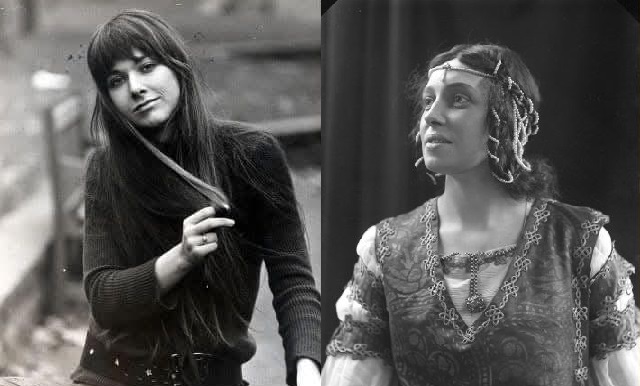
Gerda Lundequist plays Margaretha Samzelius, the matriarch of Ekeby, a grand estate in rural Värmland, and it was a genuine privilege to be joined by her granddaughter, singer and actress Sonja Kristina as her children and their children watched this rare example of their forebear on screen. Sonja knew Gerda as a child, meeting her in Sweden and England and the reconnecting with her grandmother in this sparkling restoration must have been special indeed.  Seeing Sonja’s young grandchildren cheer and wave in their animal masks as their Great, Great Granny was announced was also reminder of the familial joy of belonging.


Gerda Lundequist

For the rest of us there were other connections to be made not least the warmth of being a part of an audience of like-minded people who share the same love of cinema and specifically silent film, gathered again in this secular temple of committed, collaborative – endlessly generous – cineastes. People who programme who preserve and promote this era of film, “classic” but also timelessly true regardless of age or form. The emotions displayed by Gerda Lundequist and her peers are still part of human language and we connect with them in old familiar ways: yes this is true even after so long the family that stays together plays together.


Stiller did not have Victor Sjöström’s way with picking out the deeper humanity and magical reality from Selma Lagerlöf’s works and she was initially dismissive of this film only to have changed her mind by the mid-1930s when she met with Greta Garbo and thanked her and Stiller for the film. Garbo was just 18 when she started filming and still Gustafson before Stiller renamed this hottest of properties “Garbo” and she too was grateful to the man she later deemed her favourite director (sorry Clarence Brown!). He may have told her to lose weight and to stop moving like a farmer’s gatepost but he brought out her star power enough for Louis B Mayer to snap her up as soon as he could after seeing Gösta Berling in Berlin. Stiller came to America with her but he was never able to find the freedom and control he needed.


This was Stiller’s last Swedish film and with his departure was gone one of the fathers of the Golden Age. Soon his lead actor, Lars Hanson, was also to follow to play another cleric, The Reverend Arthur Dimmesdale in The Scarlet Letter (1926) alongside Lillian Gish who had insisted that Louis B Mayer make the film. Gish and LB were impressed with the cut of Hanson’s cassock and whilst The Internet has her requesting him post Gösta, this film came first. His performance is as assured and dynamic as Gerda’s and the scene in which she confronts him over his failings by sharing her own is one of the most moving in the entire film.


Jenny Hasselqvist posing for Henry Goodwin (1921)


You have to admire Stiller’s choices for the film, the stakes were high in terms of the pressure to succeed and off the largest budget assigned to that point by AB Svensk Filmindustri, and, whilst he took a big chance on his youngest lead, he was able to persuade not only the country’s leading stage actress and film actor but also its leading prima ballerina. Jenny Hasselqvist had worked with the director before on the little seen but very worthwhile Johan (1921), Guarded Lips (1921) as well as her first film, The Prima Ballerina (1916) just after she had started in that role at the Royal Swedish Ballet. As Marianne Sinclaire she represents a more forceful and knowing partner for our de-0frocked priest after the two are caught kissing during a play. Her control and physicality is brought to good use by Stiller as she is left in the cold, literally, by her cruel father and later gets caught in the burning inferno of Ekeby.


Garbo’s Elizabeth Dohna has deep eyes and longing looks and needed a good deal of coaching, lighting and editing from Stiller to hold her place among these consummate professionals.


All this we could see on the restoration and I am convinced that this screening led many to re-evaluate the film. The previous restoration is black and white, not so well paced and looks murky in parts whilst here the SFI have been able to sharpen the story as well as the image. The re-editing of some parts and introduction of tints and new sequences gives a richer story, as close as possible to the one first seen a century ago over two parts in March 1924.


I’d previously seen the restored film in Il Cinema Ritrovato 2023 in Bologna with a small ensemble accompanying but John Sweeney was a one-man orchestra, exploring his way expertly across the new running time and evoking the deeper humanity and grandeur of the film, connecting with the deeper meanings smuggled in from the original book which in many ways is so different from the film. It’s 400 pages long in the recent translation from Paul Norlen and whilst Sjöström would have turned that into three or four films, Stiller’s edit is remarkable for capturing the essence of these characters even if some of them changed…


Selma Lagerlöf calls the tune

At the end of the screening, I was thanked by complete strangers in the aisles as well as those I know but in truth I am the one who is grateful for the SFI, especially Jörgen Viman, Film Archivist, for restoring the film, the BFI for screening it, Bryony Dixon in particular and who kindly invited me to introduce it. I also must thank John Sweeney for playing so wonderfully and Sonja Kristina and her amazing family old and new, and all of you who attended and communed in the dark with these century-old ghosts. Thank you for reading too!


Thank you too to Selma Lagerlöf, who at the end of her Gösta Berlings saga leaves us with the cryptic clue to life:


Dear Reader… Here the giant bees of imagination have swarmed around us during years and days, but to get into the beehive of reality, they will truly have to keep their eyes open.


* The Saga of Gösta Berling (Penguin Classics), by Selma Lagerlöf, translated by Paul Norlen (2009) is available from all good bookshops and Amazon.


Cover of my 1924 Danish programme 


Saturday, 25 January 2025

Real News… Meet John Doe (1941), Talking Pictures TV


At first I was sore at the state administration because it’s on account of the slimy politics here that we have all this unemployment. But, in looking around it seems the whole world’s going to pot.


Sometimes the nation’s favourite classic film channel will classify the films it screens as PG for parental guidance and in this case I not only didn’t have to guide my daughter into watching it she was hooked from the moment Barbara Stanwyck appeared on screen. Here is someone recognisably “modern” in terms of her agency and her self-belief and it’s hard to believe she was much different than her go-getting character Ann Mitchell, a journalist who makes news because she has to but then realises her true values through the aid of Gary Cooper’s John, a down on his luck baseball player who starts of playing out her sensationalist story and ends up moving audience and America alike with his integrity and belief in fair play.


I don’t recall ever having seen this film before but I’ve certainly heard of it and the narrative clicked very quickly as I realised that this was a tale of the eternal truths of politics and the press – darn if it isn’t still so much about today and populism, fake news and manufactured emotionalism. The owner of the newspaper that starts the rumpus is one DB Norton (Edward Arnold) and he decides to ride the story of John Doe all the way to the White House, using his media outlets and power to maximise a grass roots movement around John Doe to break the mould of American politics. Now, where have we heard this kind of talk before and recently?


Ms Barbara Stanwyck

The story starts with the familiar pains of a newspaper in search of profit, Norton has just taken over The Bulletin and its rebranding as The New Bulletin begins with a jackhammer being taken to the old values as etched in stone at the front of the building “A Free Press Means a Free People” replaced by a sign for the new title and the tag line “A Streamlined Newspaper for a Streamlined Era” – one with morality removed perhaps? New Editor in Chief Henry Connell (James Gleason) gives it straight to the redundant Ann as she protests: “Sorry sister… We’re after circulation. What we need is fireworks, people who hit with sledgehammers, start arguments!”


Ann has a mother and two younger sisters to provide for and she’s going to going down fighting even as she gets the boot and told to finish off her last column. She does more than that and drafts a letter from one “John Doe” who is so disgusted with the state of American society with its unfairness and lack of opportunity that he claims he’ll throw himself off City Hall on Christmas Eve (yeah, Merry Christmas…).


What did he buy a paper for? He’s in the oil business… Why did he engage a high-pressure editor like Connell…?


Coop may well do...

The letter is duly published and the fireworks duly begin the next day at the Governor’s office where they immediately smell a rat but the wrong one assuming this is all an attack by Norton and his new client journalists. Who buys a media brand without expecting to get involved in politics? Who indeed…


The blow back is also underway in Connell’s office when he hauls Ann in to find out who John Doe is immediately wishing to de-escalate a situation in which people over the city have offered the young man work and other help. His jaw hits the floor when she tells him she made it up and, just as she’s about to get kicked out a room full of down and outs gathers in the editorial offices claiming to be John Doe.


Her mind moving faster than Rebeka Brooks on speed (former editor of the UK’s iconic gutter press sleaze-zine, News of the World) Ann realises how long the story will run if they select the right man for the John Job and before Connell has time to choke on his cigar, they’re lining up the candidates and selecting a starving former minor leagues baseball player laid low by long-term injury, Long John Willoughby (Coop). Long John’s on his uppers but he’s square enough and even comes with a walking, talking conscience The Colonel (played by the wonderful Walter Brennan) who tries to steer his pal away from money and back to the freedoms of being broke and free.


From this point on things get both complicated and also uplifting as despite the political manoeuvring after John gives a speech on the radio, written by Ann and inspired by her father, during which he starts to realise the power he can have to bring people together. He urges simple neighbourly kindness and soon John Doe Clubs are formed as people with very little give a lot.


The folks who trust and support.

Naturally the contemporary viewer wonders what happened to writer Robert Riskin (Democrat) and director Frank Capra (Republican – in old money) both during and after this very potent storyline. The two were friends but clashed over this film and didn’t collaborate any further. What they produced is both a call to individual responsibility as well as a work that can’t fail to be a critique of cynical politics and media at a time when – along with films like It’s a Wonderful Life and Mr Deeds Goes to Washington – there seemed to be a groundswell of discontent with business as usual in politics.


What starts out as fake turns into something very genuine and, despite the frequent humour – I love the boys playing baseball in the hotel like kids using an imaginary ball – there comes a point when John has to start to be real no matter how inconvenient that can be for those who would use him to win office. There’s also the very real concern with just how will the lot of the common John/Joan be improved?


The character arc for Ann and John is well handled by two of Hollywood’s finest ever talents and Stanwyck especially is fabulous, razor sharp and full of vim whilst Cooper plays the everyman with humility and guilt. In the end can their essential decency save them and everyone else?


Guess we’ll just have to find out as this year of years unfolds like yesterday’s news.


Mr Walter Brennan
Democracy dies in streamlined darkness...


Thursday, 16 January 2025

Gerda Lundequist and Sonja Kristina – the Gösta Berling connection

Sonja and Gerda - generational talents


It’s strange the connections you make in your life as well as in silent film which, after all is history itself and not just a representation of past events. Without knowing it at the time, I spent a number of pleasant afternoons in the company of Cecil Hepworth’s daughter Elizabeth Barbara – the young star of Rescued by Rover (1901) and her sister Margaret as my friends were renting their basement in the 1990s.


It was also a surprise a few years ago, to see Sonja Kristina, the pioneering singer, actress and leading lady of progressive rock, folk and beyond, posting on Facebook some year’s back about her Swedish grandmother Gerda Lundequist, a Swedish stage legend and the star of Gösta Berling's Saga which, as I think I mentioned is screening this Sunday 19th at the BFI! Knowing the connection, I asked Sonja for a few memories about her grandmother and it seems the “performance gene” runs strongly in their family!


Born in 1871, Gerda was the daughter of a hairdresser but was fostered by her mother’s sister a manufacturer’s widow. She had theatrical ambitions from an early age and she was enrolled in theatre school in Stockholm at just 15. At this stage in her own career, Sonja had already started singing in folk clubs and, also in her teens, enrolled at the New College of Speech and Drama before staring in the theatrical version of Hair along with the likes of Paul Nicholas, Elaine Page and the late Diane Langton.


Gerda Lundequist in costume in 1906


Gerda’s professional debut was at Svenska teatern in Stockholm 1889, and her breakthrough soon came her portrayal of Kristina in August Strindberg’s Mäster Olof at the old Royal Dramatic Theatre in Stockholm. She was soon starring in almost every conceivable major role in plays from Ibsen, Schiller, Moliere, Shakespeare and others establishing herself as Sweden’s finest actress and it must have been a huge coup for Mauritz Stiller to get her for the role of as Margaretha Samzelius, the matron at Ekeby in Gösta Berling.


Gerda’s daughter Cecelia married an English criminologist called Shaw and moved to the UK. Sonja remembers meeting her on a number of occasions:

I was 10 years old when Gerda died in 1959… she had come to stay with us in England when I was 6 and we visited with her in Stockholm and at her summer home.


Gerda’s professional reputation was one of strict principles and, not enjoying interviews, she soon refused all offers and was a very private person, protecting herself and her family from intrusion. Yet she was also described as a very warm and humorous person by those who did know her and this is confirmed by Sonja’s recollections:

I remember her sitting at my mother’s dressing table brushing her beautiful long auburn tinted hair before braiding it and putting it up. Her perfume was lovely and I will always remember the aroma of her favourite digestive biscuits with honey that she enjoyed as a night-time snack.


Sonja Kristina


Gerda was an ardent supporter of female emancipation in Sonja’s words and she was able to support talent through her work as artistic director at Helsingborg City Theatre and then later as a teacher at drama schools. She contributed to the independent women’s education centre Kvinnliga medborgarskolan vid Fogelstad, for which she was also a member of the board of trustees.


Sonja describes the school as a feminist and that her mother, recovering from TB, shared several stimulating and entertaining months with Gerda and her students at Foglestad.


She also relates the tutoring and encouragement she had from Gerda and her hugely experienced eye for talent: She liked to listen to me sing and encouraged me with gentle instruction on breathing technique and interpretation.


She remained such an important figure in Sweden hosting celebrity soirees at her apartment and performing on radio and television right up until the late fifties. Sonja’s mother was frequently asked for autographs by school friends and no doubt, had she grown up in Stockholm, the same would have been true then.


Gerda with Greta Garbo in Gösta.

But to Sonja and her family, the private side of her grandmother was no less precious and, especially the playful bond they developed.

Gerda was so mischievous, making grand entrances at public gatherings. Stopping traffic in the street to talk to horses - and policemen.


She was perfectly cast in Gösta Berling's Saga and, also, it seems as a mother and grandmother.


I am delighted that Sonja and her own grandchildren will be attending the screening on Sunday 19th and I hope you will too and witness one of the finest actors of the last 150 years pouring decades of experience into one of her precious few cinematic appearances!


You can book your place here!


The cast of Hair in 1968, Sonja spent over two years in the show, here on the lower right!


Tuesday, 14 January 2025

Ten reasons not to miss Gösta Berlings saga (1924) UK restoration premier!


This Sunday, 19th January at 2.30pm the BFI will be screening the UK premier of the restored Gösta Berling's saga and, as there are still a few tickets remaining and I want you to get the best possible vantage point!


This will be an event to rival the finest gala screenings of many a film festival with the film as close to its original length and condition as it has been in a century! If you are in any doubt, here’s ten good reasons not to miss this unique event!


1. It's the culmination of the Golden Period of Swedish film?


This film is one of the last of the major films from the golden period of Swedish Silent film and features some of the major talents. This is not just from within film but also without: bringing together the very best of contemporary theatrical and cinematic talent along with literature and ballet.


Selma in the office


2. Selma Lagerlöf was a phenomenon


The film is based on the book from Selma Lagerlöf for which she had won the Nobel Prize for literature in 1909, the first woman to do so. Lagerlöf’s works were also the source material for a number of films across this period in much the same way as Dickens for the British.


The Lass from the Stormy Croft (1917) Directed by Victor Sjoström

Sir Arne’s Treasure (1919) Directed by Mauritz Stiller

The Sons of Ingmar (1919)/ Karin, Daughter of Ingmar (1920) Directed by Victor Sjoström

The Phantom Carriage (1922) Directed by Victor Sjoström

Ingmar’s Inheritance (1925)/ To the Orient (1926) Directed by Gustaf Molander


Lagerlöf led a fascinating life a distinctive voice who made her own choices even if that led her to buying back the family farm and manor house Mårbacka, managing it to profitability with a range of healthy oatmeal “Mårbacka Oats-Power”. Any resemblance to the estate of Ekeby is intentional.


An example of the dynamic new tints

3. Mauritz Stiller was no slouch…


For Gösta Berling, Stiller made merry with the sequence of the story, cutting away all but the main half dozen characters and dispensing with the author’s magical realism and forensic humanity. How could such a book be filmed though, 400 pages long and written in Lagerlöf’s intensely lyrical style. Luckily Stiller’s instincts were correct in terms of his film and he was blessed with key performers who, familiar with the book could bring some of these elements back.


Selma was not impressed, calling the result “cheap and sensational”, but there’s no reason we can’t be just as the audiences of the time were with the film enjoying success across Europe and even America. Stiller got offers to make films in Germany and then Hollywood and within a year set sail with one of his young co-stars for the USA.


Greta Gustafsson before Stiller suggested Garbo...

4. Yes, Greta Garbo started right here!


She was only 19 and rather outgunned by those around her but Greta Gustafsson does very well in her first major film. Legend has it that a certain Louis B Mayer saw her in this film and after Pabst’s Joyless Street, she was on her way to becoming a legend.


In 1935 Garbo tried to visit Selma in Mårbacka but the writer was ill, they did meet the following year in Stockholm where Lagerlöf’s stage adaptation of her great novel was playing. Oh, to be a fly on the wall, next to a fly that could translate Swedish, for their discussions.


 Gerda Lundequist

5. Gerda Lundequist… the great tragedian in her only silent film!


Gerda Lundequist was “the Swedish Sarah Bernhardt” and an enormously powerful performer who enjoyed a career lasting well over half a century starting aged 18 in 1889 and carrying on to the late 1940s. She played pretty much every major role in Scandinavian as well as European classic theatre but sadly only made a handful of screen appearances with Gösta Berling her debut aged 53!


She is quite incredible in the film and clearly knows how to act on film without blowing the camera away as, naming no names, some theatre specialists had been known to do. This is her only silent film and so this is the equivalent of seeing Anna Pavlova dance in Lois Weber’s The Dumb Girl of Portici (1916) and a performance to match Bea Lillie’s in Exit Smiling (1928), her only silent feature.


On Sunday, Gerda Lundequist’s granddaughter and family shall join us to celebrate this screening and that makes me particularly happy!


Jenny at the day job

6. Jenny Hasselqvist: the Acting and Dancing Queen!


Dancing?? Happiness?!? Yes, this film features one of the most talented people to have ever reflected the glare from a Klieg Lights onto celluloid or to have bounced with perfect precision on point from the stage of the Royal Swedish Ballet and elsewhere!


Jenny Matilda Elisabet Hasselqvist was one of the finest prima ballerinas of her age and, whilst she made 20-odd films in Sweden and Germany, she remained a dancer first and foremost. In an alternate universe Mauritz Stiller could have been her Boris Lermontov, coaxing her to star in his 1916 film Balettprimadonnan when she had just begun as the Royal Swedish Ballet’s prima ballerina. But this “Vicky Page” returned to the stage and didn’t make another film until Lubitsch’s Sumurun (1920) and whilst she worked with Stiller again on Johan (1921), The Exiles (1921 and mostly lost) as well as this film, she maintained her dancing career reverting completely after her final, talking, picture Den farliga liken (1931).


She is fabulous in Gösta Berling and brings a more physical aspect to expression than even Gerda Lundequist, her emotional extremes always expressed viscerally by her body in ways that only the most controlled of beings can muster – ways that silent film magnifies in the absence of other signals.


Lars and the lads.

7. Lars Hanson is here!


Now then, it’s possible that Mr Hanson is too charming to play Gösta Berling, but there’s a mean streak to Lars that we rarely see and his ability to mask self-pity with leading qualities is unrivalled. He also breaks hearts as the defrocked and perpetually failing priest who can’t help breaking heart including his own.


Hanson was the pre-eminent film star of the Swedish Golden Period and he went on – with Lillian Gish’s insistence - to repeat the trick in Hollywood in The Wind and The Scarlet Letter (1926) and, of course twice with Garbo in The Divine Woman (1928) and Flesh and the Devil (1926). My favourite of his American films is Captain Salvation (1926) with Marceline Day. His star power is undimmed to this day!


8.  The Restoration will be colourised!


The Swedish Film Institute have been working on restoring the film for many years and they upgraded the previous black and white restoration using tinted nitrate materials in French, German and Portuguese archives to create a digitized template for re-tinting the film.


In our lifetimes the film has not looked this good and the vision of Stiller and his legendary lensman Julius Jaenzon is as close to perfect as possible.


Lars and Jenny

9. New footage… even more wolves!


The restoration team was able to add new footage throughout the film and key sequences in which first the Major’s wife, and then Marianne are disgraced at Ekeby parties are given more impact. The thrilling section on the ice with Gösta and Elizabeth try to flee from a wolf pack has been re-edited and you will be on the edge of your seat!


10.a John Sweeney is accompanying!!


Having seen and heard John accompany the three-hour Michel Strogoff (1926) in one sitting late one British Silent Film Festival, I can think of no one better to accompany such an epic! he blends dynamic imprivistations so well with lines that switch so seemlessly with emotional tione I'm really looking forward to hearing him play.


10.b. There will be an interval during which refreshments can be purchased for both the audience and the pianist!


You may have seen the film before, but never like this! We are going to party like it’s 1924!!


And, remember, as Gösta Berling knows all too well, it's better to regret something you have done than something you missed! 


Get your tickets here!


Sunday, 5 January 2025

Preview. The remaking of Gösta Berlings saga (1924). BFI screening on 19th January!


The BFI are screening Gösta Berling's saga on 19th January and if you haven’t already booked I suggest you click on this link right away to make sure of the best seats for what will be a spectacular Sunday with the best musical accompaniment!


The Swedish Film Institute have been working on restoring one of the major works of their golden silent era for years and first presented a restored version a few years back at the San Francisco Silent Film Festival but, this wasn’t enough and they were motivated to further enhance what had been done by the desire to present something as close as possible to Mauritz Stiller’s original vision and… here we are!


I’ve been speaking to the person responsible for the project, the SFI’s Jörgen Viman, Film Archivist and man on a mission. He says that the initial motivation to make a new print was that the existing ones were only in black and white. They discovered that there were tinted nitrate materials in French, German and Portuguese archives and borrowed from all three to create a digitized template for re-tinting the film.


I found images that we were missing completely, and these are euphoric moments. I also discovered images that were similar, but still not exactly the same. The camera angle was slightly different.


An example of one of the tinted source nitrates, many sprockets were fixed...


Source materials


Examining the images in detail he discovered that that there were differences in content and approach, these being all further highlighted by a black and white print from Moscow. The project was now not just about restoring the tints but also missing parts of the narrative and I can well understand the satisfactions of an archivist on this trail especially when he discovered after painstaking work sifting through the SFI’s filming reports, text lists, text signs and other documentation, that there were originally two slightly differing negatives.


Running to the same length these featured different angles with Stiller and his legendary lensman Julius Jaenzon using two cameras as was standard practice for at least parts of the filming. Trying to make sense of Stiller’s intended narrative was always going to be difficult as films often varied from the script which still survives in this instance. Luckily Swedish censorship was diligent and so there was a record of all of the intertitles – praise be to those who have the viewers’ delicate sensibilities at heart.


None of these records showed how the images were edited around the text and so a long and laborious process was begun reviewing the materials side-by-side to identify the best quality takes from scenes of varying length and angles from those two cameras.


One of only six surviving images of Ava Lundin's original intertitles


405 Intertitles…


In terms of the intertitles only three of Ava Lundin’s lovely painted inserts survive but Jörgen found three more reproduced in a magazine from 1924 that helped the team create a font that was a close as possible to the originals. Anyone who has worked with typography knows what a challenge this is but luckily all but the letter z were present in lower case on the six intertitles although the capitals were more elusive especially as they varied by context in the sentences.


Jörgen then used Photo Shop to recreate everyone of the 405 intertitles, originally painted by hand now by digital programming with no less attention to detail and layout. I remember a world of graphic design before digital artwork and it is such an underappreciated art with text placement needing to balance, avoid line breaks and to be readable as easily as possible. Jörgen centred the text and also aligned left and right creating a consistent read area throughout the film. I noticed in Bologna that some of the English text had changed as well, perhaps moving them closer to the original Swedish?


The reconstructed intertitle, only 404 to go...

Tinting and colour ways


Obviously it was not possible to recreate Alva Lundin’s painted images on the title cards but the magazine article revealed that they were all toned in dark brown which no other document mentioned. This may not always look the case though as the eye gets used to the colour that is in the image before the text. As Jörgen says: If the image is blue, the eye perceives the text as more strongly toned than if the image before is yellow, for example.


Now for the colour of the images the restoration team mostly used the Portuguese nitrate print, but there were variations with that print showing all the night images in light green, while the same sequence were tinted blue in the French material. Swedish convention was – as with Hollywood films – to use blue for night and this they did with exception of one scene only found in the Portuguese copy – which they left in dark green. You’ll see it when Gösta finds the little bird on the road.


Re-creation is an interpretation that is based on facts, but also experience and collaboration.


New footage…


This is what gets most of us excited about any restoration and watching the restoration in Bologna last June there were many occasions when I wanted to stop the film and compare with my old Kino DVD but this would have been rude of course!


There are a number of images from slightly different places throughout the film and it felt like the key sequences in which first the Major’s wife, Margaretha Samzelius (the Swedish theatre legend Gerda Lundequist) and then Marianne (my favourite prima ballerina/actress Jenny Hasseqlvist) are disgraced at Ekeby parties, were separated, giving both more impact for me.


There are new images in the latter scene where Gösta (Lars Hanson) and Marianne dance – I always love seeing Jenny dance! – which fills out the depth of feeling between the two as their attraction is revealed on stage leading to Marianne’s father refuses to have anything more to do with her.


Jörgen says that the section that perhaps took the longest to put together was the sequence that took place on the ice with many options from the footage and different camera angles. He says that the sequence where one of the wolves is attacked by his own pack was filmed from two completely different directions, leaving him with the task of re-editing one of the most exciting and important sections of the film.


Thank you for your time and for your diligence Jörgen, what I saw at Il Cinema Ritrovato you have done a splendid job and I can’t wait to see it all over again on Sunday 19th January at the BFI and to introduce the results of your work as succinctly as possible!


Book your tickets now at the BFI website!


Sunday, 29 December 2024

Look sharp! My year in silents, 2024.


As Millicent Martin – Daphne’s mum in Frasier – almost sang, That Was the Year, That Was and I realise that’s a cultural reference to a satirical TV show popular in the UK 60 years ago but the films I’m about to list are from half a century earlier so… keep up! We’re increasingly in a world in which everything is happening at the same time, an all-at-once cultural smorgasbord from which every generation picks what they want and new controversies rise from old in cinemas, Talking Pictures TV, $treaming sites and our beloved retailers. This is the best I can do in the post festive drop down especially as I don’t really do New Year. It’s always best to look beyond and push straight on through to the other side, even if that’s 2025 and all that goes with it but we can take it, we’ve not only been there and seen it all before, we’ve experienced it ever-present in films, books and what used to be called “social” media. So, I remember the passing year and rage into the next, thinking of the very best in my opinion and in no particular order!


1.       Get Your Man (1927) with Meg Morley, BFI


She will make a fine wife, son. Imagine an innocent young girl… in an age when there aren’t any!


The BFI kicked off the year with a couple of fine seasons, one focused on the iconoclastic programming of the old Scala cinema and another on the almost unique filmography of director Dorothy Arzner who was able to smash the Hollywood glass ceiling with a mixture of brilliance and independence. She worked with Bow on her first talkie, The Wild Party (1929), also screened, and this rarely-screened gem which was shown on a precious 35mm recovery/restoration and even though it’s still missing a couple of reels, still impressed as Clara’s supernatural energies were allowed full expression


It was indeed, as the BFI blurb put it, “a triumphant celebration of female sexuality…” a modern day fairy-tale set in France and where Bow’s character wins over the heart of rich boy Charles “Buddy” Rogers in a lovely sequence set in a wax museum choreographed by Arzner’s partner Marion Morgan. Clara’s pluck blows away every obstacle and dusty preconception as l’ancien régime has to surrender to classless, young love.


2.       The Rugged Island: A Shetland Lyric (1933), with Inge Thomson, Catriona Macdonald, HippFest at Home


This film sits amongst better-known works of the thirties showing island life on the extremes but actually predates Robert J. Flaherty’s docudrama Man of Aran (1934) – the Irish island, not Arran. Director Jenny Gilbertson (née Brown) had made a number of short documentaries and was encouraged to make this film by the great Scottish documentary filmmaker John Grierson, director of Drifters (1929) and the man who coined the term "documentary" in a review of Flaherty's Moana (1926).


The result is every inch as powerfully evocative as these other films with Jenny’s previous experience of the island, the documentary A Crofter’s Life in Shetland (1931), showing a year in the life of the rugged folk of Hjaltland… more Norse than Gallic and only 30 miles closer to Scotland than Norway. She was self-trained and this is even more remarkable when you consider that she not only wrote but filmed and edited her work. The Rugged Island is a drama and yet it still feels like a genuine intrusion on the lives being portrayed, the irony here being that Gilbertson’s was sometimes described as an “amateur” and yet clearly she was consummate in terms of technique and direction with only one professional actor - Enga Stout – with the rest being her friends and others she’d cast locally.


This is exactly why I shall be returning in person for the next Hippfest in March ’25!


3.       East Lynne (1913) Restoration Premiere with Colin Sell, Kennington Bioscope


Oh, Willie, my child dead, dead, dead! and he never knew me, never called me mother!


As Christopher Bird said in his introduction, East Lynne is not a lost film as such but when quality is, as Kevin Brownlow says, the main thing archive cinema has to sell itself to modern audiences, this film has certainly been missing in terms of the vibrancy, contrast and tasty tints we glimpsed today. Chris obtained an almost complete nitrate copy from a private collector which, compared with the black and white copy held by the BFI is missing the first reel but comes with an extra three minutes and those higher quality tints. Together with fellow Bioscoper Bob Geoghegan and the BFI the restoration work is ongoing and the hope is to present the finished item at Le Giornate del Cinema Muto in Pordenone.


Even Rachel Lowe admired this British film and it’s a visual feast as it is with good use of depth-of-field, form and texture by director Bert Haldane and his photographer Oscar Bovill. That said, there are some impressive performances from a very modern-looking cast led by Blanche Forsythe as Lady Isobel, handsome Fred Paul and the steadfast Archibald Carlyle and who-ever it was playing Barbara Hare, the sister of the man falsely accused of a murder committed by Isobel’s would be paramour, Captain Levison, as played with pantomime menace by Fred Morgan.


This screening was part of the Bioscope’s 7th Silent Film Weekender and it’s hard to compete with the range and passion of this gathering of like minds in Charlie’s old workhouse.


4.       The Phantom Carriage (1921), with Stephen Horne, Kennington Bioscope


After a few years of this silent film business, you have seen most of the cannon and have your own list of The Greats but all such classifications are blown out of the window when you see a screening like tonight’s with the right venue, the right audience and a supernatural accompaniment from Mr Stephen Horne that not only sent chills but brought out the full flavour of Victor Sjöström’s film and, indeed his own performance.


Not only was Sjöström probably Sweden’s finest silent film maker, he ranks as one of the finest of any era. Here with his fourth adaptation of one of Selma Lagerlöf’s works, he shows again why he is such a good interpreter of her work. Selma’s work is passionate and poetic and deceptively complex in expression and narrative form but I think Sjöström got her depth of meaning more than his contemporaries Stiller and Molander. As his thoroughly-disturbing performance shows, he may well have had a personal connection with this story as Chris Bird suggested in his introduction, for the Swede’s father was abusive and alcoholic just as his character David Holm. A film that never ceases to smash through the door and grab you.


Gerda Lundquist


5.       Gösta Berling’s Saga (1924), with Matti Bye, Eduardo Raon and Silvia Mandolini, Il Cinema Ritrovato XXXVII


"Finally, the vicar was in the pulpit..."


It’s fair to say that my Christmas came early with this presentation of this latest version from the Swedish Film Institute which is not just a restoration of the Saga but a remix and extended cut being not only some 20 minutes longer than the 1975 restoration which most of us have only seen up till now via the Kino release. It’s also in a slightly different narrative order with the party sequences and their two dramatic exiles re-sequenced as well as variations elsewhere, with a more dynamic mix for the burning of Ekeby and Gösta’s rescue of Marianne, a longer intro and new intertitles that carry more of the original author’s poetic wonder.


Now, I’m not saying that Mauritz Stiller’s magnificent adaptation of Selma Lagerlöf’s epic novel is perfect in fact there’s a reason he was no higher than her second favourite film director of the Nobel Prize winning author*, but the ambition wins you over along with incredible lead performances. Lars Hanson oozes confusion guilt and self-loathing, Gerda Lundequist – Sweden’s Sarah Bernhardt, a legendary stage actor – brings her power and poise to the screen whilst Jenny Hasselqvist, who had a parallel career as prima ballerina with the Royal Swedish Ballet, is magnetic, micro-managing physicality with emotional expression. There’s also young Greta Gustafson who radiates an unknowing allure that would see her soon off to Hollywood with a name change, some dental work and flattering lighting.


The restoration is crisp and revelatory, never has the camera work of the great Julius Jaenzon here looked so fine from the gorgeous sweeps of the lakes and forests to the shots on set and the performer’s expressions. It’s an epic restored in an epic way and I can’t wait to see it again at the BFI on Sunday 19th January where I promise to keep my introduction short and to the point!


Ticket details here!


6.       Judex (1915-16), accompanied by many hands, Il Cinema Ritrovato XXXVII


I can’t deny that there was a sense of triumph having watched the whole series and thoroughly enjoyed Louis Feuillade’s sense of drama, his eye for dynamic framing, his direction and team building and his ability to keep the narrative ball rolling even when you think he’s backed himself into a dramatic dead end. That’s 12 episodes and one big Prologue with not a second missed for lack of sleep, breakfast or headache… probably!


It's not quite up there with Les Vampires but it does have the essentiality of Musidora playing Diana Monti aka Marie Verdier, a scheming opportunist who becomes more and more dominant the longer the story unwinds. Judex himself as played by René Cresté, is a goodie version of Fantômas, part Sherlock Holmes, maybe part Eugène-François Vidocq – an actual French criminal turned criminalist. Feuillade had been criticised for glorifying his evil masterminds and so here was one of good intent even if he does kidnap and fake the death of the businessman responsible for his father’s death and many others, Favraux (Louis Leubas) before imprisoning him for life in a remote castle. And that’s just the start…


7.       Love ‘Em and Leave ‘Em (1926), BFI with Meg Morley


This blog has been driven by obsession and a subjective emotional “canon” from its earliest days (no, please don’t look!) and Louise Brooks has, of course been the main one, with a copy of Pandora’s Box on DVD bought from a second-hand shop in Park Street, Bristol in 2005 starting off the whole interest – yes, Bristol, it’s really your fault! This film is one of the few remaining unseen on-screen and viewing the BFI’s worn, warm and wonderful 16mm flickering on the NFT2 screen, with Meg Morley’s wonderful syncopations and sparkling improvisations following an introduction from Bryony Dixon has, to paraphrase the poet, helped make not only my day, my week, my month and even my year.


They may have been chalk and cheese but Evelyn Brent and Louise Brooks make for a good team in this light-hearted drama in which the former plays the sensible big sister who has to rescue her less sensible sibling from all kinds of trouble. It’s a gas and we do get to see Brooksie dance which is always a bonus!


Conchita Montenegro


8.       The Woman and the Puppet (1929), with Günter A. Buchwald, Bonn Silent Film Festival 2024 streaming


Every so often a silent film not only surprises you but pulls you to the edge of your armchair and has you blinking at the screen in delight. So, it is with the story and the actress in La femme et le pantin (1929) in which Conchita Montenegro’s dancer not only beguiles and bewilders her puppet, Don Mateo, she completely un-mans him in the most feminist of ways reaching right out from 1929 with dazzling power and beauty. If anyone has a thousand ships that need launching… here’s your woman!


Based on Pierre Louÿs’ 1898 novel of the same name, the story was adapted as an opera in 1911 by composer Riccardo Zandonai, and it was also filmed as That Obscure Object of Desire (1977) by Luis Buñuel. The first film version was an American film made in 1920 and directed by Reginald Barker, starring Geraldine Farrar, which is a little surprising given Louÿs’ background of erotic prose and poetry. Indeed, he was the man to whom Oscar Wilde dedicated the original French publication of Salome. Director de Baroncelli’s film is presumably far bolder than any Hollywood film could have been as, indeed, is his star performer and, it’s difficult to see anything like a literal adaptation being made anywhere else but France at this time. It is an eye-popping and an expectation-confounding work!


9.       The Blue Bird (1918) with Neil Brand and Elizabeth-Jane Baldry, Le Giornate del Cinema Muto


Maurice Tourneur's film featured regular collaborators such as art director Ben Carré, cinematographer John van den Broke and editor Clarence Brown. This was silent psychedelia in full bloom at a time when the World needed to believe in eternal truths and the truth of eternity. When in the heart of their fantastic journey to find the Blue Bird, the two youngsters meet not only their dead grandparents but their dead brothers and sisters, there are at least ten of them... this was a time when infant mortality was high and life came with the flimsiest of "guarantees".


The film is a sumptuous collection of such moments and visual set pieces, a hyper-creative comfort blanket that smuggles through the simple message that there's not only no place like home but that kindness must spread out from there into the heart-broken World beyond. Tourneur draws pure and naturalistic performances from his cast of children, 12-year old Tula Belle as Mytyl and Robin Macdougall as Tyltyl who react and act with genuine thrill to every new wonder. It's a child's film with many adult concerns.


The accompaniment from Neil Brand on piano and Elizabeth-Jane Baldry on harp brought the magic out across the auditorium and melted our stubborn hearts.


10.   Saxaphon-Susi (1928) with Neil Brand, Frank Bockius and Francesco Bearzatti, Le Giornate del Cinema Muto


Miss Saxophone was the most legal of highs, a mood-altering event with fabulous cast and sincerely joyous accompaniment from a powerhouse ensemble that left the Teatro Verdi at severe risk of an outbreak of dancing! Up on screen we had Anny Ondra showing us how fine she could look and how well she could dance and also make comedy – not for nothing should she have been called the Czech Republic’s Queen of Happiness or maybe most of Europe’s. She plays Anni von Aspen, a poor little rich girl daughter of the lecherous Baron von Aspen (the marvellous Gaston Jacquet) who wants to trade places with her working gal pal Susi Hille (Mary Parker), a cabaret dancer who gets the chance to become a Tiller Girl in London. They swap assignments with Susi heading off to posh school and Anni having to learn her dancing ropes fast.


On the boat over they meet some fine English gentlemen including Lord Herbert Southcliffe (Malcolm Tod) who takes a bet that he can get in to meet the Tiller Girls backstage and then another bet that he will marry this special one called Susi (Anni)… It’s not much of a plot but it’s enough to make this amongst the most enjoyable and warmest of comedies with this fabulously charming cast.


Any programmers reading… I think I’d like to see this one again please! 


Ra Messerer


11.   The Second Wife (1927) with Gunter Buchwald and Frank Bockius, Le Giornate del Cinema Muto


To Uzbekistan and this extraordinary film from Mikhail Devonov based on a story by Lolakhon Saifullina, a polish woman who married an Uzbek man and converted to Islam. It’s a reflection of the enormity of the old USSR and the challenges Moscow faced in co-ordinating so many diverse cultures into one modernising state. Saifullina worked for the Sharq Yulduzi studio writing scripts sensitive to the issues of Uzbeki women her along with former legal consultant Valentina Sobberey. The result is a tale in which women and children are exploited by old male custom and dominance even as the modern day watcher is aware of the wider context of Stalin’s impending first Five Year Plan and the eventual costs of converting an agrarian economy into an industrialised one.


Director Devonov does not lapse into bucolic orientalism and focuses on the story and the depiction of prevalent practices of early marriage and polygamy. Here a merchant’s first wife Khadycha cannot have children and so he has a second wife, Adoliat (Ra Messerer) who can.  A child duly arrives and Khadycha tries to destroy her competitor. She is far from alone in malevolence as his brother Sadiqbai (Mikhail Doronin), steals money whilst his older brother is away and also preys on young boys, as things escalate elsewhere. It’s propagandist but still shows the harshness of unresolved “tradition” and male power.


Eille looks down at Alexandra Palace, photo credit Yves Salmon 

12.   Silent Sherlock, London Film Festival, Alexandra Palace Theatre with Neil Brand, Joseph Havlat and Joanna MacGregor with Royal Academy of Music Soloists Ensemble


This was the grandest of archival screenings at the London Film Festival for some time and featured the first fruits of the BFI’s restoration of Stoll Films Sherlock Holmes films. The Stoll corporation made three series of 15 episodes and two feature films, all featuring Eille Norwood as the great detective a performer that Conan Doyle approved of in the role, both on stage and on screen. The three films featured new scores from Neil Brand, Joseph Havlat and Joanna MacGregor who conducted the Royal Academy of Music Soloists Ensemble, leading from the piano.


The programme is ongoing and I can’t wait for the further adventures of both the BFI Restoration Team as well as The Great Detective in 2025.


My 1924 Danish promotional booklet... Book Now for 19th!!


*Lagerlöf berated Mauritz Stiller for his adaptation of The Gösta Berling Saga calling it “cheap and sensational”.