Showing posts with label Lila Lee. Show all posts

Sunday, 16 January 2022

Blood and Sand (1922), Daan van den Hurk and Tijn van der Sanden, Nederland’s Silent Film Festival


To the Spaniard, the love of the bullfight is inborn. A heritage of barbarism – its heroes embody the bravery of the knights of old…


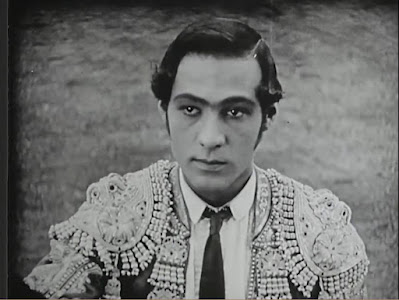
Enter Rodolfo Pietro Filiberto Raffaello Guglielmi di Valentina d'Antonguella for the opening screening of this year’s Nederland’s Silent Film Festival, playing a bullfighter and a Latin lover with a sexuality as exotic in his own way as Pola Negri (don’t mention the funeral) and other Europeans deployed by Hollywood to break boundaries and post-Victorian taboo. Valentino’s Juan Gallardo is driven by desire in life and love, and whilst being a masculine ideal is also at the mercy of his passions when torn between his true love Carmen the wanton Doña Sol, a spoilt, rich man-killing vamp who dominates and discards at will.


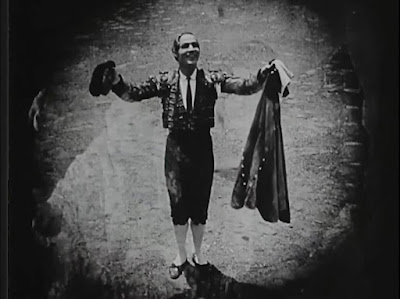
Blood and Sand leaves you emotionally rung with its derivative charm, wearing its Bizet firmly on its embroidered sleeve, elevated by superb performances and, as we now know, Dorothy Arzner’s innovative editing making us feel the heat of the bullfight even when matador, the bull and “the beast with ten thousand heads” are thousands of miles apart. As festival director, Daan van den Hurk said, no bulls were harmed in the making of this film, but it seems so purely because Arzner’s editing of stock bullfighting footage and Fred Niblo’s shots is seamless. The frenzy and the threat feel real as Juan takes on man and beast in a “sport” the film clearly disapproves of.


Daan was also multi-tasking, providing stirring accompaniment with the assistance of flamenco guitarist Tijn van der Sanden whose fleet fingered flourishes added diegetic immediacy to the film as well as dramatic flavouring. I loved the way the two worked together and it sounded fantastic on my new speakers, not as good as live but hopefully one day we’ll all be in the same room.
 

Meet the family


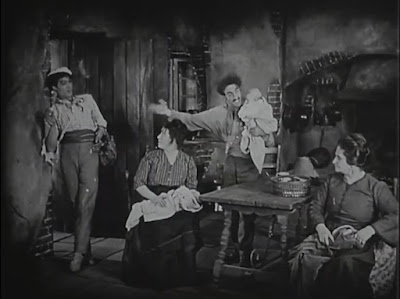
June Mathis wrote the screenplay based on Thomas Cushing’s smash hit play, which was itself formed from Vicente Blasco Ibáñez’ novel, Blood and Sand. It tells the tale of a poor boy from Seville, Juan (Valentino), “a son of the people” whose natural bravery enables him to become a toreador. His humble beginnings are set out complete with wise and loving mother Angustias (Rose Rosanova), sister Encarnacion (Rosita Marstini) and comedy brother-in-law Antonio (Leo White). Despite being called Zapaterin, Little Shoemaker, Juan has no interest in learning his father’s trade and dodges working with Antonio, a saddle maker, in order to go play at bullfighting.


Juan and friends head off to Andalucia where the locals enjoyed watching the amateurs from Seville. Juan does well but one of his friends is not so lucky with a watching bandit, Plumitas (Walter Long), accompanied by a title card noting that bandits and bullfighters both “risk life to gain a livelihood.” Juan avenges his friend’s demise and is not discouraged, dreaming of building his mother a fine house when and if he succeeds.


Naturally Juan gets talent spotted and ends up impressing the crowd mightily on his debut including his childhood sweetheart Carmen (Lila Lee) and the two grow close as his career advances and marry.


He searched deep into men’s hearts, ever willing to excuse weakness and, in a master ledger, recorded the lives of those who interested him.

And he can dance...
 

Throughout proceedings, a local philosopher keeps popping up, almost at random… Don Joselito (Charles Belcher) “a student of humanity” who will act as a guide to the morality of events passing comment and offering advice… ultimately condemning bullfighting. That beast with ten thousand heads… the audience bloodlust driving the barbarism that costs lives.


Gallardo’s success makes him the idol of Seville’s café culture and he gains a manager (Fred Becker) along with a matador, El Nacional (George Field) who “fought for living and not for glory” as well as a popular picador, Potaje (Jack Winn) and old Carabato (Gilbert Clayton) who served Juan “in order to cling to the arena and retain his pigtail” – worn by the fraternity. The film may disapprove of the sport, but it takes a delight in the details.


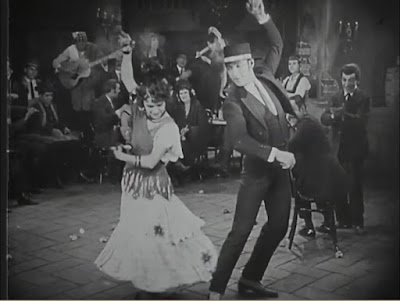
There’s a lovely scene in one of those cafes when we get the chance to see Valentino dance – he had made his way initially in Hollywood by dancing and teaching dance – and you can see his poise on the dance floor alongside and a dancer named Rosa. The women gets just too close though and Juan’s loyalty to Carmen makes him push her onto the floor… it’s a foreshadow of things to come.
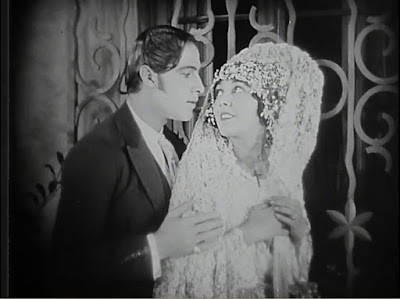

Rudolph and Lila Lee
 

Men were Doña Sol’s hobby. A bullfighter was a new experience.


Time passes and Juan is famous across Spain, and he catches the eye of the daughter of the country’s bull-breeder, Doña Sol, played by the “exotic” Nita Naldi, who was born Mary Nonna Dooley to Irish parents in New York…  Juan’s reaction to this new attention is primal, and he willingly accepts her gift of a ring given by Cleopatra to Ceasar… he’s flattered but still loyal to his wife, but Doña Sol is not easily dissuaded.


The two begin an affair, with Doña Sol dragging out the dark aggression in the man, a strange sadomasochistic edge to his fifty shades of betrayal. He doesn’t feel comfortable in her world of refined hypocrisy and artificial emotions, but he can’t resist the animal games she makes him play.


A page from Don Joselito’s book reads: Juan Gallardo has reached his goal. Will success spoil him or will his love for little Carmen overcome the plaudits of the populace and the cruelty of the national sport?


Which sets up the finale perfectly!
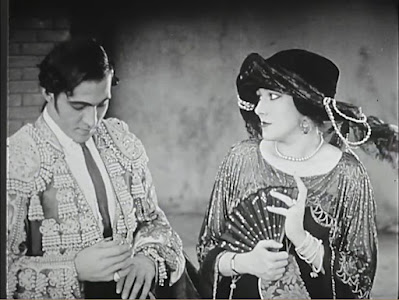

Rudolph and Nita Naldi

Blood and Sand has Glamour and Alvin Wyckoff’s cinematography captures some lovely atmospheres, Juan’s wooing of Carmen, the mock action in the stadia and the streets supposedly in Seville. Valentino has the star power and is able to convey humour as well as sexuality, he doesn’t take himself too seriously – an attractive feature for most of those watching – but he is passionate beyond reason when push comes to shove. Here his masculinity is used against him by the vamping Naldi… who else could carry this all off and still remain heroic?


The version screened was from a Lobster print of the David Killiam restoration which is shorter than the recent version released by Kino on Blu-ray. This has the tinting restored and comes in at over 25 minutes longer with a smashing score played by the Monte Alto Orchestra and a booklet including an essay from noted Valentino expert Donna Hill. Well worth purchasing if you haven’t got it!


And remember, as Don Joselito says, Happiness and prosperity built on cruelty and bloodshed cannot survive.


Tuesday, 17 December 2013

“Ready for my claws-up, Mr DeMille…” Male and Female (1919)


So much to admire about Cecil B. DeMille and so much to lay at his door...

A highly-gifted director, he created America’s first feature The Squaw Man in 1914 along with the adult sophistication of The Cheat a year later. He seemed to effortlessly create good-looking, seamless stories yet he found out what he thought audiences “really” wanted and started to give it to them – the first director to sell out or the first director to just cash in.

Amongst his key themes were an unashamed focus on his female leads coupled with a penchant for historical epics that enabled the depiction of less inhibited times and, simply put… less dressed times.


Gloria Swanson, Thomas Meighan and Lila Lee
Male and Female is an early template for this approach and there are clear comparisons with his later work… In 1932’s The Sign of the Cross it’s Claudette Colbert famously bathing in goat’s milk (it’s not pasteurised…it barely goes past her chest!) whilst here we have twenty-year old Gloria Swanson alone with just a few maids and a couple of cameramen in a giant and completely gratuitous sunken bath.

Gloria and Claudette take their baths
The later film has an extraordinary escalation of savage punishments with alligators and then gorillas moving in on bikini clad Christian girls tied under logs whereas Male and Female has the famous scene with La Swanson at the mercy of a lion: the no doubt heavily-drugged beast, just about capable of laying its paws on her unclothed back…

Scantily clad and in animal peril...1932 and 1919
Now, this is all very thrilling but is it good, honest film making or just the first major steps in the development of Cecil’s cinema of exploitation…?

Male and Female is an adaptation of JM Barrie’s highly successful stage play, The Admirable Crichton from 1902.  One feels that the themes of class and entitlement examined by the play’s dislocation of the “natural order” were played down in DeMille’s film… starting with the re-titling – “now, why didn’t I think of that…” Barrie sardonically commented.

The admirable Thomas Meighan
Never-the-less, things start well enough as DeMille shows the pampered household of Lord Loam (Theodore Roberts) and Lady Agatha 'Aggie' Lasenby (Mildred Reardon) and her family as they start their day: shoes cleaned, room service, maid-assisted bathing: all mod cons.

Holding this all together is the head butler, Crichton (Thomas Meighan) a man of supernatural calm who most assuredly knows his place and that of his staff. In spite of this, Crichton hankers after the affection of young Lady Mary Lasenby (Gloria Swanson) who, inspire of her indolence and high-level airs, has an allure the seasoned servant cannot resist – is this a crush based on position or can there ever be anything more for them… as people and as a man and woman.

Lila Lee and Crichton's shoe...
This situation is mirrored by the crush the young scullery maid, Tweeny (Lila Lee) has on Crichton…. He is out of her reach, devoted to the family and to one member above all others.

How the attract such devotion is hard to fathom as Lady Mary is rude and exacting, her cousin Honourable Ernest 'Ernie' Wolley (Raymond Hatton) is a wastrel and even her intended Lord Brockelhurst (Robert Cain) seems more interested in other women… almost all of them. Clearly Mary could do better… but how? These people seem the victims of their status almost as much as the people in their service.

Go on a boat?!
Someone has the bright idea to go on a cruise and they take their servants and other possessions with them. All is going swimmingly for a while with the toffs actually fairly bored by the rigours of the wider ocean… But all this changes as the ship is driven onto rocks by a distracted sailor and so begins the fight of their lives.

The family manage to escape to a desert island (in reality, just off the coast of Santa Barbara) where Crichton soon proves his worth, much to the chagrin of his betters who cannot see why he feels so empowered – he may be able to start fires and build shelter, but they’re still “paying his wages” aren’t they?

Gilligan's Island!
Crichton immediately realises that the party has little chance of survival unless he takes charge and helps them. After some initial indignation, the family are forced to fall in as they realise the real dangers of their new world. Thus society becomes inverted and Crichton becomes their lord and master.

 
Whether this Orwellian turn-about was in Barrie’s original play, I’m not aware, but it feels slightly at odds with the deference and respect he has otherwise shown the family: to suddenly start squad bashing and bullying them – even for their own good – seems like power has gone to his head.

Never-the-less, the new alpha male, finds himself the centre of attention as Tweeny and Mary compete for his affections… Lord Brockenhurst is a long way away…and up to no good anyway with a maid re-employed from Loam's household.

What's good for the goose etc...
Crichton has a fantasy which he now shares with Mary that he had been a Babylonian king in an earlier life and she had been a Christian slave. DeMille gladly takes us back to the brutality and opulence of this imagined time and even throws in some lions and a young Bebe Daniels for good measure.

Things don’t end well for the slave girl Mary and this is a guilt Crichton feels he still carries with him: now is his chance to put things right.

Swanson, Bebe Daniels and Meighan in Babylon
But, just as it seems that Mary and Crichton will become the island’s first couple wed in a Christian ceremony, a boat is sighted and his own expertly-constructed coastal fire alarm brings their rescuers to them…

Back in Blighty, will Mary stay true to Crichton once he is relegated to his old post and, more to the point, will he still feel it appropriate to marry this woman so clearly above his station.

The ending is not what you might expect but that’s maybe more down to the play than the film! I won’t give it away… it’s still an interesting premise.

Back to life...
In spite of DeMille’s sheer “obviousness” it’s difficult to entirely dislike his work at this early stage. Things were gentler than they ended up in later works and there is an interesting message in the work he chose to adapt even submerged beneath his populist embellishments.

It’s also worth mentioning Gloria Swanson who gives the kind of performance that made her one of *the* stars. Here at twenty I found it hard to reconcile her with Norma Desmond but you watch Teddy at the Throttle and her other earlier shorts of the post-war period and you start to understand her abilities. Maybe not as funny as Mabel or as energetic as Mary, she, never-the-less, brought her own unique sensibilities.


Her eyes were incredibly expressive and she was a demure clothes horse when she chose to be. She also has an intelligence that unpins her performance and a slightly quirky beauty which helped her to stand out. Was she well served by Mr DeMille? Certainly in this film she stars and her bravery in pushing on with the lion scene – in spite of his misgivings (reverse psychology?) – deserves respect.

Did it add much to the story? Probably not, but certainly did to the spectacle… no one ever lay down with a live lion!

Male and Female is available from  Amazon on its own as part of the Swanson box set. This also includes a number of her shorter comedies and excellent new scores all round.