Showing posts with label Theodore Roberts. Show all posts

Sunday, 19 June 2022

A house is not a home... Miss Lulu Bett (1921), BFI


The family beast of burden, whose timid soul has failed to break the bonds of family servitude…


This film is an almost perfect exemplar of a Hollywood studio film of this period featuring a superb performance from Lois Wilson in the lead and smoothly satisfying direction from everyone’s third-favourite de Mille… William ranking behind his brother Cecil and then his daughter Agnes a hugely successful dancer who was not “pretty enough” for films but became a huge star on stage and then choreographed a dozen stage musicals revolutionising the genre over a long career.


Clearly, she was given the kind of encouragement from father William that is solely lacking in the Master of the Deacon house, Dentist and Justice of the Peace, Dwight (Theodore Roberts), who seems to treat his family as slaves, especially his sister-in-law Lulu. In its own quite gently comic way Miss Lulu Bett is as powerful as many more serious dramas with a story of a family drudge, run down not just by the domineering but also everyone else; a modern-day Cinderella five years before Colleen Moore’s Ella Cinders, but of a genre and a general situation many endured.


Ethel Wales, Lois Wilson and Milton Sills

Based on Zona Gale’s Pulitzer-prize winning play and bestselling novel with a screenplay by Clara Beranger, the film reflected Gale’s activism and concern with suffrage and women’s right to choose their own destiny. It was still commonplace for family hierarchies to leave the unmarried supporting their parents, I have this in my own story with a great grandmother looked after by her eldest daughter, Mabel. When my Nain married in the mid-1920s, Mabs, the elder sister, objected on the grounds that she should be wed first but her elder brother stepped in on our Jenny’s behalf. So, thank you Uncle Alec, without whom I wouldn’t be here.


As a member of the National Women’s Party, Gale lobbied for the 1921 Wisconsin Equal Rights Law and she was also an Executive Member of the Lucy Stone League which concerned itself with opportunities for women beyond the right to vote. A century on it’s hard to understand some social attitudes although perhaps a lot less difficult after the last five years…


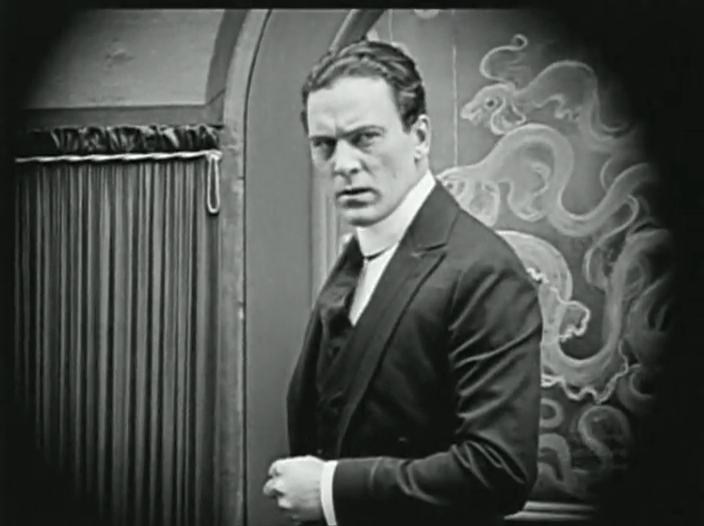
Theodore Roberts is shocked, shocked I tell you!

Back to the film…. everyone has written Lulu off – destined for spinsterhood and chained to the household chores. Lois Wilson is a revelation, emoting in an understated way and carrying a lot of subtle meaning. This is the only film I’ve seen her in and watching it for the second time – the first at an excellent Kennington Bioscope weekender in the before times – you appreciate more of the seamless directorial skill and Wilson’s ability to hold not only the narrative but our belief together. She gives her character strength and the willingness to repay her light-hearted and inconsiderate oppressors the benefit of the doubt. Driven by duty and her own sense of honour she’s also just waiting for an opportunity to re-join the World outside the kitchen.


Dwight sets the tone but Lulu’s half-sister Ina (Mabel Van Buren) does nothing to help her, not so much a wicked stepsister as a lazy one. Their mother, Grandma Bett (Ethel Wales) is no better, dodging her duties as easily as she deflects Dwight’s supposed dominance, usually by stomping off out of range. The Brett’s two daughters also have their own techniques for avoiding the bully’s blasts, youngest Monona (Mae Giraci) is far too quick for the old man, feigning deafness and fading from view when it suits whilst Di (Helen Ferguson) is the apple of his eye, being, unlike her spinsterish aunt Lulu, eminently marriable. The only problem is that Dad has eyes on more socially advanced suitors than Di’s boyfriend Bobby Larkin (Taylor Graves).


Lulu listens intently to tall tales

Lulu has to suffer a thousand unkind cuts from Dwight, she’s both relied upon to cook and clean whilst at the same time blamed for being too useless to get married. It’s no joke but never say never… Lulu’s chance comes in the unlikely form of Dwight’s likeable blow-hard of a brother Ninian (Clarence Burton) who returns from a supposedly action-packed World tour and regales the family and their friends with stories of daring do. Lulu is by this stage transfixed after Ninian shows her just the slightest kindness yet even this is inspired by the family friend, teacher Neil Cornish (Milton Sills) who is the one to ask where she is and looks on in despair when Lulu swallows the big fat fibs.


Ninian takes Lulu, Dwight and Ina for a meal and makes a joke of asking her to marry him by slipping a cigar band around her figure as she jokingly promises to honour and obey. Only trouble is, Dwight’s a JP and, therefore, they had accidentally had a proper ceremony and are now man and wife. Ninian’s up for giving it a go and Lulu takes the chance too, feeling there’ll be no other.


She moves in with her “husband” but a few days later he reveals that he’s already married to a woman who left him years ago and whilst he’s not sure is still alive, there’s a big chance she will be. That’s big of Ninian and it’s also big of Lulu that she puts principle first and reluctantly returns “home”.


Milton Sills ain't fooled

Now things really kick off as she discovers the house in a mess and the family bickering over chores… you’d think they’d be pleased to see her but no, she’s putting Dwight’s reputation at risk and has to accept the blame and the ignominy of being rejected by her husband after just one week. Yet Lulu discovers new depths: “The only thing I’ve got left is my pride and you’ve got to let me keep that…” and she works upwards from there.


There are superb performances not least from Theodore Roberts who would have been a shoo-in for Best Cigar-Chomping, Blood-Vessel-Busting Oscar had they been invented at this point, whilst Milton Sills is a steadfast lead with future salvation written all over him. But it’s Lois Wilson who wins out and she’s great value for a story that makes it’s point without getting too improbable of tiresome… we’re all for Lulu and, as the poet said, you’ve got to hope for the best and that’s the best you can hope for and Lulu Betts does not disappoint with an uplifting ending that blows the roof off!!


The film is available on Blu-ray from Grapevine and is online too if you peruse YouTube. Great to see it getting this screening in London though.


Tuesday, 17 December 2013

“Ready for my claws-up, Mr DeMille…” Male and Female (1919)


So much to admire about Cecil B. DeMille and so much to lay at his door...

A highly-gifted director, he created America’s first feature The Squaw Man in 1914 along with the adult sophistication of The Cheat a year later. He seemed to effortlessly create good-looking, seamless stories yet he found out what he thought audiences “really” wanted and started to give it to them – the first director to sell out or the first director to just cash in.

Amongst his key themes were an unashamed focus on his female leads coupled with a penchant for historical epics that enabled the depiction of less inhibited times and, simply put… less dressed times.


Gloria Swanson, Thomas Meighan and Lila Lee
Male and Female is an early template for this approach and there are clear comparisons with his later work… In 1932’s The Sign of the Cross it’s Claudette Colbert famously bathing in goat’s milk (it’s not pasteurised…it barely goes past her chest!) whilst here we have twenty-year old Gloria Swanson alone with just a few maids and a couple of cameramen in a giant and completely gratuitous sunken bath.

Gloria and Claudette take their baths
The later film has an extraordinary escalation of savage punishments with alligators and then gorillas moving in on bikini clad Christian girls tied under logs whereas Male and Female has the famous scene with La Swanson at the mercy of a lion: the no doubt heavily-drugged beast, just about capable of laying its paws on her unclothed back…

Scantily clad and in animal peril...1932 and 1919
Now, this is all very thrilling but is it good, honest film making or just the first major steps in the development of Cecil’s cinema of exploitation…?

Male and Female is an adaptation of JM Barrie’s highly successful stage play, The Admirable Crichton from 1902.  One feels that the themes of class and entitlement examined by the play’s dislocation of the “natural order” were played down in DeMille’s film… starting with the re-titling – “now, why didn’t I think of that…” Barrie sardonically commented.

The admirable Thomas Meighan
Never-the-less, things start well enough as DeMille shows the pampered household of Lord Loam (Theodore Roberts) and Lady Agatha 'Aggie' Lasenby (Mildred Reardon) and her family as they start their day: shoes cleaned, room service, maid-assisted bathing: all mod cons.

Holding this all together is the head butler, Crichton (Thomas Meighan) a man of supernatural calm who most assuredly knows his place and that of his staff. In spite of this, Crichton hankers after the affection of young Lady Mary Lasenby (Gloria Swanson) who, inspire of her indolence and high-level airs, has an allure the seasoned servant cannot resist – is this a crush based on position or can there ever be anything more for them… as people and as a man and woman.

Lila Lee and Crichton's shoe...
This situation is mirrored by the crush the young scullery maid, Tweeny (Lila Lee) has on Crichton…. He is out of her reach, devoted to the family and to one member above all others.

How the attract such devotion is hard to fathom as Lady Mary is rude and exacting, her cousin Honourable Ernest 'Ernie' Wolley (Raymond Hatton) is a wastrel and even her intended Lord Brockelhurst (Robert Cain) seems more interested in other women… almost all of them. Clearly Mary could do better… but how? These people seem the victims of their status almost as much as the people in their service.

Go on a boat?!
Someone has the bright idea to go on a cruise and they take their servants and other possessions with them. All is going swimmingly for a while with the toffs actually fairly bored by the rigours of the wider ocean… But all this changes as the ship is driven onto rocks by a distracted sailor and so begins the fight of their lives.

The family manage to escape to a desert island (in reality, just off the coast of Santa Barbara) where Crichton soon proves his worth, much to the chagrin of his betters who cannot see why he feels so empowered – he may be able to start fires and build shelter, but they’re still “paying his wages” aren’t they?

Gilligan's Island!
Crichton immediately realises that the party has little chance of survival unless he takes charge and helps them. After some initial indignation, the family are forced to fall in as they realise the real dangers of their new world. Thus society becomes inverted and Crichton becomes their lord and master.

 
Whether this Orwellian turn-about was in Barrie’s original play, I’m not aware, but it feels slightly at odds with the deference and respect he has otherwise shown the family: to suddenly start squad bashing and bullying them – even for their own good – seems like power has gone to his head.

Never-the-less, the new alpha male, finds himself the centre of attention as Tweeny and Mary compete for his affections… Lord Brockenhurst is a long way away…and up to no good anyway with a maid re-employed from Loam's household.

What's good for the goose etc...
Crichton has a fantasy which he now shares with Mary that he had been a Babylonian king in an earlier life and she had been a Christian slave. DeMille gladly takes us back to the brutality and opulence of this imagined time and even throws in some lions and a young Bebe Daniels for good measure.

Things don’t end well for the slave girl Mary and this is a guilt Crichton feels he still carries with him: now is his chance to put things right.

Swanson, Bebe Daniels and Meighan in Babylon
But, just as it seems that Mary and Crichton will become the island’s first couple wed in a Christian ceremony, a boat is sighted and his own expertly-constructed coastal fire alarm brings their rescuers to them…

Back in Blighty, will Mary stay true to Crichton once he is relegated to his old post and, more to the point, will he still feel it appropriate to marry this woman so clearly above his station.

The ending is not what you might expect but that’s maybe more down to the play than the film! I won’t give it away… it’s still an interesting premise.

Back to life...
In spite of DeMille’s sheer “obviousness” it’s difficult to entirely dislike his work at this early stage. Things were gentler than they ended up in later works and there is an interesting message in the work he chose to adapt even submerged beneath his populist embellishments.

It’s also worth mentioning Gloria Swanson who gives the kind of performance that made her one of *the* stars. Here at twenty I found it hard to reconcile her with Norma Desmond but you watch Teddy at the Throttle and her other earlier shorts of the post-war period and you start to understand her abilities. Maybe not as funny as Mabel or as energetic as Mary, she, never-the-less, brought her own unique sensibilities.


Her eyes were incredibly expressive and she was a demure clothes horse when she chose to be. She also has an intelligence that unpins her performance and a slightly quirky beauty which helped her to stand out. Was she well served by Mr DeMille? Certainly in this film she stars and her bravery in pushing on with the lion scene – in spite of his misgivings (reverse psychology?) – deserves respect.

Did it add much to the story? Probably not, but certainly did to the spectacle… no one ever lay down with a live lion!

Male and Female is available from  Amazon on its own as part of the Swanson box set. This also includes a number of her shorter comedies and excellent new scores all round.