Showing posts with label Olga Tschechowa. Show all posts

Saturday, 14 March 2020

Sad songs mean so much… Tatjana (1923), with John Sweeney, Kennington Bioscope


Ivan, they want to murder Boris! For God’s sake help!

Michelle Facey introduced the film she had found in the BFI National Film Archive and explained how, literally, one, or in this case, two things, had led to another. Firstly, the Bioscope’s screening of Asta Nielsen’s first film Afgrunden (1910) also starred Robert Dinesen, who went on to direct and star in this film and also to direct Claire (1924) – screened at the KB in 2019. Secondly, Tatjana’s mesmerising star, Olga Tschechowa, who was to later become involved in a plot to kill Adolf Hitler, also featured in last year’s screening of Ewald André Dupont’s Moulin Rouge (1928). Looking for more of their work, Michelle came up with this film which not only still existed but lived not too far away deep in the stacks over in the BFI’s Berkhamsted repository.

There is virtually nothing about the film online and, indeed, Michelle’s initial reference came from an advert in Close Up magazine’s September 1928 issue for the Shaftesbury Pavilion, “The Home of International Film” which, along with screenings for all the latest continental hits, such as the recently restored but rarely screened, Saga of Gosta Berling included a feature entitled He Who Covets, the English title for Tajana.

Digging further, a copy of the Bioscope magazine was found in the Cinema Museum archive, which included a review of Tajana, a film, the reviewer felt, that would have a strong appeal at melodrama houses. And, here we were!

Olga Tschechowa in F W Murnau’s Schloß Vogelöd (1921).
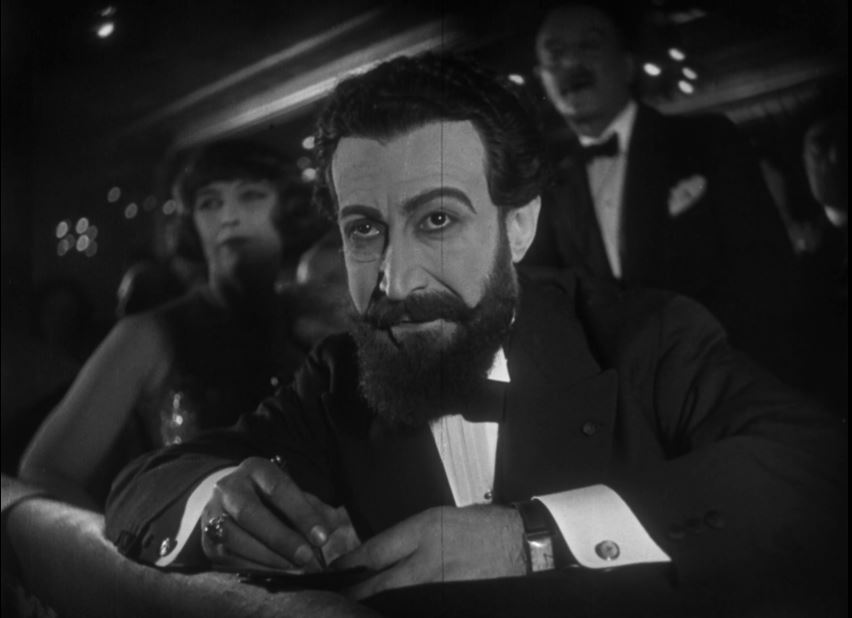
Tajana is a skilfully made tale of love and obsession during the turbulence of the Russian Revolution. Its structure is unusual, starting off in the smart part of Copenhagen, with the death of a well-to-do man, Ivan Gorykin (Paul Hartmann) found slumped at his desk in the morning by one of his servants. His wife leaves a note which leads to a flashback as the whole tale is unravelled to catch up with this mysterious moment.

We’re back in Tsarist Russia and in the house of Count Schuwaloff (Leopold von Ledebur) and his daughter Tatjana (Tschechowa) who is engaged to Prince Boris Orloff (Dinesen). The intertitles are in English and so a lot of the pronouns have been anglicised for those checking IMDB…

Schuwaloff has lost his patience with the son of one of his loyal servants, Anna (Maria Peterson), Ivan, who is too distracted by revolutionary theory to apply himself to the kinds of study the Count feels is worthwhile. The old man is quite right to be concerned because not only is Ivan a revolutionary he is also dead set on winning Tajana’s heart, even when she makes it quite clear to him that she only has eyes for Boris. She pleads with her father to carry on funding Ivan but Boris steps in to pick up the tab only for Ivan to show his gratitude by pointlessly pleading undying love to the revulsed Tajana.

Robert Dinesen
The years pass, Tajana and Boris marry and have a child whilst Russia edges ever closer to revolution. Ivan is one of the leading lights and like any bad Bolshevik decides to use the upheaval to further his own romantic agenda. He devises a plan so self-serving and cunning that even the most selfish fox might reject it as too complex and, well, he appears not to have a thorough understanding of Marx’s political philosophy, so it looks like Tajana’s old man was right about the wasted education.

The day will soon be here when we force these nobles to their knees…

Ivan arranges for the local peasantry to be both drunk and deceived, arranging for them to attack Boris and Tajana’s home whilst at the same time using his mother to provide them with an escape route straight into his arms. He pretends to help both escape, leading Boris into a trap at the border and hoping to use his supposed bravery to finally win over his suddenly isolated and devastated wife.

As plans go it underestimates the human details but when he tells Tajana that Boris has been shot by border guards, he becomes her only refuge amidst the revolutionary anarchy. Her Boris is gone and will she never hear the Chanson Triste – possibly Tchaikovsky’s Chanson Triste (Op. 40 No. 2) from 1878 - that he used to play for her, ever again?

Carl Drews’s cinematography makes the most of some marvellous snow-scapes especially during the attempted escape and the print looked splendid considering it’s possibly not been screened since its original release.

Paul Hartmann looking like an instense revolutionary in a publicity shot for something else entirely
John Sweeney is, of course, very much your man for the Russians and wove splendid dramatic and romantic lines through the web of revolutionary intrigue. He hadn’t seen the film – who had? – but he was, of course, spot on when the chanson was called upon to be très, très triste!

John was on duty for the first half too and again showed his range of quality improvisations accompanying the compilation of colourised shorts mostly shown from film.

The first two were from Bob Geoghegan’s collection, Interesting Incidents from Here and There (1916) a travelogue sadly missing the first section in London but still fascinating, and then a mild romantic comedy Une mésaventure de François Premier (1912) in which the lusty monarch tries, and fails, to have his wicked way with the wife of one of his nobles all in lovely Pathe Colour. Royalty eh? They’re nothing but trouble, just ask Ivan.

Not so simple, Simon. Ernest Bourbons screen shot courtesy of Movies Silently
There was another splendid travelogue on 35mm this time from Tony Fletcher’s collection and covering Russia in around the same period as our main film, followed by another tinted print, a French comedy called Onésime vs. Onésime (1912) (Good Simon, Bad Simon). Here forgotten French clown Ernest Bourbon plays Good Simon who tries to rid himself of his bad double with plenty of laughs and smart camera trickery to follow. There’s a review on Fritzie Kramer’s peerless Movies Silently site and it includes One of the Greatest Puns in Blogging History so you must check it out!

Both Simons were courtesy of Christopher Bird’s collection and so he along with Bob and Tony prove the worth of private collections alongside institutions like the BFI, in preserving the almost lost corners of early film. Credit too to the Bioscope which continues to provide an opportunity to see these rare gems screened and accompanied as cinematic nature intended.

Thursday, 12 December 2019

Come to the cabaret… Moulin Rouge (1928), with Meg Morley, Kennington Bioscope


Well now… this was a slow-cooked pot-boiler with two hours and ten minutes of gently simmered passion play, expertly filmed and performed, especially by the extraordinary Olga Tschechowa, and all filled out by Meg Morley’s improvisations in heart-rending minor keys. The challenge was not so much the sheer amount of ground to cover musically but the pace at which things happened and Meg took it all in her stride from massed showgirls on stage to life or death car chases and hearts breaking in slow-motion – almost eternal triangles. It was a perfectly pitched performance and the extended applause from a packed Bioscope was as much for Meg as the film; a cracking end of year show.

Michelle Facey introduced us to the main players behind the scene with her trademark thoroughness and penchant for juicy titbits; I knew that Olga Tschechowa had known Adolf Hitler but what I didn’t know was that she was a Russian spy tasked with his murder. Based on her display in this film, she looks more than capable with a fearless performance both as a dancer on stage and also in terms of her ferocity. She commits to every dark turn and not in a melodramatic way but with convincing passion.

Olga Tschechowa
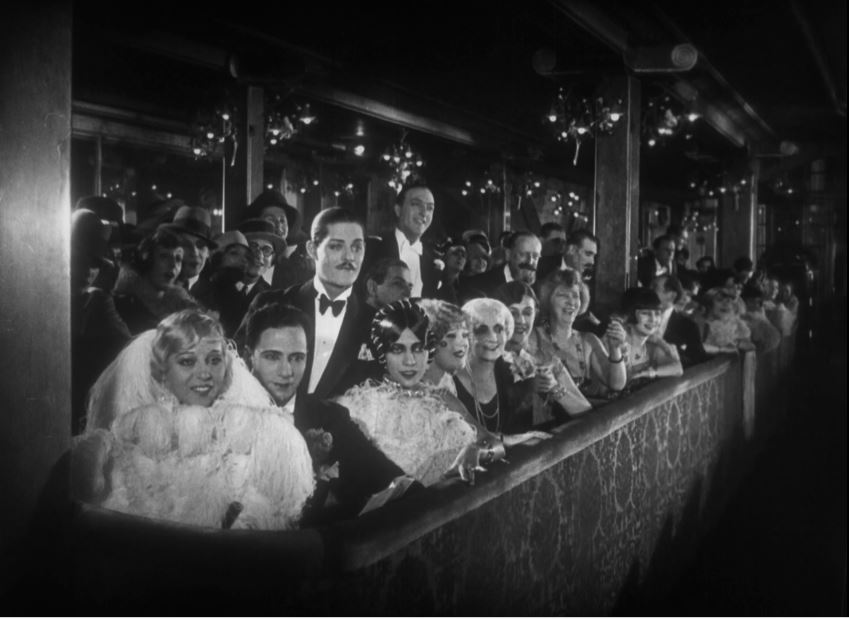
Ewald André Dupont – director of The Ancient Law (1923) and Variety (1925) - wrote, produced and directed with his debut film in Britain and brought his ability to capture performance especially in the long opening section showing acts at Paris' grand Casino de Paris standing in for the Moulin Rouge – it’s a full 27 minutes before we really get to the characters interacting.  The film's detailed scenes was shot in Elstree but there are plenty of exterior night shots showing the illuminated locations in Paris and the interiors shots show thoroughbred comtemporary performers in the Casino. 

Dupont sets the scene so well with so many mini dramas, a man trying to decide between two prostitutes, another selling dirty postcards, the audience watching the show and each other and the spectacular acts on stage. If nothing else, Mouline Rouge is a superb snapshot of French musical hall entertainment featuring so many acts - dancers, actors, singers and snake charmers who otherwise would only be found on palybills and mentioned in reviews.

Un-named cabaret contortionist
Tschechowa stars as Parysia the main attraction at the Moulin’s cabaret and one can easily see why in her eye-popping costume and with her natural poise on stage during so many West End professionals. She has a daughter, Margaret, played by Eve Gray who had a short role as a murderee in The Lodger and she’s not the only one from that film as an uncredited Marie Ault turns up late in the film as a backstage helper trying to restrain an hysterical Parysia.

Margaret has been away at expensive finishing school and turns up to see her mother perform after four years away. With her is Andre (Frenchman, Jean Bradin, who was in Prix de Beauty with Louise Brooks) the son of a wealthy father (Georges Tréville) who, naturally does not approve of the relationship given her mother’s career.

Watching Mother on stage: Jean Bradin and Eve Gray
Andre is immediately star-struck and buys a programme featuring lots of pics of his girlfriend’s Mum, for a man about to marry his love he does seem easily distracted by Parysia’s more overt sexual presence but he falls hard and the complications begin.

As Michelle pointed out, Gray was only three years younger than Tschechowa, but the two make the relationship believable even though Olga was only 31, she carries it off and there’s one memorable scene in which, face covered with cream she stares horrified at her aging face in the mirror… that’s acting my dears! Dupont juxtaposes this with Andre lying in bed and reading the programme he bought, lusting after her provocative photographs just as she doubts her aging appeal and giving, quite possibly, a whole new meaning to the phrase jazz-age mags.

What the face cream won't hide and Andre's magazine heaven
Wanting a better path through life for her daughter, Parysia goes to visit Andre’s grumpy old Dad in the hope of persuading him to sanction the marriage. She succeeds after he sees she has left behind a possibly incriminating handkerchief – I probably missed the significance – and he writes confirming his decision just as Parysia’s about to lie about it.

But it’s then that she is shown Andre’s true feelings as he bows down kissing her hand and offers to marry her instead. Parysia parries his proposal and tries to get the marriage arranged as soon as possible in order to make Andre focus on  her daughter but he’s not one to be easily swayed and potential disaster awaits as he looks at ill-advised and dangerous ways of maintaining honour… the kid needs a good talking to, and just perhaps, his first exposure to more overt sexual expression has confused his uptight bourgeois libido?

Andre reveals his true feelings...
The story is very slight for a two-hour film but it works through the strength of the main players and because of the cinematography of Werner Brandes who captures some fantastic images throughout from smoky music halls, to extreme close-ups. Brandes is adept at catching faces and the captured reactions of the extras in the theatre would be hard to edit away as they really show the most important part of cabaret culture. Apparently, Ray Milland is one of the audience members although I didn’t spot him.

There’s also superb art direction from Alfred Junge who would end up working with Powell and Pressburger on I Know Where I’m Going, A Matter of Life and Death and Black Narcissus.

It was a smashing end to the year for the Bioscope and another film that shows the strength of British silent film, especially when it collaborated with European talent. It was enlivened by Meg Morley's superb musicianship; she has a real feel for jazz-age narratives and played tirelessly for this Moulin Marathon! 

Cheats! There's 38 of you and Meg did it all on her own!
Moulin Rouge is available on Network Blu-ray and DVD, complete with John Reynders score which I believe was written for a shorter version? It runs the full 127 minutes and so 120 edits were made gto make the music fit. Either way it’s a visual feast and well-worth asking Santa to add to your stocking this Christmas.

And now for a visual postscript for your delectation...

One audience member goes from stalls (4th from left) to stage... the performers obviously keen to be extras too!
An artist is inspired... any resemblance to Lautrec is intentional
Andre daydreams of kissing the other woman...

See! It's Marie Ault!

Saturday, 14 December 2013

La règle du jeu… The Haunted Castle (1921)


Looking for clues to later Murnau expressionism one might be slightly disappointed by his 1921 psychological drama The Haunted Castle (Schloss Vogelöd) but that’s not to say it’s not a well-made and entertaining film.

By this stage Murnau had made seven features over a breathtaking two years, all but one of which have been lost, the survivor being Der Gang in die Nacht (Journey Into the Night)released in early 1921. The Haunted Castle is the earliest film commercially available and it is not as expressionist as the wonderful promotional artwork suggests. A true virtuoso can play in many styles and it wasn’t compulsory to paint the scenery wild, madden the camera angles and move the walls around.

Lothar Mehnert
All this aside, The Haunted Castle is a compelling if slightly drawn out mystery which sustains a genuine unease throughout. It is presented almost as a play, split into five parts and filmed largely on rather grand interior stage sets, expertly designed by Hermann Warm. It’s a house of mystery and the mystery in question is who done it and why?

The autumn hunt on the estate of Lord von Vogelschrey (Arnold Korff) has been ruined by rain and his guests are gathered restlessly in the castle waiting for a break in the weather.


The great and the good are gathered but there has been one notable exception, Count Johan  Oetsch (Lothar Mehnert, who still intimidates the viewer across the decades…) who has not been invited as suspicions persist that he murdered his brother three years earlier. To everyone’s discomfort he has the bad form to show up anyway… this is going to be awkward.

Still, at least Germanic conventions just about permit such behaviour; not sure how well he’d fair at Downton Abbey…

The uninvited...
But as the guests gossip at this outrage, further unpleasantness is inevitable as the Count’s former sister-in-law, Baroness Safferstätt (Olga Tschechowa, Anton Chekhov’s niece don’t you know…) is due that evening along with her new husband, Baron Safferstätt (Paul Bildt).


They arrive and are just about persuaded to stay by von Vogelschrey’s wife, Centa (Lulu Kyser-Korff) who informs them that her deceased husband’s relative, Father Faramund is returning from a long sojourn in Rome: he is someone she must see and, as it transpires, not just out of familial affection…

The night draws on and Count Johan continues to act in a strange way. The next day the rain has cleared and the men troop out in search of game only to be driven back by a further deluge but the Count, saying he prefers to hunt in the storm, sets out on his own…


That evening the Father arrives from Rome and is greeted by the Baroness who is shaken by this reconnection with her husband’s family: she begins to unburden herself. But, as she asks for the Father to come and see her later that evening it seems he has completely disappeared.

Count Oetsch, still absent on his mad all-weather hunting, is naturally installed as suspect-in-chief.

Not yet Count Orlak!
As tensions run high the most anxious of the guests (Julius Falkenstein) has a vivid dream in which a shadowy clawed hand appears in his room and starts to drag him out… this is the closest we get to Count Orlok…

But the film’s concerns are more earthly and the Baroness has already begun to reveal the circumstances of her marriage to Count Peter Oetsch (Paul Hartmann) who had developed a religious mania and neglected his wife and pretty much everything else in the pursuit of purity.

Paul Hartmann and Olga Tschechowa
Now, as the guests try to maintain civility, his Count Johan accuses Baron Safferstätt of being his brother’s real murderer. This is swiftly followed by the Baronesses counter claim that Johan was still the man… and you begin to realise that all is not at all as it seems…

But, I must say no more, for fear of exposing the shocking truth at the end of this tale…

Picture paints a thousand...
Murnau directs with control and this castle is still creepy even if the horrors in store are all too human. If the film means any more than the tale it tells then perhaps it could be intended as a critique of the German landed classes, still pursuing idle pastimes as the post war economy descended into chaos… on a simpler level The Haunted Castle could foreshadow Renoir’s more direct La règle du jeu?

There are marvellous turns from Lothar Mehnert – who manages to be whoever you assume him to be with uncanny ease – as well as Olga Tschechowa who has to bear the majority of the film’s emotional extremes. The men are tame in comparison: either too timid in one case or, mostly, too restrained – all too ready to jump to the easiest conclusions.


I watched the Kino edition DVD which appears to have been slightly surpassed in quality by the Eureka Masters of Cinema release - available from MovieMail. That said, it’s still decent quality and is greatly enlivened by a score by one Neil Brandt… is that a Kino-typo?!