Showing posts with label Clive Brook. Show all posts

Monday, 7 April 2025

Seriously silent... 8th Kennington Bioscope Silent Film Weekend, Day One: The Grand National


It’s spring, there’s a bright golden haze on the meadow and the tariffs are as high as an elephant’s eye yet we forget all such things as those who seek to learn from history gather in the leafy comfort of the Cinema Museum for two days of hot media – even more silent cinema rediscovered, England’s very hip festival, le piccolo Pordenone… Le Giornate, Del Boy, Cinema Muto… Down Lambeth Way, Oi! And, not a moment too soon!


How easy it would be to take these as cinematic comforts, rather than the expression of enlightening entertainment it really is.  You know immediately from the buzz that this has been the work of months for the KB’s crew of passionate film historians, archivists, collectors, technicians, projectionists, pianists and caterers… This is Silent Serious, it means more and more with each passing year and – with a blast – it’s the eighth edition and history is making more history with every year: we learn more, we see more. Over just two days, nine features and many dozens of shorts, live music, live cinema, with so much celluloid, really rare and unusual. Precious time spent with the Masters of Cinema and Cinema Appreciation.


And yes, the coffee is great. I woke up, smelled it and drank too much, as you can yell.


Ivy in a frock, Guy wearing the trousers.

Boy Woodburn (UK 1922) (35mm) with Cyrus Gabrysch, introduced by Lawrence Napper


No need for artificial stimulation with Ivy Duke and Guy Newall on screen though… well more Ivy than Guy anyway.  This was the first of two precious British films from this most unfairly maligned period of domestic cinema and there’s no greater defender than King’s College’s Dr Lawrence Napper who detailed the background to the couple’s stellar career and the films that established them as a top-drawer attraction in this country.


Lawrence recalls talking to his grand-mother about her memories of British film and she made the comment that “they always doped the horses…” and this was indeed true in the 40 or more equestrian dramas of this period including this one, featuring a thoroughbred dubbed A Pound a Leg 2 by Ivy’s character, Boy Woodburn, after she advised her father “Old” Matt (A. Bromley Davenport who affects the oddest stance...) that’s what his mother was worth when she was offered for sale by a friendly Romany Traveller (in modern parlance). The horse, subsequently named A Pound a Leg, was already pregnant at the time and died shortly after birth leaving Boy to raise the foal with the aid of one of her father’s jockeys and a goat.


Point of order: did you know that horses frozen with fear by, say, A Fire, will often follow a goat out of danger? Just mentioning it in the event it ever comes up.


Anyway, horse grows up fast and strong and very attached to Boy. Local rivals and bookies – not professionals like but looking to cook the odds – are keen to derail the challenge and all sorts of reprehensible things happen in the name of “competition”. During the course of all this Boy becomes enamoured with local landowner Jim Silver (Guy who also directs). Lawrence quoted contemporary critical opinion, which was pretty much spot on, some great scenery and cinematography but the story is a little off the pace. Still Ivy does, as advertised, look fab in men’s jodhpurs and it’s a spirited affair which, for me, did actually verge on the thrilling towards the end.


Today was the 177th Grand National day and so this was great programming whether intentionally or not, with its big set piece at the actual 74th Grand National in 1922. This was won, after two false starts, by Music Hall at odds of 100/9 and attended by various of my grandparents, just a short bus ride from Kirkdale but the others would have had to change at The Black Bull on route from Wavertree.  Not to make this all about Liverpool, but you could see The Sefton Arms public house, now renamed The Red Rum Bar & Grill, as well as where my mate Mark lived off the main road into town… Anyway, the race in 1922 looked chaotic as ever with a number of fallers at Becher's Brook as you’d expect. A lot less safe for horse and rider in those days. For the fictional winner, you really have to watch the film!


Gene Gauntier: actress, writer, producer, director...

Actresses from the Teens Presented by Dave Peabody, with Meg Morley


This section was the result of a deep dive into the careers of women who broke new ground and yet who are largely overlooked a century later – certainly not any longer.


Gene Gauntier was a dynamo who wrote, acted and directed working extensively with the Kalem company before establishing her own `Gene Gauntier Feature Players in December 1912. She scripted the landmark feature, From the Manger to the Cross (1912) and also starred as the Virgin Mary one of 87 film roles and 42 scripts. She left the film industry aged just 35 in 1920 later siting the “new ways” film was being produced by a more corporate system, “…after being master of all I surveyed…” she told Photoplay in 1924 (you can find the full interview on the Internet Archive here).


We saw her in The Lad from Old Ireland (1910) directed by Sydney Olcott and filmed on location in Cork after the Kalem company became the first American studio to set up a unit in Ireland. Olcott plays the Lad who goes off to America to make his fortune leaving his sweetheart Aileen (Gauntier) behind to an uncertain future. It’s probably the first film shot on two continents and you can find it on the IFI Archive Player. The locals dubbed the enterprising American show folk,  the “O’Kalems” … but of course they did!


Ethel Grandin was another former stage actor and an early star of Carl Laemmle’s IMP company who, with cinematographer (and her future husband) Ray Smallwood, was taken to California by director Thomas H. Ince before returning to New York to star in George Loane Tucker’s sensational Traffic in Souls (1913). We watched her in a ten-minute extract from Francis Ford’s The Invaders (1912) which featured a mix of genuine native Americans, actors brown-face and the settlers under attack. In many ways a far more complex and nuanced film than some modern thought might allow in the United States.


Laura Sawyer was a former Shakespearian actress who joined Edison in 1908 under the direction of J. Searle Dawley before moving on, five years later, to Famous Players. We saw her in A Romance of the Cliff Dwellers (1910) which was filmed on location at the historic Manitou Cliff Dwellings in Colorado which date back 800-1000 years.


Jane Wolfe, was another Kalem star and we saw her in The Mexican Joan of Arc (1911), directed by George Melford and which sees her impress as an action hero as well as horsewoman. Undoubtedly talented, she’s also notable for being a follower Aleister Crowley’s religious order Thelema. The Great Mage was so influential on many generations of drug-taking mystics, seekers and rock stars – Jimmy Page of Led Zeppelin bought his former house Boleskine wherein various rituals were performed. Do what thou wilt shall be the whole of the Law, was the central tenant of Thelema but Wolfe was to return to education and supporting film culture.


Sadly, there was so much to tell and show that we weren’t able to discuss the 5th Muse, Anna Q. Nilsson a Swedish-born actress who Dave said afterwards had paved the way for the influx of Swedes. Hopefully we will return to the subject and get to watch her – and the beguiling Miriam Cooper – in The Confederate Ironclad (1912) one of many American films reflecting on the Civil War as it was still in living memory (c.f. too The Invaders…).


Gösta EkmanKarina Bell,Fritz Kortner and Diomira Jacobini

Revolutionshochzeit/The Last Night (Germany 1928) (digital), with Stephen Horne, introduced by Dave Glass


First and foremost, we admire the courage of the scriptwriter and the producer for making this film without hesitation. We say this because the film does not have a happy ending…

Raul Quattrocchi, Kines (n.10, March 17th, 1929)


This was an intense and uncompromising film featuring beautiful leads and Fritz Kortner who is simply fabulously revolting as the greasy-haired, unkempt and uncouth revolutionary Montaloup, an administrative official of La Revolution who must sign off on who comes and who goes, who lives and who dies…


There are no easy choices to be made by the players in this film and ultimately, duty and love are the purest of motives and the hardest choices imaginable. It’s a quietly devastating film with light and considerable shade provided by the marvellous Karina Bell as Leontine, loyal servant to Lady Alaine (Diomira Jacobini) who must escape from Paris to marry a royalist officer, Ernest (Walter Rilla) who makes a daring return to France for their ceremony. Dashing captain Marc-Anton (Gösta Ekman) meets the women as they swap roles knowing that Leontine is the better “negotiator” and helps persuade Montaloup to give them a pass out of Paris.


Marc-Anton knows that his troop will soon be following the women to the country and sadly they arrive at the same Chateau just in time to catch the bride all in white and the groom making his escape. Montaloup signs Ernest’s death warrant but allows Marc-Anton’s plea that he should at least be allowed his wedding night before facing death at 06.00. But Ernest cannot live in the few moments he has left and Marc-Anton helps him escape only to be sentenced to the same fate… what follows next is a meditation on the nature of love and duty as the Captain and the Lady love for what is left of life.


Adapted from the 1909 novel by Danish writer Sophus Michaëlis and directed A. W. Sandberg I’m surprised this film is not screened more often – a rare treat with Stephen Horne on fine form joining the dots between our thoughts and the actors’ expressions.


World Premiere of the new Nasty Women full programme, Breaking Plates and Smashing the Patriarchy, with Colin Sell, presented by Michelle Facey


It was one exclusive after another with the World Premiere of a raucous new programme from the Physical TV Company, who gave us Cinema’s First Nasty Women. Breaking Plates and Smashing the Patriarchy (or Nasty Women II – Even Nastier as literally no one is calling it) includes ten short comedies from 1903 to 1913 that show just how forthright and iconoclastic women were in early cinema, a period in which they were allowed a creative freedom rarely seen since by the still-forming new media. This was proceeded by an innovative 25-minute documentary which showed modern women connecting with their forebears via something like a time-telephone, cutting away to shots of Texas Guinan or Leontine in silent connection with their revolutionary spirit. It is a conversation between past and present and a call to keep free running all over the stale males still in the way of progress… some of whom are indeed nastier than ever.


Colin Sell accompanied and even had to stifle a laugh or two such was the chaos: smash the patriarchy not the piano players!


Billie and Clive

The Yellow Lily (US 1928) (35mm) with Ashley Valentine, introduction by Liz Cleary


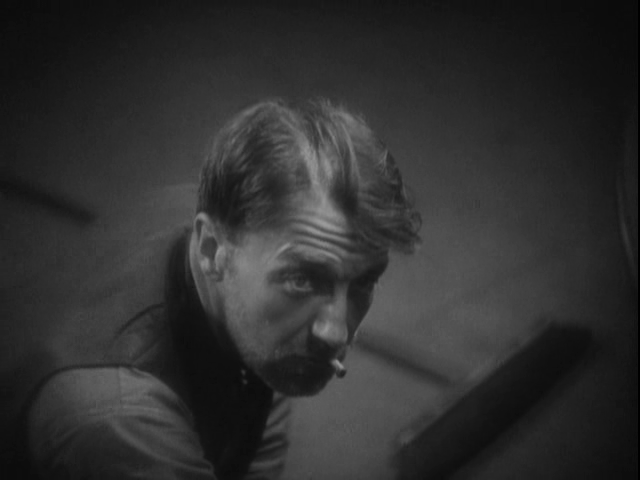
Liz Cleary gave a thoroughly researched and entertaining introduction concerning her finer feelings towards the chisel featured Clive Brook. At Pordenone and then Hippfest, audiences have been impressed with his smooth intensity as Heliotrope Harry Harlow in Forgotten Faces (1928) and here was a chance to watch this Rolls-Royce purr again as the rather more distasteful Archduke Alexander, a playboy prince for whom even the elegant Jane Winton’s Mademoiselle Julie isn’t enough.


The duke is arch alright and instructs his head of household Kinkelin (Gustav von Seyffertitz here more sympathetic than his usual unsettling…) to keep poor Jane away as she is boring him. As his party of noblemen proceeds, Julie sings in one last effort to woo him back only to be rebuffed and to – apparently – drink poison. Unimpressed Alexander cruelly dismisses her even as some of his party rush her to the local doctor (Nicholas Soussanin), he pursues, sure of her deception as women, apparently, will not die for love… In this case he is proved correct but he’s immediately distracted by the Doctor’s sister Judith as played by Billie Dove.


Apart from forever confusing Billie with Bessie, Dove with Love… I’ve not seen her in much and she’s very good here as a spirited moral counter to the fresh prince who is abusive, controlling and toxic. This could have been a much cornier tale of royalty brought down to earth by a good woman but both leads are highly engaging and, as directed by our own Hungarian, Alexander Korda, the film is quite elegant even if Billie looks more likely to be found in jazz age Manhattan than “Buda”.


Ashley Valentine accompanied with variations on a cue sheet including snatches of Rachmaninov and Chopin – some of my piano-playing mother’s favourites - spirited and evocative and very much on theme for this “Ruritanian” romantic comedy. There was also a snatch of the theme song, as Billie Dove dances with our flawed but elegant hero in the royal palace.


Lillian Hall-Davis and Carl Brisson, 

The Ring (UK 1927) (digital restoration) with Neil Brand, presented by Neil Alcock, author of Hitchology


Sadly, I had to miss the evening’s highlight, one of Hitchcock’s silent best accompanied by Neil Brand but this is a good chance to remind you all that you can hear this combination and others on the new Blu-ray box set – Alfred Hitchcock: The Beginning! Available at all good retailers and Amazon.


The same can be said of Neil Alcock’s recent book, HITCHOLOGY: A film-by-film guide to the style and themes of Alfred Hitchcock which is, of course, essential reading.


Sunday, 13 October 2024

Civil Engineering, Module One… Le Giornate del Cinema Muto, Day Eight


And, just like that, it was over but not before a final day with some incredible highs and a desperate search for a restaurant that wasn’t fully booked prior to the evening’s special event. Amidst the cut and thrust of a silent film festival it’s possible to completely forget that tonight was Saturday night and the locals were out for a good time too even if it was strange for us to contemplate: no live accompaniment, just recorded, not always sitting down or, indeed, sitting quietly with outbursts of boisterousness that would certainly concern those she say “shush” in the Verdi balconies.


Each to his own as we say in the patriarchy and we had plenty of energy of our own for Neil Brand’s new score for The Winning of Barbara Worth (1926) which was arranged by George Morton, and performed live by the mighty Orchestra da Camera di Pordenone conducted by Ben Palmer. Giornate artistic director, Jay Weissberg, described before hand how Neil Brand had wanted to score a western and asked him for suggestions and the film he had in mind had been a formative silent screening for him and soon Neil was equally enamoured with this unusual story of civil engineering and the human heart.


At the Kennington Bioscope Kevin Brownlow once revealed that Samuel Goldwyn’s wife had been the Imelda Marcos of silent film preservation. The great mogul had stored all of his films in her closet and, in order to make room for her shoes, she cleared them out except for the ones featuring Ronald Coleman and Gary Cooper. So, we have Mrs Goldwyn and her fondness for these terribly ugly men, to thank for Barbara Worth still being extant!


Vilma Bánky

Despite their physical shortcomings, these two men are two big reasons to celebrate this remarkable film but it also features some of the most stunning cinematography of the era and if you think Abel Gance was impressive in capturing equine movement on frame than check out Henry King and his cinematographers George Barnes, Thomas Branigan and Gregg Toland. Overwhelmed by this biggest of projections we could almost be alongside Ronald and Gary as the sun-baked, sand-drenched, landscape swirls around you in a crystal clear golden-yellow.


And on top of all that you have Vilma Banky… born Vilma Koncsics in what is now Hungary and exported to distract the Yankees as much as she causes both Coop and Ron to lose their focus on business. The film starts like an outtake from Greed as a young woman (Vilma Banky) buries her husband in the sand and then battles to save her daughter from a sandstorm. It’s a brutal and photographed so clearly it could have been made tomorrow. The woman perishes but her daughter, Barbara, is found alive by a Mr Worth (Charles Willis Lane) and grows up to be played by Vilma.


The story then settles into Mr Worth and his business partner/rival, McDonald (Ed Brady) efforts to try to change the landscape by damming the Colorado River in order to irrigate the Californian plains. Coleman plays Willard Holmes who works with the rival whilst Cooper plays Abe Lee, the boy Barbara grew up with. Their romantic rivalry runs parallel to business as the mood gets mean as McDonald refuses to recognise the need for additional reinforcements on the dam… In a film like this that’s never a good sign. This all culminates in the inevitable flood and a terrifying sequence in which the townsfolk flee the deluge with not all making it. Henry King could also martial a cast of thousands and, looking back to 3 Bad Men, this is another classic silent human stampede.


The implications of all this for construction projects is clear in terms of risk management and the importance of senior stakeholder buy-in for completion to full safety and technical requirements. But I suppose the film was mostly about the spirit of enterprise that made the West and the loves of the lovely people who exemplify the best of humanity: civic minded and careful people who try to bring everyone with them in the joint enterprise of society. Sadly, current political systems lack many who are trained in Prince 2 project management and who care to put people ahead of profit.


The score was quite simply huge, with Mr Brand adopting a musical project management of his own in terms of establishing clear objectives for mood and narrative cohesion and meeting every single one in the most joyous and potent of ways. Tonal milestones – deserts, sandstorms, epic landscapes, love, hate and everything in between – were nailed with his schooling in seemingly the entirety of cinematic composition in evidence mixed with his flair for melody. There were rousing themes that pricked the hairs on the back of our necks and we fell in love with simply everyone of the cast but especially Vilma!


As with his other scores, Robin Hood, Blackmail, The Lodger et al, you feel that Neil builds out from the heart of each film, working his way outwards in building a musical structure that not only hangs off the narrative but supplements it. This is the very essence of meeting specification and, with Mr Palmer swinging the baton, the Orchestra Verdi lifted the roof and our spirits. We always hope for such a big finish and, yet again, we got one.


Forgotten Faces (1928) with Stephen Horne


I’ll tell you someone else who always delivers on promise and to spec, and that’s the mercurial Stephen Horne who here delivered one of the biggest musical surprises of the week by “playing” silence during the nail-biting sequence in which Clive Brook’s character leads his mortal enemy and ex-wife as played by Olga Backlanova, up darkened stairs in the moments before she realises who her mysterious guide is… it was unexpected, meta and perfectly timed.


In this well-crafted family thriller, directed by Victor Schertzinger, Olga plays a mixture of the shark in Jaws and Anthony Perkins’ character in Psycho, she is violently over the top and hysterical in every way – the Jack Nicholson of her day! Against this Russian fire-cracker is faced the utterly controlled Clive Brook as gentleman thief “Heliotrope” Harry who, along with his trusted right-hand man, Froggy (William Powell) is responsible for the most principled of crime sprees.


After one precisely-timed raid on a gambling house sees the police arrive almost in time to catch them, Harry returns home to find his wife Lilly in bed with another man as their baby daughter screams in the hallway. He despatches the other man and, realising his jig is up, leaves his baby with a well-to-do couple who he knows have recently lost a child before kindly handing himself in. Froggy keeps tabs on the daughter whilst Harry duly serves his time and she grows into Mary Brian, a fine young woman who he has given the best chance in life.


But, when Lilly tricks Froggy into revealing her daughter’s whereabouts and then taunts Harry in prison about taking her back, he knows he must find a way to stop her. Can he do so without breaking his strict moral and his promise to the prison governor not to harm his hellish ex?


OK, there are holes in this scenario but Brook is terrific, such a measured performer – a Rolls Royce if you will – whilst Olga is Olga. MY eyes may have moistened more than once, heart strings were tugged but on Brook could make for such a charming criminal who is father first and foremost.


Desdemona Mazza, Ivor Novello and Gabriel de Gravone

L’Appel du Sang (1919) with John Sweeney


After our musical Messi and Ronaldo, we also had the compositional equivalent of Mo Salah with the studied elegance of Mr John Sweeney accompanying Louis Mercanton’s tale of love, lies and longing set in Sicily. John’s elegant lines made the most of this film’s spectacular scenery from the island and also Rome, as well as the suitably classic love tangle passing in front of both.


This was Ivor Novello’s film debut and his Maurice Delarey is an odd creation, with even his wife, Hermione Lester (Phyllis Neilson-Terry) describing him as “like a kid”, he’s immature, full of enquiry and lust for life (his grandmother was from Sicily) unlike his bookish other half and they make the most unconvincing of partnerships. Hermione has disappointed her intellectual, much older, “best friend” Émile d'Arbois (Charles Le Bargy aged 62 here) in marrying a man of her age (both actors were 27) if not maturity.


She brings her new husband to the family pile in the hills of Sicily and he spends all his time having adventures with Gaspare (Gabriel de Gravone), one of the family retainers, including night fishing, yomping and swimming… it’s hard not to impose a modern “coded” view of their relationship. Interestingly both Novello and Neilson-Terry were cast to reflect the original author’s descriptions and so the physical mismatch was intentional. Novello looks so boyish and young and when he is in Sicily his Sicilian nature resurfaces, bringing recklessness and compulsive behaviour. All that midday sun for the Englishman – although, lets be honest, he was Welsh.


Hermione goes off to save d'Arbois who is dying in Africa leaving Maurice free to explore further and to fall in love with the fisherman Salvatore (Salvatore Lo Turco)’s daughter Maddalena (Desdemona Mazza) and there’s a beautiful shot of them finally embracing, silhouetted in the half darkness of a cave with the sea behind them. This can not be good though and to add complication, Salvatore is a mad man with easy access to weaponry…


Overall a dreamy film, especially with John’s playing, and worth it for the visuals and early Ivor!


The Red Dance (1928) with Masterclass student Andra Bacila


This film’s approach to history could be said to be exemplified by the appearance of an aircraft clearly not of 1917 vintage but this is the least of its crimes against Russian history. In terms of its treatment of Rasputin, the Boney M pop song, Rasputin, is more historically accurate and the general depiction of white and red Russians as inter-changeable baddies is mind wobbling given the century and more of poor treatment the Tsars had imposed on the populace. Criticise the Revolution and outcomes by all means but there were plenty of reasons for one to happen…


All this aside, Raoul Walsh’s mini-epic is, as you’d expect, full of grand scale and great characters. Dolores del Río as Tasia, a politicised activist determined that people should be able to read after the Tsarist regime bans schooling and arresting her father and shooting her mother on the spot in front of her blackboard and pupils. Ivan Linow plays Russian Bear Ivan Petroff, a likeably roguish army officer who is prone to sexual assault and steaking horses with which to exchange for marriage to Tasia.


Ra, ra Rasputin, lover of the Russian queen is played by Demetrius Alexis, and various other actual characters appear as 2D cut-outs. Talking of which, likable Charles Farrell is the most unlikely Grand Duke Eugene, a Russian toff with a heart of gold who wins Tasia’s heart. It struck me that Farrell is a fine romantic actor so long as he’s with a talented other half and you can add Delores to the list with Mary Duncan and Janet Gaynor in this respect.


Long story short, the stakes are raised when the people revolt and the Cossacks are on the defensive. Now it’s the Trotsky look-alikes and the evil revolutionary leader with a Germanic monocle who are the enemies of the people. This disappoints Tasia who announces that “women’s only cause is love…” and it may be true that love is all you need but this messy lack of faith in governance via tradition of revolution echoes our present plight and, yes, there’s an agitator called Boris.


Excellent accompaniment was provided by Masterclass student Andra Bacila, one of many new and younger faces at this year’s festival. As the BFI’s Bryony Dixon said in her acceptance speech for the Jean Mitri award, the Giornate is a focus for world-wide efforts on film preservation and long may this continue.


And that, m’lords, ladies and gentlepeople, concludes the proceedings from this blog on Le Giornate del Cinema Muto 43! Thank you too all of those who made it happen and who I spent time with – let’s twist again in 2025!!


Grazie mille!!


Friday, 14 June 2024

Call her savage? Hula (1927), Taylor’s Version


"You look like Clara Bow

In this light, remarkable

All your life, did you know

You'd be picked like a rose?"


Clara Bow by Taylor Swift


I have to be honest, I don’t really know how much research Taylor Swift has put into the life and career of our Clara Bow especially when she follows up with a pre-chorus about a small town girl seeing the lights of Manhattan – Clara was a Bronx girl but here is inspiring others be they star-struck young women or the men who wish to exploit them and her. She was a good bet for the money men and the studio system already well set in place and one of the first "sex symbols" opening the way to Harlow, Monroe and beyond.


There are similarities with the music business a century later and a bruising process Swift has seemingly surpassed being even herself the victim of exploitation and bad deals leading to her re-recording a number of earlier albums. Women, then and now are encouraged to be “marketable” and as Taylor’s chorus reveals:


"This town is fake, but you're the real thing

Breath of fresh air through smoke rings

Take the glory, give everything

Promise to be dazzling"


Clara was nothing if not dazzling and as the all-conquering Swift well knows… that’s what you need when you are It! But when you are so dazzlingly The Thing, clearly the business of show may eat you up and it's difficult to draw the exact lines between the stars eventual mental illness which even her wealthy husband was at a loss to contain and her early years in and out fo Hollywood. That said, she was obviously a victim of her success in so many ways but able to walk away at a time of her chosing, movies still doing well, to start her family.


Clara dazzles

Clara came from the slums and, after winning the Fame and Fortune acting contest in 1921, was to become perhaps the pre-eminent sexual star of the twenties in Hollywood making mostly run of the mill films like this one, Call Her Savage or the superior Mantrap (1925) which emphasised her punk energy, wild beauty and not inconsiderable acting talent. Bow was an exceptional “emotion engine” able to shift between happy and deep sorrow, with tears, in a matter of a few frames. Her abilities partly drew on the tragedies of her impoverished background – a friend’s death in a tenement fire being her constant aide memoire for this misery business.


She made around a dozen films a year very few of which could be classified as classics – It (1927), Wings (1927), the afore-mentioned Mantrap and, probably also her first talkie The Wild Party (1929) directed by Dorothy Arzner who was very sympathetic to her star who showed she was more than capable of transitioning to the talkies. At this stage in her career and especially without the foundation of stage training, she couldn’t have wished for a better ally than Arzner – now there is someone who needs a song! Bow made another ten talkies, most of which were hits, before retiring in 1931 after marrying Rex Bell and starting a family.


You could argue that Clara emerged reasonably well from her decade in the spotlight but her early years had been ruinous and she later succumbed to mental health issues lacking the caring hinterland and wealth of Swift’s modern entourage. But, when she shone brightly there were few to match her and she elevates even Hula through her magnificence…as, indeed, she was expected to do with all of her rapidly produced films: she was worked so hard in the silent era.


Directed by the Victor Fleming, and based on the novel Hula, a Romance of Hawaii (1927) by Armine von Tempski, Clara features as the unruly Hula daughter of a Hawaiian planter, Bill Calhoun (Albert Gran) who just loves to party along with the island’s smart set. Hula meanwhile prefers the company of the locals and her “uncle” Edwin/Kahana "a half-Hawaiian ranch foreman" (Agostino Borgato) who has been her "nursemaid and bodyguard sine her baby days..." and she much prefers their more balanced existence with nature. This of course fits in with Clara’s persona of “natural” and wild, even if that would sometimes involve more over racial coding as Call Her Savage based on Tiffany Thayer’s frankly barmy novel about mixed race – one of his favourite subjects if anyone remembers Thirteen Women and Myrna Loy’s character and motivation.


Hula is certainly running wild here, opening the film skinny dipping in a pond and giving the audience what it wants in a film that Fleming makes sure covers as much of Clara Bow as possible. Clara is helped into her tight jodhpurs before racing on horseback to the party being held by her parents in their grand house with the local notables. One man, Harry Dehan (Arnold Kent), bets that he can make her get off her horse and join them inside by luring her with a present but she just rides inside and escapes with his bet lost and present in hand.


She may be only just turning 18 – Bow was 21 during filming – but Hula knows what she wants and is struck by the arrival of a “young” British engineer Anthony Haldane (Tufnell Park’s Clive Brook who had just turned 40), on the island to make his fortune and find a new life away from his wife Margaret (Patricia Dupont) and a marriage that is dying from indifference. As is the way in these films, the cultural and age differences count for little when two characters are destined for each other and the two are soon in Hollywood love as Hula’s inner flames melt his frozen heart of empire.


Clara and Clive

But there is just that one big complication and jealous forces, there are always jealous forces in these films, here the widow Mrs. Bane (Arlette Marchal), act to encourage Margaret to try and rekindle their relationship with Anthony’s hard work seemingly about to make him a fortune. She clearly has no idea that she’s up against a force of nature…


Clara’s spirit rises above the limitations of Von Tempski’s source material, in this case Doris Anderson’s adaptation and Ethel Doherty’s scenario, and she holds up the whole film especially as Brook, fine actor though he is, has very little to work with. He’s much better suited to the more cerebral Evelyn Brent on Underworld and he can’t match the Bow energy or, indeed, youth. Von Tempski is an interesting woman in her own right having been born in Maui, the daughter of a Polish ranch manager and ended up running a ranch with her sister before moving to the US and marrying a man 15 years her junior… someone should make a film!


Overall Hula, as presented in decent quality on the Grapevine Blu-ray – a bit murky in parts but very watchable – is good Clara fun but it does feel as though the more interesting edges of the story have been knocked away to free up the screen for the actor’s greatest hits in terms of expression, bodily exposure and plucky resolve to get what she wants. Clara had that in her films even if it was harder in life.


Taylor’s song moves on to Stevie Nicks and then, surprisingly, to herself as she fully recognises that she too is now the It girl and the template the industry wishes to replicate with another who fits the mould. Clara, Stevie and Taylor though, I think they broke that mould when they made these three, whatever the efforts to monetise their natural talents, all three are impossible to replicate; there’s never been a Taylor Swift before just as there’s never been a Clara Bow before or since.


The fact that Ms Swift can include herself in this company says it all about the self-awareness and power she now has in contrast to so many who were used and suffered for their fame. Taylor’s version of Clara is therefore smarter than men of my age might otherwise assume; she recognises the energy and the singular presence of the first It Girl choosing to ignore circumstances that were beyond her control. It’s a celebration as much as a warning to those who the business will try to shoe-horn into those broken moulds.


Only when your girlish glow

Flickers just so

Do they let you know

It's hell on earth to be heavenly

Them's the breaks

They don't come gently…


Thursday, 19 October 2017

Passion play… Underworld (1927) with Meg Morley, Kennington Bioscope


After the festivals… another mini-masterpiece of programming at the Cinema Museum and a reminder of the power and the passion that fuels our interest in silent cinema made all the more poignant by the current threat to this unique venue. The owners of the property in which the Museum is located are putting it up for sale to property developers and threatening its future but the resistance is being mobilised and details are below…

Underworld is one of the great films with three searing performances from Evelyn Brent, George Bancroft and Clive Brook – a testament to their skills as well as the ability of their rookie director to overcome his nerves and deliver. Feathers, Bull and Rolls Royce are the beating heart of this story and whilst it is nominally a gangster movie it is really all about love, loyalty and compassion.

What does Bancroft’s Bull sense in Brook’s Wendel, a drunken bum of a fallen lawyer, that makes him trust his promise to be the “Rolls Royce” of silence… Why does he stick his neck out to protect Rolls Royce from "Buck" Mulligan’s bullying? He senses integrity and a steadfast character despite all Rolls’ faults, he may waver – everyone does – but there’s redemption in faith.

No, here's looking at you George!
Feathers also puts loyalty to Bull above love, she’s drawn to Rolls Royce, especially once he’s re-acquainted himself with the routines of personal hygiene… and the two wage a struggle with themselves. Bull too is tested by hate and the red heat of jealousy but once he understands it’s a lesson worth his life…

Von Sternberg stated later that the film was “an experiment in photographic violence and montage…” and was matter of fact about its crowd-pleasing elements. Kevin Brownlow in his introduction, shared his experience of meeting the former Joey Sternberg (the “von” was adopted from von Stroheim, a director who influenced Josef in terms of his on-set authority) and telling him how much he liked the scene with Bull feeding a cat milk as the cops gather outside; that’s the worst moment in the film replied the director. We disagree.

Rolls Royce spots Feathers for the first time...
Writer Ben Hecht, a street-wise journalist, was also dismissive of von Sternberg’s end product until he won an academy award for his script… The film was a smash hit and helped kick off the gangster film craze of the era with the director’s vision and those three leads creating an alchemy that was far from accidental.

Von Sternberg cuts to the chase and seems little bothered in conventional pacing. The film begins in the middle of a robbery as Bull Weed runs from a bank only to find Wensel identifying him and blocking his path… within minutes the two men are established in relation to each other. Feather’s first appearance is a tour de force of Peeping Tom visuals as Evelyn Brent stands atop the stairs of the Dreamland bar, casually adjusting her stockings and with those feathers wrapped around her, magnifying and obscuring her allure: she’s soft but hard and impossible to ignore. A single feather falls, and Rolls Royce watches it drift to the ground… one of the great entrances and as portends go, a real doozy.


Evelyn is a prototypical Marlene, lit with great care throughout and with dozens of killer close ups of eagle eyes and that distinctive profile. Brent became typecast as a gangster but there was so much going on behind those eyes… a few years younger and she could have been a real force in the thirties… but so it goes.

Also pinning down a future on the dark side is the magnificent George who is outrageously hearty throughout - a lion heart who rules his patch through force of will, guts and being quickest on the draw. He’s ferocious and smart too, smart enough to know what an asset Rolls Royce can be, no wonder he calls him the Professor. And the Professor is probably the most like us and indeed Josef, someone to contextualise the villains and a fellow traveller in this onscreen trip to the underworld.

Meg Morley played along with some crashing noir-ish minor chords and jazz-tinged lines that were so Chicago 1927… her playing got right to the heart of the film and was as bold as Bancroft and as deceptively fearsome as Feathers.

There was also very impressive undercard tonight with three powerful shorts…

Segundo's Spectre in 1907...
James Finlayson featured as an easily-distracted husband in Chasing the Chaser (1925) directed by a Mister Stanley Laurel. James’ character just can’t keep himself from chasing women and his long-suffering wife sets a honey-trap using a cross-dressing detective – now there’s an idea for a TV 'tec series… John Sweeney was on hand to add subtle flavours to Finlayson’s flirting.

Segundo de Chomón’s spellbinding The Red Spectre (1907) is a stencil-coloured mini-masterpiece showing the battle between the red devil of the title and a female foe… needless to say he loses. It features some startling trick shots and close-ups. Lillian Henley cast some music spells of her own with her accompaniment.

Elmer Booth in 1912
The Musketeers of Pig Alley (1912) featured the magnetic Cagney-esque presence of Elmer Booth and that famous close-up as he creeps up on his rivals… A Griffith innovation according to some but clearly not so a Segundo’s Spectre had just demonstrated. Still, all the same, the guy has some class and you wonder at what he could have done had his life not been cut short by an auto accident in 1915. John Sweeney guided us through the streets of downtown New York as the gangs hunt each other in a tense finale… If Underworld kick-started the gangster vogue this is one of the earliest examples of what was to come and it even featured real gangsters...

These nights at the Kennington Bioscope are a privilege and the Cinema Museum is such a warm venue; we’re surrounded by friends and the physical evidence of social history… there can be nowhere else like this place. The Chaplin family lived here when it was a workhouse, it helped keep our greatest silent comedian alive to become the man he was and now it helps sustain his memory and that of so many others.


The Cinema Museum

If the best modern Britain can offer is to sell it on and close it down to earn a few thousand for the failing government and rather more for the developers who are blighting London with soulless modernity then the gangster mentality will have won after all.

But we’re not going to go down easily and there’s plenty of love, loyalty and passion left for the museum.

You can sign a petition here to keep the Cinema Museum alive and there is a public meeting on Monday 30th October at the museum to discuss the ways forward.

A night in the museum
I can also recommend Lynn Kear’s book on Feathers: Evelyn Brent: The Life and Films ofHollywood’s Lady Crook which celebrates its subject’s career and the moxie which led her to make such a success of being the bad girl!