Showing posts with label Norma Shearer. Show all posts

Tuesday, 17 June 2025

Hot media... Film on Film 2025 (Part One), BFI


The hottest day of the year and we were all indoors staying cool with the nitrate as The Man Who Would Be Compo made like a cockney Cagney* in London’s criminal underworld. Downtown forties London, I swear the lights are much brighter there with sharp pin pricks of brilliance illuminating Sheila Sim’s earrings and the West End streetlights as various cops following sundry robbers and Richard Attenborough’s taxi was ahead of them all as he sped on to avenge the death of his friend.


Dancing With Crime (1947), 35mm Nitrate


Jo Botting, the BFI’s Curator of Fiction, BFI National Archive introduced this most vibrant of Brit noirs and quoted a press report which had a confused customer apparently asking the actor for a lift, clearly unaware of the film crew. It’s a nice touch which illustrates the film’s items at realism on a budget an authenticity it manages to convey through the excellence of the cinematography and the verve of the key performers. Directed by John Paddy Carstairs, scripted by Brock Williams from an original story by Peter Fraser, it’s a fast-paced tribute to the kind of drama Hollywood excelled in even on a budget.


The Brit Pack: R. Attenborough, Sheila Sim and Mr Bill Owen


If American post-war noir was dominated by mistrust and paranoia for the Brits in this film at least, it’s about choices and how to make a living in Civvy Street after serving their country and perhaps not getting the recognition they deserved. For the dutiful Ted (Richard Attenborough) it’s the long way as a cabbie, taking his time to establish himself and his sweetheart Joy (real-life wife Sheila Sim, who lived with Dickie in a house very much like the one she so loved in A Canterbury Tale). His best pal Dave has different ideas though and has a lust for life and an urgency to grab success by the throat. Dave is played by William John Owen Rowbotham, later to re-title as Bill Owen, not just an actor but a successful songwriter, with a later stint at Sadlers Wells Opera showing his versatility – no wonder he carries the bounce of the Yankee Doodle Cagney.


Woman: Excuse me, are you dancing?

Detective Sgt: No, it’s just the way I walk…


Sadly, Dave’s doings land him in gangland trouble and he is shot leading Ted on a mission to avenge his fallen comrade with the aid of Joy who takes a job at the south London dancehall where the criminals are based. It’s got style as well as humour with some fab adlibs from Garry Marsh as Detective Sergeant Murray in particular. Barry Jones is all clipped malevolence as gang leader Mr. Gregory whilst there’s also an uncredited appearance from Diana Dors as one of the dancehalls hostesses.


It was a surprise and such an enjoyable thrilling ride which, enhanced by the nitrate sparkle, kicked off the weekend for me in some style.


Marion Grierson with movie camera

The Grierson Sisters: Today We Live 35mm


There was actuality to follow with four documentary films (on 35mm) from the Grierson sisters Pat and Marion which illustrated the familiar flair for producing compelling narratives about the way we live with breath-taking seaside scenery from the south coast featured in Marion’s Beside the Seaside (1935) including precious shots of the old Palace Pier in Brighton. Some of this material was used in Penny Woolcock’s film From the Land to the Sea Beyond (2011) and the cover star of Sea Power’s superb soundtrack CD duly cartwheeled her way not once but twice in front of the camera: people enjoying life and summer holiday freedoms, in the moment and captured for ever by the Grierson camera.


If any newcomer to the documentary field should require a handy compendium… relating to the craft, they will find all that they need in Beside the Seaside. Miss Grierson has incorporated practically every apposite screen-device…

Sight and Sound, Winter 1935-6 on 35mm


Here indeed is the art of the documentary with editing, context and narrative invention on such vibrant display. A shot at the end of Brighton’s now skeletal pier looks to have been taken from a 1930s drone but the reverse shot explains all as a ship sails by in close quarters. All human holiday is here, the sun, the ice creams and the over-heated children all captured with humour and clarity of purpose.


The same is true of Marion’s So This is London (1933), out of the trap with what Ros Cranston, the BFI’s Curator of Non-Fiction, identified as a poetic realism. Sister Ruby’s films, here Today We Live (1937) and They Also Serve (1940) were gifted with the same flair but perhaps more concerned with straightforward depictions of social reality. In the former she shows a women’s group converting a barn into a community centre and in the latter she showed the importance of British housewives to the war effort. No doubt the working-class women she interviewed found her more relatable than many a male director of the period, then again she was Scottish and no nonsense would be the order of the day.


Paul Newman, Melvyn Douglas and Brandon de Wilde


Hud (1963), in 35mm Panavision


Christina Newland and festival curator James Bell introduced a wide-screen Panavision spectacular in which Paul Newman plays against the type we always want him to be as a southern man with the darkest of hearts and a twinkle in his eye. The film’s a warning about such men and doesn’t provide any easy way out for the viewers expecting redemption: we have to take the lessons for ourselves and God only knows, never more so than now.


Directed by Martin Ritt, who also produced with Newman's recently founded company, Salem Productions, it was filmed on location on the Texas Panhandle, an aptly named flat and baren landscape which, thanks to cinematographer James Wong Howe is used to both foreground and isolate the tempestuous relationships on screen. Newman clearly wanted a character to stretch his technique and he’s wonderful as the titular rancher who disappoints himself and everyone else at turns when selfishness and inconsideration over power his decision making. Oscars were given to Melvyn Douglas as his father Homer and to Patricia Neal as their housekeeper Alma, loyal, good-hearted yet tough but another ultimately let down by Hud, in spite of himself.


Homer and Hud have a far more deep-rooted beef and not just because the latter had been driving when his brother had been killed in a car crash leaving Homer and Hud to bring up his son Lon played by Brandon de Wilde. The fact that de Wilde had been in Shane (1952) as the hero-worshipping lad Joey adds an extra dimension to the post-modern “revisionist” western and Hud is certainly no Shane… The story is about a potentially ruinous foot and mouth outbreak on the ranch but it’s obviously about the distances between nature and nurture, with the widest of screens giving us no peripheral escape from the cruelty of love.


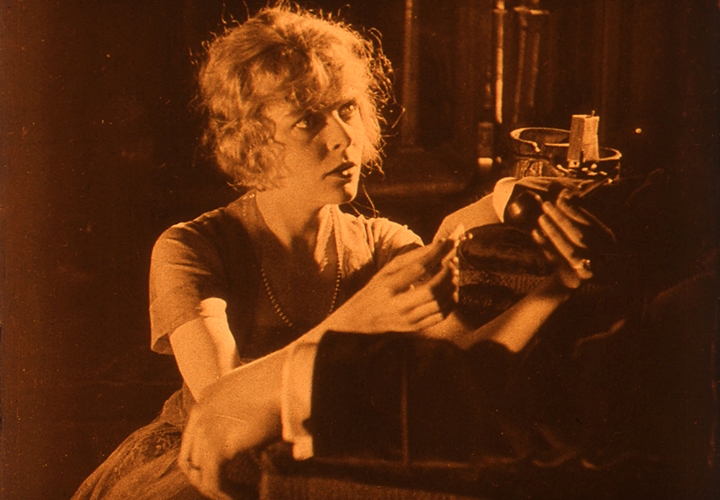
Norma Shearer and Ramon Novarro

The Student Prince of Old Heidelberg (1927), with Carl Davis’ score, 35mm


This bittersweet treat was a heart-rending reminder of the intoxicating fragilities of love and the inconvenient truths of duty… I had previously seen the 2017 Pordenone screening with composer Carl Davis conducting an orchestral performance of his score drawn from late German romanticism with hints of the emotional turbulence of Mahler and Strauss reinforcing the drama on screen. Davis’ daughter Hannah was there to read from her father’s diary about his approach to composing his 7th silent film score in 1984 and his co-conspirator Kevin Brownlow was also on hand to give his finest Ernst Lubitsch impersonation regarding his struggles to get Norma Shearer to be more Prussian barmaid. She called in fiancée Irving Thalberg to mediate and he played it just right by saying “Darling, I’m sure we can all learn a lot from Mr Lubitsch…” I suppose having dealt with Herr von Stroheim on Merry-go-Round (1923) another variation on Old Heidelberg; he appreciated a man with the discipline to work within his budget a little more!


In fairness to Norma she does an lovely job of being in love with Roman Novarro’s child-like Prince, sent from his duties to study at the titular university and for all Miss Crawford’s apparent distaste for the five-time Oscar nominee and one-time winner, she’s able to combine vulnerability and strength, an experienced actress at 25 with her talkie glory years just ahead. Jean Hersholt is joint MVP though as the playful, and long-suffering Doctor Jüttner, mentoring the wayward Prince struggling to keep pace with the fulsome ale quaffing, cigar smoking and dancing of his charge at the grand old age if 43?! Roman Navarro has energy of his own of course and whilst he doesn’t have the flexibility and nuance of these others he is a more than capable leading man here, sulky and watchable!


This was also an opportunity to admire the comedy stylings of Aberdeen’s most famous son, George K Arthur who will also be appearing in Herr von Sternberg’s The Fortune Hunters in Bologna next week. Yes, it’s George K Arthur Month on IThankYou Arthur and I just don’t care!


Back to the film can in hand, this is a film to luxuriate in as is the score and the combination with a packed out NFT1 was quite something, my head partly back in 2017 and the 1902 of 1927… with the promise of 2025 successfully ignored for two blissful hours.


And there’s more tomorrow! This is analogue beauty with a tangibility of experience most cinemagoers are mostly denied so, let’s keep it physical so far as possible shall we? I have seen the future of film and it’s got sprocket holes and is really quite difficult to manage… the BFI do us proud!


*Courtesy of Mr Mark Fuller!


Sunday, 3 February 2019

Last clown, laugh… He Who Gets Slapped (1924), Barbican with Taz Modi and Fraser Bowles


To see this film projected from a 35mm print is a special treat and all praise to the Barbican team for sourcing this copy from a private collection in France. He Who Gets Slapped has not been digitally restored, which is a crime given its qualities, and probably has not been screened like this for many a year in the UK.

The event was sold out and I was second in the queue behind a woman who wondered why they were screening it without the "original score"… I put her right on the whole silent film thing but also on the importance of live music to the experience (she was no doubt pleased we didn’t end up sat together). Today we had a mesmeric and wistful score from Taz Modi who plays a kind of hybrid-jazz, accompanied by expressive cello from Fraser Bowles. Taz’s piano figures are influenced by electronica and in the manner of Nils Frahm, Hauschka and even Dawn of Midi, he weaves patterns over the narrative rather than matching specific events; a tonal rather than a harmonised duet and which, in the context of such a powerfully visual and humane film, worked very well.

I’d previously seen Taz accompanying the Polish silent The Call of the Sea (1927) at the same venue and his style is naturally cinematic and very supportive, with humble lines sublimated to the source material. Bowles’ cello contributed to what emotional specificity there was and the two produced a pleasingly-organic sound that contributed enormously to the connections being made between the audience and emotion on screen.


It’s hard to think of a Hollywood silent film as hard-hitting as He Who Gets Slapped nor a performance as raw and convincing as that of Lon Chaney. Based on a Russian play and directed by Swedish silent master Victor Sjöström, it is a tale of unflinching honesty which doesn’t shy away from the need to show full consequence. Chaney’s range of facial expression is, as I’ve previously noted, “supernatural” and the various extremes of clown make-up enable him to reach new heights of happiness and deeper troughs of despair.

But, it’s the Chaney face without makeup that is the most impactful as dedicated scientist Paul Beaumont is doubly betrayed by his benefactor Baron Regnard (Marc McDermott) and his wife, Maria (Ruth King). Just as his research into the origins of man bear fruit the Baron takes all the credit at the science Academy, before his wife reveals she is leaving him for the “better” man… it’s an agonising moment and one that Chaney handles with measured alacrity: he could so easily go over the top but he nails the moment so convincingly, his mind snapping as laughter becomes the only response to unbearable humiliation.

After every “act”, Sjöström inserts the image of a clown laughing hysterically at a spinning world. At the start the clown morphs into Paul spinning the globe in his office and after his bitter failure, the spinning globe is joined by clowns who sit around its circumference and watch as it turns into a circus ring. So many images in the film are used to match with others and move the focused visual narrative along in a very economical way.

Lifes a walking shadow, nah-nah-na-na-nah
The action shifts to Paris six years later where Paul, now a sensational clown called HE – who gets slapped, has taken the city by storm. In a World in which nothing is funnier than a man getting hit in the face, repeatedly HE’s act is elaborate, featuring massed ranks of clowns of all sizes, ushered into the arena by an enthusiastic orchestra, syncopating wildly. HE is at the back of the parade on stilts alongside the senior clown Tricaud played by Mack Sennett veteran Ford Sterling who is very effective here acting and not fooling.

HE enters to grand applause and a wave of hilarity and proceeds with a painful pantomime based entirely on the humiliation of his previous existence, the clowns carry large books in mockery of the years he spent in fruitless study and as Paul/HE looks to the audience he sees the faces of the Academy’s mocking scientists laughing down at him.

In mockery of his failed scientific career he is slapped for every statement and the entire troop takes turns in beating him to the ground. Eventually he is beaten down to the ground and his heart, held against his chest by a cloth pocket, is ripped out by Tricaud, and he is trampled into the sand…

Silent Shearer and pre-Greta Gilbert chain daisies
Elsewhere in the circus is the handsome horse-rider Bezano (John Gilbert wearing fairly indecent tights…) who notices the arrival of a pretty girl, Consuelo, (shiny new, silent Norma Shearer so different from her sophisticated pre-code persona) who is to join his act. Consuelo’s career is being masterminded by her father, Count Mancini (Tully Marshall, having a ball…) a hard-up nobleman who aims to use her exposure to marry her off to the highest bidder.

The two young equestrians bond immediately whilst HE is also smitten with the young woman; a reminder of the love he has lost. Inevitably, all balance is soon lost as the Baron comes to watch the show. He doesn’t recognise the man whose life he stole but Paul certainly spots him just as the old cheat eye up Conseula. Sjöström cleverly mingles scenes of Conseula and Bezano falling in love on a bucolic picnic with the negotiations between the Count and the Baron... clearly the World is troubled and love, faith, honesty and greed all must be reconciled.

This is Chaney’s greatest clown, one who mixes extreme pathos with a laugh that is so engulfing you truly believe the switch from bliss to bedlam that has brought it forth. HE is contorted by the misfortunes of existence into someone who can only take solace in further violence from an unfair world but, in the end, he has to find a way to rise above treachery and defeat... this is no easy melodrama; we're all getting slapped, every day.

The globes spin, the crowds laugh and the clowns all fall down in the end, cast off into eternity…

Lon, Norma, Victor and John Gilbert's tights...

Sunday, 8 October 2017

That Pordenone Touch… The Student Prince in Old Heidelberg (1927) with Orchestra San Marco, Pordenone Day 8


These people don’t do things by halves, do they? Eight days of almost ceaseless cine-muto reached a crescendo on Saturday evening with Ramón Novarro, Norma Shearer and the Orchestra San Marco, Pordenone, conducted by Mark Fitz-Gerald playing Carl Davis’ score.

The Student Prince in Old Heidelberg is another I’ve saved for the big screen and live accompaniment and Mr Davis’ score is one of his nest for this near-perfect movie from Ernst Lubitsch – romantic, witty and so poignant… Davis works from inside the film outwards and I have a feeling he and Herr Lubitsch would have got on well!

Now then, Mrs Thalberg remains a slightly controversial and divisive figure and there are those who favour Silent Shearer over Talkie Norma but I like them both and here she is simply superb. Ramon is a very pretty boy and he does well, but only Norma moved me close to tears (darn it Pordenone, that’s three times you made me cry!!) with an intelligence pf expression that is rarely equalled.


This is not the gung-ho tennis playing sophisticate of The Divorcee but a woman who finds true love and then, heart-breakingly, has to let it go. Typically, she must decide for her Prince; they will both love again and marry as their station and duty demands but they cannot be happy. All of which reminds me of a conundrum I once had with Princess Anne… but it was all worked out amicably.

Lubitsch too is a man of many phases and it was instructive to compare The Student Prince… with his Pola Carmen from earlier in the week. The latter was energetic and game for a quick laugh but, ten years and a whole continent onwards, his approach is more delicately-defined. This film has plenty of evidence of his famous touch form the over-regimented raising of hats for the prince to the lovely time he chases Norma’s humble hotelier’s daughter, Kathi, along a series of arches; the camera follows them, anticipating their arrival at the next arch until, suddenly, the don’t: the prince has caught his girl and who knows what private passions are being expressed.

The pacing is so well handled – a real musician’s film – and the overall tone is one of good humour even if the end-game involves balancing duty against individual happiness.

Lovely composition. Cheers Getty Images!
The programme notes reveal that The Student Prince… was an attempt to win back the mid-European market by showing a more human side to Germanic characters – a similar problem was faced with Herbert Wilcox’s Dawn (1928) about Edith Cavell. Here Lubitsch is on safer ground but these men have honour as well as humour.

Appropriately enough for a Ramon Navaro film, this film was M-GM’s second most expensive film after Ben-Hur (in which the actor starred). Apparently, Norma fought off competition from May McAvoy, Marceline Day, and Fay Wray for the role but I can’t see any of them playing the role as well. That said… there were moments of tension with her director as he felt he initial performance was too grand: ‘Mein Gott!’ he shouted. ‘I can get a waitress from the commissary who will do better than you.’

That may well be Ernie but she’s got a guy called Mr Thalberg at home and he’s quite important. IN the end, Irving superbly defused the situation with the line: ‘Darling, I’m sure we can all learn a lot from Mr. Lubitsch.’ I’m sure she did.

We also watched:

Karina Bell and Peter Nielsen in Morænen
The Swedish Challenge has been my favourite strand and shown me that there is far more to Scandinavian silent film than Victor and Mauritz… today’s double maintained the quality and in the case of the latter Anders Wilhelm Sandberg’s Morænen (1924), featured some of the best accompaniment of the week from Stephen Horne on piano and various and Elizabeth-Jane Baldry. 

Elizabeth-Jane users her sonic pallet way beyond the confines of traditional playing much as Stephen has pushed the piano; together they sounded like a dozen players and produce music that is delicate and the with all the attack of more avantgarde composition. In the end, the Teatro Verdi wouldn’t let them leave the orchestra pit until they’d take a bow on the main stage: and well deserved too!

The film itself was quite dark with an overbearing father a dying mother and a brain-damaged son. It’s interesting to see how mental disability was treated at the time and – given the huge developments in diagnosis and treatment over the years, very valuable social history.

Everyone seems to care for the boy in question, even the father for whom he is a daily reminder of his "hateful" mother (IHAO), a man of unyielding selfishness his over-compensatoin was for his own failure.


Teuvo Puro and Jussi Snellman’s Anna-Liisa (1922) was no less challenging and this time involved infanticide a woman unwittingly getting pregnant after an, un-consensual liaison with a local ruffian. She has the child but kills it new born and as she tries to move on and marry the man she does love; this past comes back to haunt her. The answer is to come clean and accept both crime and punishment: another scandi-redemption song and it’s true.

Gabriel Thibaudeau wove some elegant lines throughout his piano improvisations, he seems to have all the time in the world: The Eric “Slowhand” Clapton of accompaniment.

No, please... don't kill Creighton Hale!
After all this Scandinavian seriousness, hearts were sinking at the merest sight of Danish director, Benjamin Christensen in the credits for Seven Footprints to Satan (1929).  But, we needn’t have worried for it was an absolute hoot that prefigures the comedy horror of Cat and the Canary and Universal’s funnier moments. It’s very well done and whilst Creighton Hale rises to the occasion, Thelma Todd just blows him off screen!! Screwball before screwball was invented.

Turns out Christensen was far funnier than we thought… talking of which: don’t miss Haxan, at the Pheonix Cinma on 31st October… Halloween Night, yes, that’s right! Tickets available here!

Rising star Daan van den Hurk was on hand to have fun accompanying this one.

Blanche Sweet
Also funny and disturbing was The Deadlier Sex (1920) and the sight of Boris Karloff in pants that looked liked they had been stolen from a New Romantics party in 1981!? Thank goodness we didn’t see those in colour!

Robert Thornby directs and his two leads sparkle especially Blanche Sweet as the daughter of an industrial magnate aiming to be just as tough when “Wall Street alchemist” Harvey Judson (Huntley Green) tries to bully her Dad’s former business out to the market. Nothing a bit of sedation and kidnapping can’t fix as she has Green transported to the wilds to sink or swim.

Boris is hired to put the frighteners on him but he takes his role a little too seriously. It’s fun and Masterclass graduate, Bryson Kemp, played along with a spirit of adventure!

Georges Méliès: Le Rosier Miraculeux (1904)
Then, just before The Student Prince… we were treated to a recently-discovered Georges Méliès: Le Rosier Miraculeux (1904) or The Wonderful Rose Tree projected in almost immaculate condition on the huge screen. It is truly amazing that his work is still being discovered but it’s thanks to the dedication of the very people who attend, program, perform and otherwise support Pordenone that all is possible.

So keep on being passionate about cinema muto in all its forms. Enjoy it, discuss it, engage and promote it and we will not only have more wonderful weeks like this one but so much more.

Grazie Mille Pordenone!! Vediamo l'anno prossimo per GCM37!


A communication from the Mile-high Blogger Club (no, it’s not what you think…)

Thursday, 4 May 2017

Ich möchte kein Mann sein... The Trail of the Law (1924), with Cyrus Gabrysch, Kennington Bioscope

“I like you better as a girl Jerry…”

This film rests on whether or not you can really believe that Norma Shearer looks like a boy yet, no matter how much you dislike the double-Oscar-winning wife of Irving Hallberg – and I’m looking at you Joan Crawford – it’s a stretch.

Norma plays Geraldine – Jerry – Varden, who grows up in an isolated wood cabin with her, some might say, over-protective father Alvin (John P. Morse) determined to hide her from the male gaze – at least as a female. Following some unfortunate business with her mother (also Norma) and a passing psychotic, Steve Merrill (Richard Neill). They find Merrill near starvation and take them into their home only for him to later attempt to steal all Alvin’s money. He is thwarted but escapes whilst Geraldine’s mother never recovers from the shock and asks that Alvin bring her up as a boy to avoid unwanted attention from cruel mankind…

Now, as Variety said at the time, “…that’s all there is to the plot, and it can be seen that the brain is not seriously taxed keeping up with it…” but once you discount the story this is a well-made and enjoyable flicker. Significantly, it’s also a film that was largely believed lost but the BFI has a copy and we should be grateful.

Norma Shearer in Pleasure Mad (1923)
Young Shearer was only 21 at the time and a few years away from really breaking through but her easy, naturalistic charm is evident throughout and her style that would come to fruition with the talkies but still impress in silents such as He Who Gets Slapped and Lady of the Night (in which Miss Crawford briefly played her double). She’s full of pep and makes a good go of the shootin’, throwin’ and fightin’ required whilst all the while looking far too fair of face and fringe to pass muster as a lad.

She brawls with Bobby Willis (Herbert Holcolm) the younger brother of her and Pa Varden’s new neighbour Caleb (Charles Byer) who’s set up a small hunting cabin with a bearded-fellow name of Tom Frost. They don’t look too pleasant… certainly not as gentile as Alvin, Jerry and their man Mathew (George Stevens).

Jerry gets the better of Bobby and a forbidding truce descends on the valley… Peace is about to be disturbed on an together different way as a canoe arrives bringing a refugee from the City, burnt-out Fraser Burt (Wilfred Lytell) looking to get away from the rate race and to get it together in the country…

Tomboy circuitry? Norma in 1925
Fraser frazzles Jerry’s tomboy circuitry and her Dad reveals all as he speaks his story and Geraldine appears in evening gown to play harp must be a devil to keep tuned in these parts?). But sneaky Bobby sees all and the Willis’ hatch a plot to take advantage of this unexpected gender fluidity…

Is Geraldine still more of a man that Bobby and Caleb will ever be, can Fraser survive a sniper’s bullet in his canoe and just who is beardy Tom really?! All will be revealed… if, that is, you’re lucky enough to see this fine 35mm print projected again.

This was the probably first time The Trail of the Law had been seen since its initial release and relatively unambitious though it is, we should still celebrate the survival of this entertainment and not just for its stars and her glory to come. This was the every-week fare of our grandparents – a classic experience if not a classic film.

Oscar Apfel
Director Oscar Apfel co-directed Cecil B DeMille’s first features, The Squaw Man from 1914 and was a highly competent pro who makes this story flow really well, aided by some lovely scenic cinematography from Alfred Gandolfi. Variety was also impressed praising the “…pictorial excellence, adequate direction, good acting… “but, noted that as “Miss Shearer is appealing even in trousers and cap… more than the usual amount of imagination is needed to conceive her palming herself off as a boy.”

Accompanist Cyrus Gabrysch was up in the hills with them all the way charting a sure-footed path alongside the narratives gentile excitements and rural revelations – making a good “harp” when Geraldine reveals the full extent of her femininity through music.

Tonight’s undercard included some strange and wonderful shorts.

Land Beyond the Sun (1912)
Land Beyond the Sun (1912) as a film made on behalf of the still-extant Fresh Air Fund a body set up to get inner city children experience of the great outdoors: “get your son and heir some sun and air!” a later slogan may have run…

In this case, it is a poor Newsboy called Joe (Martin Fuller) starved of sunlight and even love by his harsh grandma (Mrs. William Bechtel) who gets his chance for a day of sunlit escape and is so captivated by fairy stories from the fund workers, that he escapes to the sea in a boat… or does he?

Henry King crowning Ruth Roland in still from Unto Herself Alone an earlier episode of Who Pays?
The next film was altogether harder-edged as Ruth Roland and Henry King stared in Toil and Tyranny (1915) episode 12 of Who Pays?  a serious seral with a difference from the usual cliff-hanger. There were four such serials from Pathé Exchange including Who’s Guilty? and Who Wins? all tackling social issues.

I this case it’s capital against labour as Henry King’s timber worker is abused by management leading to tragic consequences for his family and that of the business owner, whose daughter is played by Ruth Roland. The film is much more even-handed and frank than you might expect from Hollywood it’s worth remembering the year and the impact of wider movements and events on capitalism’s crisis of confidence.

“If they’re not satisfied, let them starve!”

Meg Morley played along for both impeccably-well: fresh air and industrial strife conveyed with equal relaxed expressiveness.

Another winning evening the Kennington Cinema Museum: where else can you see so much rare and unique celluloid?

Saturday, 15 August 2015

Olive branches out... The Flapper (1920)


“This is the fluffiest sort of fluff, but good summer booking just the same, though any but the best type of houses may find it lacking in dramatic meat…” So wrote the Variety reviewer on the film’s release in May 1920. Olive Thomas, whose “appeal is the sex appeal” here continued “her trip toward film fame…”

Sadly Olive’s trip was a very short one and within months she was dead, accidentally poisoned in Paris on holiday with her second husband Jack Pickford. She had been a star of the Follies with (reluctant) sister-in-law Mary describing her appeal: “The girl had the loveliest violet-blue eyes I have ever seen. They were fringed with long dark lashes that seemed darker because of the delicate translucent pallor of her skin.” Those eyes still work in black and white but on this showing Olive was more than just a fine pair of peepers but also a fine comic actor; and all of this in spite of a  uneven script from Frances Marion.

Olive eyes trouble
Directed by Alan Crosland, The Flapper was clearly a vehicle for the rising star – a Pickford by style and not just association – and plugs into the vogue for teen rebellion epitomised by those young women who just liked to have fun particularly those saddled with the tragic restraints of being born into wealth.

A bored teenager
Olive (then 24) plays 16-year-old Genevieve 'Ginger' King a poor little rich girl suffocating in the empty acres of her family mansion in Orange Springs – a town in which “they didn’t even have a saloon to close”. Her father (Warren Cook) is a senator and rules his castle with determined authority. He’s had enough of his daughter’s waywardness and, on the advice of his friend,  Reverend Cushil (Charles Craig), decides to pack her off to boarding school run with strict discipline by Mrs Paddles (Marcia Harris).

Bill takes Ginger for a ride
Before this, we meet Ginger’s (almost) boyfriend, Bill Forbes (Theodore Westman, Jr.) who is about to go to military academy and is part deus ex machine part red herring.

Ginger arrives at school to be confronted by the inmates lined up on the stairs, their short skirts revealing “the limbs of Satan from old family trees…” and appraising eyes who give her the “once over”. The title cards from Frances Marion are quirky whereas the tone of the film is sometimes just odd.

Limbs of Satan?!
For example… the girls like watching grown men but rather than fixate on someone age appropriate, Ginger falls for Richard Chenning (William P. Carleton – 47 at the time) – a middle aged man who wouldn’t give George Clooney or Cary Grant any sleepless nights… Maybe she’s looking for a father figure.

She finally gets to meet her man after a sleigh ride in which Bill forgets to remember that he can’t drive a sleigh; they tumble off and as he tries to recover the horse and snow-cart, Ginger convinces Richard that she’s twenty and on the lookout for some… sophistication.

Joining the grown ups...
Back in the school we have already met some of the other girls, one of whom is played by Norma Shearer (genuinely of school age at the time – 17 years old). Another, is “a moth amongst the butterflies” Hortense (Katherine Johnston) who has too much mascara to be a goody and a scheming boyfriend called Tom (Arthur Housman).

Goodies or baddies?
Ginger sneaks away for an evening of jazz dancing with Richard at the country club and Hortense tells Mrs Paddles in an effort to create a distraction. Sure enough as the school mistress heads off to re-capture her lost lamb, Hortense burgles the school safe just as Paddles pulls Ginger out from the dance, rightly suggesting to the unsuspecting Chenning that he should be locked up for romancing one so young… As he laughs this off to his friends Ginger’s heart breaks as she is dismissed as a silly thing.

The robbery is revealed... Norma Shearer second left?
On return to school she naturally decides to commit comedy suicide but is distracted by the sounds of Hortense dropping the stolen good down to Tom. Naively she accepts her classmate’s lame explanation.

We move on and after an impressive little dance with a ukulele – one of my favourite parts of the whole film! – Ginger is in New York en route to an assignation with Hortense and Tom. I always love seeing real backgrounds in films of this period… an open-top time-travel-tram-ride!

Ginger takes in the sights
Ginger agrees to help the two tea leaves – swallowing their story that they were eloping and only “borrowing” the goods as a joke… She decides to use the contents before she returns them to “vamp” Chenning and thereby gain her revenge… Oh dear Ginge, that sounds awfully complicated, dontcha think?

Queue Olive at last dressed as a proper flapper and cutting and rug very sharply at a mid-town nightclub. She convinces her prey that she is now “grown up” and there is much coded face-pulling at the shock of her lost virginity.

The flapper vamps it up!
Then she returns home to pull the same trick on friends and family… but lost honour is not to be taken lightly and things get a little complicated.

For all its disappointments – this is no prototypical Flaming Youth, It or Bare Knees – The Flapper remains diverting and that is entirely down to its star aided by Marion’s cute intertitles. There are just a few too many elements in the story – is Tom really necessary or his two hero worshiping hangers on from the academy? - but you can see why Thomas was a major starlet and who knows what she could have gone on to achieve as the twenties progressed? 


I watched the Milestone DVD The Olive Thomas Collection which comes with an hour-long documentary produced by Hugh Heffner (a connoisseur of that which Olive exudes…) and which provides a decent summation of Thomas’ short life and career. Some IMDB reviewers pick holes in the tone but, as with The Flapper itself, I much prefer its existence to the alternative!

It is available direct from Milestone or from those canny tax-avoiders over on the long river.