Showing posts with label Nigel De Brulier. Show all posts

Sunday, 16 October 2022

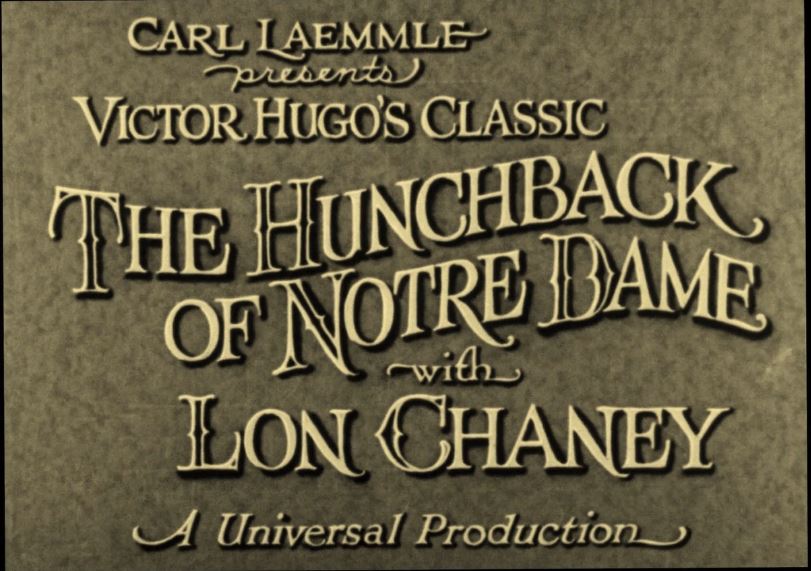
Sanctuary much… The Hunchback of Notre Dame (1923), Eureka Masters of Cinema Blu-ray, Out Now


To the towns people he was an inhuman freak, a monstrous joke of nature – and for their jeers he gave them scorn and bitter hate.


This is the UK Blu-ray debut of this Universal classic and it is a 4k transfer of the recent restoration from NBC Universal from two 16mm prints, which looks fabulous and really carries across the scale and daring of this huge feature – a million-dollar super-production. Surprisingly, I haven’t seen The Hunchback of Notre Dame before and so this disc held and extra fascination. Lon Chaney’s transformation is under more scrutiny than ever envisaged for the original screening experience but, once again, it is his performance and not the make-up that convinces and you soon forget the all too obvious prosthetics and just become submersed in this classic tale.


Victor Hugo’s novel of 1831, Notre Dame de Paris was, according to Kim Newman, as much about history and architecture as the hunchback. Then, as now, the building was under threat and Hugo’s novel helped to raise interest in the cathedral and, indeed, the author took part in restoration that helped preserve the building. According to Newman, the book helped create a social movement… but still has a lot more humour than the film, with Esmeralda charged with enchanting a goat, a satire on the French justice system. More on that goat later…


From an era of epic set design... the star of the film?

The film changed more than the story with a number of characters flipping from good to bad and a revision of the ending. This is a primal story that is clearly malleable in terms of meaning, sense of place and dramatic sweep with the cathedral the biggest character and narrative device, a place to hide, to haunt and to swing down from as well as being the ultimate sanctuary. There is nowhere else that Quasimodo can be and when Esmeralda is falsely accused, he carries her there shouting “sanctuary, sanctuary!”. But Notre Dame is also a place hiding the shadowy plotting of Jehan (Brandon Hurst) although the main villain in the book was his brother, the Archdeacon Claude Frollo, here played by Bristol’s finest Nigel De Brulier, as a good man.


It's also a refuge from the poverty beyond with the film retaining some political overtones, bemoaning “the King’s justice” and the struggle of the 15th Century poor more reflective of Hugo’s time – during the early reign of King Louis Philippe I after the revolution of 1830, all far removed from the days of the Republic. Hugo was elected to the National Assembly of the Second Republic after the 1848 revolution calling for the end of misery, poverty and the death penalty as well as other 19th Century concerns such as universal suffrage and free education. By 1923 all of these things were recognised as undeniably good so writers Perley Poore Sheehan, Edward T. Lowe Jr. and Chester L. Roberts were preaching to the converted.


The film starts with The Festival of Fools, the one day of the year when those “crushed by tyranny” could give themselves to unrestrained pleasure… His Majesty King Louis XI (Tully Marshall, who I always associate with the Clara Bow comedy Mantrap (1926)) rides through the throng, “a crafty oppressor of his people, whose dungeons were always full… “ which may be a little harsh on "Louis the Prudent" as he was called in the 1480s who founded what became the French postal system, built roads and unified France under a more administratively solid monarchy. It’s not my period but the needs of the story must…


Torrence, Chaney and De Brulier

We also see the poor of Paris huddled in the cavernous Court of Miracles … led by King of the Beggars, Clopin (man-mountain Ernest Torrence, who I also always associate with the Clara Bow comedy Mantrap), the enemy of kings… 400 years early.  He too is at the festival, watching from the steps of Notre Dame as the revelry gets wilder, he is chided by the Archdeacon before his brother Jehan crosses over to plot with Clopin… the downfall of Louis and a new world he can mould with the help of his lucky hunchback.


That freak is my slave, he will be useful to us…


There, high above the crowd, is Quasimodo, the “ugliest man in Paris” who will this evening be crowned King of Fools. He looks down on the crowd, pulling tongues and dangling precariously off the buttresses. Lon Chaney makes most of these moves himself, physically transformed so much that the outlandish prosthetics are barely necessary.


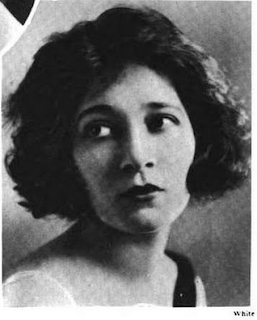
Patsy Ruth Miller

In his video essay, film historian, Jonathan Rigby describes the impact the film had including its blockbuster two-month stint at the Empire Leicester Square, which featured an “Impersonate Quasimodo” competition featuring seventeen contestants designed to encourage British acting talent. As Charles Laughton, Quasimodo in 1939, later said, Chaney wasn’t just a great actor but a magnificent dancer and clearly this physicality was an influence although we don’t know if Laughton entered the competition.


Having danced onto the screen, we get to meet the other main players, the newly promoted Captain Phoebus de Chateaupers (Norman Kerry, playing slightly gormless here) and his fiancée Fleur de Lys (Winifred Bryson) who watch the festival from across the cathedral square. Fleur’s attention is caught by a dancing goat – told you – who is being coached by a pretty gypsy called Esmeralda (Patsy Ruth Miller) who, even from a distance of a hundred metres, takes de Chateaupers’ mind completely off goat dancing.


Esmeralda is the most connected character in this film, being not only the adopted daughter of Clopin, who bought her off some gypsies because he always wanted to adopt but couldn’t be bothered with all the paperwork, as well as the object of Jehan’s wicked desires, not to mention her new admirer, who is forgetting all about his fiancée. Later in the day after Quasimodo’s coronation as King of Fools, he sees Esmeralda dancing and then he too has lost his heart to her fresh face and regular features, not to mention high-level armography and syncopation.


The kindness of Esmerelda

Passions run fierce and Jehan orders his man to kidnap Esmeralda, as that is the surest way to any woman’s heart, only for Quasimodo to be arrested and sentenced to a lashing. Before that, Esmeralda meets de Chateaupers, who takes her to a tavern before discovering that she’s not that kind of girl, suggestive moments when he pulls down the strap of her dress to reveal her naked shoulder before edging it back up again as she reveals her true heart.


From this point Esmerelda motivates the central characters and not anachronistic revolutionary thoughts. She shows mercy to Quasimodo as he calls for water after a brutal lashing in front of the cathedral… and if he didn’t know she was the girl for him beforehand he does now and his loyalty will not waver.


De Chateaupers takes Esmerelda to a nobles’ party only for Clopin to raise an army of beggars in order to go and “rescue her”, forcing her to intervene and go with her stepdad, to be with her own people. Minor character and coded gay poet, Gringoire (Raymond Hatton), rescued by Esmerelda after accidentally ending up in the Court of Miracles, brings the captain a note arranging a meeting with her in Notre Dame. She intends it as a last farewell and it almost is for De Chateaupers who is stabbed in the back by Jehan, who implicates Esmerelda.


No you don't Norman...

Will her Captain live to tell the truth or will Esmerelda fall victim to Louis XI’s lousy justice with a public hanging at Notre Dame? So many questions for the final part of the film and director Wallace Worsley masters his cast of thousands and stunning sets to full affect for a dynamic denouement. But it is his players that really bring the action with Chaney peerlessly acting through his make-up, dancing his feelings and ringing those bells for all he’s worth with a frightening intensity. Patsy Ruth Miller is also second MVP with a charismatic performance most of the others struggle to match, several roles perhaps being under-written given the need to squeeze so much into a single film from the epic source material.


The Blu-ray is released on 17th October in a Limited-Edition O-Card Slipcase* and has the usual Masters of Cinema extra special features:

·         1080p presentation on Blu-ray from a 4K restoration conducted by Universal Pictures

·         Music by Nora Kroll-Rosenbaum & Laura Karpman (presented in uncompressed LPCM stereo)  

·         New audio commentary with author Stephen Jones and author / critic Kim Newman

·         New interview with author / critic Kim Newman on the many adaptations of Victor Hugo’s novel |

·         New interview with film historian Jonathan Rigby

·         A collector’s booklet* featuring a new essay by journalist Philip Kemp, richly illustrated with archival imagery


*Both the booklet and the slipcase are limited to the first 2000 copies so I would urge you to order your copy now and you can do sodirect from the Eureka site.

It’s another important silent release from Eureka, an essential part of any silent film fan’s shelf and one that has not looked or sounded better since the 1920s!

A feast for your eyes...


Thursday, 6 December 2018

Priscilla, Queen of the Desert… The Virgin of Stamboul (1920), Kennington Bioscope with Cyrus Gabrysch


“The moving finger writes and having writ, caresses a camel…”

This was one of Universal’s most expensive productions and starred the irrepressible Priscilla Dean as Sari, part-time street thief, occasional dancer and full-time force of nature. Kevin Brownlow introduced and held us spellbound recounting his meeting with Ms Dean who, even in her old age was larger than life being a volunteer driver of her local fire truck and as down-to-earth as any former Hollywood idol had any right to be.

Kevin saw this film half a century ago and doubted that it had been projected since and this is the pure essence of Kennington Bioscope; yes, we’re quite spoiled in London with screenings at the BFI, Barbican and elsewhere but at the Cinema Museum we get to see the rare and unusual. It matters not whether every one is a classic; there’s always something to appreciate and this audience is packed full of connoisseurs.

Now, there may have been a little cork in this vintage adventure but with Mr Gabrysch conjuring up a musical meltemi and Pruce – as co-star Wally Beery called her – whipping up a storm, this one flew by without presenting too many surprises: we even get the inevitable Omar Khayyam quote.

Zoonoses are diseases that can be transmitted from animals to humans.
In the streets of Stanboul, the striking Sari steals bread to feed puppies, kisses pigeons as she shares her food and even snogs the odd camel… that’s how committed ‘Cilla was and some evidence of director Tod Browning's gift for strange charm. Naturally she attracts the attention of Capt. Carlisle Pemberton (Wheeler Oakman aka Mr Dean) who is in town to cement an alliance with the Black Horse cavalry of Capt. Kassari (Nigel De Brulier, later John the Baptist, out of the desert in Nazimova’s Salome).

There’s also less welcome attention in the form of Sheik Ahmed Hamid (Bad-boy Beery) who collects wives like some men collect 16mm film and has trust and anger-management issues that spell trouble. Finding out that his favourite wife, Resha (Ethel Ritchie), has been carrying on with a westerner, Hector Baron (Edmund Burns), he kills the man in the mosque. Now, as luck would have it, Sari has snuck into the mosque, even though women, “not having souls” (a false understanding of Islam still persistent in Western views at the time), are not allowed to be there.

Wheeler Oakman was married to Cilla Dean from 1920 to 1926
Sari went there to try and teach herself to pray after overhearing Capt. Carlisle discussing her, and, clearly impressed, wondering out loud if he should teach her… You have the feeling that the Captain’s God may be required to help at some point, especially after Sari attracts the attention of the sour Sheik.

As Carlisle heads off to the desert – which seems remarkably close to Stanboul – Ahmed makes moves to marry Sari by making her mother an offer she can’t refuse… Can Christian fortitude triumph over misguided local custom and will Leery Beery emerge triumphant with his hareem enhanced?

It’s fast paced with a thoroughly predictable yet thrilling ending and Priscilla Dean is impressive throughout although perhaps not the most convincing casting given the film’s title. The film was based on a story by one Herbert Harwell Van Loan… who turned to writing after his vehicle hire business folded (that’s a lie).


Before this we same a vary rare print of a British film, Maria Marten (1928), which was based on a sensational murder in 1827. The film was introduced by Michael Pointon who explained the extraordinary circumstances of the murder where one William Corder shot dead his lover as they met at the Red Barn in Polstead, Suffolk. Corder buried Maria at the barn but pretended she was alive and living with him in Ipswich. He was eventually found out and hanged in public and the murder was so infamous that bits of the rope and indeed his body have been preserved to satisfy public curiosity.

The film moves things back half a century and turns Corder into a nobleman with additional characters to produce something that turns into something like a silent Gypsy Columbo.


There’s some interesting camerawork that showed director Walter West had been watching German films with a great pull-back at a dining table as the nobles celebrate and a sumptuous shot of figures silhouetted through trees on a hill as a man mourns in the foreground. The murder itself, though missing the deed itself, does have real atmosphere and, as the killer emerges from the Red Barn, the shadow of a noose falling grimly on his neck: we know he’s going to get his.

Australian actress Trilby Clark plays the unfortunate Maria and you have to take your hat off (ahem) as she does a good job as does wicked Warwick Ward as her murderer. He’s thoroughly nasty (a bit like a more charming, better looking and much tougher version of Jacob Rees Mogg) and makes the mistake of murdering a gypsy whose daughter he has put in the family way. The man’s son witnesses the event and, after his sister also kills herself, he resolves to join the constabulary and right these wrongs through legal means.

Trilby Clark
It’s sensational stuff but, combined with John Sweeney’s sparkling accompaniment, entertaining as well as historically interesting; it’s always good to see British films of this period and whilst it’s no masterpiece it’s better to exist than not.

And so ends another special year at the Cinema Museum and only 42 days until the next screening on 9th January!

Warwick Ward and Pola Negri in The Way of Lost Souls (1929)
Beery looms...
Beware of false advertising...

Thursday, 17 May 2018

Under the Moon… Salomé (1923) with Haley Fohr Ensemble, Barbican


Haley Fohr’s experimental score for Alla Nazimova’s radical passion project was commissioned by Opera North for the Leeds International Festival. It’s a mix of avant rock, post-rock, electronica and trace elements of folk/country although Tammy Wynette never sounded like this.

Vocalising and operating a console of synthesiser and samples, Fohr was accompanied by Tyler Damon on percussion, Andrew Young on double bass and Whitney Johnson on viola. The music was interesting in of itself but tended to take straight lines while the narrative followed a more elaborate path. The players followed a score and well though they performed the end result wasn’t balanced in the way that silent accompaniment often aims to be... but, this was intentional.

Fohr had taken the bold decision to remove the intertitles from the film arguing that by “…muting the text, I find new stories quickly sprout in its place from the action itself. The score to the film was composed as much to those stories as to the film itself.”  This is indeed bold given that the film was based on a poem by Oscar Wilde and featured extensive references to his original writing; removing this means you create a new narrative not only visually – we don’t have the specificity to define events – but also musically. That is Fohr’s intention and you have to respect that.

Alla Nazimova
One major issue I struggled with was the decision to leave gaps where the intertitles once where so that we had a blank screen between the action throughout. This interrupted the flow and unbalanced the mix – just when you were absorbed in the story it would stop and you’d be left looking at the band, well outside of the “moment” in terms of the film Nazimova created.

If you came to watch Oscar Wilde’s poem set to film with a score serving both then you were going to be disappointed but that was not the aim of a work that was in search of new meanings. To some that’s maybe like colourising Laurel and Hardy or adding CGI to old Star Wars films: just because we can doesn’t mean that we should... Still, you don't have to watch, unless, that is, you really wanted to see this film on the big screen, but maybe it wouldn't even have been there without the new music.

A few days earlier I had seen two electronica acts at the Barbican, Kaitlyn Aurelia Smith and Jlin (Jerrilynn Patton), both had back projections to accompany their very different beats and the latter had a dancer interpreting her music. You could argue that Fohr was following a similar line only with a pre-existing and defined artwork. Not everyone was comfortable with the recycle.

Or maybe not?
Personally, I’m not so sure the removal of text in exchange for a visual vacuum was the way to go, had the score played over the intertitles we would still have drawn new meaning based on the music alone and not the absence of text. As it was it was just too distracting from both the film and the hard-working musicians in front of us. I also say this as someone who is familiar with this film and therefore followed the narrative lines dictated by the text whether or not it was there…

"How strange the Moon seems! One might fancy she was looking for dead things..."

Salomé is a stunning silent film that features some of the most cohesive creative vision in film, with Natacha Rambova’s designs drawing on Aubrey Beardsley’s iconic interpretations of Wilde’s words. The whole enterprise drips in decadence – Wilde wrote the original in French whilst under the influence of new passions; in Salomé the act of merely looking can lead the soul on a fateful dive into the heart of desire.

Bad boy Beardsley and the "invisible dance".
Yet, even he was concerned his work might be overshadowed by the power of the drawing even though he had initially viewed Beardsley as "...the only artist who, beside myself, knows what the dance of the seven veils is, and can see that invisible dance."

Directed by Charles Bryant, Salomé is the quintessential platform for producer and star, Alla Nazimova - a woman aiming to combine both Wilde and Beardley's visions. This mix allowed her to put together one of the first genuine Hollywood “art” films – an enterprise laced with her European artistic sensibilities from the choice of story, writer, designer and even sexuality… Maybe the rumours of an all-gay cast were just hype, but this story of transgressive - deathly - passion may have additional spice being performed by homosexual actors given Wilde’s proclivities and the tragic response of Victorian authority.

Natasha Rambova's stunning designs took from Beardley's style...
Such freedom of expression clearly appealed to Nazimova who was forging a brave career through her alien sophistication and an angular, conflicted, expression so at odds with the warmth of mainstream American cinema. Yes, she strikes a pose, but it rings true and there's an undoubted sense of humour behind the balletic pantomime. Salomé needed to be well choreographed to translate the author’s rhythms and whilst the expressions occasionally grate some of these characters are meant to simply be grotesque…

Not Salomé though, she’s just a bored teenager…with an endless wardrobe to fit every flounce and flurry.  Nazimova was pushing it, being just 44 at the time and yet with expert lighting and deep inches of foundation she carries it off, like Mary Pickford on crystal meth. 

She sits bored stiff at the table as the regal bacchanal rages all around. Her stepfather, Herod, Tetrach of Judea (Mitchell Lewis) has obtained power by murdering his brother and acquiring his wife, Herodias, and her altogether more alluring daughter, Salomé. They party with a collection of bizarre guests, a group of Pharisees who argue over the existence of angels, men in strange hats and with strange hairdos and nervous servants so concerned over the risks of their master’s opprobrium that they would rather throw themselves off the battlements rather than be granted an audience with an unhappy King. 

Salomé imagining "a band of scarlet on a tower of ivory..."
Tiring of her step-father’s inappropriate attentions, Salomé leaves the banquet hall and steps outside for some fresh amusement. She finds her  loyal servants Narraboth, Herod’s Captain of the Guard (Earl Schenck) who harbours unrequited love for his mistress, and Herodias’ Page (Arthur Jasmine). Salomé ignores them and distractedly stares at the stars in a provocative pose before sounds from a deep well break her reverie… These are the prayers and pronouncements of John the Baptist,  or Jokanaan in the film and play (Nigel De Brulier), a seer and prophet  who just won’t be silenced on the subject of the impending Messiah.

Salomé catches one look at his fine chiseled features and slender strength and is hooked, demanding that he be released so that she may learn more. Jokanaan emerges and refuses to be distracted from his cause by the “young” seductress in spite of her best efforts: he knows that even if he glances at her too deeply he could fall. Soon good feeling turns to bad and, in the face of Salomé’s infatuation, faithful Narraboth kills himself in front of his love but she simply steps over his corpse in her attempt to speak closer to Jokanaan. Horrified at this callous disregard and so much else besides, Jokanaan returns to his cell…

Mother and step-father in shock. Kids yesterday...
The film, as the play, makes constant references to the Moon – it’s tied to fate and the immutability of feminine will. What starts off blue gradually gets darker as a skull appears to fill the centre and then the sky runs red as matters descend into madness. Salomé sulks and as the party finally comes out to join her, is made an offer she cannot refuse by Herod: if she dances he will give her anything she desires. She agrees but doesn't reveal what her prize will be… and, boy, there will be blood.

Salomé exists in an unsettling world all of its own and is surely one of the most subversive films of silent Hollywood. It was a box office dud that prevented Nazimova from being able to make further films with the same control – but we all know now what she really meant