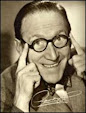
Showing posts with label Eugene Pallette. Show all posts

Friday, 21 April 2023

The music of chance... Strolling Players (1925), with Cyrus Gabrysch, Kennington Bioscope


Sex and silent film, it’s full of objectification and attitudes that today we frown upon and yet… here we find four men sizing up young Lya de Putti, whose heads transform into pig’s as they imagine our heroine with no clothes on. OK, those clothes do seem to disappear but I think Karl Grune was making a point, wasn’t he? To put this even further in context, Felix Salten, the writer of the film later went on to write Bambi; so, make of that what you will.


The sexist pig-heads was one of a number of striking visual set pieces that illustrate Grune’s story of a star being born, a tale as old as time indeed, as young actress meets successful player, Axel Swinborne (Eugen Klopfet), and we all know the rest… or do we, for this film ends in a way that, whilst I obviously can’t reveal, does leave the audience surprised.


We were watching the BFI’s 35mm print of Strolling Players (Komödianten or Comedians, certainly more Max Wall than Jimmy Tarbuck!) and this is, possibly, the only celluloid copy left in the World, yet another reminder of the rarities on view at the Kennington Bioscope and the vital role played by our national film archive. Why travel a thousand miles when you can see these treats in Lambeth? Blessed are the hobbyists, the collectors, the projectors, the historians and the programmers!


The story spins on coincidence – we are all after all merely players on the stage and there’s more than one reference to Shakespeare – starting with the arrival of a group of strolling players at makeshift theatre/public house in the village of Gotten. They’re performing Faust and it’s fair to say that the locals aren’t giving the cast the respect they might possibly deserve despite the presence of a looming Fritz Rasp looking almost cherubic in blonde curls and a striking leading lady (Lya De Putti), listed just as “The Sentimental”.


The director of the troupe (Viktor Schwanneke) knows this rejection well and as he’s always done and no doubt always will do, rouses his weary gang for a morale-boosting meal.


Miles away in the big city, we see Swinborne’s latest triumph and his determination to take a holiday on the completion of this run. He duly heads off on a train only, and what does this say about the safety of German trains at this point, to catch the train door handle on his waistcoat and fall out at high speed. Rescued by railwaymen, he’s taken to the inn where the players are staying and Lya volunteers to tend to him after he’s unceremoniously dumped on an upstairs bed.


The next morning the great actor is remarkably unscathed – what a lucky break as he remarks… and going down stairs to find out where he is, catches the players in rehearsal, in the very play he has just starred in, right at the moment for his cue to rush in and find his faithless lover and then shoot her dead. Maybe it’s the new lease of life or just the look on Lya’s face, he offers to join them for the evening’s performance and, unlike the previous evening’s Geothe, tonight is a huge hit and he raises everyone’s game.


His faithful dresser (Hermann Picha) comes to collect him the next day and just as he thanks the director for his generosity, he tells Lya that she could be a successful actress if she lets him guide her career. She’s persuaded and heads of to, of course, guaranteed success.

Lya de Putti, a World-class slinker!

In the cut and thrust of theatricality there’s always complications and, just as Swinborne comes to love his protégé so do others, including a handsome young prince (Owen Gorin) and no wonder given the stunning fashions on display for the Austro-Hungarian aristocrat de Puti. She has to choose between her loyalty to Swinborne and her primal attraction to the younger man… it’s a tough call and this emotional maze confounds our expectations in a denouement that dodges and dives in every effort to avoid the predictable.


Lya’s magnetic presence does much to elevate the film, she may be posh but she’s got a look that connects in a very earthy way and as she was to show in Variety and many more, she knows how to play the camera and to pull the watcher in with earnest, raw expression. She’s part Pola, neo-Nazimova - that hair! - with a hint of a more virtuous Valeska Gert - a Euro-pudding of the most adult-deco proportions. 


Cyrus Gabrysch underpinned this emotional commitment with improvisations that captured the emotional storms and romantic sweep of this tug of love. This was a fiercely committed approach that was buoyed by clusters of muscular chords and lilting lines; I haven’t seen Cyrus play for sometime but he was lost in music and completely plugged in to the action on screen. Stirred and shaken.


Ralph Lewis and Norma Talmadge


Going Straight (1916) with Colin Sell


As if this BFI gem wasn’t rare enough, we were also treated to another early Norma Talmadge film, following on from last time’s stunning 16mm copy of A Helpful Sisterhood (1914). As with that film, I’d already seen Going Straight (1916) but never like this 35mm versions, which whilst showing its age, which I like, was full of gorgeous texture and tints showing Norma in fabulous close up as the 21 year-old showed the growing confidence in her craft.


Norma featured in hundreds of short films for the Vitagraph Company from 1910 to 1915. Then, having joined Triangle Pictures, she made longer form films of which Going Straight, was one of the first. Directed by Chester M. Franklin and Sidney Franklin the picture clearly shows the guiding influence of DW Griffith who oversaw a lot of the production at Triangle. There are expert intercuts and parallel scenes, close ups reminiscent of Pig Alley and the action is tightly marshalled throughout.


Talmadge is superb, acting naturalistically and given ample close ups to demonstrate her restrained playing which has more in common with Gish and Pickford than some of the more dramatic queens of the era. She plays Grace the wife of successful businessman, John Remington, played by Ralph Lewis. The two live in wedded bliss with their young family in one of those sizable wooden properties we brick-bound Brits envy. However, despite this apparent normality, both Grace and John were once part of a group of professional criminals known as the Higgins gang. Grace finds a clipping about their trial and a flashback explains their violent past.


Eugene menaces


Higgins/Remington’s second in command was Jimmy Briggs, played by the excellent Eugene Pallette, full of violent menace, who, after doing his time spots John, who offers to help him on the straight and narrow. Unwilling to change his greasy spots, Briggs threatens to reveal Grace’s criminal past and John has little option but to join him on one last robbery. He goes to commit the crime with Briggs whilst Grace stays over at a well-healed friend’s house after a card party. As it turns out – in a coincidence not too uncommon at the time – Briggs and John are burgling the same house.


What could possibly go wrong?


It is undeniably melodramatic but Talmadge is believable and understated even in the most fraught moments. She has a number of close ups that allow her to illustrate the emotional shifts in the story and her facial transitions are quite the special effect and as viewed on this wonderful 35mm copy, stunning. She’s another whose looks appear to be almost “out of time” and could have made her successful in any period of screen acting. It’s a face you enjoy reading on many levels and has a fascination and a depth that would grow to place her in the upper echelons by the early Twenties.


Colin Sell’s fingers danced along creating a sprightly symphony to accompany the players’ hard work and as with all good accompaniment the sound and vision blurred into a deliciously satisfying whole – sorry, the new range of home-made catering at the Bioscope naturally encourages such comparisons!


Another special occasion in Kennington, introduced majestically and expertly by Michelle Facey as we have come to expect!


Friday, 9 October 2015

Splats entertainment… The Battle of the Century (1927), with Costas Fotopoulos, London Film Festival


My granddad Jim (born James Joyce, one-time amateur boxer, full-time carpenter and British Rail worker who fooled the five-year old me by claiming to have built Lime Street Station… on his own) loved Laurel and Hardy. One of my earliest silent film memories is of him sitting me down to watch the boys - “these are great…” - and our laughing together as they got to work. Silent film community – a shared experience and you always laugh more when there are others around to get the joke.

This was Jim’s little present to me and as I helped give him a live audience for his memories he helped me by opening up a new world of funny.  He was right, of course, they are good, really good and, as Buster Keaton who would have it, one of them was actually the best. But, for me, you can’t split them – they are a pair, a right pair!

The boys consider the consequences
The Battle of the Century has lived a half-life for much of the time since its release with one reel mostly (a few minutes survived in a fifties documentary)having gone missing until now and tonight, at the London Film Festival, we witnessed the full monty – every projected pie and every human target re-connected for the first time since who knows when.

On the undercard, there was a trio of silent shorts including Double Whoopee (1929) aka The One with Jean Harlow’s Legs – all of them! - You’re Darn Tootin’ (1928) and Big Business (1929) – all end up in perfectly choreographed mayhem with our two heroes the cause and the victims. But, whatever the slings and arrows of outrageous Christmas tree abuse, manhole mantraps and taxi driver vengeance, Ollie and Stan usually emerge smiling. As carpenters and publishers all know, there’s worse things can happen at sea…


The Battle of the Century shows the duo in the early stages of their personas with Stanley a boxer called Canvasback Clump – the clue’s in the name – and Oliver as his manager. As with so many of their films it’s not the desperation that’s funny, it’s the hope and here the extremely optimistic team almost succeed in securing an unlikely victory over the mean machine that was Noah Young – here playing a boxer name of Thunderclap Callahan – the clue’s in the… oh, done that.

But the chance is lost as Clump takes a nap on the canvas one more time. A change of tack is required and in a brief lost segment the boys meet insurance salesman Eugene Pallette who convinces Ollie that with a talent like Clump’s what they really need is insurance.

Every journey begins with a single miss-step
The new agenda is to get Stan injured but, unaware, he suddenly develops a charmed life refusing to slip on a strategically-placed banana peel in spite of his mate’s bets efforts. One thing leads to another and a man carrying a tray of pies slips up… outside of a pie shop… next to a van packed with pies…

And the first pie is placed on Ollie's face
Now, this can only mean one thing and what that is is the Citizen Kane of custard pie fights, a Sistine Chapel of crusted chaos - the pinnacle of pastried pugilism… as one pie leads to another and the whole street erupts in a flurry of flying food.

Injury is added to insult for Dorothy Coburn
This is The Great Silent Bake Off with some 3,000 cream pies used by hundreds of extras and dozens of skilful cameos each allowing a flicker of character as the human cost mounts… a Flapper (Dorothy Coburn) is splatted first and exacts swift revenge, followed by a man opening just a bit too wide in a dentists (Dick Sutherland), a man getting his shoes shined (Jack O'Brien) and a sewer worker (Dick Gilbert) poking his head up into the line of fire. 

Anita Garvin assess the possibilities for retaining dignity...
Anita Garvin slips on a pie but recovers her dignity and walks gingerly off shaking her leg just enough to indicate discomfort… and the rest is chaos.

Of all the tonight’s comic crescendos the pie battle got the biggest laughs. Maybe that’s because we’re less familiar than with the others or maybe it’s just a collective celebration that we can see all of this once again?
In the heat of battle
Live music accompaniment was provided by Costas Fotopoulos who seemed to have emerged unscathed but he’s riding his luck, it’s only a matter of time before the piano player cops the custard!

Our Jim would have loved it but then he undoubtedly did, in the cinema, somewhere in Liverpool in the 1920s… Thanks Grandad.

Pie fight? What pie fight??

Wednesday, 6 February 2013

Really free… Mantrap (1926

"Well well - a big boy from Away Back!"
There are no rules for this blog but if there were, they wouldn’t prevent me from writing twice about films of particular note.

Mantrap I covered in the “early days” (2011) and didn’t really go into much detail – I had seen a VHS copy and it wasn’t great... no more than a bootleg view of a great concert.  But now the film has been cleaned up and released as part of the Treasures from the American Film Archives: Volume 5: The West (1898-1938) box set, it’s worth another, clearer, look: you can certainly see more.

Clara Bow
Directed by Victor Fleming, Mantrap is a vehicle designed to allow Clara Bow to dazzle as she flirts with all around her… but far from showing a woman exploited, Mantrap actually shows a woman in control.

Watching with my blue stocking mother–in-law (she takes pride in that term!) confirms this and we got to considering how much 20s film helped in liberating women or at least changing perceptions. After all, even the 60s looked back to icons of the earlier decade, Greta, Louise and, of course, Clara. It wasn’t just their looks or their style it was their intelligence and self-determination.

Ernest Torrence
Clara snags herself a husband from the middle of nowhere but this is what she wants – it’s not an escape but a choice. Joe Easton played by Ernest Torrence (the bad prison cap’n from Captain Salvation) isn’t everyone’s idea of a leading man but he’s steadfast and smart and will just about do for Alverna. The intervention of disaffected city lawyer, Ralph Prescott (Percy Marmont) provides only a temporary destabilisation.

Percy Marmont
For a while he takes Alverna’s fancy but he’s not strong enough to see through her “rescue” and she’s already bored with him when hubby arrives to sort things out. Initially the two men are bargaining amongst themselves but after Alverna threatens to take off in Joe’s boat they quickly realise that the situation is not theirs to dictate.

Throughout Clara Bow is genuine and energetic: she is thoroughly naturalistic and effortlessly powers through this film with ease. Mantrap was one of her favourite films and you can see why. She has the central role, in spite of all the male introspection, and emerges with her free will intact at the end.

It’s a very entertaining film with first rate support from the wildly expressive Torrence and  the uptight sophisticate Percy Marmont (who I’d last seen getting bumped off by Peter Lorre in Hitchcock’s Secret Agent).

The film starts with Marmont’s character driven to the point of ennui by an endless succession of lucrative divorce cases and their endlessly needy divorcees. He’s had enough and needs to escape from woman kind.

Getting away from it all...
His friend, (Eugene Pallette, on the right), suggests a fishing trip to the wilds to clear the air and cement their friendship. Cut to the two men looking miserable sat drenched outside their tent as the rain falls hard on their parade.

Meanwhile, back-woodsman, Joe, has headed up to the big city where he is in a whirl of disorientated surprise. His eyes fall on a shapely ankle and the camera follows his gaze up to the owner… it’s Clara of course.

Clara Bow and Ernest Torrence
He follows the legs into a barber shop and orders everything on the menu just so long as Alverna is the one serving it up. The moment when Clara enters the salon and strolls majestically towards camera, drawing the eyes of all around her is the mark of a player at the height of her powers. So casually commanding and always with a twinkle in her eye that says, you’re in on this and we’re going to have some fun.

Alverna accepts Joe’s invitation to dinner and the two end up marrying and returning to Joe’s home. This is where they encounter Ralph who has been rescued by Joe from his miserable fishing trip. Ralph immediately recognises that he’s in trouble…

Clara Bow - City Girl or Lady of the Wildwoods?
You’d be surprised if either Ralph or Joe could win Clara’s heart under normal circumstances, but then this was part of the Bow phenomena – if these guys stood a chance with Clara then maybe you could too? Reciprocation might might – just might – be a possibility. All you needed was the chance and to be yourself… How many stars had this affect on their audiences?

You can measure Clara Bow against all the other stars but she was uniquely grounded in the reality of the everyday. In fact, she’d probably had it much tougher than you, so dust yourself down, pick yourself up and keep on… Energising and empowering what more can you expect from a true star?

Mantrap is available as part of the Treasures from the American Film Archives: Volume 5: The West (1898-1938) which also includes Al Jenning's Lady of the Dug-out as covered here.