Showing posts with label Dale Fuller. Show all posts

Wednesday, 29 June 2022

Back home… Foolish Wives (1922), Timothy Brock, Il Cinema Ritrovato 36th Edition (Part One)


OK, remind me how this goes again, we leave the country that has held us prisoner since 2016, sorry 2020, and land in a place where almost everyone wears face masks and where films of all eras are screened every day from 9.00 till passed midnight. Some how we’re supposed to sleep, eat and socialise and to take care of the other routines as the Celsius hits high 30s… and, somehow, some of us are supposed to write stuff about it? The pleasure and the pain of this festival is precisely down to their being too much to do… so, turn off you mind, turn on your out of office, relax and float downstream on the Reno.


Herewith begins my highlights of the first few whirlwind days… let’s start with a biggie.


“Sooner or later those romantically inclined American wives who believe the superficial polish of Old Worldling and his fascinating ways are the essential qualifications of a husband will be disillusioned. They are sure to come to the realization that the man for the American Woman – is the American Man.”


Foolish Wives (1922) 


The first million-dollar movie acclaimed the publicity… and, spectacularly, Erich von Stroheim delivered on the ROI and Universal had another hit on its hands from the most complex man in most parts of Hollywood whose productions had the skill of DeMille, the scale of Griffith and a dark heart the latter could never think or feel. The son of a hatmaker, the Austrian was all too aware that clothes maketh the man and, for that matter, how far you need to go to get a hat to get ahead, his incredible drive seeing his not only create himself anew in the USA but also emerge from the field of European theatricals to be trusted with audacious projects such as this one, the controversial Blind Husbands (1919) – screening later this week here – and his masterwork, Greed (1924) of which I had the pleasure of seeing the four hour reconstruction screened at the BFI a few years back.


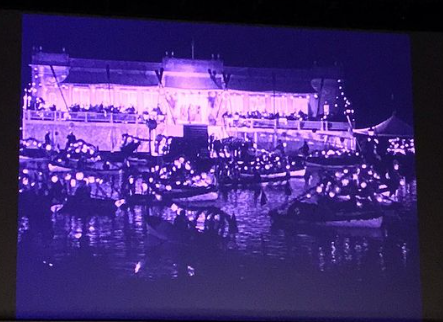
He arrived in 1909 and how he built his reputation in less than a decade is a story for another time but what you can see in this film is the extent of his control, basing it on a “novel” he didn’t write, and using huge reconstructions of Monte Carlo and a cast of thousands, he effectively played a version of his invented self. Instead of a bourgeois Viennese faking German aristocratic airs, he’s a phoney Russian military officer, Count Wladislaw Sergius Karamzin, accompanied by his two cousins, minor white Russian royals who have fled the unfortunate events in their home country.


The three live in a grand villa and frequent the Casino and all the best places so they can work their various whiles on unsuspecting rich tourists, the more American the better. This is a slick crime caper movie from before the days when slick crime capers set in this period were all the rage. But Erich is making sure we see the seedier side as well, he and his two “cousins” may smile and be villains too, charming con artists, but he has a debauched sexuality which is revealed early on when Cesare Ventucci, a local tradesman/counterfeiter visits with his young daughter Marietta (18-year old Malvina Polo) who is distastefully described as “half-witted”, clutching her dolly. Marietta attracts reptilian glances from the Count, who even licks his lips (not for the last time) and if we were under any misapprehensions about the true depths of this man’s character von Stroheim makes is crystal clear right from the off.


It might even be described as “Hitchcockian” in another country, another decade… but the director is making us complicit in his character’s agendas from the get-go, and, as we want redemption for all our lovable rogues, he’s giving us a tricky moral maze to navigate. Also, about that redemption… this film was made in Hollywood but this is not a “Hollywood director”. The Count is charming us all if we let him, suspending our own disbelief despite all of the evidence of all that is put before us, call him Boris by any other name, or Don. This is just fantasy or is it real life?


Von Stroheim puts so much detail in the films of his I’ve seen and this was to have been over six hours long and split in two screenings if he’d had his way. The length was as grandiose as the location, designed by Richard Day, his debut as art director, and who later won seven Oscars and worked on Greed, and this presented the studio with all the dull problems you’d expect and with his presented cut of 31 reels, soon reduced to 14 for its New York premiere and then another four, including the spectacular extended opening. This restoration produced by MoMA and the San Francisco Silent Film Festival, contains no previously unseen footage, but does attempt to recreate the balance and sense of that first theatrical release as well as the sparkling clarity, via digital processing. Scenes have been returned to their original order, the 1928 re-release – the basis of most version to date - intertitles have been replaced with the original texts, adding tinting and recreating the spectacular colour effects of the climactic fire sequence.


Erich and Miss DuPont

The other characters are almost as nuanced as the Count, with Maude George as Her Highness Olga Petchnikoff and Mae Busch as Princess Vera Petchnikoff, ugly sisters on the inside but not without good humour and some compassion; professionals without the Count’s unhealthy singlemindedness and tastes. They distract rich American Andrew J. Hughes (Rudolph Christians who was replaced by Robert Edeson’s back view after dying during production) whilst the Count attempts to seduce his much younger wife, Helen (Miss DuPont aka Patricia Hannon from Kentucky) in front of his very eyes. They first meet on a sunlit hotel veranda and the start of the seduction is so very well signified with not a moment out of place as by almost imperceptible gesture, stolen glances, over newspaper and book, yes Foolish Wives by Erich von Stroheim (100% meta) the two begin to connect and to collude. She is, after all, a bored young wife who is reading about romantic fantasy and quickly interested in the attractions of foreign nobility.


The Count is sexually voracious – a predator in every way – and we soon learn that he has not only wooed their maid Maruschka (Dale Fuller, excellent here as in Erich’s Greed and The Wedding March, proper skilled actor) but made her pregnant. He keeps making her promises we know he won’t keep and maybe, at the time he means it, maybe… but people pleasing won’t save him for ever and she will have her revenge at some point.


It’s all but pointless to describe the narrative in too much detail as its detail on screen is so full of nuance that only by viewing can you fully appreciate (yes, that is a cop out) but to see it on the giant screen in the Piazza Maggiore, was special. Which brings me to Timothy Brock’s extraordinary score and the performance of L’Orcestra del Teatro Comunale di Bologna which he conducted. His score was technically brilliant in terms of the Russia themes he borrowed and interwove to support the grandiosity on screen and also the delicious lines of his own written to map every strange and unusual nuance from von Stroheim’s screen. It felt complete with the film and completed that magical connection between the place, the audience and the film that makes live silent screenings so compelling and which makes this place, almost uniquely, a truly silent city.


Brava Mr Brock, Bologna and Erich’s cast and crew. Glad to have you all back where you belong*.


*Get Back screens at the Piazza on Thursday, natch.


Thursday, 12 April 2018

Shacked up... The Canadian (1926), Lillian Henley, Kennington Bioscope

Mona Palma and Thomas Meighan
One of the real treats of attending the Kennington Bioscope is not only watching films from Kevin Brownlow’s collection but also hearing his introductions. As the noughties game used to have it, we’re all six degrees of separation from Kevin Bacon but in Kennington we’re just three degrees through Kevin Brownlow to so many silent film stars, cast and crew.

Kevin not only met William Beaudine, The Canadian’s director, he also helped put on a screening of the film so that, having been too busy in the first instance, it’s director could finally see it 44 years after its run. Ill health almost prevented Beaudine attending and he wouldn’t give an introduction until the audience and he had a chance to see it the film was actually any good… after applause during and after the film, he got up on stage and announced his surprise that he wasn’t that bad director, in patches at least.

The Canadian is indeed a decent movie and has many similarities to Victor Sjöström’s later film The Wind (1928) a film found in very good quality in the UK prompting one US archivist to tell Kevin that they only had “the poor man’s Wind”… Whilst The Canadian is not as good as that nor City Girl (1928), another later film featuring a sea of wheat, it is a very good movie and accompanied by Lillian Henley’s perfectly-paced piano – lots of lovely, patient lines, so sure of tone - had more than one of this battle-hardened silent audience to wipe salty fluid from their eye: we’ve coped with Chaplin, Stella Dallas, Joan of Arc… but then this!?


Beaudine had been primarily a comedy director and, seeing out his contract to MGM as a lucrative loanee with Paramount, he took a chance and took the all expenses trip up to Canada to make a drama based on a 1913 play, The Land of Promise, by W. Somerset Maugham of all people. He was accompanied by cinematographer Alvin Wyckoff who ended up being assisted by a curious electrician, Stanley Cortez, who stayed up all night studying the cameras hoping to find a more better role. He ended up as Orson Wells cinematographer on The Magnificent Ambersons (1942).

See, from Kevin Brownlow to Orson Wells in three moves!

Nora Marsh (Mona Palma, who bears a passing resemblance to City Girl’s Mary Duncan…) has had to leave the “culture and poverty” of Britain (and this in 1926!!) following the death of her aunt. She travels way out west to stay with her brother Ed (Wyndham Standing) and his wife Gertie (Dale Fuller, who has a face you never forget and was so good in von Stroheim’s Greed).

Nora’s no explorer and quickly finds both the locale and the locals distasteful. She’s full of airs and graces and appalled by the rough and ready approach to dining; eating with a fork and no napkins. Chief amongst the louts is Frank Taylor (mighty Thomas Meighan) who is as incredulous as she at each other’s startling incompatibility.


But it’s not Frank Nora needs to worry about, at least not yet, Gertie’s a reasonable girl but when she finds her sister in law not only knows literally nothing about housework but continues to lord it over her and the men, she cracks and picks a fight Nora can only loose.

Thus it is, slightly improbably, that after being forced into the most humiliating of apologies, Nora offers her desperate hands in marriage to Frank who had previously said that he only wanted a woman to cook and clean. The two are wed in cold contractual misery and then face life together in a cold, tiny wooden shack that makes Lars Hanson’s gaff in The Wind look positively palatial.

There a thousand tiny terrors start to unfold including the issue of marital intimacy… like a gent Frank sleeps in the main room leaving Mona the bedroom. But, the pressure builds, and things are about to get a lot more intense.


The Canadian deserves its own reputation and both leads excel. I knew what to expect from Mr Thomas Meighan, but Mona Palma was also very good – pride just about trumping fear until she learns to adapt.

There’s also a nice turn from Charles Winninger as Pop Tyson who dances a mean jig!

Up first was an eclectic and satisfying mix of shorts the best of which was It’s A Gift (1923) which featured Snub Pollard in a small metal car propelled by his use of a giant magnet to follow other vehicles; it’s an iconic image and now I know which film it was from! Snub plays a scientist who has an automated breakfast and wake up routine similar to Wallace in The Wrong Trousers: we’d all like to pull a few strings to get our breakfast made and trousers hitched.

The gifted Mr Pollard
There was also an oddity called Life’s Staircase (1915) featuring a couple reading and ripping up old love letters, she ranged left and he, right, as the circumstances of each letter and token place alongside, double-exposed. It’s about marriage and the prototype relationships we leave behind, and it reminded me of Scott Pilgrim vs The World in which our hero must battle all his girl’s previous partners. In this film he’d only have to get married and they’d all fade away.

First film was a dreamy confection from Louis Feuillade all about Spring (1909) which featured lots of women dancing in flowing white dresses. It was impressive, but I was concerned about the safety of the numerous doves held aloft during the calisthenics.

My garden, today
If you like ladies in swimming costumes, an episode of the long running women’s cinemagazine, Eve’s Film Review, was about to explore how “Eve’s” swimming costume has shrunk since the 1880’s. There was definitely a trend on the evidence presented and cause for concern for some but boy, were they in for a shock twenty year’s later.

Felix the Cat started life in Eve’s Film Review and he popped up trying to win a battle with a clown for the hand of a doll in Toy Land. Itchy won (or was it Scratchy?) and the romance between paper cat and human doll went to plan but oh, Mr Hays were you not watching?!

Meg Morley matched these broad themes with an assured eclecticism of her own: if you can accompany cartoon cats, Doves in danger, Snubb’s auto race and swimming-costumed women washing elephants in Manchester zoo, then you can probably cope with anything.


Another superb evening at the one and only Kennington Bioscope c/o The Cinema Museum! Thanks to Lillian and Meg for playing, Michelle Facey (the shorts: meticulous research as usual!) and Kevin Brownlow (his film!) for introducing, Dave Locke for projecting and to everyone who keeps this special place going.

PS For Ladies Only? Eve's Film Review: Pathe Cinemagazine 1921-33 by Jenny Hammerton looks fascinating and is available on Amazon!


Tuesday, 2 September 2014

Buy two Normas get Joan free... Lady of the Night (1925)

Norma and Norma
There’s a moment in this film when Norma Shearer leans over and embraces Norma Shearer. She’s playing two roles and in a critical scene her characters meet and make fateful decisions in the back of a limousine. We all think we know how it’s done: split screens and double exposure but that moment… you can’t quiet explain it away. Well, not until you realise that a double has been used briefly to play the more heavily made-up character: an uncredited actress named Joan Crawford.

Back in 1925 viewers wouldn’t have been able to freeze the frame and roll back the action to reveal the truth to the vague delight of their wife and daughter… nor would they have been able to recognise one of the most famous faces in cinema history... but I could, so there you go.

Norma and Joan
This snippet aside Lady of the Night’s major revelation was Miss Shearer herself who gives two top-notch performances in a manner my daughter described as naturalistic and unaffected – “she’s not like the rest: she’s almost modern…” (I feel that I’m giving our Beth a good grounding; don’t you?).

Norma Molly and Norma Florence...
Norma does indeed stand out and the same intelligence on evidence in her more famous pre-code hits can be seen here in the sassy, gum-chewing, broken hearted Molly Helmer. If you didn’t know she was also the soft, highly privileged but decent, Florence Banning you might struggle to recognise her… but that is acting. I get the impression she really enjoyed the former role more – there’s a lot more of an emotional ride and she’s the true noblewoman in the end; defined by her choices and not her position in society.

This is typical Hollywood double-think – an industry in a hurry to get rich quick, largely peddling tales in which the ordinary poor have it better because that choice of being “good” is much harder: this played well with their working class audience who then gave them back a fortune in return.


Miss Shearer is often accused of riding high on the extent of her husband, Irving Thalberg’s, considerable influence but this is some months before their affair began although she was in a relationship with this film’s Director Monta Bell at the time… But Norma Shearer is a darn fine actress and she shows it twice over in Lady of the Night (1925): even in the 1920’s women didn’t need any help from men in gaining success through sheer talent. And, do we really think that one of the best talent-spotters in Hollywood history would push the claims of anyone he didn’t think was anything less than exceptional?


On this evidence Shearer was an unique acting presence and one that relied more on skill than sheer good looks to impress. Her emoting is impressively nuanced and you are compelled to watch her every sneer, wince and head-tilt as her Molly struggles to make the best of things as the dice roll first for then against her…

Lew Harvey
The film opens with Molly’s father Chris being sent down for twenty years just after she is born. He says goodbye to her in handcuffs then rails against the wealthy Judge Banning (Fred Esmelton)
 as his baby daughter is wheeled up safe in the arms of her rich aunt Miss Carr (Dale Fuller).

18 year’s later both girls are orphans and as Florence leaves her select school for girls, Molly leaves her reform school with her gum-chewing friends Gertie played by Betty Morrissey and another, un-named, performed by Gwen Lee.

Typical Girls: Gwen Lee, Betty Morrissey and Norma Shearer
Molly heads off to Kelly’s bar for an evening of dancing with her long-standing beau, “Chunky" Dunn (the marvellous George K. Arthur) whilst Florence attends an elegant coming out party. Chunky attempts to defend Molly form the attentions of a local wide-boy only for a neighbour, David Page (Malcolm McGregor) to have to step in and do the job properly. Molly is impressed and starts planning a boyfriend upgrade by inviting her rescuer to diner. 

George K. Arthur
Mr Page is not just handy with his fists though, he’s an inventor and before his appointment he achieves the breakthrough he’s been working for: a device that can open any safe! Wow, if only the script had gone into more specifics on that one… He tells Molly and, their gooseberry for the evening, Chunky who suggests there will be a fortune available from the underworld but Molly’s having none of it and tells David to sell it as a security device to banks.

He follows the straight and narrow and seals a lucrative deal with local bankers and their wealthy backers – including Judge Banning. He meets Florence and falls in an instant… future life sorted – not bad for an evening’s work.

Choices, choices... Malcolm McGregor and the Normas
But… it’s not that simple and David’s life is to be eventually decided by the women in his life and not his own free will… an interesting progression from Alice D.G. Miller (who wrote the scenario) and Adela Rogers St. Johns who scripted. The ending’s not too surprising but the way we get there is based on moral code and not character weakness or happenstance… it’s not greatly dramatic but it is well done and Norma Shearer shines!


I watched the Warner Archives edition which comes with a cracking new score from Jon Mirsalis. It’s worth it for the double barrels of Norma and that first glimpse of Miss Crawford. It's available from Amazons...