Showing posts with label Michael Powell. Show all posts

Friday, 11 July 2025

Pen-Ultima Thule – The Edge of the World (1937 cut), Birkbeck College


“Edge of the World was entirely saved for me by the editor (Derek Twist) … I mean, Flaherty with no story – at least I had the semblance of a story – took about six months to cut Man of Aran, and then it wasn’t any good…”

Michael Powell, Powell, Pressburger and Others (1978) BFI


The last few decades have seen a bonanza of different mixes, demos and alternate cuts of the output of the most familiar musicians from The Beatles and The Stones to even JS Bach, Erik Satie and Taylor Swift (not together…). Each new variation fascinates and paints a picture of the artists on route to their eventual well-known statements, the elements of Strawberry Fields Forever are interesting because they sound so different to the magical mix created by George Martin and his “Boys” and they show how decisions were reached in search of the perfected final version.


So it is with film, with a boom in “Limited Editions” featuring different cuts of even the most esoteric of films. Getting to see a different version of a classic film some of us have seen dozens of times is pretty rare though and to see Michael Powell’s first major “personal” cinematic statement in a form not seen since its original release in 1937 is not only rare it’s almost certainly unique and it happened again on screen right here on 8th July 2025 in Birkbeck Institute for the Moving Image Cinema a lifetime after it was last seen in this form.


How there came to be a copy of this Mark I release of the film is a story of its own and owes everything to conversations between passionate cineastes one of whom, Bob Geoghegan, Director of the Archive Film Agency and a man of many parts, knew he had a copy of the film safely stored on 35mm nitrate but not the exact age. SO it was that investigation revealed it to be a print from the year of release and one that was different from that we know in significant ways. He duly created a digital transfer from these materials for projection at this event.


Inspired by the evacuation of the Island of St Kilda a few years before, The Edge of the World has been recently restored by the BFI and I’d last seen this at Bologna in 2023 but this was something else entirely as Christopher Bird explained in his introduction to a room full of the very people you’d usually find in Il Cinema Ritrovato, some who’d come a long way for this rarity. Chris had scrupulously prepared a shot-by-shot comparison video for four key moments from the films, showing us three before revealing the fourth a very important moment from the ending shot which I won’t spoil.


Technically, Michael Powell is a much better filmmaker than Robert J Flaherty...


The video ran the two versions side by side and it was easy to see the gaps in the restored version against the fuller shots on this 1937 version. For whatever reason – and this is where the historians come in and dig deeper than the primary evidence – Powell re-edited the film in the 1940s no doubt when he had more success and clout behind him so that the version we have been watching all of lives is what he wanted us to watch some eight (?) years after it was first released. As he said in the quote at the top, Derek Twist brought this production home with Powell struggling with a limited budget and, after St Kilda’s owner refused, a last-minute change of location to the island of Foula across the North Sea to Shetland.


In general, the newly-revealed film showed more of the reaction shots to discussions between the main characters filling out the narrative and engaging us with more of the wonderful locals who we would see again when Master of Ceremonies, Professor Ian Christie, screened Return to the Edge of the World a BBC-funded documentary returning Powell, John Laurie and Grant Sutherland back to the remains of the society they filmed amongst. It’s a wonderful film and Laurie is full of mischief with a mystical twinkle greeting every islander who’s name he feigns to have remembered. A special time for both.


I’ve written about this film a number of times before on here but every viewing only makes it more impressive – not least because of the three or so “new” minutes but also the achievement of Powell’s team in making of the film was an epic adventure in itself. "200,000 feet on Foula" was Powell's original title for his book on the making of the film and references the immense amount of footage shot… thanks be to Mr Twist again!


Powell and drama-documentarist Robert Flaherty did not get on and their methods were so different with the Englishman choosing to use actual actors for his depiction of disappearing cultures. In the end the skill of the story making as well as the players and crew win the day for Foula. EOTW is about as political as Powell gets as he highlights the failure of government to support the islanders as they drown their dogs and cut their losses in the saddest of circumstances. I wonder what happened to the folk of St Kilda, Rachel Johnson, the last of the native St Kildans, died in April 2016 at the age of 93, having been evacuated at the age of eight… what stories did she and other tell of their traumatic changes? Powell caught the dramatic truth better than his rival over on the Irish Aran.


Christie and co also presented us with some fabulous extras including Smith (1939) a public information film promoting a charity helping ex-servicemen, The Embankment Fellowship Centre, which was once lost not just to film archives but also film history. This was introduced by the remarkable Mark Fuller who’d actually found the only remaining copy by tracking down the charity - now called The Ex-Service Fellowship Centres - who revealed that they not only have materials about the project but also a copy of the film! They are now called Veterans Aid and the film is available to view on their website.


We also saw the poignant, An Airman's Letter to His Mother (1941) which is so revealing of the times in which Powell made films and the nature of lived experience during wartime.


My thanks to the following:

  • Christopher Bird
  • Ian Christie
  • Mark Fuller
  • Bob Geoghegan

And also the audience of some of the most cinematically curious people in the country and, indeed, in the town!

The next event at the BIMI is Voices from the Chorus presented by Ian and Robert Denning. Full details are available on the Birkbeck website.


Saturday, 19 October 2024

Michael Powell: Early Works, BFI Blu-ray Set


‘What fascinated me was the attitude: the planned yet flexible operation, led by the director, to seize the moment … to turn the light of common day into something beautiful and entertaining. This was for me! I never had the slightest doubt that I was meant to direct films from that day to this. Ten years later, I made my first.’

Michael Powell*


My family remember the BFI’s 2023 Powell and Pressburger season very well and with some fondness as my regular disappearances up to the Southbank were greeted with ironic jeers along the lines of “Mickey Powell a-gain, A Life in Movies eh?”, “Oh, so you’re not going to the tip then?” and “Is it a matter of life and death then?” The great Liverpool manager Bill Shankly might well have said that football wasn’t a matter of life and death, it’s more important than that… but latterly Jurgen Klopp added the balancing view that it was the most important of the least important things.


So it was that Michael Powell became, for a few golden months at least, “the most important of the least important things" and, from Cinema Ritrovato to the BFI, I tried to watch everything I could from the rare to the restored. The films on this set are mostly branded as “Quota Quickies”, a loaded term now and then referring to the need for US studios to invest in British B movies in order to not blow our domestic industry completely out of the domestic picture houses.


Stewart Rome in Rynox (1931)

Tight of budget and time they may have been though but for ambitious men like Powell they were a way into making films along the lines of the Rex Ingram features he had been involved in (Mare Nostrum and The Magician, in which he appeared as well) and Hitchcock’s Blackmail on which he was a photographer and, as quoted by the BFI’s James Bell in one of the extras, claimed to be responsible for the dramatic denouement. Once a bank worker, but always a film fanatic, celluloid ran in Mickey’s veins or at least the drive to create stories for the screen of a British flavour.


Here there are five of these short films – not all definitively quota quickies as King’s College London’s Dr Laurence Napper describes on one of the excellent commentaries – along with some fascinating silent shorts made by Powell as a travelogue for the South of France where his father ran a hotel. Together they form the most serious effort yet to document this most distinctive of British filmmakers and the forging of a genuinely British style during the post silent period.


In other words, it wasn’t all just Alfred.


Powell made some 23 films for various companies in the early to mid-1930s of which only 13 survive. Some are already on DVD, such as the lovable lighthouse mystery, The Phantom Light (1934), The Fire Raisers and Red Ensign (both 1933) also but this marks the first time the five “quota” films included have been on Blu-ray let alone the recently restored versions. All picture digitisation has been carried out at 4K resolution and 16-bit colour depth whilst nitrate sound negatives for the features were digitised at the BFI’s Conservation Centre. Regardless of the various sources, they all look wonderfully crisp whether you are viewing on home cinema or on the big screen


Michael Powell gives instruction during filming of Her Last Affaire


Take quota quickies, for example. You know what they are? Films made in a hurry, and much too cheaply, for an American distributing company to offer for sale, in order to comply with the law of the land. These are made by “independent” companies – so called, presumably, because they can’t afford to be independent.**


The films range from the first to the last of Powell’s so called quota quickies:


Rynox (1931)


… there never was an English film so well made. The director’s name is Michael Powell.

John Grierson, Everyman magazine


Powell was also clear that Rynox was not a quota-quickie production: It was a British feature, financed and distributed by Ideal Films, a respectable and respected English film-maker.***


The film stars Stewart Rome in twin roles, not to give the game away, and boss of a failing company who decides to finish himself off and go undercover to determine who his enemy is.  Then there’s Blackmail’s investigating officer, John Longden playing his son Tony Benedik. The film is one of the more suspenseful and rushes along at pace with some silent style in terms of cinematography. There are many soundless moments - as you'd expect at this point in British film making, and this makes for an odd experience for those of us used to fuller scores. Powell would later use silence for effect such as in One of Our Aircraft is Missing (1942).


In his commentary Marc David Jacobs draws the links from Rome's struggling company boss to Colonel Blimp, with the actor playing a man running out of options and yet who bravely faces the ultimate decisions for the sake of his family. As Jacobs says, it's very rewatchable with a lot packed into the running time and all very well played all round. The design is also very striking with art deco Rynox branding heightening the poignancy of the human drama.


Jerry Verno and guests at the Hotel Splendide!


Hotel Splendide (1932)


This is a likeable comedy that shows some visual flair from Powell on his tiny budget. As senior Lecturer in Film Studies at Kings College London, Lawrence Napper points out in his booklet essay notes, “Powell’s resourcefulness in the face of meagre resources is everywhere evident, perhaps nowhere more so than in the brief sequence that shows Verno travelling from London to Speymouth…. The entire journey is handled in less than two minutes with 18 shots edited across eight camera set-ups…”


I’ve now seen this film a number of times and I have a fondeness for Jerry Verno’s jumped up optimisem and Joyce Dacre’s plucky Vera Sherbourne. You’ll believe that a Speymouth hotel can indeed be Splendide!


Ernest Thesiger and Jane Millican


The Night of the Party (1935)


In her booklet essay, film writer Pamela Hutchinson summarises this one with trademark economy  as “… a witty parlour-game whodunnit, dismissed by its young director Michael Powell as ‘a piece of junk’ but which offers plenty of arch amusement within its brief running time, and an explosive courtroom finale.”


There’s good work from Malcolm Keen as Lord Studholme along with Leslie Banks as Sir John Holland and Ian Hunter as the reliable, solidly masculine character he came to specialise in. Then there’s Ernest Thesiger, who’s character couldn’t be anymore coded. As for time immemorial, cash-strapped British filmmakers had a ready supply of highly-trained theatrical talent who could turn up do the job and not require endless re-takes.


Francis L. Sullivan, Sophie Stewart and Hugh Williams


Her Last Affaire (1935)


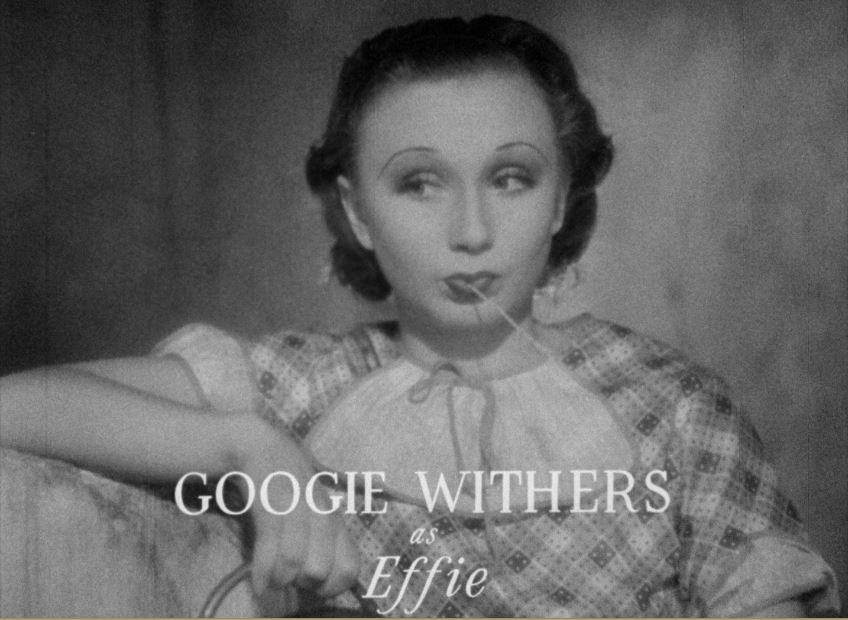
This one has my favourite cast including Googie Withers in an early role, Powell stalwart John Laurie and two more legends Felix Aylmer as Lord Carnforth and Cecil Parker Sir Arthur Harding. Hugh Williams, once again, plays Hugh Williams… he was totally “method” on this one.


Film historian and Powell specialist, Ian Christie writes the booklet essay and expects that modern audiences will note Powell’s ingenuinty in resolving the plot and story line with “…the ingenious use of a BBC broadcast SOS message (the play had a message tapped out in morse code) that is striking. And even more, the montage sequences Powell and Dalrymple devised, first for Alan’s journey to the New Forest inn, and then for his return by plane from Paris.”


Behind the Mask (abridged reissue version of The Man Behind the Mask (1936)) (1944)


This last film was long considered lost until the discovery of this abridged version from the US which makes for a slightly unbalanced tale in terms of the master-mind behind the operation and the grandiose science fiction elements of his secret base… some 40% is still missing. That probably wouldn’t elevate this into a classic but it would have explained more about the grandiose plans of the chief villain, The Master aka Paul Melchior as played by Maurice Schwartz.


As with all the rest, it is charming and well made romp with good performances from Donald Calthrop especially as Dr H E Walpole and Jane Baxter as June Slade. Hugh Williams also gives another example of the Hugh Williams School of Acting. It's an enjoyable romp that takes in old school friendships and betrayal, masked balls, kidnap and chase, country pub stand-offs - with Esme Cannon as a waitress - and mystic hokum for the deranged conclusion. Another very entertaining ride!


Special features


The whole set feels like a celebration of British film preservation and specifically the BFI with both Inside the Archive extras showcasing the steps taken to restore and preserve the work with not just the head of departments but also specialists within shown at work in the painstaking process which is by turns stressful in terms of the unknown condition/completeness of original materials and most rewarding when a previously-lost film can re-emerge.


This box set is a bargain in terms of it’s breadth and depth of information and also in showing the passion involved. So, please look at these extras as extra-special!


Newly recorded feature commentaries by Marc David Jacobs (Rynox, Behind the Mask), Lawrence Napper and Dom Delargy (Hotel Splendide), Dr Josephine Botting and Vic Pratt (The Night of the Party), and Ian Christie (Her Last Affaire)


Riviera Revels – Travelaugh No.1 and No.10 (1927, 26 mins total): Powell himself appears in these rare short comedy curiosities from the silent era, with optional audio commentary by Bryony Dixon, curator of silent film at the BFI


Inside the Archive: Riviera Revels (2024, 12 mins): Bryony Dixon explores the origins of Riviera Revels and Michael Powell’s work on them


Inside the Archive: The Early Films of Michael Powell (2024, 42 mins): a new documentary on the BFI National Archive’s role in rediscovering and remastering the early films of Michael Powell


Visions, Dreams and Magic: The Unmade Films of Michael Powell (2023, 41 mins): a new documentary exploring some of Michael Powell’s unrealised films


Interview with Erwin Hillier (1988, 26 mins, audio): in these extracts from an interview recorded by the British Entertainment History Project, cinematographer Erwin Hillier recalls working with Michael Powell


The Archers in Argentina (1954, 21 mins): Michael Powell and an international film-star entourage are captured on camera at an Argentinian film festival in this home movie footage shot by Emeric Pressburger, with optional audio commentary by Marc David Jacobs


Image galleries


There’s a handsome illustrated booklet featuring contributions from James Bell, Marc David Jacobs, Lawrence Napper, Pamela Hutchinson, Ian Christie, Bryony Dixon, Dr Josephine Botting and Kieron Webb; notes on the special features and credits. It’s only available with the first pressing but is an essential companion!


So, go straight to the BFI’s shop in person or online and buy this set immediately!


*Powell writing in his autobiography, A Life in the Movies after seeing an article in Picturegoer magazine, aged 15 in 1920. Quoted by James Bell in the booklet for this set.


**On the British Sets – The Crime of quota quickies’, EG Cousins, Picturegoer, 9 September 1933, p28


***  A Life in the Movies


Sunday, 31 December 2023

Art for art’s sake… The Age of Consent (1969), BFI, Cinema Unbound, Film on Film


“… to see a painter sit down and paint a girl, this could be exciting, but I had the hardest time explaining to my scriptwriter that this didn't excite me at all. What interested me was the problem of Creation and the fact that this creation in the case of the painter was very physical. He will have to struggle, to fight, even more strongly than he will move away from reality.” Michael Powell


This was Michael Powell’s last feature film and his best film since Peeping Tom for me although not without its issues. Co-produced with the film’s star, James Mason the film is also notable for being Helen Mirren’s first and after all that goes before its politeness or mischief that notes her membership of the Royal Shakespeare Company during the end credits. At least, that’s a view a more cynical viewer might make of a film in which the actress is described by one character as being “all t***s and legs…” and we do indeed see a lot of Helen in this film but, following the lead character’s aesthetic indifference and the good intentions of Michael Powell, this has to be seen as necessary.


Mason’s character, Bradley Morahan, is in search of his artistic truth and has boxed himself into a lucrative corner as he watches his abstract works fetching a pretty price in a New York gallery, attracting buyers with the shallowest of motives all of whom are painted just a little too large. The gallery manager is over-pricing his paintings and it’s working but all Brad wants is to rediscover the authentic commitment to producing honest work. There’s only one thing for it, and he decides to return to Queensland from whence he came, not that his accent is giving that away, and rent a shack on an island on the Barrier Reef.


Harold Hopkins, Lonsdale and James Mason


The story is based on a 1938 novel by Norman Lindsay which was initially briefly banned in Australia (until 1939) and which featured the artistic relationship between a 40-year-old painter Bradley Mudgett and a 17-year-old “child of nature”, Cora Ryan. Lindsay was the subject of the film Sirens (1994) which made much of his free-thinking, bohemian lifestyle and attitude to nudity. That film is a less honourable take on the issue than Powell’s as any relationship between the people played by 60-year-old Mason and Mirren, 22 when filming began in March 1968, is purely artistic for almost the entire film and he’s not liberated by Cora’s physique or youth but by her potency as a subject for art.


It's very interesting to hear Helen Mirren talk about the film as one of the extras on the excellent Indicator Blu-ray set which has both the Director’s Cut, 107 minutes with more Mirren and the original score by Peter Sculthorpe, a leading Australian classical composer, and the 100 minute UK cut for which the studio pulled in Stanley Myers for the score – I prefer the former, which achieves more of a balance between the film’s tonality. Mirren enjoyed the experience, her first major role in a feature film*, and that’s important given that her nudity in the film could have been seen as exploitative. She was 24 and with significant theatrical experience not least with the RSC, and says she was well treated by Powell, noting that this was not always the case with others.


Helen Mirren, RSC on tour


She says that the film could have taken an altogether darker route in terms of Cora’s relationship with the much older man but, as Martin Scorsese says in an interview on the set, confirming Powell’s views at the top, the film is all about the creation of art and the relationship between Cora is more about that than anything else. Scorsese points to this being a common theme running through much of the other director’s work from The Red Shoes through to Peeping Tom and even Honeymoon (1959). Brad’s eye is caught by the lines of Cora’s body, her energies and connection to the gorgeous landscape and it’s only in the very final minute that there is a physical interaction and one initiated by Cora.


Powell used some talented artists to give Brad’s work in progress the richness required and his artistic instincts are clearly shown to be returning the more time he spends in his hut. John Coburn is used for the lucrative e abstract works seen in the opening New York Gallery sale at the film’s start while paintings and sketches by Paul Delprat were used on the island scenes. This location was Dunk Island** off the Great Barrier Reef in northern Queensland a spectacular and raw part of this vast country.


Brad is disgusted with the whole process of the New York gallery sale and decides to fly back to his home country and find a wilderness in Queensland where he grew up. In Brisbane (?) he connects with an ex-girlfriend (Clarissa Kaye***) and the two are seen in bed in ways that will prove that in terms of Cora, his aim is artistic. This is a sexually active man but, not only does his art come first he is more of a “dromedary” in terms of his sexuality than his “pal” Nat Kelly (Jack MacGowran) who, frankly, needs to be on medication.


Nat’s slapstick laddishness is where the film veers a little off course along with the comedic characterisations of Cora’s dipsomaniacal and dominating grandma (Neva Carr Glyn) and local man-eater Isabel Marley (Andonia Katsaros). MacGowran (born and raised in Dublin) plays Kelly as an unlikable rogue and, as with Mason, his accent is a broad brush; he steals from his painter pal and is constantly on the make. If nothing else though the interactions with there three serve to highlight the innocence of the connection between painter and muse.


One performer without artifice is Brad’s dog, Godfrey as played by noted Australian terrier, Lonsdale. As with the other characters Godfrey lightens the tone in ways that allow us to appreciate the journey as the serious business of art, honesty and genuine connections evolves.


It’s ultimately a happy ending for Powell who sneaks enough meaning in there to remind us all what he was capable of. He may have found it harder to make films for the last quarter of his life but as Marty says, he never stopped making plans some of which involved him as well as his editor, Thelma Schoonmaker, eventually to become the third Mrs Powell.


We watched a 35mm print of the 2005 restoration and it looked glorious, wonderful colours and a tangible warmth that digital doesn't always convey in quite the same way. Such a treat to experience so many of Powell's films on celluloid. Thanks again to the BFI for this Season of Seasons!


*Helen Mirren also had a brief appearance in Don Levy’s harrowing Herostratus (1967) and played Titania in Peter Hall’s A Midsummer Night’s Dream (1968).


** I’m not sure it there’s a connection but in 1974 a small community of artists was established on Dunk Island by former Olympic wrestler turned tapestry maker, Bruce Arthur allowing a small group of creators to live and showcase their work to many visitors. It’s still there now, just about.


*** James Mason began corresponding with Kaye after the filming, and they were married in 1971, remaining so until Mason's death in 1984. He found a muse as well as Brad.


Friday, 22 December 2023

The Chaplin Touch… A Woman of Paris (1923), BFI with Mark Fuller, Cinema Unbound


Hollywood had been taught a new and sophisticated attitude to sexual relations by, of all people, Charlie Chaplin in a Woman of Paris…

Michael Powell, A Life in Movies


There was a moment when Edna Purviance’s character Marie St Clair, is being visited by her former love Jean Millet (Carl Miller) to discuss his painting her portrait. She’s seemingly done well for herself but as one of her maids opens a draw to fold away her washing, a man’s shirt cuff falls to the floor and catches the eye of Jean who notes as does the audience, the significance of such familiarity with a man’s wardrobe. It’s the economy of the moment and Chaplin’s cinematic intelligence that catches our attention now as we sit and do the maths for subsequent releases such as Lubitsch’s The Marriage Circle (1924) or Three Women (1924) and Monte Bell’s Lady of the Night (1925).


But we weren’t here to discuss the influence of Chaplin on his contemporaries but the impact of this film on an 18-year-old Michael Powell who at this point was just a regular cinema- loving bank clerk based in respectable Ringwood, Hampshire as Archers expert Mark Fuller explained in his informed introduction. I would say that Mark has forgotten more about Powell and Pressburger than most remember if not for the fact that I don’t think he forgets any details of these two. His diligence and thirst for knowledge led him to the rediscovery of Smith (1939) a short film Powell made to promote the Embankment Fellowship Centre with Ralph Richardson (and Wally Patch!).


"... using objects for their metaphoric and metonymic value..."*

Years later, interviewed by Kevin Brownlow in an unpublished article for Time Out, Powell recalled how he was collecting everything in a “romantic sort of way… and I looked on films the way that people did then, as a wonderful new plaything, but not serious…”. Then he saw A Woman of Paris, in either the Boscombe Hippodrome of Boscombe Cinema near Bournemouth, and “I was absolutely knocked by it, because suddenly the whole medium grew up.”


For Powell, Chaplin a clown with “all the power in the world”, had not only made a “grown-up” film, he’d done it out of pure love and loyalty for his long-time on-screen partner Edna Purviance, who was given the prominence you would expect of an Italian diva or a Pickford, Gish or Talmadge in a project with something of his innocence but also sense of tragedy based on the worldview you could expect of a man who grew up in the poorhouse. Charlie and Edna had also been romantic partners until his marriage to Mildred Harris but they remained firm friends and he supported her throughout her life.


The film was not a smash hit – perhaps Powell suggested, it was not just realistic but too realistic – but he felt more modern viewers should be made aware of it and the influence it had on the cinematic language of the twenties and beyond. Modesty would have forbidden but we certainly watched this film with fresh eyes after learning of its impact on Powell himself. Props to the BFI for including it in the Cinema Unbound programme and to bringing in Mr Fuller to explain the connection.


Adolphe Menjou and Edna Purviance

Charlie Chaplin not only wrote, produced and directed the film by 1976, he had even written the music for it which today we heard on a recording conducted by Timothy Brock. I must admit that I don’t always like Chaplin’s score but this one, possibly because if was for Edna, rang so true to the narrative and was like an audio commentary on his intent from the 87-year-old to his 34-year-old self. It was the last of his films he scored and it was to be his final completed work.


Chaplin was frustrated by the reaction to the film and it’s a shame for Edna that it didn’t raise her profile in the way it did for Adolphe Menjou who was to feature in Lubitsch’s The Marriage Circle and many more. Edna is superb though and in addition to wearing some fabulous costumes that would have graced a Borelli or a Boardman, gives such a nuanced and commanding dramatic performance. Her timing is, of course, perfect and whilst Chaplin’s comedies had always required dramatic chops, here she’s inverted her usual performance with some controlled comedic touches mixed with a dominant and thoroughly convincing lead performance as a woman torn between two lives and loves.


There are Germanic touches in the sets and lighting and the film feels almost more European than American but what would you expect from a boy from Kennington. But the themes and the timing – sometimes comic and otherwise tragic – are all his own.


Edna looks nervously towards the future

The film opens with a bravura shot of a small house in a French village with the enclosing camera gradually revealing the figure of a young woman staring with concern from her bedroom window. The young woman, Marie St Clair (Purviance) nervously packs her bags in her room and as her father creeps up the stairs and locks her door, Chaplin gradually reveals the scenario: an elopement is being planned and both sets of parents disagree.


Marie’s lover Jean Millet (Carl Miller) helps her climb down from outside her room and they walk to his house where an equally frosty reception awaits. What has caused this parental disapproval is not made clear but it’s deep-seated. Refused entry back home, the couple head for the station to catch a train to Paris: their city of hope. Jean leaves Marie to go and collect his things but, tragedy strikes when his father has a heart attack and dies. A fateful miss-communication then occurs as the lovers telephone each other and Marie, thinking than Jean has just got cold feet, heads off to Paris alone.


A year later she seems to have found her feet exceptionally well, being the kept woman of Pierre Revel (Menjou), “the most eligible bachelor in Paris”, living in luxury and spending her time socialising or being prepared for the next occasion along with her proto-flapper buddies Fifi (Betty Morrissey) and Paulette (Malvina Polo). Everything is well except for the fact that Pierre is planning to marry the wealthiest spinster in Paris. The story is revealed in the papers but Marie doesn’t know until her helpful friends show her, she hides her disappointment well: she’s learned a great deal of city ways. Pierre tells her that it won’t change their relationship but she’s not convinced.

Parisians un-winding...

She sulks and stays in whilst her friends head off to an outrageous party in the Latin Quarter… Chaplin gives a good party and clearly enjoys showing the risqué side of life as the drunken debauch is topped off by an elegant striptease in which a young woman (Bess Flowers - sometimes dubbed the Queen of the Hollywood Extras) is gradually revealed to the on-screen audience as a white sheet is slowly unwrapped: glasses and monocles are raised even by the women and a drunken man faints in dis-belief.


Fifi tells Maria she can’t miss out and she heads over only to open the door to the wrong address, a small apartment home to a struggling artist: it’s Jean. So, chance has re-united them and whilst their guards are now up, Marie invites Jean to paint her. As Jean arrives wide-eyed at her opulent home Marie finds out with a shock the reason for his none-appearance and her sympathy shifts back but there can be no simple reconciliation especially when Marie sneaks at peek at her portrait and, rather than paint her in the stunning satin gown she has chosen, Jean depicts her as she was when he left her. This can’t be healthy and it’s a very neat touch from the director.


Carl Miller

But as romance is re-kindled, parental dissatisfaction again plays a part as Jean’s mother – disapproving of Marie’s lifestyle – makes him promise not to marry her and he agrees only for Marie to overhear at the door… The course of true love never runs smooth and in real life second chances are few yet Chaplin’s players are compelled to try and there’s a very elegant mess building that he plays out as well as in any of his comedies. The relationship between Marie and Pierre is especially well handled, so many then transgressive aspects left unsaid but the full meaning conferred perfectly by these two wonderful players.


Ultimately the film stands as testimony to Chaplin’s enduring qualities as an instinctive and innovative filmmaker as well as to his loyalty and influence. It should also ensure that Edna Purviance’s reputation remains as simply one of the finest screen actors of the period: not just a "straight guy" or a foil but the emotional foundation on which he built some of his finest work. As for Mr Powell, we can see the inspiration he took from this work and the role Chaplin had in inspiring his fellow Englishman: a daisy chain of genius.


Powell loved this simple intertitle as Pierre laughs at Marie's frustration: a perfect moment...
Edna abides...


*Chaplin: Genius of the Cinema (2003), Jeffrey Vance,  New York: Harry N. Abrams. 


Wednesday, 20 December 2023

Composing film… The Tales of Hoffmann (1951), BFI, Cinema Unbound, Film on Film


There was no script… we simply followed the score.

 Michael Powell, Ecran (1979)


This is a spectacular, complex and unusual film from an extraordinary set of film makers, one that crosses boundaries and responded to the formality of opera and ballet with something like the improvisational techniques of silent film. The director, Michael Powell, was always at pains to highlight the contributions of his team too all of whom were among “the most talented artists in the World…” who brought “excellent ideas…” leaving him the job to “choose from them and to elaborate, little by little the film you saw.” 1 So, some cinematic "jazz" with which to capture the dance and the song, with the finest players and with Pressburger and Powell exercising the kind of leadership that only true improv virtuosi can command. Powell's ambition was to "compose film" in the same as the score had been created and to do that, he started with that music and composed scenes, shots and segments in silence, working to the rhythms and the notations of the source material.


Based on Jacques Offenbach’s 1881 opera Les contes d’Hoffmann, which was itself inspired by the stories of E. T. A. Hoffmann a German writer, artist and musician from the turn of the nineteenth century who was very influential, also writing the story that became The Nutcracker. His stories were fantastic and this strangeness was as perfect for adaptation on stage as it is for film. Here The Archers recorded Offenbach’s music first with the Royal Philharmonic Orchestra conducted by the mighty Sir Thomas Beecham and including world class singers from the Royal Opera House company and elsewhere.


This was a screening on a fresh 35mm print taken from the BFI’s national archive and the colours were good enough to eat although I was prevented from nibbling the screen by the diligence of the BFI’s long-suffering stewards. This was my first-time viewing Tales even though I’ve had the Blu-ray of the 2015 restoration for some time; some things just have to be done right and a packed NFT1 is the only way to experience one of the peaks of The Archers’ glory years.


Moira Shearer

The Tale of Moira


Yes. It was more daring but also rather clumsily put together. … Powell put all the action into the first third of his film and was then left with long static stretches almost to the end. For a man with such a gift for cinematic effect it seemed very odd. 2


Moira Shearer was never a women lacking opinion and you can imagine feisty discussions across the breakfast table with husband Ludovic Kennedy throughout their long marriage. Shearer had a complex relationship with ballet and film after her experience with the hugely successful The Red Shoes. Pressburger she liked, Powell much less so, and yet she respected his abilities working with him three times, the last on Peeping Tom when another actor had dropped out – according to Powell - with a cameo that fills the film with life and yet failed to prepare her for the end product; another example of “Michael’s sadistic streak” for her.


Here she was lured not only by the reassuring presence of Robert Helpmann and Leonide Massine but especially by the choreography of Frederick Ashton with Powell and his cameraman Christopher Challis filming with less editing and artifice than the director used, with Jack Cardiff, on The Red Shoes – and once again I can heartily recommend Pamela Hutchinson’s new book on that fascinating subject3. Here Fred was the director and as Shearer said in 1994, “This was purely dance - it was choreography... It was very enjoyable - we had to hit a few marks for the lighting and there was a certain amount of stopping and starting for technical reasons, but working with Fred was such a pleasure and relief.”


 Moira 3, Ludmilla 1


There is certainly more uninterrupted footage of Shearer’s abilities and, as she said herself, her technique is not only better than three years’ earlier but she is allowed more room for expression by Ashton. The Red Shoes may be the best ballet film but these sequences are the best of Shearer’s ballet on screen; incredible energy and control even on perfect point as she whirls around flicking her legs in high step with the metronomic quality of an automaton during the Olympia/Doll sequence and so expressive during the opening segment set in a theatre for The Ballet of the Enchanted Dragonfly.


She has three main dances and dominates the film’s first hour  and exhibits the honed physique of a top-level prima, almost painfully thin but with the leg strength of a professional footballer. Ballet is surely the most demanding of the arts hence the confusions surrounding her life and that of her character in The Red Shoes. Art for art’s sake is the aim with both films but none of these players got here without the thousands of hours isolated dedication. No imposters here, just world-class practitioners as Powell said.


Robert Helpmann as Lindorf

“Helpmann’s theatrical persona is almost more than an ordinary film could bear…” 4


Which brings me to the genius known as Robert Helpmann who is also freed up by this film compared with The Red Shoes, he plays Hoffmann’s nemesis Councillor Lindorf and various other characters throughout – Coppélius, Dapertutto, Dr Miracle - who attempt to thwart the writer’s romantic ambition. He’s so dynamic both as an actor and dancer, having worked with the Royal Ballet - the Vic-Wells Ballet as it began - and acted through most of his career in mainly Shakespearean roles as well as other classic theatre. He is so expressive and fits in perfectly with the mad make-up of Connie Reeve and the eye-popping Oscar-nominated designs of Hein Heckroth.


Helpmann was lauded on stage and occasionally on screen, he danced with Margot Fonteyn in Frederick Ashton's Façade and many more and, of course with Shearer as her star rose. You have to wonder again at why there was so much of a reaction to her and not him. As ballet critic Clive Barnes wrote after a full and frank exchange with Shearer for a Dance Magazine interview in 1962: I wonder how much we in British ballet circles were prejudiced, consciously or subconsciously, against the glamorous Shearer. 


Let the regaling commence... Robert Rounseville starts singing...


The Tales of Hoffman


The story begins in Nurnberg in the Opera House where a young writer, Hoffmann (the opera singer, Robert Rounseville, later to sing You’ll Never Walk Alone in Carousel) is watching Stella (Shearer) a ballet dancer performing The Ballet of the Enchanted Dragonfly. Watching also is Lindorf who intercepts a note she has written to the writer on a doily setting the scene for another romantic disappointment. In his BFI Classics book on the film, William Germano, describes this six minute sequence as acting as an introduction to the style of the film, with Challis' camerawork, Reginald Mills' editing and Frederick Ashton's choreography - all dynamism and laced with erotic intent - all working together to "...give the audience a view of Moira Shearer doing what they came to see her do: dance". 4 


Would you hear the three tales of my folly of love?


In scenes eerily reminiscent of our school trip to see King Lear at the Liverpool Playhouse in 1979 during which we took a half-time drink in the Shakespeare public house, never to return to the play… Hoffmann joins his pals in Luther’s Tavern during the intermission and, as the drink flows and the ornate pipes are passed around, Hoffmann, already moody and disheartened, decides to regale his pals with three stories of his thwarted love. Whilst Lindorf is traditionally played by the same actor, this section of the opera normally involves three different singers or, in this case, two dancers miming and one singer singing.


Leonide Massine and Moira Shearer

The Tale of Olympia


Shearer returns in the remarkable puppet dance of Olympia, an automaton devised by scientist Spalanzani (Grahame Clifford) and magic spectacle maker Coppélius (Helpmann) who proves that animated beauty is in the eye of the beholder after all, as they try to convince Hoffmann that not only her intentions but her entire being is true… Shearer’s movement as the puppet is technically superb and she holds the eye with her control, precision and bounce; she snaps into positions and out again with an almost contemptuous ease; she's here to show what she can do encouraged by the best choreographer in the business. She's matched by Helpmann's charismatic energy as well as the verve and skill of Ashton himself playing the half human/half puppet, Cochenille.


The Tale of Giulietta


A completely different style is required for this take as we find Hoffmann in Venice pursuing the heart of Giulietta as danced by Ludmilla Tchérina another Red Shoes alumnus and another prima ballerina who danced across Europe but primarily as principal dancer with the Ballet des Champs-Élysées. She is earthier than Shearer and well able to play the femme fatale in this battle for soul and sensuality as, under the influence of the magician Dapertutto (Helpmann) Giulietta captures Hoffmann’s reflection and gains possession of his soul. The writer must duel with her former paramour, Schlemil (another Red Shoes star, Léonide Massine) to get the key to free her but is it just another ruse… your guess, it is after all, an opera based on a fantasy.


Helpmann and Ludmilla Tchérina

The Tale of Antonia


This final segment is, in the restored version, the longest and most purely operatic with Hoffman in love with Antonia played and sung by the American opera singer, and future Dr Kildare star, Ann Ayars. Antonia’s mother, also a singer, has already died young as a result of consumption and her father hides her away on a Greek island – a magnificent setting again from Heckroth – in an attempt to prevent her from singing and also succumbing to the same fate.


This time Helpmann plays Dr Miracle who was actually responsible for the death of Antonia’s mother and who claims to channel the spirit of her mother in encouraging her to sing and die. There is magnificent duet between Ayars and Miracle (sung by Bruce Dargavel) as the spectral conclusion is reached among some of the film’s most powerful imagery utilising more in camera trickery than the rest of the film combined. It almost does for pure opera what The Red Shoes did for cinematic ballet and no doubt there was a similar dislocation of certain snobby noses.


Ann Ayars and Robert Rounseville

After the fatal climax it’s back to the opera’s gorgeous main theme and multiple Shearer’s converging into one as she completes the dance at the Opera House before heading to find her lover in a most dishevelled state at the cellar; having told and drunk too much, forever to be unlucky in love and outmanoeuvred by Lindorf…


The film cuts to Sir Thomas Beecham conducting the last few notes and closing the book as a Made in England stamp is thumped down – The Archer’s pride in helping to establish an English operatic tradition just as Shearer’s boss, Dame Ninette de Valois, the Irish-born, Russian trained former dancer who was aiming to create an English tradition in ballet through the Royal Ballet.


Again, this underlines the creative and improvisational power of Powell and Pressburger, the former may have known more about ballet than he let on but it was the latter who understood opera. The fact that they could take all of these high-powered talents and produce this coherent whole says so much. Perhaps shooting the film as a silent was liberating with Thelma Schoonmaker says in the Studio Canal Blu-ray interview, that her former husband kept on saying how free he felt. Maybe not amongst their greatest films Hoffmann is surely the finest example of their abilities as collaborators.


It's also an eminently rewatchable film as more details of dance, design and direction are revealed with every viewing. A film for life and love.


1.       Interview by Bertrand Tavenier in Midi-Minuit Fantastique, October 1968

2.       An Autobiography of British Cinema (1997), Brian McFarlane, Methuen/BFI

3.       The Red Shoes (2023), Pamela Hutchinson, BFI/Palgrave Macmillan

4.       The Tales of Hoffmann (2013), William Germano, BFI/Palgrave Macmillan


Sir Thomas Beecham
Ludmilla Tchérina and the woman she mimes for, Margherita Grandi
Pamela Brown
Shearer dancing with Edmond Audran (Tchérina's husband)

An orchestra of Helpmanns... 50 years before The Matrix!