Showing posts with label Fay Wray. Show all posts

Sunday, 23 October 2022

Normal men... The Most Dangerous Game (1932), Eureka Masters of Cinema Blu-ray, Out Now.


Hunting is as much a game as stud poker only the limits are higher.


I’ve just been to see the latest superhero film, Black Adam, starring Dwayne the Rock Johnson as the titular anti-hero and coming in with a budget of some $190 million, relatively modest for such films. Back in 1932-3 King Kong was something like a superhero film, laden with state-of-the-art special effects, and it had a then big budget of $672,254.75, which is worth around $15 million in 2022 indicating that film production costs have vastly outpaced inflation. The directors of King Kong, Ernest B. Schoedsack and Merian C. Cooper were producers on The Most Dangerous Game, which was shot on the same sets at night when most of the crew we asleep.


Working very long overtime were Fay Wray as cast away, Eve Trowbridge and Robert Armstrong as her brother, Martin; playing drunk most of the time but possibly that was Bob’s way of coping with the insane schedule. The film’s a very neat 62 minutes, just two-thirds of the length of Kong with around a third of the budget, and directors Irving Pichel and Ernest B. Schoedsack, pack a lot of disturbance and menace in that fraught hour, even with few moments still missing from the existing stock.


Dangerous Game is based on Richard Connell’s classic 1924 short story, which was much lauded and clearly touched a nerve, being reproduced in many compilations to this day and forming the basis of another RKO film in 1940 and, as film writer Kim Newman says in his video essay, influenced many films since. It’s a primal story that touches on the taboos underpinning our so-called civilisation.


What makes you think it isn’t just as much sport for the animal… as a matter of fact we admired each other.


Wray and McRea on a familiar-looking log bridge.


As Newman says, Dangerous Game is absolutely pre-code and, indeed, it’s “one of a run of early 30s horror films that goes too far…” with suggestions of Zaroff’s perversions; he only wants to have his evil way with Fay Wray after his blood is up and the hunt is done, ordinary hunting had not been exciting enough for his libido: arousal is part and parcel of the hunting experience for him. The idea of murder as a sport also ticks more than a few criminal boxes whilst we also see our hero breaking one of the baddies’ backs. It’s graphic, sexually overt and makes the audience complicit in the hunt whether we like it or not.


The story begins in a luxury yacht as a group of men have a rather civilised discussion with their friend renowned hunter Robert "Bob" Rainsford (Joel McCrea) about his sport and whether or not it is indeed a “sport”. Bob’s pretty sure of himself, he thinks his recently killed tiger “enjoyed” the cat and rife game but, just as he concludes his argument, their ship hits a rock and very swiftly sinks. Soon there are men clinging onto wreckage as numerous sharks pick them off one by one… the would-be hunters turned quickly into prey. Bob swims ashore, the lone survivor and climbing into a thick jungle, gazes out sadly at his sunken friends – the swellest crowd on earth - and the treacherous channel lights that led them onto the rocks.


Bob thinks his luck is in as he spots a large house and makes his way with relief knocking on a gothic door to be greeted by the mute form of Ivan (Noble Johnson), servant of the instantly creepy Count Zaroff (Leslie Banks), a white Russian who escaped with most of his fortune and made his home in this remote island and who has a huge tapestry in his cavernous hall of a satyr about to ravish a woman. He offers Bob room and board, his educated poise conveying a whole tonne of weird who later that evening confesses that, when I lost my love of hunting, I lost my love of life… and love!


Leslie Banks


He introduces Bob to the Trowbridges with Eve instantly trying to communicate danger signals to Bob whilst Martin’s boorish drunken ramblings offer a prosaic contrast to the very abnormal atmosphere built up by Zaroff’s intense talk of the new sport he has invented. Zaroff has hunted the world over and became jaded, despite a close encounter with a buffalo which left a scar he keeps touching in moments of high emotion.  These occur whenever the Count discusses the loss and then rediscovery of his lust for life: tried to sink myself to the level of a savage by becoming expert in the Tartar war bow, but what I needed was not a new weapon but a new animal…


Later that evening, Eve comes to Bob’s room as her brother has gone missing, the two investigate and find their host’s trophy room filled with the heads of his human prey and the truth is finally revealed as Zaroff captures them and reveals Martin’s dead body. The most dangerous game is about to begin as the Count challenges Bob and sets him and Eve off into the jungle with the promise that if they evade capture by dawn, he will let them live and leave. Bob’s situation is life and death whilst Eve’s is arguable worse… Zaroff doesn’t kill the female of the species and his threat is clear, only after the kill does man know the true ecstasy of love…


The game of “outdoor chess”, follows with hunter matched against hunter and pits the wholesome couple well against the evil count who is not averse to shifting the odds in his favour… for all his intellectualising and rationalisation might is right and “do as thy wilt shall be the whole of the law”, leads only one way. He is the true horror in this film, the ultimate in fascistic sadism who serves only his own appetites no matter the misery he causes. With dialogue lifted from Connell’s original story, he is undoubtedly the challenge to our core beliefs the author intended and still men hunt animals for sport and each other for justice, territory and belief.


This restoration is presented in crisp 1080p on this Blu-ray from a 2K restored scan and features the longest, un-censored version. It remains a vital piece of filmmaking with superb performances and effects that place the players in the heart of back-projected rapids and wild nature. It’s not a film you’ll forget in a hurry and replays repeat viewing with a taught narrative that’s lean and mean.


As is usual with Eureka’s Masters of Cinema series, the special extras are indeed, extra special:

·         Optional English SDH

·         Brand new audio commentary with author Stephen Jones and author / critic Kim Newman

·         New interview with author / critic Kim Newman on the “hunted human” sub-genre

·         New interview with film scholar Stephen Thrower

·         There’s also a chunky collector’s booklet featuring a new essay by Craig Ian Mann, illustrated with archival imagery


The Most Dangerous Game is out on Monday 24th October, and is deservedly part of the Masters series; influential and nearly perfect in its execution…


The first 2000 copies come with a Limited-Edition O-Card Slipcase so get in as soon as you can to place your order direct from Eureka.


Would you trust this man?

We're normal men, just innocent men...

One of the superb matte shots, depth of field and gothic energy


Sunday, 11 October 2020

Rita, Stan and Babe too… Ballettens Datter (1913), Laurel or Hardy with John Sweeney and Neil Brand, Pordenone Day Eight


And so it ends with a medieval wedding with daft knights and kings dancing to a rag-time band and Stanley Laurel stepping on his princesses bridal train to reveal, “The End”. It ends with belly laughs from the family after eight days of a streamed Limited Edition of Le Giornate and the pledge to return in person next year. They made the best of what we hoped for and it was an experience that as festival director Jay Weissberg said, will have introduced new friends to the experience who will be there for the 40th Anniversary edition in 2021 even if at this stage, we don’t know where but we do know when.


The final day featured Danish dancing, Hardy romancing and Laurel prancing; it was pure Pordenone.


Rita Sacchetto


Until today I’d never heard of Rita Sacchetto, the German star of Ballettens Datter (1913) but now I know that she was at the forefront of new approaches to modern dance having been inspired by Isadora Duncan and learned ballet only to take her instruction towards freer expression, mixing pantomime with dance to create Tanzbilder (“dance pictures”), aimed at “completing” works of art through movement. She attracted the attention of Loie Fuller, known for her Serpentine Dance, which was captured on hand-coloured films at the turn of the century, and toured America with her.


Sacchetto dances in Holger-Madsen’s film and as accompanist John Sweeney said, it was not ballet and quite unlike anything he’d seen as a dance specialist. Professor Mary Simonson of Colgate University, filled in the dancer’s background in the after screening discussion and made me go back and watch those sequences again.


In a week full of insights into silent film musical accompaniment John explained the difficulties in playing with dance on screen as the performance is quite different in tone and pace to the drama that surrounds it. In this instance, Holger-Madsen’s focus on doorways and general framing, acted as a natural cue between changes in the narrative. It’s a very competently directed film as you would expect from the standards of Danish film at this time.


The Count obsesses before he controls...


Sacchetto plays prima dancer Odette Blant who is being romanced by Count de Croisset (Svend Aggerholm), who watches her performances in love-struck awe. But when she agrees to marry him he tells her that the condition must be that she gives up the stage. A year later Odette’s getting itchy feet and he chides her for dancing in front of the mirror - Holger-Madsen (also known at the time as Holger-Hyphen…), is very fond of mirrors and they give depth to this scene and others.


Odette goes to the Theatre where she used to dance and meets old friends including Delage, the manager and, when their leading dancer injures herself, he calls Odette to stand in – obviously they couldn’t afford an understudy… She agrees and lies about seeing her sick aunt whilst the Count, happy to enjoy watching other women dancing but not for others to enjoys his wife… goes to the theatre and the inevitable happens.


Love this sequence, it explains so much.


The Count then compounds his illogical position by accusing Odette of having an affair with Delage, a duel is arranged and things look like taking a dark turn, all because of his old school pride.


Ballettens Datter is another fine restoration from the Danish Film Institute and whilst the plot creaked to jaded modern eyes it’s a very entertaining window on contemporary mores and the eccentrically wonderful performance art of Rita Sacchetto.


With joyful synchronised serenades from maestro Neil Brand, Laurel or Hardy (US 1916-1925) raised the whole issue of fate and predetermination in slapstick comedy. Living in the era of hot-take history, many folk have difficulty understanding the nature of events, I mean, what took Stan and Ollie a decade to find each other? Didn’t they know?! It’s one of cinema’s great journeys and, whilst it’s always odd to watch one without the other, they were always a class act and it’s fascinating to view them on their way up when you’re constantly reminded of Buster Keaton’s comment, “Chaplin wasn’t the funniest. I wasn’t the funniest. Stan Laurel was the funniest.”


Runt and Plump

The Serenade (1916) was first up and was part of the period when the duo were “seeing” other comedy partners in this case Billy Ruge as Runt to Oliver Hardy’s Plump. Now clearly this is sizeism of the worst order but it is bloomin’ daft and very funny and it’s exactly why my Granddad Jim (yes, he was James Joyce, but the amateur boxer and carpenter variant) loved these men. I always think of Jim watching Mr Hardy’s work and here he oozes comedic charm as a tubby tuba player annoying his neighbours and fighting with Ruge’s Runt for the hand – and other parts – of the Bandleader’s daughter played by Florence McLoughlin.


Sermon on the mount...


Forward five years and Oliver was at Vitagraph for The Rent Collector (1921) and this was the first in a six-year period as part of writer-director Larry Sermon’s company. Sermon was Vitagraph’s biggest comedy star and here he gives himself the difficult task of becoming a rent collector in one of the roughest parts of town. Hardy is Hurricane Smith, a beardy hoodlum not given to polite negotiation having thrown the previous rent officer out of his window to his braying gang below. It’s the same moves from Ollie just different intent – he’s a lot more violent - and he cuts a darker figure than usual as the fearsome Hurricane bopping the opposition at will, winging them over his head and taking advantage of the charitable women of the mission. At Vitagraph Babe worked mostly as “chief comedy support”; he was always a team player and worked very well with Sermon who reputedly taught him golf!


Santa knows Stanley, he knows...

Over to Stanley and Detained (US 1924) from Selznick Pictures where he made a dozen films with Joe Rock after leaving Hal Roach. Rock tried to avoid paying him his due and so, fed up with trying to get blood out the stone, Stan went back to Roach.  In his notes Rob Stone therefore gives credit to the parsimonious Rock for driving Laurel back to the place where he’d end up with Hardy. In Detained, Stanley is rudely interrupted from his task of watering trees in the park by an escaped convict who swaps clothes leaving him to be arrested by the cops and interred in the con’s place. In his own way, Stan Laurel was Kafka…


“Shakespeare said it – No woman can make a fool out of a man. But she can give him a wonderful start.”


Clyde Cook and Noah Young hedge their bets


Moonlight and Noses (1925) sees our hero back at Roach, co-scripting and directing Australian comedian Clyde Cook as well as a young lass name of Fay Wray. Rob Stone says that Cook influenced Laurel and vice versa, and here he is in a duo with Noah Young as a couple of bungling burglars, showcasing a similar slow-paced delivery and relationship to the camera. James Finlayson’s in it too as Professor Sniff, “goofy half the time and cuckoo the rest…” and Laurel writes a great newspaper headline, just read your way down this one…


Cook plays the brains of the outfit but that’s not saying much and, as they break in to Prof. Sniff’s house, he agrees to let them off on the condition that they steal the body of Hemmingway Toots from the graveyard so he can prove his medical point (no wonder some have had enough of experts…) Needless to say, things don’t go to plan but you can sense Stan’s cheek and professionalism behind it all. Also, that Fay Wray, what a cracker, she’ll go onto to bigger things, mark my words!


Fay Wray, James Finlayson and Tyler Brooke 


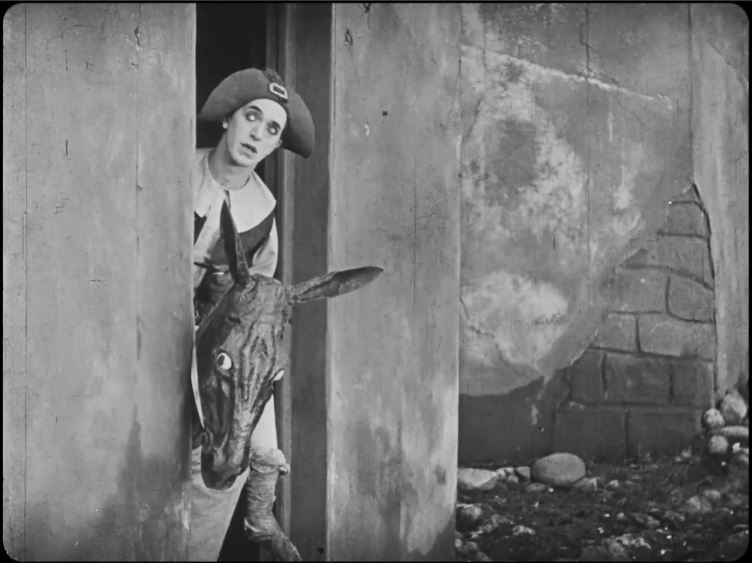
Only half of When Knights Were Cold (1922) survives but it ain’t half funny, especially Stan’s “horse” which is basically just a stuffed head on a stick, with two fake legs over an equine girdle. This, along with such fancies as taking a watering can to trees, and then to a fast-growing vine in this film, shows, to me at least, Laurel’s very Lancastrian humour, revelling in the surreal and the plain daft. That said Frank Fouce, who wrote and directed was born in Hawaii so what do I know? Stan is Lord Helpus who is out to rescue Princess Elizabeth New Jersey (Catherine Bennett) form the evil clutches of the Prince of Pluto (Stanhope Wheatcroft) and his numerous guards.


There’s one moment when Lord Helpus and a guard are so bored with their swordplay, they both lean against the wall tapping swords in a perfunctory way before Helpus kicks his adversary out of the window. Throughout Stan looks direct to camera, Mabel Normand style, but with his own particular twinkle; so much comedy to give. People may look for the Laurel persona in these films but he was clearly a flexible performer who if he was looking for his own defined style like Chaplin or Keaton, hadn’t yet found it. It’s chicken and egg or, perhaps, man and papier-mâché horse.


Which is where I came in. See you next year Giornate Family!


you can lead a fake horse to water...


Tuesday, 30 October 2012

My funny Halloween... Mystery of the Wax Museum (1933)


"I felt that he was not flesh and bones, that he was part of the steel of the camera…"

So said Fay Wray after being directed by Michael Curtiz in this strange film from one of cinema’s most prolific directors. If you don’t know Curtiz by name then you’ll certainly know him by his pictures which include everything from the rare silents such as  Red Heels, to massive blockbusters like The Adventures of Robin Hood and niche features like Angels with Dirty Faces and Mildred Pierce...Then there was a little something called Casablanca…and White Christmas!


 It’s hard to reconcile such a broad body of work and it’s difficult to say that there was anything like a “Curtiz style”, other than a high level of professionalism, working – hard - with the best people, as Wray’s quote testifies, and smoothly-efficient story-telling.

Mystery of the Wax Museum was still relatively early in the Hungarian-born director's career and it shows the influence of his time in Germany (where he made the aforementioned Red Heels (Das Spielzeug von Paris), Einspanner Nr 13 and dozens of other intriguing silents). There are certainly a lot of expressionist touches; dark shadows pervade the film and characters are framed at odd angles against the scenery.


One of the last films to be made using the two-strip colour, to emphasise the “horror” no doubt,  this does sound very much like a straight-ahead pre-code horror but it has more style than you might expect and is still a little chilling to this day…a little haunting or maybe just plain weird! Tod Browning eat your heart out!


It begins in London in the early 1920s where down a dark and dingy street, Ivan Igor (Lionel Atwill) is a sculptor of genius who, unaccountably, operates a wax museum. Art critics are wowed and want to exhibit his incredibly life-like sculptures at the Royal Academy.

However, Igor’s  beautiful creations – one of whom looks very much like a young Fay Wray… aren’t pulling in the crowds and the museum’s owner Joe Worth (Edwin Maxwell),  has a plan to balance his books by burning down the museum and cashing in the insurance money

Lionel Atwill and Allen Vincent
Igor tries to stop Worth but is knocked out as the fires leap all around him and his handiwork melts grotesquely before his eyes…

We shift forward a decade to New York City on New Year’s eve 1933…as New Yorkers celebrate a grimly-familiar face watches them with disdain… It’s Igor, who has somehow survived and is set to open a new wax museum in the city.

Glenda Farrell
But all is not quite right, Florence Dempsey (mouth almighty Glenda Farrell for whom playing a tough-fast-talking journo became a career) is sent out by her charmless editor, Jim (Frank McHugh) to try save her job by finding a story in the apparent the suicide of a model named Joan Gale (Monica Bannister).

The girl’s body is taken from the morgue and Florence starts to think that she might be onto something…

The model’s boyfriend, rich-kid George Winton (Gavin Gordon), is implicated but Florence thinks differently. Her nose for a story is so good you wonder how she struggles to find news!

Yep, "pre-code"... Fay in those shorts
We switch to Florence's apartment where roommate Charlotte Duncan (Fay Wray) is performing some gratuitous (very much “pre-code”) exercises in shorts… Charlotte’s fiancé Ralph (Allen Vincent) works at Igor's museum and takes the girls along to the opening. Here they encounter Igor who is wheelchair bound and crippled following the fire in London. His hands were severely damaged and he has to rely on the hands of Ralph and other less wholesome assistants.

He unveils a waxwork Joan of Arc who looks startlingly life-like… and frankly behaves like a man with something to hide!


More than this he is entranced by Charlotte seeing her as the exact likeness of his Marie Antoinette… one of those lost in the fire. Those familiar with Carry on Screaming might spot where this film is headed right about now. But there is still something genuinely creepy about proceedings and this formula was yet to become stale.

I won’t go any further with the plot suffice to say that there is genuine peril and Charlotte really shouldn’t be so trusting! The climax is well-handled and Curtiz builds the tension well – we were squirming in our seats right till the end.

Frying tonight?!
The sets are superb, all larger than life and owing something again to German expressionism (Curtiz was Hungarian but learned his craft in the Weimar). The cast is uneven, Lionel Atwill is a little wooden (or should that be waxen?) whilst Fay Wray was a little subdued – though her time was to come with something more sizably scary in her very next film.

Glenda Farrell takes the plaudits and marauds her way through proceedings firing off one-liners and casual comments with machine gun rapidity – she was reputably able to say 400 words in 40 seconds… She grounds the action in someone believable and even confounds expectations with her choice of romantic partner at the end. An interesting “broad”, she enjoyed a long career in film and television, including a series as a fearless investigative reporter.

Monica Bannister... still life
But, spare a though for Monica Bannister who had to play a waxwork dummy for long minutes on end…

Mystery of the Wax Museum is stylishly atmospheric and well worth a showing at your Halloween party. Don’t expect to be too frightened but you’ll certainly be amused and entertained. Available from Amazons.

"Mouth almighty!"