Showing posts with label Holger-Madsen. Show all posts

Tuesday, 29 December 2020

Asta enlightened… Mod lyset (Towards the Light) (1919), Danish Film Institute Online, #Bosslady


The frivolous countess, who toys with men and their feelings the same way she played with dolls as a child…


This was Asta Nielsen’s last film in her Danish homeland and she’d already enjoyed much success in Germany and beyond – the first European screen superstar and a performer who helped establish the art of screen acting. From the start she was so measured in her expression, micro-managing her emotions in ways that were seemingly intuitive and which, even now, has you watching in vain for any sense that she’s consciously “acting”. Even with this melodramatic and largely predictable script she injects so much passionate febrility that you identify with even the shallowest of her emotions.


Acting has never been a competition – despite all those awards – but in Asta we can see the impenetrable security of someone who feels their way through any role and who never gives you doubt in her performance. She is always very much in the present on screen and engaging with her imagined surroundings as much as the direct narrative and other characters. At one moment, devastated by twists of fate, in floods of tears, she pulls her handkerchief to her mouth, biting into it in a way Greta Garbo might ten years later…


All for charity? Asta Nielsen and Augusta Blad


The film starts as Asta’s character, Ysabel, hosts a charity bazaar with her mother Countess Prosca (Augusta Blad) and very quickly we see the runners and riders in the race for her heart or, more practically, just her head? There’s Baron Sandro Grec – a rich adventurer with a “heart of lead” – who’s her current beau and then, his “competition” the younger noble, Felix (Harry Komdrup). Felix is the nephew of Professor Manini (Nicolai Neiiendam) whose daughter Inga (Lilly Jacobson) longs for her cousin but he wants the one he can’t have and Ysabel is not one to let affectionate attention go to waste…


Asked by one guest whether she would put her talents to the service of religion, Ysabel is dismissive: I never insult religion or its practitioners, however, I will not adorn myself with a belief I do not hold in my heart! For the first, and not last time, director Holger-Madsen cuts for contrast, to a different party, one being hosted by the “poverty preacher” Elias Renato (Alf Blütecher), who is helping his poor flock snatch some enjoyment just as Ysabel pours drink from an amusing porcelain figurine for her well-heeled guests.


Harry Komdrup and Lily Jacobson


Later that day as the rich men smoke cigars and play cards, Elias rescues a desperate young woman, Wenka (Astrid Holm) from throwing herself into the river. Her miserable story of domestic abuse is conveyed with Holger-Madsen cutting across to those who can afford to gamble their riches… as the day closes Elias prays and thanks God for his blessings in saving the girl. The next scene jars for being alongside this moment as Felix arrives at Ysabel’s front gate the following morning, just as she’s about to drive out in her limousine. He joins her and they come across a small crowd listening to Elias preaching. As Felix looks on with alarm, the Countess is moved by the hot priest’s presence if not necessarily his message.


He was so beautiful when he spoke! … it is the first time a preacher’s words have touched my heart!


But poor Felix can’t compete with the preacher’s allure and nor has he a chance against Sandro Grec’s wealth and masculine power. He announces that Ysabel has agreed to marry him even though we can see the doubt in her and her mother’s minds. But worse is to come as Felix, hopelessly in love, is devastated reading the announcement of their union in the paper, and, as his cousin looks on, he heads out to drown himself.


Astrid Holm and Alf Blütecher


The power that Sandro Grec holds over Ysabel makes her believe that she has truly found happiness…


When Felix does not return, Professor Manini and Inga go to Ysabel’s palace in the hope he might be there but not only has she not seen him, she has no desire to accept responsibility. When Elias arrives with the young man’s body and his note, she seems to privately revel in the dramatic testament of his fatuous longing. The Professor reminds her that whilst he does not judge her, what you sow you will reap… (especially in melodramas of this period). Then, from the selfish to the sublime, we cut to the community for orphans Elias has established on an island outside the city with charitable donations.


Karma comes quickly though when Sandro is implicated by a former partner in crime on the day of his wedding.  He’s not a fine rich baron at all but Loen Spontazzi a master criminal who the police rush to arrest, wedding night or not. Just as “Sandro” reassures his new wife their carriage is stopped by the police and he is arrested. Ysabel’s new life is snatched away and after she burns her bridal veil, she stares at herself in the mirror only to imagine the Professor there remining her of his prophetic statement. Six months later she is at her lowest ebb with her mother physically and emotionally broken yet pride still comes before her fall/possible redemption.


I did not acknowledge religion when life was fair, and I am now too proud to do it now that my happiness has been cast aside!


The kitchen sink is thrown at the closing segment of the film and whilst you might be able to guess some of what happens it’s still worthwhile watching our heroine “live” through it. This was a film made for a largely Christian audience and at a time of continent-wide grieving both for soldiers lost as well as flu pandemic victims; the socio-theological context is perhaps baffling for a world now fuelled by cultural disconnection and pure dislike even amongst a similar pandemic.


You can see it on the DFI Asta Nielsen collection DVD which comes with Afgrunden (1910), The Black Dream (1911) and The Ballet Dancer (1911) altough this looks to be hard to find now. The first two as well as this film are however, available to stream for free on the DFI site although Mod lyset runs a little faster than on the disc and comes in shorter.


There’s also an enlightening essay on Die Asta – Bosslady - on the site from film scholar, Nanna Frank Rasmussen. As if you needed any further reason to go to the DFI site, where there are literally hundreds of silent films to stream for the Lockdown and beyond!


Sunday, 11 October 2020

Rita, Stan and Babe too… Ballettens Datter (1913), Laurel or Hardy with John Sweeney and Neil Brand, Pordenone Day Eight


And so it ends with a medieval wedding with daft knights and kings dancing to a rag-time band and Stanley Laurel stepping on his princesses bridal train to reveal, “The End”. It ends with belly laughs from the family after eight days of a streamed Limited Edition of Le Giornate and the pledge to return in person next year. They made the best of what we hoped for and it was an experience that as festival director Jay Weissberg said, will have introduced new friends to the experience who will be there for the 40th Anniversary edition in 2021 even if at this stage, we don’t know where but we do know when.


The final day featured Danish dancing, Hardy romancing and Laurel prancing; it was pure Pordenone.


Rita Sacchetto


Until today I’d never heard of Rita Sacchetto, the German star of Ballettens Datter (1913) but now I know that she was at the forefront of new approaches to modern dance having been inspired by Isadora Duncan and learned ballet only to take her instruction towards freer expression, mixing pantomime with dance to create Tanzbilder (“dance pictures”), aimed at “completing” works of art through movement. She attracted the attention of Loie Fuller, known for her Serpentine Dance, which was captured on hand-coloured films at the turn of the century, and toured America with her.


Sacchetto dances in Holger-Madsen’s film and as accompanist John Sweeney said, it was not ballet and quite unlike anything he’d seen as a dance specialist. Professor Mary Simonson of Colgate University, filled in the dancer’s background in the after screening discussion and made me go back and watch those sequences again.


In a week full of insights into silent film musical accompaniment John explained the difficulties in playing with dance on screen as the performance is quite different in tone and pace to the drama that surrounds it. In this instance, Holger-Madsen’s focus on doorways and general framing, acted as a natural cue between changes in the narrative. It’s a very competently directed film as you would expect from the standards of Danish film at this time.


The Count obsesses before he controls...


Sacchetto plays prima dancer Odette Blant who is being romanced by Count de Croisset (Svend Aggerholm), who watches her performances in love-struck awe. But when she agrees to marry him he tells her that the condition must be that she gives up the stage. A year later Odette’s getting itchy feet and he chides her for dancing in front of the mirror - Holger-Madsen (also known at the time as Holger-Hyphen…), is very fond of mirrors and they give depth to this scene and others.


Odette goes to the Theatre where she used to dance and meets old friends including Delage, the manager and, when their leading dancer injures herself, he calls Odette to stand in – obviously they couldn’t afford an understudy… She agrees and lies about seeing her sick aunt whilst the Count, happy to enjoy watching other women dancing but not for others to enjoys his wife… goes to the theatre and the inevitable happens.


Love this sequence, it explains so much.


The Count then compounds his illogical position by accusing Odette of having an affair with Delage, a duel is arranged and things look like taking a dark turn, all because of his old school pride.


Ballettens Datter is another fine restoration from the Danish Film Institute and whilst the plot creaked to jaded modern eyes it’s a very entertaining window on contemporary mores and the eccentrically wonderful performance art of Rita Sacchetto.


With joyful synchronised serenades from maestro Neil Brand, Laurel or Hardy (US 1916-1925) raised the whole issue of fate and predetermination in slapstick comedy. Living in the era of hot-take history, many folk have difficulty understanding the nature of events, I mean, what took Stan and Ollie a decade to find each other? Didn’t they know?! It’s one of cinema’s great journeys and, whilst it’s always odd to watch one without the other, they were always a class act and it’s fascinating to view them on their way up when you’re constantly reminded of Buster Keaton’s comment, “Chaplin wasn’t the funniest. I wasn’t the funniest. Stan Laurel was the funniest.”


Runt and Plump

The Serenade (1916) was first up and was part of the period when the duo were “seeing” other comedy partners in this case Billy Ruge as Runt to Oliver Hardy’s Plump. Now clearly this is sizeism of the worst order but it is bloomin’ daft and very funny and it’s exactly why my Granddad Jim (yes, he was James Joyce, but the amateur boxer and carpenter variant) loved these men. I always think of Jim watching Mr Hardy’s work and here he oozes comedic charm as a tubby tuba player annoying his neighbours and fighting with Ruge’s Runt for the hand – and other parts – of the Bandleader’s daughter played by Florence McLoughlin.


Sermon on the mount...


Forward five years and Oliver was at Vitagraph for The Rent Collector (1921) and this was the first in a six-year period as part of writer-director Larry Sermon’s company. Sermon was Vitagraph’s biggest comedy star and here he gives himself the difficult task of becoming a rent collector in one of the roughest parts of town. Hardy is Hurricane Smith, a beardy hoodlum not given to polite negotiation having thrown the previous rent officer out of his window to his braying gang below. It’s the same moves from Ollie just different intent – he’s a lot more violent - and he cuts a darker figure than usual as the fearsome Hurricane bopping the opposition at will, winging them over his head and taking advantage of the charitable women of the mission. At Vitagraph Babe worked mostly as “chief comedy support”; he was always a team player and worked very well with Sermon who reputedly taught him golf!


Santa knows Stanley, he knows...

Over to Stanley and Detained (US 1924) from Selznick Pictures where he made a dozen films with Joe Rock after leaving Hal Roach. Rock tried to avoid paying him his due and so, fed up with trying to get blood out the stone, Stan went back to Roach.  In his notes Rob Stone therefore gives credit to the parsimonious Rock for driving Laurel back to the place where he’d end up with Hardy. In Detained, Stanley is rudely interrupted from his task of watering trees in the park by an escaped convict who swaps clothes leaving him to be arrested by the cops and interred in the con’s place. In his own way, Stan Laurel was Kafka…


“Shakespeare said it – No woman can make a fool out of a man. But she can give him a wonderful start.”


Clyde Cook and Noah Young hedge their bets


Moonlight and Noses (1925) sees our hero back at Roach, co-scripting and directing Australian comedian Clyde Cook as well as a young lass name of Fay Wray. Rob Stone says that Cook influenced Laurel and vice versa, and here he is in a duo with Noah Young as a couple of bungling burglars, showcasing a similar slow-paced delivery and relationship to the camera. James Finlayson’s in it too as Professor Sniff, “goofy half the time and cuckoo the rest…” and Laurel writes a great newspaper headline, just read your way down this one…


Cook plays the brains of the outfit but that’s not saying much and, as they break in to Prof. Sniff’s house, he agrees to let them off on the condition that they steal the body of Hemmingway Toots from the graveyard so he can prove his medical point (no wonder some have had enough of experts…) Needless to say, things don’t go to plan but you can sense Stan’s cheek and professionalism behind it all. Also, that Fay Wray, what a cracker, she’ll go onto to bigger things, mark my words!


Fay Wray, James Finlayson and Tyler Brooke 


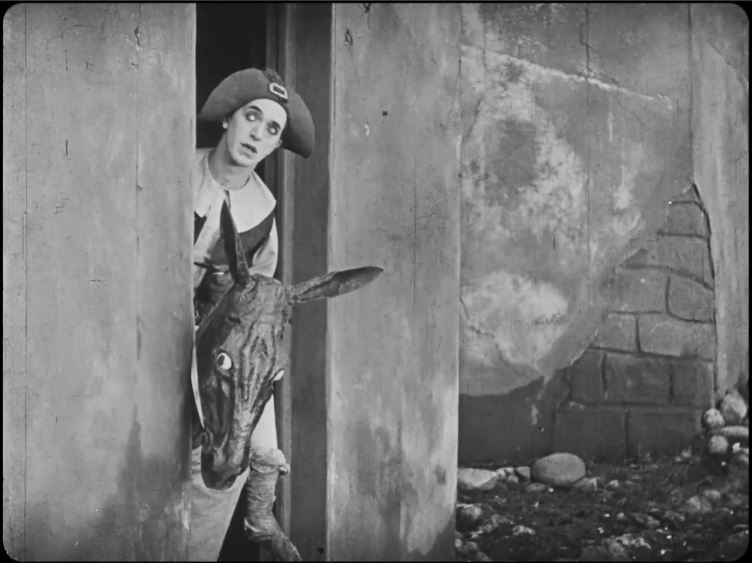
Only half of When Knights Were Cold (1922) survives but it ain’t half funny, especially Stan’s “horse” which is basically just a stuffed head on a stick, with two fake legs over an equine girdle. This, along with such fancies as taking a watering can to trees, and then to a fast-growing vine in this film, shows, to me at least, Laurel’s very Lancastrian humour, revelling in the surreal and the plain daft. That said Frank Fouce, who wrote and directed was born in Hawaii so what do I know? Stan is Lord Helpus who is out to rescue Princess Elizabeth New Jersey (Catherine Bennett) form the evil clutches of the Prince of Pluto (Stanhope Wheatcroft) and his numerous guards.


There’s one moment when Lord Helpus and a guard are so bored with their swordplay, they both lean against the wall tapping swords in a perfunctory way before Helpus kicks his adversary out of the window. Throughout Stan looks direct to camera, Mabel Normand style, but with his own particular twinkle; so much comedy to give. People may look for the Laurel persona in these films but he was clearly a flexible performer who if he was looking for his own defined style like Chaplin or Keaton, hadn’t yet found it. It’s chicken and egg or, perhaps, man and papier-mâché horse.


Which is where I came in. See you next year Giornate Family!


you can lead a fake horse to water...


Friday, 25 September 2015

The bringer of peace… A Trip to Mars (1918)


“We will never more kill living creatures and we will never more use weapons!”

When did alien worlds start being more of a threat than a promise? It says much about the times that this film’s Martians are an evolved civilization who want to help bring peace on Earth… so think again Gustav Holst.

Released in early 1918, Himmelskibet (literally Heaven-Ship but more often referred to as A Trip to Mars) was a plea for patience (and it is quite slow-paced) and pacifism at a time when the ending of the Great War was still some way off with both sides still in with a chance of victory (with or without the USA) and therefore still murderously competitive.


It is the most deliberate of allegories with this much being obvious from the names of the main characters; Professor Planetaros (Nicolai Neiiendam), the astronomer who believes and his counterpart Professor Dubius (Frederik Jacobsen) who not only does not have faith he actively tries to destroy it in others.

Planetaros believes that there is life on Mars and enlists the help of his son, ocean adventurer Avanti (Gunnar Tolnæs) and his friend Dr. Krafft (Alf Blutecher) who is also in love with Avanti’s sister Corona (Zanny Petersen, who’s eyes are so electric blue they translate in monochrome as sheer white).

Alf Blutecher, Zanny Petersen and Gunnar Tolnæs
The Planetaros begin the construction of their great ship and name it Excelsior in tribute to the lofty heights of their dream. Naturally, Professor Dubious makes many attempts to undermine their project and – bizarrely – to lampoon it arriving just before take-off to ask them to deliver a letter for him…

They gather together an international team including an American lug called David Dane (Svend Kornbeck) who has a weakness for liquor (what were they trying to infer?!)… there may be trouble ahead.

Planetaros and Dubious
Avanti and Krafft take off with their crew in the 1918 version of the space shuttle, a propeller-driven bi-plane that presumably has a rocket as well. The effects are well done and all the more so given that there had been few feature-length films about space craft – although there were seemingly plenty of interplanetary shorts between this and Georges Méliès and there's an excellent summary on the  Silents, Please! blog: To the stars and beyond: movies dream of outer space, 1898-1910.

Taking what they knew the director Holger-Madsen and screenwriter, Sophus Michaelis, were breaking some new ground…certainly in trying to create a serious science film with a message.

Nothing dates in culture more than the view of the future and whilst there’s a period charm in the mix of old-new and old what the film achieves in conveying the wonder of connection with an alien culture undures: that aspect of science fantasy does not change and still drives the genre onwards.

State of the art...
The space ship may make Flash Gordon’s look like the Millennium Falcon and there really is no science at all in the fiction but the film really impresses with the gathering of Martians once the Earth men arrive… the hills lined with white clothed figures and topped off by well-designed temple (God is Love and is on Mars as in Heaven…).
Life on Mars
The Martian Leader (Philip Bech) and his balletic daughter Marya (Lilly Jacobson) move in a state of grace and are able to communicate to the astronauts through use of the perfect language – an interplanetary Esperanto that can be understood by all; pure meaning.

Don't worry, Nils will be alright
They offer the Earthers food, which is naturally vegetarian and when they reciprocate by shooting down a bird to show them the pleasures of fried poultry, the Martians are shocked. One thing leads to another and a young Martian (a very young Nils Asther) is almost killed as the men are briefly imprisoned.

The leader’s daughter takes up their cause and soon is making sweet music with Avanti… after wearing the Cloak of Mercy which allows them to judge themselves as innocent even though they did fire the first shots on Mars for millennia and threw a grenade at the advancing Martian crowd.

Marya wearing the garb of mercy...
Martian techniques enable them to look beyond the fear and ignorance behind the men’s actions and even the drunken David Dane, who tried to start a mutiny en route, begins to see the light.

Again the film scores with the wonder stuff, as Martian techniques relying on self-revelation and inner truth reveal that Avanti has fallen in love with the merciful Marya. There’s a beautifully lit Dance of Chastity which pretty much does the job for Avanti – these Martians can move.

The Dance of Chastity
Meanwhile back on Earth there is no sign of the adventurers and both Planetaros and Corona are beginning to fear for the worse. As Dubious revels in the hope of mission failure he drives Planetaros further into depression and physical decline. But Corona stands firm and defends her father … the women are starting to turn things around.

But still… the Professor is very ill and it is a long way back from the Red Planet…

“On Mars, everything is pure and innocent but on Earth…”
A Trip to Mars is a vision of a peaceful, pastoral future that is more about religious faith and eternal truths than technology. To this extent it has a far more developed “business case” than most modern science fiction with its obsession with delivering the technology without focus on the human process gains behind it.


The acting is less Asta Nielsen and more Astral Traveller with large sweeps of intrepid arms, vexed hands held to brows and bitter fists punched in professorial futility at the heavens.

It is very earnest but then that was important at a time when the truly incredible was very much earthbound in the everyday muddy hell of Western Europe.

“Do not fear death, it is just the beginning of a superior life!”
I watched the 2006 Danish Film Institute restoration which features a sparkling new piano score from Ronen Thalmay. It’s available direct or from Edition Filmmuseum and comes with The End of the World (1916) which doesn’t sound anywhere near as optimistic.

“Go and rest under the tree of longing. If your longing for me fills your dreams, I shall be yours!”