
Teinosuke Kinugasa’s A Page of Madness or Kurutta
Ippeji stands apart from American and European sensibilities even as it
borrows elements and then re-interprets them in the most technically proficient
way. It’s powerfully disturbing and addresses the human condition in timeless
ways, placing demands on the audience few films ever do with an unconventional
narrative structure plus the absence of intertitles…
Kinugasa later said that “… story was less important
than technical experimentation: tracking shots, close-ups, rapid montage,
flashbacks, dissolves, irises, etc. In this film I used almost every
avant-garde technique.” It’s a puzzle to unravel and the meaning creeps up
on you prompting wrong-footed self-reflection in an age when we know so much
more about the difference between our inner selves and the aspects we present
to the world: we know all about “masking” and in the film actual masks are put
on everyone’s face to hide their true feelings.
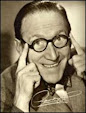
Not for nothing did Kinugasa chose The Last Laugh as his favourite film and here it’s the magnificent performance from Masuo Inoue which holds the film and encapsulates the meaning… his face is its own mask with naturalistic reactions to the disorientation all around. He anchors the story and provides us with an identifiable “main character” but is he a reliable witness to what is apparently on screen. Is his character someone we can base our interpretations on?
 |
| Masuo Inoue |
In terms of meaning, having previously seen the 2007
restoration with only musical accompaniment, it’s less specific than what we
saw today. Firstly, this is a new restoration that is slightly longer than
previous versions and which looks amazing for a film once considered lost.
There was also the added dialogue provided by tirelessly expressive benshi,
Ichiro Kataoka, alongside music from Matsumura Makia (piano), Katada Kisayo
(percussioni), Kiyomoto Nobuakira (shamisen) which was very well worked adding
more layers of counter-point to the experience.

This is not a new thing as in a 1977 interview, Kinugasa
confirmed that a benshi was used on the original run with Aaron Gerow writing
that legendary benshi Musei Tokugawa narrated the film at the Musashinokan
theater in Tokyo*. There is a specific meaning if not a script and a story
isn’t a purely “surreal” or impressionistic tale although from memory it’s
interesting how much of the story I recognised from watching at the Barbican in
2013!
Just to confuse things, there’s also a suggestion from
scholar Alexander Jacoby*, that the director re-edited the film on its
rediscovery to remove more traditional narrative sections and to conform more
precisely with contemporary avant-garde perceptions…
Whatever the truth, it doesn’t matter because what we saw
tonight was stunning silent cinema an Le Giornate at its considerable best. A
tough tale but as my neighbour said, it was exhilarating!!
*Both from A Page of Madness: Cinema and Modernity in
1920s Japan ((2008), Centre for Japanese Studies, University of
Michigan.

Weimar Uncensored: Blondes Gift (1919)
Hubert Moest’s Blonde Poison tried its best to be some
kind of pre-code Weimar saucepot and yet despite the best efforts of Blondie
Loni (the fizzy Hedda Vernon) it didn’t quite work out due to her lack of chemistry
with the hapless Ernst Deutsch as Rolf Roem, her lovelorn first boyfriend who
was somehow enthralled by her he was willing to blow his entire inheritance on
making her happy when clearly she had an appetite for darker pleasures with the
cruel and monocled Georg (Paul Hartmann).
Good cameos from Reinhold Schünzel as her nasty dad Adolf as well as Eduard von Winterstein as her Chauffeur who only drove in 4th gear… and fun accompaniment from Mauro Colombis!

Phantom Tram Ride of the Day Award: Today we were
travelling mindfully along the street SPÅRVAGNSINVIGNINGEN I KARLSKRONA (SE
1910). Fun facts about Karlskrona! It is known as Sweden's only baroque city
and also has the country’s largest naval base – so, hello sailors!
 |
| Gösta Ekman and Pauline Brunius |
Swedish Comedy: GYURKOVICSARNA (SE 1920)
Now here was a film I could certainly do business with as
those two ugly mugs/Not Lars Hansons, Gösta Ekman and Nils Asther played twins the
eldest in a large family who were starting life as adults. Nils is Bandi (snigger…)
who takes over as the master of the house whilst the slightly younger Geza (Gösta)
sets off to join the army after having to be forced to show how smart he is in
the school exams.
He makes for an interesting comparator with William
Haines as the uncouth raw recruit in yesterday’s Tell it Too the Marines, being
just about likeable even as he messes up time after time. The difference could
well be in the script as Geza romances the Colonel’s daughter Jutka (Violet
Molitor) and then elopes with the Field Marshall’s wife, Baroness Hetvics-Janky
played by Pauline Brunius, who was married to director John W. Brunius.
It's a bit of froth but its amusing and well made and, of
course the two boys were major exports to Hollywood a few years down the line. Pauline
Brunius is also worth watching which is good as there’s more to come!
Stephen Horne accompanied and added zest to the comedy
cake mix.

Another Marshall Neilan film: The Girl at Home
(1917)
This was a very professional lesson-in-life film with Jack
Pickford’s Jimmie Dexter leaving his Mom (Olga Grey) and sweetheart, Jean
(Vivian Martin – a girl with curls just like Jack’s big/little sis) to go to
college and better himself. He doesn’t realise that – following a family financial
set back, it’s Jean who is funding his studies.
The little twit gets sidetracked by a glamorous older
woman cabaret artist, Diana (the very glam Olga Grey – actually 21 at the time,
a year younger than Jack) and there’s a to-do when she forges a cheque to buy an
expensive stole. It was a cautionary tale with a surprisingly bitter side to it…
Neil Brand kept the varsity rag on track.

Czech Avant-Garde is all about brand building!
The second part of this programme was a real treat with a
high standard of film making even when most of the films were adverts employing
avant-garde techniques rather than purely art. A tale as old as time… There
were films encouraging citizens to invest their money in banks and not hide it
under their beds as well as one extolling the value of Czech tractors. Best of
all was a film showing how typewriters are made and using stop motion animation
to illustrate the complexities of the common or garden Remington which Zbrojovka
Brno made in Czechoslovakia under license from Remington-Rand.
Prague, City of 100 Spires (1928) showed up the
city to fine effect although I only counted 46 spires… but that’s being
churlish. Prague in the glow of lights (1928) also made the city look
gorgeous and the beer is so fine.
Accompaniment was provided by the jazzed, inventive hands
of Masterful Meg Morley on piano and the free-hitting Prince of Percussion, Frank Bockius.
They were so in tune and instinctively giving each other space as they
improvised as you’d expect from two such accomplished jazz players. They took
two solo spots which enabled Meg to play the strings with a book as she
progressed her melodic lines using the keys and then Frank took scoring syncopation
to new heights by striking out what was effectively an extended drum solo mixed
with an unseen array of percussive objects.
As Jack Kerouac might have said, Frank was “... kicking his
drums down the cellar and rolling the beat upstairs…” They were something else
and the applause was long!
 |
| A Typewriter. |


.jpg)
+colour.png)




No comments:
Post a Comment