Showing posts with label Elmer Booth. Show all posts

Friday, 2 February 2024

Rare Mary… Heart o' the Hills (1919), Kennington Bioscope with Colin Sell


I remember [Pickford] telling me that she couldn't bear the way [D. W. Griffith] directed adolescent girls. She said, "Oh, he directed them so they ran around like a chicken with its head cut off. And I would not do that sort of thing..." She already saw that naturalism was terribly important, even more than Griffith did. 

Kevin Brownlow


For the first time since the Pandemic, it was time to play Six Degrees of Kevin Brownlow and, as usual, the answer was two; Kevin had met and interviewed Mary Pickford on a number of occasions. This direct relationship with the “source material”, one of the major players, one of the three of four, who really made the cinema of Hollywood in the 1910s, predating even Kennington’s own Charlie and her husband Doug, even outshining her director on so many occasions, David Wark, distancing herself in a way Lillian didn’t as she set up her own production company in 1918 and took charge of her intellectual property as well as her career.


Kevin’s introduction focused on fellow film collector Bert Langdon and his own meetings with Heart o' the Hills’ cinematographer, Londoner Charles Rosher, who shot all of Pickford’s films from 1918 to 1927, became the first cameraman to win an Oscar for Sunrise and grabbed a second for The Yearling (1946). Kevin’s friend was able to screen his original 35m nitrate original not just of this film but also My Best Girl (1927) neither of which Rosher had seen in years.


Heart o' the Hills impressed Kevin in terms of its technique but also Pickford’s range; “characters no sooner look at each other, than they exchange blows…” The hillbilly dance is “a classic sequence” featuring the ethnic authenticity director Sidney Franklin was looking for. Kevin also singled out art director Max Parker for his creation of the backwoods locations and living spaces; as he says, there was nothing “cutsie” or sentimental about this endeavour and the producer herself also has to take great credit for that… Kevin concluded by saying: If anyone needs to be converted to Pickford, this picture should do the trick!


Pickford's character shows her scars from maternal beatings...


I suspect Kevin was preaching to the already converted but this is indeed a wonderfully spirited film and one that treats its audience with respect, another key element of Pickford’s approach. After all, she was a working-class women just like most of her audience, her agenda was to deliver the kind of stories they understood and morality they would agree with in a tough environment they would recognise. We don’t talk enough about silent film stars and class, except to note that they “escaped”, but I don’t think Mary, or Charlie and many others, pulled the ladder up.


Here Mary is Mavis, who’s father was shot in the back when she was young and whose mother Martha (Claire McDowell) has been worn down over time, fighting to keep going in their ram shackled homestead. Her best pal is young Jason Honeycutt (Harold Goodwin) who takes her out on fishing trips – some worms were sadly harmed in the making of this film – and other larks.


Jason’s father Steve (Sam De Grasse) is the opposite of fun and, as we quickly learn, many other things including honesty, fairness and virtue. He’s hard on his boy and Mavis while targeting Martha, her hand and, her land which, as Mavis shows Jason, is rich in coal, surprising for such an elevated location but there you go.


Hootenanny show-down! John Gilbert on the left.

Money comes to town in the form of “forrigns” Colonel Pendleton (W.H. Bainbridge) and his entourage including son Gray (a surprise appearance by young John Gilbert, just 22 here and on the brink of stardom) and his intended Marjorie Lee (Betty Bouton). Also with them is the scheming Morton Sanders (Henry Hebert) who is plotting with Steve Honeycutt to grab Martha’s land and swindle as much of the community as possible.


There’s a great confrontation between the two at the local hop, where Gray, who has caught the eye of Mavis and vice-versa, joins the dance only for Jason to try and out-manoeuvre him in a kind of strictly-come-country dance-off. In the end Mavis joins in and a proper scrap is narrowly averted.


Soon though she has worse to come as Steve pushes Martha to marry him and orders her to leave home. She takes her issue to the locals, led by her wise Granpap Jason Hawn (Fred Huntley) and they decide that dressing up in white hoods and costumes to confront the land-grabbers is the way to resolve this. 


Don't mess with Mary...


Now I’m not sure why it is that certain Americans like wearing their sheets in this way but I’m also not convinced it’s a Ku Klux Klan moment – although it might well be. It ends badly though as someone shoots Sanders and, of course, given motive, opportunity and her outspokenness, Mavis is soon standing trial accused of his murder.


As Kevin Brownlow points out, this film doesn’t pull its punches and the stakes are high. Mavis’ character also stays true to herself and the resolution is worth the wait. It’s an entertaining film with that mix of humour and grit our great grand parents knew and loved to see on screen. Pickford is mighty as you’d expect and Rosher packs as many glorious head shots in as possible as we watch her unconscious naturalism lead the emotional charge!


We were watching a 35mm print made from an original copy at the Mary Pickford Foundation and it was full of rich textures and stunning depth of field. This is one of the real pleasures of the Bioscope, the connection between the audience, the celluloid and the general ambience of this unique venue. The atmospherics are also heavily informed by the subtlety of the accompanist and in this case it was Colin Sell who not only as Kevin predicted, showed his powers of controlled syncopation for the dancing sequence but also played along so sympathetically with Pickford and the rest of the players.


The British version of the sheet music

We were also treated to a wonderful performance of the song released to accompany the film from Colin and the Bioscope’s MC Michelle Facey. On BBC programmes you sometimes witness “experimental” archaeologists attempting to recreate certain processes to illustrate and find out more about the techniques and the “taste” of the period. The Bioscope is a working example of this experimentalism and Facey and Sell recreated another key element of the spirit of this film and the emotional reaction this song would have brought. Glenn Mitchell had a copy of both the US and UK version of the sheet music and naturally we went with the British copy. Loveliness ensued… and the film was set up!


Early Mary…


White Roses (1910) directed by Frank Powell was screened first on a 16mm from Chris Bird’s collection and, whilst its plot was a little outlandish, it was all good fun with Mary’s character Betty for some reason in love with a very shy man called Harry (Edward Dillon). Harry hasn’t the courage to ask her directly so her arranges to send three colours of flowers to her and a note saying that she should wear red for yes and white for no… Sounds simple but he gives the task to a young lad (Jack Pickfor, who’s other sister, Lottie is also involved), who promptly gets robbed of note and flowers.


A well meaning man steps into help and buys replacements but there’s no note and so Betty wears white forcing Harry to propose to his cook in retaliation… That’s not the end of things but you really have to watch this to believe it! John Sweeney accompanied and suspended all our disbelief in the process.


Mary and Elmer wait for the law...

The Narrow Road (1912) directed by D. W. Griffith on rare and possibly singular* 16mm print made from a nitrate original by legendary collector John Cunningham, now from Chris Bird’s collection, the film is only otherwise preserved in the Library of Congress paper-print collection as a paper copy of the celluloid made for copyright purposes. It was another of the unique Bioscope occasions, watching Mary married to ex-convict played by the great Elmer Booth, who is torn between going straight at a wood merchants and his loyalty to fellow con and recidivist forger, Charles Hill Mailes.


Ashley Valentine accompanied with lovely lines and in tune with this short but powerful tale. As Michelle said in her introduction, some say DW was at his best for these Biograph shorts and on the evidence of this and others, I’d have to agree but part of that is down to the contribution of players like Pickford who would eventually fall out with him and others, such as Booth who would die tragically early in a car, driven by an inebriated Tod Browning.


 *According to Movies Silently, the film is featured on the Image Entertainment, Origins of Film DVD set, now deleted. This may come from another source although it doesn't - as featured above - look like anything like as clear as what we saw.


Thursday, 19 October 2017

Passion play… Underworld (1927) with Meg Morley, Kennington Bioscope


After the festivals… another mini-masterpiece of programming at the Cinema Museum and a reminder of the power and the passion that fuels our interest in silent cinema made all the more poignant by the current threat to this unique venue. The owners of the property in which the Museum is located are putting it up for sale to property developers and threatening its future but the resistance is being mobilised and details are below…

Underworld is one of the great films with three searing performances from Evelyn Brent, George Bancroft and Clive Brook – a testament to their skills as well as the ability of their rookie director to overcome his nerves and deliver. Feathers, Bull and Rolls Royce are the beating heart of this story and whilst it is nominally a gangster movie it is really all about love, loyalty and compassion.

What does Bancroft’s Bull sense in Brook’s Wendel, a drunken bum of a fallen lawyer, that makes him trust his promise to be the “Rolls Royce” of silence… Why does he stick his neck out to protect Rolls Royce from "Buck" Mulligan’s bullying? He senses integrity and a steadfast character despite all Rolls’ faults, he may waver – everyone does – but there’s redemption in faith.

No, here's looking at you George!
Feathers also puts loyalty to Bull above love, she’s drawn to Rolls Royce, especially once he’s re-acquainted himself with the routines of personal hygiene… and the two wage a struggle with themselves. Bull too is tested by hate and the red heat of jealousy but once he understands it’s a lesson worth his life…

Von Sternberg stated later that the film was “an experiment in photographic violence and montage…” and was matter of fact about its crowd-pleasing elements. Kevin Brownlow in his introduction, shared his experience of meeting the former Joey Sternberg (the “von” was adopted from von Stroheim, a director who influenced Josef in terms of his on-set authority) and telling him how much he liked the scene with Bull feeding a cat milk as the cops gather outside; that’s the worst moment in the film replied the director. We disagree.

Rolls Royce spots Feathers for the first time...
Writer Ben Hecht, a street-wise journalist, was also dismissive of von Sternberg’s end product until he won an academy award for his script… The film was a smash hit and helped kick off the gangster film craze of the era with the director’s vision and those three leads creating an alchemy that was far from accidental.

Von Sternberg cuts to the chase and seems little bothered in conventional pacing. The film begins in the middle of a robbery as Bull Weed runs from a bank only to find Wensel identifying him and blocking his path… within minutes the two men are established in relation to each other. Feather’s first appearance is a tour de force of Peeping Tom visuals as Evelyn Brent stands atop the stairs of the Dreamland bar, casually adjusting her stockings and with those feathers wrapped around her, magnifying and obscuring her allure: she’s soft but hard and impossible to ignore. A single feather falls, and Rolls Royce watches it drift to the ground… one of the great entrances and as portends go, a real doozy.


Evelyn is a prototypical Marlene, lit with great care throughout and with dozens of killer close ups of eagle eyes and that distinctive profile. Brent became typecast as a gangster but there was so much going on behind those eyes… a few years younger and she could have been a real force in the thirties… but so it goes.

Also pinning down a future on the dark side is the magnificent George who is outrageously hearty throughout - a lion heart who rules his patch through force of will, guts and being quickest on the draw. He’s ferocious and smart too, smart enough to know what an asset Rolls Royce can be, no wonder he calls him the Professor. And the Professor is probably the most like us and indeed Josef, someone to contextualise the villains and a fellow traveller in this onscreen trip to the underworld.

Meg Morley played along with some crashing noir-ish minor chords and jazz-tinged lines that were so Chicago 1927… her playing got right to the heart of the film and was as bold as Bancroft and as deceptively fearsome as Feathers.

There was also very impressive undercard tonight with three powerful shorts…

Segundo's Spectre in 1907...
James Finlayson featured as an easily-distracted husband in Chasing the Chaser (1925) directed by a Mister Stanley Laurel. James’ character just can’t keep himself from chasing women and his long-suffering wife sets a honey-trap using a cross-dressing detective – now there’s an idea for a TV 'tec series… John Sweeney was on hand to add subtle flavours to Finlayson’s flirting.

Segundo de Chomón’s spellbinding The Red Spectre (1907) is a stencil-coloured mini-masterpiece showing the battle between the red devil of the title and a female foe… needless to say he loses. It features some startling trick shots and close-ups. Lillian Henley cast some music spells of her own with her accompaniment.

Elmer Booth in 1912
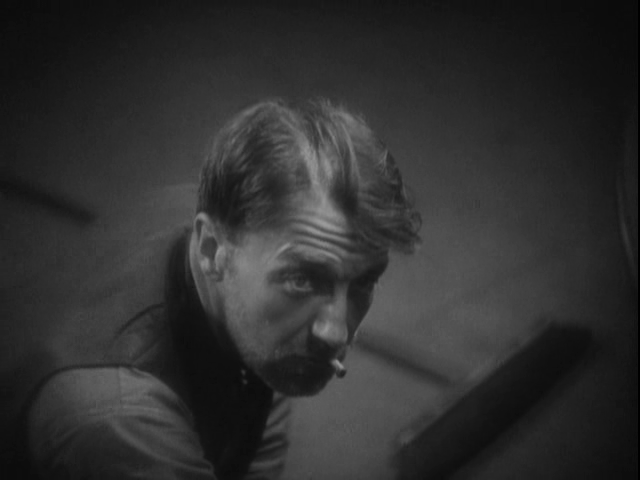
The Musketeers of Pig Alley (1912) featured the magnetic Cagney-esque presence of Elmer Booth and that famous close-up as he creeps up on his rivals… A Griffith innovation according to some but clearly not so a Segundo’s Spectre had just demonstrated. Still, all the same, the guy has some class and you wonder at what he could have done had his life not been cut short by an auto accident in 1915. John Sweeney guided us through the streets of downtown New York as the gangs hunt each other in a tense finale… If Underworld kick-started the gangster vogue this is one of the earliest examples of what was to come and it even featured real gangsters...

These nights at the Kennington Bioscope are a privilege and the Cinema Museum is such a warm venue; we’re surrounded by friends and the physical evidence of social history… there can be nowhere else like this place. The Chaplin family lived here when it was a workhouse, it helped keep our greatest silent comedian alive to become the man he was and now it helps sustain his memory and that of so many others.


The Cinema Museum

If the best modern Britain can offer is to sell it on and close it down to earn a few thousand for the failing government and rather more for the developers who are blighting London with soulless modernity then the gangster mentality will have won after all.

But we’re not going to go down easily and there’s plenty of love, loyalty and passion left for the museum.

You can sign a petition here to keep the Cinema Museum alive and there is a public meeting on Monday 30th October at the museum to discuss the ways forward.

A night in the museum
I can also recommend Lynn Kear’s book on Feathers: Evelyn Brent: The Life and Films ofHollywood’s Lady Crook which celebrates its subject’s career and the moxie which led her to make such a success of being the bad girl!


Sunday, 5 June 2011

Elmer Booth - original gangster! Musketeers of Pig Alley (1912)

"The Musketeers of Pig Alley" is a 1912 short widely credited as the first gangster film. Written by DW Griffith along with Anita Loos, it is notable for the ground-breaking direction of the former and Elmer Booth's defining role of the gangster, The Snapper Kid.

This is a very controlled movie from Griffith with consistent use of space and place. Filmed using authentic New York locations, people go in and out of the Saloon and the adjoining tenement so often you soon know the place like your own back yard.

Most significantly, there's an early use of "follow focus" and some fabulous, famous, close ups of Snapper and the gang as they skulk around Pig Alley in pursuit of and being pursued by a rival gang.
Snapper isn't a plain and simple tough guy. He takes a shine to lovely Lillian Gish's character even though she rebuffs his advances - she's as tough as anyone in the Alley. This doesn't stop Snapper mugging her musician husband and taking the last of his money. It's dog eat dog on the Lower East Side.

But Snapper intervenes to stop Lillian ("The Little Lady") being drugged by a rival gang member at a local dance and sets off a war that results in a shoot out in the alley. During the confusion, the musician wrests his money back from Snapper as the bullets fly.

Snapper avoids capture and seeks sanctuary in the couple's apartment. In the end Lillian provides him with an alibi that saves him from arrest..."One good turn deserves another"! A surprisingly pragmatic conclusion given Mr Griffith's reputation for simplistic morality.
In this movie Elmer Booth creates the prototype for all the Cagneys, Rafts and even Bogarts to follow. His performance is marked by alert cunning and restless energy, hands stuffed in his jacket pocket, constantly checking his pistol and hyperventilating on his cigarette - he's just waiting for it all to go pop!

Sadly Elmer Booth was killed in a 1915 car crash at the age of just 32. Griffith had a big role for him planned for "Birth of a Nation" but we never got to see how big a star he could have become.

I watched this film twice today and I salute Elmer for his energy and craft! He woulda been a contender alright and has his place in film history.Musketeers is viewable in hazy youtube glory or in far more defined DVD on the Griffith compilation "Biograph Shorts: Griffith Masterworks", available from Amazon here.