Saturday, 31 May 2025

Marion Davies keeps moving... The Restless Sex (1920), Grapevine Blu-ray


This was Marion Davies’ ninth film and she was still only 23, with an established stage career begun in 1914 leading into films starting with the lost Runaway Romany in 1917 and a further 19 silent films until her move into the talkies. It’s the earliest I’ve seen her and already she’s a steady presence with dramatic certainties as well as on screen energies that hold your attention more than any of those around her. Believably, she is a “restless” woman who wants to experience everything in life and on her own terms.


The source material, Robert W. Chambers’ 1918 novel of the same name, was considered “feminist” in the way it addressed the life of Stephanie Quest whose drug-addicted parents set her on a life of precarious fortunes until she adopted by a wealthy widower, John Cleland. There’s no mention of her parents’ habits at the start of the film – not in Hollywood, not in 1920 – just that she is an orphan with a winning personality who is adopted by Cleland (Charles Lane) who is – perhaps – trying to rebuild his family. Frances Marion scripts and gives Stephanie, known to all as Steve, plenty of agency even though she will become trapped by circumstance and formality.


Steve is played by Etna Ross as Steve as a child and is delighted to meet her new brother Jim who is played by Stephen Carr a teenager with plenty of pep who not only featured in Davies’ Little Old New York (1923) but who went on to have a long career including the original Superman serial and Congo Bill. Jim is slightly awkward with his newly acquired sibling but she is nothing if not forthright and we sense a future romance, and, as the years pass, this looks more likely as Steve has grown into Marion Davies and Jim is now Ralph Kellard. Everyone is gathered for the end of term production of Jim's play - his crowning achievement - and Steve is even more excited when she spots his pal Oswald Grismer (Carlyle Blackwell) in the cast.


Marion Davies

The adopted siblings are deeply bonded though and talk excitedly of what they will do with their lives, Jim aiming to write and she with a broader scope involving the arts and adventure – “the restless sex” (it’s unclear as to whether this is an attribute of her sex of just nature?). All dreaming comes to a shuddering halt when they find their father dead in his office having quietly passed away. Cleland has planned for the eventuality and has left instructions for both: Jim to study in Paris and Steve to take nursing training (I’ve known quite a few “restless nurses” of both sexes though, and am married to one…). Cleland has also placed Steve’s financial affairs in the acre of his trusted friend Chilsmer Grismer (Robert Vivian) who is also father of Oswald.


This removes the two from each other’s immediate company and as the years pass they keep in touch only via letters as Steve, having qualified as a health professional, takes up painting in Greenwich Village bohemian society with Oswald chipping away at sculptures in the same block and Steve sharing an airy studio with Helen Davis (Corinne Barker). Steve spends a lot of time with Oswald and whilst they are out driving upstate, they narrowly avoid colliding with a steam train. Oswald’s car is a wreck though and 90 miles from NYC, they take refuge in a hotel – in separate rooms. This out of the way refuge proves unexpectedly problematic when the police raid to stop partying youth and find the two wrapped only in quilts in the same room…


Carlyle Blackwell and Marion

Soon after Steve and Oswald marry and we soon learn that this is not entirely to the couple’s satisfaction. Jim hightails it from Paris to investigate and meets Steve’s room-mate as well as a young model Marie (Vivienne Osborne) posing on a horse with very little on. Helen explains the strangeness around the newly-weds and that Oswald has fallen on harder times and had to move to run-down ol’ Bleeker Street to find a studio.


Things come to a head with the film’s startling set piece, a huge ball celebrating Greek culture with Steve as Pallas Athena ushered into the hall by a host of choreographed dancers. Joseph Urban designed a two-storey set for this sequence with costumes from Erté and all would not have looked out of place in a Cecil B DeMille epic. Among the extras are Norma Shearer but no one’s spotted her yet. Steve and Jim renew their relationship whilst Oswald looks on askance before order is restored and he whisks his wife off leaving Jim to dance the light fantastic with Marie.


But… what is the secret of the marriage and will what we all expect to happen, happen? You’ll just have to seek this film out and find the answers for yourself.


The wild party

Directed very effectively by Leon D'Usseau and Robert Z. Leonard, this shows the burgeoning status of Marion Davies and in a film which is dramatic with some light-heartedness. Edward Lorusso quotes a positive review from Motion Picture World, which says “In the charm of life’s romantic comedy Marion Davies seems to have been born for the part she plays…” and also praised her naturalism “… instead of strutting, eye-rolling and attempting to tear passion to tatters.”


That we can see the film on home media is entirely down to the efforts of Mr Lorusso who Kickstarted this in 2015 getting a decent digital copy from elements housed by the Library of Congress. This is now available from Grapevine Videos complete with a smashing score from Donald Sosin who uses piano and keyboard improvisations to greatly enliven proceedings including that grand set-piece ball.


Throughout Marion is every inch a star in waiting, Allen G. Siegler camera loves her and so do the audience as she draws the eye from the rather one-paced Kellard and even the more effective Mr Blackwell who would head to Europe after this film and never make another Hollywood film. That’s a story for another day.


Ralph Kellard

You can buy the Blu-ray from the Grapevine website and check Ed Lorusso’s Kickstarter page for his ongoing project to make as many of Marion’s films available as possible. Latest project involves The Cardboard Lover (1928) which I and over 630 others backed: can not wait to see it.


*Also recommended is Ed’s book, The Silent Films of Marion Davies – no silent home should be without one!


Monday, 26 May 2025

Laurel & Hardy: The Silent Years (1928), Eureka Masters of Cinema Blu-ray


“We never tried to get very far from what was real… (the Derby hats) … gave what we felt these characters’ needed: phoney dignity! There’s nothing funnier than a guy being dignified and dumb!”


Eureka’s first Stan and Ollie set showed how in 1927 they emerged as a double act with appearances in films gradually evolving their interplay and characterisation as the iconic duo who has made the world split its sides for very nearly a century. Now with this second set we get a chance to see their first golden year as a duo in ten short films available in restored transfers on Blu-ray for the first time in the UK. What more do you need to know, the link to order is at the bottom and as we’re alone can I ask you just why you haven’t already got your copy?


There’s a fascinating video essay among the fulsome extras from David Cairns and Fiona Wilson which really gets to the heart of the enduring hilarity created by Laurel and Hardy and from which I drew the above quote from Stan in one of his rare expressions on their style and purpose. Cairns and Wilson act as our companions to these timeless lords of comedy and the instinctive love and laughter becomes clearer as it is shared and explained in personal ways that are shared by so many. We are all Sons and Daughters of the Desert, we all stand on our dignity, pick ourselves up and keep on trying against the odds, constructing our own folly in real time up until the moment when things are so broken, it’s the end of the film.


It's a Video Essay of the Year award contender and it’s only Spring. The quote from Spike Milligan they include sums up so much: “The first time I saw them on screen, I knew they were my friends…” and this has been passed down from the moment my grandad James told me how good they were; any friends of Jim’s were going to be mine as well.


This collection brings together the silent Laurel & Hardy shorts produced during 1928, as their partnership began to gather steam and, as with 1927, it’s so instructive and hilarious to watch them develop and consolidate the greatest comedy duo in cinematic history.


February 1928


The Finishing Touch, with Neil Brand score


Filmed in December 1927 in a relatively long shoot of just over two weeks, possibly related to the extensive mechanical gags as Patrick Vasey of the L&H Podcast suggests, this film is one of my personal favourites. The lads play two construction labourers who are employed to finish off a wooden house build by noon, next Monday for $500… Their confidence to complete the task is, of course in sharp contrast to their ability and over the two reels there are so many classic moments of painful slapstick as their inability is demonstrated time and again.


Edgar Kennedy is on hand as an exasperated cop whilst Dorothy Coburn is the nurse who tells them to keep the noise down for her patients… Now fighting both the forces of law as well as physics their failure is magnificently funny!


January 1928


Leave ’em Laughing, organ accompaniment Andreas Benz

Be careful, you might make him nervous!


Famously, in our family, my Grandad Jim, a joiner and part-time boxer, used to remove his own rotten teeth sitting by the fire in Wavertree Liverpool. As Jim first exposed me to Laurel and Hardy it’s a joy to see an episode involving tooth ache and the Boys’ attempts at home-made treatment for Stan’s toothache … this is the World just passed (we hope). David Kalat in his commentary askes just how is it that these films stay fresh? For me it’s that childhood fascination with Grandad’s extraordinary dental handy work… especially given mine and Stan’s fear of the dentist’s office.

This we see as the Boys unable to do what Our Jim did, head to the dentists and before you know it laughing gas filled the place and our stoned heroes are off to try and drive whilst laughing their heads off. Cars crash and – of course – Edgar Kennedy’s traffic cop gets to boil over and steam!


Anita Garvin and the frustrating fruit


March 1928


From Soup to Nuts, with Neil Brand score


One thing about Stan—with apologies to a lot of directors—they thought they were directing him. And they thought they were directing the picture. But Stan was the one...He was very clever about it.

Anita Garvin interview, "She Took Her Lumps and Liked Them", Los Angeles Times, September 24, 1978


Here we start with the newly enriched Culpeppers played by Tiny Sandford and Anita Garvin who made over 350 films and who worked on eleven Laurel and Hardy films. The couple are hosting a party to impress their new peers and end up hiring itinerant hospitality workers, Stan and Ollie as waiters – the best available on short notice. We know things are not going to work out and they don’t work out splendidly aided by Garvin’s classic battle with a cherry as she tries to work out the polite way to eat a fruit salad, echoing Stan’s previous routine in The Second Hundred Years. As David Kalat says in his commentary, Stan trusted Anita with his material and she makes a meal out of it!


Also featured is another semi-regular, Edna Marion as Agnes the Maid although she would not enjoy the same career as Garvin who, as Kalat says, was offered opportunities to form a female comedy team – find out more by buying this set!


And if the band you're in sgtarts playing different tunes...


April 1928


You’re Darn Tootin’ with score from Neil Brand


Edgar Kennedy gets to stand in the safety behind the camera directing this one which features Stan and Ollie as a dysfunctional paid of musicians with the former’s clarinet and the latter’s French horn simply not following the instructions from conductor (Otto Lederer). Neil Brand provides expert accompaniment and commentary and, obviously, this is very much the film for him especially this opening silent orchestral slapstick. There is so much comedy content this is so re-watchable which, also of course, was not the way they were originally intended: Stan and Ollie expected their work to be experienced in the moment and not repeated and at the viewers’ leisure… we are lucky.


After being sacked for uselessness the two players end up on the streets and busking… what could possibly go wrong… on the streets… all those workers and pedestrians to connect with, all those shins to kick and stomachs to thump! Comedy chaos and more of that mutually assured de-bagging!


May, 1928


Their Purple Moment, organ accompaniment Andreas Benz


A fine day for mischief!!


Was the first Hal Roach film to officially bill Laurel & Hardy as a duo and foreshadowing their later films, has them married and desperate to find time together and away. Here Stan’s wife, as played by Fay Holderness, already looks like trouble as she keeps a tight rein on his paycheque even as he tries to smuggle away enough money for “hobbies”. Ollie is similarly micro-managed in similar style by Lyle Tayo “I’ll teach you to hold out two dollars on me!” – these are marriages based on antagonism as Neil Brans says in his commentary.


The boys make good their escape and offer to help two young women, Slapstick Kay Deslys and the Glamourous Anita Garvin who have been abandoned by two suitors unwilling to pay their tab at a restaurant. Stan and Ollie believe they are flush but Stan’s wife has found and taken his hidden stash meaning that they too have no way to pay the bill… As Kay slips over going back into the restaurant, the local gossip Patsy O'Byrne spies them and reports back. We know exactly what is going to happen but what a joy when it does!


As Neil Brand observes, by this stage director Leo McCarey – and the duo – had worked out that they were so reliable as comedy foils for each other, that the narrative could be slowed down and allowed to play out with their expressiveness and intimate silent discourse guaranteed to reach the boiling point of hilarity.


Collateral... Dorothy Coburn 


September 1928


Should Married Men Go Home? piano accompaniment Neil Brand

You’re going in, you started it!


Spotting Stanley on his way with his golf club, Mr and Mrs Hardy (the excellent Kay Deslys) pretending to be out all to no avail as the check jacketed and four-plus wearing bore finds them out. After breaking a chair and generally behaving like a misbehaving child in front of his exasperated parents – as Glenn Mitchell observes in his well-informed commentary (well, he did write the Laurel & Hardy Encyclopaedia!) Ollie is allowed out to play, conveniently wearing his golfing outfit underneath his dressing gown.

Here their escape leads to them making up a four on the golf course with two very pretty young women – a blonde (Edna Marion) and a brunette (the vivacious Viola Richard – who had also featured with the Boys in a number of their 1927 films as well as Charly Chase’s brilliant Limousine Love (1928)). There’s some business involving a drug store and a too expensive round of soda followed by some golfing antics with Edgar Kennedy and his hairpiece! Events are topped off by a mass mud-fight as an exasperated Edgar splashes Dorothy Coburn who retaliates, misses and the rest is an enormous dry-cleaning bill.


The Fountianhead


October 1928


Early to Bed, piano accompaniment by Neil Brand


Whilst this was the year in which the boys consolidated their personas but there are still examples of them playing variations on the themes we mostly know. Here Ollie inherits a fortune and employs Stan as his butler but soon gets bored and starts to disrupt his own party. This is an interesting watch given the times and the unusual set up and the two do not disappoint when it comes to delivering the keys to life and happiness: clue, it’s not money, money can’t buy you laughter.


Chris Seguin and Kyp Harness provide commentary and both are quite concerned about the amount of bullying in this class tale – money has not treated Oliver well – and whilst we know there will be a come-uppance it’s perhaps not as even-handed as their usually balanced universe. I like the fountain gag which Leo McCarey had used to greater effect in the Mabel Normand and Creighton Hale film, Should Men Walk Home? which also featured Hardy as a waiter! Here Ollie doesn’t quite his just deserts and we can make of that what we will…


November 1928


Two Tars


As Glenn Mitchell explains in his commentary, this is one of the duo’s greatest films as well as, not uncoincidentally, one of their most anarchic and destructive with motor vehicular abuse that wouldn’t be out of place in Jean-Luc Godard’s Weekend which also features an endless traffic jam and society pushed to the limits of civilised behaviours. That might be a bit rich but why not?


Our heroes play two “dreadnaughts” from the USS Oregon a late-Victorian era battleship by now a decommissioned relic, who driving a rickety Ford model-t, come across two young women, a blonde (Ruby Blaine) and a brunette (Thelma Hill) who are struggling to extract their purchase from a bubble gum machine. Cue an outbreak of tie-twiddling and winsome shyness from the boys before they step out to save the day. Things do not go to plan and, after a short battle with shopkeeper (Brummie Charlie Hall who Mitchell explains was the most frequent guest in the Boys’ films), they make good their escape.


A pleasant afternoon’s drive with the girls is spoiled by a traffic jam and “reciprocal destruction” on a scale rarely seen – a Kwik Fix version of Battle of the Century with more and more drivers and their cars caught up in a mad whirl of push and shove with the players and cars described in detail by Glenn Mitchell in sixth gear! Excellent work all round!


December 1928


Habeas Corpus with original synchronised score


This is all together a more sedate affair which doesn’t reach the intensity of Tars but which features one of Stan’s more outlandish scenarios in which he and Ollie are engaged by a mad Professor (Richard Carle) to exhume a dead body for his experiments. This is the first film they made with a synchronised sound score combining music and sound effects which here is featured in restored form. There are some interesting choices of music – Danse Macabre - to modern ears it is occasionally too on the nose but you do have to imagine the audience hearing this for the first time.


The Prof’s butler, Ledoux – our Charlie Hall again - is also an undercover cop and follows the lads as they make their way to do the deed in the local cemetery, in the dead of night… There follows much self-scaring as confusion and the pursuing Ledoux, covered in a sheet (of course…) unsettle the big pay night.


December 1928


We Faw Down with original synchronised score


This film as David Kalat and Patrick Vasey discuss in their commentary, is an attempt by director Leo McCarey to focus more on the personalities and the character of not just Stan and Ollie but also their better halves as played by Bess Flowers (Mrs Laurel) and Vivien Oakland (Mrs. Hardy). The two men want to go to a poker game and make up a story about going to the Orpheum Theatre only to end up “making whoopee” with two women they meet on the street - Kay Deslys and Vera White. There’s some very bad table manners with various face pokes and slapstick accompanied by woman’s laughter and the synchronised score before Kay’s man returns – boxer "First Round" Kelly (the fearsome George Kotsonaros) but this is as nothing to the reckoning that awaits back home…


This film has polarised opinion a bit but both Kalat and Vasey point out the importance of watching it with an audience with the former explaining how well one screening went. So please, watch these discs with your family, your friends, your pets or anyone you can grab passing by. The more, the merrier! Live Cinema laughs harder!


There is a limited edition of just 2000 copies which comes with a slipcase and a collector’s booklet featuring newly written notes on each film by writer and comedian Paul Merton and new essays by silent cinema expert Imogen Sara Smith and film historian Sheldon Hall.


There are a welter of special features:

  • 1080p HD presentations on Blu-ray from 2K restoration
  • Brand new video essay by David Cairns and Fiona Wilson
  • Brand new interview with Neil Brand - essential analysis of 1928!
  • Scores by a variety of silent film composers - see above! A sonic feast!
  • Brand new audio commentaries by film historian and writer David Kalat, Patrick Vasey, (editor of The Laurel & Hardy Magazine and host of The Laurel & Hardy Podcast), film writer Chris Seguin, Kyp Harness (The Art of Laurel & Hardy: Graceful Calamity in the Films), Glenn Mitchell (The Laurel & Hardy Encyclopaedia) and silent film accompanist Neil Brand
  • Alternate Robert Youngson score on The Finishing Touch, newly restored by Stephen C. Horne
  • Super 8 presentations of Dizzy Heights, Let ’em Rip, Out of Step and The Car Wreckers
  • On Location with Laurel and Hardy – 1928 home movie footage of Laurel and Hardy
  • Stills Galleries for each short


It is absolutely essential and you can order direct from the Eureka Store right here…


Thursday, 24 April 2025

Stage-coaching… The California Mail (1929), Kennington Bioscope with Cyrus Gabrysch


There were some outstanding shots – glorious panoramas of the rugged West, cameras placed beneath horses pounding hooves, above them from the vantage point of a stagecoach driver and even amongst them as a man fought to control their ferocity during a breath-taking race and chase. If this was the work of Abel Gance we would be in raptures but it was Albert S. Rogell and respect is due.


We were watching the world premier of a rediscovered lost film and Christopher Bird was projecting from the back row and risking his own copy – probably the only one left anywhere – albeit on his own projector through which it had already passed during testing. The film, projector and projectionist all passed the audition tonight and we saw something special as well as something unique.


The California Mail (1929) was projected from a 16mm archive print that had been made by transferring original filmic materials onto Gun Film which had been sold off cheaply by the RAF and yet was typically only twenty feet long meaning that the previous owner would have had to splice together something like 900-1000 times to make the complete 1800+ foot film – his labours have not been lost thanks to Mr Bird and the film is in the safest of hands.


The view from Chris's projector of The California Mail (pic Chris Bird)

Written by Marion Jackson and Leslie Mason the film tells the tale of attempts to find a safe route through to California for much-needed gold supplies during the dog days of the Civil War. The gang trying to stop the shipments is led by the very butch, “Butch” McGraw (C.E. Anderson) whose gang regularly ambush the Yankee shipments forcing the Union to run a contest to find the quickest stagecoach.


There’s a new member of Butch’s gang who has yet to prove himself name of Bob Scott (Ken Maynard) who after being despatched to capture the daughter of one of the town’s leaders, Molly Butler (Dorothy Dwan). He lifts her off her horse but then proceeds to take her back to safety. Butch sends “Rowdy” Ryan (Paul Hurst) to kill the duplicitous Bob but he’s more messy than rowdy and Bob spots him hiding in a barrel before convincing him it’s all part of his plan to get the stagecoach franchise so the gang can get tipped off.


First there has to be a three-way race-off to decide the best company to run the franchise and Bob takes the seat in the California Mail coach and after a genuinely thrilling and incredibly dangerous race – in which some horses might possibly have been injured – he prevails. This is where we see Maynard in between the horses pulling them back into position and definitely doing his own stunts. According to Chris he had been a trick rider with Buffalo Bill’s Wild West Show, Ringling Brothers’ circus, then later a champion rodeo rider with his horse Tarzan (the Wonder Horse!) – here acting under his own name and being the handsomest equine star this side of Trigger of Tonto.


Ken and Tarzan with a baby in Heir to Trouble (1935)


It's a very entertaining ride and I won’t spoil the final sequence which just has to be seen to be believed. Chris quoted Kevin Brownlow in saying that westerns are often not given the credit they deserve for the technique and skill involved in making them and this was one of those late silent films which not only showed the level of Hollywood filmmaking but, as David Thompson said, you could almost hear the voices ready for the coming of sound.


Once talkies had arrived Maynard added another string to his impressive bow by becoming the first Singing Cowboy. Cyrus Gabrysch – accompanying sight unseen – certainly made the Bioscope’s piano sing and galloped along in sync with man, woman and horse both on and off the screen as Mr Bird’s trusty projector provided a comforting whir behind us… only at The Bioscope amigos!


Sue Carol and Richard Walling

Walking Back (1928) was the first film of the evening and was another 16mm archive print from Chris Bird’s collection. It was directed by Rupert Julian for Cecil B. DeMille but there’s a strong likelihood that the latter was as involved in this as Lon Chaney was in Phantom of the Opera’s direction (as rumour has it and I like this rumour). There’s certainly some of Cecil’s trademark salacious male gaze (am I being unfair...? c.f. Sign of the Cross and many more…) but either way it’s a fast-paced fun ride with plenty of jazz energy!


Sue Carol, as flapper Patsy Schuyler certainly has It! and was understandably regarded as a potential Clara competitor for a while. She is exceptionally pretty but Clara had depth and range that drew a deeper engagement certainly based on this script which, in fairness, doesn’t give Sue much to do other than look good and support her man, one “Smoke” Thatcher – not a good nickname if he were to follow the family name and attach straw to cottage roofs… He’s played with considerable gumption by Richard Walling who is a rebel without much cause and also little clue.


That said, there are elements of a fifties/sixties generational drama with “reckless” kids doing battle with their misunderstanding parents. And I ask myself, just when did I start siding with the grown-ups?!


Sue Carol 


After an opening of drunken foolishness which sees one overloaded car crash off the road following a flat tyre caused by a smashed and very illicit whiskey bottle, the gaggle of flapper legs and male drunkenness leads the party to a café shortly followed by the police and a quick disposal of the hootch. Later on, there’s a party to which Smoke can take his “fire” Patsy but only if his father (Robert Edeson) will loan him his car. This doesn’t work and so Smoke borrows his neighbour’s car only to find that his rival Pet Masters (Arthur Rankin) has taken Patsy instead.


The two butt heads over Patsy and then, irresponsibly, smash their cars together in a demolition derby that is going to cost Smoke a lot in terms of money and paternal approbation. Still, it’s an energetic sequence and it’s better than watching Jeremy Clarkson do it. Finally with Patsy clinging on to his side Smoke upends his rival’s car and is declared the winner but at what a cost.


They take the ruined vehicle to a garage where the mechanic informs him that the borrowed car, now wrecked, has become a stolen car and his is the place the police will often look first. Smoke needs some money fast and as luck would have it there arrive three smartly dressed individuals who need someone to drive their Mercedes for a particular errand. Their true intent only gradually reveals itself to the rather dense Smoke as they park up outside his father’s bank intent on robbing it… OK, it’s not high art but it is great fun full of youthful jazz-age energy and great stunt driving. It’s a witty film with the tone set with one if the opening intertitles, 1928 – and how! – the shock of the old-new never fails to impress.


The boys try to win Patsy over...

Mordaunt Hall was even slightly moved, writing in The New York Times that the film was "… no worse than the general average of those dealing with wine, automobiles and the biological gropings of persons under the age of 24. As a matter of fact, it is a little better. Miss Carol, as Patsy, is pretty, and Mr. Walling, as Smoke, looks as though if he had the right opportunity to be intelligent, he might fool everyone."


Ashley Valentine proved that you could play the piano with jazz hands and thoroughly enjoyed accompanying this peppy entertainer. I especially like the hint of The Godfather theme when the gangsters arrive to make our heroes an offer they can’t refuse.


Another richly entertaining evening in Lambeth and I’m surprised that this kind of thing isn’t available on prescription by now. An absolute tonic!


Walking Back as viewed from the back (pic Chris Bird)


Monday, 21 April 2025

The dark side of Tom Conti… Eclipse (1977), BFI Flipside #51 Blu-ray, out now!


In his commentary, BFI Flipside supremo Vic Pratt recalls interviewing Tom Conti for another recent release, Heavenly Pursuits (1986) in which he mentioned that Eclipse was one of the few of his films he didn’t have a copy of. Vic dutifully sought it out to make Tom a screener and discovered this disturbing and atmospheric thriller was ideal for the quirky, strange charms of the Flipside range.


IMDB describes Simon Perry’s film as a “… story of the possession of one man - his mind, heart and soul - by his twin brother”, but it’s rather more than that and possibly less. For all those in search of a neat Columbo-style ending to this emotional mystery they’d better look elsewhere as Eclipse is as full of shadowy meaning as a Mark Rothko picture painted with all the lights off and wearing sunglasses. It’s based on a novel by Nicholas Wollaston and by all accounts with less specificity.


Tom Conti is the most unreliable of narrators playing twin brothers Tom (oh yeah?) and Graham who is found dead on the beach at the start of the film with a nasty gash on his head and a moustache to match on his fore lip. Having recently seen him as the soulless advertising executive trying to manipulate the band Slade in Flame, you’re reminded of his deceptive skill in portraying empty vessels and, even when he’s emotionally wrought you’re unsure in this film what is driving him.


Tom was the only other person on the boat with his twin and throughout the film’s numerous flashbacks to the incident you’re never sure whether this is his own faulted memory or a gradual unrolling of the truth. In stormy seas out to view a total eclipse, the brothers lose control of their vessel and Graham falls into the water either struck by the boom or by something else… the flashes we see may be Tom’s imaginings or his recovering memory.


At the inquest Tom is equally hard to read with Conti playing with just a hint of guilt even as he tells the most plausible of tales. It’s death by misadventure and of a man referred to as The Big G by Tom’s sister-in-law and her son. Graham’s widow Cleo is played by Gay Hamilton who Conti had recommended for the role and who is every inch his equal in portraying her own range of barely decipherable emotions. Cleo had her darker views of G and the painting Tom finds on visiting her for Christmas shows him slighter of stature and naked on a beach. Tom cannot stand the image and asks for it to be removed.


There are clearly strong undercurrents running between Cleo and Tom, not just their mixed feelings about G but for each other too; a path well-trodden and now with new possibilities. Tom is also welcomed as the most familiar of uncles by young Giles (Gavin Wallace) who treats him almost like a father. But, as they play trains on Christmas day, Giles runs them backwards upsetting Tom by not playing to his rules and echoing Big G’s more dominant position.


The Christmas is tense as the discourse between Cleo and Tom unwinds with the former having developed a taste for gin since the accident – maybe before – and the latter still unable to recall the events of the fateful journey. Both are grieving and yet both have reason to resent Big G’s dominance in their lives. Tom, twenty minutes younger, has been overshadowed by Graham and the two would conduct conversations by completing each other’s sentences. Graham wasn’t just dominant he was the driver of so much of his brother’s choices, driving him to extremes in order to stake a claim to his identity.


Is this reason enough to kill or just to be ambiguous about his brother, and for Cleo, is she too now liberated in terms of her feelings for Tom and her choices.


It’s a broody and unsettling tale and one that offers no easy answers or resolution, you are wrongfooted throughout and the skill of the actors keeps you guessing. Vic mentioned thematic similarities to Mark Jenkin’s Enys Men (2022) and there are similarities in a narrative that shows and certainly doesn’t always tell as well as the brutal psycho-geography of the coastal location. At one point Cleo jumps into the stormy sea as if communing with the unrelenting power that took her husband and then there’s almost a re-run of the fateful voyage when Tom takes Giles out on a small sailing boat.


It’s fascinating and well worth inclusion in the Flipside alternative canon of British and Irish oddities and should have beens!


The special features below clinch the deal… especially the three classic public information adverts that amused and frightened my generation of children. Be very careful near deep waters… stay in your depth.


  • Newly remastered in 2K and presented in High Definition
  • Audio commentary by Vic Pratt, co-founder of BFI Flipside
  • Sun & Moon – Tom Conti Discusses Eclipse (2025, 10 mins): the actor on his experience of making the film
  • Relative Strangers: two stylish short films, The Chalk Mark (1989, 24 mins) and Marooned (1994, 20 mins), that echo the disjointed relationships central to Eclipse
  • Not Waving, Drowning: Joe and Petunia: Coastguard (1968, 2 mins); Charley Says: Falling in the Water (1973, 1 min); Lonely Water (1973, 2 mins): three haunting water-safety Public Information Films eerily adjacent to the psycho-geographic headspace of the main feature
  • 2025 trailer
  • Image gallery


The first pressing only includes an illustrated booklet with new writing on the film by Vic Pratt, an archival interview with director Simon Perry, an original review, an essay on the film’s locations by Douglas Weir and writing on The Chalk Mark and Marooned by the BFI’s William Fowler.


You can order direct from the BFI from their online shop. Another winner and a missing piece for Mr Conti’s shelves as well as those of us who appreciate under-appreciated British film!

Sunday, 20 April 2025

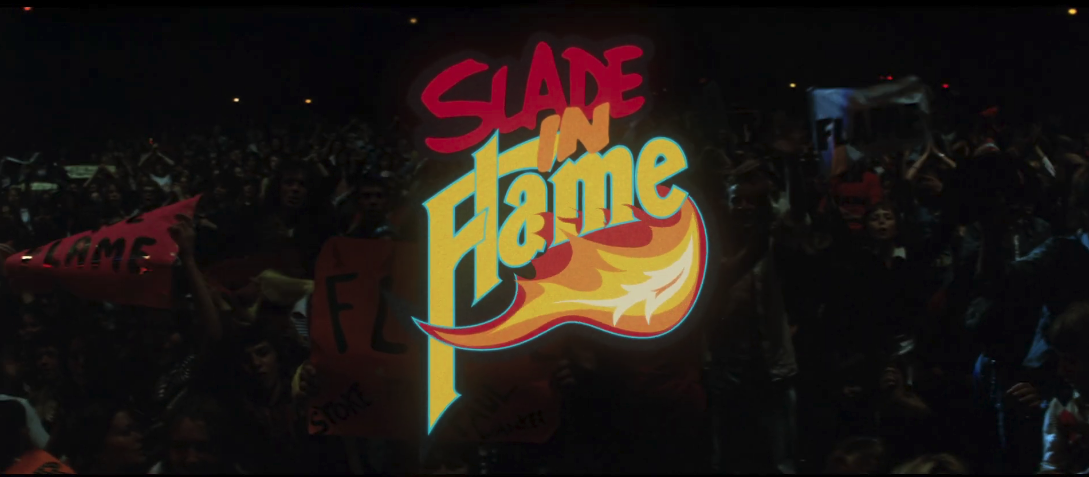
C’mon see the noise! Slade in Flame (1975), BFI restoration screenings and Blu-ray


The early seventies… they say if you can remember them you weren’t really there… oh, hang on, that’s the sixties. I may have been only ten but I was definitely there for the explosion of grimy glam rock that blew our junior-school minds after years of well-behaved formulaic bubble gum from The Osmonds, Dawn, The New Seekers and even my once beloved Middle of the Road. Glam was a turn in the road, a call to revolt and it touched our unruly instincts as we felt a connection to the sheer naughtiness and noise of Slade, Sweet and T-Rex starting in 1971 and for the next three years and beyond. We no longer cared where our mother had gone, we just wanted to get down and get with it… even if it was only in the Friday lunchtime school disco!


Slade were the greatest exponents of Glam but with a gritty edge that under-lined all of the best acts: these guys may have worn make up and glitter but they were in the main hard as nails: call Steve Priest an artiste and he’d probably give you a bunch of fives in the parlance of the time. Slade were, at one point, a “skinhead act” and, much like Oasis in the 90’s, they were working class lads who just loved The Beatles. Unlike the Gallaghers though, they brought their own songs filled with original melodies as well as fierce riffs.


They may not have known it but Slade had peaked by the time they filmed Slade in Flame and were in search of the new challenge it bought, or at least their manager Chas Chandler (ex-Animal and Jimi Hendrix’s manager) was. Several daft ideas were mooted – The Quite-a-mess Experiment being quickly dismissed not least because Dave Hill would have been despatched in scene two… In the end the band followed the Hard Day’s Night route but, rather than just mimic the actuality of the band’s existence the team devised a harder-edged drama that was loosely- based on their career and, crucially, their characters but one that was also drawn to the cynical end of the pop machine. This wasn’t Slade’s biography but it was an amalgam – amal-glam! – of theirs and many other bands experience in the dingy, cut throat, beer-stained, bingo halls and working-mens’ clubs of provincial Britain.


Noddy Holder in the Seventies

Released in 1974 - it is pure 1974 - the last time Slade would produce material of the quality of Far, Far Away and the sublime How Does it Feel. The result may have confused audiences and critics at the time (Barry Norman apart – he loved it) but now is amongst the best-regarded of its genre: the "Citizen Kane of rock musicals" as Mark Kermode calls it. As if The Monkees had been from Wolverhampton and decided to film Head not just in Sheffield but also using Alan Lake as technical advisor and not Jack Nicholson… it would have looked something like this.


Flame is raw-edged and not just because of the four main leads. The scripting from Andrew Birkin, matched their personalities to their on-screen personas to make it easy for Jim, Noddy, Dave and Don to perform as naturally as possible and was informed by the group taking both Birkin and director Richard Loncraine on tour with them to the US: the pair lasted a couple of weeks before retiring exhausted.


The story takes place in a netherworld of the North being filmed in Sheffield, Nottingham as well as London and Brighton. This may have been Loncraine’s first film but that doesn’t stop him opening the film with a single take shot from the bathroom down the stairs and into the garden at a wedding party that Robert Altman would have been proud of. At the end of the sequence, we find the disturbing sight of Jack Daniels (Alan Lake) and his Elvis Presley-stylings fronting a band with a bored bass player Paul (Jim Lea) and a cheeky guitarist Barry (Dave Hill) who sparks off a riot after lifting a girl’s skirt with his foot.


Alan Lake: none more rock or roll...

Alan Lake is superb throughout with a manic energy tempered by genuine acting skill, here in this opening scrap he doesn’t look out of place at all as you’d expect from a man who’d just finished a prison sentence for GBH. Lake has that authenticity from a period when the barriers between criminality and performance was blurred perhaps more than now. Unlike Mr Statham I doubt he needed inordinate amounts of takes to get through his lines too!


The band is eking out a living on the club scene and following the wedding fracas has to replace their drummer. Don Powell plays Charlie a metal worker – one of a number of Wolves let lose in South Yorkshire – and he easily gets the gig after rocking up with a full drum kit. The band is “managed” by local bingo-magnet Ron Harding (Johnny Shannon, a man with genuine “connections” who had played the hard man music agent before in Performance) who isn’t that convinced by Daniels’ band but has him on a lock-tight 10% all the same.


The band is in competition with another band, The Undertakers, who dress up in Halloween gear whilst their leather-lunged singer Stoker (Noddy Holder) performs from within a coffin. Barry slyly adds a padlock and Stoker gets trapped. Out for revenge the Undertakers chase after the boys and Barry’s girlfriend (Sara Clee – who does a splendid job as the long-suffering, gum-chewing, feather-cut Angie – absolutely the kind of girl I had a crush on in 1974!).


The band on manoeuvers

The band’s car crashes and after being pulled out by the Undertakers they’re all thrown in clink for the night. So it is that ace singer and lyricist Stoker pals up with ace tunesmith Paul and a new band is formed out of adversity… The new band has something more and after one gig are spotted by everyone – not least Ron, but also a detached businessman Tony Devlin (Kenneth Colley) who follows up his interest by posting a note through Paul’s gran’s letter box. Tony is employed by a wealthy advertising executive, Robert Seymour (the studiously laconic Tom Conti in only his second film although already well established on stage) who sees a market ripe for exploitation and believes that this is a band he can monetize.


The boys are made an offer they can’t refuse and gratefully swap Ron for the Home Counties’ comforts of Robert who has plans… A single is cut and the band begins the carefully orchestrated PR circuit beginning with Radio City a pirate radio station based on one of the abandoned sea fortresses in the Thames Estuary. This sequence is well filmed and the sight of the boys gingerly climbing the rusted metal steps of the fort is not entirely the results of acting – Dave Hill in particular was terrified of heights and had to be supported on his way up by Loncraine.


Once in the studio the boys are interviewed by one Ricky Storm (Tommy Vance) before gunfire is heard and the station is attacked by unknown assailants… Apparently this had happened during the pirate wars but, on this occasion at least, it looks like cynical PR from Robert. Naturally it works, and the band goes from strength to strength in spite of cracks already appearing between the moody perfectionist Paul and garrulous improviser Stocker… none of this too far from the truth.


Tom Conti muses...

There are wonderfully-observed moments of discomfort between the band and their social betters – not least Robert’s family and "friends". Then there’s a touching exchange between Charlie and his old boss Harold (Patrick Connor) by a canal in which the latter used to fish and swim but which is now a polluted mess. This sequence is all the more remarkable when you consider that Don Powell was still suffering short-term memory loss after a crash a year before. He had to learn his lines immediately before the scene yet plays a blinder.


He invites Harry to a party with his record company friends and yet Robert dismisses him with contempt… Another guest at the party gets taken a little more seriously, it’s Ron here to claim his winning ticket by informing Robert that he’s still the group’s agent. Then Robert meets Jack who is still in search of his opportunity calculating the odds very quickly Robert works out how he and Jack can quickly help each other…


Now things get messy as the band go from big to huge and a battle begins over the rights to their earnings, control of their creativity… it’s a familiar story and one not too far from the truth for many bands over the course of the rock and this roll, if perhaps not Slade. It also includes one of Holder and Lea’s very best songs in How Does it Feel which somehow manages to encapsulate a hopeful vulnerability with a defiant anthem pretty much as John and Paul did. Noel was taking notes.


Sarah Clee and Dave Hill... 

There may be occassions when the dialogue is muffled or when events rush along just a bit too quickly but Flame is still a triumph. All four members of the band perform well which not only shows the value of writing their parts so closely to their own characters but also their native ability to be authentic – the very foundation of Slade’s appeal. Unlike some they actually meant it, man… And from the young boy from the second year at Deyes High School, it takes me back to an era I only experienced as a child but I certainly felt the noise.


Slade in Flame is back in cinemas on 2 May 2025 and released on BFI Blu-ray/DVD on 19 May 2025. Details of tickets are on the BFI website and you can pre-order the home media on the BFI Shop.


There’s also a new trailer highlighting the lovely restoration on the BFI site too!


Parts of this review previously appeared on my other site: DustyVideoBox...

Hobart Bosworth sails on… The Blood Ship (1927)


Only my silent friend in the corner declined to take part in the merrymaking… The bludgeon-like wit of the house very carefully passed him by. For he was so plainly a desperate man.


The Blood Ship is based on the 1922 novel of the same name by Norman Springer and is very much tailor-made for a Hobart Bosworth blood bath. The star of the ferocious Behind the Door had earned his sea legs at a young age after apparently running away from home at 12 then working as a cabin boy on a sea clipper for three years before work on an artic whaler. The son of a Civil War naval captain, he clearly heard the call of the sea but he became involved in theatre aged 18 when invited to work as a stage manager helping to produce backdrops, work he hoped would enable him to study art. Quite the shift for a man who, in Norman Springer’s words, looked like the sort of “hard case” you would find working the toughest seas.


Bosworth began to act, funded by the odd stint in coal mining, and just as he was establishing himself in New York he was stricken with tuberculosis which not only weakened him but also affected his voice. Unable to project on stage he found new opportunities with silent film in the 1900s and also the ability to live in warmer climates. He credited the industry with saving his life and became one of the period’s most forceful performers who was also producer, script writer and director. A man of many talents.


The Blood Ship was one some two dozen nautical films he made and it gives him full rein to bring his weather worn features and remarkable sensitivity to the role of a man robbed of life and liberty who is seeking revenge for more than he knows… and he ramps up the righteous anger with emphatic force as the full extent of his betrayal is revealed. The film has recently been restored following the discovery in 2007 of its long-lost final reel and it looks almost freshly minted in the new Sony Blu-ray which comes with a new score from the redoubtable Donald Sosin.


Directed by George B. Seitz it concerns The Golden Bough, a trading ship run by the brutal Captain Angus “Black Yankee” Swope (Walter James) a man who in the late 1880s was “cursed from Liverpool to Singapore as the cruellest master that sailed the Seven Seas…”. We find him ordering the lashing of a would-be mutineer aided by his equally unforgiving First Mate, Fitz (Fred Kohler who would play so many henchmen – he had a face for cruelty). The other crew seethe silently and only the Captain’s daughter Mary (Jacqueline Logan) tries to help the poor man.


Walter James

“They cleaned me - a year’s pay - the Swede and his wimmin!”


Swope is a cynical abuser and he knows that treating his crew mean will keep them in line and that they’ll escape the first chance they get without his having to pay them and as the ship’s hull touches the dock they’re all off. Meanwhile at Knitting Swede’s Lodging and Beds, more services are being supplied than advertised as one sailor is ejected after getting caught up in the titular Swede’s web of gambling, sex work and booze.


James Bradbury Sr. plays the Swede who does actually sit at his bar and knit in a surprise development although the knitted hat he wears doesn’t speak to any great advancement in wool craft. He sist and smile eyeing his clientele up and assessing all with a smile including the Reverend Richard Deaken (Chappell Dossett) who steps over the threshold to remonstrate about the effect of his wicked ways. After his rebuttal, the Swede says to his bouncer (Syd Crossley) that perhaps the preacher could do with a sea voyage…


John Shreve’s my name – able seaman – and I don’t think I like you or your runner!


Richard Arlen and Hobart Bosworth

A young man smirks at the bar and introduces himself as John Shreve (Richard Arlen) to the Swede and his man, expressing his distaste for the racket they are unquestionably running and going off to sit next to a moody man fulling his pipe in the corner of the room. The Swede sends one of his girls to distract John who then gets in a fight with the bouncer and, having trounced him is saved by the moody man who turns out to be Jim Newman (Hobart Bosworth). Both men volunteer for Swope’s ship though, John because he wants to protect Mary and the latter for reasons all of his own.


Soon they’re taken on board with many who most definitely did not volunteer including the Reverend, who thinks this must be some kind of mistake and couldn’t they drop him back on shore, and the cockney bouncer now surplus to the Swede’s requirements having lost his barroom brawl and his reputation. Jim avoids Swope’s attentions whilst the rest of the men soon learn that his reputation is entirely founded in reality.


Soon Jim confronts Swope and we learn the shocking secret of their relationship whilst a young cabin boy is almost kicked to death by Swope and the tensions mount… This being a Hobart Bosworth production you just know there will be a hate-filled battle at the end of the film and few actors could match his convincing ferocity and righteous indignation. There is good support from Arlen and all including Blue Washington who is gifted with a dramatic role that doesn’t entirely rely on the usual racial stereotypes of this era – there were always creators who looked to progress and not perpetuate. Call them “woke” perhaps…?


Jacqueline Logan

It's a tense and  visceral ride and as the novelist, mage and former comic-book author Alan Moore once remarked, superheroes are essentially revenge fantasies for the impotent, and you can say the same for film stars in stories like this.


Talking of which, there is now a new Blu-ray combining Irvin Willat’s Bosworth adventures, Behind the Door (1919) and Below the Surface (1920) from Flicker Alley, both restored by the San Francisco Silent Film Festival and with new scores from Stephen Horne. Personally, I can never get enough Hobart and Horne and have already snapped this one up, you can order direct from Flicker Alley for the further adventures of Bosworth on Boats!


The Blood Ship Blu-ray can be ordered from eBay and the usual US retailers, but watch out for the sales tax!