Showing posts with label George Méliès. Show all posts

Thursday, 31 October 2024

The dark night… The Bat (1926), with John Sweeney, Kennington Bioscope


It was the KB Halloween Edition and MC Michelle Facey was accompanied by a raven and genuinely spooky tales not just about our main feature but also the fate of Roland West’s yacht, Joyita, which, to cut a unsettling mystery short, became known as the Marie Celeste of the Southern Seas after all passengers and crew disappeared leaving only and empty vessel listing and carrying mute evidence of a desperate conflagration. None where ever seen again and the ship’s former owner, director of this film, also vanished from the industry after the mysterious death of his lover Thelma Todd in 1935.


Whoever the fool was who directed Babylon (2022), there’s more things in Heaven and Hollywood than dreamt of in your ridiculous screenplay. Anyway, as usual Madame Mystery, sorry, Facey, was on song – unlike her raven – illuminating the stories of cast and crew and West’s seminal film about a costumed anti-hero who dresses like a bat, swoops around like a bat and genuinely terrifies in the manner of a large flying rodent. This is as she says one of the great Old Dark House films along with The Cat and the Canary, The Final Warning and Seven Footprints to Satan. Trilling, comedic and genuinely intriguing, we don’t know who The Bat is until the end and, having been told not to reveal the secret by an intertitle at the start, we must keep our silence as with The Mousetrap.


We were watching Ben Model’s recent restoration of The Bat which included a 2k scan from the UCLA Film & Television Archive’s original 35mm materials and it looked splendid on the big screen and with John Sweeney accompanying. I have the Blu-ray to watch having been on of the project funders and this will also be available from Ben’s Undercrank Productions site – link at the bottom. I’ve never seen the film before and whilst it’s not quite as tightly presented as The Cat…, it’s certainly an entertaining romp with plenty a twisted dark turn. Possibly too many but what the heck, it’s Halloween!


Directed by Roland West who also adapted from the play by Mary Roberts Rinehart and Avery Hopwood which was first produced in 1920 to much success. Events kick off with a daring robbery by the seemingly superhuman Bat, who is so confident he has written to millionaire jewel-fancier, Gideon Bell announcing his intention of stealing his Favre Emeralds at midnight. Despite the presence of the police, The Bat succeeds by climbing up the outside of the elegant skyscraper and pulling Bell out the window taking his prize.


The Bat is audacious and even leaves a note on a kind of Bat-Post-It note announcing his intention to visit the country for his next crime… Bob Kane was influenced by the film in creating The Batman but the template is more like one of the Caped Crusader’s rogues’ gallery, Cat Woman, The Riddler or even The Joker who himself was influenced by The Man Who Laughs (1928). Talking of which, what a great Harley Quinn Olga Baclanova would have made… a proto Gaga!


Before his trip though The Bat drops in on Oakdale Bank to enhance his short-term liquidity only to find that another has got there first to steal $200,000 from the safe. He notes the number plate of the felon and, no honour amongst thieves, sets off in pursuit in his car, a mobile vehicle for the Bat. The subject of his pursuit arrives at a large darkened house and, climbing in through the basement proceeds to climb up the laundry shaft and then a hidden stairway to a secret lair of his own. There's a cat and mouse as well as a bat in this tale.


Sojin Kamiyama, Louise Fazenda and Emily Fitzroy

As it happens, this is the mansion of the recently deceased Courtleigh Fleming, the president of the very same Oakdale Bank, where a whole bevvy of suspicious suspects are in place. Chief suspect for this unauthorised withdrawal is Brooks Bailey played by Jack Pickford who frankly always looks guilty of something. Apparently West shot during the night hours which gave his players that extra edge and it certainly has a sleep-deprived mania generated by the cast drowned in the shadows of these huge sets designed by the great  William Cameron Menzies with help from Harvey Meyers.


Brooks is accompanied by Miss Dale Ogden (Jewel Carmen aka Florence Lavina Quick aka Mrs Roland West) who is the niece of Cornelia Van Gorder (the ace Emily Fitzroy) who is renting the property and Dale not only convinced that her Brooks is innocent, she wants to marry him too. She presents him as a new gardener even though he knows less than I do about horticulture as quickly exposed by Cornelia who is generally the smartest person in every room of the house. No competition in this respect is her nervy maid, Lizzie Allen (played by the excellent Louise Fazenda) who provides enough comic relief for two films if I’m honest but she’s such a reliable pivot for the crime and the grime.


After breaking contract with Fox in 1921, this was Jewel Carmen's last film


This is an ambitious story, and I’d love to see it on stage for there are still another six characters to introduce, all of whom have their suspicious edges – almost everyone is a suspect apart from Lizzy – especially the men, Dr. H. E. Wells (Robert McKim) and his black bag, the moody Detective Moletti (Tullio Carminati), Billy the Butler (Sojin Kamiyama) and “prevalent at the time” racist tropes… There’s Detective Anderson (Eddie Gribbon) with his two guns, is he as clueless as he seems? And what’s more suspicious than Fleming’s nephew, Richard (Arthur Housman) who wants to frighten Cornelia away so he can lease the mansion?


You’ll just have to watch and find out and ideally with a live audience and as skilled an accompanist as John Sweeney who treated us to some full-blooded flourishes and mystical melodies for this gently fretful but funny silent spooky treat!


Some new blood – creatively speaking – was unveiled for the first part of the programme which was accompanied by Le Giornate del Cinema Muto Masterclass alumnus Andra Bacila who is studying at the Royal Academy of Music and who we will hear a lot more from in future. She accompanied The Red Dance (1928) in Pordenone and here sprinkled musical illumination for three wonderful shorts starting with La course aux potirons (1908) concerning runaway pumpkins in Paris, an hilarious film I'd also seen in Italy.
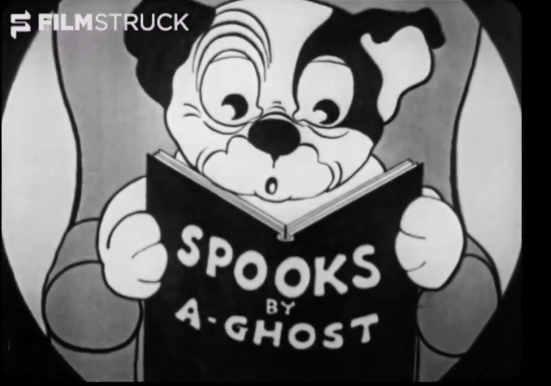

Pete the Pup is petrified!

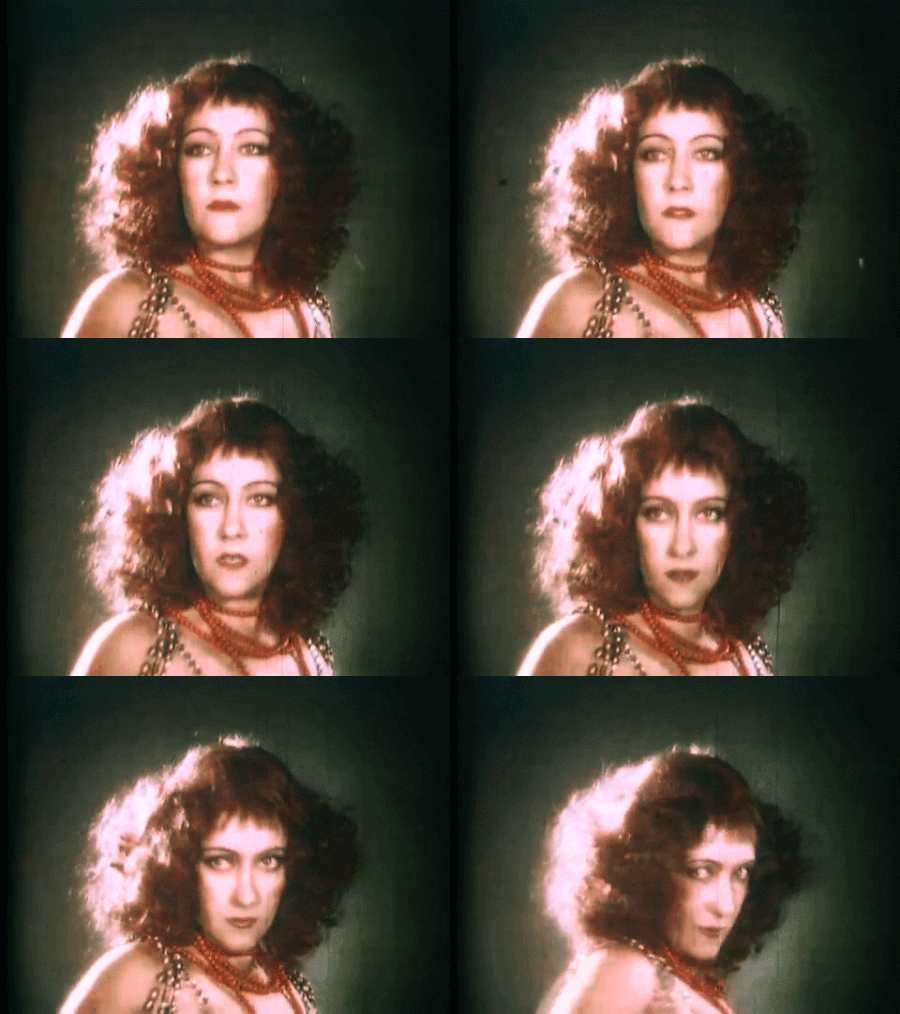
After this was some wonderful invention from Walter Lantz with the mixed live and animation featuring the director and his cartoon dog, Pete the Pup, in Pete's Haunted House (1926) followed by a stunning The Devilish Tenant (1909) from Georges Méliès which was a trick film honed to perfection. It was hand coloured which as Chris Bird reminded us, meant that every frame on every copy was coloured individually - remarkable and beautiful film to see.


The last film was courtesy of a lucky find on eBay and was a rare surviving copy of a Cecil Hepworth film from 1922, One Too Exciting Night, a spoof on Griffith's One Exciting Night, itself an Old Dark House Mystery. What we saw may well be the only surviving copy anywhere but that's how they roll at the Bioscope - the rare, the extraordinary and the exceptional. We are privileged and all for just a few quid!


Frighteningly good!


Louise Fazenda gives her all!


To buy the Blu-ray of Ben Model's restored The Bat, please follow this link to the Undercrank Productions website - it is a very worthy release including some delightful extras. Blessed are the Kickstarters!


There's more about the mystery of the good ship Joyita here, a fascinating tale from the Bow Creek to Anatahan maritime history site.


This "near-mint" copy of the first appearance of The Batman in March 1939 last sold for $1.7 million in auction, and is now valued at $2.2 million. So, it's not just classic film enthusiasts who should check their lofts for lost treasure... I know where one copy is but I'm not telling. 


More gorgeous screen shots from the Blu-ray!


Gotham, before the Bat Signal


Sunday, 1 February 2015

Classic film… The Classical World in Silent Cinema - British Museum


OK, it’s been some time since I had to rouse myself for a 10 AM lecture but… on a Saturday!? We were gathered at the British Museum for a study day examining the fascination of early cinema with classical Greece and Rome. Apart from the chance to relive my miss-spent student-hood, this was an opportunity to view many early films from 1897 to 1913 which only exist on film, are rarely screened and are not commercially available.

The day is part of ongoing international research project co-directed by Maria Wyke of University College London and Pantelis Michelakis of Bristol University who were both present along with Nick Lowe of Royal Holloway University and Bryony Dixon, the Curator of Silent Film at the BFI.


They had lined up fifteen films from archives across Europe and had commissioned Stephen Horne to improvise accompaniment on a variety of instruments including Flute, Percussion, Accordion, Vibes and Piano. I’ve often said that Stephen’s playing is so inventive and varied we could listen to it all day: today we almost did as he worked like a Trojan from 10 to 4pm…

Maria Wyke introduced proceedings saying that their objective was to understand the links between the early flourishing of European cinema and antiquity: were film makers not only borrowing from nineteenth century literature and art for ideas but also legitimacy, trying to prove that the new art form was on a level and not just taking the contemporary fascinations as source material.

Inspiration? Locusta testing in Nero's presence the poison prepared for Britannicus by Joseph-Noël Sylvestre (1876)

Session 1 – French shorts 1897 to 1910

The first session featured French shorts and included the earliest film I’ve ever seen in cinema…

Nero Trying Poisons on Some Slaves (1897). This early Lumière brothers film was the very first to represent the ancient world in cinema and was made just a couple of years after their famous train arrived at its station in Paris. At just under a minute the plot was simple but so was Mr Armstrong’s first footstep on the Moon… how he got there is a whole different matter.

The Temptation of St Anthony (1898) featured director Georges Méliès as the titular saint who is distracted by the constant appearance of playful young women but he stays strong in spite of their cheeky hair tousling antics…The Mermaid (1903) by the same director had some lovely tricks and composition including a fish tank that moves towards camera before a mermaid materializes inside: he’d come on a lot in five years.

Surely Georges Méliès wasn't mocking the Church?
Diana’s Resentment (1910) brought much colourised motion to the ancient world… whilst the next film Creon and Mirtyl (190?) is a mystery about which very little is known. It is however a very funny colourised account of how Mirtyl’s aunts try and help her get over her shyness with her warrior husband.

The Vestal (1910) Directed by Albert Capellani drew its story from an opera and was also very colourful and, unfortunately, very damaged. Bryony Dixon explained that the original stencil  colours at the time had by now been affected by other factors with red decolourisation from water damage and tonal shifts from the initial copying onto 1990’s colour film. She said that we needed to treat ancient film “like a Greek vase” to re-colour as originally intended and discover whether the tints were intended to portray accuracy or heighten impression.

Luitz-Morat meets a colourful end in Le fils de Locuste (1911)
Heliogabale (1910) was directed by Andre Camettes and featured a misbehaving Roman Emperor who, taking a shine to one particular Vestal, kidnaps her. The people rally to save her and throw him into the Tiber… which was where the original ended up but following a rather more complex series of events.

Session 2 – Historical and mythical narrative 1910-11

The second sequence featured later films with narrative complexity: the new medium learned fast and developed its sophisticated language remarkably quickly.

Belisaire (1910) feature the unusual setting of a late Byzantine court and a tale of general Belisaire. Belisaire is Emperor Justinian’s favourite but the empress Theodora is also impressed with him… He is already married and so, unable to have him for herself, she plots to blind him by pouring acid onto his eyes. Luckily his wife spots her arranging the scheme with her henchmen – in classic silent-film stalking style… and he is able to overturn the attempt to disable him and then to return to the court to accuse the traitors in its midst…

This film included a good deal of location shooting, making the most of the Mediterranean light as natural landscapes began to play an important narrative role.

Classically composed... The Son of Locusta (1911)
The Son of Locusta (1911) directed by Louis Feuillade, was the second film to feature Nero but showed far more narrative subtlety than the first from 1897: ordinary people still die but we see more of their personal tragedy. Nero’s poisoner-in-chief, Locusta, prepares a lethal draft for Nero’s brother Britannicus but the plot goes awry in a most personal way as the urn carrying the poisoned wine gets diverted to another…

The Fall of Troy (1911) directed by Piero Fosco, Giovanni Pastore (later to direct Cabiria) and Romano Luigi Borgnetto was one of the few on the day’s bill to have been restored showing how the blockbusters of the time could look with an account of the critical battle in the tug of war over Helen.

Helen and Paris travel in comfort
This is an advanced film with the journey of Helen and Paris to Troy shown with them in a giant shell with cherubs flying around them - double exposed on a moving diorama. There were also some nifty camera pans – early indicators for Cabirian fluidity.

The initial Grecian attack on the walls of Troy is well realised with a tower entering the fray before a hail of boulders forces the Greeks back, they retreat to their ships but leave a suspiciously large horse behind. The people of Troy have to partially dismantle their gate to allow the horse in and, of course, at night the Greeks sneak out to set fire to the city…

Yep, looks like a Grecian gift to me...
Session 3 Antiquity in modern settings

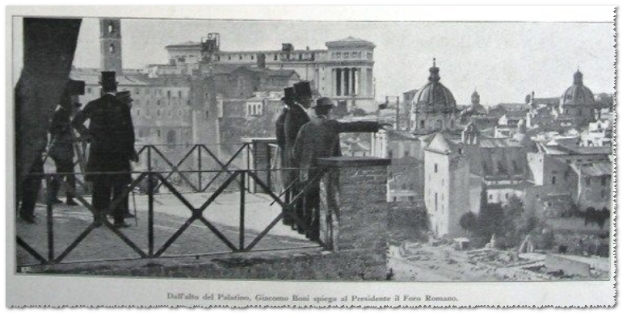
By 1913 cinema was engaging with antiquity in different ways. This session opened with three documentaries showing visits to ancient sites: “the poor man’s grand tour…” the only way the common man could get to see these sites: An Excursion in Ancient Greece (1913), Through the Ruins of Ancient Rome (1914) and Excursions to the Roman Ruins of Ampurias (1911).

These were fascinating snippets and Stephen Horne’s playing was especially effective in helping us recreate the fascination of seeing the living ancient world for the first time.

https://rometheimperialfora19952010.files.wordpress.com/2014/09/boni-1922.jpg?w=627
Oddly enough the Forum has hardly changed...
Oil and Water (1913) This DW Griffith film carried a typical message but not the straight-ahead Christian morality you’d possibly expect. It stars Blanche Sweet as a dancer who falls in love with an Idealist (Henry B Walthall… later to star in The Birth of a Nation) – can they form a sound family union or will she be lured back to her exiting life on stage?

There’s support from Lionel Barrymore and if you looked really closely you could see both Dorothy and Lillian Gish in the audience for Blanche’s first dance sequence. The dance is very well filmed by Griffith as Sweet plays Venus and wins the Idealist's heart.

Nick Lowe pointed out the film’s "magnificent theological incoherence" - none of which stops DW from making his ultimate point (bit of a habit that).

Almost certainly not priestesses of the goddess Vesta...
L’etoile de Genie (1913) Directed by F. Zecca and R. Leprince, this French film dealt with another relationship in which two people are brought together by a classical figure.

Stacia Napierkowska plays dancer Stacia who inspires a wayward musician, Signoski (Gabriel Signoret) to write a great work based on the life of Gaius Caligula. But Signoski can’t cope with his muse’s success and she moves on as he loses the plot: are they oil and water too?

So… a very full day in the comfortable seats of the British Museum’s BP Lecture Theatre underneath the tourist-packed Great Court. Maria Wyke said to leave feedback and mine would be to please run more days like this – the films and music  were a treat and the Q&As were full of insight and interesting snippets. Did you know, for example, that tinting had to stop when sound came as the process would have interfered with the sound track?


More details of the project can be found in The Ancient World in Silent Cinema edited by Dr Michelakis and Professor Wyke – it’s available from Amazon or Cambridge University Press.

Fin

Saturday, 27 December 2014

And the best is silence… 2014 in review

https://blogger.googleusercontent.com/img/b/R29vZ2xl/AVvXsEjSP48F_KK1of2brRrN7k45dRHZpB85jj0vut2QOL16IomGJ8xesQIenT31QnYcQVa_MOulJv8QRAjNp3bfVuRls6dtUR4iBXZNIccCV6lQLH7GCXWlNtkaP3tbCQMhjP-WAn9S0b2jfA/s640/Bow.jpg
Clara strides towards the New Year!
This blog is an aide memoire for a good chunk of my cultural experience not just a means to rationalise it... at my age, given the speed of life, I might just forget stuff. So, what do I remember best about 2014? Without referring to my notes or re-reading, here’s what’s left in my head: my, inevitable, Top Ten in no particular order involving nine grand nights out and one good reason to stay in...

Neil Hamilton and Colleen Moore
Colleen Moore and Why be Good (1929), London Film Festival
This has been Colleen Moore’s year as she re-emerged on screen to blow us away with her intelligence, wit and sheer verve. Moore’s enduring impact was demonstrated no better than in the LFF screening of the recently re-discovered Why be Good – complete with the original Vitaphone soundtrack.

The Warner Archives DVD has also allowed my teenage daughter to find a new silent heroine!

Si vis pacem, para bellum?
The Battles of the Coronel and Falklands Islands (1927), London Film Festival
A special night at the Southbank's Queen Elizabeth Hall with the BFI’s restoration being accompanied by a magnificently-moving new score from Simon Dobson performed by the Band of Her Majesty’s Royal Marines – a 24 piece ensemble in memory of the 24 bandsmen who perished on HMS Monmouth at Coronel.

Walter Summers’ painstaking reconstruction of these two key engagements from the Great War is all the more impressive as he used real sailors and ships – there were no model shots – a tribute to naval and creative discipline.

Harriet Bosse and Victor Sjöström
The Sons of Ingmar (1920), with John Sweeney, Cambridge Arts Picturehouse
The Sons of Ingmar is not digitised and can only be viewed when double-projected in cinema. This was a rare chance to view this important Victor Sjöström film and it proved to be deftly made and genuinely moving – worth the effort of finding a car parking space in Cambridge!

It was also good to finally see personal favourite dancer-actress Jenny Hasselqvist in Sjöström’s Vem Dömer (1922) – but why are so many of these films not on DVD?!

Mind your hats!
Comic Heroes of the Silent Screen at Wilton’s Music Hall, with the Lucky Dog Picturehouse
Wilton’s wins my new venue discovery of the year award – an Eighteenth Century music hall on the fringes of the City that has great atmosphere and a bar too! The Hall was taken over by the Lucky Dog Picture House for a programme of comedy capers accompanied by the magic house band.  We had Charlie in The Adventurer, Harold Lloyd in Never Weaken, Felix the Cat in Hollywood, George Méliès with four heads and Buster Keaton in Sherlock Jnr (1924).

http://www.flickeringmyth.com/wp-content/uploads/2014/07/night19142.jpg
Variety
A Night at the Cinema in 1914, BFI with Stephen Horne
Another hugely enjoyable anthology evening, this time aimed at recreating the experience of a night at the cinema in the year that war broke out. The films on view were mostly British and ranged from clips showing the troops in Egypt to the unreal sight of German troops on bicycles after their rapid invasion of Belgium. It captured the “over by Christmas” spirit but the Empire wasn’t as strong as we thought… The picture houses went on to help maintain morale through the ensuing years of unrelenting sacrifice.

Benita Hulme rouses the rabble
Not going out? Silent sci-fi on the BFI Player – High Treason (1929) and A Message from Mars (1913)
It was good to see the BFI Player hosting some interesting British silent science fiction, from Maurice Elvey’s late silent-period  High Treason to the very first domestic feature, A Message from Mars. I always like peering beyond the actors to the street settings and it was fascinating to see Trafalgar Square, the Mall and Edwardian fire engines tearing through pre-Great War London.

The Electric Cinema
The Wind (1928) with Lola Perrin at the Electric Cinema, Birds Eye View
I’d kicked myself for missing the original performance from Lola Perrin – winner of Silent London’s poll way back in 2011 – and wasn’t going to pass up the opportunity again. Ms Perrin’s accompaniment was as unrelenting as the wind and melded so well with Victor Sjöström’s tale of life and death at the extremes... 

The venue was also superb and if you’ve never experienced the plush, leather-seated living room comforts of the Electric Cinema I urge you to add it to your New Year’s resolutions – this is how all cinema should be!

The auditorium awaits...
The Sound of Chaplin, Barbican with Timothy Brock and BBC Symphony Orchestra
A grand evening with Timothy Brock conducting the BBC Symphony Orchestra as they played along to the early works of Mr C Chaplin of Walworth.  Call me an inverted snob but the orchestrated set pieces at the Royal Festival Hall sometimes seem more for the “concert crowd” than the cineaste whereas the Barbican feels more focused on the film. There was barely a set of red braces in sight as the beards and cloche hat brigade laughed their heads off at The Immigrant, Kid Auto Races and Shoulder Arms.

Neil Brand’s sprint to the stage to take his un-expected bow for Easy Street’s new score epitomised the unaffected joy of the event.


The Music Lovers (2013)
Six Italian Films 1906-2013, Italian Institute of Culture with 1911 Lokomotif Orchestra
An unexpected delight at an unusual venue where I was probably the only non-Italian speaker and the only non-Armani wearing attendee…

We were treated to five short films from the golden age of Turin Cinema all accompanied by the music of Mauro and Roberto Agagliate. Matteo Bernardini hosted the evening which was topped off by a showing of his silent short The Music Lovers (2013).


Naughty, bawdy, gaudy, sporty Friedrichstrasse…
Berlin, Symphony of a City (1927), Barbican with Stephen Horne and Martin Pine
Director Walter Ruttmann’s rhythmic city symphony was brought to life by swinging syncopation from Stephen Horne on piano, accordion and flute along with Martin Pine on drums and vibraphone. This was “lean-forward” silent media with an urban-edge that peeled away the years: for 65 minutes we were all Berliners (at least the 1927 variety...).

More proof, if it were ever needed, that silent film is best viewed with live music. The media may be old but the improvised response from expert musicians helps transmit an edge of uncertainty to an audience experiencing something genuinely new.
Gloria is Stage Struck!
So, here’s a toast to more of this in 2015… Gloria Swanson, Maurice Elvey and Sherlock Holmes at the Barbican, Buster and Carl at the Southbank and the Lucky Dog Picturehouse illuminating early British comedy at the BFI… Another very silent year but far from quiet!