Wednesday, 16 March 2022

Asta talks! Impossible Love (1932), BFI Asta Nielsen Season

Three women: Ery Bos, Asta Nielsen and Ellen Schwanneke

It looks good from far away, just like me…


It’s no coincidence that the very first thing we see Asta Nielsen do in her first and only talkie is to put her finger to her lips to shush the chatter as her daughter gives a music recital. Only Die Asta could be so knowing and post-modern. She was fifty when she made this film and she looks great, lovely big smiles and gorgeous fashions, nothing like the rags of Joyless Street and, as with that film and so many others, she unrolls as stunning closing section… watching all of these films that’s one thing that stands out, the actress always left plenty in the tank for a sprint finish of audacious expression.


So many lines ring beyond the film, not least the one above and other’s relating to her age that she may well have improvised given their added poignance. The male characters in the film are mostly boorish and one constantly complains that a woman of her age with two grown daughters should simply resign which I took to be a mistranslation of retire but which the Kennington Bioscope’s Michelle Facey suggested was meant literally, Asta’s character being viewed by a conservative German man as wrong to still have personal ambition given her womanly responsibilities.


Maybe it was Asta’s age and her feeling that the parts were just drying up as younger actors swarmed. She made silent five films released in 1927 and headed off to the theatre before being lured back for Unmögliche Liebe (1932) and clearly decided that artistically that was enough and the stage would be where she would carry on before the changes in Germany forced her back to Copenhagen in 1936.


Asta Nielsen, Julius Falkenstein and Hilde Hildebrand


Directed by Erich Waschneck, Impossible Love is a little deliberate but also a very interesting film that is firmly centred on three women, sculptor and studio manager Vera Holgk (Asta), her eldest daughter Nora (Ery Bos) and youngest Toni (Ellen Schwanneke, who’d featured in the previous year’s Mädchen in Uniform). These three are the centre of the action and are largely surrounded by odd men.


Nora is, for some reason, in a relationship with the moneyed but foolish Leopold von Möllendorf (Anton Pointner) who, once engaged to his much younger partner, calls Vera Mutter like the man child he is, whilst also attempting to get Nora to give up the cello on the grounds that it is a most unfeminine instrument to play. He also thinks Vera should “resign” and surrender her selfish ambitions, declaring his family as “conservative” but not backward… Toni meanwhile has a relationship with a young man nearer her age, Erwin (Carl Balhaus) who works with her in a photographic studio and how is less intelligent and less realistic than she. Toni may be the youngest but she has insight and some of the film’s best lines.


Daftest of all is the Professor’s man servant Zimmermann (Julius Falkenstein, who, as Michelle reminded me, was so good in The Oyster Princess with Ossi Oswalda) but he’s meant to provide comedic relief and does so with practiced ease, some physical comedy, inappropriate napping and lots of outspoken lines that still cause a titter.


Asta still works hard on the casual details of real character

Tell me you still believe I can create great work? 


The exception to all this appears to be Professor Steinkampp (Hans Rehmann), a sculptor of repute and, even though younger, a suitor for Vera’s affections. Steinkampp pursues her with some style and then invites her to his studio to work on her own sculpture for a competition. At first, Vera, who has been running a commercial art studio, is doubtful she can still compete but with the Professor’s encouragement she is soon back in the groove, as it were. It’s a joy to watch Asta, fag in mouth and singing to herself as her character works… that’s how to use talkies for narrative continuity, her old tricks of seemingly casual distractions are accompanied by sound in this new environment. You can also see/hear the stage experience at play.


Vera has doubts and guilt about her growing feelings for Steinkampp and starts withholding some information from her daughters, the beginnings of a distance between them as she, for the first time in a long time, starts to put herself first. She wins the art competition and has to confess some of her new relationship but then things take a dramatic turn for the worst as Steinkampp’s old girlfriend, Martini (Hilde Hildebrand) sells her salacious story to the newspapers and all Himmel breaks loose…


Amidst the moral outrage, that Vera was seeing and staying with Steinkampp is the assertion that he helped her win the sculpture prize. Stuck up Möllendorf insists she responds publicly but Vera has nothing to say to the stuffed shirt and will deal with this in her manner. Nora is conflicted and leaves to stay with her man whilst Toni takes matters into her own hands to visit the newspaper and ask them to retract… she learns far more than she wants to hear.


A woman with agency, managing her life and business


Spoiler zone: Steinkampp is revealed to be married but his wife Katharina (Elisabeth Wendt) has lost her mind and is permanently residing in an asylum. Fair dos to the Professor, he makes sure that she is looked after and he wants a divorce but he hasn’t told Vera any of this and she is naturally devastated and, as he talks calmly with Toni about his plans to divorce and marry Vera, she is visiting Katharina… Wendt is made up like a supernatural Miss Haversham, golden hair floating around her head, a child’s mind but with enough left to know that her husband’s love is all the world to her.


Nieslen finally let’s rip in these circumstances and they are very powerful moments, it’s an over-egged scenario but she makes it work through all the years of skilled control and tears flow between the two. Even if Steinkampp had been completely open with Vera, how can he be forgiven this abandonment… Later, we see Asta sitting on a bench for a moment, she stands and walks into the darkness of the forest… out of life perhaps, but certainly out of film.


It's a perfect ending to her cinematic career and not dissimilar to that she confected at the end of the documentary she would direct about herself in 1968.


In this film, the family’s friends suggest she should just marry Steinkampp, “after all you can get married at 90 these days…” and, almost forty years later, that’s what Asta did, marrying a 70-year-old art dealer aged 88*. She didn’t let age deny her, just like Vera perhaps.


So, the end of a stunning season of films covering 22 years when Die Asta was the biggest movie star most people hadn’t heard of… not anymore! Thank you, BFI, programmer Pamela Hutchinson, the accompanists, archivists and all who made this happen. There’s still enough films left for a part two… just saying.


Julius Falkenstein and Ossi Oswalda in The Oyster Princes

*Julie K Allen of Brigham Young University, quotes the 18-year age gap in a review of Lotte Thrane's book, Maske og menneske: Asta Nielsen og hendes tid. (Copenhagen: Gads forlag 2019) in Scandinavian Studies, Volume 93, Issue 1.


She also quotes Thrane on her examination of Asta's the public and private persona: "...her mask and her private self. . . . From time to time the mask can even triumph over the physical face upon which the mask is based, so that it alone is visible - and is therefore mistaken for the person..."


Looking froward to an english translation of this book... 


Tuesday, 8 March 2022

Crimes and misdemeanours… In the Eyes of the Law (1919) with Stephen Horne, BFI Asta Nielsen Season


Any suffering is easier to bear if the goal is great…


More Asta magic that turns what could be a melodramatic take on Crime and Punishment into something altogether worth watching. The secret of her success and lasting impact certainly wasn’t the scripts she was given or the directors she worked with but the ways she was able to create character and to self-direct… can you imagine her working with Griffith or DeMille? She did work with Lubitsch but that film sadly no longer exists and it would be especially interesting to view now as she was very much the established star… It’s also such a shame that her Miss Julie and Hedda Gabler are no longer with us, but so it goes.


Here she delivers yet another distinct performance, from metropolitan newspaper reporter flirting easily with her co-worker, and fiancé, so naturistic you feel like you’re intruding… to a committed newshound on a case, exposing inequality and ruinous criminal practice to an avenging angel who effects change but at a moral and personal cost.


The statement at the top is something her character says near the end and isn’t that far away from Friedrich Nietzsche's words, He who has a Why to live for can bear almost any How… a very apposite and necessary sentiment given the time after so many had died for Kaiser and country, a film made in the early days of the Weimar Republic when Germany was in recovery. Bruised and unbowed depending on your point of view.


In the Eyes of the Law (Nach dem Gesetz) is directed with fluid precision by Willy Grunwald, who worked with Nielsen on a number of films during this period and was obviously trusted to let the Danish diva get on with the real magic. There are, nevertheless, some well-constructed sequences and he really does show her to best effect as the film reaches its climactic sequence.


The film is presaged, as a number of Nielsen’s were, by some glamour shots of the actress smiling direct to camera and smelling a large bunch of roses, this is, as usual, a very knowing moment that seems to suggest that audience complicity is already guaranteed…


Asta’s Sonja Waler is dressed in some style as she breezes into the newspaper offices to briefly flirt with Arthur (Fritz Hartwig) before typing up her copy. The opening of the film feels like a rom com with some superb street shots of bustling Berlin – the locations are a glimpse on a lost world with cinematographer Max Lutze capturing the city in motion and one particularly delicious shot of Sonja and Arthur enjoying a champagne lunch high up in a café overlooking one of the main streets.


Lutze also captures the couple eating their sandwiches on the roof of the newspaper, Asta opening the bread to see what’s inside, an everyday action that almost no one else would think of. From a distance they spot her brother Eric (Otz Tollen) and doctor, with his colleague, Albert Holm (Theodor Loos). They invite them up and learn about Holm’s latest breakthrough which could greatly help the large numbers who are dying from lupus (remembering again that this was also the time of the Spanish flu pandemic).


Sonja wants to help raise the funds Holm desperately needs but her editor is less keen until she finds a way of popularising it. Never short of ides she decides to visit a wealthy industrialist whom she finds mid-argument with his son (Henri Peters-Arnolds). Her curiosity peaked by the elder man’s refusal to provide any further financial support, she follows the young man to a dingy part of town and a meeting he has with a money lender, Heere (Guido Herzfeld) who is bleeding his client dry.


Soon afterwards she hears that the youngster has shot himself, the latest casualty of the loan shark’s greed. Meanwhile, she visits her brother’s clinic and sees for herself the sad deaths of his patience, all of which could be preventable if funding could be made available.


Then Sonja’s aunt is ill and she is to travel to see her with her mother (Georgine Sobjeska) – she has not got long to live. It is then that Sonja, spurred on by the extremes of injustice, decides on an almost perfect plan to help the needy and punish the guilty… and it’s pretty ingenious at a time when not all such things were as well thought out – so props to writer Louis Levy!


The New Cinema Review said at the time that Nielsen’s “internalized play… makes one forget the shortcomings of logic ...” and you can say that about so many of these films although, this caper seems secure if only Sonja’s conscience allows it to be. There must be a reckoning of course and there’s a dogged policeman played by Bernhard Goetzke … so, once again we are treated to the actor’s emotional pyrotechnics; she never disappoints and, again, this is Sonja’s agony… unlike any other character I’ve seen.


Stephen Horne accompanied with Asta-assurance on piano, flute and accordion, and again one felt that different mix in his call and response with the action on screen. It’s been a full on three days of Nielsen films and we’re all deeply invested at this stage.


You still have time to experience the Asta impact as the films run until 15th March. Booking and details on the BFI site.


Monday, 7 March 2022

A monster tragedy? Earth Spirit (1923), Stephen Horne and Pamela Hutchinson, BFI Asta Nielsen Season


Frank Wedekind’s play has multiple connections in silent film not least of which is Louise Brooks’ genuinely iconic performance in GW Pabst’s Pandora’s Box (1929) but before the 22-year old American became synonymous with the character of Lulu a 41-year old Dane acted herself quite differently into the role. The play had initially been written in 1894 as a single piece in five acts and subtitled A Monster Tragedy but Wedekind subsequently divided it into two plays: Earth Spirit (1895) and Pandora’s Box first performed in 1904. Before Pabst re-joined the two for his film, Leopold Jessner made his version of the first part with Asta Nielsen and it’s fascinating to see the differences in approach and style.


It’s hardly fair but modern silent film viewers cannot start off watching Die Asta’s Lulu without thinking of Brooks but that quickly vanishes as you see how forcefully Nielsen goes about the role. Even before Brooks, for me there was Joanne Whalley in Ian MacDiarmid’s production of the play at the Donmar Warehouse in 1991, no bob, that was left to Belinda Lang as Countess Geschwitz, a sign of trying to escape Brooks’ iconicism in order to get to the root of this complex and controversial character: is Wedekind proto-feminist or does Lulu represent the “sins” of free sexuality? Maybe, yes… but more and it’s also about Lola Montez… about whom the internet virtually teems with rumour and suggestion.


Carl Ebert and Asta
 

It's not only modern audiences… Brooks herself had, of course, an opinion about Earth Spirit according to season programmer Pamela Hutchinson, who quotes the actress from Lulu in Hollywood, complaining about the earlier film’s ducking the lesbian aspects of the play and Nielsen’s lack of dance skill. Brooks also said that there we two types of actors, one’s like her who essentially played themselves and others, like Nielsen, who played their parts. Even looking at the Asta of Afgrunden you wouldn’t see her as a natural “Earth spirit”, a Lulu or untamed passions and yet… there she is. Asta is, literally, different in every film I’ve seen in this season and here is no different.


Asta’s Lulu is outrageous, more knowing and yet just as ruinously impetuous as Brooks’ version, she’s faithless and fancy free, carnal and reckless but… no one ever says no do they “Men”? Just as there are so many ways to read the play, there are so many ways to read Asta playing Lulu. As is becoming thrillingly clear from this season, the Dane never seemed to have played the same part twice and here again is another unique creation as she inhabits a character of her own making no matter, I’m sure, of the expert prompting from director Leopold Jessner.


As season curator, Pamela Hutchinson said in her introduction, Jessner was a noted theatre director and one of a number of heavy hitters from the stage involved in this production, script writer Carl Meyer, producer Richard Oswald et al, both a reflection of the seriousness with which the play was regarded and also the prestige of the star performer, who’s years of theatrical under-achievement were long behind her now, not only the premier screen star in Europe but also arguably the finest actor despite new challengers from Sweden, Germany and France.


A love-hate relationship? Asta and Albert Bassermann

Lulu has been having a long time dalliance with Dr Schoen (classically trained actor and former chemist, Albert Bassermann) who has married her off to the older Dr Goll (Gustav Rickelt) knowing she’ll run rings around him and be available when required. However, he reckons without Lulu’s endlessly playful nature and Schwarz (Carl Ebert), the handsome painter employed to portray her in sexy Pierrot costume, is soon seduced the minute Schoen takes his friend off to a cabaret.


Lulu is wild, tearing down the carefully arranged fabrics designed to filter the light in the huge high-ceilinged studio and wrapping around herself and her lover, who needs dance training when you can destroy the scenery and arouse physical passion at the same time. Sadly, Goll has come back early, perhaps suspecting intrigue and, desperately smashing down the door he finds the couple in flagrante or at least, tangled in fabrics, and after taking a swipe at the painter falls dead to the floor. Lulu’s mild irritation at this distraction speaks volumes and soon she is married to the painter.


The painter’s house is an expressionistic extension of his high (ceilinged) art and in time Lulu lolls around bored by his aesthetic intensity and waiting for fun. Cue her father/first benefactor, the sinister Schigolch (Alexander Granach) whom she welcomes by throwing herself prone onto opulent cushions and waving her heels in the air before pouring him two large ones which he drinks and she pours onto the carpet… not so out of control after all?


The novelty of art has worn off... Asta and Carl Ebert

Dr. Schoen remains in close attendance as does his son Alwa (Rudolf Forster) who, naturally, is drawn to Lulu like a moth to a naked candle flame… then we have the friends of Schigolch, a circus strong man Rodrigo (Heinrich George) and a poet Eulenber (Erwin Biswanger) opposite ends of the intellectual spectrum yet equally fascinated beyond their understanding.


All of the men see their sexuality reflected in Lulu’s dazzling energy. As with all her roles Nielsen makes you believe and there’s some daring subtext if you only look for it… Pamela told us to pay particular attention to Asta’s moth and there is a long essay on her “lip-ography” in this film right up until the sudden and quite shocking end.


Wedekind said that “Lulu is not a real character but the personification of primitive sexuality who inspires evil unaware. She plays a purely passive role…” How interesting then that from two different directions two women made her into something more in both the films of the twenties.


Stephen Horne who, as those of us who have his debut album, Silent Sirens know, has a particular rapport with the strong silent actresses and accompanied with some primal tones of his own playing piano, flute and accordion. Of these perhaps the flute caught the essential mysteries best, there’s something knowing and unknowable in Asta’s Lulu a force as well as an accident of nature.


So, another winner for the Dane and one that I’m looking forward to watching again. Her reputation and my appreciation grows with every screening.


The Nielsen season runs until 15th March and Earth Spirit is screened again on Wednesday 9th with accompaniment from Meg Morley, not to be missed!


Sunday, 6 March 2022

Her infinite variety... Downfall (1923) with John Sweeney, introduced by Pamela Hutchinson, BFI Asta Nielsen Season


It was, with some spoilers, a day of three tragedies for Asta Nielsen at the BFI and whilst I knew what to expect from Hamlet and Lulu in Earth Spirit , I hadn’t expected to be quite so blown away by this film. The first reel is missing from Downfall aka Der Absturz but it’s the last two that really pack the punch and allow for an exceptional, heart-rending denouement with Asta’s character literally beyond her former lover’s comprehension.


It bought to mind the scene in Victor Sjöström’s Sons of Ingmar when Ingmar goes to meet the mother – and murderer – of their only child, born out of wedlock and, even after her years in jail, an almost impossible thing to forgive. To illustrate the powerful pain, Victor Sjöström has his great cinematographer, Julius Jaenzen shoot the couple against the Sun, dazzling Ingmar who can barely look at his former lover. In Downfall, Asta’s character has simply aged far more than her younger lover and, cruelly, for so many women over a certain age… she has become invisible, devoid of her make up and finery, the last vestiges of her youth… he literally does not notice her.


The way that Nielsen handles her aging is also remarkable, especially given this was made for and produced by her own film company and she was (gasp) 41 at the time the same age as Kim Kardashian (I know!) or, if you’re talking people with talent, Melanie Williams or Bryce Dallas Howard. She appears to be without make up – or much make up – or at least enough to make her look as old and unglamorous as possible and it’s fascinating to watch the amazing instrument that is her face keep on pushing out the meaning and dominating the narrative in or out of close up.


It's almost new wave… and old school heart-breaking.


Asta's Kaja at the top

On IMDB someone had said that Nielsen is less "well known" because she didn’t make any great films but whilst this is wrong with the likes of Hamlet, Earth Spirit, Joyless Street and Afgrunden around, it also ignores films like this one in which her performance level raises everything. And, having seen over a dozen of her films in this remarkable season, I’d say her other defining quality is of consistency and range; she never plays the same part twice with even broad comedies differentiated by her decision to find new avenues to explore within characters of her own construction… a remarkable ethic especially given the quality of some of the scripts.


Directed and written by Ludwig Wolff, Downfall sees Asta playing Kaja Falk, a popular singer of light opera approaching her middle years, who has become involved with the “vampiric” waster, Frank Lorris (Albert Bozenhard) who – based upon a synopsis for the missing opening section, literally sucks her dry of money and good will. She’s saved by the noble Count Lamotte (Ivan Bulatov) who offers her his villa to hide away from Lorris’ unwanted attentions.


Near the villa lives a handsome young fisherman, Peter Karsten (Gregori Chmara) and his pretty fiancée, Henrike Thomsen (the striking Charlotte Schultz) and the two are perfectly happy as they go about their simple life. When they glimpse Kaja’s fancy coach on its way to the villa, they laugh at the pretension until a hat box drops off and, urged past his reluctance by Henrike’s imploring, Peter catches up with the coach and, handing the box over, is instantly captivated by the demure singer.


Gregori Chmara exuding Daniel Craig vibes?


One thing leads to another and Kaja meets Peter on the sea shore and he takes her for a ride in his boat as Henrike looks on, knowing her heart is in trouble. Soon Peter is creeping up to the villa and seeing far more of Kaja than is healthy for either.


Evil Frank also tracks her down and starts to use the situation to his advantage… tragedy strikes when Lamotte confronts Peter on a steep coastal path and, after a short scuffle falls to his death. Peter takes the rap but both he and Katja vow to be true and to meet once he is released in ten years’ time. That decade takes its toll though and when he is released into the sunshine will he recognise his love?


There’s no denying that Katya’s fall from grace allows Asta Nielsen to really go through the gears and it’s truly fascinating to see her with hardly any make up during her character’s illness and decline. Though this period she’s drained of everything she has by Lorris, and it’s the combination of his influence and her growing frailty that makes for one of the most gripping sequences in her revelatory oeuvre.


On the slide

Struggling to regain her voice she attempts a comeback only to be faced with not just pity but contempt from her audience – given this was a project commissioned by herself, it’s clear she knew full well the contract between audience and star. As she said in her stunning 1968 documentary, “fame is but a word written in sand…” she knew what was coming, what had already started.


Yet watching her out of make-up. looking in horror at her unfamiliar face, being deadened by Lorris’ unyielding humiliations and finally, vanishing from the love of her life’s vision… is oddly rewarding. Certainly one of the most innovative and honest portrayals of tragedy in any of her films and proof, if any were needed, of her ability to transcend melodrama and to give something extra special entirely from within character.


John Sweeney accompanied, as he has many a dying swan, and was thoroughly embedded in this arc of decline with powerful classic chords and heart-rending lines, following our eye-line as the great star burns, flickers and crashes down, emptied of all light before her body stops moving.


You have to see this for yourselves...

One of the big surprises of this splendid season and there were two others still to come on this bumper Astaday.


There’s more Asta coming at the BFI, and Downfall screens again on 15th March with Cyrus Gabrysch accompanying, book now and I guarantee you will not be disappointed. Full details are on the BFI website.


Age cannot wither her, nor custom stale her infinite variety... quotation from Antony and Cleopatra with a tip of the hat to Mrs P Hutchinson of Worthing-on-Sea who provided a most excellent introduction!


Sunday, 27 February 2022

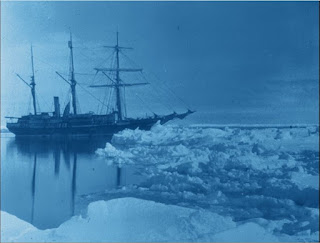
It’s a miracle… South (1919) & the Heroic Age of Antarctic Exploration on Film, with Neil Brand, BFI Dual Format


I wonder if three spools of film ever went through more exacting experiences before they were developed.’ (F Hurley, Shackleton’s Argonauts, Sydney 1948).


SHACKLETON


A century after the death of Sir Ernest Henry Shackleton CVO OBE FRGS FRSGS on South Georgia at the start of his last great adventure, the Shackleton–Rowett Expedition, the BFI have paid tribute by rereleasing South along with a host of extra films dedicated to all those who pursued the unknown. This was the golden age of polar exploration and there were compelling motivations of national prestige and personal glory that drove Ernest Shackleton and his team to the South Pole and, when all went wrong, they proved to have remarkable qualities above and beyond mere pride. Ultimately Shackleton could have opted for an easier life after South, the war, the Russian Civil war… but something compelled the 47-year old to return.


Shackleton had previously been on two missions to the South Pole, once as third officer on Captain Scott’s expedition from 1901-04 when his health failed and he had to return home early and the next time as commander of his own Nimrod Mission in 1909 when his team got to within 97 geographical miles of the Pole, a record which earned him a knighthood. After Scott had narrowly lost the race to Amundsen in late 1911, the biggest challenge remained the crossing of the Pole from shore to shore, from one sea to the other.


It was this that Shackleton set off to achieve in 1914 as part of the Imperial Trans-Antarctic Expedition referring to the transcontinental route as the "one great object of Antarctic journeyings". One ship, the Endurance, would take the team from South Georgia through the Weddell Sea to Antarctica and then, after a crossing of 1,800 miles they would join up with supplies left by a second ship, the Aurora, which would then take them to New Zealand, completing an epic journey from the South Atlantic to the South Pacific… in one mind-boggling, map-defying stretch.


Endurance sets off from Buenos Aires

On 8th August, just five days after the outbreak of the First World War the ship set sail and a few weeks later, Shackleton joined them and the show really got on the road. In the circumstances the team had naturally asked British officials whether they should go on but the answer came: “proceed”. The hope was that it would all be over by Christmas after all...


As with Scott’s expedition of 1911, Shackleton’s was a miracle of fundraising with a commercial eye on the future so, just as Herbert Ponting was to record Scott so Frank Hurley was nominated to do the same for this latest adventure. Interesting in this case that a film about so much British pluck was led by an Irishman and filmed by an Australian… let’s just say that this was a film about pluck full stop not to mention discipline and courage.


FRANK HURLEY

Frank Hurley

The film starts with shots of various members of the crew, including Shackleton himself and you search each line and every nuance of expression for a clue to his character: this is what a brave man looks like… even if the close-ups were taken after the event with him in uniform ready to do his bit in the War.


We then see the Endurance as it sets off from Buenos Aires, waved off by a large crowd as Shackleton’s pre-publicity had encouraged world-wide wonder, and then makes its way south to the Antarctic landmass, smashing its way through ice and passing by enormous ice bergs. It looks unstoppable, reinforced steel providing an extra cutting edge for the spring ice floe: this is the best modern science can offer and surely nature will not be able to stand in its way. There are stunning shots from high overhead up the foremast as one member of the crew sits on the bowsprit steering the ship through the weakest parts of the ice; Hurley was some sailor as well as cinematographer.


Hurley’s camerawork is not only brave but technically so impressive, far more mobile than you might expect as he pans across and upwards to show the depth and range of this forbidding landscape and, through use of close-ups and point of view, places the crew and consequently the watcher in the heart of this deadly landscape. Unlike Ponting, brave though he was, Hurley was in the middle of the main drama itself – he too was stranded and in peril - yet he kept on working.


Steering through the ice

The film proudly shows us the packs of dogs who were to be the expedition’s backbone once they landed and there’s a typically British fascination with animals both domesticated and wild throughout with a long section on penguins and seals near the end (eat your heart out Herbert P!).


Before the Endurance was able to make land it became trapped in the ice in mid-January 1915. At first this seemed just a temporary setback but then the predicament became much clearer and much more serious. The crew tried many times to hack a channel through the ice to enable the ship to make progress and to break through to clear water but this wasn’t to be.  After some days they were resigned to a long wait for the ice to thaw and they kept themselves busy with research, hunting and football matches. Obviously, we only see what’s on film and what Hurley edited and was perhaps allowed to show but clearly the command from Shackleton was strong and effective: moral appears to be high. They knew they had a long wait ahead… until the arrival of the arctic spring later that year.


Yet, when the thaw did start in September 1915, a far more serious challenge arose as the force of the shifting ice started to compromise the Endurance’s hull and the ship began to be lifted from the water. Hurley’s shots of the stricken ice-breaker are amongst the most iconic of the whole journey especially those he shot at night using dozens of magnesium lights… it’s haunting, not just because of the eerie phosphorescent glow but also because you realize that the men could be watching their best hope of survival being crushed and sunk.


The men try to cut a way through the ice

Shackleton had the men strip everything of use from the Endurance before she finally sank in November and he established a camp using tents, shacks built from the ship’s timbers and upturned lifeboats. One of these, the twenty-foot James Caird, with some major adjustments from the team's carpenters, was used to make Shackleton’s heroic journey from Elephant Island to South Georgia. Before that the crew had had to use the boats to make their way from the melting ice floes to land an epic adventure in itself.


That Hurley’s film survives is one thing but that it survives in such good quality is another. He buried film canisters in the snow during parts of the escape in order to preserve them in the event that things didn’t quite work out…  When Shackleton departed on that final stage, Hurley remained behind with the rest of the crew and the gaps in the story are made up of illustrations and then later footage of both the forbidding ice wall Shackleton and his men had to climb in order to reach help.


In the end Shackleton returned with help and ensured that every one of his crew returned safe: the greatest survival epic of the golden age of polar exploration at a time when far less was known about these still treacherous waters…  Whatever the merits or otherwise of Shackleton’s motives you cannot doubt his leadership and courage nor that of the men, like Hurley, who followed him come thick and thin ice.


Endurance high and dry

Hurley later remarked that the earlier Australian expedition he had been on was a means to a scientific end whilst the British focus was on the adventure first with science an added bonus. Be that as it may, there was certainly great domestic interest in viewing the strange creatures of the South as Ponting’s film had already proved and there’s some twenty minutes of crowd-pleasing wildlife footage once it’s clear that the men survived. This is all the more remarkable given that according to Bryony Dixon in her booklet essay, Hurley was persuaded by the Ernest Perris, editor of his sponsor, the Daily Chronicle, “…to return to South Georgia (in the middle of a war, we should remember) to capture images that would be popular with the public of Antarctic wildlife (penguins) and the whaling station.”


THE SCORE


This splendid transfer comes with a stirring new orchestral score from Neil Brand which perfectly captures the spirit of the times and of adventure as it used to be: indomitable, brave and with the passion to overcome all obstacles - they endured!


I hope that the overall effect of the score is to help us go through the screen and onto those icy wastes with those men...


This set includes a feature on Neil Brand’s approach to the scoring and, it is every bit as revelatory as the music as the composer explains his relationship with the film and the reasons behind his choices. Neil uses the film in teaching at the Royal Academy of Music and one of the reasons is the sheer relatability of the events; when the ice crushes the Endurance we all feel as the men must have felt, that this was probably their doom, their only means of return destroyed leaving them a thousand miles from the nearest human.


Endurance finally succumbs

Neil chose a small ensemble combining flute, piccolo, cello, violin, viola and horn – no piano, no safety net – to enable an uplifting and febrile composition that could change with the sudden shifts in mood of the film. This works so very well, music full of the hope and determination of these men as their near disaster plays out against the deceptive tranquillity of the sublime white silence and stark, sunlit cinematic contrast. It’s the most extraordinary meditation on human perseverance against all odds, as they determinedly fight for their ship and then their lives. As Neil says, this film has been a major part of his professional life for twenty years and this familiarity has enabled him to construct a deeply resonant musical response.


Long-time collaborator Ben Palmer helped with the score and the mucisians from the Covent Garden Sinfonia who he then conducted for the recording: Francesca Barritt (violin), David Campbell (clarinet/bass clarinet), Kira Doherty (horn), Simon Gilliver (flute/piccolo), Matthew Kettle (viola) and Alexander Rolton (cello)


Having been unable to attend the IMAX screening with live accompaniment, I hope the show is screened again with the musicians – this is a story we all need to see and hear right now. Neil previously scored the film in 2002 and you can listen to that to as an option on these discs too.


Trapped but the team played on

EXTRAS


The set also includes extra footage of the expedition – the football match with Endurance marooned in the ice, perhaps the purest example of the team spirit, and there’s also extra animals and terrifying icebergs.


There’s also an audio commentary from Luke McKernan, who worked on the restoration, and a bumper 38-page Illustrated booklet with new essays and credits for all content including contributions from the BFI’s Bryony Dixon, Naomi Boneham and Charlotte Connelly, Masaki Daibo, Eirik Frisvold Hanssen, and Quentin Turnour, which gives a truly international perspective on the Heroic Age of Antarctic Exploration – Japan, Norway and Australia, so many were pulled south.


There’s footage from these countries expeditions as well as other British adventures: 

Fram’s South Polar Expedition (1910-12, 22 mins) documents parts of the legendary ‘race to the Pole’ won by Roald Amundsen and his Norwegian team. This the English version of the film footage seen in cinemas and theatres in 1913.


Nihon nankyoku tanken (1910-12, 19 mins) is the extraordinary and rare footage taken in the second year of the Japanese expedition to Antarctica led by Nobu Shirase.


Australasian Antarctic Expedition Films aka The Home of the Blizzard (c1916, 68 mins) film taken by Frank Hurley of the 1911–1914 scientific expedition to the Magnetic South Pole led by Sir Douglas Mawson.


Other films in the set, range from 1898 – 1922 and include visual references to these and other notable Antarctic expeditions. Additional special features include film and audio extracts, including from Shackleton himself in short audios My South Polar Expedition (1910) recorded a week after returning to New Zealand and Shackleton Speaks (1910) naming his Nimrod crew.


800 miles to South Georgia Island... 

WHAT TO DO NEXT


It’s a wonderful and inspiring package and absolutely essential for all those fascinated with the spirit of adventure both in cinematic and Antarctic terms.


You can order now from the BFI online shop. Go on, be bold!


Endurance's Captain Worsley

Captain L Hussey with his moral-boosting banjo

Some of the Endurance's 70 dogs

Hurley's haunting night shots of the frozen ship

Shakleton's men needed to climb this huge glacier in South Georgia

It took them 36 hours to finally find refuge at Stromness Whaling Station.


Wednesday, 23 February 2022

Spirited… Mod lyset (Towards the Light) (1919)/Asta Nielsen (1968), with Neil Brand, BFI Asta Nielsen Season


Fame is just a word written in sand…


Thus, Asta Nielsen begins her final monologue in the documentary she directed aged 86 about her life and work. It’s fascinating, that smile still youthful and her huge eyes still twinkling as she dispassionately skips through the years ending with that emotional paragraph and tears of sadness, pride or, just on cue. She still had it, even having not performed in years, content with her daughter and sister in Copenhagen before outlasting both, marrying Danish art collector, 77-year-old Christian Theede in 1970, and passing away aged 90 in 1972. A long life well lived.


The piece de resistance is her dinner with Afgrunden co-star, Poul Reumert, still handsome and recognisably the cowboy she tied up on stage and danced around in her leather skirt. The two toast each other and talk about the film and her early years in Denmark and Germany. As a plan to get her taken more seriously by the theatrical world it failed utterly but she was able to take on the new challenge of film and trying to make “spirit visible”.


She downplayed the difficulties of film but enjoyed its new challenges every one of which she met in comedies, dramas and every point in between. She skirts over the war years during which she remained working in Germany but still popular on both sides – Denmark was neutral – and talks about the formation of her own film company and its first production, Hamlet followed up by a film version of Strindberg’s Miss Julie (1922) and being the first Lulu in an adaptation of Frank Wedekind’s Earth Spirit (1923) – showing at the BFI in March, and not to be missed.


Asta at sea in Mod lyset

Asked by actor Axel Strøbye if she was ever satisfied with her roles she smiles and twinkles the answer no, there was always something that could be improved. So speaks a perfectionist with an uncanny level of skill. It was so good to finally meet Asta as we celebrate this season of some of her most vital films. Sadly, Intoxication the film she made with Ernst Lubitsch in 1919, and including one Pola Negri, is considered lost but at least we have just over half of her 74 films extant; she’s done a lot better than some.


Talking of spirit, Mod lyset (Towards the Light) was Asta Nielsen’s last film in her Danish homeland and gave her the task of playing a high-society atheist forced into confronting her spirituality by events and the love of a good man. A tough pitch for worldly-wise 2022 but this was a film made for a largely Christian audience and at a time of continent-wide grieving both for soldiers lost as well as flu pandemic victims. The socio-theological context is perhaps baffling for a world now fuelled by cultural disconnection and pure dislike even as we exit a similar pandemic and the World gets madder.


The frivolous countess, who toys with men and their feelings the same way she played with dolls as a child…


You can keep faith in Asta though as even with this melodramatic and largely predictable script, Asta injects so much passionate febrility that you identify with even the shallowest of her emotions. Acting has never been a competition – despite all those awards – but in Asta we can see the impenetrable security of someone who feels their way through any role and who never gives you doubt in her performance. She is always very much in the present on screen and engaging with her imagined surroundings as much as the direct narrative and other characters. At one moment, devastated by twists of fate, in floods of tears, she pulls her handkerchief to her mouth, biting into it in a way Greta Garbo might ten years later…


The film starts as Asta’s character, Ysabel, hosts a charity bazaar with her mother Countess Prosca (Augusta Blad) and very quickly we see the runners and riders in the race for her heart or, more practically, just her head? There’s Baron Sandro Grec – a rich adventurer with a “heart of lead” – who’s her current beau and then, his “competition” the younger noble, Felix (Harry Komdrup). Felix is the nephew of Professor Manini (Nicolai Neiiendam) whose daughter Inga (Lilly Jacobson) longs for her cousin but he wants the one he can’t have and Ysabel is not one to let affectionate attention go to waste…


Asked by one guest whether she would put her talents to the service of religion, Ysabel is dismissive: I never insult religion or its practitioners, however, I will not adorn myself with a belief I do not hold in my heart! For the first, and not last time, director Holger-Madsen cuts for contrast, to a different party, one being hosted by the “poverty preacher” Elias Renato (Alf Blütecher), who is helping his poor flock snatch some enjoyment just as Ysabel pours drink from an amusing porcelain figurine for her well-heeled guests.


Astrid Holm and Alf Blütecher

Later that day as the rich men smoke cigars and play cards, Elias rescues a desperate young woman, Wenka (Astrid Holm) from throwing herself into the river. Her miserable story of domestic abuse is conveyed with Holger-Madsen cutting across to those who can afford to gamble their riches… as the day closes Elias prays and thanks God for his blessings in saving the girl. The next scene jars for being alongside this moment as Felix arrives at Ysabel’s front gate the following morning, just as she’s about to drive out in her limousine. He joins her and they come across a small crowd listening to Elias preaching. As Felix looks on with alarm, the Countess is moved by the hot priest’s presence if not necessarily his message.


He was so beautiful when he spoke! … it is the first time a preacher’s words have touched my heart!


But poor Felix can’t compete with the preacher’s allure and nor has he a chance against Sandro Grec’s wealth and masculine power. He announces that Ysabel has agreed to marry him even though we can see the doubt in her and her mother’s minds. But worse is to come as Felix, hopelessly in love, is devastated reading the announcement of their union in the paper, and, as his cousin looks on, he heads out to drown himself.


Lilly Jacobson and Harry Komdrup

When Felix does not return, Professor Manini and Inga go to Ysabel’s palace in the hope he might be there but not only has she not seen him, she has no desire to accept responsibility. When Elias arrives with the young man’s body and his note, she seems to privately revel in the dramatic testament of his fatuous longing. The Professor reminds her that whilst he does not judge her, what you sow you will reap… (especially in melodramas of this period). Then, from the selfish to the sublime, we cut to the community for orphans Elias has established on an island outside the city with charitable donations.


Karma comes quickly though when Sandro is implicated by a former partner in crime on the day of his wedding.  He’s not a fine rich baron at all but Loen Spontazzi a master criminal who the police rush to arrest, wedding night or not. Just as “Sandro” reassures his new wife their carriage is stopped by the police and he is arrested. Ysabel’s new life is snatched away and after she burns her bridal veil, she stares at herself in the mirror only to imagine the Professor there remining her of his prophetic statement. Six months later she is at her lowest ebb with her mother physically and emotionally broken yet pride still comes before her fall/possible redemption.


Sandro tricks Ysabel into marriage, Mother suspects he's a wrong 'un...
 

I did not acknowledge religion when life was fair, and I am now too proud to do it now that my happiness has been cast aside!


The kitchen sink is thrown at the closing segment of the film and whilst you might be able to guess some of what happens it’s still worthwhile watching our heroine “live” through it. Even given the broader strokes of religious passion, Asta is still so measured in her expression, micro-managing her emotions in ways that are seemingly intuitive and which, even now, have you watching in vain for any sense that she’s consciously “acting”.


Miss Nielsen could also not have wished for a more sympathetic and dedicated accompanist as Neil Brand became the latest of the BFI’s finest to match musical wits with the Dane. As we have come to expect, Neil provided an emotionally informed musical narrative with some gorgeous emotional fills and dramatic lines, channelling the most fitting moods from a century of film score appreciation – by which I mean the form and not the player!


There’s a lot more to come, many of which, like Mod lyset, just hasn’t been screened here for many decades. You know the drill, go straight to the BFI website and book as many as you can!


Asta invests... The Queen of the Stock Exchange (1918)/The Guinea Pig (1913) with Costas Fotopoulos, BFI Asta Nielsen Season


An intellectual of great refinement… the quintessence, the epitome of her era… Lotte Eisner in The Haunted Screen


Another dramatic change of look for Asta in The Queen of the Stock Exchange, Nielsen plays Helene Netzler and has two kiss curls framing her face making her almost unrecognisable from the two other characters she’d played tonight at the BFI. That’s not all though as Helene runs a mining business and is clearly at home in the very male world of both mining and the stock exchange. This is a fascinating character and I wonder how this would have seemed to a European audience at the time who had grown more used to women at work during the Great War. It’s a nod back to her character in Die Suffragette (1913), a proto feminist who may or may not be happy settling down to have babies.


Here Asta has achieved the parity once dreamt of and she is in charge of almost every aspect of her life. Directed and written by Edmund Edel, it’s clear that Asta called the shots in terms of the films she wanted to make, even before the establishment of her own production company in 1920. Helene’s company is running out of coal though and she’s in trouble until one of her engineers, Lindholm (Aruth Wartan) spots a new seam that might just save them.


Asta in Man's World


The initial investigation is encouraging and so Helene plays the market and buys up most of her own stock at rock bottom prices in order to make a killing when the news is confirmed. Whilst providing comment on the capitalist greed that would become an increasing issue in Europe, this shows a woman being a ruthless as men and Asta is imperious. She even promises Lindholm co-ownership if the seam is as valuable as he thinks and there’s a clear sexual frisson there as well… the thrill of the power.


Things work out and Lindholm is promoted but not everything in Helene’s life can be controlled… she has employed her poor cousin Lina as a domestic and the young woman catches Lindholm’s eye. As the two are drawn together Helene’s jealousy knows no bounds and she engineers the most awful revenge even after Lina has left.


What use are my riches if the one who was dearest to me is dead?


Asta with the workers

This is the most overtly political of the films shown so far and it’s interesting that this one dates from May 1918, the tide was turning and anti-capitalist sentiment was on the up as Russia revolted and the cost of war became ever clearer. The film’s conclusion, as Helene’s grief is played out amongst scenes of dozens of mine workers running to assist after an accident at the mine, is very powerful and she ends up deciding that her workers deserve full recompense for risking their lives in her business.


A different side to Asta…


From socialism to sublime silliness and proof that Asta could goof about with the best of them. The Guinea Pig (Das Versuchskaninchen) isn’t as funny or as polished as Der Eskimo Baby but Asta does a good job with a very odd story which includes some cringe-worthy references to mental health – a century being a long time in psychiatry.


Directed again by Edmund Edel, the film finds Asta who was 32, playing a teenager called Jesta who is low on attention span and high on energy constantly frustrating her father (Alfred Kuehne) and coming between him and his fiancée. Amazingly, Jesta has a love of her own, played by Fred Immler who seems normal enough but clearly likes her sense of humour.


Asta menaces her future step mother...

Tiring of been worn down by his daughter’s constant comedy, Dad decides to send her off to a strict school but, due to various mishaps, she ends up at a lunatic asylum where the doctor quickly diagnoses insanity and proceeds to try and treat her using the modern of methods including electric shock treatment and a padded cell. It’s largely not funny anymore but still interesting to see Asta playing in a weird kind of Mary Pickford role.


Her fiancé comes to rescue her only to be also diagnosed as insane before the telegram explaining it all is finally found. These things happen…


Costas Fotopoulos provided sprightly accompaniment for both films and kept a straight face for the finances and the “loony tunes… there was more than enough going on there anyway. Again, Asta dominates the attention so much you wonder what impact this has on the playing; with both accompanists today, there was a deep blend with the narrative that showed how sure footed Nielsen’s performances were and how hard it is to not watch/play along with, her every move.


The Asta Nielsen season continues apace through to March, full details are on the BFI site.


There are delicious tints for The Queen of the Stock Exchange and, of course, once again, Asta wears the trousers...