Thursday, 19 February 2015

Jazz and babies… The Empty Cradle (1923)/Bare Knees (1928), Kennington Bioscope with Lillian Henley and Cyrus Gabrysch


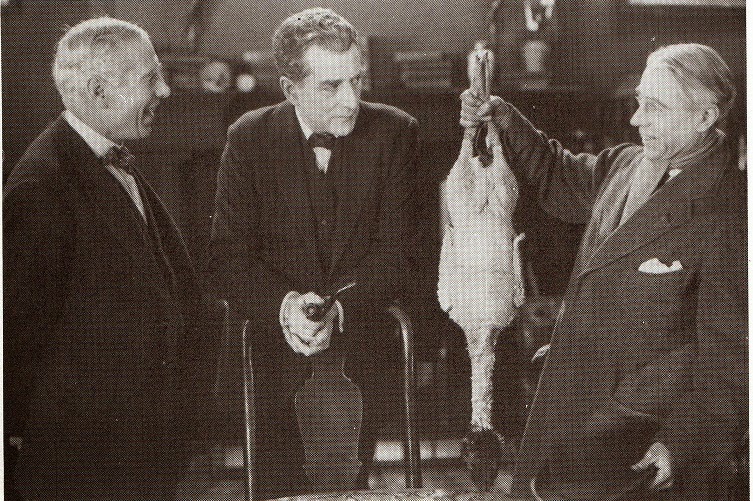
There are plenty of lost films but there are also many unknown ones at least to me, I had never heard of The Empty Cradle and there is very little about the film on the interweb – even IMDB only has the cast list and no reviews. So, it’s quite a present to be able to sit in comfort and good company to unwrap the mystery of a film I didn’t know I wanted to watch until I’d seen it.

At London’s Kennington Bioscope they’re used to such treats and we watched a 80-something 16mm Kodascope print that required a good deal of attention from the projectionist in fixing broken sprockets prior to the show and then constantly re-focusing as light flowed through it in public for the first time in years.

Burton L King 1920.jpg
Burton King
Directed by Burton King from a story by Leota Morgan, the film starred Mary Alden an actress who learned her craft on Broadway before working for the Biograph Company and famously featuring as the mulatto girl who falls for Northern reformer John Stoneman in Birth of a Nation. She was in Intolerance too as well as Clara Bow’s The Plastic Age and a host of features up until the pre-code era in Strange Interlude (1932) with Norma Shearer.

She was forty when she made this film and clearly a very experienced and able actress who carried much of the emotional weight of the drama on her shoulders.

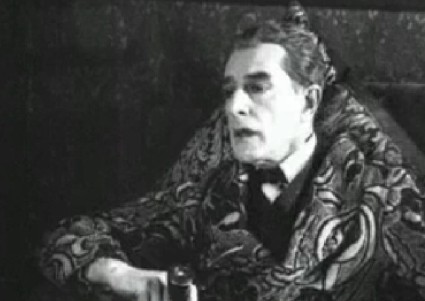
Harry T. Morey
Alden plays Alice Larkin a woman who left the upper-middle class enclave of The Hills for the blue collar depths of The Road in an every-town called Bloomdale. She married for love and in hope but her husband John (Harry T. Morey) has failed to provide the success they longed for. He has a formula for treating copper but has not been able to master the process leaving them stony broke and in debt not just to the local grocer, who they owe $3.98, but Alice’s wealthy Aunt Martha (Rica Allen) who’s sadness at her niece’s life choices has mutated into a form of sadistic glee in reminding her of constant failure.

The couple have three children, two characterful boys Buddy (Mickey Bennett) and Frankie (Edward Quinn) and a baby girl, Louise (apparently played by one Helen Rowland). Times are hard and as the boys dream of their Christmas presents – a drum for one and a pram for the other (plus a cow to provide milk for his baby sister) – Alice knows that she cannot afford for Santa to visit.

Former Zeigfeld girl Madeline La Varre
The plot thickens when her former love rival Ethel (Madeline La Varre… now there’s a name to conjure with!) arrives in town with mischief on her mind: let’s call her Evil Ethel shall we… Ethel it was who stole off with Alice’s former love, the well-heeled Robert Lewis (Coit Albertson) but who then lost him as her character flaws eroded their marriage. But she has a plan to win him back and, at the same time, break her former rival’s heart for good… see how evil Ethel is?

Evil wants to buy herself a baby and claim it as Robert’s own, thereby winning him back and the person she has chosen to acquire the child from is Alice. Meanwhile, down the hill as the boys play with their old toys on a cold Christmas morning, John heads off to his workshop to experiment once again on his process. There’s a flash and he reels back seemingly blinded… he’s helped back to the house to heap more misery on the flailing family fortunes.

Mickey Bennett
Just when you think things cannot get any worse… Evil’s attorney arrives with a cheque for $50,000 which he offers to Alice in exchange for her daughter… Broke with no support from her Aunt and with a husband possibly crippled what options does she have?

If this all sounds melodramatic that’s because it is but the playing is so intelligent you forget the situation and feel for the characters… More than one cynical cineaste wiped a tear from their eye as the story unfolded after the apparently fateful decision… but I will say no more.

Lillian Henley provided expert accompaniment to the film and greatly enhanced the drama. Given the film’s rarity I wonder if she’d had a chance at a run-through but she played very well – I'd not seen her play before but she's certainly a musician to watch and hear! More details are on her website.

Virginia Lee Corbin and Johnnie Walker
Top of the bill tonight was the bundle of fun that is the flapper comedy, Bare Knees described in its introduction as being amongst the speaker’s favourite films with bad titles. Bare knees and bare backs will get girls into trouble says her elder sister but a glimpse of stocking is no longer shocking and in the world of Virginia Lee Corbin’s Billie anything goes… Except Billie’s not quite what she appears even though Director Erle C. Kenton’s camera seems fixed on her legs almost throughout. She has a thoroughly modern morality and is first of all, true to herself with an open integrity that puts her elders to shame.


Never judge a book by its cover or legs by their lack of covering…

I previously raved about Bare Legs and tonight saw no reason to change my opinion. It’s always better watching a comedy with a live audience and those wise-cracking title cards were rewarded with laughs all round in another full house. I also have to say that Jane Winton has the most gloriously expressive eyes especially as they well up with the shock of betrayal soon followed by pride in her suddenly surprisingly wonderful sibling…

Jane Winton and those eyes...
Bare Knees is a gift for accompanists and Cyrus Gabrysch grabbed it with both hands and all ten digits as he threw in plenty of jazz-age riffs and romantic transitions. His music transformed the experience of watching the film – it’s so much more fun live and worth the late night on a school night - I forgot all about my budgets - what more can you ask?

Bare Knees is available on DVD from Grapevine and we can only hope that The Empty Cradle will get more attention in future. For more like these keep your eyes on the Bioscope’s website.

Sunday, 15 February 2015

The Silent Detective... The Hound of the Baskervilles (1921), Barbican with Neil Brand


In these days of Sherlock the sociopath (UK) and a female Doctor Watson (USA) it’s hard to imagine the impact of the original stories on contemporary audiences. This film was the first feature produced as part of the Stoll series and was well received by Arthur Conan Doyle who was still writing his character at the time – this was six years before his last The Adventures of Shoscombe Old Place.

It seems that Doyle was particularly impressed with Eille Norwood who played his master detective. A vastly-experienced stage actor, Norwood so impressed the author with his obsessive attempts to bring every detail of Holmes to light that he gushed about his “brooding eye” and  his “rare quality, which can only be described as glamour, which compels you to watch an actor eagerly even when he is doing nothing.”

First edition Hound from 1902
Even though the films had moved Holmes into the modern age of telephones and motorcars, Doyle remained a fan of the forty five shorts and two features produced by Stoll and mostly directed by the great Maurice Elvey (George Ridgwell was brought in for the second “series” in 1922). All of which renders them the only author-approved televisual adaptations… what would he have made of Messrs Cumberbatch and Millar, would he consider them to have the same level of “mastery” as Mr Norwood?

This was the first in the series of screenings at the Barbican timed to coincide with an exhibition on the great detective at the nearby Museum of London. It featured Mr Neil Brand on piano who gave his all with full-on polychromatic flourishes that spiced up the action with dynamic chords of which Bernard Hermann would have been proud.

McDougall, Norwood, Raynham and Willis
The film doesn’t compare with Elvey’s 1918 Lloyd George biography or his sublime Hindle Wakes (1927) but this is to misunderstand the context of the Stoll films: rapid turn-around populist serials that were low on budget and time. There are some wonderful exterior shots and some rapid cutting as the action hots up with parallel perils whilst there are a few sequences that, given more time, the director would have perhaps refined better. It matters not, The Hound of the Baskervilles is great fun as it was always intended to be.

Eille Norwood’s Sherlock Holmes is possibly more understated than I expected but this too is a factor of the production context: he’d honed his character over the previous 15 shorts in 1921 and, by now, was both well known as and well used to his detective. You have to view his performance in the context of the broader series and thankfully we have three shorts and another feature to go.

https://bioscopic.files.wordpress.com/2010/08/eille1923.jpg
Eille Norwood
He is indeed a magnetic presence on screen and his Sherlock remains unflustered by stories of mythical hell-hounds and goes about his new case in calmly-innovative fashion.

Dr. Watson is played by Hubert Willis who was in all of the series save the last film following his untimely passing. He is a dogged (pun intended and there may be more…) and brave companion and is sent by Holmes to investigate the characters in and around Baskerville Hall following the suspicious death of Sir Charles Baskerville and to help protect the inheritor of the title, Henry Baskerville (Rex McDougall) an almost overlooked relative of Sir Henry returned from the United States.

Hubert Willis and Eille Norwood on another case...
Sir Charles’ physician, Dr. James Mortimer (Allan Jeayes), tells of his client’s last night and how he was terrified of the family curse:  a flame-charged hound is said to roam the moors before the death of every Baskerville! Sir Charles was found dead from a heart attack but… what caused it?

Watson observes the rather suspicious family butler, Barrymore (a splendidly wide-eyed comic turn from Fred Raynham) as well as the brother and sister from the neighbouring mansions, Roger Stapleton (Lewis Gilbert) and his nervy sister, Beryl (Catina Campbell). To be honest, a large number of people are behaving suspiciously, suspicious…

We see the dog rampaging across the moors, head seemingly engulfed in supernatural flames whilst the mystery deepens when an escaped convict is known to be nearby and a mysterious figure is seen pacing the moors in the midnight hours…

Did the butler actually do it?
Everything is set for the re-entry of the formidably forensic detective as Beryl faces peril, Roger gets cross, Barrymore signals danger and Henry almost shows his pedigree, chum, as that dog just won’t lie down.

The Hound of the Baskervilles is an, all too rare, example of popular early 20’s British film and one based on great indigenous fiction.  This is the stuff our great grand-parents lapped up (pun etc…) in their rare time and we’re not so different today as the success of the Sherlocks continues world-wide.

The film is also pretty hard to see and given that the print used was in such good quality, surely it’s ripe for the box-set treatment? Maurice Elvey presents Eille Norwood as Sherlock Holmes... it has a ring doesn’t it?

In the meantime,there is a DVD-R with three of the shorts available from Amazon.com - The Man With The Twisted Lip (1921), The Dying Detective (1921) and The Devils Foot (1921).

Wednesday, 11 February 2015

Electric cinema… Metropolis (1927), Wilton’s Music Hall with Dmytro Morykit

The screen in the green
To be honest, I wasn’t sure whether the modernism of Metropolis would blend with the faded Victoriana of Wilton’s. Britain – the World’s – oldest music hall is a restoration in progress -  walls a turquoise mix of decades of undercoating, brick halls caked in the disturbed dust of continuous renovation and the ghost of Champagne Charlie haunting the space between the high chandeliers and the bare boards where once he stood… Fritz Lang’s masterwork, on the other hand, is still as shocking as on release: a glimpse of a future long passed but still a future all the same.


The film – the shorter restoration lacking the sections recently found in Argentina – was being shown with a live score composed and played by Dmytro Morykit which, according to the publicity flyer, promised to “bring the film to life”. Whilst this was a play on die mensch-maschine arising as the new Maria, it is an over-claim for such a vibrant creation: the music generated a new feeling with the film but Lang’s work is very much alive.


Dmytro’s score is part of a project to examine the effect of music on the experience of visual art and comprised a new score which partly comprised of a “re-imagining” of previous compositions which fitted with the story. Dmytro played the entire piece from memory with no improvisation a remarkable feet of power and precision – all this dressed in a smart suit and tie.  The result of this energetic dexterity was music that did succeed in creating a new emotional response to the film – a new duet between Fritz and Dmytro.


This was further aided by the warmth of the Wilton’s space - the antiquity acting to highlight the film’s modernity. Metropolis was in a sandwich in time between the almost equidistant past of the building and the future in which the music was being played. Silent film was designed for music and live music continues to help us connect with the emotional content on display.

Brigitte Helm
This was my fourth time with Metropolis and, even without the missing sections, I was seeing more especially in Brigitte Helm’s performance. This was Helm’s first starring role and it is remarkably assured in terms of her controlled expression and movement. She contorts herself in almost impossible ways as mad Maria, her twisted features atop a torso that appears to move independently of her legs and arms. She must have had extensive dance training (although was keen on becoming an astronomer after school)… and was certainly an expert mime with hands almost as expressive as her face.


In addition to featuring in the most iconic moments - the transfer of good Maria’s features to the robot and then the mad dancing that drives the rich boys wild – she is the  catalyst for the film’s major narrative shifts.  She kicks off Freder’s interest in the lives below after ascending to the Son’s Academy gardens with her class of worker children, shows him the way forward with her Christianity and then sets the city alight with her unbridled cabaret.

The audience gasped a laugh or two at her mime but did they really think there was never an element of panto about the film – its more fairy tale than science fantasy in spite of the amazing mise-en-scene – surely some of the most expressive and cohesive in all silent film.


Of the other performers Alfred Abel is seriously serious as Joh Federsen, carrying the weight of his City on his shoulders to the extent that he forgets all about the love of his son. Rudolph Klein-Rogge makes for an excellent mad scientist, tortured by the death of his and Joh’s joint love Hel.

Gustav Frohlich makes for a good-looking Freder but lacks Helm’s intensity and movement, hampered as he is by his satin jodhpurs.

Gustav Frohlich
Through it all Metropolis emerges as one of the most consistently enjoyable of the silent “greats” – sometimes laughable (Grot’s dance got me I’m afraid!) but overwhelmingly laudable: it still looks great and if you listen carefully you can hear the ghostly echoes of UFA’s accountants crying into their beers as the most expensive film in German cinema brings down the firm.

But, for all time, it stands as a unique testament to the artistry of the Weimer film industry and, with the romantic, insistent, pulsating piano work of Dmytro Morykit it did indeed find new life in the darky-lit stucco wonderland of Wilton’s Music Hall.


If you want the older, shorter Metropolis it is still available for completists from Amazon whilst the Eureka full Monty is on Blu-Ray and DVD in a metal box – natch – from the same lovable tax-flops.

But you knew that didn’t you…

Details of Dmytro Morykit’s music are to be found on his website including snippets of the score which he is touring along with the film until March: don't pass up the chance to see/hear it!

Up in the gods at Wilton's

Saturday, 7 February 2015

Child in time… The Child of Paris (1913)


This sophisticated slice of pre-War French cinema is split equally between an adventure set in Paris and one filmed extensively in the streets of Nice. In the latter section the young hero, Bosco, stays in the Hotel Suisse, next door to the sometime Hotel Europa in which I stayed for part of my honeymoon but, that’s by the by… although the view is stunning and hardly changed over the century and there was certainly no Irish pub in the old town showing premiership soccer.

A view of la Jetée-Promenade in Nice, demolished during WW II
This film is more than just Fantômas-by-the-seaside though, being an almost unprecedented two hours in length and proving not only worthy of its extensive running time – largely – but chock full of inventive and entertaining composition and narrative drive. You find glimpses of cinema-to-come in many shorter films from the period but there are few that I’ve seen that are as likeable and logical as this one. It helps that director Léonce Perret also wrote and that this is not an attempt to compress a novel or expand a play – it is a composition purely for cinematic exposition.


At some points it appears a little too deliberate – man climbs into house, walks down a shadowy corridor and searches rooms… but this isn’t Liam Neeson chasing down euro-criminals in cut-up cine-short hand, it’s a man going through the steps in real time… well almost: you soon realise the cutting and directoral finesse already involved even if it’s almost invisible to the jaded modern eye. These scenes manage to build a genuine tension aided by the unpredictability of the vintage pacing.


The story opens in the home of Captain Pierre de Valen (Émile Keppens) a well-to-do army reservist who is summoned to duty in North Africa having to leave his contented life with wife (Jeanne Marie-Laurent) and daughter Marie-Laure (Suzanne Privat). He leaves his brother Jacques de Valen (Henri Duval) to look after his family while he is away – all hope for the best.

Jeanne Marie-Laurent and Émile Keppens
The conflict progresses and it seems as if the rebels are in retreat as encouraging reports are read out from newspapers – Perret is very adept at moving his narrative on through “found” objects rather than relying solely on the artifice of title cards. Sadly, the rebellion is far from over and we are shown one desperate engagement in which the Captain’s platoon are overcome.

Suzanne Privat
The news gets worse as a telegram arrives at the household declaring the Captain missing in action and presumed dead… Mother takes the news very hard and is soon seriously unwell, passing away from her grief… Marie, now an apparent orphan is in the care of Uncle Jacques but then he is also drafted and has to head off to war.


Sent to boarding school, Marie hates everything and everyone (who seemingly reciprocate). One night she makes her escape climbing down into the dangerous streets of Paris, where, alone and exhausted she falls asleep. She is spotted by a man we discover is Edmond Talmin aka The Graduate (Louis Leubas) who robs her of any valuables before deciding she’d make good forced labour for a shoemaker he knows called Tiron (Marc Gérard).

Bosco takes pity on young Marie
Tiron accepts the gift with bad grace pushing her into a cupboard where she is to sleep shown side on by Perret as the camera moves from one room to another through the artificial wall, a trick he returns to later. Young Marie’s only saving grace is the cobbler’s hunchbacked assistant, Bosco (Maurice Lagrenée) who immediately becomes very protective of the stolen child.

The Captain in his study
Game over surely… not a bit of it! The Captain is alive: released from imprisonment by the enemies of colonial France and returned to be greeted with gratitude by crowds around the Gare de Lyon. He returns home to discover his family tragedy but, whilst the Police have given up on locating his daughter, he hasn’t and he begins a public search using the media to post pictures of his daughter: surely someone will recognise her?

The Graduate makes off with Marie
Unfortunately for the Captain, that someone is The Graduate who immediately calculates the riches he can extort in exchange for the girl. He extracts 50,000 francs from the Captain and aims to claim more but Bosco comes to the rescue, alerting the Police after the thug removed Marie from the shoe-makers garret…


But The Graduate escapes with the girl and Bosco sets off on a remarkable pursuit that takes him out into the streets of Paris and from there onto the Paris Nice Express…

Perret avoids title cards where he can...
The last section of the film is genuinely fraught and the direction really comes alive in the sunnier climes of Nice: can Bosco locate the missing girl, just how organised is the crime of The Graduate and has the menu changed that much over the last century of Hotel Suisse dinners?

The film is part of the Gaumont Treasures set from Kino Lauber. It's available direct or from Amazon.

The view from the Hotel Suisse

Sunday, 1 February 2015

Classic film… The Classical World in Silent Cinema - British Museum


OK, it’s been some time since I had to rouse myself for a 10 AM lecture but… on a Saturday!? We were gathered at the British Museum for a study day examining the fascination of early cinema with classical Greece and Rome. Apart from the chance to relive my miss-spent student-hood, this was an opportunity to view many early films from 1897 to 1913 which only exist on film, are rarely screened and are not commercially available.

The day is part of ongoing international research project co-directed by Maria Wyke of University College London and Pantelis Michelakis of Bristol University who were both present along with Nick Lowe of Royal Holloway University and Bryony Dixon, the Curator of Silent Film at the BFI.


They had lined up fifteen films from archives across Europe and had commissioned Stephen Horne to improvise accompaniment on a variety of instruments including Flute, Percussion, Accordion, Vibes and Piano. I’ve often said that Stephen’s playing is so inventive and varied we could listen to it all day: today we almost did as he worked like a Trojan from 10 to 4pm…

Maria Wyke introduced proceedings saying that their objective was to understand the links between the early flourishing of European cinema and antiquity: were film makers not only borrowing from nineteenth century literature and art for ideas but also legitimacy, trying to prove that the new art form was on a level and not just taking the contemporary fascinations as source material.

Inspiration? Locusta testing in Nero's presence the poison prepared for Britannicus by Joseph-Noël Sylvestre (1876)

Session 1 – French shorts 1897 to 1910

The first session featured French shorts and included the earliest film I’ve ever seen in cinema…

Nero Trying Poisons on Some Slaves (1897). This early Lumière brothers film was the very first to represent the ancient world in cinema and was made just a couple of years after their famous train arrived at its station in Paris. At just under a minute the plot was simple but so was Mr Armstrong’s first footstep on the Moon… how he got there is a whole different matter.

The Temptation of St Anthony (1898) featured director Georges Méliès as the titular saint who is distracted by the constant appearance of playful young women but he stays strong in spite of their cheeky hair tousling antics…The Mermaid (1903) by the same director had some lovely tricks and composition including a fish tank that moves towards camera before a mermaid materializes inside: he’d come on a lot in five years.

Surely Georges Méliès wasn't mocking the Church?
Diana’s Resentment (1910) brought much colourised motion to the ancient world… whilst the next film Creon and Mirtyl (190?) is a mystery about which very little is known. It is however a very funny colourised account of how Mirtyl’s aunts try and help her get over her shyness with her warrior husband.

The Vestal (1910) Directed by Albert Capellani drew its story from an opera and was also very colourful and, unfortunately, very damaged. Bryony Dixon explained that the original stencil  colours at the time had by now been affected by other factors with red decolourisation from water damage and tonal shifts from the initial copying onto 1990’s colour film. She said that we needed to treat ancient film “like a Greek vase” to re-colour as originally intended and discover whether the tints were intended to portray accuracy or heighten impression.

Luitz-Morat meets a colourful end in Le fils de Locuste (1911)
Heliogabale (1910) was directed by Andre Camettes and featured a misbehaving Roman Emperor who, taking a shine to one particular Vestal, kidnaps her. The people rally to save her and throw him into the Tiber… which was where the original ended up but following a rather more complex series of events.

Session 2 – Historical and mythical narrative 1910-11

The second sequence featured later films with narrative complexity: the new medium learned fast and developed its sophisticated language remarkably quickly.

Belisaire (1910) feature the unusual setting of a late Byzantine court and a tale of general Belisaire. Belisaire is Emperor Justinian’s favourite but the empress Theodora is also impressed with him… He is already married and so, unable to have him for herself, she plots to blind him by pouring acid onto his eyes. Luckily his wife spots her arranging the scheme with her henchmen – in classic silent-film stalking style… and he is able to overturn the attempt to disable him and then to return to the court to accuse the traitors in its midst…

This film included a good deal of location shooting, making the most of the Mediterranean light as natural landscapes began to play an important narrative role.

Classically composed... The Son of Locusta (1911)
The Son of Locusta (1911) directed by Louis Feuillade, was the second film to feature Nero but showed far more narrative subtlety than the first from 1897: ordinary people still die but we see more of their personal tragedy. Nero’s poisoner-in-chief, Locusta, prepares a lethal draft for Nero’s brother Britannicus but the plot goes awry in a most personal way as the urn carrying the poisoned wine gets diverted to another…

The Fall of Troy (1911) directed by Piero Fosco, Giovanni Pastore (later to direct Cabiria) and Romano Luigi Borgnetto was one of the few on the day’s bill to have been restored showing how the blockbusters of the time could look with an account of the critical battle in the tug of war over Helen.

Helen and Paris travel in comfort
This is an advanced film with the journey of Helen and Paris to Troy shown with them in a giant shell with cherubs flying around them - double exposed on a moving diorama. There were also some nifty camera pans – early indicators for Cabirian fluidity.

The initial Grecian attack on the walls of Troy is well realised with a tower entering the fray before a hail of boulders forces the Greeks back, they retreat to their ships but leave a suspiciously large horse behind. The people of Troy have to partially dismantle their gate to allow the horse in and, of course, at night the Greeks sneak out to set fire to the city…

Yep, looks like a Grecian gift to me...
Session 3 Antiquity in modern settings

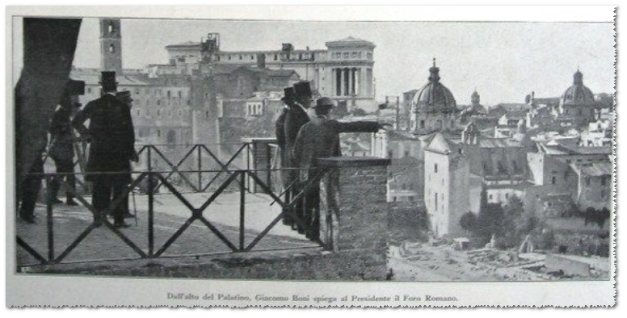
By 1913 cinema was engaging with antiquity in different ways. This session opened with three documentaries showing visits to ancient sites: “the poor man’s grand tour…” the only way the common man could get to see these sites: An Excursion in Ancient Greece (1913), Through the Ruins of Ancient Rome (1914) and Excursions to the Roman Ruins of Ampurias (1911).

These were fascinating snippets and Stephen Horne’s playing was especially effective in helping us recreate the fascination of seeing the living ancient world for the first time.
https://rometheimperialfora19952010.files.wordpress.com/2014/09/boni-1922.jpg?w=627
Oddly enough the Forum has hardly changed...
Oil and Water (1913) This DW Griffith film carried a typical message but not the straight-ahead Christian morality you’d possibly expect. It stars Blanche Sweet as a dancer who falls in love with an Idealist (Henry B Walthall… later to star in The Birth of a Nation) – can they form a sound family union or will she be lured back to her exiting life on stage?

There’s support from Lionel Barrymore and if you looked really closely you could see both Dorothy and Lillian Gish in the audience for Blanche’s first dance sequence. The dance is very well filmed by Griffith as Sweet plays Venus and wins the Idealist's heart.

Nick Lowe pointed out the film’s "magnificent theological incoherence" - none of which stops DW from making his ultimate point (bit of a habit that).

Almost certainly not priestesses of the goddess Vesta...
L’etoile de Genie (1913) Directed by F. Zecca and R. Leprince, this French film dealt with another relationship in which two people are brought together by a classical figure.

Stacia Napierkowska plays dancer Stacia who inspires a wayward musician, Signoski (Gabriel Signoret) to write a great work based on the life of Gaius Caligula. But Signoski can’t cope with his muse’s success and she moves on as he loses the plot: are they oil and water too?

So… a very full day in the comfortable seats of the British Museum’s BP Lecture Theatre underneath the tourist-packed Great Court. Maria Wyke said to leave feedback and mine would be to please run more days like this – the films and music  were a treat and the Q&As were full of insight and interesting snippets. Did you know, for example, that tinting had to stop when sound came as the process would have interfered with the sound track?


More details of the project can be found in The Ancient World in Silent Cinema edited by Dr Michelakis and Professor Wyke – it’s available from Amazon or Cambridge University Press.

Fin