Showing posts with label Margaret Deriaz. Show all posts

Tuesday, 22 October 2019

Jenny from the dock... Docks of Hamburg (1928), with Stephen Horne, Cambridge Film Festival 2019


"I love you. For the first time, I love someone. And I do not care about everything else…"

Emmanuel College was founded in 1584 by Sir Walter Mildmay, Chancellor of the Exchequer to Elizabeth I and as you walk past the dining hall, originally the chapel of a Dominican Friary, (replaced by a building commissioned from some bloke called Sir Christopher Wren), you’re so immersed in the atmosphere that a late twenties silent film feels positively futuristic.

The silent film experience is that magical mix of venue, audience, music and film and all are inter-active and malleable even the feeling on screen. Emmanuel’s theatre is a modern building tucked to one side of the graceful old quads and it provides a perfect place to focus the mind, comfortable seats, warm wooden finish and a Steinway grand for Stephen Horne to play with.

Ace Weimar programmer, Margaret Deriaz, introduced with a natural warmth and enthusiasm few lecturers present; silent film is like a continuing educational programme for the historically-fascinated and these films are unique primary sources that we not only read but experience in places like this and with accompanists offering emotionally rich audio commentary.

As Margaret said, Stephen Horne has an affinity with Weimar film and that can only come from decades of accompaniment and research into the area. Margaret herself is one of the leading experts on this period of cinema and earlier this year programmed a superb series of Weimar films at the BFI: one of the best I can remember.  

Stellen Sie sich in einem Boot auf einem Fluss vor...
Directed by Erich Waschneck with much excellent cinematography from Friedl Behn-Grund, Docks of Hamburg is rich with location shots of the docks and the St Pauli district, providing a view of Germany’s most vibrant port before the War re-arranged things and the Beatles arrived 30 years later. There’s also an audacious travelling shot of Willy Fritsch’s character as he walks through the docks in search of his Jenny… it prefigures neorealism and so much film of the early Beatle era.

The interiors and sleaze of St Paulis were also, as Margaret pointed out, the result of Alfred Junge’s production design. He had also worked for Ewald André Dupont on Moulin Rouge and Piccadilly and was to enjoy a long career including working in Britain with Powell and Pressburger as production designer on Colonel Blimp, A Canterbury Tale, I Know Where I’m Going, A Matter of Life and Death and Black Narcissus. Well, he started here.

The film is a loose reworking of Carmen with boats, not bulls, and smugglers replacing toreadors. Willy Fritsch plays Klaus Brandt, a naval seaman who has just been promoted to night watchman for his ship, just as he has become engaged to his social climber girlfriend (Betty Astor).

One night Klaus catches someone trying to break onto the ship and, having caught the intruder, makes the classic error of assuming a hat and trousers indicate a boy when really it’s a girl called Jenny (Jenny Jugo) who, soaked to the skin, strips in front of his saucered eyes to dry off. After the initial shock, Klaus is so won over by Jenny’s carefree, well, everything, that he forgets fiancée and work, covering for her as the port authorities pass by.

Komm, Gib Mir Deine Hand: Herr Rasp und Jenny
Jenny’s associated with a colourful gang of ne’er-do-wells including Tonio Gennaro as Gentle Heinrich (definitely harder than he looks ), Wolfgang Zilzer as The nipper (he’s young) and Fritz Rasp as The Doctor (probably not medically trained) all of whom are looking for an opportunity to get rich quick through smuggling, living off immoral earnings and extortion.

Jenny works in a nightclub as a hostess, dancer and cyclist… racing other girls in a competition to show off their thighs in skimpy bathing costumers with the winners of their sexy spin being pre-arranged. It’s all part of a whir of activities to relieve distracted punters from their hard-earned pfennigs either through drinking, gambling or the oldest transaction in the world. Jenny is in the midst of this world but seems happy enough – this is not the usual fallen woman, she’s more like Marlene’s Lola Lola.

By chance, Klaus bumps into Jenny outside of the club and she explains what she does and invites him to see for himself… he’s smitten and, for the first time in her life, Jenny is smitten too. This is Carmen but not quite as we know it. Klaus sneaks off from his ship-mining to see Jenny only to find that the Rats have broken onboard and stolen not only cash and goods but also his chance of a career.

Sie hat eine Fahrkarte, um Fahrrad zu fahren - Jenny's in it to win it
He tries again, this time getting a lowly job as a stoker on a ship bound for Australia only to be drawn away again by Jenny’s charms… All the while she keeps on working and, like Klaus, we aren’t sure if her feeling for him are as deep as his for her. She meets with a couple of rich handsome men, one an actual racing cyclist (Friedrich Benfer), and she’s whisked away to posher nightclubs where they ply her with new clothes and champagne… Is this what she really wants or is Klaus her heart’s desire?

Do they want to save each other or will this end as all Carmen tales with the ultimate punishment for Jenny and Klaus on the rocks? I couldn’t possibly comment.

Willy and Jenny make for charming leads and Jugo is indeed another “Earth Spirit” with a relaxed intensity and free expression which raises her above the dirty doings all around. We can fully see why Klaus would be drawn to this erotic firefly – throwing away his future and his fiancée, in an effort to not only win Jenny’s heart but to save her from the life she’s in.

"Sie liebt dich, ja, ja, ja!"
Stephen Horne responded to this complex Kabarett with clubby accordion, lilting flute and sentimentally intelligent piano – he has such a feel for every movement of Waschneck’s visual Bizet including one of those gorgeous themes he has which not only encapsulates the longing and fear of desire but sticks in your head for days. Klaus is drawn to Jenny… they’re on a collision course which will either work for them or kill them and, thanks to Mr Horne, we fall a little more emphatically ourselves.

Docks of Hamburg is a good Weimar film but Stephen’s playing lifted it higher as his well-informed melodies captured and expanded on the mood created by Waschneck and his players. It doesn’t exist on home media or even YouTube so I’m especially grateful for the opportunity to see it projected.

Another smashing show in Emmanuel and the Cambridge Film Festival remains one of the UK’s strongest for silent films and accompanists.


Saturday, 6 July 2019

Desperate housewife… The Devious Path/Abwege (1928), with Stephen Horne, BFI Weimar Season


And so ended the BFI’s excellent Weimar Cinema season and all thanks to Margaret Deriaz for programming so many of the best and most representative films of the period. Some of my favourites have of course been Pabst’s and this film shows the director at his subtle best turning what could have been a light romantic tale into an intense psycho-drama that plumbs the depths of naughty, bawdy, gaudy, snorty Berlin club culture.

Pabst brings out the very best of Brigitte Helm as he did with a nervy Garbo and a fearless Brooks, with a mix of instruction, editing and the flying camerawork of Theodor Sparkuhl. She’s almost ever-present and we see every delicate transition as she flits from intense frustration to anger, from desire to fear, hate to love… her body thrown into acute angles just as her unique features shift through gears most of us don’t have. She’s the only thing really happening in the film which is a minimalist story of suburban disconnection stirring horrific extremes in her character Irene Beck.

Pabst digs into her portrayal and the tension is not just surface but disturbed. Helm was a relatively inexperienced actress at this point, just one year on from Maria but she had already worked with Pabst on Die Liebe der Jeanne Ney and there was obviously a connection with the actress willing to commit so much. Occasionally she over-steps but quickly corrects and is always inhabited by the moment; a true “silent actress” supple and sensuous whether tortured or teasing.


But yes, Gustav Diessl is also in it as her neglectful husband Thomas and he’s full of dark-eyed tricks of his own. He too can transmit mixed signals and come over all doe-eyed destroyed seconds after being in control… he’s a very shadowy presence next to Brigitte’s shining light but… casting, lighting, directing will all do that for you.

Thomas is, heh, married to his work and won’t show Irene much attention let alone a good time and their young marriage has hit the rocks at just the wrong point. Irene is much too much to not be noticed and artist Walter Frank (Jack Trevor) can’t help but be drawn to her… constantly sketching his affection in a studio dominated by her image. Irene and Walter plan an escape but Thomas spots the clues and arrives just in time to bring his wife back.

Irene is not to be constrained and breaks away to find her friends, led by Liane (Joyless Street’s Hertha von Walther) in a nightclub. This “den of iniquity” as Councillor Möller (Fritz Odemar) calls it, offers all kinds of temptation and as Irene sits knocking back the champagne her eye is caught by a lone woman, Anita Haldern (Ilse Bachmann). Eventually she follows her behind a curtain emerging somewhat refreshed by powders unknown as Pabst ticks off as many illicit activities as he can.


Irene dances, flirts with a boxer Sam Taylor (Nico Turoff) – who couldn’t be more different than Thomas, and makes sure Walter also sees her independence. It’s a heck of a night and Sparkuhl’s camera draws us, hand-held, into the heart of the action, inebriating the viewer with images.

No less impressive is the scene once Irene gets home to find Thomas lying still in the darkness; the couple re-unite and all seems forgiven until Thomas spots the very odd hairy-chested man-doll Irene had been given at the club. It doesn’t look much to me but as a token of unabashed male sexual interest it’s clear enough to him. The row resumes and the new dawn fades…

Irene now begins a liaison with Boxer Sam who we see soaring in a display of the animalistic masculinity Thomas does not provide, and as he asks Walter to draw her picture, it looks like artist vs athlete unless Thomas the Accountant can intervene…


Ultimately the “devious” path is more about truth and fidelity than sex, drugs and nightclubbing and is very engaging, emotionally heightened cinema that relies on the depth of feeling rather than drama. It looks sensational partly because both Brigitte and Gustav do, and this new restoration, shown at last year’s Berlinale shows this off to maximum effect.

Of course, the experience was also enhanced by another of Stephen Horne’s emotionally-intelligent accompaniments – as fluid as Fräulein Helm and dark and serious as Herr Diesel. A subtle mix of strong lines and syncopated sympathy one senses that Stephen may have played in more than a few Berlin bars…

Two months and a couple of dozen superb films, the BFI’s Weimar Season has been the best silent film strand in my time – I’m a very late adopted having started in 2010. The audience seem to have been there and we have enjoyed the show.

Ich danke dir Margaret und dem BFI!

Interiors...


Close-ups...


Obsession...


Disdain...


Nightclubbing...


And?

Wednesday, 8 May 2019

Weimar mania… Opium (1919), with Jonny Best, BFI


In her sparkling run through of this major BFI retrospective of Weimar Cinema, Margaret Deriaz said that in the years between 1919 and 1933, Germany produced over 3,500 films, second only to Hollywood in scale and productivity. Of all those films it would be hard to find one more purely quirky than Opium and yet, for all its strangeness the film has plenty of charms especially when accompanied by Yorkshire's finest, Jonny Best, whose patient minor chords and plaintive discords did much to liberate Robert Reinert’s original dramatic flavours.

The film has a distinctive visual style, almost a series of tableaux in the manner of pre-war Italian film but very vibrant and filled with ambitious double exposures as well as some superbly-captured performances. Reinert’s cameraman was Helmar Lerski, a former portrait photographer who used deep focus and careful lighting to capture every performer in the frame with absolute clarity. Over and again one actor is joined by another and then another moving into frame and adding layers of meaning as they react to events. Another startling shot sees the main character, Professor Gesellius (Eduard von Winterstein), on a boat moving relentlessly in focus towards a distant shore filled with opium-induced faeries and sprites (of which more later…).

When the Professor gives a lecture a glass remains in close-up on his lectern as do his students as he approaches to speak, it’s very skilled and apt for a film about perception: The Doors of Perspective perhaps? It’s a very powerful style and whilst it wasn’t the way movies were to go it is still a compelling example of the experimentation of the time.

Conrad fades away and Eduard marvels at the depth of field as Sybill stays calm
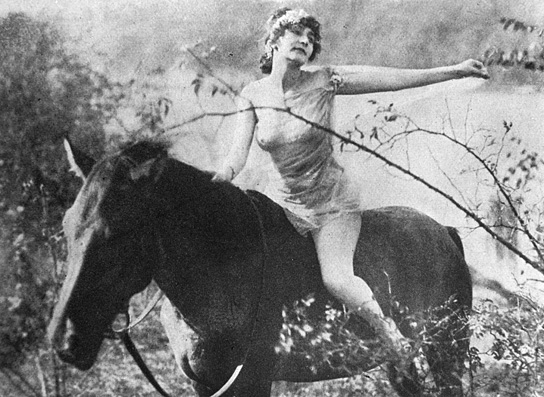
This was also that brief period, post-war, when all censorship was dropped and so the film’s frequent Faerie nudity adds some extra surprise as does the take of mixed-race relationships and, yes, drug addiction. The effects of opium are revealed through double exposures and static montage of dancing sprites and pools of water, sometimes inverted over the character’s head. It’s clear that Psychedelia nearly happened here and yet the summer of love was far from the thoughts of film-makers still trying to make sense of the Great War.

As film historian Tobias Nagl, quoted in tonight’s hand-out said: “under the surface, Opium captures the experience and shock of the War… (using) … a brilliant, hallucinatory cinematic language.” So it is that the sanatorium the Professor sets up for recovering addicts is so very like those for the shell-shocked and the physically-destroyed, men who were all but dead already trying to piece themselves together away from the adrenal rush of fear and mortal dread.

Now some of the audience and I’m naming no names couple in the second row with horsey laughs… found all this a bit too melodramatic but maybe they’d been caught up in BFI Weimar Mania (it’s a thing!) and hadn’t quite – literally – got with the programme.

"Smokers, get high..."
This being 1919 some stereotypical characters are deployed but the relationships between the “Indians” in brown face, the “Chinese” and the white men are more even-handed than you might credit. Granted there is a completely bonkers bad guy, Nung Chiang (Werner Krauss, yes the good Dr Caligari) who literally pops up onto screen to the surprise his enemies across the World with a manic grin and acid jazz hands but I think, like so much of the film, his character is representative and not meant to be a genuine description of a contemporary drug dealer.

Lotte Eisner shoot me down in flames but, whilst this is most definitely not an expressionist film, there are elements of the style not so much in the mis en scene but the performances all of which are designed as emblems rather than characters. No one plays it straight but then this is a drug-den of a movie and we’re all out of minds with grief and as the first tentative buzz of the new democracy kick in. No censorship mein Herr: we’re so out of it, we see lions in India!

The story is about addictions to love and revenge with Nung Chiang swearing revenge on Richard Armstrong (Friedrich Kühne) an Englishman who smoked his opium and then stole his wife in China. There’s a further grievance for Chiang when Professor Gesellius rescues a young woman, Sin (Sybill Morel) from his den of multiple iniquities – you name it he’s selling it – and takes her back to his sanatorium in the West. Sin is mixed race and you can guess who her father is… but, none of this is known to Gesellius’ wife Maria (Hanna Ralph) who just happens to be having an affair with Dr. Richard Armstrong Jr. (Conrad Veidt).

Eduard von Winterstein, Werner Krauss and Sybill Morel
Connie’s younger and better fed than I’m used to and is convulsed with shame after his boss comes back… so much so that he’s not long for this World, dying on a bed surrounded by almost all of the main characters in another remarkable tableau with centimetre-perfect depth of field.

His death is considered suspicious and with the Professor in the frame, Sin takes the blame only to be whisked away from execution by Gesellius. Which is how we find ourselves in India with all those lions and so many scores to settle.

Opium is opulent and over-wrought and I’d love to see it again. The restoration from Filmmuseum München, as premiered at last year’s Berlinale, is crisp and clear, is as close as we’ve been to the original which is one of Reinhert’s few surviving films.

Jonny Best took the film in his stride and maintained a watchful poignance that fitted the sparkling visuals perfectly; this film is an elegy as much as a beginning and despite appearances there was more unknown than known emotion on screen.

An excellent start to the BFI Weimar season!

Just say no.
Jungle Book, not The Lion King