Wednesday, 3 November 2021

Off-beat… Beat Girl (1960), BFI, London After Dark Season


"She’s nearly always here, digs all the modern gear, cool like a lager beer… Beat Girl…”


This film was being shown, in 35mm no less, and as part of the Edgar Wright curated season of films that influenced his new picture, Soho After Dark. As our luck would have it, he not only took the chance to watch the film on the big screen and with an audience, but also to give an impromptu introduction.


He wondered how Edmond T Greville’s film was received on its initial release and guessed that then as now, it was not as well as the makers hoped… it may have done good business but it’s not cool. That said there is much to appreciate in a film of incoherent energy and dubious dialogue but which has so many notable players, genuine sleaze and some few precious location shots, one of which, looking down Old Compton Street with the Greyhound pub on the left and what is now the Prince Charles Theatre on the right, he was determined to reproduce for his film, identifying the exact window from which the shot was made – now a pizza restaurant.


The young generation: Gillian Hills and Shirley Anne Field

The film features two potential British Bardots, the main star Gillian Hills, Jennifer/Jenny, the Beat Girl, and Carol White aka The Battersea Bardot, who although uncredited, appears throughout the film, with little dialogue although clearly directed, and once or twice walking across the action as if denoting possible directions for the other blonde.


Whilst it’s easy to mock the “dated” battle of the generations between the hipsters and the squares – and the film deserves that! - there are some interesting performances and a genuine sense of threat as well as period. Christopher Lee and Nigel Green are the pick for the grownups whilst Adam Faith’s mumbling authenticity and Gillian Hills’ youthful edgy-ness stand out for the kids oh, and one youngster name of Oliver Reed already typecast as “dangerous” who was obviously under clear instruction to dance dangerous, act dangerous and, well, just be yourself.


This language, these words, what does it mean?!


"Bloggin's for squares..." Adam Faith. Smouldering.


The script from Dail Ambler, aka Betty Mabel Lillian Williams a writer of pulp fiction who also used the pen name, Danny Spade, contains lines that even the youngsters sometimes struggle to say… with more Daddios, heps and cools than are credible, to which the grown ups also respond with stilted observations, with Jennifer’s Dad(ioh) top architect Paul Linden (David Farrah) simply unable to understand her. Gillian Hills does however cut through this with a quite wonderfully vindictive performance almost as if she has some score to settle.


Without a doubt, the John Barry-penned theme tune, snarled by Adam Faith with more genuine menace than Cliff or Tommy could ever hope to muster (but not Billy or Vince…) is one of the surer steps of this odd film as is the whole score, Barry’s first and probably worthy of a whole post on its own. It’s not the polished Barry we came to expect but there’s some energetic modern jazz, powerful themes throughout and a couple of decent attempts at rock n’ roll, sung by Faith, Made You and I Did What You Told You. There’s also a song sung by Shirley Anne Field called It’s Legal which has a range of  interpretations.


City of Future Past... Hills, Adam and Farrar


In Vic Pratt’s excellent booklet essay for the BFI’s Beat Girl Flipside Blu-ray, he points out that Adam Faith became more popular as a singer after this film but his rough charm was polished pretty quickly thereby preventing an outbreak of British Elvis-ism before Liverpool smuggled it in two years later, craftily disguised by Brian Epstein’s favourite tailors.


The Beat Girl herself certainly cuts a rug in the basement discotheque, even if Oliver Reed doesn’t, yet authenticity if provided by some of Soho’s finest exotic dancers who show just a little of what they can do in the strip club scenes. This is surely one of the film’s most startling choices… even now this is raunchy stuff recalling scenes from Primitive London plus West End Jungle (also screening as part of this series) and other sexploitative documentaries of the period. These performances are not edited by much and you wonder that 62 years or so probably hasn’t changed the watchers or the watched… the drinks are just more expensive… I should imagine.


Pascaline performing - one of the less revealing shots

Gillian Hills was a sixteen-year-old actress playing a sixteen-year-old rebelling against her strait-laced, radical architect father and his pretty new Parisian trophy wife Nicole played by Noëlle Adam who also gives a very good performance as the woman with a troubled youth of her own to deal with. Her battles with Jennifer are spiky affairs with Hills showing what she’s got in the most pointed of ways, there’s a visceral edge to the women’s relationship that probably says more for Adam’s generosity as a performer than script or direction.


Jenny has undoubtedly been neglected by her work-aholic father and having divorced her mother; he has spent months in Paris romancing his Nicole. That said, no one understands Jenny and even though she is studying art at the respectable St Martins, she would prefer to be out dancing with her beat friends in their Soho coffee shop basement.


Jenny and her stepmother do not get on


Her friends include Dave; a bit of rough with a guitar (Faith), Dodo (Field – a good actress whose remarkable clean features make her seem forever posh, even though she’s from Bolton...) and Tony (Peter McEnery, in his first film), who is constantly swigging from a cough mixture bottle filled with gin… Jenny is not alone in having generational difficulties: Tony’s father is aloof, a war hero without the courage to be a full-time parent, whilst Dave’s had to bring himself up spending so much time playing on bombsites, a world away from post-war regeneration.


Alcohol is not yet “cool” for these guys and it is interesting what they do think is uncool – these beats are passionate about Dave Brubeck, rock and their own means of expression… even if you cringe at some of the self-conscious slang. “He sends me…” says Dodo describing Dave’s singing… yes, but probably not too far from the Home Counties. There’s a nice moment at a party in Chislehurst Caves where both the lads share their feelings about the war, loss and their hopes. They open up but essentially via two intersecting monologues… maybe that’s cool, I don’t know.


Whadya mean maybe that's cool?
 

Jennifer was always going to go to war against her new stepmother partly because of her growing alienation from her father and his obsession with his city 2000 project a model of which fills their sterile living room. See, the fault’s not just youth but career-centric middle age… but the city looks a lot like Brasilia and hey, we’ll need more housing by 2000.


Nichole reaches out to Jennifer and seeks her out in her coffee bar haunt but things go awry especially when she bumps into an old friend, Greta (Delphi Lawrence) who she feigns not to recognise… The kids know Greta as one of the strippers in the club across the road and Jennifer starts digging deeper trying to find a way to antagonise Nichole. She goes into the club to quiz Greta and sees more than she bargained for on stage - an obviously well-practiced, sensuous routine from one Pascaline (actual stage name…) involving innovative use of a long shawl… The seediness looks all too real, especially in the longer cut on the BFI’s Blu-ray, and is frankly disturbing.


S-Lee-zy does it Chris.

Jenny doesn’t get much out of Greta but then she is noticed by the club’s shady manager Kenny (Christopher Lee) who also happens to be – just about – the older woman’s boyfriend. He takes a shine to Jennifer and makes Greta tell her about her life in Paris with Nichole… There’s more but she has to return to learn it all. Nichole goes to meet Greta to try and put a cap on things yet, despite her standing up to Kenny he threatens to reveal more if Jenny is not allowed back to the club. He’s looking for fresh blood and already has a trip to Paris planned with side-kick Simon (great stuff from Nigel Green given a rare chance to be a geezer).


Get out of it you jiving, drivelling scum, get out of it!


Adam Faith about to get slapped

Jennifer starts to go wild, encouraging Dave to drive too fast in a race with other hipsters and inviting a party round to her parents’ house.  She performs a striptease mimicking Nichole’s past and Dad arrives just in time to kick out the beats… All is revealed and yet David is willing to forgive and forget Nicole’s burlesque past – not such a square after all! Hey kids, the Old can learn!


Unaware and angry, Jenny has run off seeking adult refuge with Kenny. As we’re shown another expert routine from a woman in a white negligee (Diane D'Orsay), the seedy club owner attempts to persuade her to come to Paris with him even though he knows she’s under-age… and has no formal dance training. As the Linden’s race to try and find their daughter. Will the Beat Girl be corrupted for good or is there still a chance for her to re-connect with family and knuckle down to her studies??


The great Nigel Green shares a moment with Delphi Lawrence

Beat Girl is pacey and packed with so many moods it’s bound to feel uneven yet it’s a wild ride redeemed by so many interesting performers and its moment in time.


As Edgar Wright says, Gillian Hills may not have become the British Bardot but rather a Zelig-like figure in key films of the period, cavorting with David Hemmings and Jane Birkin in Antonioni’s Blow Up (1968) and then again in a speeded-up threesome with Malcolm McDowell and Barbara Scott in A Clockwork Orange (1971). She even became a pop star in France for a while, scoring the first hit with Zou Bisou Bisou. She’s also in the strange British horror, Demons of the Mind (1972) which may or may not be cool.


There’s a fascinating interview with her from 2016 as part of the extras on the BFI Flipside Blu-ray/DVD and, in addition to looking pretty much ageless, she’s very articulate and revealing about the film and her approach: “I was quite courageous as I knew absolutely nothing…” It barely shows and she still makes the film worth watching.


Gillian Hills now! Stories of hanging with Catherine and Francoise... and so much more!


The release has three versions of the film, one restored from the BFI 35mm we watched and two others of slightly longer length which include more exposition of the newly married couple and then Jenny’s initial confrontation with them in which she places a photograph of her mother in a book on blues and jazz. There are also different takes of the two strip actual strip routines.


The soundtrack LP is also essential and can be found on Cherry Red CD with extended cuts! Personally I really dig the original mono release but I'm just hep to vinyl's scratch and sniff.


“That’s the Beat Girl, feeding the coins into the juke box…long black stockings and no makeup… she makes like she’s not over concerned about this extravagant attention: keeps given’ me the look like I’m supposed to rate this chick high or somethin’…”


Gratuitous location spotting!!


Bar Italia is still there in Frith Street

Berwick Street Market

The Greyhound Pub is still on Old Compton Street: look for a copy of this shot in Last Night in Soho!

Gratuitous dancing shots:

Diane D'Orsay - Soho pro dancer

On the verge of fame:

Carol White later in Cathy Come Home, Poor Cow etc

Oliver Reed, later in everything...

The BFI Flipside Dual Format set you must buy:


Thursday, 28 October 2021

Back home… The House on Trubnaya (1928), with Cyrus Gabrysch, Kennington Bioscope


Thus, it can be seen that even the most unworldly peasant can make a valuable contribution to the labour movement… As with Michael Powell, Boris Barnet was not phased by the strictures of propaganda and weaves his way around the need to deliver this core messaging whilst still providing entertainment. This film is funny, inventive and superbly edited with the actors giving sardonic and engaging performances that make light of the script ultimately conspired by five different writers. The original script dated back to Lenin’s era and a call for the common comrade to be ready to participate in democratic process whilst Stalin’s era was driven by a lengthening process of pulling more from the country to work in the city. Barnet meets both these objectives with wit and irreverent undercurrents which pull in the viewer in more subtly and completely than more earnest polemic.


I’m second-guessing historically but by the end of the film I was all for marching my support for Parasha Pitunova (Vera Maretskaya) as elected deputy of the Moscow maids' Trade Union.


In addition to some wonderful location shots of Moscow - Yevgeni Alekseyev’s cinematography is a wonder – there’s also a fantastic set showing the flights of stairs inside the tenement on Trubaya, like Dante’s Hell each level denoting a different level of position and snobbery with some of the worst at the lowest levels. It’s a superb way to illustrate the neighbourly interactions as well as the building’s “society” and, in a hectic start, Alekseyev’s camera pulls in and out as we witness the chaos – two men chopping wood on one landing, pausing to let a disabled child squeeze past, whilst others squabble over laundry as another day in civilisation begins.


Inside the house on Trubnaya

Barnet plays with expectations and form throughout notably when Parasha is chasing a duck in the streets and grabs it just as a tram moves at speed towards her, the driver leaps out and is suspended – freeze-framed - in mid-air as the title card reads: “… but wait, we forgot to tell you how the duck ended up in Moscow.” All this after some ten minutes of set up including rapid cuts, reversed film, montage (natch) and the goings on in the staircase set. This was Barnet’s fourth film but it’s his Revolver in terms of pushing the boundaries.


But wait, I forgot to tell you how I ended up in Kennington…


This was my first visit to the Cinema Museum since March 2020 and it was a delight to see the Kennington Bioscope back up and running. The KB carried on through the pandemic with KBTV on YouTube and whilst the path to the old place is all still familiar, what a time we’ve had. The old team was back together in the flesh and as star of stage and small screen, KBTV’s MC Michelle Facey introduced and John Sweeney warmed up for the first films… we were about to party like it’s 2019.


Still Dot Moving

Our first film was Still Dot Moving, a new silent short made by print-maker Julia Vogl which was a mesmerising sequence of original prints superimposed and almost glowing with a vibrant rhythm as John Sweeney overlayed his musical response. This was startling and unlike anything you might expect from the context but it was a fine way to return to the screen. John Sweeney’s accompaniment was as intricate and mesmeric as Julia’s images and this was the perfect example of the continuing possibilities of film and live music. 1


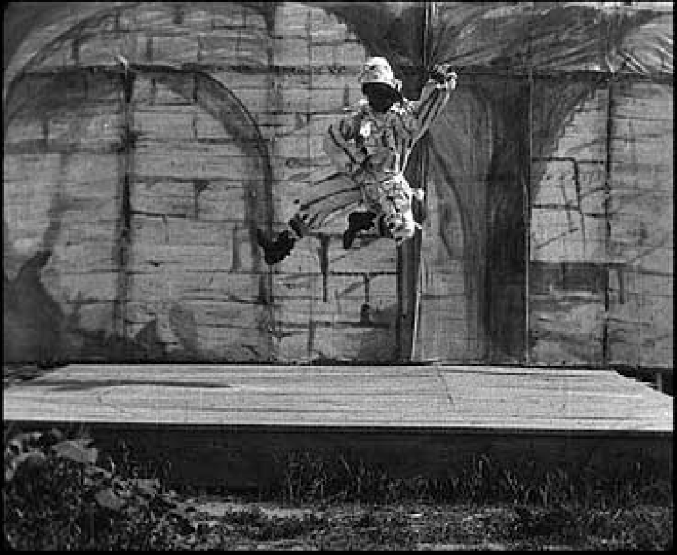
John then introduced us to the ground-breaking Russian dancer and film maker Alexander Shiryaev, who not only founded character dance in Russian ballet at the Mariinsky Theatre but also (probably) invented stop motion animation. Shiryaev’s interests were strictly in support of his work – helping to show his dancers his intended movements and choreography – and were only discovered in the 1990s. As John said, his ability to capture movement using these techniques was remarkable and the three films screened, one paper animation, another stop-motion and a third showing Shiryaev performing a Cossack dance with his wife, dancer Natalia Matveeva, were captivating especially when aided by such a practiced dance accompaniment!


Alexander Shiryaev

A Lupino Lane short comedy followed, Goodnight Nurse (1929) a new scan of 35mm nitrate and one of a number restored by the KB’s David Wyatt and Dave Glass following a Kickstarter campaign. It showcased the Brit’s speed of movement and athleticism which matched those who’d gone over to Hollywood before if not necessarily in terms of originality, then certainly flexibility and comedy!


Accompaniment for this was provided by the sprightly hands of Radio’s Colin Sell who’s worked with more than a few old jokers in his time and was the perfect comedy accomplice for Ida Lupino’s Uncle, the man who used to dance The Lambeth Walk. The Lupino Lane restorations are now available on DVD and you can purchase them from Amazon soon.2


Yes, but what about the duck?


After Boris stops his film with the endangered duck, the tram driver is unfrozen and jumps backwards into his reversing tram and we’re run back to scenes of Parasha about to depart from her village where she has been staying with her aunt. She’s off to stay with her Uncle Fedya (Aleksandr Gromov) in Moscow but, just as she climbs on board with a wicker bag containing food and the present of a white duck (uncredited, sadly) her train departs just after one arrives with Fedya on it.


Cue dreamy views of Parasha’s train slicing through trees and fields on route to Moscow and then her disorientation in finding that Fedya is not where he’s supposed to be. She wanders all night ending up with the above Duck Distress before, as chance would have it, being spotted by someone she knows.


Semyon in his motor

In the first ten minutes, Barnet has already shown us Semyon Byvalov a young chauffeur (Vladimir Batalov) preparing his car and then driving through Moscow with his sweetheart Marisha-maid (Anel Sudakevich). The narrative threads now intersect as he picks up his old friend and takes her to Trubaya. Here she gets work as a maid with the very odd couple of Mr. Golikov (Vladimir Fogel), a hairdresser, and his slovenly wife (Yelena Tyapkina) who seems to have perfected the art of lounging. Mrs. Golikov refuses to allow a union member to be their maid – probably more on economic than political grounds – so the newly arrived innocent is perfect for her purposes.


The Golikov’s are key characters, especially the hairdresser. He is hyperactive and ridiculous, washing their plates in the absence of a maid and after drying them flinging them across the room to smash. She is full of undeserved airs and graces… the sort of bourgeoise the Revolution was supposed to galvanise and re-purpose.


Another interesting sequence with Vera Maretskaya followed by (hand-held) camera through a crowd

But Parasha is of good intention and only sees other’s better motives. She is befriended by Fenya (Ada Vojtsik) who is politically active and takes her to union meetings. The workers arrange a play about the French Revolution which completely bewitches Parasha who, having not seen theatre before, attacks Golikov on stage as his character is assassinates Semyon’s… this wins her the love and support of the audience but Golikov immediately sacks her.


Our irritable boss has reckoned without the impact his young maid has created and soon he learns that she has been elected to the post of deputy by the maids’ trade union. This immediately elevates the standing of her former employers and Mrs Golikov is not alone in being keen to to ride this particular tide yet can her husband control himself for long enough to act in his and, more importantly, others' best interests? 


Parasha on the march

The House on Trubnaya is very clever slapstick mixed with social observation and the required political messaging: if all bosses are as venal and self-serving as the Golikov’s – even over a decade on from the Revolution – then workers need to join unions to support themselves and others. It never lectures just wends its peculiar way scoring laughs over political points and that’s exactly why it’s so watchable now.


Cyrus Gabrysch accompanied in style and relished this return to the silent film “club” he helped found! Welcome home Mr Gabrysch and everyone else involved in this wonderful collective!


1. More about Julia Vogl's work on her website and her Instagram.

2. More details of  the Lupino Lane project on their Kickstarter page.


No ducks were harmed in the writing of this post.


Monday, 25 October 2021

You’re next!! Invasion of the Body Snatchers (1956), BFI Blu-ray, out now!


‘At first glance, everything looked the same… It wasn’t. Something evil had taken possession of the town.’


It’s starts with Kevin McCarthy’s character shouting at police officers, telling them he’s not mad and that they are here… they are talking over and they must be stopped and it continues 65 years later in a post-Trump, post-Brexit world in which myths have been injected into our minds by forces unknown. In the mid fifties this could have been communism and it could have been fascism – both sides took offence at Don Siegel’s film – but the ability and desire to wield fear to manipulate opinion hasn’t changed only the tools with which to do so.


You can take this film as face value and perhaps that’s best, an invasion of alien beings who take over human bodies and minds and are concerned only with being… no anger, irony, love or other emotional extremes. As is said in the documentary accompanying this film, these are the most benign of invaders and yet… no one wants to lose their ability to feel and to reach those extreme states. Maybe this is the only way to truly value our freedoms; to be close to losing them.


Dana Wynter and Kevin McCarthy 

Presented on Blu-ray for the first time in the UK, the film is based on Jack Finney’s three-part serial, The Body Snatchers which first appeared in Collier’s magazine in 1954, and which he always claimed held no hidden meanings being just a good story based on common science fiction tropes of the time. If anything, it may have been a reaction to cultural and technological changes with the writer exhibiting a nostalgia for a community-spirited smalltown America that seemed to be slipping away.


In one of the featurettes accompanying this sparkling presentation, Don Seigel’s former assistant said he got different things from the film at different stages of his life and with different political contexts… I think it’s the film’s ambiguity and passion which enables this longevity, its specificity is about the fear of loss of self and not necessarily political at all. That’s where the real horror is.


The pace of Invaders is also impressively relentless and there’s a very satisfying narrative arc that pulls no punches and is heavy with the realities of a battle for existence against a relentless enemy. Enjoy yourself it’s later than you think is fine but this is the moment between that realisation and midnight.


There's something wrong with Uncle Ira...

We kick off with a desperate Doctor Miles Bennell (Kevin McCarthy) being taken into a psychiatric ward rambling about “them” being here and smashing the fourth wall with feverish, frightened intensity. He gradually calms down enough to explain that he’s a doctor too and we switch to flashback and the seemingly tranquil California town of Santa Mira, the setting of Invasion… and, for sure, if it could happen here, it could happen anywhere.


Bennell has been away on a trip and on his return, he has been seeing patients exhibiting “Capgras delusion” a belief that their friends and relatives have somehow been replaced with identical-looking impostors but everyone who complains is soon fine. He finds that his old fiancé, Becky Driscoll (the divine Dana Wynter) has returned following her divorce and a stay with relatives in England and there’s definitely still a spark between them.


The two visit Becky's cousin Wilma (Virginia Christine) who’s convinced that her father, Ira, is not the same man he was… there’s much detailed conversation about the change in him and how he’s still Ira but has lost his emotional connection with the World. At this stage, it all sounds fantastical and we see Ira, we know there’s a change but, even pre-warned and informed, it’s hard to pin it down.


Meeting Teddy and Jack

Bennett’s colleague, psychiatrist Dr Dan Kauffman (Larry Gates) cheerfully puts it all down to some form of mass hysteria and, as with all good mysteries, the audience, is lulled into a false sense of comfort. But the film doesn’t linger long and starts to accelerate towards the unlikeliest of explanations.


Bennett and Becky go to see his friends, Jack Belicec (King Donovan) and his wife Theodora "Teddy" (the wonderful Carolyn Jones, later Morticia, wife to Gomez Addams…) for a drink. What could be more normal and comfortingly routine and yet they find a strange mannequin which looks like an unfinished version of Jack growing out of a pod in his greenhouse. Truly, something is rotten in the state of California. Bennett calls Kauffman to see for himself but the body has disappeared…


Seigel doesn’t linger on the disappearing evidence though and soon the four find exact replicas growing in the Belicec’s greenhouse… and it’s not long before they realise that many of their most trusted friends and local officials have already been replaced by these strange doppelgangers and their personalities gone for good.


Running out of places to turn to Bennell and Becky hide away in his office overnight and watch the town gather in the morning to send off more and more of the pods to neighbouring towns. The arrival of Kauffman and a transformed Jack makes their situation look hopeless and as the Professor calmly explains what is happening – an alien invasion, the pods taking over and freeing the humans from daily stresses but also freewill – the horrific reality becomes clear.


The two make a break for it and the sight of them being chased by the entire town is even more dispiriting than the biggest of Twitter pile-ons… is there anyway they can escape? All they have to do is stay clear and awake… to prevent their consciousness being pushed out.


Invasion is still an agitating ride especially in crystal clear high definition and unsettles you for all kinds of reasons… this play on human insecurity is the most “noir” of all the fifties sci-fi classics and betrayal by your community and society is right up there with loss of self as the ultimate in nightmarish narratives.


Hertford, June 2016.

There’s a pod-full of extras including commentary from filmmaker and critic Jim Hemphill as well as the 50th anniversary commentary with stars Kevin McCarthy and Dana Wynter, and Gremlins director Joe Dante (2006). There’s a number of featurettes on the film along with archive shorts on communism and ground-breaking botanical cinematography in Magic Myxies (1931, 11 mins) and Battle of the Plants (1926, 11 mins)


An illustrated booklet is included in the first pressing, with new writing on the film by Dr Deborah Allison, an archival feature by J Hoberman from Sight and Sound, May 1994, a biography of Don Siegel by Charlie Bligh and notes on the special features.


Another impeccable release from the BFI and you can order it now from their Shop – if they haven’t already left one growing in your greenhouse - and remember…


"They're here already! You're next! You're next!"


Sunday, 24 October 2021

Shocked again… Short Sharp Shocks Volume 2, BFI Blu-ray set, out now!


Clare Binns, Ritzy Cinema alumnus – usherette, tickets seller, projectionist, programmer and beyond – in her interview here about the Brixton venue points out the significance of diverse programming especially at a time when streaming services push their top content at us in every decreasing algorithmic circles. The importance of independent cinemas, production houses, publishers, distributors etc has never been greater as informed recommendation cannot be replicated – yet – by AI. There is an art to finding things and, as the BFI’s Flipside series continues to show, a bunch of uber geeks raiding the archive and sharing is a winning formula.


This double disc set is the 43rd disc in the series and follows on from the first volume of Short Sharp Shocks that was one of the BFI’s biggest sellers last year proving that there’s a  sizable amount of folk who want to experience the shock of the new even if they are sometimes old and very strange… there’s not a single film on here that isn’t worth re-discovery and some, such as The Mark of Lilith (1986) represent a moment in feminist film making that certainly deserves wider recognition: Derek Jarman was a fan and there’s plenty of contemporary value in the film’s polemic.


We start with more deliberate mysteries with a couple of Ronald Haines’ Quiz-Crimes from 1943-4 in which Detective Inspector Frost challenges the audience to solve the murders of showgirls, golfers, along with Soho kidnaps and botched boarding house killings. The films plug into the whodunnit fad which has been ongoing for well over a century now and make the strangest of aperitifs for film programmes then and now, pulling eth watcher into mysteries as surely as the dramatic tensions of the main features.


They’re followed by the purely threatening The Three Children (1946) a public information film warning drives, parents and children about the perils of road death at a time when three children were killed every week in traffic accidents. It’s very reminiscent of safety films of the seventies with the threat personified by a human figure warning you to avoid deep water or strange film makers…


John Le Mesurier

Probably the person you’d least expect would need to Escape from Broadmoor (1948) is John Le Mesurier, but here he is alive with menace as Langford, a psychotic professional thief aiming to make a score at the scene of a previous crime in which he shot a woman. He’s being pursued by Inspector Thornton played by frequent detective John Stuart, a veteran who started off in the silent era with Hitchcock in The Pleasure Garden and Elvey in Hindle Wakes. Langford’s sure there’s more to be had and he takes along his apprentice Jenkins (Antony Doonan) to what they hope will be an empty house… only to find a rather confident housekeeper (Victoria Hopper) running unwanted commentary as they try to break the safe…


Director John Gilling ramps the atmosphere and tension up as Le Mesurier effortlessly transitions from hard and cocky to uncertain and supernaturally scared…


There are more uncanny happenings in Theodore Zichy’s quirky Mingoloo (1958), in which an artist, Mark Langtree (Anthony F Page) wakes from a vivid dream featuring a Chinese dog which he is compelled to sculpt with the help of his assistant Linda Burrows (Therese Burton). Mark’s on his uppers and has a deal that will keep him afloat with a foreign government to decorate a building. One of their number, Mr Leventa (Reed De Rouen) just so happens to run a night club and dodgy business and decides that the plaster pup could be very useful.


He arranges a date with Linda thinking she’s made the statue and ends up gifting her £1000 for the dog, even as she gets too squiffy on champagne to sign the paperwork. The next day Mark is too cross to listen to Linda after the dog gets napped and he gets slugged… It’s a daft but engaging story and more dreams will come that enable a denouement. Made on a shoestring, it’s fun and Zichy? He’s quirky.


My old girlfriends’ dad used to manage clubs in Lancashire which is how he came to know Screaming Lord Sutch who, aged about three, she found having breakfast in their kitchen, not in his make-up but with his long hair and sunken eyes enough to frighten her into running straight out into the street. We get to see his gothic charm in the video for the 1963 near-miss, Jack the Ripper, produced by Joe Meek which tastefully summarises Jack’s murderous career with the Lord showing how much The Damned Dave Vanian owed him for make-up and style.


David Allister not quite dead

Things get more seriously weird and contemporarily resonant on the second disc which kicks off with The Face of Darkness (1976) which is written and directed by Ian FH Lloyd and features genuine forces of darkness intervening in British politics for the first and far from last time… surely non one expects the last five years to be devoid of devilment?


Edward Langdon plays Lennard Pearce an MP with a law-and-order private members bill which will bring back hanging (avenging his murdered wife) and a clamp down on our freedoms. The numbers are against him in Parliament but he has a plan to rouse the Undead (David Allister) a being long ago buried by a medieval Inquisitor (John Bennett) and a peasant helper (Roger Bizley). The Undead will do as he is bid but in the strange ceremony bringing him back to consciousness, Langdon fails to remove his tongue allowing him the leeway to follow a broader course. He meets Eileen (the excellent Gwyneth Powell, headmistress of Grange Hill and much more) the mother of his intended victim, a schoolgirl and in unsettling scenes plays magic tricks for her schoolmates before drawing a perfect circle and placing a box inside for his “Pandora” to open and blow them all up.


Lloyd is featured in an interview on the disc and admits that the resurgent IRA had informed his writing and as with everything in the disturbing allegory, there’s much to be wary of as politicians plough ahead with myths of their own, sowing anger, fear and division. The timeless nature of evil and the immutability of history are but a couple of themes in the entertaining, intelligent and unsettling film.


Geraldine James

Talking of unsettling, Robert Bierman succeeds in scaring the modern watcher with the home-invasion horrors of The Dumb Waiter (1979) in which a young Geraldine James (star of pretty much everything since…) is pursued by a nameless man who is determined to attack her no matter what. Locations are shot around West London with commercials director Robert Bierman creating an edge of the seat thriller in his first fictional film. James is superb and so is the young director as he creates a dark atmosphere through expert editing and beginner’s improvisations!


Just as dark but more educatively so, David Evans’ Hangman (1985) is a health and safety film designed to make building workers aware of the risks at their workplace. The beefy Hangman – played by a mainstay of period hardmen characters as found in Bergerac, The Bill, Minder and many more, here uncredited – speaks direct to the workers in the audience as he tests them on the workplace dos and don’ts. It’s a little like the Quiz-Crimes only viewers are being asked to prevent their own manslaughter rather than identify the guilty parties post-facto.


The final film is perhaps the most interesting, The Mark of Lilith (1986) was essentially the graduation project for a number of students at the London College of Printing with, a budget of £7,000, including a huge amount of of begged, stolen and borrowed kit and their fellow students goodwill, Bruna Fionda, Polly Biswas Gladwin and Zachary Nataf were able to make a work aimed at deconstructing the vampire genre as well as asking questions about feminism in film.


Zena (Pamela Lofton) is a lesbian film student looking onto the genre and the role of legend in fuelling such stories, especially the passage of female gods from good to bad in myth. She meets Lillia (Susan Franklyn) and actual vampire who has grown dissatisfied with life with her pain in the neck boyfriend Luke (Jeremy Peters) whose “Gothic and go” has got up and gone. Lillia wants to be real and more seen… Zena agrees and the two characters set off in search of more substance.


All three of the directors are interviewed as part of the box set’s extras, the film was an important mark in their careers.


Pamela Lofton, looking for Lilith

Sat in her taxi searching for Zena, whose presence she’d sensed on screen, Lillia tells the driver to take her to the Rizty… nineties code for independent and free-thinking cinema! There were cheers in the venue when the film showed and there are cheers now we can see this and the rest of this superlative package from the BFI.


Short Sharp Shocks is out on 25th October and you can order direct from the BFI – do it, do it now! The first pressing only includes a fulsome booklet with many interesting essays from filmmakers and historians Vic Pratt, William Fowler, Josephine Botting, Jon Dear, Jonathan Rigby and Caroline Champion so, be quick about it!


Screeming Lord Sutch considers electiral reform... he lost all his deposits standing a record 39 times for parliament with his Monster Raving Loony Party.


Thursday, 21 October 2021

Look at life. Peeping Tom (1960), BFI, Edgar Wright’s London After Dark


Michael Powell did live long enough to see the reputation of this artfully disturbing story rise like the reanimated but skewered remains of the far-too-likable-and-lovely-to-kill, Moira Shearer, Peeping Tom’s third murderee. He never saw Rotten Tomatoes which has the film ranked at 96% - 2% ahead of Avengers Endgame and level with Black Panther – but his art transcends their populist appeal and I'm pretty sure Stan Lee would agree. This is a film you can watch over and again, still finding new details, new meanings and cinematic resonance and I'm delighted that the BFI allowed us to view it on the big screen.


Tom, as Powell obsessives do not call it, was being screened as part of the new Edgar Wright curated season of London films and others that influenced his latest retro fun-pack Last Night In Soho, including Beat Girl, Sammy Lee and Primitive London. Peeping Tom shares those film’s fascination with the sleezy side of old Soho and even features Pamela Green who my Uncle Harry assures me was the sexual superpower of late 50s/early 60s Dad’s mags and “art films” such the saucy travelogue Naked as Nature Intended (1961) and who also made films for the deaf along with George Harrison Marks her partner and director. Pam plays Milly the model and adds authentic glamour in some outrageous flimsy lingerie and is thoroughly believable as the bored model waiting to be clicked at.


Carl Boehm: Mark is a camera

Retro porn is of course "perfectly harmless"… but Powell has a deeper point to make (literally, etc.) given that his tripod-wielding murderer, Mark Lewis (Carl Boehm) is obsessed with documenting fear in the most coldly calculating way after being brought up by a father (played, of course, by Michael Powell himself) who experimented on him and recorded the results on film and tape. There’s a comment here on the nature of filmmaking and also the obsessive-compulsive collation of experience in a manner that is now commonplace thanks to mobile phones and social media. We’re all of us “Peeping Toms” now, recording content every day and sharing it good or bad… are we reduced as the subject and is our capacity to just experience hindered by our urge to collect and collate?


Powell clearly had in mind the driving force of directors like Hitchcock and not excluding himself, who were drawn to the extremes of human behaviour not to mention the audience that enable their films through watching. Hitchcock made voyeurs of us all and his P.O.V. killer Psycho was released mere weeks after Tom… Powell was also worldly enough to not sensationalise but send up the burgeoning sex industry just as much as he does the film industry here.


Pamela Brown as Milly the Model


Powell’s casting of Carl Boehm is crucial to the film’s strangeness with the German actor not looking or sounding English but rather something alien much like the character in Paul Auster’s City of Glass, Peter Stillman, whose father kept him in isolation as a child expecting him to emerge speaking the one true language. Mark has been thoroughly twisted by his upbringing and the film opens with his murder of a prostitute called Dora (Brenda Bruce) in Newman Passage, Fitzrovia, which he films before, during and after as the Police arrive to investigate. Dora’s face is shown as he thrusts the blade hidden in his camera tripod and it’s the most unpleasant of deaths even compared to the modern “slasher” films supposedly influenced by this film.


Mark has a side-line in taking dirty pictures – in the old vernacular – over a newsagents on the corner of Rathbone Street and Percy Street, Bloomsbury, which sells soft porn as well as under-the-counter “views” if the dirty raincoat brigade are brave enough to ask for them – there’s a lovely cameo from Miles Malleson as “Elderly gentleman customer”, one of a number of humorous episodes that lighten the film and offer you sweet before the sour.


The uneasy lensman oozing queasy need

He has a session there with Milly who introduces a new model, Lorraine (Susan Travers) who has a disfigured upper lip which immediately makes Mark very sweaty… he’s a creep, he’s a weirdo and I know exactly what the hell he’s doing there.


Powell is typically counter-intuitive, selecting the right players for his characters and Anna Massey is arguably more important that Boehm as Helen, who lodges on the ground floor of the house Mark has inherited. Massey’s a great technician – I once saw her imperious as Queen Elizabeth to Isabelle Huppert’s Mary in Schiller’s Mary Stuart at the National, darling - and she gets through a lot of the emotional narrative as the wholesome, determinedly faithful Helen who only sees the best in her painfully shy new friend. She’s the one who will be left to find Mark guilty but with extenuating circumstances, understanding the painful reality of his situation in ways the police, good as they are, won’t comprehend. Helen experiences the horror in the same way as the audience in a typical thriller, we know from the start that Mark is the killer but she must find his bloodied dark side through his innocence.


Anna Massey arrives bearing cake

Mark’s social interactions are painful to watch as he first meets Helen as she greets him on the stairs outside her 21st birthday party, he’s the shyest of serial killers but she only sees his vulnerabilities and fascinated by his innocence and creativity wants to know more about the “documentary” he is working on. There’s a strong cameo from Maxine Audley as Helen’s mother, she is blind – therefore incapable of being another Peeping Tom – but hears more than other’s see and is always suspicious of the man she can hear moving around on the floor above in his dark room.


Mark’s main job is as a focus puller at a film studio and this is where the film adds some slapstick, at least initially…  Esmond Knight is Arthur Baden, a director of nervous disposition who is exasperated by his young star Diane Ashley (Shirley Anne Field - also in Beat Girl!) and her inability to faint just as he wants her, there’s take after take until she collapses from exhaustion and that’s the shot. Any relation to Director Alfred is probably accidental.


Vivian/Vicky/Victoria - Moira Shearer gets ready for her close up...

Diane’s double is Vivian played with cheerful ethereality by prima ballerina Moira Shearer, Vicky/Victoria in The Red Shoes and, here again, thank you Mr Powell, we do get to see her dance for a little while at least. This is one of several self-referential points in the film and to see a “character” from the Powell extended universe, an earlier more earnest one, throws the horrors of this film into sharper relief. Vicky dies for her art in her film whilst Vivian – all light and joy – is despatched as a meaningless bit player in Mark’s greater scheme, she even gets left on the cutting room floor as the death isn’t captured well enough to meet his vision. So, he goes in search of another victim…


The police are now involved, with Chief Insp. Gregg (Jack Watson) and Det. Sgt. Miller (Nigel Davenport) assigned to Vivian’s case, and the dots start to connect around Mark. It’s all as he planned though, part of a greater picture of which even he is a player to be sacrificed in the name of film.


There’s endless fun to be had with pulling out the hidden meaning Powell smuggles into the film, as always, and whilst the film has been described as “horror” it’s rather more than a thriller which is why it has outlasted the opinion of the contemporary critics. For me it’s far less obnoxious than Psycho and once you accept it as a kind of very high comedy the action leads to self-examination as much as revulsion with the director keeping the violence as much in our minds as on screen.


Very pleased to have seen this on screen so thankyou BFI as always and for this season of seedy Soho swinging… next up, Beat Girl and in 35mm!.


Miles Malleson asks for the latest issue of Sight and Sound...