Saturday, 11 June 2022

Don’t stop believing… Lawrence of Belgravia (2011), BFI Blu-ray, out now


I am completely obsessed with being famous, you know, forget these Big Brother people, I am an original I crave it more than anything else…


Released on Blu-ray for the first time, and previously unavailable on home media, one on the extras on this set includes the Q&A after the film’s screening at the London Film Festival in 2011 and shows Lawrence being more moved than he expected by Paul Kelly’s documentary of his life at that point. Kelly was sincere and treats his subject with the upmost respect whilst also highlighting a personality and approach that might well have contributed to his long wait for commercial success. All this said, Lawrence is a one off and someone we should celebrate, a man with a vision and who really means it (man) in a world of phoneys, sell outs and sycophants.


Only Lawrence could write to John Peel to ask him to return two copies of Felt’s Index single which the Liverpool-supporting legend was less than impressed with. Years later Peel told Pete Astor (ex-Weather Prophet) that he still remembered Lawrence’s response, “I’ve never had a letter as vitriolic and nasty….”  JP returned one of the singles but couldn’t find the other and so offered to cover the cost… Lawrence still has the note. He maintains that Peel’s not liking Felt was a major part in their downfall… although he kept the returned single and note. You feel the two should have got on very well given the chance but Peelie described their first album as having one of the worst titles in history and Lawrence never forgets.


In the indie eighties though, any listener to Peel or reader of the NME was well aware of Felt and their string of highly distinctive releases that laid the path for the post-post-punk style that wore its influence on velvet sleeves dominating the domestic underground through the C86 era. That NME compilation tape featured acts that went on to success such as Primal Scream, Wedding Present and We've Got a Fuzzbox and We're Gonna Use It and others who were talented but stayed below the line, Bogshed, Stump and Glasgow’s legendary, The Pastels. Many still play but like most musicians, have relied on portfolio careers, often as “civilians,” to make ends meet but what is remarkable about Lawrence is that he’s still hanging in there expecting to be like his pal Bobby Gillespie who, he notes, has always avoided introducing him to Kate Moss…


Go-Kart Mozart on stage


Artistically I think we achieved what we wanted to achieve but commercially it was a disaster…


Like me, Paul Kelly first heard Felt on another classic compilation, Cherry Red’s Pillows and Prayers from 1983 which included Tracey Thorn and Ben Watt (Everything but the Girl), Thomas Leer and The Monochrome Set. Felt were quirky and atmospheric, standing out for Lawrence’s lyrics and plaintive delivery along with superb guitar from classically trained Maurice Deebank to which they added keyboards from Martin Duffy (now with Primal Scream). The band split in 1989 and Lawrence’s next project, Denim, should have been his commercial breakthrough with the excellent debut, Back in Denim a celebration of Glam Rock featuring contributions from The Glitter Band’s Pete Phipps and Gerry Shephard, and filled with wit, great hooks and a sampling of Chirpy Cheep Cheep. The critics loved them but they were swept away by far less worthy and ironic competitors of the Brit Pop explosion… many of whom also loved Felt and Denim.


This film is all about the life that Lawrence was leading though and not a history of Felt and Denim which Kelly neatly summarises with a compilation of cuttings showing gigs and reviews. It’s also something of a meditation on the craft of documentary with filming taking place over eight years to follow the debut album of Lawrence’s new project, Go-Kart Mozart (now Mozart Estate), and its launch. During that period Lawrence gets evicted from his flat in Belgravia and moves into a tower block overlooking tremendous views from Old Street across London and indeed to Paul Kelly’s flat in Shoreditch (?). There were various court cases and Lawrence was constantly harassed by the police during the period, with a single shot of medication hinting at the issue BUT the glory of this film is in the resilience, focus and ambition of its central character who would just love to be the first pensioner pop star.


The view from Old Street

I want people to like a group that you can put on the back of your jacket with pride…


Lawrence designs Go-kart Mozart to be the first B-Side band in the World but can’t help himself in producing a set of potential A-sides covering his eternal concern with bringing the past and future together. But he’s very principled and won’t use his old music, he refuses to play any Denim songs at a warm-up gig for Go-Kart in Paris and, no matter how much money might be offered, he’s adamant that You’ll never, ever, see a Felt reunion.


In Paris Lawrence was expecting a series of press interviews, Nick Kent was mentioned, but in the end it was mainly students and bloggers (bless us!) but, as Kelly says on the commentary, these  came out better for it as he was more relaxed and gives fulsome, honest, answers giving out more to help structure the discussions than he would have done under Kent’s more probing questioning.


Lawrence is asked about his relationship with Nick Gilbert who left Felt as he thought it would spoil their friendship, Lawrence doesn’t get that, and success is more important to him than friends even though, he was the only best friend I’ve ever had in my life, so it was quite a big deal… but he would do the same thing now, my friend is the band.


It’s possibly the same with romantic relationships with Lawrence saying that whilst men fall in love in a second, it’s all downhill after the opening amazement, as the everyday reality dissipates the desire. Lawrence is very self-contained and maybe choses to be the island just as he dipped in and out of Kelly’s film; he reaches out when he needs to. There’s a dignity in his discipline and a feeling that he’s being true to himself, a success on his own terms which may not have the chart placings and wealth but is still some achievement for any of us.


What we get is a series of vignettes all of which help to build up this bigger picture. Lawrence buying a new hat, giving very specific instructions to his cover designer and recording elements of the album in painstaking almost Martin Rushent style (“that’ll be one drum beat at a time, Stephen…”) – he knows what he wants which is also a triumph. We also see him in the old Haggle Records in Essex Road and there was a yelp of recognition when he points out the irony that you could never haggle on any of the stock!


No haggling vinyl paradise

When I play a record, I sit there transfixed, mesmerised… and if it’s got a lyric sheet, I’m in heaven… it’s another world you’re entering into.


We see Lawrence presenting a radio show with his list of favourites very telling, supporting St Etienne – Bob and Sarah only briefly glimpsed - and then discussing The Felt Book – a Felt fanzine Foxtrot Echo Lima Tango. Lawrence talks about the introduction from Kevin Pearce, who was helping Lawrence to do a book on the band but decided that didn’t want to delve too deep and loose the myths, or as the singer says spoil the beauty of things… Pearce remembered the band’s gig with The Smiths and Go-Betweens at the Venue, where he was impressed with their wonderful short set played in atmospheric darkness, Lawrence told him it was down to a problem with the lighting and not design. Still, that’s the band rising through adversity, impressive even if not perfect… maybe it’s hard to collaborate when someone only insists on perfection or complete control?


The closing long-lens shots showing Lawrence looking out across from his balcony across London from Paul’s flat reflect his singularity, and that, even amongst the endless and confusing city he still has a vision that may yet make Lawrence a “pensioner popstar”!


The set comes with excellent special features:

·         Feature-length audio commentary with director Paul Kelly

·         A Q&A with Paul Kelly and Lawrence after a screening at the 55th London Film Festival in 2011

·         The original trailer, alternative title sequence, deleted scenes and poetry readings: Cat Meat on Slum Street (2009) and The Tortoise (2011)


There’s also an Illustrated booklet with new writing by Siân Pattenden, Michael Hayden and Tim Murray, poetry by Lawrence and song lyrics, notes on the special features and credits.


This is with the first pressing only, so you better be quick and order from the BFI Shop and you’ll also get a limited-edition postcard signed by Lawrence himself while stocks last!


There’s also a launch screening, Q&A and signing at Rough Trade East, London E1 on Wednesday 15 June with Lawrence and director Paul Kelly, hosted by Siân Pattenden. Still some tickets available…


If I’d have been born in the Sixteenth Century, I’d have been fine because I would have had a patron…


I hear you, Lawrence!


Lawrence with Vic Goddard


Sunday, 29 May 2022

Tough love... The Soft Skin (La Peau douce) (1964), BFI Blu-ray, out now!


Another gift from the BFI’s François Truffaut season and a film that only gradually attained the respect that a 91% Rotten Toms score might indicate. Maybe it suffered in comparison with The 400 Blows and Jules et Jim, maybe it was too subtle, a three-hander between a husband, his wife and his lover and maybe some felt the ending was too melodramatic. That conclusion was, however, based on a real event and in wanting to create a film about adultery, the director was looking to show how that moment could happen when three ordinary people are caught up in emotions beyond their control, or, at least, their willingness to control.


Another actuality had been Truffaut’s witnessing of a couple kissing so passionately in the back of a taxi that their teeth clashed, that’s not the kiss of a married couple he reasoned (parle pour toi mon ami) and he added it to his “moments” in a script written at speed holed up in one of the posher hotels in Cannes with Jean-Louis Richard. Richard is interviewed on the commentary and is great value in terms of the motivations for making the film, the process and the three remarkable performances. Truffaut was fascinated by Hitchcock, and the latter’s influence is felt in certain aspects of the film, with the Frenchman building up tension and almost freezing time as he does when literary critic Pierre Lachenay (Jean Desailly) meets air hostess Nicole (Françoise Dorléac) in the hotel lift… the tension is palpable, the desire almost too painfully obvious, Nicole almost hiding behind her shopping parcels, flattered by the attentions of the famous man.


Elevator discomfort: Françoise Dorléac and Jean Desailly

Richard is full of praise for the extraordinary Dorléac, someone he’d known since she was a teenager, she was only 21 now but so confident and assured as a performer, extrovert and daring in a way her sister, Catherine Denueve, wasn’t. Françoise had just made the action-comedy, That Man from Rio (1964) with Jean-Paul Belmondo, and easily inhabits the complexities of her role as someone who is still discovering themselves. It’s likely that Truffaut was as fascinated with the actor as his camera is and this adds to the portrayal of her attraction and Jean’s willingness to risk everything in pursuit.


According to Richard, Jean Desailly was unhappy with the film and felt it killed off his career as he was never again cast as a leading man. He was 43 at the time and perhaps, as Richard suggests, viewed his character too harshly especially as Truffault’s overall direction – especially the editing in the film – took his meaning beyond his performance. That said, we don’t entirely dislike any of the characters, it’s possible to feel sympathy for all three and that’s as intended. Yes, Pierre’s a cheat who “goofs” as Nicole says, but he’s also lost and in crisis before he even meets her and he, may, given time, get over his mid-life wandering eye and calm down to count his blessings.


Pierre watches as Nicole dances...


Pierre may feel that his is missing a teeth-clashing relationship with a beautiful young woman but he’s overlooking his successful career, his daughter Sabine (Sabine Haudepin), his apartment in the fashionable 16th arrondissement – Truffault’s own – and most especially his wife Franca played by Nelly Benedetti. Benedetti comes more and more to the fore as the story progresses and is a force to be reckoned with as her character at first suspects and then begins to find out the full extent of her husband’s betrayal. Benedetti, on a point of trivia, was also Elizabeth Taylor, Eva Marie Saint, Raquel Welch and a host of others, dubbing their films into French.


We find Pierre and Franca in a rush at the start of the film as the former is about to miss his plane for a conference in Lisbon at which he is to deliver a paper on Balzac and Money. Pierre comes through the door, down the hall and to their sunken living room as he will many times in the film, Truffaut’s home surprisingly perfect for illustrating the depth or family comforts, kitchen diner with a screen that can be pulled up as required, all mod cons.


Nelly Benedetti long-suffers

Pierre is driven by their friend to the airport with lots of those quick cuts setting the action in time and space. He makes it just as they’re about to close the gates and is the last person on the plane, welcomed by a very pretty stewardess as he breathlessly takes his seat. During the flight he notices the girl more and more, sneaking repeated peaks and fascinated by seeing her change from flat shoes to high heels behind the curtain. How much of this creepy male gazing was a reflection of the director’s own situation/his interest in Dorléac is open to conjecture but Pierre is a jowly middle-aged man desiring a woman half his age. There are two occasions in the film when women are harassed by men in the street, it’s unlikely Truffault was unaware of the power relationships.


In Lisbon Pierre keeps on seeing Nicole and they are staying at the same hotel. The meet in the lift and he helps her pick up her shopping… Once back in his room he gathers his courage and phones her on the pretext of apologising for not helping more, he tries to arrange a drink and, after calling back, she agrees. They meet the next evening and perhaps start struck, amused by his wealth of knowledge, Nicole allows him into her room.


As with Jules et Jim, darkness shrouds deep connections


So begins their affair, with slightly comic attempts by Pierre to spend time with Nicole as he introduces a screening of a documentary about André Gide at a conference in Reims. The locals try to wine and dine him as he tries to escape to join with Nicole. Finally, they escape to a rural guest house but he has spent too long away and on his return, Franca is not only suspicious but beside herself… This is too much emotion for Pierre to deal with and he needs to find out what he wants to do before it is too late.


It's a deceptive story with nuanced characters and a prosaic “reality” that hides the indecision of all three characters. It’s subtler than Jules at Jim as it lacks that film’s dynamic interactions, again based on actuality, but it still hits hard as each of us try and keep our eyes on the road driving on to the next appointment.


Pierre and Sabine in Truffault's sunken living room

The film is presented in High Definition from a new 2k restoration and comes with a full basket of extras including a 24-page booklet with two fascinating essays: Truffaut’s mirror by Catherine Wheatley and A certain tendency: Truffaut as film critic by Kieron McCormack, plus:


Feature commentary by La Peau douce co-writer Jean-Louis Richard, with contributions from film critic and journalist Serge Toubiana (2002)


Between Masters at War: Truffaut and the Lessons of Alfred Hitchcock and Roberto Rossellini (2022, 18 mins): film academic Pasquale Iannone considers how the work of Truffaut was influenced by two great directors


Paris Through the Lens (1900-1910, 9 mins): precious glimpses of the sprawling city Truffaut loved from the BFI National Archive


Old Portugal at the Ocean’s Edge (1896, 1 min): mesmerising early film fragments, shot near Lisbon long before it provided the setting for illicit love in La Peau douce


Original theatrical trailer


The Soft Skin is released on 30th May and you can order it now from the BFI Shop online or in person! 


Sunday, 22 May 2022

Jack’s back… Get Carter (1971), BFI 4k restoration re-release, Friday 27th May


I’ve always had your welfare at heart Eric…


Jack is indeed returning to our big screens with the BFI re-releasing a 4k restoration from a 35mm negative approved by director Mike Hodges whose films have been celebrated on the Southbank this month. Carter’s never really left our collective conscience though and the film has only grown in stature since it’s initial release, from cult classic to a major part of the British film canon, one of the best, retaining its impact, criminal cool and unsettling violence, with a majestic Michael Caine giving perhaps his greatest performance: pure instinct and experience.


As Jack Carter watches a pornographic film after yet another sexual conquest, his head drops, and tears begin to flow as he realises that his brother’s teenage daughter, possibly his, has been pulled into this degraded world. Carter is psychopathic, a killer with intelligence and ruthless purpose pursuing revenge for the killing of his brother and yet here he is mourning the loss of his’ Doreen’s innocence… it breaks his heart for long seconds and then the brutal retribution of the film’s breathless closing sequence begins.


Watching his world disolve

The film is about that revenge but also the pointlessness of the violence some might celebrate and Roy Budd’s hypnotic score reflects this as his harpsicord, piano and Hammond organ, coupled with Jeff Cline’s bass and Chris Karan’s tabla play out Carter’s relentless drive north as the train heads from Kings Cross to Newcastle. The theme returns, startlingly reworked on vibes as visceral vengeance approaches and then plays itself to a slow stop at the devastating conclusion. Carter’s heart beats in the music which is all the more remarkable given Budd and his trio played along direct to screen given budget constraints. As with everything else in the film, necessity was indeed the mother of superlative invention.


Budd’s music also accompanies what is almost a City Symphony for Newcastle, with the film capturing Victorian streets, vibrant pubs, cavernous bingo halls, docks and the three bridged riverside to his mix of jazzy hauntology and pop songs… Getting Nowhere in a Hurry. North-Eastern Soul reflected in the faces on the civilians in those pubs, bookies and streets. Cinematographer Wolfgang Suschitzky and Hodges both had a documentary background and it shows. I especially like the pub singer, Denea Wilde, performing the standard How About You? having worked in Butlins a decade later when the organ and drums were still the combination of choice.


Michael Caine

The film is crammed full of great moments and Hodges editing is also pretty much perfect… instinctive and free flowing he’s having an absolute blast in his first feature. He’s lucky and he knows it and we feel it in the film’s narrative quality, so many lines to savour, cameos from an incredible cast and a story that never doubts its purpose. Hodges screen wrote based on Ted Lewis’ novel, Jack’s Return Home, and he apparently took out elements explaining more of the back story to Jack’s relationship with his brother, streamlining what became a taught moral tale in which the anti-hero’s ambiguities are for the viewer to establish for themselves.


Censorship had been relaxed and there were a number of films of this period addressing gangland and the characters all too frequently making the headlines, the Krays, the Richardsons et al. Nicol Williamson was chilling in The Reckoning (1970), and dodgy accent aside, Richard Burton too in Villain (1971) whilst, predating all, Peter Walker’s Man of Violence (1969) with Michael Latimer and Luan Peters, offered a low-budget subversion of the genre. It was this film that Get Carter’s producer, Michael Klinger had seen and decided he could do better by optioning Lewis’ story and getting Hodges to make a more realistic and nuanced film.


Looking through Ian Hendry's eyes

Caine’s brilliance undoubtedly elevates the film but he has outstanding support all round from a febrile Ian Hendry as Eric, eyes like two piss-holes in the snow behind his shades, then John Osborne as his sinister boss Kinnaird, then Tony Beckley and George Sewell as Peter and Con, his London mates sent up to bring him home. Sewell is especially impressive with a confidence and humour behind his hardness that made his so good at playing in this field. As with Caine, Sewell knew “people” in London, and this certainly informed their portrayals as the film took the likeability of organised criminals away from the capers of the sixties in a more nihilistic and realistic direction.


There are a lot of tough performances but also a lot of very frightened ones too as the threat levels increases for those with and without Carter, the great Alun Armstrong as his brother’s mate Keith and Rosemarie Dunham as Edna, Carter's landlady and love interest. Jack’s love life is conflicted with his girlfriend in London, a sparingly used Britt Eckland, part of his plan to get away from it all in South America yet seemingly making herself available to his boss whilst he’s away. There are few certainties in his life and after being “rescued” by Kinnaird’s inebriated squeeze, Geraldine Moffat, he falls into her bed and then finds out more than he wants from watching the 16mm projector in her bedroom.


Brutalism

He's led to unlikely porn star Albert (Glynn Edwards) and then local businessman, Brumby (Bryan Mosely) who, is famously, a big man out of condition… The film touches on so many themes, from child abuse to corruption and the poisonous impact of crime on local communities. Everything is interconnected and depressingly self-perpetuating and if we truly get Carter, he’s not the solution but the problem.


Anyway, now’s your chance to work it out for yourself, to celebrate and re-evaluate in glorious clarity on the Southbank and across the country including, naturally, Tyneside. Details available on the BFI website.


There's also an article from Adam Scovell on the BFI site comparing the North Eastern locations now with then, fascinating how things change and how some things stay the same.


Saturday, 21 May 2022

Dirty rats… Outside the Law (1920), Eureka Masters of Cinema Blu-ray, Out Now!


What I was going to say is… we weren’t born crooks, were we?


It’s only right and proper that Tod Browning should be included as a Master of Cinema given his contribution to the horror genre and also, as here, the development of the gangster picture. Here in 1920, we have something of the flavour of the late twenties with the likes of Underworld or The Racket, following on from the prohibition-induced black market. Tod Browning directs with pace and that swaggering mix of suspense with cocky comedy that defines the bravado of the settled genre. There’s a moll, a truly vicious hoodlum and grandiose betrayal for love all against a rather over-egged moral thread that mixes Confucius with Californian Christianity. The clincher perhaps is when Lon Chaney’s gangster calls a faithless fellow criminal, “…you dirty rat!”. Ladies and gentlemen of the jury, I rest my case.


Outside the Law is dynamic, emotive, soppy, violent, fun and this new 4k restoration from a 35mm print looks crisp and clear, apart from a few short passages showing deterioration, really bringing the action and some very fine performances to life, The film is considerably enlivened by a sparkling new orchestral score from noted film composer Anton Sanko, which gives the film a modern but respectful “volume”. 


Lon Chaney

It was Tod Browning’s second collaboration with Lon Chaney after The Wicked Darling (1919) and, as if to make up time, he has two roles, one as Black Mike Sylva, a gangster with his face twisted by malice, and the other as Ah Wing, loyal servant to the sagacious Chang Lo (E. Alyn Warren), who possibly had a larger role in the original cut with what we have now being based on a 1926 re-release. Both these characters are played in “yellowface” as was the practice at the time and distasteful though this now is, Chaney does his usual trick of completely losing himself in make-up, false teeth and costume.


Whilst it’s the Man of a Thousand Faces we remember the undoubted star here is Priscilla Dean as Molly Madden (Silky Moll), who plays the Moll (ha!) to perfection, quick-witted and every bit as ready with a gun as the men. As she proved in Browning’s The Virgin of Stamboul (1920) as well as Wicked Darling, Dean was an actor of presence, range and natural warmth. She is top billed for a reason and you can see why she was such a star and how she earned the epithet, The Queen of Crookdom, in her run of nine flicks with Browning. She’s snappy, sassy, and self-determined in a way we don’t normally see.


Priscilla Dean lookin' mean

As film writer Eddie Muller has said, Priscilla “…was a feminist icon before such a label ever existed” and whilst Kim Newman rather dismisses her lasting cultural impact in his video essay on this release, she was undoubtedly a phenomenon at the time and therefore worth study. In Muller’s notes from the San Francisco Silent Film Festival 2017, he sums up the contemporary appeal: “the public loved the power she wielded on screen; especially the sceptical sneer that became the actresses’ trademark, alerting audiences that there would soon be hell to pay and Miss Dean would be cashing the cheques.”


Dean plays Molly – aka Moll - the daughter of “businessman” Silent Madden (the most excellent, Ralph Lewis) who is determined to step away from his life of crime – ironically, Lewis was in an even earlier crime film called Going Straight with Norma Talmadge. They take advice from the sagacious Chang Lo and plan their exit.


Wheeler Oakman and Edward Alyn Warren not looking himself...


Unfortunately, Black Mike has other ideas and, planning revenge on people he really, really hates, he hatches a plan with Dapper Bill Ballard (the always-charming Wheeler Oakman who was also married to Dean at the time and the two have great rapport) to frame Silent for the shooting of a cop and force Molly into working with them. Silent is duly sent down for a couple of years, not found guilty exactly, just “in the general location” when the killing went down and leaving his daughter without a “protector”.


Molly, pained at her father’s injustice, happily goes along with a plan to rob jewels from a society party, little suspecting that it’s another of Black Mike’s traps and that he will leave her in the lurch for the cops to grab as he makes off with the loot. But, crime, as the title card says, can’t hold sway over the human heart and Dapper Bill confesses all to Molly with whom, naturally, he has fallen in love…


Priscilla and Ralph Lewis


The two collude as the deal goes down and they avoid even a triple cross before hiding out and going stir crazy waiting for the noise to die down. Is there still time to get back on the straight and narrow, will Bill penetrate Moll’s tough exterior with his puppy-dog eyes and the repeated intrusions of the cute kid from across the hall (Stanley Goethals) and will Black Mike discover them?


I’m not spoiling anything by revealing that there’s a huge bloody punch up at the end, much the same as in The Virgin of Stamboul and one heck of a gun fight in which Miss Dean plays a full part. The violent confrontation between Black Mike and Bill is bloody and set destroying… you wonder how they were able to choreograph such a scrap and it reminds me of other encounters, especially the bare-knuckled viciousness of Hobert Bosworth’s fight in the early part of Behind the Door (1919).


"Why, you..."


Clearly viewers knew a good fight well enough for these performers to take the punishment necessary to show them one on screen. It also feels very much part of Browning’s approach to filmmaking, drawn to the darker side of humanity and, even in the midst of genre entertainment, revealing a lot of emotional truth. In this world, the goodie couldn’t just expect superior technique to win the battle, they needed to fight for their lives. So, yes, there is some narrative artifice in the film but it’s unsettling enough to keep you gripped. Not a pure “classic” but certainly masterful.


On the subject of yellowface, whilst the likes of Sessue Hayakawa were big stars at the time, here there’s a fascinating cameo from an uncredited fifteen-year-old Anna May Wong, whose time would come certainly in terms of impact if not deserved career success.


Young Anna May Wong

Extras on this set include a new video interview with author / critic Kim Newman as well as an alternate ending from a 16mm print of the film, created in 1926 for a re-release – it’s not as good as the high-octane thrills of the main version but is still interesting. There’s also a lovely collector’s booklet featuring an essay by film historian Richard Combs.


No silent home should be without a copy and you can pre-order direct from Eureka by clicking on this link!


Sunday, 15 May 2022

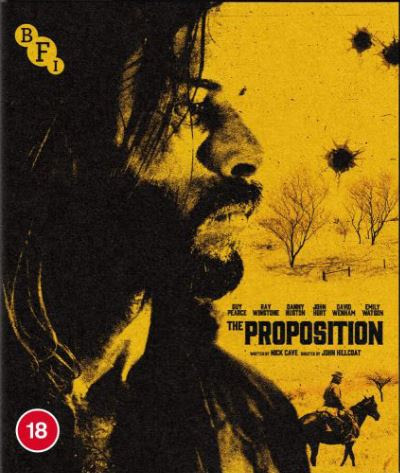
Higher noon… The Proposition (2005), BFI Blu-ray/UHD set


You never get your fill of nature… It salves the heart, the mountains, the trees, the endless planes, the moon, the stars… every man can debate quiet, and complete, even the lowliest misanthrope…


Some folk of my generation will tell you when they first saw Nick Cave (1983) and be able to reel off the touchpoints of a career that has not only sustained innovation and vitality but has evolved through music into print and then film. He can write the most beautiful songs about a woman being drowned who is redeemed by her hatred for her murderer, the exploits of serial killers and look his personal tragedies straight on… he is the most honest of artists and this film proved his ability to tackled complex themes as well as provide the most elegant if fierce and frightening, drama.


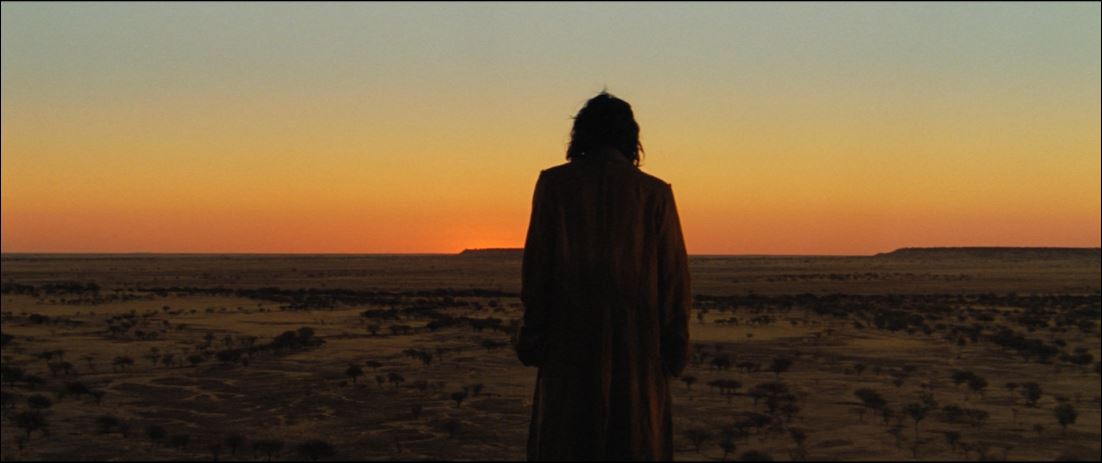
The Burns boys are ultra-violent criminals and yet, Arthur Burns (Danny Huston), head of the family, who will kill a man just as easily as a dog, is in love with the beauty of the Outback landscape and even in the midst of the most violent episode can always find time for the endless majesty of the sunset hance his quote at the top. The film was directed by John Hillcoat who had been inspired after a trip to the region and then begun thinking of the harsh time of the 1880s when it was arguably wilder than the wild west.


Hillcoat got Nick Cave involved on the story and later the score, his first collaboration with violinist and composer Warren Ellis, with the result and unflinching portrayal of humanity in fight or flight and survival mode as the Australian West was won with all the unfairness and amorality that entails. Tom E Lewis, who plays outlaw Two-bob, reflects in the documentary on the fact that even in 2005, aboriginals and white folk didn’t always mix and the film enlists the help of local native Australians to show the impact of the invading white men and the notorious Queensland Native Police.


Danny Huston


Danny Huston sums up the essence in the making of featurette, the characters are not delineated in terms of good and bad, the good guys are bad and the bad guys are good… he sees his Arthur as being very moral, with a very strong sense of family and woe betide the lawman or Englishman who gets in the way. Cave is always able to present the most extreme situations in an almost off-hand way and whilst this encompasses the film’s violence – no Hollywood or Spaghetti Western rolling around – it also enables the presentation of the historical aspects in a way that makes the viewer make their own assessment. As Tom Budge, who plays one of Arthur’s confederates Samuel Stoat, points out, you don’t have to “elevate” the Aboriginals to deal with the issues of their treatment.


It’s about the nature of civilisation… who we are and how wrong we get it…


Then we have the English, with Captain Morris Stanley played by Ray Winstone and his wife Martha, Emily Watson, who makes the above observation and refers to the couple’s small “Chekhovian house”. Their homestead is a representation of the impossible dreams of empire, with their garden a mannered and futile horticultural attempt to recreate the environment of the home country. As Winston says, unlike the USA, a lot of people didn’t choose to go to Australia, they were sent, and this impacted the relationship between law and order with a cultural imposition that simply fails against the harshness of the environment and the people.


Emily Watson and Ray Winstone

This is Stanley’s experience in the film as he fights to maintain his values in the context of and authority and police force far removed from what he is used to: a good man in the wrong position as Cave says in one of the set’s interviews. The proposition Stanley makes is an eternally problematic one, he does a deal with Charlie Burns (Guy Pearce), that he and his younger brother Mikey can go free if he brings down his older brother Arthur (Huston), who is wanted for rape and murder of Eliza Hopkins and her unborn child before Christmas in nine days’ time. Needless to say, it’s hardly seasonal weather in the blistering 50-degree heat as Charlie sets off leaving Mikey in perilous incarceration, the guards and local populace keen on revenge without due process.


Australia, what fresh hell is this… make no mistakes Mr Burns I will civilise this place.


Charlie goes to the Hopkins’ home stead and sees the graves and the unused crib, perhaps he realises that his brother has gone too far, Pearce is amazing, as usual, in delivering intensity and complexity with deep interior feeling but he’s far from alone with this cast and this material. There’s an exchange between Stanley and Martha after she comes to see him at the jail, she shocked at the World he lives in, “in there”, believing in him and recognising the burdens of his position without knowing the deal he has done and the reason he has spent three days watching over his – still secret – prisoner.


John Hurt


You want star turns… meet Jellon Lamb, an Englishman “of no little education” played with skills way beyond "world-weary" by John Hurt. Charlie meets him seemingly drunk in a lonesome cantina serving himself as the barman has been impaled by three aboriginal spears. The two spar carefully, Lamb clearly whip smart despite his degradation, a bounty hunter clearly looking for the same man as Charlie.


Back in town, a group of aboriginals have been captured and through interpreter Jacko (the recently deceased David Gulpilil, star of Walkabout), tell of a “Dogman”, a fierce white man who lives in a cave. Charlie, meanwhile, is about to experience one of the film’s most unexpected twists as he wakes to find his horse killed and a spear flying in to puncture his chest, as he falls unconscious he sees an aboriginal’s head shot open… the film’s way with horror is, as I’ve said, casual. Charlie awakes to find himself being tended by his brother’s gang.


Meanwhile, Stanley’s men are talking leaving him exposed to local opprobrium as the fact he let Charlie go is shared across town. Popular opinion must be assuaged and local official, Eden Fletcher (David Wenham), orders Mikey to be given one hundred lashes as an initial punishment for the murders. Whilst this might possibly kill the boy, it could also bring the Burns gang back, looking for revenge.


Guy Pearce and Danny Huston


Stanley sends the disloyal Sergeant Lawrence away with tracker Jacko and the other men to investigate the Cantina murder by a group of Aboriginal people on the instructions of Fletcher. Bloodshed ensues… and the Burns gang hear the shots echoing from miles away.


The film’s sense of dread grows heavier as the policemen celebrate their murders and Arthur sits in the moonlight staring intently at the Moon. Events are about to catch up with all the participants in the thunderous final sequence, Hillcoat juxtaposing the disturbing peace of the Stanleys’ household with the savage death count beyond as the Burns gang comes down from their mountain to rescue Mikey…


This is a film to savour and to rewatch and a tip of the hat to cinemtographer Benoît Delhomme who captures the extraordinary light of this desolate and beautiful landscape as well as every pained element of humanity.


It is, of course, an excellent set from the BFI, packed with wonderful extras, contemporary interviews with the cast and crew along with commentaries from Cage and Hillcoat as well as a new one from critics Alexandra Heller-Nicholas and Josh Nelson.


Emily Watson


Other features include:


4K (2160p) UHD Blu-ray presentation in Dolby Vision (HDR10 compatible) or Blu-ray only release is presented in High Definition


An 80-page book featuring new writing and recollections by John Hillcoat, Cat Villiers, Leah Purcell and Warren Ellis, plus essays by Andrew Graves, Professor Catriona Elder, Dr Stephen Morgan and Adrian Martin


John Hillcoat and Nick Cave in Conversation (2021, 53 mins, audio only): a newly recorded conversation between the film’s director and its screenwriter


The Making of The Proposition (2005, 27 mins), behind-the-scenes documentary


Inside the Proposition (2005, 43 mins), featurettes looking at the film’s pre-production


Shooting the Proposition (2005, 24 mins), featurettes on the production and the challenges faced during filming 


B-roll footage (2005, 20 mins): behind-the-scenes footage shot during the making of the film


Interviews with Guy Pearce, Danny Huston, John Hurt, Emily Watson, Ray Winston and other cast members


You can order the set direct from the BFI Shop and whether you’ve seen it before or not, prepare to be haunted for days afterwards.