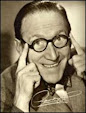
Showing posts with label Lucy Porter. Show all posts

Friday, 24 January 2020

All kinds of funny… Slapstick Festival Day One, Bristol Watershed and Cathedral


They call it Slapstick and you may start the day laughing at a man diving through the Earth to China and finish it with another trying to escape marriage to a woman he thinks has a wooden leg but in between you are astonished by French Benshi and genuinely unable to watch the moment Emily Davison gave her life for Suffragism. Our sense of humour has always derived from concerns, compassion and need to collectively understand.

Here in one of England's most cinematic cities, people gather every year to laugh and, more importantly, to connect. I go to a lot of silent films screenings – yeah, obviously – but these are unique, this city responds in kind every year with sold out shows across the programme and with contributions from across the World.

This year Lobster Films supremo, Serge Bromberg brought so much to the party with restored and rare films fleshing out a fascinating mix of diverse comedies. He’s a pretty diverse man himself in terms of his talents and not only does he restore films he also plays accompaniment and today he provided live narration to Georges Méliès’ La fée Carabosse ou Le poignard fatal (1906) with John Sweeney on piano. It was a riot as Serge improvised off what script there was through twelve minutes of hand coloured Méliès madness involving a knight asking the titular witch for aid in rescuing his sweetheart from all manner of daft threats. Qui, nous connaissions le français Benshi et c'était magnifique!

A witch yes, but what is she thinking?!
Later in the day the tone was altogether more reflective in a discussion of Suffragettes in Silent Comedy with Lucy Porter and Samira Ahmed, moderated by Andrew Kelly. Lucy and Samira were the perfect blend of informed with their responses to the comic and journalistic context of these films – both fascinated by the response and social setting of these films that, regardless of their intent, were not only responding to, but helping to develop. Suffragism was a movement across class and sex, whilst most of the comedies on show were placed in very recognisable Edwardian middle-class South-East London, the newsreels showed the support from trades unions and men. As Jane Duffus – author of The Women Who Built Bristol 1184-2018 – said during the Q&A, many working class men did not have the vote as well.

We loved Chrissie White as Physical Culture Phyllis - in Wife the Weaker Vessel (1915) - see image at the top... and in Tilly and the Fire Engines (1911) with Alma Taylor – voted Britain’s favourite film star in 1915 by readers of Pictures and the Picturegoers,  14,000 votes ahead of Charlie Chaplin. But there was also extended footage of the 1917 Derby in which Emily Davison lost her life trying to pin a rosette onto the King’s Horse, the jockey, Herbert Jones was distraught and haunted by the episode through his life whilst the establishment perpetuated the myth of suicide and not political determination for the educated and brave Emily. In these times we do well to properly study history and the way that things happen and they are then portrayed; I loved this history session and its enquiring use of primary sources! That said, cross-dressing boy-girl Diddums Diddles the Policeman (1912) was wacked as anything and, yes Lucy, the moments when “she” shins up drainpipes and lampposts are indeed hard to unsee… still, do yourself a favour, it’s on BFI Player. Alot of these films are there and on the BFI's Make More Noise DVD.

Hard luck, Buster.
The day began with a screening of three top-tier Buster Keaton comedies with introductory expertise from Polly Rose, screen editor by day and Keaton PhD student by night (and day at the weekend no doubt!) accompanied by Guenter A Buchwald and Frank Bockius: nothing in January 2020 could be much finer! One Week (1920) and The Boat (1921) are sublime, laugh-a-foot-of-film-funny with that extra sprinkle of Sybil Seely but I’d never thought before that the latter was a sequel to the first? Of course now it’s obvious but… Hard Luck (1921) I’d never seen before and is not quite so perfect with Keaton playing off a string of unsuccessful suicide attempts the last of which was only recently recovered and which, he said, gave him the biggest laugh of his career, so much so that they had to delay the feature after it… I won’t spoil it and it’s another restoration care of Serge B.

Talking of whom, the Lobster restoration of Pierre Étaix’s Yoyo (1965) was a total surprise to me and proved to be not the mawkish clown-fest I’d cynically expected. Étaix’s film is so subtle and very smartly pays tribute to the silent era right through to the TV age of the sixties. Étaix plays father and son to cover the ground and the twenties section, with silence only punctuated by exaggerated sound effects was a delight. There was also a convicted murderer in the cast with huge ears and a long trunk… but we have to forgive elephants anything.

And so, to the grand finale and Bristol Cathedral in which, standing high in the pulpit, her expensive posh shoes out of view, Shappi Khorsandi preached to the converted on the subject of silent divas.

Love 'em both!
We started off with Mabel Normand marrying Rosco Arbuckle in Fatty and Mabel Adrift (1916), one of their most winsome films presented with lovely crisp visuals as John Sweeney and Frank Bockius rocked the massive acoustics. Mabs and Rosco are primal screen and both eternally funny, emotionally agile and genuine, they also knew how to fling themselves around physically for the sake of our good time.

By comparison, whilst Viora Daniel and Lillian Biron were definitely female, there was precious little slapstick from either in A Pair of Sexes (1921) in which some daft man accidentally nicks his neighbours twin babies. Still, Dan van den Hurk accompanied with vigour. Definitely diva was Dorothy Devore who made short work of the plot and other characters in Saving Sister Suzy (1921) in which she needs to dress like a child so as to give her sister a chance of winning the man; an odd premise but DD is comedy class!

Also definitely diva and totally slapstick was the remarkable Martha Sleeper in Sure-Mike! (1925), her only leading role according to Silent Diva expert Michelle Facey of the Kennington Silent Speakeasy. Skating at speed through crowded streets, riding on a driverless motorcycle and bravely providing physical comedy, Martha also had an ace face, tough and pretty with a perky presence you’d expect to have found more favour. One of the films and finds of the day!

Martha Sleeper - a Parker Posey for the Jazz Age?
Lastly, we had Charley Chase – definitely no lady although not immune from diva-esque behaviour! In His Wooden Wedding (1925), he shares an hilarious dance routine with Gale Henry – the inspiration for Olive Oil apparently – as he tries to displace a wedding ring from the back of her dress… How did it get there? Well, his best man tells him is intended has a wooden leg…

The European Silent Screen Virtuosi joyfully accompanied the last three with Günter A. Buchwald, Romano Todesco and Frank Bockius.

A full day and a splendid full-throated programme. Bring on tomorrow Bristol!


Sunday, 24 January 2016

Slapstick and Bristol fashion… The Kid (1921), Colston Hall, Slapstick Festival Day Two


There was a moment during this gala screening when I looked along the line to see the faces of my family lit up with smiles. Both generations had already been laughing at Buster Keaton chased by hundreds of cops and Charley Chase pursuing a woman he doesn’t know is his wife but then Charlie Chaplin comes along to offer something more complex: a comedy about poverty, loss and fragile chance.

If Charlie had been set a test to cope with this scenario without being mawkish… he couldn’t have passed it better. The Kid is a sentimental film but Chaplin steers perfectly clear of the obvious dangers and those moments, and there are those moments, when the emotionalism is switched dangerously high, are handled with exquisite ease. There's a look between mighty five-year old Jackie Coogan and his surrogate father that is searing and not soppy. It is the look of a man who knows parental loss and a supernatural performance from young Jackie.


But then... there is a dream of a dog flying on angel wings as Charlie and his angels fly around the Slums of Heaven with manic abandon. It comes just at the right moment in the film a sequence designed to undermine overt sentimentality.  So, right back 'atcha 21st Century Cynics: this is mad fun and our Charlie deliberately flies towards the Sun on waxen feather wings but he doesn’t crash or burn he glides straight to the heart of funny.

I’d never seen The Kid, on purpose, holding off for a live screening and tonight the Colston Hall, the Bristol Ensemble, ably conducted by Timothy Brock and the fulsome support of an open-minded and good-humoured Bristol audience delivered wonderfully well.


If today’s sessions at the Slapstick Festival proved one thing it is that watching comedy is always – always – better as a group exercise. Live music creates new connections with the films and a joke shared is often laughter squared.

In the splendid, care-worn, space of the Colston Hall, the European Silent Film Ensemble played along to Keaton’s massed Cops (1922) and Charley Chase’ Mighty Like a Moose (1926) – what a title! Then came the main feature with the Ensemble playing the UK premier of Charlie’s own score, conducted by Mr Brock.


The most striking thing about the main feature is how cinematic the writer, director and star’s vision was. The film is told with supreme economy - a narrative that could be convoluted and strained is perfectly paced and key moments fall as lightly as feather’s dropped from dog angel’s wings…

The performance of Coogan is like that of a man four times his age – his father was on hand to help gear him up for the emotional moments but he winked at Charlie and told him he knew what he was doing. Edna Purviance as the mother who gains a career and loses her child, shows just why Chaplin rated her so highly whilst Chaplin himself is not the focus of the film you might expect – he’s almost ever-present but is smart enough to under play and generous enough to let the other leads and some super support actors take the limelight.


Compere Robin Ince had said he’d once been asked to write an article on whether Charlie was still funny: his response was that it could be a very short piece beginning “Yes…”. Of course he is, and my family and the two thousand-strong audience proved it.

The Colston Hall
This was my first day at the Slapstick Festival – now in its 12th year – and it was a rewarding one – work commitments meant I missed out on the opening day a mistake I won't make next year!

I arrived left foot still hot from the M4, just in time to see David Robinson’s session on Mack Sennett – a man who made over a thousand films and who brought so many talented comedians to screen. Robinson focused on “four and a half” plus a few more…

Ford Sterling and Mabel Normand
First up was Mack himself in heavy disguise playing a French interior designer (of sorts) intent on delivering the eponymous item in D. W. Griffith’s A Curtain Pole (1909) – Dutch Talmadge’s  climactic chariot charge from Intolerance clearly had its origins here although she never worked out how to put the horse into reverse.

Then we had marvellous Mabel Normand bouncing her way through a choice of racers in The Speed Kings (1913) with “father” Ford Sterling trying to force her to choose his favourite for some un-specified reason. Everything feels improvised but Sennett films the - actual – races very well. He learned with DWG at Biograph and knew how to throw a film together, ad hoc and energised thanks to his dynamic performers.

Charlie as a Cop: Ford's not in this one as well?!
We had the one and only glimpse of Charlie Chaplin as a Keystone Cop in A Thief Catcher (1914) again featuring Ford Sterling – David Robinson warned that it wasn’t the best film but conceded that John Sweeney’s piano improvisations turned it into something more: audience plus expert live accompaniment equals pure joy!

Don’t Weaken (1920) again featured Ford Sterling just as I had probably seen enough of the ham of the hour but this was a different side to Sterling who played a convincingly-graceful dance teacher trying to impress newly-enriched Charles Murray’s daughter played by Harriet Hammond. The two men box and Murray is getting pasted until the Dancing Master is distracted by Harriet’s pins. Way more sophisticated than Benny Hill.

Hurry up Harry... 
Finally there was Harry Langdon in His Marriage Wow (1925) with the deeply-unsettling Vernon Dent as A Pessimist - Prof. Looney McGlumm trying to dissuade him from marrying Nathalie Kingston. I’m still haunted by Dent’s soul-sucking stare of disapproval…

Next up was a session on writer Anita Loos from Lucy Porter who bounded on stage with all the energy of a Mabel Normand clutching a handful of written notes and Loos’ two autobiographies. Loos played fast and, er, loose with the facts but was spot-on viscous in her observations on contemporaries – especially poor Norma Shearer.

Anita... there's one huge flaw in your argument...
 In her defence, Anita could be just as hard on herself plus she could write! We watched The New York Hat (1912) with accompaniment from harpist, Elizabeth – Jane Baldry who played in complete sympathy with the emotional cadence of Mary Pickford’s performance – I’ve never been so shocked by a father’s demolition of a feathered hat.

Then we were treated to the inexplicable The Mystery of the Leaping Fish (1916) written by Tod Browning with intertitles by Anita Loos. Here again the redemptive power of a comedy audience was proved as – having previously been a bit Home Counties about the drug taking, I just saw  a stoner comedy performed with self-depreciating zest by Douglas Fairbanks and Bessie Love as the little fish blower…

Coke Ennyday's on the case!
Only Fairbanks could possibly follow that and so he did in Wild and Woolly (1917) written by Anita Loos and directed by her water-carrying husband-to-be John Emerson and filmed by some bloke called Victor Fleming.

It is a splendid romp about a rich boy wannabe cowboy who gets sent out to scope out an investment opportunity for his pa. The western townsfolk get wind of the greenhorn’s delusions and make like it’s 1880 all over… Plans are set to entertain his fantasy with a train robbery and an Indian uprising but soon the fake bullets turn real and, delightfully, Doug turns out to be just as brave as he wants to be…


Tip of the ten gallon hat to Mr Sweeney – westerns must be murder on the keyboards with the relentless rhythm of trains and horses always interrupted by contrapuntal gun fights and saloon brawls!

Then came the evening and the pun-fight at the Colston Hall…

Cops on the run
Buster’s Cops! (1922) was a massed symphony of un-policed chaos that builds exponentially towards one of the most existentially bleak comedy climaxes in silent film.

But then what could be more post-structurally challenging than the battle Charley Chase has with himself in Mighty like a Moose (1926)… one to watch our Charley: a reputation on the rise!

The Mooses: Vivien Oakland and Charley Chase
Superb accompaniment was provided by the European Silent Screen Virtuosi comprised of Gaunter a Buchwald on piano and violin, Romina Todisco on double bass and Frank Blockhouse on percussion.

There was also a surprise appearance from St Helen’s favourite son (sorry Johnny), Bernie Clifton who, in the spirit of Slapstick, not only showed that comedy is for life and not just Christmas (he’s 79) but also sang Charlie’s Smile – two minutes in which the World slowed and Chaplin again reminded us that humour is often the only hope we have.

The Slapstick Festival continues until 25th but watch their website for 2017…

Monday, 26 January 2015

Gloria excels… Stage Struck (1925), Barbican with the European Silent Screen Virtuosi

I will always be very grateful to Lucy Porter as the last time I saw her she was giving me a publishing industry award (two actually…) and, dressed in bow tie and dinner suit, my resemblance to John Gilbert was – arguably - never more in evidence. Here she was introducing two films from her silent film idol, Gloria Swanson which showcased the appeal of one of the era’s very best performers as well as Lucy’s superb judgement.

Like most modern viewers I initially viewed Gloria through the twisted prism of Norma Desmond – a woman traumatized by her fall from fame in Billy Wilder’s Sunset Boulevard and yet watching her younger self in Teddy at the Throttle (1917) and Stage Struck, you forget the future; drawn in by her incredibly  vibrant, intelligent performing. She had the same kind of star power as Mary Pickford or Joan Crawford – wide-eyed girls next door with that little bit more who worked their socks off.

Above all else, as Lucy Porter said in her Sight and Sound article, you are captivated by just how likeable Gloria Swanson is… like Mary you simply want her to win.

Jennie's dream self
Directed by Allan Dwan, Stage Struck famously features opening and ending sequences filmed in the early two-colour Technicolor highlighting Swanson’s character Jennie Hagen’s dreams. Jennie works as a waitress in a café yet wants to be a star actress. The opening section is a pure dream of theatre from Dwan and his cinematographer George Webber, that shows Jennie superstar actress being rapturously received by her audience before declaring herself Salome and rising up some phantom steps to receive her famous platter… it looks as much like an Aubrey Beardsley picture as Nazimova’s film.

Jennie's Dream Boat: Lawrence Gray
As Salome stands triumphant the head of John the Baptist transforms into a plate of beans which begin to slide off the tray as the daydreaming arms that hold it drift back to reality with a bump.

In the frenetic every-day of the eatery the food needs to be a fast as the customers who steam in between shifts at the local factory. Jennie needs to be quick on her feet but too often she is distracted by thoughts of Orme Wilson (Lawrence Gray) – a man who flips pancakes with the aplomb of a cocktail mixologist much to the delight of the young women who gather at the window to watch him.

Beans for Baptist
Orme has distractions of his own though and longs to meet an actress like the dozens who are stuck on his bedroom wall – how can Jennie compete with all this two-dimensional perfection? There’s a funny sequence in which she mimics the pouting and preening of these impossible starlets only drawing the line at an image showing one with hardly a stich – really, Orme!

Jennie dreams of opening a restaurant with Orme but she has a plan to become an actress by correspondence course… Just $5 to hopefully show him she’s as good as any of them.

The Water Queen arrives
But the arrival of a steam boat carrying a theatrical troop brings Orme’s dreams closer to fruition. Led by Buck (ex-Sennett mainstay Ford Sterling) the players include one brassy blonde lead actress called Lillian Lyons (Gertrude Astor) who immediately catches his eye and Orme jumps at the chance to meet her.

Their first rendezvous at the café is sabotaged by Jennie with a series of comic accidents in the kitchen. Swanson is so winning in these moments, tough but vulnerable especially when measured against the towering thesp.

Jennie has pin-up envy...
There seems little she can do to knock Orme off course until, spotting her aspirations, quick Buck makes her an offer she can’t refuse… and the stage is set (literally) for a battle between blonde brawn and brunette grit… Gloria always seems to pick fights with the bigger girls, first Bebe Daniels and now Gertrude Astor: she never knows when she’s beaten!

This was very much Swanson in her comic pomp more defined than in her earlier work with Sennett and de Mille and with a romantic determination and pure will to happiness that sits far more comfortably than her Desmond desperation. This was the “face” she had then but it was also the spirit and the skill.

Jennie tries to be the actress Orme wants...
Teddy at the Throttle (1917), screened before the main film showed more of Gloria’s raw ability at just 18 working with animals and Wallace Beery, her husband at the time… just. Lucy Porter pointed out that their relationship was very much on the rocks at the time, so much so that Mack Sennett made sure they didn’t have to rehearse together. None of this impacted on the end result, a gag-packed spoof on the Perils of Pauline and other damsels who end up chained to train tracks… Swanson performed all of her own stunts but then her relationship with Beery clearly showed that she was afraid of nothing!

Gloria and Lawrence Grey in publicity still from Stage Struck
Superb accompaniment was provided by the European Silent Screen Virtuosi comprised of Geunter A Buchwald on piano and violin, Romana Todesco on double bass and Frank Bockious on percussion. They gave the films plenty of swing and perfectly matched the mood as virtuosi should.

Stage Struck was restored some time ago and looks well for its age, a shame the film is not available on home media. There’s an horrible bootleg copy of YouTube but this film and Gloria deserve a lot more. That said, seeing it in cinema with improvised accompaniment and a live – laughing - audience was the bee’s knees and we left buzzin’…