You men are all Judases. Even when you kiss you betray…
These were the second and third adaptations of Sandro
Camasio and Nino Oxilia’s wildly successful 1911 play, the first, in 1913, made
by the playwrights themselves. Oxilia went on to write and direct including two
of my favourite Diva films Rapsodia satanica (1917) and Sangue blu
(1914) both with Lyda Borelli.
They’re part of a new set from Cineteca Bologna that
collates four of the director’s work, majoring with a quite wonderful restored
silent version of Il Prezzo Della Bellezza (1930), aka Prix de Beauté
which, as you all know, stars Louise Brooks in full radiance. That film alone
makes this set worth buying at all costs and as soon as possible, but the other
films give a fascinating insight into Genina’s work of which so little
survives. In their booklet introduction, Mariann Lewinsky and Andrea Meneghelli
explain the difficulty in analysing the director’s work based on so few films.
Genina did not always make great films, but in each film he made, he knew how to encapsulate a world…
 |
| Ruggero Capodaglio and Lido Manetti in 1918 |
This is certainly true for his stunning, colourised Cyrano
de Bergerac (1922) as well as these films both of which are based in Turin
University… Genina also brought out the best in his performers from the
sympathetic slapstick of our hero Mario’s sidekick, Leone, to fulsome roles for
his lead actresses who are emotionally dominant throughout.
In 1918, Mario’s love interest is his landlady’s daughter
Dorina who is played by Maria Jacobini who is a most compelling watch, quickly
striking you with her warmth and range of expression. As Lewinsky says, it is
she rather than Lido Manetti - later Arhold Kent acting in the US – who is the
centre of the film even though his character Mario is the nominal focus.
Jacobini had been in a relationship with Nino Oxilia until
his death in late 1917 when he had been planning his own remake of the play…
it’s hard not to view her performance and the film itself as a tribute. She was
the surprise of this package and I’d like to see more of this contemporary of
Francesca Bertini – same age and experience but so different in style.
 |
| Maria Jacobini and Lido Manetti (later Arhold Kent) |
The story is fairly easily summarised but is clearly so
malleable as the various remakes show. Small town boy Mario leaves his loving
parents behind to study law in Turin. En route he meets the comically short-sighted
Leone (Ruggero Capodaglio) who is also to study law, and the two quickly bond;
friends for life by the time the train arrives.
They face fresher humiliation together as they are tricked
into paying for a huge round of drinks by some senior students… so much changes
and yet so little, eh first years? They go in search of a room on the fourth
floor of a cheap house being rented by a woman and her seamstress daughter,
Dorina. Mario likes the look of both room and girl as does his myopic pal, but,
as usual, Leone loses out. Gradually Mario raises the courage to tell Dorina
that he likes her and soon his studies take on a broader remit.
The years pass and as finals approach an enigmatic and
beautiful woman comes for a fitting at the dressmakers below their apartment.
It is Elena played by, erm, Elena Makowska one of the Diva class actors who
could hardly have been better cast as the elegantly illusive clothes horse who
clearly gets what she wants. Yes folks, a “Jolene” scenario is about to take
place as the mystery beauty sets her intense gaze on young Mario and the two
click via a lovely set piece in the opera as he searches the stalls and
galleries for the lady with camelias originally given to him by Dorina.
 |
| Elena Makowska looking like a Diva! |
This treacherous play by Mario rather undermines our
sympathies and Genina wisely distracts us with a farcical set-up for his
planned assignation with Elena in his room. The place is filled with flowers
and he gets Leone to pretend that it’s for him so that poor Dorina suspects
nothing… but she wasn’t born yesterday. Everything is set until the students
start to strike in protest at a reduction in exams… they need their lawyer,
Mario to lead the protest…
Convincingly these are people still learning in and out of university and whilst the lessons are sometimes hard, they can also be unexpected.
 |
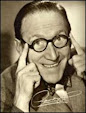
| Augusto Bandini three years before he met Louise Brooks |
Move forward almost a decade, and we have a version with a
different focus on character.
This version, whilst technically an upgrade, doesn’t always
have the edge over 1918 especially as the latter is a fuller version and there
are some parts missing especially at the end – the run time was originally 87
minutes and what survives is only just over an hour. Both have their visual
strengths and noteworthy performers.
Now, I’m not claiming to be an expert on the films of Cliff
Richard but after some time watching the 1927 version, I realised that the
young lead was Walter Slezak, who plays Susan Hampshire’s grumpy director dad
in Wonderful Life (1964). That aside, he had a distinguished career and
it’s always interesting to see younger versions of actors you know only in
later life.
Here Slezak’s Mario is more of the fulcrum and the real drama is between the two women, in this case Carmen Boni’s Dorina and Elena Sangro’s Elena who, whilst lacking her predecessor’s ethereality puts in a more convincing performance, acting Elena’s way to Mario’s heart and showing a good deal more tenderness in the process towards her helpless rival.
 |
| Walter Slezak |
Another familiar face pops up and promptly falls over and
it’s Prix de Beauté’s Augusto Bandini getting more laughs than Leone No.
1 with his greater physicality and comic energy. Leone’s myopia may well be
real but there’s one uncomfortable instance on the train ride to Turin when he
sits down next to an actress in black face and then quickly shuffles away once
he gets close enough to detect her skin colour; a reminder of the way the wind
was blowing in Italy at the time where Il Duce was already premier.
The new friends arrive at University and face the same ragging from the more experienced students, before ending up in the student bar, The Ark, where we witness a comic rundown of some of the student types; the Hippo, the Giraffe Piggy and a shapely pair of legs named Leda – shades of the director’s fascination with Brooks’ pins in Prix.
 |
| Carmen Boni |
They find their rooms and Dorina, with Carmen Boni’s gamine
delicacy a contrast to Maria Jacobini’s more physical performance. There’s more of a focus on their friendship
group and one delightful sequence in which a portable record player is set up
and the youngsters dance along in ways reminiscent of Brian Ferry’s backing singers…
their moves are robotic and comically stylised – the youth dancing to sounds
with an appeal laughably obscure to one of Genina’s generation. Timeless
inter-generational confusion, which brings us back to Slezak and Cliff…
As they romp, the vamp is downstairs getting her clothes
fitted, marvelling at the youthful energies and planning her introduction to
Mario. His betrayal of Dorina is again bitterly pragmatic, a young man who can’t
say know to a more experienced offer; is this his real education and is the
answer to focus on himself and his studies more? As Dorina’s quote at the top
says, perhaps all men can be faithless when it comes to love and ambition.
 |
| Elena Sangro |
Both films make the choice to buy this set an easy one –
even without Brooksie – although the cover photo and multiple images of her
legs emerging from the car at the lakeside, show that Cineteca Bologna know
their main selling point.
You can buy the disc direct from them or from Amazons who
place it in the “Books” section because of the lovely booklet which is very informative on the actors and the films.