Sunday, 11 September 2016

Five reasons to get excited about... Napoléon (1927), BFI preview


Every time Abel Gance's Great Work gets screened it's described as a "once in a lifetime" opportunity - but this year promises not only a restored and revitalized version of that cinematic experience but also Napoleon's first appearance on top-end digital media.

On 6th November cinemutophiles (thank you Pamela H for that!) will gather in the capitol for a screening at the Royal Festival Hall with Carl Davis conducting the Philharmonia Orchestra playing his score: the longest ever recorded and surely one of the most remarkable.

I was lucky enough to be invited to a preview screening at the BFI where Kevin Brownlow introduced a restoration he has been working towards, on and off, almost from the time when he first saw a 9.5mm print whilst still at school in 1954. For Kevin, Carl Davis - who was also present - and generations of film archivists this digital restoration puts Napoleon back where he belongs: in front of an audience.

So, whether you're intending to stream from the BFI Player, watch on your TV/home cinema or in the posh seats rattling your jewelry at the RFH... why should you be counting the days?

Gance joked with Kevin Brownlow that he need the triptych to fit in all the extras
1. You will be engaged!

We're all used to cinema as fireworks or as computer game from exposure to superhero films that aim to assault the senses but Gance was there first. His camera is right in the centre of the action whether on horse-back for exhilarating chases or amidst a snowball fight where you follow the young Napoleon's charge against his cheating opponents. You can almost feel the cold, ice-melting impact of the snow as the focus remains on the young "general" with battle intensifying all around him.

No one did point of view quite like Gance and the frequent us of hand-held shots reinforces the feeling that you are, actually, in the picture.

You won't fool the Children of the Revolution...
2. You will be inspired!

Kevin Browlow talked about the score being almost magical and it's true that there is magnificent alchemy at play between the screen and music that takes a philosophical as well as melodic lead from contemporary composers. Beethoven - who had a personal connection to the future Emperor - Mozart and Haydn are all sampled and the resultant mix is both empathetic and complimentary. This is music that is as questioning of the ancien régime as the protagonists: revolutionary and opinionated, it's there to create a stir.

The speakers in NFT1 were turned up to "eleven" ensuring that this glorious mix pulled you in as surely as the visuals - for such a long film the narrative and emotional energy is maintained with intensity.
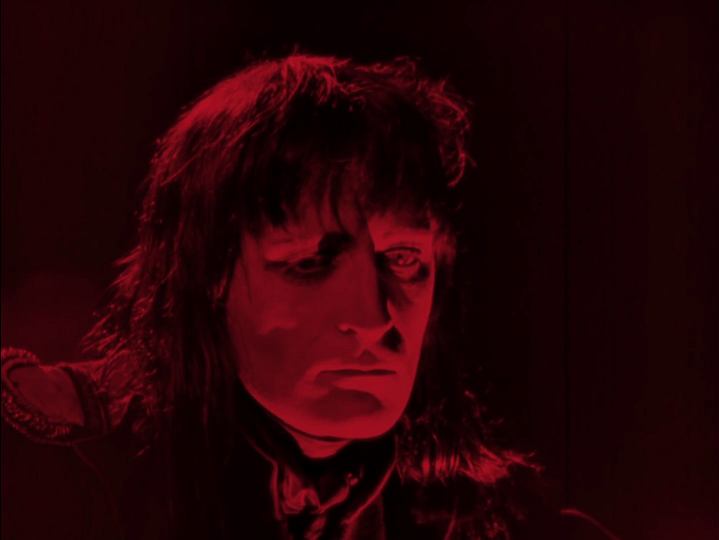
Albert Dieudonné
3. It's the perfect post-Brexit film

Gance was mythologizing one of the founders of modern France and also the revolution itself. Napoleon is not so popular a figure in so-called Great Britain but he played his part in establishing a new political legitimacy in France following the removal of the monarchy and the old regime.

Napoleon had a European aim too and it's very interesting to see the respect Gance gives him..."I wished to found a European system, a European Code of Laws, a European judiciary: there would be but one people in Europe..." Oh why is history so inconveniently complicated?

Napoleon reminds us to look at the facts first before we rely on assumptions: Bonaparte was always much taller than the British said he was... More history is required to fully understand this man and his continent.

Edmond Van Daële as Maximilien Robespierre
4. It reminds us of what cinema can achieve

Gance was innovating and the film's rush and tumble feels at least twenty years ahead of its time: pop-art montage, hand-held intrusions, cameramen on horseback in the midst of battles and the biggest bloody screen you've ever seen for the climactic tinted triptych.

Technically ahead of the game the film also features superb performances from dozens of lead actors, all placed perfectly in context by their director.

Kevin Brownlow said that reading negative contemporary reviews he kept on expecting his search to reveal a dip in quality but that never happened and the film just kept on getting better. Today was only the second time I've viewed - half - the film and there were so many things I hadn't seen before: almost three hours on a sunny Sunday morning watching a silent film? It flew by!

In the heart of the pillow fight - the screen split nine times
5. It exists!

The fact that we have so much of what Abel Gance intended is a near miracle and we should never take it for granted.

This film deserves our up-most support for all the years that Kevin Brownlow, David Gill and so many others laboured on it. They have restored one of cinema's truly great films and we should celebrate with a Blu-Ray or two and a live performance as often as possible!

The BFI Blu-ray...looks irresistible doesn't it!
Napoleon is screened at the Royal Festival Hall on 6th November - details and some tickets are available here. Don't miss this it's a once in a lifetime...

The BFI Blu-Ray and DVD are available on 21st November, pre-orders can be made on the BFI Shop.

Sign up for the BFI Player newsletter to find out when the film will be made available although do try and see a screening if you can: it's longer than Batman v Superman and Captain America v Iron Man combined but also ten times as good!

Saturday, 10 September 2016

WestEnders … St Martins Lane (1938)


The queue for tickets at Wyndham’s Theatre stretches right round from the box office down onto St Martins Court, a street scene barely changed in 78 years even if last minute ticket sales have now moved online. But even if you were lining up for tonight’s show of No Man’s Land you would be unlikely to encounter street entertainers like The Co-operators… a rag-tag troop of street musicians topped off by a “reciter” specialising in high-volume Kipling.

Busking has moved on and is now far more organised in a London trying to license its random charm and organise all ad hoc entertainments. One well-spoken character describes the practice as little more than begging… but it looks like hard work to me: trying to interest the ambient public in poetry on a theatre night?!
St Martins Court busking
One man shouts out The Green Eye of the Yellow God and J. Milton Hayes’ poem has never sounded so desperate… so lonely. He is the aptly-named Charles Staggers as played by co-producer, co-writer Charles Laughton. St Martins Lane (US title Sidewalks of London) was number two of three films Laughton made with Erich Pommer and it is naturally dominated by his extraordinary expression although not at the expense of his equally remarkable co-star, young Vivien Leigh. This was the film before the Big One in ’39 and, even without the benefit of hindsight and biography; you could see that her curious energies would carry her far.

This film is most certainly “not my period”, as I would always say in degree days… but there’s plenty of silent style on view to accompany two thoroughbred British theatricals (and Rex Harrison). I like the way they use actual street acts such as The Luna Boys (they sound and look very 1977) but they can’t avoid a magical realist feel even when a lengthy tracking shot from a bus shows the gang performing outside the Holborn Empire. It’s clever direction from Tim Wheelan – a passenger’s eye view – but it’s surely on an elaborate but artificial set?

The buskers from the bus... Holborn?
It matters not as the staging only focuses the viewer more on the febrile key performers both of whom I confess to being less familiar with than I should be. Now I get it though. Late as usual…

Charles Laughton was always one of my Dad’s favourites and he tells his story with truth and naturalistic force. His Charlie Staggers is a man on the cusp of middle age who still, just about, believes in his big chance… but it’s as convincing as his refusal to pass beyond 39 to 40 (we’ve all been there and in fact my father stuck on 39 for years as was his right).

Mr Laughton
He’s supported in his entertainment by the possibly-fallen-from-your-grace Gentry (Tyrone Guthrie) – as in “landed”? – one harmonica, a cheery guitarist called Arthur (Gus McNaughton) and a terrier who knows far more than a dog ought to know… As they busk in St Martins Court Charlie’s robbed of sixpence by a pretty urchin. He chases after his half-shilling only to find her making eyes at a handsome chap in evening clothes at a food stall. The gent is a song-writer name of Harley Prentiss (Rex Harrison) and the gal whose face he’s growing accustomed to is simply... Liberty (Miss Leigh).

Leigh, Laughton and Harrison
Libby’s a free soul who can sing and dance with abandon yet who survives through streetly-wiles incorporating common theft and trespass. She relieves Harley of his silver cigarette case but Charlie spots the sleight of hand and follows her to an empty grand town-house where she squats. Before he can pounce he witnesses her dancing in the moonlight – she moves with grace and stirs something in Staggers’ soul.

They argue, the Police arrive and they escape back to Charlie’s digs… So a great friendship is formed as Charlie reveals himself to be a total gent willing to offer Libby his bed whilst he sleeps on his chair.
All of the gang live in the house which is owned by Mr and Mrs Such (Edward Lexy and the wonderful Maire O'Neill who looks like a mix of my Nan and Lillian Gish). Cakes are baked and new routines are devised as Libby is added to the new troupe: The Co-operators.

Leigh and Laughton
Now, we all know A Star is Born but this story is both softer and richer than that. Libby grabs hold of Harley’s coat-tails when he comes calling after Charlie’s return of his case and naturally her talent shines through at the Holborn “audition” as she comes to the attention of the theatrical toffs.

Charlie crashes into drunken disrepute as Libby works her way up the billings… there’s massive back-stage action and set-pieces to rival Busby Berkley’s more moderate works as Libby’s wayward loyalties threaten to negate our goodwill. But things take a more enriching course…

Vivien smiles and glares
It’s a slight story perhaps but the work performed by Leigh and Laughton is exemplary. There’s an edginess to Vivien Leigh’s acting that makes you constantly unsure about her character – she runs from annoying to adorable with all stops in between whilst Laughton is her equal in unease, staggering (see what I did…) between self-delusion and realisation and treating both those imposters just the same. His final reading of If bringing tears to any sober man’s eyes: a melodrama in your face and well under control.

To top it off there’s the extraordinary sound of Larry Adler who for a harmonica player sounded a heck of a lot like an orchestra!

St Martins Lane is available on expensive US Blu-ray and reasonable UK DVD: hopefully it’ll get a re-release soon.
 
The Luna Boys!

Wednesday, 7 September 2016

Funny Bones: the Black Comedy of the War… BFI with Cyrus Gabrysch


This was the latest screening from the BFI’s WWI: The View from the Ground aimed at commemorating the centenary of the Battle of the Somme. It took a look at the lighter side of war… and indeed there always is one even in the darkest of conflicts.

Very few comedy films from the period survive but what we have illustrates the greatness of Britain: our ability to laugh at and with ourselves in the face of almost unendurable horror. This is often, as Bryony Dixon season curator put it in her notes, “conscript humour”; taking the proverbial whilst not only accepting the possibility that those in charge might possibly have a plan, but steadfastly counting on it. As Bryony says it’s not too far from modern satirical humour: Blackadder with good faith perhaps.

Officers are lampooned but no more than gullible privates, NCOs, land girls, magistrates and even horses: the country that laughed together fought together.

Meet the boys... Splinters (1931)
First up was an extract from proto-It Ain’t Half Hot Mum – Splinters (1931) an early talkie which was based on an officially-sanctioned morale-boosting wartime stage show featuring leading drag artiste Reg Stone and Hal Jones.  For soldiers starved of anything like female company such reviews were a chance to imagine life back home. In this particular instance two squaddies – Lew Lake and Sydney Howard - are so dulled by fond hearts and beer that they are completely fooled by Mr Stone’s expertise…

I’ve seen this film before and would recommend a full viewing: luckily the BFI are showing the complete film on Monday 12th September – details here.

Violet Hopson and Johnny Butt
Next up was a comedy short Tubby’s Rest Cure (1915) which featured some marital comedy from Johnny Butt as the titular Tubby and his long-suffering missus, Isabelle, played by Violet Hopson.
Tubby goes for his rest in a village seemingly over-flowing with Land Girls who, clearly desperate for male company fawn all over him. He writes to Isabelle complaining of his loneliness only to be caught out when she pays him a visit. What’s good for the goose is quickly adopted by the gander and Tubby’s nose is out of joint as handsome officers entertain Mrs T.

Charming and even-handed in a way that Mr B Hill would struggle with half a century later…

Lupino shows his moves...
More outlandish nomenclature followed with Lupino Lane in Trials of Mr Butterbun (1918). This was truly outrageous and suggested that our judiciary could be bought off with the promise of a few pounds of sugar! Lupino played a magistrate charged with hearing appeals against the draught and had to endure a variety of bribes and excuses in the course of his business at the “Try-on-bunial”.

The magistrate was joined by four others – a Quin-bunial? – and had to resort to a magic ring to convince his fellow judges – one of whom was a Mr Slopsam, sausage maker and horse owner (possible connection inferred). Funniest of the complainants was a conscientious objector who thrashed the tribunal until they gave him an exemption.

On screen and on paper: Old Bill
Lastly… a double helping of Sydney Chaplin along with his brother… Charles I think?

Syd played cartoonist Bruce Bairnsfather’s famous ‘Old Bill’ character in a film called The Better ‘Ole (1926) reprising a moustache he initially deployed in Shoulder Arms – like three overgrown Charlies on the one upper lip.

Old Bill is a veterans’ veteran who, as Bryony Dixon put it possesses: “…that comforting old soldier’s instinct for survival and competence at dodging extra duty.” But he can only dodge so much and here he ends up as the front end of a pantomime horse trapped on stage with an unconvincing blacksmith and a German officer who wants him re-shoed for a walk in the Alps. Mayhem ensues as “Black Beauty” gets too close to the furnace and ends up soaking cast, crew and audience.

Only an extract was featured but it’s a film worth seeking out. You can buy it from Warner Archives.

Charlie and Syd entrenched
The same goes in triplicate for the source of this evening’s final sequence, Chaplin the Younger’s Shoulder Arms (1918) – not just the best of the period’s comedies but one of Charlie’s too. Famously it was an attempt to make up for his not signing up – although what purpose could that have served? Mr Chaplin surely did far more good on screen than he could ever have in the trenches and the film clearly showed how far ahead he was of most other performers.

Charlie’s timing and tone is perfect and he is genuinely funny in these Hollywood trenches, sleeping under water, opening wine bottles and lighting cigarettes with German sniper fire and launching an attack using Limburger cheese – why don’t we fight wars with dairy products and not guns as my son’s old teacher used to ask…


My previous experience of Shoulder Arms is detailed here…

Fleet-fingered live piano accompaniment was provided throughout by the eminent Mr Cyrus Gabrysch who’s work can regularly be experienced at the Kennington Bioscope.

The View from the Ground continues through September, further details on the BFI site.

Sunday, 4 September 2016

New York Minutes… Speedy (1928), Criterion Edition

For some time now we looked over the Atlantic with jealous hearts and relieved wallets at the range of classic films released on NSTC and Blu-Ray by Criterion: blue ribbon editions with essays and extras marking them out as the definitive editions (in most cases). Now, after years of multi-regional Russian roulette – most play some don’t – we have our own versions of these discs being released to rival or surpass Eureka’s Masters of Cinema series.

Typically avoiding the obvious, Criterion have picked Harold not Charlie or Buster to lead the American invasion and what a sound choice that is: The Twenties highest-grossing comedian given the prominence he deserves in a film that highlights his timing, unrivalled gag-construction and the endurance of a persona that is perhaps the most malleable and enduring of all…

Directed by Ted Wilde and produced by Lloyd, Speedy is his last silent film and it feels like a farewell to every trick and fluid expression soon to be curtailed by the tyranny of the fixed microphone.

Harry and Ann Christy - four different fun fairs were used as Coney Island
Fittingly it features one man’s fight against the on-rush of progress: a battle that can only be won with ultimate defeat assured and only the manner of surrender to be decided on. Needless to say, Lloyd’s character isn’t going to take anything lying down and you’re never going to bet against him winning the peace.

It also features your actual Babe Ruth doing a fine job of being Babe Ruth. Seems like an OK guy for such a huge sportsman but they put deeds first and wealthy contracts second in the era of silent sport…

The Sultan of Swat hails a cab
My great grandfather drove a tram in Liverpool at around this time although they stopped using horses here in 1903 and 1917 in NYC – Lloyd’s story was already looking back in 1928 – and I suppose that gives me especial sympathy for Pop Dillon (Bert Woodruff) the driver of the last horse and tram in New York. He plods a lone track and is under intense pressure from the automated competitors all too eager to mechanise the entire network.

Pop offers a service as slow as it is reliable and as cheap as it is friendly: his customers rely on him and he’s a pivotal figure in a commercial culture still run by Victorian men – some of whom go back to the Civil War. It's Grenwich Village as it was and even by 1928 the community was changing.

Bert Woodrfuff and Ann Christy
Pop has a delightful grand-daughter, Jane (Ann Christy – another looker for Lloyd) who dotes on him whilst also being incredibly supportive of her endlessly-exasperating boyfriend, Harold 'Speedy' Swift (Lloyd) who is quick but only in terms of losing patience, concentration and consequently jobs.

Speedy was, incidentally, Lloyd’s family nick-name, bestowed by his father… irony may have been involved.

This Speedy is mad on Baseball and tries to work as close as possible to Yankee Stadium or at least near a phone so that he can keep tabs with his beloved New York Yankees. Serving customers in a down town del, Speedy keeps his colleagues informed of the state of play by using don-nuts to indicate the score: it’s an efficient method but only up to a point and as the Yankees score three Speedy gets spotted and it’s off to his next job.

Harry knows the score - one donut to a three pretzel
But first things first and Speedy has a weekend with his gal Jane to arrange and off they go to the many joyful rides of Luna Park at Coney Island.  The Playground of the World is its own star here and actual rides add to the experience whereas other films may have used corny-Coney substitutes.

Back to life, back to reality and after much error and trial Speedy ends up as a cab driver but even this proves a discipline too far as he struggles with contraption and concentration. He’s commandeered by two cops in a chase and ends up with a speeding ticket for his pains then drives off again with what he thinks is the officers on board but which only leads to another ticket. It’s three strikes and out but then he chances upon a school reception for Babe Ruth who he ends up giving a high-speed lift to Yankee Stadium: more police trouble.

Coney Island baby
The film shifts gear for a superb scenic climax as Speedy fights to maintain Pop’s required run of one service every 24 hours. The bad railway company (not Southern Rail of Govia apparently…) has tried to buy the old man out but in the face of his intransigence decide that violence and theft is the only option. At first they try to use gangs of heavies to stop the service by force but Speedy calls upon the legion of super shop-keepers to use their old Yankee spirit to fight them using brooms, bins and sheer weight of numbers. It’s a little reminiscent of the massed brawl in Keaton’s The Cameraman and that’s no bad thing!

Then the baddies steel both horse and tram and as the clock ticks it looks like the game is up but Speedy finds the clue and then the tram and proceeds to rip through the streets of Manhattan (mostly!) followed by the enemy – it’s a break-neck tour of the city as it was and it makes for fascinating viewing: from Union Square to Brooklyn Bridge, Central Park, Times Square and Broadway down to Wall Street and across to the Queensboro bridge.


The sequence is up there with massed chase in Cops and one that even incorporates a genuine crash – you can see the stuntman tumble out of the tram - followed by an on-the-spot improvisation of a wheel from a man-hole cover. It’s hard to believe that this was the end for silent Harold Lloyd but he goes out with a bang and in a manner that proved his ideas were second to no man in terms of invention and breath-taking verve.

He is ably supported by Ann Christy who replaced the out-of-contract Jobyna Ralston as well as a host of extras and New York City herself: seven million extras! The horses are also good – there were at least three with one being used for ballast in the tram chase.

Can you spot the third horse?
The restored image is very crisp and renders far better than any version of the film I’ve seen before. The disc also comes with an impeccable score from Carl Davis which brings symphonic scale to proceedings and is in great sympathy with the mood and action: like the story it whips along… speedy indeed.

There’s a host of extras as you’d expect from Criterion… including Bumping into Broadway a 1919 Lloyd two-reeler and In the Footsteps of Speedy, a fascinating visit to the locations from Bruce Goldstein which shows that the film was centred on the West Village as it was in 1917 when the last horse-tram ran from Sheridan Square. Goldstein reckons Speedy to be the best silent made of New York and it’s hard to argue.

I’d go on but you probably already have it! If not, it’s available direct or via Amazon. Hurry up!


Wednesday, 31 August 2016

No beating around… The Busher (1919)


“The story has been done and done, and even half-way well-done, it never fails, but this time it has been so well done that it starts life all over again, as something new, vigorous and real.” New York Times, May 1919

Baseball, as obscurely-fascinating as cricket: thousands of people in a frenzy of support whilst arcane running, hitting and catching takes place on the grass. Films about sport; close-ups and game-changing moments… cricket’s a slow-burn and not very cinematic but baseball… a home run can change everything: a flash of the bat, the ball in the sky and the hero running safely home as his opponents throw wildly to base.

OK, no spoilers… but this is a film about a baseball. It features impossibly-young people who resemble Colleen Moore and Johnny-Jack Gilbert but its star is Charles Ray a boyish 27-year old who, since his debut in 1913, had often played country boys made good…

And, lo, it did come to pass that here he plays a fresh-faced young man who can swing and throw like no other in the little town of Brownsville...


Charles Ray
As The Times went on: “Seldom, if ever, has Ray had a part more suited to him. Ben Harding, hired-man, pitcher, lovable and laughable human being, lives on the screen in him.”

A "Busher" is someone from the minor baseball “Bush Leagues” someone who may have the potential to make the majors but not necessarily the character… it’s one thing to have the skill, Raheem Sterling (insert other disappointment here…), but another to deliver when it matters… The Busher may or may not have provided emphatic new momentum to this tale but it’s hard to tell given the odd jump and skip suggestive of missing frames if not reels.

That said, we can fill in those gaps and the narrative arc holds in place for a story of rise and fall and the girl won then lost then…

Whether deliberately of through force of vanishing celluloid, there are moments that are underplayed… and that means that the film now presents as “subtle” and strangely “modern” in not ramming its key moments home.


Jim tries to impress Mazie with his car and all...
Ray himself is a decent performer – anyone who has seen The Coward (1915) will know how well he can act – and here he is as convincing as the contemporary press describes: his Ben Harding a mix of insecurity and sporting brilliance that needs to find a balance. In love with local girl Mazie (Colleen) but out-gunned by the confidence and wealth of her other suitor Jim Blair (Jack – later John – Gilbert).

Ray just falls back in jealous resignation whenever he sees them and even when he gets a chance to bid on a date with Mazie at a bizarre ritual at the local theatre in which men get to bid on the silhouette of their favourite girl… he guesses wrong and ends up out of pocket and out of luck.

But things are about to change… Earlier that day the players and coaching staff of the major league Pink Sox (no relation to the team that plays at Fenway Park…) – are marooned in Brownsville and decide on a knock-up to pass the time. Ray gets involved and they can’t fail to be impressed as he throws un-playable curveballs past what he thinks are just amateur players. The guys look around with eyebrows raised but they ain’t telling, at least not yet.


Colleen
Yet, in the midst of his humiliation at the theatre, a telegraph arrives that far from bringing bad news – the usual expectation, especially this close to the Great War – contains an offer to train with the Pink Sox! The town celebrates with their hero: recognition at last.

Off to the big city, and his big opportunity… but surely it’s too early? Yes, it is… Ray goes from that insecure ingénue to a cocky first-teamer who all-too-quickly forgets the folks back home as the potential WAGS of the time gather. By the time he returns home to show what his new team can do, he has taken his eye off the ball and gets hooked after trying an illegal spit ball… the equivalent of seam-tampering in cricket and the lowest of the low…

He is shamed and what’s more seems to have lost the trust of his town and even loyal Maize… can there be any way back: will we see redemption?


Ben watches the ball...
The Busher is a fun film in spite of those missing pieces. Charles Ray gives a super performance of realistic expression and is more than ably supported by those around him. Colleen Moore radiates as usual, her style already in place at just 19 years old whilst Gilbert, also 19, looks skinny and not yet the romantic superpower he would become.

Jerome Storm directs with efficiency and the cinematography of Chester A. Lyons capture the detailed and large-scale action equally well.

Your home media options
I watched the Grapevine version which is not great quality but which retains some of the original title cards and some well-chosen stock backing music. The film is also available on the Kino’s Reel Baseball DVD in much better quality: if you need more silent baseball – that’s the one to go for!
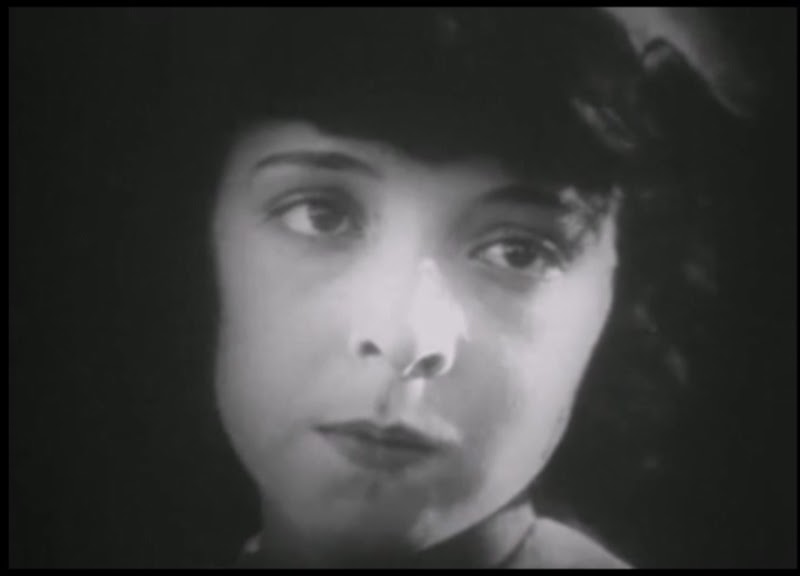
This is a lovely still but it's Colleen and Ben Lyon in Painted People from 1924
