Showing posts with label Edward Lorusso. Show all posts

Monday, 29 April 2024

The old magic remains... The Enchanted Cottage (1924), Edward Lorusso Kickstarter No. 26


"To anyone with a poetic soul, this picture will be a rare treat. But the too literal person will be sadly disappointed. A picture for folk who dare to dream. As such we cannot recommend it too highly."

Photoplay, June 1924 (see below)


This is a fascinating film on so many levels and I’m not surprised Edward Lorusso chose it as his 26th Kickstarter Project and that he aimed for a specially written score from the Mont Alto Motion Picture Orchestra for this Blu-ray presentation. It’s a tale of post-war angst and redemption that for all the accusations of melodrama does indeed address the very real issues for those of the audience who did not look like movie stars or who were disabled, injured during the Great War as were an estimated six million British and German soldiers alone.


It's also rare to see two leading stars, in this case, Richard Barthelmess and May McAvoy, and who aren’t called Lon Chaney, playing disfigured versions of themselves in romantic leading roles. Barthelmess plays former British officer Oliver Bashforth who was so badly injured his body is twisted out of shape whilst McAvoy has false teeth to play the “plain” Laura Pennington a challenge to the prevailing demand of Hollywood to portray the most beautiful people in the most beautiful of ways. Both give of their best and their performances elevate what is a slight story to levels of poignancy that still resonate.


Ed made a 4k scan of the Library of Congress’ 35mm print, perhaps the only surviving copy on this stock, which had oddly been copied onto stock containing the music track from another film. He cropped the music off and makes the most of what is a pretty decent print to which he added new opening credits which fit very well with the style of Gertrude Chase’s intertitles. The result also highlights Livingston Platt’s gorgeous designs of the titular cottage, enabling us to feel anew the romantic and possibly even supernatural properties of this space.


Richard Barthelmess

The film was based on the 1923 play by Arthur Wing Pinero who was also impressed by this design. His story echoed others of the time in its desire for damaged people to be made somehow whole again by romantic love or dreams coming true against all reason. You can understand why such stories were popular after the war and the flu pandemic and there are so many works of fiction reflecting this. Lorusso quotes Testament of Youth, the memoir of British nurse and activist Vera Brittain, whilst at the time there were comparisons with JM Barrie’s supernatural Mary Rose which had its premiere in 1920. Pinero was aiming more for the redemption through love of Barrie’s Sentimental Tommy, written in 1896 and made into a film, now lost, in 1921.


Directed by John S. Robertson with a scenario from Josephine Lovett the film hedges its bets on the supernatural elements of the “enchantment” and you can just as easily read it as a tale of two people who find themselves against all odds in terms of class, physicality and looks.


Soul and body awry, Oliver sought out the pain of his own reflection…


We find Oliver Bashforth wounded and miserable still trying to fit in with the rather shallow lives of his upper-class family and friends… The stiff upper lip is much in evidence from his father whilst his mother is caring if trapped in her circumstances whilst his sister Ethel – a spirited turn from Florence Short – just thinks he should shake himself out of it, a mindset very much still prevalent among the conservative British classes. In modern parlance, The Enchanted Cottage is something of a treatise on PTSD or “shell shock” as it used to be called at this time and as explored in Pat Barker’s exceptional Regeneration Trilogy. Whatever the changes to Oliver’s perceived reality during the film, he recognises his crisis which, for psychiatrist W. H. R. Rivers, who pioneered treatments of post-traumatic stress and is one of Barker’s subjects, is part of the road to wellness.


May McAvoy, yes, really...

At the start though Oliver forces himself to release his fiancée after she has quite clearly fallen for his able-bodied pal. Heartbroken, he goes to hide himself away at a remote country cottage, downsizing his status along with his outlook on life and possibility. His only companion is housekeeper Mrs. Minnett (Ethel Wright) who, an intertitle notes, is possessed of the uncanny intuition sometimes found in simple folk. That condescending sentence may well hit the nail on the head.


Into Oliver’s darkened misery floats the sounds of children playing and to his dismay he finds that his poisoned reverie has been introduced by the simple honesty of the plain and lonely governess Laura Pennington (McAvoy) along with her friend Major Hillgrove (Holmes Herbert) who is blind and can therefore only hear the truth around him with the aid of the classic cinematic trope insisting that losing one sense enhances those that remain… but why not?


The text is pretty brutal and hard to read but there’s no doubt that Laura may well be a wonderful human being but she is “hopelessly plain but… dependable…” and that reliability is of tremendous value with, “… plain women the bricks of the World.” McAvoy’s extra teeth and extended nose can’t hide her glowing eyes though and she’s clearly enjoying this role. She pretty quickly bursts Oliver’s misery bubble and explains that he’s living in Honeymoon Cottage, for three centuries a go-to destination for newly married good folk.


Father and Ethel (Florence Short)


With his sister Ethel offering to come to the cottage and look after him, Oliver gets desperate and hatches a plan to marry his new – plain – friend so that they can be left alone. McAvoy is great value here, portraying her character’s heart breaking a-new as this man whom she’d come to love sees her only as a device. But strange things begin to happen after they are wed and the ghosts of honeymooners past float through the rooms of the cottage, possibly visible to Laura and Oliver but certainly palpable in spirit.


All I see Laura, is your unselfishness – your tenderness – how blind I’ve been you are beautiful!


Sooner or later, the inevitable happens and the two realise that they are in love but is this a supernatural or even Christian moment or are they, and the audience, now seeing their idealised versions, a hale and hearty Barthelmess and a beautiful McAvoy. There’s only one way to find out, call in Oliver’s family to meet the new bride and put their closeted romance to the test…


The spirits of romance?

The Enchanted Cottage is a sweet film and it makes some brave decisions for the time allowing both those wonderful leads to express its emotive content to the full. I doubt there was a dry eye by the end in 1924 and a century later, this Cottage is still Enchanted. The magic is also manifested by the Mont Alto Motion Picture Orchestra who play pianist Rodney Sauer’s score to perfection with the cello of David Short and violin of Britt Swenson aided by the clarinet of Brian Collins and the trumpet of Dawn Kramer. The ensemble are always so good at comedy and here they present their more soulful side.


Thank you to them and especially Ed Lorusso for another project well realised; how else would we find this enchantment? Hopefully it will get a wider release after the Kickstarters as it’s a film many would find resonant.   


Photoplay recommends...


Tuesday, 7 December 2021

Blessed are the Kickstarters… Zander the Great (1925), Edward Lorusso with Ben Model


Even with the vast majority of silent films lost, there continue to be new discoveries or at least new re-emergences and re-evaluations. Edward Lorusso wrote in his excellent book, The Silent Films of Marion Davies published in 2017 that this film was “largely forgotten” and was only extant outside of the archives on a grainy grey-market VHS copy from Videolibrary. Mr Lorusso was clearly not going to let that lie and proceeded to set up a funding campaign via Kickstarter, his 17th and 8th for Marion which duly brought in double the backing after being funded in just four hours.


He was thus able to create a new scan of the 35mm print from the Marion Davies Collection in the Library of Congress which is not only in very good condition but also contains the original tints making this one of the loveliest looking digital offerings. Ben Model provides an expertly improvised organ score and the plan is to release the film more widely through his company, Undercrank Productions. So, even if you missed this project, you’ll be able to see what is yet another truly entertaining Davies’ film at some point.


Directed by George W. Hill from a script by Lillie Hayward with Editorial Direction from Frances Marion, Zander represented something like a return to “normalcy” as Lorusso wrote, with epic costume drama left behind for a western with a strong moral core. This was the actresses first “Hollywood” film for MGM and allows her to show off her impressive and under-rated range, from comedic Pickford style kidding around as an orphan at the start, to the more dramatic episodes out West, romance and comedy hair cuts that have to be seen to be believed… especially relevant in this age of “Lockdown Haircuts”, if only more of us thought to use a bowl to guide the scissors!


Marion in motion

Marion kicks off in full Mary-mode as Mamie Smith a spirited orphan who has far too much energy to follow the rules of her orphanage in Weeweedin, New Jersey, nor the terrifying Matron (Emily Fitzroy keeping a glacial, straight face almost throughout). Exhibitors Trade Review noted that Marion’s appearance and interpretation were “strongly reminiscent” of Pickford and whilst that’s true, boy does she carry it off well. The same paper was also complimentary about Hill who was apparently the replacement for one Clarence Badger who producer and Davies’ partner and career counsellor, William Randolph Hearst, who also burned his footage before bringing in the replacement. Quite what Hearst wanted for Marion is open to interpretation… there’s no way this was going to be a great drama but perhaps he was simply trying to get the best for his friend?


Another reviewer, “A.S.” in Photoplay, described this opening section as a “turning point” in Davies’ career and a performance that will “place her in the rank of the Gishes, the Pickfords and Colleen Moore.” She’s certainly a whirlwind with her ponytails, freckles and sheer “bounce”. The perpetual motion Marion is also supported by some smart stunt work with a man in a dress carrying her huge laundry basket and riding her motorbike in dangerous fashion but not quick enough to defeat the modern freeze-frame; a tribute to the quality of the transfer.


Rescued by Hedda Hopper

Mamie goes too far and is badly beaten by the sadistic Matron before being rescued by the kindly Mr. Pepper (Richard Carle) before being shipped out from the orphanage to stay with a single mother Mrs. Caldwell (Hedda Hopper), and her small child Alexander whom Mamie calls Zander (who grows up to be played by Master Jack Huff). The house and surrounds look like something out of a fairy tale, especially in the gorgeous lilac tints and there’s some smart business involving a proposal from a local lad which is rejected in silhouette by a fully grown Mamie who wants to marry only for love.


Talking of which, Mrs Caldwell has been waiting years for her husband who has gone off to Mexico in search of his fortune and as the years pass she grows frailer as her hopes fade. She gets ill and when he finally writes to callously brush her off, Mamie pretends he’s arranging to meet her after establishing himself in Singletree, Arizona (there’s only one tree, do you see?). As she dies, Mamie promises to take her son to find his father there.


Now the film hits its stride as Mamie and Zander evade the attempts of the old orphanage to take in the boy and make their way out West in a battered Ford with both of Zander’s pet rabbits… this is a good film if you like Lagomorpha as, by the time they arrive, the two have become rather more, proving that old jokes really are pretty, pretty old.


Harrison Ford is also really good in this film

Mamie seeks refuge in a huge house – a very expressive set design – where she encounters two old hands, “Good News” (Harry Watson) and “Texas” (Harry Myers) who are going to be good for some slapstick whilst also being apart of a gang liquor smugglers. The gang’s leader, of Dan Murchison (Harrison Ford no, not that one… how many times Paul!?) takes an instant disinterest in Mamie until she takes her hat off and is revealed as a woman as beautiful as Marion Davies! A fourth horseman is revealed as Juan Fernández (Holbrook Blinn).


Dan’s all for kicking Mamie out until there’s a lightning raid by the local Sheriff, played by Hobart Bosworth who, as all those who’ve seen Behind the Door know, can give bad guys one hell of a beating! Mamie’s the domestic cover they need and there’s more as Dan reveals his real name… yes, he’s Zander’s long lost father and he means to change course.


Or. Does he? The bad guys are all relative and there’s a gang leader in the desert called Black Bart (George Siegmann) who’s just as keen as the law enforcement officers to end Dan’s trade in hootch. There’s a lot of moral issues piling up and you can be sure they’ll all be resolved one way or another in a breath taking finish featuring some smashing locations and Marion choking on gusts of sand whipped up under Randolph Heart’s specific instruction: he wanted her to be seen to suffer just as much as Lillian Gish on the ice in Way Down East… and it looks like she did. Amongst her impressive array of competencies seems to be physical resilience; no one can doubt that as troopers go, Marion was real!


That's acting, Rudolph!

So it came to pass that Zander the Great is no longer forgotten or grainy and grey, it’s part of our growing appreciation of Marion Davies the star and even if it’s not exactly a classic it is very much a film made by a genuinely classic star… For that Mr Larusso is owed a debt of gratitude by all of us who find the actress charming and highly skilled. Marion is being rehabilitated and I’ve no doubt that Mr Hurst would be pleased to know how much she is still truly loved.


The commercial release will be out in early 2022 and you'll be able to order direct from the Undercrank Productions site as this film joins Beauty’s Worth, The Bride’s Play, Little Old New York and the excellent When Knighthood Was in Flower, which was a Ben Model Kickstarter, on the roster. When the going gets tough the tough get Kickstartng and we can only be grateful for the enthusiasm, expertise and passion of both gentlemen!


There’s also a fascinating post on Ed’s website, Silent Room discussing the relationship between Chaplin and Davies as well as the former’s stunt work in this film. There’s no evidence of the lion taming scene apart from references in Davies and other biographies and the cue card proves it had gone by the final cut… all signs of wanting to avoid the opprobrium of Citizen Hearst or just a casualty of the widespread changes made by the magnet? Who knows… there are plenty of mysteries left in silent film as PH has so eloquently stated in her recent post about Le Giornate in Pordenone.


Forward into the past it shall be then… as always!


Saturday, 30 January 2021

The gang’s all here… Dinty (1920), Edward Lorusso Kickstarter DVD


This was a vehicle for the remarkable young performer Wesley Barry and yet, it is perhaps more historically notable for providing one of Colleen Moore’s biggest breaks. Moore’s extraordinary energy comes through as she plays a young “colleen” (how many times? Etc…) who leaves Ireland for America where her new husband is making a new life. She’s striking and vibrant in these scenes but when fate takes a nasty twist and she falls ill with tuberculosis, she offers up one of the most believable performances in her sick bed. There’s a stillness to her expression, hardly the energy or will to even smile at her son and there’s no flicker of hope in her drained eyes. That’s acting and that’s range; and there’d be far more to come.


At the time 13-year-old Wesley was the star and he’s also very good, displaying a winning youthful pluck that would lead to a string of “our gang” type successes throughout the twenties. He was one of the leading freckled performers of the age, Marshall Neilan being one of the first to deploy them to full effect in Rebecca of Sunnybrook Farm – no grease paint and no credit in Mary Pickford’s film, but it got him noticed! Wesley grown up was less of a proposition for Hollywood and after the films dried up in the thirties he went behind the camera and was assistant director for a number of films including Roger Corman's 1967 film The St. Valentine's Day Massacre. Barry also directed films and his most notable effort was The Creation of the Humanoids (1962), apparently Andy Warhol’s favourite film, depicting a future society in which robots are persecuted by the fanatical humans of The Order of Flesh and Blood (1962) that’s gone straight to the top of my watch list!


Wesley Barry contemplates what he must do to impress Andy Warhol

Such things were probably far from Wesley’s mind in 1920 and he’s very engaging in a film that packs a lot of action and simple fun in with the melodramatic. Marshall Neilan created the film for his freckled friend with a script co-written by Marion Fairfax which allows the lad to show his own range.


Not quite knowing what to expect the early scenes in Ireland lead me to expect a romance in the old country as good catholic girl Doreen Adair (Colleen Moore), falls for protestant Danny O'Sullivan (Tom Gallery). Whilst her father disapproves of the Orangeman, he’s got plenty of get up and go and after getting approval marries Doreen and sets off to America, the land of Irish opportunity.


Colleen Moore knows the score

But as Doreen and their baby, Dinty, follow months later, she arrives in San Francisco just in time to find that her love has died in a car accident. Doreen works all the hours at menial jobs and brings up Dinty in a poor but decent way and we move forward twelve years we see her painfully ill in bed whilst the spunk kid is out selling newspapers as their breadwinner.


There’s a rival paper gang trying to muscle Dinty’s boys out of their corners but Dinty’s a determined lad and sets about the bigger bullies as you’d expect with superior vim and strategy. It’s all good fun and presages a more adult battle between local mobsters and the police. I do like Dinty’s multi-ethnic band of younger brothers with African American Aaron Mitchell as Alexander Horatius Jones and the Chinese American Walter Chung as Sui Lung, and, whilst it’s a precursor of Our Gang (1922–44), it also reminded me of the gang in Penfold and Sam (1923), itself a follow up to the now lost Penrod (1922) which starred Barry. It’s so interesting that the good guys are multi-racial whilst the bad guys are all bigger and white? Hollywood liberals eh? Hold on…


Noah Beery... bloomin' 'eck!!

Anna May Wong was just 15 and only two years older than Wesley Barry, yet she gets to play Half Moon, not the public house in Putney, but the wife of Wong Tai (an improbable Noah Beery) an opium smuggler and head of a Tong gang. Wong Tai – that leery, Beery look in his eye – is cruel and ruthless, employing a sharp-edged pendulum in his secret den to torture and otherwise ensure compliance with his commands. He can do nothing though when his son (Young Hipp) is sent down by Judge Whitely (J. Barney Sherry) but kidnaps his daughter (see-saw Marjorie Daw, … one of the great silent film stage names) with the intention of freeing his boy.


The police are involved but they need the help of Dinty’s newsboy legion who, through their work and cultural diversity have an insight into the workings of the Chinese underworld. It’s one thing for the baddies to take on the men in blue but when the youngsters get involved… things move too fast.


Anna May Wong was two years older than Wesley Barry


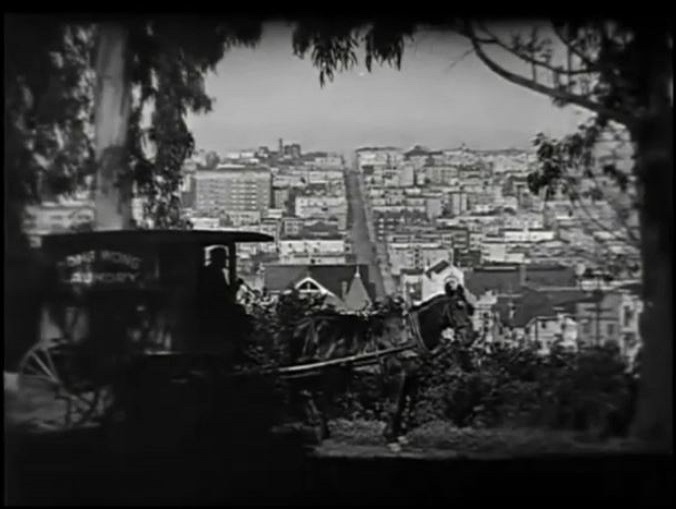
It’s "feel good" in excelsis and everything works out through collaboration and trust just the kind of message families and children most wanted to here in the land of second chances. Unsurprisingly Dinty was a success and one of the films of the year according to Photoplay magazine and box office returns. It also provides some excellent shots of contemporary San Francisco all of which add an element of realism to the film as well as glimpses of the city 100-years past.


This is Edward Lorusso’s tenth Kickstarter funded presentation and the source film came from a private collector. The print quality is very good and the experience is enriched by Ben Model’s practiced piano accompaniment which matches the flow of the film’s pace and tone to a tea.


Aaron Mitchell is ace too!


The production is now available from Grapevine Video on Blu-ray and DVD and you can buy direct from their site here. It comes with the comedy short A Two-Cylinder Courtship with Billie Rhodes and Edward Lorusso providing accompaniment.


Mr Lorusso is also on another project now, Marion Davies in Zander the Great, a new scan of the original 35mm nitrate print by Library of Congress. There’s still time to support this very worthwhile project and the link is right here… please support if you can!