Showing posts with label Napoléon (1927). Show all posts

Monday, 7 November 2016

Dynamite… Napoléon (1927), Royal Festival Hall with Carl Davis and the London Philharmonia


"Intuitively, I feel the stirring of the Emperor’s Shadow in response to my effort. If he was alive, he would deploy this wonderful intellectual dynamite of the cinema to be loved wherever he was absent, to be everywhere at once in people’s eyes and in their hearts. Dead, he cannot object to our modern alchemy transmuting his memory into a virtual presence to better enhance his Imperial Radiation."
Abel Gance

It happens about half way through Part IV when Napoleon is talking about a boundary-free Europe in which all people are the same… a spontaneous eruption of applause breaks out from throughout the auditorium: I think something touched a nerve…

Three years on we were back, Abel, Albert, Carl and Kevin, the fathers and sons of La Revolution Cinématographique, standing tall in the Royal Festival Hall as sure as the projections of Robespierre, Danton, Marat and Sante-Just in the Convention Centre inspiring Napoléon before his Italian expedition. Behind them stand hundreds of cast and crew, thousands of extras and tonnes of horses and when Carl waves his baton he’s channelling Beethoven, Haydn and Mozart: mighty music for colossal cinema. This was truly the greatest show in town: a European adventure examining the nature of nationhood at a time when the UK and USA are losing the plot.

Gance planned six films covering Napoleon’s life and this was to be just the first. From 1923 onwards he began immersing himself in his subject in an effort to not just tell the story but to re-create the spirit of the founding days of modern France. Watching the results is a lesson in historical contextuality: yes, Napoleon was the enemy of Britain at the time but look what he did for his country? Gance lauds his leadership, intelligence and legacy and, whilst as a modern viewer it’s hard to avoid anachronistic political referencing we should recall that Napoleon was operating at a time when Britain was ruled by an un-elected sovereign and a parliament of a few hundred rotten boroughs elected by the property-owning classes.

The Gods of the Revolution
In the Twenties, post-war politics were in flux with hard-left/hard-right movements across Europe – British malleability enabled the rise of the Labour Party whilst the French situation was more unstable… Gance’s contribution would be to try and remind his countrymen of where their nation-state came from: he wanted to help make France great again. Dangerous territory for sure - that was him and that was then.

But what he really achieved was cinematically game-changing – a decades-defying leap forward in technique and new ideas: ultra-fast cutting, thrilling hand and horse-held intrusions and the widest screens in history. More than anyone else from the silent era he can make the audience feel like they are right there in the picture.

Kevin Brownlow has laboured for decades over Abel Gance’s film – there’s a wonderful youthful shot of him as a youth with Gance in the late sixties – now his work has reached something of a peak with the BFI’s sparkling digital restoration (although rumour has it that the French are working on their own using different source materials…).


I’ve been lucky enough to have seen a sample of the completed work with the recorded score but to see the full film with composer, conductor and the full Philharmonia is something else entirely: I am thrilled and frazzled… once again I stand ready to invade Italy (in the nicest possible way…).

This time round I noticed the humour more… you might expect there not to be too many laughs but in Act III especially, we have a love-struck Napoleon as well as a pop star General who, having saved Paris from a Royalist insurrection, has to employ a double to distract the fans outside his humble apartment: it’s a Hard Day’s Napoleon and y’know, he looks a little like John with that fringe.

They’re selling dolls of our hero and he even has a would be groupie in the form of Violine (Annabella) daughter of the ever-present Tristan Fleuri (Nicolas Koline) - an “everyman” who follows our hero from school to Italy. Violine’s worship is a little troubling but gains some validation after Josephine (Gina Manès) discovers her makeshift shrine: Gance clearly thinks his subject is worthy.

Making plans for Italy
Act IV is very much a poetic tribute especially in comparison with the more fact-filled earlier sections dealing with Napoleon’s rise to power, his adventures in Corsica and the siege of Toulon. Gance crams in a lot more title cards during the Revolution and The Terror but here the triptych and music deliver crescendos showing his vision, passion for Josephine and leadership of the Italian force. The soldiers are a rag-tag bunch when he arrives but within hours he has them mobilized and up for anything.

On they march in red white and blue off into the wide fields of Piedmont and beyond; new lands to conquer good fortune assured… if only.

This film is so detailed there is always something new and whilst the snowball and pillow fights get mentioned for their hand-held immersiveness, the Victims’ Ball in the former prison cells deserves similar mention: it’s a more adult version of the same game, a blur of bodies with Napoleon as perfectly still at the centre as he would be in battle.

The Marseillaise section is equally visceral as the revolutionaries learn the tune and a young Captain congratulates its author: the song will save a few canons. The camera rocks forth over the crowd: time and again Napoleon sweeps you away with emotional intelligence far beyond most cinema.

Albert Dieudonné
At the heart is a resolutely centred performance from Albert Dieudonné as Napoléon following an equally impressive Vladimir Roudenko as his younger self. Gance directs them both the same way: all that Imperial Radiation…

Carl Davis’ score becomes more remarkable with time: he interweaves his source composers so well with his own themes, particularly the main theme for Napoleon/The Eagle/The Vision. Interviewed for the new BFI set, Davis recalls how Kevin Brownlow first remarked on the strength of this theme: “is that one of yours?” Most of this was composed and arranged in under three months: a remarkable feat and one that, like the film, has stood the test of time.

The Philharmonia were on fine form today with a tip of the hat to Ray Attfield, guest principal on Hurdy Gurdy, which is shown being played in Robespierre’s office as well as Sarah Oates leading the first violins. Carl Davis conducted my uncle’s band, the Royal Liverpool Philharmonic, and I know our Duncan would have enjoyed the strings more than anything else.


Napoleon is marching across UK cinemas throughout Novemberdetails on the BFI site – and is also available on a new Blu-ray and DVD BFI set including a 60-page booklet with an excellent essay from Paul Cuff from which I lifted the above quote. More on this later but you can pre-order direct form the BFI – it’s out on 21st November.

Do not miss it!

Vive la Revolution!

Sunday, 11 September 2016

Five reasons to get excited about... Napoléon (1927), BFI preview


Every time Abel Gance's Great Work gets screened it's described as a "once in a lifetime" opportunity - but this year promises not only a restored and revitalized version of that cinematic experience but also Napoleon's first appearance on top-end digital media.

On 6th November cinemutophiles (thank you Pamela H for that!) will gather in the capitol for a screening at the Royal Festival Hall with Carl Davis conducting the Philharmonia Orchestra playing his score: the longest ever recorded and surely one of the most remarkable.

I was lucky enough to be invited to a preview screening at the BFI where Kevin Brownlow introduced a restoration he has been working towards, on and off, almost from the time when he first saw a 9.5mm print whilst still at school in 1954. For Kevin, Carl Davis - who was also present - and generations of film archivists this digital restoration puts Napoleon back where he belongs: in front of an audience.

So, whether you're intending to stream from the BFI Player, watch on your TV/home cinema or in the posh seats rattling your jewelry at the RFH... why should you be counting the days?

Gance joked with Kevin Brownlow that he need the triptych to fit in all the extras
1. You will be engaged!

We're all used to cinema as fireworks or as computer game from exposure to superhero films that aim to assault the senses but Gance was there first. His camera is right in the centre of the action whether on horse-back for exhilarating chases or amidst a snowball fight where you follow the young Napoleon's charge against his cheating opponents. You can almost feel the cold, ice-melting impact of the snow as the focus remains on the young "general" with battle intensifying all around him.

No one did point of view quite like Gance and the frequent us of hand-held shots reinforces the feeling that you are, actually, in the picture.

You won't fool the Children of the Revolution...
2. You will be inspired!

Kevin Browlow talked about the score being almost magical and it's true that there is magnificent alchemy at play between the screen and music that takes a philosophical as well as melodic lead from contemporary composers. Beethoven - who had a personal connection to the future Emperor - Mozart and Haydn are all sampled and the resultant mix is both empathetic and complimentary. This is music that is as questioning of the ancien régime as the protagonists: revolutionary and opinionated, it's there to create a stir.

The speakers in NFT1 were turned up to "eleven" ensuring that this glorious mix pulled you in as surely as the visuals - for such a long film the narrative and emotional energy is maintained with intensity.

Albert Dieudonné
3. It's the perfect post-Brexit film

Gance was mythologizing one of the founders of modern France and also the revolution itself. Napoleon is not so popular a figure in so-called Great Britain but he played his part in establishing a new political legitimacy in France following the removal of the monarchy and the old regime.

Napoleon had a European aim too and it's very interesting to see the respect Gance gives him..."I wished to found a European system, a European Code of Laws, a European judiciary: there would be but one people in Europe..." Oh why is history so inconveniently complicated?

Napoleon reminds us to look at the facts first before we rely on assumptions: Bonaparte was always much taller than the British said he was... More history is required to fully understand this man and his continent.

Edmond Van Daële as Maximilien Robespierre
4. It reminds us of what cinema can achieve

Gance was innovating and the film's rush and tumble feels at least twenty years ahead of its time: pop-art montage, hand-held intrusions, cameramen on horseback in the midst of battles and the biggest bloody screen you've ever seen for the climactic tinted triptych.

Technically ahead of the game the film also features superb performances from dozens of lead actors, all placed perfectly in context by their director.

Kevin Brownlow said that reading negative contemporary reviews he kept on expecting his search to reveal a dip in quality but that never happened and the film just kept on getting better. Today was only the second time I've viewed - half - the film and there were so many things I hadn't seen before: almost three hours on a sunny Sunday morning watching a silent film? It flew by!

In the heart of the pillow fight - the screen split nine times
5. It exists!

The fact that we have so much of what Abel Gance intended is a near miracle and we should never take it for granted.

This film deserves our up-most support for all the years that Kevin Brownlow, David Gill and so many others laboured on it. They have restored one of cinema's truly great films and we should celebrate with a Blu-Ray or two and a live performance as often as possible!

The BFI Blu-ray...looks irresistible doesn't it!
Napoleon is screened at the Royal Festival Hall on 6th November - details and some tickets are available here. Don't miss this it's a once in a lifetime...

The BFI Blu-Ray and DVD are available on 21st November, pre-orders can be made on the BFI Shop.

Sign up for the BFI Player newsletter to find out when the film will be made available although do try and see a screening if you can: it's longer than Batman v Superman and Captain America v Iron Man combined but also ten times as good!

Sunday, 1 December 2013

Immersed… Napoléon (1927) with Carl Davis, Philharmonia Orchestra, Royal Festival Hall


“Maintain radioactivity during the creation of Napoléon. Only write in moments like these...” Abel Gance

Oh where to start? It’s the morning after the day before and my head is still full of the Abel Gance’s images and Carl Davis’ music.

This was the biggest silent cineaste party of the year: one huge film in four parts, a sixty piece orchestra and those three stunning screens… Napoléon is a rich artistic achievement that still over-reaches itself 85 years after it was created.

Even when you know what to expect, this was the most visceral of cinematic experiences and one that almost defies rationalisation: you respond in the most subjective, emotional ways and you are constantly surprised… you can’t quite keep up.


Locked in the Royal Festival Hall from lunchtime to closing time, you are sucked into the heart of Gance’s story by his relentless energy and invention. From the beginning you are placed right in the visual heart as the camera roams freely through the snowball fight that is the foretaste of every battle to come. But it’s not just the mobility of the image, it’s the way Gance captures his actor’s emotion, cuts rapidly between his shots and overlays images that show their interior responses to the action.

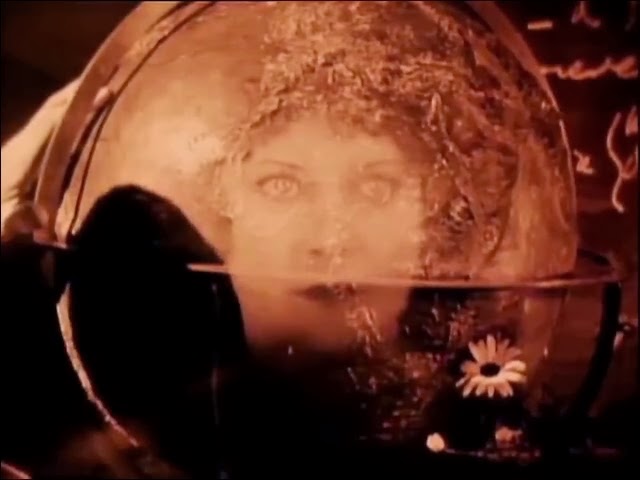
Vladimir Roudenko and Albert Dieudonné play Napoléon young and old and are marvellously expressive, but only Gance can show you what they are actually thinking of: conquest, Josephine, a pet eagle… sometimes all at the same time in multiple exposures on three screens.


Simon Pegg recently described modern cinema as being like fireworks but Gance was making the explosions first, using every technical advance he could to disorientate the viewer and make them submit to the story. Forget 3D he had polyvision, cameras on bikes and horses (steam powered to counter the motion) as well as hand-held and suspended on a giant pendulum. And, whilst he originally had music from Arthur Honegger, today he had Carl Davis and the mighty Philharmonia channelling Beethoven, Mozart and Hayden – so, come and have a go Hans Zimmer if you really think you’re hard enough!


Davis’ score is an amazing composition which matches the film’s energy and tone: heroic and soulful. Even with the three breaks it must push the players to the limits: I’m amazed at the endurance and the fact that Mr Davis appeared as spritely for his fourth bow on the podium as he did for the first. Needless to say, there was a suitably-sustained standing ovation at the end… and perhaps we were also clapping ourselves for experiencing this wonder: we did it – the whole day long: we saw Napoléon!

As the crowds floated away a huddle remained around Kevin Brownlow without whom the film would not exist in the form it does… something close to Gance’s original before it was so cruelly butchered.  Here was also our physical connection to the director whom he met on a number of occasions and who got to see his original restoration aged 90. When we got home we re-watched the Napoléon section in Brownlow’s The Music of Light which features an interview with Gance as well as cinematographer Jules Kruger.


Napoléon as seen by Abel Gance to give its full title, was the first of six planned movies on Napoleon but the first one was enough… as financial issues and a mixed reception clipped Gance’s wings. There were spectacular performances with both triptych sequences intact and a full orchestra but the general distribution was compromised by business meddling. In the end, the final part, Saint Helena was made from his script by Lupu Pick in 1929 and Gance made Austerlitz in 1959 with a multi-national cast including Orson Welles and Leslie Caron.

This first part takes us from Napoléon’s school days, through the Revolution, the Terror and to his first successful foray into Italy aged just 28 and two days after his marriage to Joséphine de Beauharnais. Had Gance carried on in the same manner, it would have taken us till at least Thursday to get to Waterloo: either the battle or the station for the journey home…

School days
But what remains is a powerful exposition on the nature of the man and his motivations. Napoléon’s rise to power is amongst the most startling in history and whilst his elevation to Emperor and expansion across Europe mark him as a military dictator of the highest order – 17 years of conflict and as many as six million dead - he also brought reform as well as order.  He was a man of incredible drive and intellect and in a country that had to re-invent its concepts of authority and nation after the end of monarchy, understanding him and his relationship to the Revolution was an enduring concern when the Third Republic faced the Great War and France struggled in the aftermath.

Saint-Just, Robespierre, Danton and Marat
Gance wasn’t excusing the tyrant-to-be just trying to explain him… and, then as now, being even handed with despots is a minefield. The Revolutionary period is not straightforward and even “The Gods” - Danton, Marat and the notorious Robespierre - all fall from grace at some point: not for nothing is the latter seen reading a biography of Cromwell… All of their reputations reflect the political mores of the day but they were revolutionary.

Albert Dieudonné
Dieudonné is mesmerising as Napoléon and carries the weight of the film and history on his narrow but firmly-set shoulders… this was pretty much a suicide mission for any French actor and yet he is entirely convincing even in a wig that gives him a passing resemblance to Noel Fielding.

His Jospehine is Gina Manès (so amazing in Coeur Fidele) whose electric blue eyes are given full reign as she lures the young general in whilst politicking on his behalf with her paramour the Vicomte de Barras.

Gina Manès
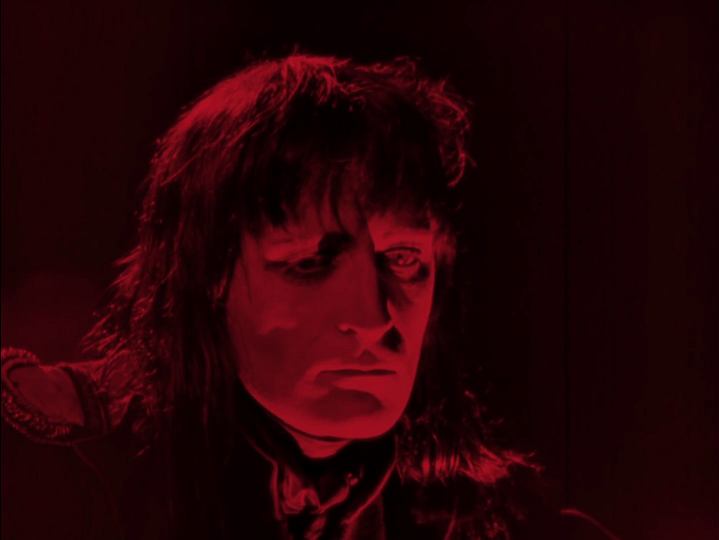
 Alexandre Koubitzky makes for an operatically expressive Georges Danton, Antonin Artaud (known for the Theatre of Cruelty) is a twisted Marat whilst Edmond Van Daële (the baddie in Coeur Fidele) plays Robespierre, hiding his thoughts behind deeply tinted glasses.

Abel Gance himself plays Louis de Saint-Just encapsulating the movement’s conflicted delight in the removal of opposition via Madame La Guillotine whilst at the same time, passionately defending the continuing revolution in front of the baying mob in the Assembly.

"The Gods": Marat, Danton and Robespierre
There are two other roles that also mark Gance’s view of greater events with Tristan Fleuri (Nicolas Koline) as an “everyman” who pops up throughout the key moments of Napoléon’s career and his daughter Violine (Annabella who later married Tyrone Power!) who starts her own cult of Napoléon: worshiping him at an alter hidden in her room like a pop star, like a saint…

Both help to humanise the spectacle and to anchor the audience in the recognisably real – there are plenty of jokes too. But Napoléon was super-natural and Gance’s film is suitably extra-ordinary.

Albert Dieudonné, Annabella and Nicolas Koline 
Whatever the rights or wrongs of the character or the odd blips in pacing and tone, ultimately we’ll never forget the moments of Napoléon’s tiny ship riding the waves of the storm as the Assembly erupts in conflict. Nor will we ever see anything like the closing sequence when the curtains are pulled back and the film on view triples in size. As Davis’ score reached new heights the story soared like Napoléon’s eagle over any refusal to accept it.

Simply magnificent.

Abel Gance as Saint-Just