Showing posts with label Yasujiro Ozu. Show all posts

Friday, 19 April 2024

Boys don’t cry… Two Films by Yasujirố Ozu, BFI Blu-ray Out Now


The BFI release two newly restored films, presented on Blu-ray, I Was Born, But… (1932) and a longer, previously unreleased version of There Was a Father (1942). An Adult's Picture Book View — I Was Born, But... to give its full title was Ozu’s 25th film and he had 30 more years of filmmaking to go but, already, he was an absolute master of the form with so much gorgeous technique and a way with actors of all ages that brought out such warmth and humour.


I Was Born, But… (1932)

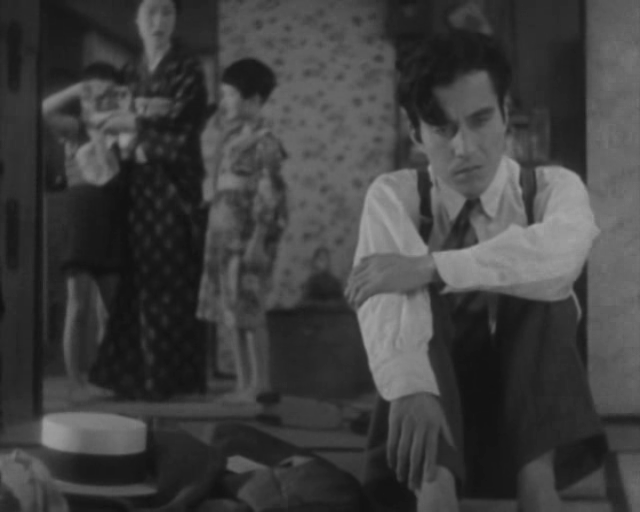
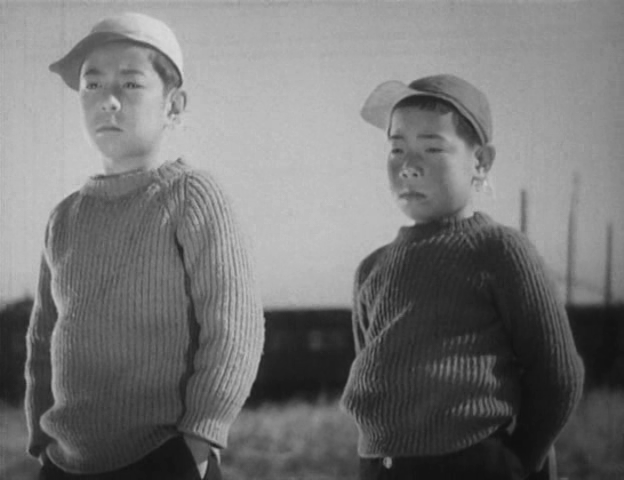
This film is a journey of discovery for two young brothers and yet they teach the adults as much as they learn. Tomio Aoki and Hideo Sugawara are two fine actors and are clearly well-directed in delivering relaxed and believable performances with Ozu’s camera and eye pulled down to their level, we well remember school days like these. Ozu was a master of the family dynamic and here, as in his later works, you see a fully rounded unit built on love, disappointment and stretched by social obligations. In some ways, it’s a slight story but told with almost novelistic attention to detail – it feels so rich.


Sugawara and Aoki play Ryoichi and Keiji (the youngest although he was actually slightly older), the two sons of a businessman, Kennosuke Yoshi (Tatsuo Saitō) and his wife, Haha (Mitsuko Yoshikawa) who have moved to the Tokyo suburbs – an area with improved education and where they will be closer to his boss Iwasaki (Takeshi Sakamoto); such are the obligations of working life.


Hideo Sugawara and Tomio Aoki

Almost immediately the boys encounter difficulties with the local children who take against them in the way children do. The biggest boy pushes Keiji down and he runs to get Ryoichi to stand up for him. Sheer weight of numbers plays against them but, as the Yoshi’s escape, the boys promise to get their full revenge in school. One of the smaller members of the gang is played by Masao Hayama who is now 98 and hopefully still up to no good!


The next day their courage fails them as they sight of the gang at school leads the boys to play truant and forge their schoolwork. The plan almost works until their teacher tells their father who, on hearing their reasons for avoiding school tells them to ignore the bullies. But, as every child knows, this tactic rarely works and so it proves. But the boys are made of stern stuff and after fighting back and being helped by an older delivery boy called Kozou (Shoichi Kofujita) the biggest boy is despatched. Kozou won’t do anything about Taro (Seiichi Kato) the son of their father’s boss and also a very good customer of Kozou’s company.


Lads...

The playground hierarchies are, as we grow to learn, not that dissimilar to adult ones and the boys become alarmed to see their father – seemingly – playing the fool to win favour with his manager, Iwasaki when they go along with Taro to watch cinefilm at his house.


Disgusted they both confront their father and ask why he must be subservient – he’s my director and he pays me… says the father and the boys say he should refuse to accept the pay and pay his director… Not one I’ve tried I’ll admit but, as the two come to terms with the sacrifices their dad must make they realise that compromise and ambition aren’t necessarily incompatible. By the same token Kennosuke accepts he must keep his eye on his own goals…


Not a lot happens but a lot happens… it’s an Ozu classic!


There Was a Father (1942)


I told them it was dangerous, but if I’d been sterner and firmer, I could’ve stopped them…


As Adrian Martin explains in his detailed commentary, this film existed in two forms until its recent restoration: one made at the height of the Second World War with references to that conflict and a propagandist brief and another recut to remove these elements after the American occupation post-war. The film has now been restored to its original form and we can see for ourselves how skilfully Ozu dealt with issues of loss and responsibility even within the constraints of the Imperial regime.


Family being always such a strong concern for the director, even in these circumstances he was exploring the issue of honour and duty as well as when and how one should express emotion as Martin says; when you are able to surrender to sadness and cry. There is also the question of duty and whatever the circumstances, continuing to work and to continue to contribute to the state no matter the impacts on personal status and advancement.


Chishū Ryū

The film begins with the death of a student in a boating accident and the teacher in charge, Shuhei (Chishū Ryū, who famously appeared in 52 of Ozu’s 54 films) takes responsibility even though no one, not even the young boy’s parents blame him. He feels that he has no other honourable course than to resign and to find another way of contributing to society and looking after his son, Ryohei (Haruhiko Tsuda) making sure he gets the best education.


There are some beautiful settings as you’d expect from Ozu and none more so than when father and son are fishing, moving their lines in unison in a wide, low-running river. Shuhei is talking to his son about his exams and then discussing his move to the middle school where he will have to board. The realisation makes Ryohei pause and the last cast is made by his father alone, such a powerful way of showing the first beginnings of the inevitable separation of the two. “Rhyming between one of them and another…” as Martin describes it.


Shuhei goes to Tokyo to work in as a clerk in an office, leaving Ryohei behind to his schooling. The film jumps forward a few years to his meeting with old friend and former boss at his old headmaster, now retired, Makoto Hirata (Takeshi Sakamoto). The two socialise at Hirata’s house meeting his 21-year-old daughter Fumi (Mitsuko Mito) and her bratty younger brother. Ryohei is now 25 (and played by Shūji Sano), graduated from university and teaching at a technical school… one cycle is complete.


Father and son live apart and as elsewhere in Ozu, loneliness and obligation are an eternal tension within families. As in I Was Born But… trains also play a part, here reminding Ryohei’s students of their potential journeys home just as in the former film, trains come between characters as signifiers of a divided future.


Whatever or wherever, treat your job like it’s your calling… with no complaints. Everyone has a role to fulfil. Abide by it.


Ryohei comes to visit and the two enjoy a spa bath before a hearty meal, a few too many drinks and a cigarette… relishing each other’s company. They both want to live closer together but Shuhei says that work is your duty and must not be sacrificed, his son must not complain and must abide. Trials and tenacity bring true happiness. The two go fishing again and the same coordination is seen between the two, their understanding running deep.


The final third of the film concerns a school reunion as former pupils now based in Tokyo, arrange to meet with Shuhei and Hirata, and introduced wonderfully by a shot of dozens of hats, all discarded in the cloakroom for the event. Here will be a chance to look back but also resolve future directions.


Chishū Ryū and Shūji Sano

The film critic Noel Burch describes Ozu’s downplaying of melodrama as “de-dramatisation” (in his book To the Distant Observer: Towards a Theory of Japanese Film (1975)) and also describes There Was a Father as “a film of excruciating sublimation…” A great deal of what happens takes place off-screen, the death of the child, Ryohei’s time in university they are not the centre of the personal drama that must play out at its own pace.


There is a mournful beauty in Ozu’s method and whilst this is not at the same level as his finest work it still packs a punch and, along with the older film, makes this new set essential viewing for admirers of his work and cinema at its purest!


Special features

  • Newly restored and presented in High Definition
  • Newly recorded audio commentaries on both films by writer and film critic Adrian Martin
  • First pressing only an essential Illustrated booklet with essays by Bryony Dixon and Tony Rayns, and by Ed Hughes who composed a new score for I Was Born, But…, credits


It Was Released, But…


This collection is, of course, a must for any fan of Ozu and silent film in general and that limited edition booklet provides every incentive for you to head straight to the BFI shop off* or online and grab your copy as soon as you can right here.


* It’s released on 22nd April 2024.


Friday, 10 November 2023

Gangs of Yokohama… Dragnet Girl (1933), Three Films by Yasujirō Ozu, BFI Blu-ray set


Dragnet Girl is quite the surprise even for those of us familiar with Ozu’s work not just in terms of its Americanisms but also in terms of the story. There are copious references to US style in cinematic and boxing terms, “The manly art of self-defence” being a poster in the gym frequented by the gangsters in the story, next to a poster for King Vidor’s The Champ (1931). Boxing was also very new to Japan at this point and, along with the gramophone shop, pool hall, guns and yo-yos, clearly a symbol of the modern, American-facing Japan Ozu created in the earlier Walk Cheerfully (1930). But the main surprise is the way the narrative confounds the very conventions the director was working with this being a Jimmy Cagney film in which his moll provides the driving force for the characters’ development; Joji Oka makes for a stylish mobster but it’s Kinuyo Tanaka as his partner in crime Tokiko, who steals the show. She won’t be getting a grapefruit in the face.


Influenced certainly by Josef von Sternberg’s gangster films, there’s a faster pace than later period films as well as his earlier, more homely, silent films, with more action, although some off screen, such as a beating our main gangster Joji gives out to three challengers, all observed only through the reactions of the people around, as if reacting to every thump and crash. It’s high technique from the director throughout and a very mature film in terms of his control and touch, from fast cutting to performance direction and dozens of symbolic shots, from the famous coffee pot, as poignant a household object as ever there was.


Then there’s the moment when Tokiko goes in pursuit of Kazuko (Sumiko Mizukubo), the woman her man is taking too much interest in, the sister of one of his protégées at the boxing gym. She has a gun and we’re uncertain as to whether she’ll use it as she confronts the younger and more beautiful woman, there’s a pause as the latter’s doe eyes stare innocently back at her before she lowers her weapon, admits that she understands why Joji would find her attractive and kisses her on the cheek. We don’t see the kiss only Kazuko’s reaction and, just like with Mae Clarke, she didn’t see it coming and nor did we. This is where Tokiko takes us off into unexpected territory, she’s not attracted to Kazuko but the idea of her and she is inspired to try and change herself and her life with Joji by the other’s purity and decency.


Joji Oka and Nipper

Ozu wrote the story under his Americanised nom de plume James Maki and the screenplay was from Tadao Ikeda. As gangsters go Joji is pretty small time although he does have his little empire centred around the boxing gym. A former boxer himself he doesn’t want to return to the ring and instead makes a living from the petty crimes of his men. A young boxer Hiroshi (Kōji Mitsui, who went on to make over 150 films in an exceptional career), joins the gang and is desperate to impress his boss so much so that his concerned elder sister Kazuko. Mizukubo was just 16 at the time, a little young for the role but it suits her innocence.


Joji’s girlfriend Tokiko works at an office and it’s full of typewriters much as a Chicago workplace might be but, according to Tony Rayns commentary, there were no Japanese language typewriters at this point so perhaps they’re there for effect or maybe the company provides translation services. Tokiko’s boss, Okazaki (Yasuo Nanjo) has a very soft spot for her and she considers how to use this to her advantage possibly as a way of getting her man to go straight; she’s just as concerned for his future as Hiroshi’s sister.


As Hiroshi goes off the rails, stealing from Kazuko’s music shop where, intriguingly there’s a model of the famous dog Nipper (1884-1895), the subject of the painting(s) that became part of the brand identity of His Majesty’s Voice (HMV), RCA and other recording companies. She spend more time with Joji and is spotted with him by one of the gang’s molls… this leads to Tokiko’s encounter with the young woman and the search for change which drives the remainder of the film.


Sumiko Mizukubo


Tanaka is the undoubted star and you can understand how she ended up with a career lasting over 50 years and which involved over 250 films. She also became only the second Japanese woman to direct a film with Love Letter (1953) following in the footsteps of Tazuko Sakane


As a pointer to the future, we also get a cameo from Ozu favourite Chishū Ryū as a policeman. Ryū would later feature in Tokyo Story and 52 of Ozu’s 54 films, building up from small parts to the lead in so many. Legend!


This 4k restoration from a 35mm nitrate print looks gorgeous and is further enhanced by a new score from Ed Hughes who employed “…a modernist, dislocated musical language… at odds with more lyrical episodes to reflect the tension between the fractured, conflicted world of the gangsters, and the regulated world of the office environment.” The technique works in narratively contrapuntal ways and unsettles just as Ozu’s dynamic symbolism continually makes us uncertain of the outcome as we search for reassuring clues and find only dissonance… reflecting the tension between drama and sentimentality…”.


Dragnet Girl is part of a set is released as part of the 120th anniversary celebration of Yasujirō Ozu’s birth and features three newly restored films, all presented on Blu-ray in the UK for the first time. The release follows September’s extensive Ozu retrospective season at BFI Southbank. Also included are two of the director’s post-war films which have a quite different flavour.


Kinuyo Tanaka


Record of a Tenement Gentleman (1947)

Kohei, a boy who has been abandoned by his father, develops a relationship with a widow, Tane. Although she initially resists the child, the pair begin to develop a bond amid the turbulence of post-war Tokyo.


A Hen in the Wind (1948)

In a country recently devastated by war, a devoted, near-destitute mother turns to prostitution to pay for her son’s medical care after he falls dangerously ill.


Special features


   Commentaries: 

Dragnet Girl by film historian and critic Tony Rayns

Record of a Tenement Gentleman by film critic and writer Jasper Sharp

A Hen in the Wind by film critic and writer Adrian Martin


    First pressing only Illustrated booklet with film essays by Bryony Dixon, Tony Rayns and Jonathan Rosenbaum; an essay by composer Ed Hughes; credits


You can order the set direct from the BFI shop online or go there in person and get expensively distracted by the superb range of Powell and Pressburger offerings currently on show.

The BFI are really spoiling us right now, long may it continue!


That Ozu Touch...


Tuesday, 23 June 2020

Yasujiro Ozu's timeless reflections… Tokyo Story (1953), BFI Blu-ray


After seeing so many of Ozu’s films, although their focus was family life in Japan, the characters in his films are very universal. … I can see my father, my mother, my brother and sister, and sometimes myself too. It’s like reflections in a mirror. Director, Stanley Kwan

One of the extras in this superb BFI issue, is the 1993 documentary, Talking with Ozu, a tribute to the legendary director featuring diverse filmmakers such as Lindsay Anderson, Claire Denis, Hou Hsiao-hsien, Aki Kaurismäki, Paul Schrader and Wim Wenders. Hong Kong based Stanley Kwan lost his father in his early teens and credits Ozu’s films as helping him grow up after watching them at film school. Kwan recognised his loss from the first time he saw Tokyo Story through to early silent films such as I Was Born, But… where the children only come to realise the reality of their father’s work pressures gradually; they thought he was a superman but now they appreciate his love for them in a new way.

Ozu cuts quietly and deeply across the ages of film and it doesn’t matter where you’re from, you will still be affected by his humanity.

Setsuko Hara
The BFI has been running an online season of Japanese films on the BFI Player and this release is part of that effort to celebrate the unique qualities of one of the country’s greatest directors. Amazingly, Tokyo Story was Ozu’s 48th film, give or take a few shorts, and whilst his early films showed some Hollywood and wider influences, by this stage his was taking longer to make his statements and he was continuing to get better. The script surprisingly drew from Leo McCarey’s Make Way for Tomorrow (1937) about grandparents being shuffled off between their offspring, Ozu had never seen the film but his co-writer, Kôgo Noda, had seen it though and relayed the theme.

Ozu had always dealt with family and with The Brothers and Sisters of the Toda Family (1941), had already created a similar multi-generational drama which hinged on the same motif of grown-up children not being respectful enough to their older parents. It’s included on this release so you can see the thematic similarities for yourself.

Chishū Ryū
But Tokyo Story stands alone and proved to be a gateway film for western audiences being both very emotional direct as well as dealing in a very didactive way with some of life’s great compromises, some of its greatest disappointments too. Claire Denis quotes from the ending of Late Spring as Setsuko Hara’s daughter tries to get her father, Chishū Ryū, to let her stay with him rather than get married. He can’t, reasoning that she has to live her own life and that he is nearing the end. Ozu himself, lived with his mother for almost all of his life, dying within two years of her in 1963.

Tokyo Story has been restored before but as the original negative was lost in a fire, until now prints have come from a duplicate negative, now this new 4k restoration, takes advantage of the latest technology and the film has never looked better or at least, not for some 67 years. In lieu of the NFT re-opening anytime soon, this is the best opportunity to watch this story in the best quality – it is jaw-droppingly clean!

Tokyo contrasts: old and new, clean and dirty
For those who don’t know, the story revolves around two elderly parents trying o find their place in their children’s’ evolving lives. They plan to visit their children in Tokyo, a rare excursion for them and the father, Shukishi Hirayama (played by Ozu stalwart, Chishû Ryû, who appeared in all but two of his films) and mother Tomi (Chieko Higashiyama) make their preparations, excitedly discussing the reception they will receive. They live a long way from the capitol and Ozu shows the slow and orderly existence of their provincial town. Their youngest daughter leaves for the school she teaches at, being greeted by her pupils as they tread the familiar paths to class. Ozu deftly shows us the culture and pace of life through sparse use of music and external shots bookending quiet, politely loaded conversations.

Eldest son Koichi (Sô Yamamura) is an over-worked general practitioner in one of Tokyo’s more hard-pressed suburbs. He is married to Fumiko (Kuniko Miyake) who struggles with their two wilful sons one of whom complains after his desk is moved to accommodate his grandparents’ stay… it’s a foretaste of what is to come. Shukishi and Tomi duly arrive and after their day out with Koichi is cancelled after a medical emergency for one of his clients, it’s clear that he will struggle to find time for them.

Shukishi and Tomi travel in hope.
They are greeted cordially by their daughter Shige (Haruko Sugimura) who runs a beauty parlour and lives with husband Kurazo (Nobuo Nakamura), an easy-going chap who she criticises for spending too much money on her parents. Shige’s apartment and her life are too crowded to easily accommodate her kin and you wonder how such polite old people have produced such a misery of a daughter.   

The warmest welcome comes from Noriko (the sublime Setsuko), the wife of their eldest son who died in the Second World War. Noriko still cherishes her dead husband and thinks nothing of putting herself before his parents. She takes a day off to look after them and willingly gives them her time. Yet, Shukishi and Tomi worry that Noriko has spent too long mourning and urge her to move on and re-marry even though she is seemingly content.

Parental planning: Kuniko Miyake and Sô Yamamura
Shige and Koichi send their parents off to a resort for a few days respite. It’s ostensibly a nice gesture but, whilst the beach is lovely and the food is good, the walls are thin and the couple can’t sleep for the sounds of young people enjoying themselves late into the night. They return to the city to find Shige and Koichi unprepared. Tomi stays in Noriko’s tiny apartment, whilst Shukishi goes off to catch up with some old friends and get very drunk. This sequence was another Ozu trademark and allows the older generation to let down their guard and say what they feel. Here they bemoan the shortcomings of their offspring. They are all disappointed with their children’s modest achievements but they are still proud… they could be worse.

It is revealed later that Shukishi’s job had been as head of education, he was a high-flyer and this could explain his drink problem and the distance of some of his children… as well as his view of their positions. Ozu was so aware of the pressures of work on quieter personalities and the toll it took and the props that were used.

Haruko Sugimura
Eventually the parents return home leaving relief behind. But here the story takes a gear shift as Tomi is taken seriously ill. After a series of steadily worsening telegrams Shige, Koichi, and Noriko head north. There they find Tomi near to death with Koichi quickly realising she is in her last hours. They are saddened, especially at the suddenness and after a trip that Shige at least, remembers as being far more convivial than it was. But maybe that’s the way of things: being taken for granted is a privilege of parenthood. Ozu doesn’t judge and he leaves it for the viewer to reach their own verdict.

Will grief melt the family squabble and who will put duty ahead of self-interest, as if things were that simple. The scenes of Noriko with Shukishi are the heart of the film’s closing sequence as she reveals her feelings of unworthiness but father-in-law wants only for her to move on; am echo of Late Spring… He gives her Tomi’s watch as a keepsake – a more meaningful memento than Shige asked for or was given.


You’d have to have a heart of stone not to be in tears by this stage and for all the right reasons, yet Tokyo Story is a film full of real characters who are all flawed and weighed down by life and responsibility. Ozu called it his most melodramatic film and this possibly appeals more to western audiences. It still operates around a relatively narrow emotional band and the depth of feeling is all the stronger for that. It is an ordinary story but those are, ultimately, the most resonant.

The performances are superb with Chishû Ryû being especially impressive – a 50-year old playing a man 20 years older. Setsuko Hara is, of course, a wonder, managing to convey so much with such calm economy and the subtlest changes of expression using what must undoubtedly be, the kindest face in all cinema.


The reward is enriching and haunting and, as is usual, I’m still on Ozu time days later. Mind you, it is a very hot day and the house feels like one of Ozu’s; the windows are all open and we sit in quiet contemplation, casually fanning ourselves as the children watch TV and play computer games.

In addition to Ozu’s Brothers and Sisters of the Toda Family (1941) and Talking with Ozu (1993), there’s a host of special features, including a surprising trip to Sheffield!

An Introduction to Tokyo Story (2020, 26 mins) from Asian-cinema expert Tony Rayns. Furnival and Son (1948, 19 mins): recounts the difficult choice a recently demobbed serviceman has to make between an unexpected job offer elsewhere, and resuming his pre-war position as his father's right-hand man in their small cutlery firm, Furnival and Son

There’s also an image gallery and a fullsome illustrated booklet, including an essay by Professor Joan Mellen, archival writing by John Gillett and Lindsay Anderson and a biography of Yasujirô Ozu by Tony Rayns. This is with the first pressing only, so get in quick!


It is absolutely essential, and this will be my third copy. You know it makes sense.

Buy one, get Toda free!

Friday, 4 May 2018

The family that plays together… Tokyo Chorus (1931), with Cyrus Gabrysch, Kennington Bioscope


1931 and this is already Yasujirō Ozu’s 22nd film and one which, stylistically, isn’t a million miles away from his later work. This is deceptively simple story telling but it is so deliciously subtle. A father returns home from being sacked and has bought his son a scooter rather than the bike he promised, the boy is angry and the two fight with the father smacking the seven-year old in frustration. The mother arrives back and asks her husband to apologise, he shows her the letter… immediately she understands and the children, having glanced at the note turn it into a paper plane and start playing catch. The father decides to buy the boy his bike even though they are facing tough financial straits…

Everyone in this scene has a narrative line, even their baby and the boy’s sister… Ozu is showing the family and all of its parts reacting to the bad news about the job and the bike. It’s not over-dramatized and there’s no “heroic” focus on the man; even though he’s the provider, it’s a family problem and husband and wife will face this together.


This is why Ozu is such a compelling film-maker, even in his silent period when he was still experimenting with style. He lingers on interiors as he will in later films and occasionally cuts away to a brief shot of sunflowers or a washing line… both adding extra impact to the events and emotions in side. The first time I saw Ozu I felt I was viewing a strikingly-foreign culture but now I see more universal themes and some of the best acting you’ll find whether it’s the indefatigable Hideo Sugawara (who was indeed seven) to the middle-aged Tatsuo Saitō.

The central couple are played by Tokihiko Okada as Shinji Okajima and Emiko Yagumo as his wife Sugako. Okada has a comic touch and is Harold Lloyd-handsome able to gain our sympathy as the slightly devil-may-care insurance clerk who argues with his boss against an elder colleague’s dismissal. Emiko Yagumo has a kind, patient face and carries her character’s emotional responses carefully, showing them in devastating slow-release.

The film begins with a group of youths in the exercise yard with their sports teacher, Ōmura Sensei (Tatsuo Saitō) who is exasperated with one out of step student… Shinji who is late and has forgotten his underclothes. Cut forward a few years and Shinj is working as an insurance clerk and promising his son a bike on the basis of his annual bonus.

Battle of the fans
Ozu plays the humour so much we aren’t braced for the dramatic turn-about as Shinji, handsome bonus in pocket, tries to stand up for his older colleague Yamada (Takeshi Sakamoto) who has been sacked on some jumped up pretence. Even his confrontation with the company President (Reikō Tani) is semi-comic as he steals the latter’s fan to make his point only for his boss to pull out another to retaliate.

But there are serious consequences beyond just his failure to buy a bike… the family are about to suffer tough times as jobs are as scarce in Great Depression Japan as anywhere else and as their daughter Miyoko (Hideko Takamine) falls ill, they have to sell Sugako’s kimonos to pay for her care.

In themes reminiscent of The Crowd, the film deals with gradually eroding hope and self-esteem as Shinji has to do anything he can to earn money no matter how humiliating. Throughout we see the family unit hold strong despite petulance from their son (the remarkable Hideo Sugawara who was also to feature in I Was Born But… (1932)) whose spirit will no doubt hold him in good stead…

Facing up together
Cyrus Gabrysch accompanied matching the deceptive, controlled movements of Ozu’s story with figures of his own; period-appropriate arpeggios that carried wistful force and fast-fingered phrasing that echoed the detail in every frame. Those moments when the characters are seemingly still are the ones with the most happening: Shinji and Sugako looking downwards, both in profile as the weight of responsibility for the happiness and survival of their family bears down. It was all captured in Cyrus’ themes too.

The Bioscope is known for it’s excellent accompanists and we also had Meg Morley playing alongside two unusual late period films whilst John Sweeney saddled up alongside Texas Guinan…

Texas was the real thing (or is that “thang!”) a ranch gal (there I go again) from Waco, who could ride and shoot as good as any man on her father’s farm. Michelle Facey’s gone to the heart of Texas and in her introduction revealed how Guinan toured as an itinerant rodeo performer before the stage (not that one…) called. She featured in vaudeville were her pep and knack for self-promotion stood her in good stead: she once claimed to have accidentally shot herself in the side, but the show still went on, it being just a flesh wound an all. She was still a chorus girl in 1917 and as she road a horse down the runway in the theatre she was talent spotted by a movie man.


She had made dozens of short films by the time of The Girl of the Rancho (1919) a tale of thwarted cross-cultural romance in which a Mexican bandit kidnaps Guinan’s young sister to try and blackmail her into loving him. This amorous motivation was excised from most versions of the film and the emphasis was on the abduction which seems to happen for almost no reason. It’s a rip-roaring tale with lots of action: Texas fights, she shoots, she rides and she outwits all around her.

Mr Sweeney formed a piano-posse of his own and galloped along with thunderous intent.

Time for some poetry? Youth, Beside the Lonely Sea (c. 1924-25) was based on the poem, originally entitled Voices and Visions (1893) written by American writer Thomas Bailey Aldrich. It was a dreamy, bitter-sweet ode to old regrets and a call to never lose youthful wonder in the World… part of the reason we all come to the Cinema Museum. It made startling use of a triptych – before even Mr Gance – with a young soul growing old and almost losing touch with his fairies.


Things got even more surreal with painter Boris Deutsch’s only film, Lullaby (1929) which, whilst it focused on the harsh peasant life in Russia also delivered nightmarish visions to torment a young woman charged with minding the baby for her careless elders. If Lotte Eisner had seen this she might have revised her fixed limit to expressionist films. It’s lovely stuff and all illuminated with spritely precision by the deft touch of Meg Morley on keyboards.

Sweet dreams? Lullaby
Tonight was so engaging that it – almost – made me forget that Liverpool FC were playing Roma in the semi-final of the Champions League: we won 7-6! Cinema Museum: You’ll Never Walk Alone.

PS Some more of that Ozu magic...
 
Others are being called to work
The outside world intrudes
The family that plays together, stays together.

Tuesday, 27 June 2017

Talking the walk… I Was Born, But... (1932) with Katsudo-Benshi Hideyuki Yamashiro and Mie Yanashita, Barbican


Many silent films have placed adult actors as children and the results have been occasionally juvenile yet here we have a film featuring children as children who teach the adults as much as they learn.

Tomio Aoki and Hideo Sugawara are two fine actors and are clearly well-directed in delivering relaxed and believable performances. Director Yasujirō Ozu was a master of the family dynamic and here, as in his later works, you see a fully-rounded unit built on love, disappointment and stretched by social obligations. In some ways, it’s a slight story but told with almost novelistic attention to detail – it feels so rich.

An Adult's Picture Book View — I Was Born, But... to give its full title and then in Japanese - 大人の見る絵本 生れてはみたけれど -  was Ozu’s 25th film and he had 30 more years of film-making to go.

Tomio Aoki
Sugawara and Aoki play Ryoichi (the eldest, 8 at the time and 93 now!) and Keiji (the youngest although he was actually slightly older), the two sons of a business man, Kennosuke Yoshi (Tatsuo Saitō) and his wife, Haha (Mitsuko Yoshikawa) who have moved to the Tokyo suburbs – an area with improved education and where they will be closer to his boss Iwasaki (Takeshi Sakamoto); such are the obligations of working life.

Almost immediately the boys encounter difficulties with the local children who take against them in the way children do. The biggest boy pushes Keiji down and he runs to get Ryoichi to stand up for him. Sheer weight of numbers plays against them but, as the Yoshi’s escape, the boys promise to get their full revenge in school.

Ozu manages to catch a poignancy even among the ealy morning washing...
The next day their courage fails them as they sight of the gang at school leads the boys to play truant and forge their school work. The plan almost works until their teacher tells their father who, on hearing their reasons for avoiding school tells them to ignore the bullies. But, as every child knows, this tactic rarely works and so it proves.

But the boys are made of stern stuff and after fighting back and being helped by an older delivery boy called Kozou (Shoichi Kofujita) the biggest boy is despatched. Kozou won’t do anything about Taro (Seiichi Kato) the son of their father’s boss and also a very good customer of Kozou’s company.

The playground hierarchies are, as we grow to learn, not that dissimilar to adult ones and the boys become alarmed to see their father – seemingly – playing the fool to win favour with his manager, Iwasaki when they go along with Taro to watch cine-film at his house.

Hideo Sugawara who is now 93
Disgusted they both confront their father and ask why he must be subservient – he’s my Director and he pays me… says the father and the boys say he should refuse to accept the pay and pay his director… Not one I’ve tried I’ll admit but, as the two come to terms with the sacrifices their dad must make they realise that compromise and ambition aren’t necessarily incompatible. By the same token Kennosuke accepts he must keep his eye on his own goals…

Not a lot happens but a lot happens…

The Gang
Today’s screening was special for a variety of reasons and featured a precious 35mm print flown in from the National Film Centre in Tokyo. But it wasn’t alone in making the trip as Katsudo-Benshi Hideyuki Yamashiro and acclaimed silent film pianist Mie Yanashita had also made the long haul. Yanashita I was fascinated to hear as accompaniment styles vary by film culture whilst all the while embracing the same humanity on show. She opened with some glorious themes and then got stuck into the humour with practiced ease: this is what I love about Ozu, his ability to cover emotional range with deceptive ease and Mie was more than up to the task.

Family debate
Of course, she also had to accompany Yamashiro’s verbal accompaniment and that’s a skill in its own right. I’d never seen Benshi before and for the uninitiated, it’s more than just the reading out of inter-titles. Yamashiro acted out the scenes in between the dialogue, adding words where he could lip read them and tonally-appropriate narration. It was all in Japanese of course but between the mime, the piano and the emotional accenting we got the joke even if the Japanese speakers in the audience were there just that bit quicker!

It’s a remarkable combination and all I can say is that life would be a lot more interesting if we all had a personal Benshi with us on a daily basis.

The screening was part of the Barbican’s series The Japanese House: Architecture and Life After 1945, showing life before in this case and was sponsored by the Japanese Film Foundation, NFC Tokyo and Shindofuji Ireland.


The film is available on Blu-ray/DVD along with Good Morning, Ozu’s 1959 re-make. You can buy it from the BFI shop here at a very reasonable price!

Personal post-script: It was Yasujirō Ozu who got me interested in watching film again. Many years after the joyful complications of fatherhood began, I was walking along the Southbank enjoying some "us time" with Mrs IThankYou when, on impulse, we watched Late Autumn at the BFI. I’d never seen or heard of Ozu before but this was an energising enlightenment; a true holiday for the mind and a work so powerful in its strange simplicity and familiarity.

And one thing leads to another because, you just have to explore and find out more…