Showing posts with label Jameson Thomas. Show all posts

Thursday, 17 June 2021

A passion play... Piccadilly (1929), BFI Blu-ray out 21st June


“Just imagine the whole place being upset by one little Chinese girl in the scullery?”


Piccadilly may need one of those advisory warnings Talking Pictures use when dealing with materials that reflect “the prevailing attitudes of the time” but the film did enable Anna May Wong to be the one thing she wasn’t really allowed to be in her native America – a romantic lead. Gilda Gray may well have top billing here but there’s no doubt who your sympathies are meant to be with, in the love-tangle at the heart of this story.


Director E A Dupont, had already made two films on the theme of infidelity and waxing entertainment careers with Varieté (1925), based in the circus and music halls of Berlin, in his native Germany and Moulin Rouge (1928), another BIP title set in a saucy Parisian demi-monde still many decades away from the existence of Kylie’s Absinthe Fairy. This film, whilst preoccupied with London’s West End, also spends a good deal of time in East End where it turns out that whilst you can’t take Limehouse out of May Wong’s Shosho, it’s also hard to take her out of the area’s  pervasive misery.


Anna May Wong


Art director Alfred Junge, who worked with everyone from Paul Leni to Michael Powell, faithfully captured the atmosphere of both and, slightly disappointingly for me and other 80’s clubbers, recreated the interior of the Café de Paris, between Eros and Leicester Square, which I had always assumed was the location for the filming, in Elstree Studios. It was worth it though, as this allowed the remarkable camera mobility we see in the film as the dancers whirl around and audience reacts to the visceral movements and swirling passions of the cabaret…


This disc comes with an odd five-minute Prologue to Piccadilly, in which Jameson Thomas’s character form the film, Valentine, talks briefly to a former customer (John Longden) with dark regret in his heart in front of his humble rural ale house. This was intended for US audiences at a time when most films had sound… oddly, we’re not surprised to find that Valentine’s “sound world” lacks the style and excitement of his silent glories…


“Can you picture things? Then close your eyes and I’ll tell you a strange story about Piccadilly…”


Café de Paris on set, complete with famous twin staircases


And so, we begin… and there are many strange aspects to this particular story. In her excellent booklet essay, the BFI’s Bryony Dixon explains that it is hard to say which was the more shocking for contemporary audiences: the drugs or interracial relationships. For his part Jameson Thomas, speaking about the cutting of the kiss between his character and Shosho, in a 1931 interview in US fan magazine Movie Classic, felt that ‘in England we have less prejudice against scenes of interracial romance than in America. In France still less, and in Germany none at all. But we are still careful to handle such scenes tactfully.’


It’s hard for casual viewers to contextualise the daring of the love story in these enlightened times perhaps and also because Anna May Wong, in a Brooksian way, seems to stare out at the viewer as if the past 92 years hadn’t happened. When I first saw the film, it was also the first time I’d watched her but now with several viewings and a number of other films under my belt, her talent is as clear in terms of its quality as much as its compromise by American film makers.


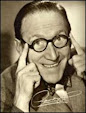
Jameson Thomas


Piccadilly was an original screenplay by Arnold Bennett, a British novelist of social concerns and who once observed that “good taste is better than bad taste, but bad taste is better than no taste.” The resultant film was a highpoint for native silent film albeit one that was made with international funding, cast and crew. The director bringing Germanic sensibilities to his London locations as, in fairness, did Mr Hitchcock, and whilst arty-farty Close-up may have felt it owed little to the location, I’d disagree as there’s a lot of “London” in the film.


Werner Brandes' camera may have been almost entirely on-set but he captures the West End thrills as well as the murky otherness of Limehouse; London’s original China Town, with crowded streets squeezed in between Whitechapel and East End docks on the North-side of the river Thames.


Cyril Ritchard and Gilda Gray


His camera swoops through the opening sequences as we see the Piccadilly Club’s star attractions, Victor and Mabel descending the Café de Paris steps to wow the audience with their quick stepping. Victor is played by Cyril Ritchard (the artist in Blackmail) and Mabel by Gilda Gray (a Polish actress, big in the US and who popularised a dance called The Shimmy). Victor wants to take their partnership into a more romantically choreographed direction but suave club owner, Valentine (Jameson Thomas), is the object of Mabel’s genuinely adoring eye.


Things come to a head after a disgruntled diner, Charles Laughton, temporarily stealing the show as a corpulent complainer with a dirty plate. Valentine tracks down the source of the imperfection as he finds his scullery distracted by a dancing Chinese girl Shosho - played Anna May Wong. He orders her removal but not before clocking the moves… there’s something there. Later he auditions her in his room and, whilst we aren’t shown the sequence, Shosho leaves him with her lucky charm. An unseen transaction has taken place.


Victor forces Valentine’s hand by harassing Mabel one time too many and then offering to quit only for the club owner to fire him first. Game over and literally slapped down, Victor leaves and Mabs pins her colours to the main man yet she isn’t able to hold the star billing alone and soon Valentine is looking for someone to pull in the punters.


The Shosho show in Soho

It’s Shosho’s big chance and she plays her cards well, insisting on choosing her own costume from a seller in Limehouse rather than the fake theatricals from Soho. Victor finds himself being outmanoeuvred by a woman finally realising her potential and power. As Shosho woos Valentine her loyal friend Jim (King Hou Chang) takes it on the chin as she insists on his accompanying her at the club. Shosho’s dance is, of course, a sensation and the sequence is superb as the camera roams around the ballroom catching the response from the crowd as the glitter ball slowly turns… Mabel senses that her game is up and pleads with Victor but he is commercially and emotionally banking on Shosho.


There’s a fascinating and very deliberate sequence where Valentine takes Shosho out to an East End pub in which a young girl dances with a black man. The man is ejected for daring to dance with a white girl but, to her credit she – an uncredited Ellen Pollock - argues her case long and loud. It’s a startling moment outside of the show business milieux and the most pointed reference to the race issue in the whole film; the voice of Bennett and Dupont?


Shosho duly notes the situation and both she and Victor know they must be discrete, so much is unspoken and we come very close to seeing them kiss only for concerns about the American market forcing a timely cut.  As these two grow closer though, Mabel and Jim can’t let go… it’s a passion play as much as anything else.


Gilda Grey may have been the big name but the film’s success is founded on Wong’s crisp naturalism and you can only imagine the impact if she was the only Asian actress you were used to seeing? Shosho is a rounded character as well,  not some manipulative and inscrutable “other” but a player, every bit as much as Victor, Val and Mabel. That’s show business  and looks, talent and drive are the ultimate equalisers... as is love.


Gilda Gray

Jameson Thomas is grand as the dashing alpha male Valentine, ruling all but his heart with a rod of commercial iron. I also see  more in Gilda Gray’s performance with each viewing and she gives Mabel a vulnerability that is inversely proportioned to Shosho’s burgeoning self-awareness.


King Hou Chang deserves special mention too for frequent scene stealing; he was a non-professional and yet his portrayal of the conflicted Jim is pitch perfect as his love and loyalty are stretched to the limit by Shosho’s ambition. Hannah Jones also throws in sure-footed light relief as Bessie, Shosho's friend and the distractible supervisor of the part-time plongeurs. 


I watched the new BFI Blu-ray which comes with a swinging rendition of his original 2003 score – only his third - from Neil Brand which is played by talented jazz ensemble including the composer himself on piano, Henry Lowther on trumpet, Stan Sulzmann playing saxes and flute, Rowland Sutherland, flute, Alec Dankworth on bass, Paul Clarvis, percussion and Jeremy Price, literally, blowing his own trombone. Sulzmann and Sutherland’s flutes get some of the best lines, often cutting expressively through the jazzed interplay to signal a nuanced change on tone and atmosphere.


King Hou Chang


Neil picks themes from contemporary and later period jazz to suitably illuminate this proto-noir, following the rhythms of the dance as well as character and story develop. Those flutes are essential for delicately adding Shosho’s musical presence but the aural ethnicity is restrained even in a score that, occasionally, can feel insistent. Every silent film and accompaniment have a different balance in terms of narrative pacing and musical energy and here compositional invention wins out given the absolute respect for the source material.


Mr Brand explains himself in more detail in one of the set’s excellent video essays along with an appraisal of the film from Bryony Dixon and a documentary on the career of Anna May Wong from film historian Jasper Sharp who is currently writing a book on the actress too. There’s also Cosmopolitan London (1924), part of the Wonderful London series, which takes a luck at multiculturism as it was with accompaniment from John Sweeney. 


As usual, this is essential viewing and reading from the BFI and you can order it now from their online shop.


Saturday, 6 October 2018

The home fires, burning… Blighty (1927), BFI with Costas Fotopoulos


A film about the Great War that doesn’t feature any battlefield action, Blighty was originally to be called Apres le Guerre which more accurately reflects the intended audience than the action. It’s pretty much all about the Home Front and is a like a silent-WWI version of a Family At War.

In his introduction, King’s College’s Dr Lawrence Napper, author of The Great War in British Cinema of the 1920s*, explained that the war had been a subject for the British film industry pretty much from the Armistice and far from films such as Blighty being considered “anti-war” they were plugging into the mind-set of audiences who having experienced loss were all aware of the horrors of war yet were proud of the contribution they had made to peace. Films re-enacting battles like Walter Summers’ Battles of the Coronel and Falklands Islands (1927), Mons (1926) and Ypres (1925) as well as AV Bramble’s Zeebrugge (1924) (recently screened in Portsmouth on 28th September**) were popular as indeed was this one which was being screened as part of the BFI’s World War One: Regenerations strand.

Directed by Adrian Brunel, Blighty focuses on the experience of the Villiers family who live in a well-upholstered Georgian pile in Park Lane and are so loaded they can even afford to have Jameson Thomas as a chauffeur. It’s interesting, that despite Mr Thomas’ best efforts this film is uplifted by the performances of the three main female actors.

Alright you 'orrible lot!
Nadia Sibirskaïa films are as rare as hen’s teeth and I’ve seen two in the last few days with this and the marvellous Au Bonheur des Dames. Best known for the extraordinary visual experiments of Menimentant she’s a fascinating player to add to the mix on this very British film. She has a febrile visage and features that quiver with emotion in an expressionistic and natural way instantly drawing the eye and the sympathy. Here she plays a refugee in France who meets, falls in love with, marries and has a child with the Villiers’ only son Robin (Godfrey Winn – a fascinating character in himself).

Robin starts the film off at university in old Heidelberg with lots of German friends all of whom enjoy a healthy duel as part of their studies. Robin is hearty enough to join in the fun but his first duel is called off as news breaks of the Russians mobilising after the assassination of Archduke Franz Ferdinand – those scars of honour will have to wait for the real thing.

The film recreates the assassination and features extensive footage from newsreels all of which would have felt as raw to the audience as images of 9/11 or 7/7. This mix of real and the imagined connected with audience sentiment whereas in 2017 people are complaining about the use of actual BBC reporters in the drama series The Bodyguard. It’s not so much that we’ve gone soft just that we don’t have the experience of suffering loss on this scale.

Lil and some bloke (Jameson T...)
Robin’s sister Ann is played by the remarkable Lillian Hall-Davis who brings her own emotional power to the screen with subtlety, utter control and the star power of a souped-up Keira Knightly. When Robin returns home to say that he has enlisted she hides her response in ways that leaves you in no doubt of the fear and quiet desperation just beneath the surface. She’s also concerned for chauffeur David Marshall although a number of experts doubted his suitability…

Sir Francis Villiers is played by Annesley Healey and his wife by Ellaline Terriss, the third of the terrific leading ladies (literally in her character’s case). She has perhaps the toughest role, carryong the pressure of playing the mother of a soldier, to be watched by thousands who had experienced the same anxieties and, ultimately, the same loss. It’s a role she carries with care and respect and she is so powerful.

These women are the emotional heart of a narrative that occasionally telegraphs its moves but, sadly, that was the reality of a situation in which men went off to war and lost their health or their lives.

The lack of gunfighting only serves to strengthen the unreality of the daily dread and the stabs of happiness that punctuate the fear only serve to heighten the tension and the sure knowledge that tragedy is only a telegram away… The audience had been there, felt that and wanted the comfort that this had not been in vain and that the future was positively underway.

Godfrey Winn and Jameson Thomas put it there!
Blighty does not disappoint in that respect and pays fair dues to the women who fought an agonising war of wait and see; keeping the home fires burning as brightly as they could.

Costas Fotopoulos marched along in spirited fashion on piano occasionally racing ahead of a narrative that struck most effectively in undemonstrative silence.

Further details of the other screenings in the BFI’s World War One: Regenerations programme are on the website.

*Dr Lawrence Napper’s The Great War in British Cinema of the 1920s is available from Amazon and all good bookstores.

**My post on the screening of Maurice Elevy’s epic Nelson (1918) and Zeebrugge (1924) at Number 6, Portsmouth is available here.


Saturday, 8 November 2014

Give peace a chance… High Treason (1929)


Having watched Mathew Sweet’s Silent Britain documentary as well as the British episode of Brownlow and Gill’s Cinema Europe, I’ve been on the look out for more home-grown films like Nell Gwyn that support the idea that there was more to UK film production than quota quickies and the worthy yet dull efforts so derided by contemporary reviewers in the self-referential pages of Close Up.

Mere hundreds survive of the thousands of British silents made and it is difficult to compare what remains with the better archived materials from Germany, France, Scandinavia and Hollywood.  But, there is one film from 1918 that points to our potential with drama – albeit docu-drama – and that is Maurice Elvey’s The Life Story of David Lloyd George – which was suppressed by the government at the time. Over a decade later the director, undoubtedly one of this country’s great film makers (silent and other-wise), turned his hand to science fiction and some prescient pacifism.

London and New York in the 1950 of 1929...
High Treason is an intriguing prospect made on the cusp of the talkie era and at a time when most of the best domestic output was achieved following the introduction of the quota system and the absorption of expressionism and other European techniques.

Based on a play by Noel Pemberton Billing, who also co-scripted with one L'Estrange Fawcett, the film is clearly influenced by Metropolis and whilst Elvey can’t match Lang’s vision or budget there is one sequence which is as good as almost anything in the German film…


It’s the near future of 1950 and the Federated States of Europe is at loggerheads with a union of the Atlantic States.  Dark forces are at work trying to ramp up the tensions and push the two sides toward World War Two – arms manufacturers need more war and there’s no profit in pacifism.

A shoot out at the American/Canadian border increases tensions and as the two governments argue over how to respond we see the future London – quaint skyscrapers dwarfing the Houses of Parliament as flying ships criss-cross the capital. One of the largest buildings houses The Peace League, a global organisation aiming the stop the military-industrial complex from destroying themselves. The Peace League is member-driven and in their vast central hall of operations we see the ever-growing count of converts approaches 25 million – the peace is with them.

Benita Hume and Humberston Wright
The human heart of this global dichotomy is represented by two families:  European President Stephen Deane (Basil Gill) and his son, air force commander Michael (Jameson Thomas), the head of the Peace League, Dr Seymour (Humberston Wright) and his daughter Evelyn (Benita Hume).  They are intimately connected, with Evelyn in a relationship with Michael even though father disapproves: both are young enough to believe that the worst won’t happen but their fathers know better…

Jameson Thomas vid-skypes Benita Hulme or something like that...
The agent provocateurs listen in on an Atlantic States cabinet meeting as one of the delegates describes the potential devastation of an aerial assault on New York: the skyscrapers levelled by high-powered bombs and the people gassed in their thousands. This was Pemberton Billing’s specialist subject – the role of aeroplanes in future military conflict. He was an air-war visionary albeit one with some strange beliefs, including the idea that German homosexual spies were out to undermine British manhood in the First World War…. anders als die andern indeed.

The Channel Tunnel
The agents decide one last spectacular is needed to push the two sides to war and set about blowing up the Channel Tunnel (yes, that’s one prediction they got right… not so sure about the extended European Union…). Their murderous operation takes place as the innocent passengers dine in luxury, hanging their small dogs up in silken bags on special hooks… a horrible juxtaposition.

Meanwhile Michael is taking Evelyn out nightclubbing and endures a stilted few minutes with her disapproving father whilst she readies herself using hi-tech bathing equipment: the longest walk-through shower in cinema history… Wet rooms haven’t quite played out this way although I like the extension of the hair-dryer principle.

Nighclubbing
The club of the future doesn’t feature a live band but a single MC playing synthesised sounds; as if you could ever replace live music with recorded sound… the couple dance almost robotically as Elvey's camera follows them round this strange old-new room.

Just as the party is in full swing events are halted by an announcement of the Channel Tunnel atrocity: the President has ordered full mobilisation and war seems certain. Evelyn briefly tries to address the revenge-hungry hoards but she is shouted down and Michael goes off to get his uniform.

Evelyn addresses the women conscripts
As the population turns up for conscription the film’s great set piece takes place as Evelyn leads a large group of women conscripts against Michael and his black-suited guards. This section features hundreds of extras all perfectly choreographed by Elvey as the white and black lines flow in close quarters. The sheer weight on white threatens to overwhelm the black until Michael orders the men to unsheathe their weapons. But even with guns pointed at them Evelyn urges her peace troop on assured that “they won’t dare shoot women…”

Michael and his guards
The face-off is paused as one of the ever-present government broadcast video screens reveals that the President will make a televised proclamation at midnight. At his cabinet office Dr Seymour arrives to make a final plea it seems that nothing can prevent world war…

Dr Seymour and the President: who will speak out for peace?
No spoilers… High Treason manages to ramp up the tension very well for the closing section even though it has a double barrier to overcome not just its own vintage but also a view of the things to come firmly rooted in late twenties technology. That's the curse of science fantasy - the future’s never what it used to be when watched after the event. Inevitably most predictions are wrong and a few are almost right: the use of of almost instant telecommunication is pretty spot on and whilst it enables narrative propulsion it also shows how quickly the World and its fortunes can turn.

The walk-through shower... by now every home should have one
Elevy anchors the grand events in his characters and not just the four main players. There are numerous, very British, cameos injecting light relief into what could be a portentous story whilst the impact of violence is shown in human detail after every whiz and bang from the imagined attack on New York to the bombing of the train and the League's HQ.

The human cost of destruction
Jameson Thomas makes for a fine airman, stiff upper lip adorned by an impeccable moustache and there is genuine chemistry with Benita Hume’s proto-feminist flapper, who's sense of style is more than patched by her passion for peace and the conviction that women must lead the way. The performances have to fit with the grandiose settings and ultimately High Treason is a fable just like Metropolis with a rather mixed message about pacifism and the ultimate resort to violence which is not as inconsistent as it might seem.


High Treason doesn’t rank with Elvey’s magnificent Hindle Wakes or Lloyd George but it certainly has its moments and is an entertaining ride – unless, that is, you’re going through the Channel Tunnel.

It was also made as a sound film in which the repeatedly-sung Peace Song might have more impact and there’s a definitely transitional feel to the narrative with some lengthy titles. I’d also really like to hear that one man synthetic band in the night club! Raymond Massey also pops up arguing for peace in government meetings: there would be more of him to come.

Watch the film now on the BFI Player!
High Treason is now available for streaming on the BFI Player… and it proves that, whilst we didn’t have German budgets we did have ideas and a style all of our own.

Friday, 3 January 2014

Limehouse blues… Piccadilly (1929)


In the late 1980’s youngsters in dodgy Prince of Wales cheque suits would spend long hours in the Soho Brasserie or the French House before piling into basement acid jazz clubs on Frith Street. Sometimes we’d head over to the Café de Paris on Coventry Street for more salubrious clubbing: typical 80’s flash...Detroit techno in the smartest venue in the west end.

Since then the Café has closed and now been revived, “at the forefront of the cabaret and burlesque revival…” according to their website. I’m sure it is and, back in the day… much before my day, this was very much the venue’s main purpose.

Mabel and Victor hit the floor...
Watching Ewald André Dupont’s extraordinary Piccadilly, I was surprised to find the twin stair-cased ballroom at the heart of things as Mabel and Victor descend for their opening dance and later as Shosho stops the show. Dupont picked his venue well but then he had previous, directing Whitechapel in 1920 concernong the backstage drama at a theatre in the East End. He also knew where to find the drama in theatre having directed the outstanding circus thriller Varieté (1925) in his native Germany.

Here he also found an outstanding star who, in an oft-noted, Brooksian way… seems to stare out at the viewer as if the past 85 years hadn’t happened…

Anna May Wong
Piccadilly was an original screenplay by Arnold Bennett, the noted British novelist who once observed that “good taste is better than bad taste, but bad taste is better than no taste.” The resultant film was a highpoint for native silent film with the director bringing Germanic sensibilities to his London locations.

The cinematography of Werner Brandes captures the West End thrills as well as the murky otherness of Limehouse; London’s original China Town with crowded streets squeezed in between Whitechapel and East End docks on the North-side of the river Thames.

Cyril Ritchard and Gilda Gray
His camera swoops through the opening sequences as we see the Piccadilly Club’s star attractions, Victor and Mabel descending the Café de Paris steps to wow the audience with their quick stepping. Victor is played by Cyril Ritchard (the artist/murderee in Blackmail) and Mabel by Gilda Gray (a Polish actress who popularised a dance called The Shimmy…); they’re an almost couple with suave club owner, Valentine (Jameson Thomas) the object of Mabel’s increasingly-adoring eye.

Things come to ahead after a disgruntled diner – Charles Laughton oozing class in the cameo – complains of a dirty plate. Valentine tracks down the source of the imperfection as he finds his kitchen distracted by a dancing Chinese girl Shosho - played Anna May Wong (黃柳霜). He orders her removal but not before clocking the moves… there’s something there. Later he auditions the girl in his room… we aren’t shown the sequence but Shosho leaves him with her lucky charm…

Jameson Thomas
Meanwhile Victor’s pushing his claims on Mabel and trying to force Valentine’s hand by offering to quit but the latter already has his number and has drafted a letter firing him after another show in which he was inappropriately attentive to his co-star. Game over and slapped down, Victor leaves and Mabs pins her colours to the main man.

Yet Mabel isn’t able to hold the star billing alone and soon Valentine is looking for someone to pull in the punters. It’s Shosho’s big chance and she plays her cards well, insisting on choosing her own costume from a seller in Limehouse rather than the fake theatricals from Soho. Victor finds himself being out-manoeuvred and one feels this is a tribute to young ingenuity rather than any racially-stereotyped cunning. But, ultimately, the elephant in the ballroom is the race issue… does Piccadilly deal well with its cultural issues and could any film from the period stand up to modern scrutiny on these grounds?

Negotiations...
As Shosho woos Valentine her friend Jim (King Hou Chang) takes it on the chin as she insists on his accompanying her dance thereby insuring that his face will be rubbed further as her success becomes apparent and she develops her relationship with the club owner.

Shosho’s dance is a sensation and the sequence is superb as the camera roams around the ballroom catching the response from the crowd as the glitter ball slowly turns…


Mabel sense her game is up and pleads with Victor but he is commercially and emotionally banking on Shosho. He takes her out and there’s a revealing scene in which a young girl dances with a black man in an East End pub… the man is ejected for daring to dance with a white girl but, to her credit she argues her case long and loud: clearly the voice of Bennett and Dupont.

Shosho duly notes the situation and both she and Victor know they must be discrete. But, as these two grow closer, Jim and Mabel look to have their own – final - say in things…

Rejected... Gilda Gray and King Hou Chang
Piccadilly is stylishly made and still packs a visceral punch made all the more powerful by a feeling of authenticity: the East End may have been shot on sets but the atmosphere and sentiment is realistic.

This is underpinned by Wong’s superb, naturalistic, style and you can only imagine the impact if she was the only Asian actress you were used to seeing? Shoshu is not some manipulative and inscrutable “other” but a player, every bit as much as Victor, Val and Mabel: that’s showbiz and bankability, looks, talent and drive are the ultimate equalisers... as is love. Shoshu's relationship with Valentine is relatively un-sensationalised, we don't quite see them kiss but we know they do...


I may be viewing matters through modern eyes and the story may have been a good deal more shocking in 1929, but Shoshu seizes her chance and gets to control her own act from the get-go.

Jameson Thomas is excellent as the dashing alpha male Valentine, kicking out Victor for unprofessionalism, pawing his girl (at the time…) and generally challenging his authority: he rules all but his heart with a rod of iron. 


King Hou Chang deserves mention as Jim whose loyalty is stretched to the limit by Shoshu’s ambition whilst Hannah Jones also throws in light relief as Bessie, Shosho's friend and the distractible supervisor of the part-time plongeurs.

I watched the BFI DVD which comes with a swinging new score from Neil Brand who picks themes from later period jazz to suitably illuminate this proto-noir  – the rhythms of the dance are unchanging from the twenties through to the eighties and beyond.

It’s available direct or from MovieMail and other responsible retailers.