Showing posts with label John Hurt. Show all posts

Friday, 31 March 2023

Trick of a tail-ender… Jerzy Skolimowski in Conversation/The Shout (1978), BFI


This was an extraordinary evening in the presence of a remarkable man who probably needed an all-nighter to get through all of his amazing stories from a life encompassing boxing, drumming, poetry, directing, acting, writing, painting and then back to film. His last film, EO (2022) was Oscar nominated and is out on BFI Blu-ray on 3rd April, his next film is due later this year written for some guy he met through a mutual appreciation of jazz – then illegal – back in Iron Curtain Poland in 1956, Roman Polanski.


Born in 1936 or probably 1938, Skolimowski explained that his mother had had to change his birthdate so that he would qualify for support post-war. During the war he was trained to play act as a happy child, jumping up and down on his bed when the Gestapo made a call, hiding the fact that there was a printing press underneath it, used by his parents to spread the news of what was actually happening. His father was executed by the Germans and after the war, in recognition of his parents’ activism, he was sent to a special school in Prague were his dorm included future filmmakers Miloš Forman and Ivan Passer, whilst future Czech President Václav Havel, was also there.


Jerzy wanted to make his mark and this began with attempts at being a poet – he joked (perhaps) of visiting libraries to steal his books so that no one could read how bad they were – jazz drumming, he couldn’t really keep time, and amateur boxing which taught him to keep his eyes open during every blow so that he knew how to recover and take evasive action. Lessons in life. When his chance came with film, he grasped it with the same alertness and co-ordinated aggression, writing scripts and then planning out a full feature film based on his four student projects in film school.


Michael Brook, Jerzy Skolimowski and his partner/co-writer Ewa Piaskowska

His films in Poland – and Belgium – during the sixties established his name and then he went too far into politics for the authorities to bear, a four-eyed Stalin in Hands Up!, being enough to ensure they delivered his passport as the biggest hint to leave. He came to the UK, where he knew no one, and made the sublime Deep End (1970) with Jane Asher and John Moulder Brown. The dialogue was partly improvised and it was the smartly experienced Asher who came up with the “de-facing Government property” line when she rips up a poster promoting contraception.


By now time was running short and we didn’t get much further than Moonlighting (1982) the making of which is as fascinating as the film itself and says much about the director's generosity and determination. Essentially in 1981 when Poland was put under martial law, Jerzy came across a crowd of Poles outside a hotel where he lived who were now without a country to return to, he took them in and found a place for every one through friends and looking up Poles in the phone book; just head to the sectionwith names starting "Sz..." Then, he decides to make a film about his country's hour of need, persuades Channel 4 to back it, Jeremy Irons to star in it and theatre impressario Michael White to also fund it through a mid-tennis match sales pitch. Another extraordinary circumstance and the resultant film is one of those I'm most looking forward to seeing on the big screen.


Props to film writer Michael Brook for digging into this rich history and we literally could have gone on well into the next day had scheduling not intervened for Jerzy's uncanny masterpiece, The Shout (1978), was due to screen and he had to prepare himself for his introduction. Before he spoke though there was a unique introduction from Mark Jenkin who had taken the extraordinary step of a Cornishman, to cross the border into Devon, to seek out the locations of The Shout in ways that only he can. Is the soul of the story to be found in the spaces between the locations, Saunton Sands, the church of St Peter in Westleigh and Braunton Burrows, or in the stone and the land itself, echoing the themes of the film itself?


Alan Bates 

The director described this film as his happiest experience in filmmaking and that it was mostly down to his producer Jeremy Thomas, well that and the 200 Thai Sticks they were going to quote as a dedication at the end of the film! The film is indeed one wild trip but that’s more down to the story and setting as well as the performances from a remarkable cast to which he credits Thomas’ powers of persuasion. For himself, Jeremy is equally impressed with his director: “Skolimowski had a sense of shooting style then, this was the second director who I had worked closely with, and it was fascinating watching Skolimowski work. He came from a Polish tradition, the Wajda Film School, he had a different background to other directors… And it made the film much more creative to me. I saw it more as an artistic endeavour by him.”


The film features electronica from Rupert Hine who started out as a fold musician but ended up Chair of the Ivor Novello Awards having had hits of his own as well as producing everyone from Tina Turner to Rush and Underworld. The composers of the main theme and incidental music were Tony Banks and Mike Rutherford of the progressive rock combo, Genesis*, then extremely out of fashion but about to conquer the world with the aid of drummer Phil Collins.


Rutherford and Banks went to Charterhouse as did, coincidentally, Robert Graves whose story provides the basis of the film, a mysterious tale of a man who claims to have supernatural powers that is told largely in flashback during a cricket match played at a mental hospital. Jerzy was very keen to film a cricket match but this is unlike any you’ll have seen – of course – and I’m still having nightmares about a nearly naked Jim Broadbent running around in only his cricketer’s box and covering himself with cow dung. Jim worked with Ken Campbell early doors, what can one say?


Alan Bates and Tim Curry
 

The film’s flashback begins after Susannah York rushes to a remote hospital after an incident, crying “where is he?” before entering the billiard room in which three dead bodies are laid out under clothe. We don’t quite catch the faces before the scene changes to the pastoral calm of a cricket match as a young Robert Graves (Tim Curry) arrives in his whites. He meets the head Doctor (Robert Stephens) who introduces him to a man known as Crossley (Alan Bates), whom he describes as the most intelligent man in the place.


Crossley and Graves are set to score the match and as they watch it unfold from the edge of the pitch, the former begins to tell his strange tale involving his involvement with a couple who, he considers, have lost their way in their marriage. Anthony Fielding (John Hurt) is an experimental composer working away in his home studio supported by his wife Rachel (Susannah York). Whilst we have already seen Susannah, John Hurt is one of those out on the cricket pitch… we assume now that they’re the same characters and, they might well be.


In Crossley’s story, we see him engineer a meeting with Anthony after he has been playing the local church organ and had a secret assignation with a young married woman (Carol Drinkwater), he starts talking to Anthony about his faith and ends up following him home and inviting himself to lunch and to stay. Gradually he reveals his strangeness and his past decades spent in the Australian outback during which, in addiction to apparently killing any offspring as his right under their supposed rules, he learned much magic including the ability to kill men with his voice, The Shout or The Scream.


John Hurt, Alan Bates and Susannah York, a talented table

He pushes both of the couple’s sensibilities and the viewer is left wondering what is real and what is simple fantasy but there are so many layers as events unfold.


The cast is, of course fabulous, but its Bates who dominates with his thousand-yard stare and a restless power that continually wrongfoots expectation and social norms unsettling both those o and off screen. It’s a very centred performance that conceals as much as it reveals and only generates more mystery as the story is fully revealed.


The film was nominated for the Palme d'Or at the 1978 Cannes Film Festival and received the Grand Prize of the Jury, in a tie with Bye Bye Monkey.


The Jerzy Skolimowski Season continues into April andthere are full details on the BFI site.


The BFI are also releasing the Oscar nominated EO (2022) as well as a double set, Identification Marks (1964) the film he made over four years at film school and Hands Up! (1967) the film that got him exiled from Poland, on 24th April.


*Hence my incredibly forced and childish play on words... for the youngsters, A Trick of the Tail was an LP released by them in 1975.

Sunday, 15 May 2022

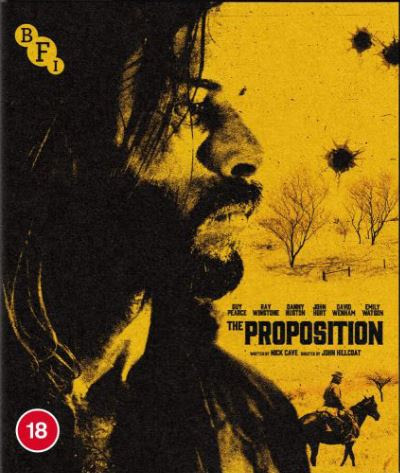
Higher noon… The Proposition (2005), BFI Blu-ray/UHD set


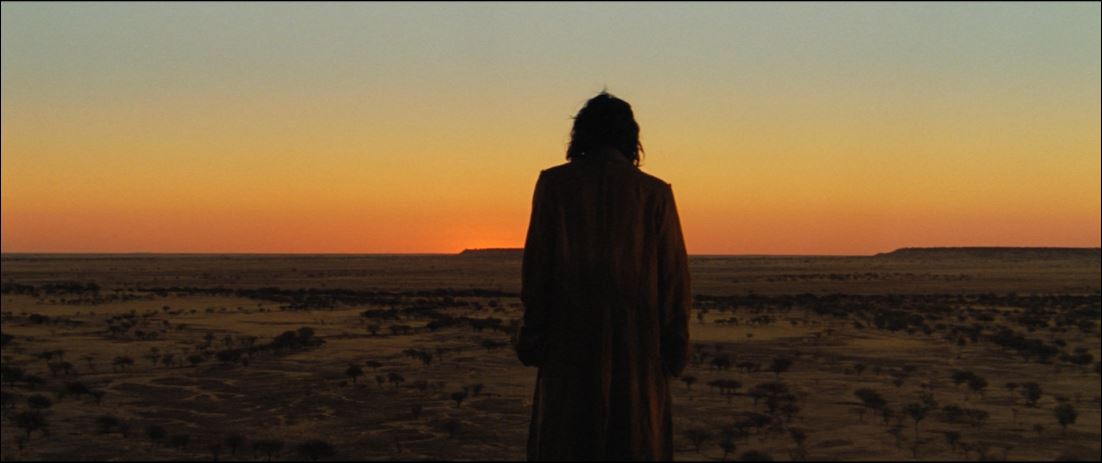
You never get your fill of nature… It salves the heart, the mountains, the trees, the endless planes, the moon, the stars… every man can debate quiet, and complete, even the lowliest misanthrope…


Some folk of my generation will tell you when they first saw Nick Cave (1983) and be able to reel off the touchpoints of a career that has not only sustained innovation and vitality but has evolved through music into print and then film. He can write the most beautiful songs about a woman being drowned who is redeemed by her hatred for her murderer, the exploits of serial killers and look his personal tragedies straight on… he is the most honest of artists and this film proved his ability to tackled complex themes as well as provide the most elegant if fierce and frightening, drama.


The Burns boys are ultra-violent criminals and yet, Arthur Burns (Danny Huston), head of the family, who will kill a man just as easily as a dog, is in love with the beauty of the Outback landscape and even in the midst of the most violent episode can always find time for the endless majesty of the sunset hance his quote at the top. The film was directed by John Hillcoat who had been inspired after a trip to the region and then begun thinking of the harsh time of the 1880s when it was arguably wilder than the wild west.


Hillcoat got Nick Cave involved on the story and later the score, his first collaboration with violinist and composer Warren Ellis, with the result and unflinching portrayal of humanity in fight or flight and survival mode as the Australian West was won with all the unfairness and amorality that entails. Tom E Lewis, who plays outlaw Two-bob, reflects in the documentary on the fact that even in 2005, aboriginals and white folk didn’t always mix and the film enlists the help of local native Australians to show the impact of the invading white men and the notorious Queensland Native Police.


Danny Huston


Danny Huston sums up the essence in the making of featurette, the characters are not delineated in terms of good and bad, the good guys are bad and the bad guys are good… he sees his Arthur as being very moral, with a very strong sense of family and woe betide the lawman or Englishman who gets in the way. Cave is always able to present the most extreme situations in an almost off-hand way and whilst this encompasses the film’s violence – no Hollywood or Spaghetti Western rolling around – it also enables the presentation of the historical aspects in a way that makes the viewer make their own assessment. As Tom Budge, who plays one of Arthur’s confederates Samuel Stoat, points out, you don’t have to “elevate” the Aboriginals to deal with the issues of their treatment.


It’s about the nature of civilisation… who we are and how wrong we get it…


Then we have the English, with Captain Morris Stanley played by Ray Winstone and his wife Martha, Emily Watson, who makes the above observation and refers to the couple’s small “Chekhovian house”. Their homestead is a representation of the impossible dreams of empire, with their garden a mannered and futile horticultural attempt to recreate the environment of the home country. As Winston says, unlike the USA, a lot of people didn’t choose to go to Australia, they were sent, and this impacted the relationship between law and order with a cultural imposition that simply fails against the harshness of the environment and the people.


Emily Watson and Ray Winstone

This is Stanley’s experience in the film as he fights to maintain his values in the context of and authority and police force far removed from what he is used to: a good man in the wrong position as Cave says in one of the set’s interviews. The proposition Stanley makes is an eternally problematic one, he does a deal with Charlie Burns (Guy Pearce), that he and his younger brother Mikey can go free if he brings down his older brother Arthur (Huston), who is wanted for rape and murder of Eliza Hopkins and her unborn child before Christmas in nine days’ time. Needless to say, it’s hardly seasonal weather in the blistering 50-degree heat as Charlie sets off leaving Mikey in perilous incarceration, the guards and local populace keen on revenge without due process.


Australia, what fresh hell is this… make no mistakes Mr Burns I will civilise this place.


Charlie goes to the Hopkins’ home stead and sees the graves and the unused crib, perhaps he realises that his brother has gone too far, Pearce is amazing, as usual, in delivering intensity and complexity with deep interior feeling but he’s far from alone with this cast and this material. There’s an exchange between Stanley and Martha after she comes to see him at the jail, she shocked at the World he lives in, “in there”, believing in him and recognising the burdens of his position without knowing the deal he has done and the reason he has spent three days watching over his – still secret – prisoner.


John Hurt


You want star turns… meet Jellon Lamb, an Englishman “of no little education” played with skills way beyond "world-weary" by John Hurt. Charlie meets him seemingly drunk in a lonesome cantina serving himself as the barman has been impaled by three aboriginal spears. The two spar carefully, Lamb clearly whip smart despite his degradation, a bounty hunter clearly looking for the same man as Charlie.


Back in town, a group of aboriginals have been captured and through interpreter Jacko (the recently deceased David Gulpilil, star of Walkabout), tell of a “Dogman”, a fierce white man who lives in a cave. Charlie, meanwhile, is about to experience one of the film’s most unexpected twists as he wakes to find his horse killed and a spear flying in to puncture his chest, as he falls unconscious he sees an aboriginal’s head shot open… the film’s way with horror is, as I’ve said, casual. Charlie awakes to find himself being tended by his brother’s gang.


Meanwhile, Stanley’s men are talking leaving him exposed to local opprobrium as the fact he let Charlie go is shared across town. Popular opinion must be assuaged and local official, Eden Fletcher (David Wenham), orders Mikey to be given one hundred lashes as an initial punishment for the murders. Whilst this might possibly kill the boy, it could also bring the Burns gang back, looking for revenge.


Guy Pearce and Danny Huston


Stanley sends the disloyal Sergeant Lawrence away with tracker Jacko and the other men to investigate the Cantina murder by a group of Aboriginal people on the instructions of Fletcher. Bloodshed ensues… and the Burns gang hear the shots echoing from miles away.


The film’s sense of dread grows heavier as the policemen celebrate their murders and Arthur sits in the moonlight staring intently at the Moon. Events are about to catch up with all the participants in the thunderous final sequence, Hillcoat juxtaposing the disturbing peace of the Stanleys’ household with the savage death count beyond as the Burns gang comes down from their mountain to rescue Mikey…


This is a film to savour and to rewatch and a tip of the hat to cinemtographer Benoît Delhomme who captures the extraordinary light of this desolate and beautiful landscape as well as every pained element of humanity.


It is, of course, an excellent set from the BFI, packed with wonderful extras, contemporary interviews with the cast and crew along with commentaries from Cage and Hillcoat as well as a new one from critics Alexandra Heller-Nicholas and Josh Nelson.


Emily Watson


Other features include:


4K (2160p) UHD Blu-ray presentation in Dolby Vision (HDR10 compatible) or Blu-ray only release is presented in High Definition


An 80-page book featuring new writing and recollections by John Hillcoat, Cat Villiers, Leah Purcell and Warren Ellis, plus essays by Andrew Graves, Professor Catriona Elder, Dr Stephen Morgan and Adrian Martin


John Hillcoat and Nick Cave in Conversation (2021, 53 mins, audio only): a newly recorded conversation between the film’s director and its screenwriter


The Making of The Proposition (2005, 27 mins), behind-the-scenes documentary


Inside the Proposition (2005, 43 mins), featurettes looking at the film’s pre-production


Shooting the Proposition (2005, 24 mins), featurettes on the production and the challenges faced during filming 


B-roll footage (2005, 20 mins): behind-the-scenes footage shot during the making of the film


Interviews with Guy Pearce, Danny Huston, John Hurt, Emily Watson, Ray Winston and other cast members


You can order the set direct from the BFI Shop and whether you’ve seen it before or not, prepare to be haunted for days afterwards.


Sunday, 23 February 2020

Nothing proved… Scandal (1989), BFI Blu-ray/DVD out now


Hot on the heels of the recent BBC series, and thirty years on from its release, it’s interesting to learn that Scandal was originally conceived as a three-part TV series by producer Stephen Woolley and writer Michael Thomas who felt that was the best medium for what is still a news story. Indeed, even in 1989 the Profumo scandal was very much alive with the “establishment” obstructing this film where they could – the BBC and others went cold after initial interest, locations where hard to find and which actor was brave enough to play the role of one of Mrs Thatcher’s best friends.

Interesting also is the initial take of director Michael Caton-Jones on meeting Woolley and the team at Palace Pictures who he thought were more about marketing stylish stories than content. Caton-Jones' graduate film at the National Film and Television School – included here – was after all, The Riveter (1986) a tough tale of working-class folk in Glasgow whilst Woolley had just made Absolute Beginners (1986); was this going to be another case of nostalgia for cash? After roughing them up on first encounter he decided they were serious about the subject matter and the potential the project had to make a political point as well as right some of the wrongs of recent history.

Amazingly Ian became Sir Ian in spite of the film, Joanne became Whalley-Kilmer and that's a whole different story.
My memory of the film did have it closer to Caton-Jones’ initial impressions – especially with the Pet Shop Boys and Dusty coolly stylish theme, Nothing Has Been Proved -  but watching it again now you can understand why John Hurt listed it among his favourite films. Hurt plays a blinder as Dr Stephen Ward who’s lust for life is as apparent as the determination of the powers that be to set him up as the fall guy for the infidelity of the Minister of War. Of course, John Profumo (Ian McKellen) also made the foolish decision to lie to Parliament about his involvements not just for his unfaithfulness but also because of the links Keeler and Ward had with a Russian spy.

Hurt plays Ward with a confident sensitivity, there’s even an innocence in his game playing with the swinging set and his picking up of young women to provide illicit thrills for strait-laced former public-school boys in select parties in Knightsbridge. He’s attracted to Christine Keeler – played here by the It Girl of the era, Joanne Whalley (who I once saw as Lulu in Pandora’s Box at the Almeida…) – perhaps more for what she can provide to others than himself and – she says – moulds her from show girl to high-class “companion” if not escort.

The Man, John Hurt
There’s another silent film link as the nightclub in which Christine works is set in the Café de Paris, the location used for Piccadilly (1928) with Anna May Wong. Here we also meet Mandy Rice-Davies played by Bridget Fonda with decent English accent and enough sass to earn her a Golden Globe nomination. As my daughter observed, the two actresses are more “objectified” than in the recent TV series and even though Joanne Whalley refused to do nude scenes and a double had to be used, the camera lingers long on the two as they put on their “warpaint” as The Shadows Apache plays. Even 1989 is a long way away when you’re 21 and when you’re older you just forget how much you’ve changed. The film was made 27 years after the scandal and released 31 years ago… which makes it braver than it seemed at the time given the posthumous handling of Profumo’s affair.

Ian McKellen is excellent as the Minister in question even though Profumo’s pattern baldness has clearly challenged make-up teams all along. He captures the sympathy in ways which balance out the narrative, he was as a victim too albeit one with more resources and friends in high places enough to allow him to carry on his life working for a charity. There’s one lovely moment when he’s in bed with Christine as she opens her moth in what initially looks like ecstasy before covering it to stifle a yawn… yes, there was clearly something else about the rich and powerful middle-aged man that attracted the teenager other than his animal magnetism.

Getting ready for battle
There’s also super support from the likes of Roland Gift as Christine’s lover Johnny Edgecombe, the legendary Jean Alexander as Christine’s Mum and Leslie Phillips as Lord Astor, one of Stephen’s better friends and therefore one of his biggest betrayers when the need to make him guilty arose. The police are a motley duo of Alex Norton and Ronald Fraser whilst the press couldn’t get any sleazier than young Keith Allen and the brilliant Ken Campbell.

Deborah Grant plays Valerie Hobson and is identified only as Mrs. Profumo in the film’s credits… even then there were some lines that couldn’t be crossed and it’s a wonder that this film was able to tread the path it did.

The BFI set includes a making of film with contributions from Hurt as well as Woolley and the Michael’s Thomas and Caton-Jones along with extended interviews with both director and producer. There are commentaries from all three along with the documentary Cabaret Girl (1956, 26 mins) on Murray’s Cabaret Club, shot shortly before its owner hired Christine Keeler and Mandy Rice-Davies as dancers. There’s the usual essay-packed booklet and you even get the Dusty/PSB video.


Sunday, 27 April 2014

The big sky… Heaven's Gate (1980)


Some people still get cross about this movie as if it’s a personal affront but, come on, did Michael Cimino really let you down? He pursued his dream at ruinous cost to himself and United Artists much in the way of an over-ambitious modern soccer club – even allowing for inflation, his $44 million budget would barely cover the annual salaries for PSG, Chelsea or Manchester City.

What he produced was a commercial failure but one that has had a growing amount of critical respect. Watching the restored director’s cut – supervised by Cimino – it felt like watching a really good HBO mini-series but with extra sky and impossibly huge mountains. Whatever else its failings, Heaven’s Gate is an extraordinary good looking film. 


Having not seen it for almost twenty years, this “new” version makes more sense in narrative as well as stylistic terms. Its pacing and granularity is now explicable as part of the greater whole and Cimino’s eye for detail creates an immersive experience unlike few others before or since.

I feel a tenuous personal connection to Heaven’s Gate as it was partly filmed in Oxford when I was an impressionable student, I knew some of the extras and I remember seeing the cameras and crew at Mansfield College, one of the newer colleges. Oxford’s a puzzling choice to double for Harvard with some of the buildings pre-dating Columbus by a full two decades... but that’s showbiz.

Kris in line at the Sheldonian Theatre and dancing around Mansfield College
This section and the one that closes the film, act as bookends depicting the main character’s class and position. James Averill (Kris Kristofferson who was a Rhodes Scholar at my college, Merton, many years before me…), is an educated man of East-cost culture who somehow gets embroiled in the base conflicts of the West.  The director’s time in establishing this is worth it for the contrast it shows once James and his friend, class wit, William "Billy" Irvine (John Hurt), get involved in the shooting.


The film is based on the Johnson County War of the 1890s although Cimino is going for representational and not historical accuracy, introducing new themes as he presents the conflict of rich cattle owners versus immigrants. The immigrants gather to enjoy life at a tented hall called Heaven’s Gate run by John L. Bridges (Jeff Bridges). Here they roller skate dance and enjoy the little freedom they have from struggle: a slither of Heaven.

Christopher Walken
One of James’ friends, Nathan D. "Nate" Champion (Christopher Walken) is an enforcer for the Stock Growers Association and we see him shoot dead one desperate cattle rustler, leaving his distraught wife as he heads off into the prairie framed by the rip in their sheet left by his shot gun blast.

This man was caught red-handed – literally – as he butchered a stolen cow but the stockmen are about to elevate justice to a whole new level of brutality. They meet and are persuaded by leader Frank Canton (Sam Waterston) to support the despatch of 125 hired guns to execute a list of 125 locals labelled as rustlers. All a far cry from university legal studies and, shockingly, based on an actual death list of 25 small-holders.

Billy witnesses the decision in a drunken stupor barely able to stand, he meets James who responds by laying out Canton… but can he stop the slaughter?

He didn't even bother to wrap it!
James heads back to base presenting a gift of a smart new trap to his lover Ella Watson (Isabelle Huppert), who runs the local bordello. The casting of the very French Huppert was apparently one of the first signs of trouble on the film as the producers didn’t feel she could cope with the English dialogue. Cimino put his foot down and carried on doing so as the production ran many times over budget. A sit turned out and as one of the producers now admits, Isabelle was superb – when is she ever not?

Ella also loves Nate but, in a neat testament to the ground rules of the time, always made him pay as a customer. We’re confused to see what we thought was a cold-blooded mercenary so awkward with his feelings.

Isabelle Huppert
James obtains the unlucky list and at Heaven’s Gate reads it out the terrified immigrants. Ella’s on it for the crime of accepting stolen cattle in exchange for favours but, in spite of James’ prompting she refuses to leave.

As tension runs high violence descends as the men ride in and Johnson County descends in stylised late-seventies havoc. Can James really stand aside to let his Eastern friend enforce the rule of law in such a callous and unjust way or will he make a stand with the immigrants? Can he forgive Ella for also loving Nate and the latter for loving the former… will this love triangle doom them all?

The climactic battle
For a film with such perfectionist tendencies you could say that the human motivations seem less than well-defined but then with actors possessing the skill of Hurt, Huppert, Bridges and Walken this can be a positive strength. Life is messy and human behaviour often bafflingly obtuse: they revel in the space Cimino allows.

Kristofferson doesn’t have their range but he more than makes up for this in presence: his face is a mask of masculine resolution deliberately obscuring his thoughts even when he’s angry.

Roller skating was genuinely a craze in the 1890's
It all feels very real and the earnestness you occasionally sense would nowadays be smothered by the hyper-violence enabled by CGI and other digital processing.

And then there’s that big, blue sky and those huge mountains, the dust filled rooms and the huge sets showing mankind in mass transit one their way to who knows where, who knows when. Vilmos Zsigmond’s cinematography is exceptional throughout and the film feels whole again.

Huppert and Kristofferson outside a cabin now in Jeff Bridges garden - fact fans!
I watched the 219 minute restored cut which is readily available from MovieMail and other online retailers.  It’s on MGM who obtained the rights from the wreckage of UA… don’t blame Michael Cimino it takes more than one auteur to break the bank and many weak executives to let them: where was the risk management?

The business may have died but the creative lives on.


Saturday, 26 January 2013

Mob mortality… The Hit (1984)


Michael Caine once said to Bob Hoskins that there’d only been three decent British gangster films and they’d been in all three: Get Carter, The Long Good Friday and Mona Lisa. To that list I’d certainly add Stephen Frears’ metaphysical The Hit staring Caine's old mucker Terry Stamp.

To some of us locals, British crime films can be either too violent or just too American: we don’t have the guns and style of the Yanks, so why pretend otherwise? Brit-crime should be determinedly un-stylish and not directed by Guy Richie…

The Hit left a mark when I first saw it in the cinema by avoiding the enduring cliché of the genre. Yes there was violence and a dramatic situation but the film was more philosophical than psychotic.

Braddock considers his options
It touches on the deepest and most everyday fears of all, that of our own mortality and the time when death turns from distant possibility to rapidly approaching certainty (we kid ourselves otherwise…). To this end, the situation is almost secondary… all of the characters are living in mortal fear,  but just a little more focused than normal.

Staring a rejuvenated Terence Stamp as super-grass Willie Parker, the story follows his betrayal of his gang-mates in the early 70s. He’d sold them out because he couldn’t face going back inside, a prosaic and self-interested decision which certainly doesn’t make him look like the hero in the courtroom where his former gang mates send him off with a chorus of We’ll Meet Again.

Willie, the Boys and a be-wigged Jim Broadbent
We re-join Willie a decade later living a life of nervy solitude, hiding away in southern Spain with a constant bodyguard courtesy of the local police. Willie has found a new erudition with his apartment artfully decorated and the walls lined with books on philosophy and art.

But as he returns home ahead of his guard Willie is kidnapped by a group of local youths. They drag him off to remote exchange with two men: hit man Mr Braddock (John Hurt) and his apprentice, Myron (an impossibly young Tim Roth).  The Brits booby-trap the gang’s payment but leave one alive… the first of a string of crucial mistakes.

Soon after the police, led by a senior officer played by the great Fernando Rey, are seen interviewing the survivor – the pursuit is on.

Terry and Johnny
Willie overcomes his initial shock and appears supernaturally calm with his new captors… This is especially disconcerting for Myron: he only expects fear.  Willie continues an open commentary on his situation as if he’s almost on the same side as the assassins and he succeeds in unnerving even the experienced and intelligent Braddock. They are to smuggle him to Paris where he is to meet the gang’s leader (70’s pop singer Lenny Peters in a forceful yet wordless cameo) before the end: this is revenge served cold.

Willie overhears a news report detailing his abduction and Braddock is persuaded to change car in a Madrid safe house. But on arriving at the flat they find one of their paymaster’s associates Harry (Bill Hunter, vulnerably venal) holed up with a young lady friend Maggie (Laura del Sol).

John Hurt, Bill Hunter, Tim Roth and Terence Stamp
Harry’s heard too much – Willie makes certain of that - but Braddock gives him a chance by taking Maggie as insurance. As they’re about to leave Willie puts a seed of doubt in his mind and Braddock returns to find Harry phoning the police… the reward was too big a temptation.

The pace shifts as Maggie starts to have her own impact on the group dynamic. She has a fierceness and desperate need to live which contrasts with Willie’s studied acceptance: he is ready but she most definitely is not.

Laura del Sol and John Hurt
Willie continues to amaze Myron with his sang froid and skilfully drives a wedge between the young man and Braddock. At the same time Myron can’t help but let his attraction for the Spanish firebrand over-rule calculating self preservation. Braddock seemingly has no such conflict but his suppressed desire is evidenced in a number of physical confrontations with the girl.

One such battle takes place when he takes Maggie to get some petrol… she bites a clump of skin off his hand but he holds back from killing her: “you’re a very lucky girl” he later says, heart over-ruling head.


On their return he finds Myron asleep and Willie, rather than escaping is just over the hill staring in wonder at a waterfall. Braddock and Willie have their most direct exchange in the whole film Willie playing down the fear of death: “ …it’s as natural as breathing”.

They approach the border with the police close behind… the final act is played out with stunning unpredictability. 

This was Stamp’s first starring role in some time and he is superb, covering the shift from self conscious betrayal to Zen calm when life catches up with him. He’s always been great at conveying uncertain meanings in his look and here he masterfully misdirects our feelings at least some of the time…

Terence Stamp
He’s matched by John Hurt who plays against type carrying an air of martial competency you wouldn’t expect, with utter conviction. I was reminded of Ben Kinsgley in that other decent Brit crime caper Sexy Beast… also produced by Jeremy Thomas The Hit’s producer.

With these two at the centre both Laura del Sol and Tim Roth excel. Del Sol’s no-holds barred ferocity acts as the counter-point to Stamp’s fatalism whilst Roth kicks off his distinguished film career in fine style as the trainee psychopath. He’s the only one who doesn’t sense the proximity of his own death…

John Hurt
The Hit is not a film you can just walk away from and each viewing  always reveals new shades of meaning. Very few British films matched Frear’s output in the 80s and he perhaps doesn’t always get the credit he deserves for bringing a uniquely British sensibility to thrillers, from Gumshoe to The Hit and onto Dirty Pretty Things. His next film was to be My Beautiful Laundrette.

The Hit is widely available but the one to go for is the Criterion Edition which comes complete with the usual trimmings - a commentary from Frears, Roth and Hurt, an 1988 interview with Stamp on Parkinson and a lengthy essay from Graham Fuller.