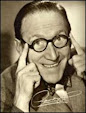
Showing posts with label Marius Goring. Show all posts

Wednesday, 11 January 2023

Simply red? The Red Shoes (1948), BFI, 100 Greatest Films


You have to take that film with a huge tin of salt, because there was never a ballet company anywhere which was like that. I'm sure no dancer of any generation ever had this supposedly appalling problem ending in suicide, if you please - between real life and the ballet.

Moira Shearer*


What is there to say about this film that hasn’t already been said? Something you could say for pretty much the rest of the Sight and Sound 100 Greatest Films the BFI are showing across January and February, a once a decade opportunity to re-explore the cannon as reinvented or reinforced by some 1600 film critics (almost as many Tory Party members it takes to elect a new leader...). Powell and Pressburger have to be in there and it’s impossible to rank their films although clearly, the electorate have…


I watched the screening at the BFI and then watched it again with wife, daughter and mother-in-law who remembered her impressions on seeing it on screen in 1948 when she was just 16. Two different audiences and it was fascinating to compare over the day. I’m not sure how many of the packed audience watching on NFT 3 had previously seen the film but, after a chatty disturbed start with some early laughs at the quaintness of the dialogue we settled down in silence as the film engaged minds and sensibilities.


It's hard not to become engrossed in this film as Powell and Pressburger create such an intense atmosphere with dialogue from the latter that challenges our norms of polite discourse. Anton Walbrook’s Boris Lermontov manages to be extraordinarily rude, maniacally controlling and also strangely vulnerable. He carries natural authority and with trademark restraint manages to underplay a role that could so easily fall flat through an excess of grim single-mindedness. Boris just needs to find beauty in his art and even the prospect of being danced to in the inappropriate surroundings of an after-show party is too much for him to bear. He reminds me so much of Jose Mourinho.


Lermontov is not the only jarring character; even Moira Shearer’s Vicky Page is frank and awkwardly single minded, first in the way she talks back to Boris after he disapproves of her being asked to “audition” for him at an after show party and then as she insists on greeting him personally on stage during her first day at the ballet, she’s young but she’s strong. Walbrook may well give a star turn but in Shearer’s cinematic debut she is the centre piece, the star who is to be born and the focus not only our attention but also admiration; she is a ballerina acting the role of a ballerina and her dancing is not something you can “act”.


Powell had seen Shearer performing with the Sadlers Wells Ballet (later the Royal Ballet) aged 20 and had pursued her for his film for something like a year. The dancer herself was less than impressed with the idea especially as she saw the story as a bit daft. She was on her way up, dancing in the shadow of Margot Fontaine and about to get her first prima roles, how could this film help her with her ambition?


Powell eventually got his woman but only after he hired a group of leading ballet dancers to form the core cast and after the Royal Ballet said that Shearer would be welcomed back after the filming. After she came back she felt the film didn’t help her in what was already a highly competitive corps de ballet but, interestingly, her stature increased as she continued to develop technically and to be offered not only the classic leading roles but also a ballet written especially for her, created by the great British choreographer Frederick Ashton. She danced the title role in the premiere of his Cinderella in 1948 having already ed his seminal neoclassical ballet Symphonic Variations in 1946, along with and along with Pamela May and Fonteyn.


Anton encourages

She soon found that filming ballet is quite different from performing on stage, and this was not all to her taste. Firstly there were the stages which had concrete floors, “… death to the calf muscles!”, then there was the disjointed nature of filming and “…the long waiting while cameras, lights, playbacks, etc, were organised. Eventually they would be ready and expect us to leap instantly into the air, but we were now cold and had to limber up yet again. No - filming ballet is not easy.” Quoting a lecture she gave in 1949, The Daily Express had her complaining The chopped-up sequences allowing perhaps only half a minute's dancing at a time made it very difficult and a very miserable experience. You can see how the film-making experience would have been completely counter to her ingrained discipline and practice. And yet, she made it.


Another deciding factor in her decision to do so was the casting of Robert Helpmann, Léonide Massine and Ludmilla Tchérina, three ballet dancers with impressive pedigrees. Shearer had worked with Helpmann and Massine a number of times and also with several of the corps de ballet dancers and this familiarity shows in certain moments when they practice, rehearse and put in the hours with professional commitment. All of this makes the film stronger and the reality of the dance sustains the fantasy all around.


I had been a more rounded performer at the time I made it or that I would have done it two or three years later, when I think I would have done justice to it. Still, I've seen 'The Red Shoes' a couple of times in the past 10 years, and I must say that for all the creakiness of the dialogue and situations, it has a certain period charm… Moira Shearer, The New York Times, 1988


Powell had cast a young ballerina on the way up as, a young ballerina on the way up… he also cast the most extraordinary cinematic hair… Jack Cardiff’s cinematography is stratospherically good as usual but he achieves so much in being able to capture the natural tone of the actor’s golden strands as well as her Scottish freckles and powerful pale skin. These observations are made after a comparison of said tones with those of my wife Catherine, a Grade 6 ballerina in her day and no less fierce than Ms Shearer in her opinion and drive!


Powell may well have been cold, but Pressburger was not and the cast and crew created something far greater than the sum of the parts… despite himself, in Moira’s view he was cold, lacking warmth and humanity, and yet the director led in this wonderful cinematic creation with his crew excelling from painter Hein Heckroth, completely out of his comfort zone and yet providing astonishing production design along with costumes, and Arthur Lewis art direction. As with the gaggle of real dancers on set, the real filmmakers gelled and teamworked a gem.


It's tempting to draw a line from the film to Shearer’s eventual career choices but she really does sound like a no nonsense lass from Dumfries … the offers continued for years, including unlikely ones like El Cid with Charlton Heston. But I've always found my marriage and my children infinitely more important than any career, so no great decision had to be made…


Robert Helpmann and Moira Shearer


No red shoes were to compel Moira away from the path she had chosen. That’s the reality but there is still so much to unpick from the fantasy. Red Shoes remains one of the greatest cult films of all time and part of that, a big part, is because of the sheer skill and humanity that Shearer bought to the film. She was to dance for Powell twice more, once in The Tales of Hoffmann (1951) and with a light-hearted cameo in the otherwise sinister Peeping Tom (1960) but she had four children by then and had found a different life.


Red Shoes is such an enduring fable, dramatizing the choices we make in life and its darker corners are mysterious enough to reward repeated viewing. Although, each time, I’m not the one who has to watch myself dance, but, in many ways, that is the heart of the film’s meaning even if, from the start, the star herself had such mixed feelings.


Let’s leave it to The Daily Express to add some of it’s now famed balance to Moira’s view of her film  with Emeric Pressburger responding to comments she made in 1949, I will make no comment. Miss Shearer has the right to criticise like everyone else. I don't know why she is doing it. But she must have a reason.


So much to unpick and I look forward to Pamela Hutchinson’s book on The Red Shoes being published later this years. There’s so much more to learn for a film that never grows old and wins over every new generation.

You can pre-order the book now direct from Bloomsbury, there will be more opportunities to see and discuss this film as the year unfolds.


*From a 1994 interview reproduced in An Autobiography of British Cinema, Brian McFarlane (1997), Methuen/BFI (pp 532-5)

**Quotes sourced from the excellent Powell and PressburgerPages site


Léonide Massine offers you a choice...


Saturday, 16 December 2017

It’s more important than that… A Matter of Life and Death (1946), BFI


This is a film for the ages, a film to grow with. When I first saw A Matter of Life and Death, I must have been very young and pretty much read it literally but when I watched in my teens I realised that it was not quite that simple: of course it wasn’t.

Seeing David Niven in massive close up for the first time on the big screen it is perfectly clear how much this story takes place from his point of view and yet his imagined afterlife is almost too huge in scope to be the dream of a single mind… but then it’s always hard to believe that the main works of Powell and Pressburger came from just two minds. If that’s not enough, the opening statement that "this is the story of two worlds, the one we know and another which exists only in the mind of a young airman whose life and imagination have been violently shaped by war… “is clear enough, especially when followed up by “any resemblance to any other world known or unknown is purely coincidental".

This is a new 4k restoration and it’s exceptionally lovely with Jack Cardiff’s colours like so much newly-polished, quicksilver summer fruits, all the more so when contrasted with the monochrome “heaven”. Real life and real love are more vivid than the antiseptic afterlife especially as so many seem to have carried their grudges with them, of which more later.

Kim Hunter and David Niven - screen grabs from the BFI trailer for the restoration
The film has so much context and has to deliver on a variety of briefs. As with A Canterbury Tale, AMOLAD had to address the relationship between the allies and whilst there are French issues there are very specific American ones too. Alsi, with this film coming just at the War’s end, there was also a consideration of the UK’s future role in a World of vanishing Empire, a situation very much on the minds of the then self-determining USA (even so long after Woodrow Wilson). So many of the barbs from Raymond Massey’s American Revolutionary, Abraham Farlan, ring true today: then we’d just worked together to defeat the Nazis and now, well, now… we just get on each other's nerves.

But, no matter how Farlan rails against the unpopularity of Great Britain and the unsuitability of one of its sons loving a daughter of Boston, Massachusetts, ultimately love is the law. It’s probably all you need, love is, you know.

It’s curious that Farlan is so mealy-mouthed and prejudiced but then again this is in the mind of Peter. Niven's Squadron Leader Carter typifies the bravery of the best of us, putting his men before himself and ready to take his chances even without a parachute. He has been valiant and highly effective after his bomber was shot to bits and he engages with his last few moments with an almost matter of fact energy. He is intensely interested in the America radio operator, June (Kim Hunter) who picks up his distress call and the two form and instant, almost super-natural bond in the flaming seconds he has left. This was the War: tomorrow was never guaranteed not even assumed and we simply didn’t waste as much time as we do today.

Instant connection... as life ticks down

June, Peter… all of the characters on Earth are pragmatic and focused; what can be done will be done and in whatever conditions prevail. Oh, what you can achieve when your own mortality is no longer a comforting deception? Yet, Peter’s surface calm is counterbalanced by all kinds of agitation below in his subconscious and we get to meet them all, one by one.

Whilst Peter’s number 2, Flying Officer Bob Trubshawe (Robert Coote) waits for him to arrive “upstairs” he chats admiringly to an angelic (in all ways…) Kathleen Byron. Things run smoothly up there but this administrative angel is concerned at Peter’s non-appearance. Richard Attenborough arrives from the stairway to Heaven and caused the old couple in front of me to chatter excitedly: yes, after all these years, Dickie is still in the film…

Kathleen Byron (gulp) and Robert Coote
American soul-soldiers chat excitedly as they pop open bottles of celestial coca cola and eye up the angels as they would on Earth: in “heaven” everything is fine… and not too different from home.

But the mathematics is wrong, and Peter has unbalanced the books… the English fog meant that Conductor 71 (Marius Goring) just couldn’t find him and he fell to Earth still alive. As Peter wakes up in the surf he sees a boy, strangely naked, playing a flute as he minds his goats… it’s an other-worldly seaside and it’s only when the lad points to buildings and a woman on a bike that he realises he’s alive. And the woman… it’s June, the woman he talked to as his took his leap of faith.

71 arrives and, literally, stops the World as he explains the rather awkward predicament… Peter needs to crack on with being dead and he would do, decent chap that he is, were it not been for the fact that his "extra" hours have seen him fall in love with June and her with him.


These consequences of celestial carelessness end up being discussed before the highest court in a stellar sequence which is so heavy in dialogue and yet remains a tour-de-force of edited brilliance. Peter is operated on by a brain surgeon just as he battles with himself in his vision of eternity. Is it worth going on living? How can you prove that someone loves you? And has there ever been a better portrayer of the decent British man than Roger Livesey?

After all this time... I can conclude that this is still a very odd film but also that it is a genuinely great one. It is an experience that has to be lived with and seen on screen and for the first time I really felt I’d paid The Archers and Mr Cardiff the respect their work deserves. Now I can wish for a Blu-ray version of this restoration without feeling that I’ve not given the bigger picture its due.

The Great Livesey
So, do go see AMOLAD on screen for this re-release and indeed any P&P film you can (I'm watching Blimp tomorrow at the Barbican). Tickets are available for A Matter of Life and Death from the BFI and elsewhere as the restoration is re-released.

Powell and Pressburger smuggle so much meaning in this film, it’s truly uncanny and almost as if we’re characters in their dream watching a debate about our lives… the watchers, watched this time in 4k resolution.


Yes Richard, still in the film.

Monday, 28 July 2014

Be careful what you wish for… The Red Shoes (1948)

 
`Why do you want to dance?' `Why do you want to live?'

A film about ballet for people who don’t necessarily like ballet, a populist “art” film and a fairy tale where the magic is provided by human drive and imagination… The Red Shoes isn’t straightforward at all but then what Powell and Pressburger film ever is?

The centre piece of the film is the 17 minute Red Shoes ballet which abandons any pretence at theatrical reality by taking off into a cinematic flight of fantasy that Gene Kelly could only dream of. The film is magically real – perhaps the very peak of The Archers’ trademark style and one that confused their distributors so much that they never gave it a proper premier in the UK. Unable to reconcile the adult content in what they presumed was a family film, Eagle Lion all but buried The Red Shoes until a record-breaking response in New York lifted it to international success and eventual recognition as one of the greatest films ever made.


From this distance you can still understand their response and this film isn’t as far away from Peeping Tom as you might think, as Moira Shearer’s presence in the latter may well prove. Miss Shearer was a prima ballerina with the Royal Ballet, perhaps second only to Margot Fontayne in London at the time. So, unlike Black Swan for example, here we have a actress who can actually - really - dance and who moves with the dangerous grace founded on the bruised flesh and cracked ankles of a thousands days’ practice. She is authentic and fascinating: a delicate beauty, whose sensitive features are crowned by a mass of rust-red curls and set atop a body perfectly poised: you can really only be this way if you have no other choice.

Moira Shearer,
Moira may also be simply one of the most beautifully-filmed redheads in cinema history. Jack Cardiff was the man and his cinematography is revealed by the recent Criterion Blu-ray to be even better than I had imagined. The extremes of porcelain white and red are almost impossible to photograph sympathetically, especially against the sumptuous backgrounds used by Powell but Cardiff’s depth of field reveals even Shearer’s freckles.

My wife, a redhead herself and no mean ballet dancer in her youth, was suitably impressed – solidarity of colour and tone. The reds… they know more than they let on.
Robert Helpmann, Moira Shearer and Léonide Massine
Shearer is not the only dancer in the film and there are notable parts for Ludmilla Tchérina as Irina Boronskaja, Robert Helpmann as Ivan Boleslawsky and Léonide Massine as Grischa Ljubov. Powell effectively put together his own company for the film and this plays a major part in the authenticity: these characters knew how to act around each other.

But the non-dancing cast was also well-chosen and none more so than Anton Walbrook who’s Boris Lermontov manages to be maniacally controlling and also strangely vulnerable. He carries a natural authority and with trademark restraint manages to underplay a role that could so easily fall flat through an excess of grim single-mindedness. Boris just needs to find beauty in his art and even the prospect of being danced to in the inappropriate surroundings of an after-show party is too much for him to bear.

Anton Walbrook and Léonide Massine
But the dancer in question is one Vicky Page (Shearer) who has already caught his eye over a ladle of punch: she agrees with him and impresses with her own determination to perfect her craft – as the above quote reveals, she has no option but to dance. Is she really as single-minded as her statement suggests: is dancing all she can do with her life?

Vicky’s inevitable rise is held back by Powell as she joins the ranks of hopefuls in Lermontov’s troop and we’re immersed in the life of the ballet. Also involved is a young composer Julian Craster (Marius Goring) who has impressed the great director with a composition that has been ruthlessly stolen by his music teacher. Lermontov points out that it is better to be capable of producing such a work than to have to steal another’s creation and commissions him to write a new ballet, The Red Shoes

Marius Goring
The ballet is based on Hans Christian Andersen’s fairy tale which provides the perfect metaphor for the broader story of creativity versus life and other interests. Pressburger had originally drafted a treatment in the late thirties and now, after the changes in tone made necessary by their wartime cinematic service, the Archers were ready to make such an escapist film. Being them, this fantasy focused on the reasons we make art: is it possible to share a passion for creation with love or can attainment only be achieved through sacrifice?

Simple enough questions on the face of it but Powell and Pressburger succeed in walking the line between clarity and complexity and, in Moira Shearer, they have an acting presence capable of expressing actual hard-won genius on screen. Everyone else is posturing (albeit skilfully) but she demonstrates the end product… she’s the real deal.


The music by Brian Easdale is another element that has to be as good as the story demands: his music is the soul of Craster and an expression of his love for Vicky. Brian takes this near impossible brief  in his stride though and his compositions are wonderful, especially for the Red Shoes ballet itself – the only section he didn’t conduct, that was left to the mighty Sir Thomas Beecham. Easdale went on to win the Oscar for Best Original Music Score: the first Britain to do so.

Some films get lodged in the “canon” by reputation alone but The Red Shoes is one in which every major component is no less than excellent… it’s a film about ballet sure enough but also the most basic questions of life: this is why it continues to resonate and to retain its power.


 If you don’t already have it and you probably do… the Criterion Collection version is superb and the UK Blu-Ray uses the same transfer (I think?). Movie Mail has the latter plus DVDs whilst you’ll need Amazon.com for the former. You can also buy Brian Easdale's soundtrack on CD.

“Why do you want to watch classic film…?'  because they're entertaining. Not quite as good is it...?

Tuesday, 4 June 2013

The moving finger writes… Pandora and the Flying Dutchman (1951)


A wispy dream of a film, Albert Lewin’s labour about love has a cracking start full of intrigue, invention and fragile mortality.

It begins with a portentous quote from the Rubaiyat of Omar Khayyam: "The Moving Finger writes: and, having writ, Moves on: nor all thy Piety nor Wit Shall lure it back to cancel half a Line, Nor all thy Tears wash out a Word of it."

The villagers crowd to view the tragedy
A Spanish fishing boat has uncovered something terrible and we see the villagers of Esperanza  running across the beach from all directions as the camera pans outwards through a tolling bell on a high tower and revealing a young woman looking down in horror through a telescope on a platform way above the shore. It’s a great set-piece and seems to have been improvised largely around the location as found.

Amidst the distress that follows we learn that one of the two dead was known and loved very well by the local expats - a mix of archaeologists, drunks and speed racers – and is an American singer called Pandora…

There goes the fourth wall...
The owner of the house on the hill is Professor Geoffrey Fielding (Harold Warrender) and, as he mulls over the tragedy, he turns startlingly to face the viewer and starts telling the whole tale... The distant sound of gypsy music increases in volume and is revealed as the Professor's memory of a local group performing before the expats. The gypsies are everything the Brits are not, passionate and  true to themselves, they play and dance with abandon... a foretaste of what is to come.

Now that's a pasodoble!
Pulling back from the gypsy dancing, we soon see Pandora languidly dazzling all around her one of whom (Marius Goring) is drinking himself to death over her. After asking her one more time if she will marry him he drinks the poison he has popped in his wine glass and drops dead in front of her.

Almost unmoved by this inevitable waste of a miss-guided life, Pandora simply walks off.

Ava Gardner
The next day at the Professor's home, Pandora ignores the facile grieving and sets her sights on Stephen Cameron (Nigel Patrick) a British land speed record driver who may have been dating the Professor’s niece Janet (Liverpool’s own Sheila Sim). Yet even the professor admires her directness and her honesty… perhaps the younger men are too distracted by her beauty: too sexually acquisitive?

She drives off with Nigel in his racing car – his pride and joy – and, stunningly, asks him if he would push it over the cliff in order to prove his love to her. This is duly does and there’s some marvellous shots of Pandora throwing her head back in ecstasy as the machine falls to the sea behind her.

Pandora is impressed by sacrifice
This is then followed by a strangely impressive shot of Pandora’s profile – huge in the foreground – whilst Nigel stands small, trying to make sense of what he has just done.

Man Ray is rumoured to have worked on the film and such moments might reflect such input but, then again, the cinematography is from Jack Cardiff fresh from his triumphs on The Red Shoes. This is a sumptuous-looking film and – allowing for some deterioration even on the restored Blu-Ray – must have looked stunning on the big screen.

Pandora swims out
Mere moments after having agreed to marry Nigel, Pandora becomes fascinated by the boat in the bay and swims out to investigate… she arrives to find an almost empty ship with a single occupant, painting a portrait of a woman who looks uncannily like herself.

Pandora is shocked when she meets this strange man – a look of recognition or of love? She tries to regain her stride but she has been shaken to the core.

At first sight...
The man is revealed to be Hendrick van der Zee (James Mason) a Dutch sailor who hides a rather substantial secret…

It’s from this point that the film begins to lose some of that early energy as the viewer calculates the ways in which things will play out. Yet the chemistry between the simply gorgeous Gardner and the manly Mason is good and both act exceptionally well – blasting pretty much everyone else off-screen (such a shame Goring got “injured” so early on…)

The genuinely great, James Mason
Gradually the mystery is revealed as Hendrick becomes involved in local society. He translates a sixteenth century journal for Fielding who begins to realise that his translator is also, incredibly the author… Can it be that this is the same man?

I won’t give much away as this story relies so much on mystery and anticipation to work.

Bull fighting and car racing... the men compete
But there’s a long way to run as a famous bullfighter Juan Montalvo (Mario Cabré), returns to his home town and sets himself on winning back Pandora. There’s a dangerous sporting stand-off between him and Nigel who breaks the land speed record in a sequence filmed in Pendine, South Wales (I’d recognise that long, flat beach anywhere!). Juan responds by fighting bulls and getting cross.

But who will Pandora chose…

The film is a stylistic delight and strangely charming… OK the story may be fantastic but then isn’t that what we want? It’s a more spiritually straightforward counter-point to A Matter of Life and Death at a time when audiences still needed to believe that there’s more to life than death… and we haven’t changed that much.


Ava Gardner
I hadn't really watched Gardner properly before and she is indeed very beautiful... perfectly cast as a Pandora every bit as mythical as the Dutchman: the two eternally destined to be together or not at all.

Watch it and be entranced by Gardner and Mason and to marvel at a fantasy that is ultimately disarmingly frank. As Professor Fielding says: "the measure of love is how much you are willing to sacrifice for it" and there's simply no easy answer to that.

It’s available here in a fine new Blu-Ray/DVD combo.


John Laurie's in it too!
Pendine Beach in South Wales, home of the World land speed record once upon a time.