Showing posts with label Kenneth Harlan. Show all posts

Sunday, 14 December 2025

Clara take a bow... Poisoned Paradise: The Forbidden Story of Monte Carlo (1924), NFPF Restoration Streaming


“Nothing but the highest praise can be accorded Clara Bow… Her performance both when she is at the heights of exaltation, and when she is cast into the depths of despair, is nothing short of inspired. There is every reason to suppose that she will become a great favorite in a short time, and her performance in this picture will do much to put her there.”

Exhibitors Trade Review


It’s true, there’s nothing that makes this film so thoroughly enjoyable than the emergent presence of Clara Bow and it seems that this was as remarkable then as it still seems now. Written by Waldemar Young, the film is based on the 1920 novel Poisoned Paradise: A Romance of Monte Carlo by Robert William Service a Preston born lad who went to Canada where he became known as the Bard of the Yukon. In reality he spent little or no time in the Gold Rush but having been posted there by his bank, he soon picked up plenty of stories. After success, he certainly spent ample time on the Riviera and could have been inspired by any number of bad nights on the tables of the Casino.


Service knew how to tell a popular tale and with sentences rich in imagery and emphatic subtext - portents of destiny - you can see why he was so successful: "Strange! Always drawing. Did I ever tell you that your father was an artist?" In the film this sentiment is echoed after the opening scene of a suicide of his father who shoots himself after losing his all. The portentous intertitles lead us into the narrative from the get-go.


There was a boy in London...


Young Hugh and his fatally ill Mother find out the elder Kildaire has passed away after leaving them to pursue the dream from which he was distracted… “You too will be an artist, but you must be brave my little son: for you have a hard, hard life in front of you…” the rest of the story is trailered right there, who could resist turning the page, or waiting for the next reel. 


“There was a girl in Paris…” shifts the scene with similar economy to Margot, a young girl living in poverty, collecting a bottle of cheap wine in a bar and watching as a local woman, Madame Tranquil, returns with success from Monaco: “God bless Monte Carlo – I bring back a fortune – champagne for all…” Margot takes the bottle to her grandmother who, promptly chases her with a kitchen knife for trying to eat some bread. She falls down the stairs chasing Margot and dies. Luckily Madame Tranquil decides on the spot to adopt her with her new wealth.


Strange how like the whirring wheel Life itself is… the hazards… the final click of the ball of destiny…


It's all a façade!

To Monte Carlo and the Casino! Unchanged season after season, down the magic years… where we meet hustler Monsieur Martel – sometimes called “The Rat” – played by Raymond Griffith with the excess of verve you’d expect. He’s spotted near the roulette by Krantz (George Andre Beranger), the secret service officer who escorts him out of the building as we switch to a grown-up Margot about to throw away her savings on the unforgiving tables remind me how I once took ten Euros into the Casino and came out with eleven… we broke the bank! 


Clara’s reaction shots are all consuming as she loses and she looks fabulous dressed in a mink stole and with a top hat. Then it’s time to visit the grown-up Hugh (Kenneth Harlan), living the life of an impoverished artist in Monte Carlo where usually the only artists are conmen and not painters. Things are looking up though as he’s just sold a painting and can now afford to eat. He’s living in the same Hotel as Margot and The Rat and is as big a mug as you might expect falling for an old line from one Mrs Belmire (Carmel Myers) for whom he ends up paying for dinner. 


Back at their rooms, Margot is in misery, broke and with The Rat harassing her. It’s not just her though and the rogue has been stealing from other guests too forcing Hugh to leave his wallet on a chair and hi door ajar in an attempt to lure the thief into making a move. Sadly, it’s Margot, desperate, who cracks and grabs his stash but he can’t help but feel sorry for her after she tells him her misfortunes – Bow again excelling with her emotions bursting through that expressive prettiness, she’s hypnotic. No wonder then that it is then that Hugh has A Brainwave! 


I have it! Since mother died I have no one – you shall come and be my housekeeper!


Clara Bow and Kenneth Harlan


As brother and sister… exclaims the intertitle as they set up home with Hugh’s room divided by a curtain to protect his housekeeper’s modesty but, surely, no one can seriously believe that even with an especially acute artistic temperament, he cannot have missed the ever-so-slightly-gorgeous flaw in his plan…?


Ah well, he’s soon distracted by another man of improbable motives in the form of Professor Durand (Josef Swickard) who has come to break the Bank of Monte Carlo and avenge those who had fallen under its spell. He has worked out the perfect mathematical formula to predict when the numbers will come up and whilst it is another crazy plan we just know that this one is going to work. 


In another shock development, Hugh hears that he has sold all of his paintings and, despite feeling that the Prof is a one sandwich short of a Monet Le Dejeuner Sur L'Herbe, decides to fund his project. At the same time Hugh doubles his money at the Casino and gets the bug, impressed with his luck. Margot is not impressed but plenty of others are namely Mrs Belmire who Hugh still sees as a romantic interest. Of course, this means that he has her firmly in the “sibling” zone, even though Margot has grown rather fond of the big lug… she calls his bluff and threatens to go off and set up her millenary shop in Paris but something tells her she needs to stay.


The rock on which it stands is built of human skulls! …I shall destroy it!


Mr Griffith, the Rat!

It is, as you can tell, a very bitty narrative but things start to firm up in the second half of the film as all of the connections are revealed and the other “artists” try to work out how the Professor keeps on winning. It’s enlivened by the performances of Griffith and Bow especially and there’s a lovely scene when Martel comes a calling to take advantage of Margot when her “brother” is away and she absolutely batters him – it’s something we love to see in silent film, a “nasty woman” taking charge of the situation! In comparison Kenneth Harlan seems too old for the part but is solid enough although I don’t believe he could even hold a paintbrush.


For such a low-budget movie some of the exterior sets do seem rather extravagant and it suddenly struck me that we might be witnessing the leftovers from Erich von Stroheim’s Foolish Wives (1922) and this turns out to be the case with footage borrowed as per the notes on the NFPC page on which you can watch the film. Apparently the studio told the press that the star were being sent to Monte Carlo but they forgot to mention it was the one built, no doubt way over budget, by “Von”. Nevertheless, it does add some atmosphere to the tale. 


Ben Model perfectly recreates the contemporary feelings of the film with a spirited, playful accompaniment that indicates he’s clearly having a ball playing along with the dazzlers on screen. All in all, a very entertaining experience and one you can have for free at the NFPF site which isright here. As it’s that time of year they would appreciate support in funding this and further restorations and you can send them a Christmas gift at this location. It’s better to give than receive and they are the Professors of Preservation who have definitely found the right formula!


About the Restoration (from the NFPF site): “UCLA Film & Television Archive and the Stanford Theatre Foundation worked from the only surviving element of Poisoned Paradise, a deteriorated 35mm nitrate print. Two missing sections were replaced with stills and intertitles, some derived from the source novel (courtesy of David Stenn). The preservation, which also recreated the film’s tinting scheme, was funded by Saving the Silents, a collaborative project organized by the NFPF and supported by the Save America’s Treasures program, a partnership between the National Endowment for the Arts and the National Park Service. Further funding was provided by the Stanford Theatre Foundation. A recent NFPF grant funded scanning and digitization of the preservation print.”


SUPPORT THE NFPF! DONATE HERE!!


Responsible gambling...
Detectives in drag...
So, you stay on one side of the curtain and I'll be on the other... you'll be like my sister/mother/housekeeper... 


Tuesday, 31 October 2023

Colleen can dance… Twinkletoes (1926), Grapevine Blu-ray


I heard it through the grapevine, how much longer can you be mine…? is a song Marvin Gaye sang and he could indeed have been addressing the transient nature of physical media as well as his love for Tammi Tyrell. Grapevine video, who for the last few decades have been issuing public domain silent films in various degrees of quality, most unrestored, has decided to cease its current approach. Founder Jack Hardy retiring, his colleague Jason, will continue the brand as the home for Kickstarter transfers and restorations whilst running the current stock down - the site still seems fully functional, but this is no time to dither if they have something you want!


Whilst this is not the greatest of news for the seeker of rare silent film grooves, and it did precipitate a rush to obtain some of the finite stock on their site, it does leave us with another route to market for higher quality transfers from archive film along with those offered by Ben Model, Ed Laruso and Red Mill Films. This model has also already been running at Grapevine and the peak Colleen Moore vehicle, Twinkletoes (1926), was one of those I backed, always keen for, erm, more Moore.


Coming to any film entitled Twinkletoes did give me pause, the title alone red-flagging what sounds like a feel-good rags to riches story based on a happy-go-lucky dancer with natural-born talent? Well… think again you cynical old fool, keep your post-post-modern toy-comedies and post-nuclear doom-dramas, this film is the kind of small-world drama that Greta Gerwig would love albeit one with a linear narrative that might confuse Christopher Nolan… it is filmed on celluloid though mate.


Colleen Moore and Tully Marshall

The superpower here is, of course Colleen Moore and time after time she rises above the source material to impress the viewer with her gleeful zest and supernatural energies. Despite the twee title, Twinkletoes is actually more at the dramatic end of her films, sure there are playful street fights, high hopes and winsome stainless steel melting smiles, but there’s also infidelity, violent confrontations with sad drunken competitors, crime, betrayal and dark motivations.


Perhaps more than anyone else since young Pickford does Moore represent everywoman in her twenties’ heyday with an incredible audience connection, created by her sharp-eyed expression, physical dynamism and looks that whilst they lack the style and sexuality of those other bob-wearers Clara and Louise, can be easily as pretty as the part demands. Colleen’s ordinary in an extraordinary way and as tough as the audience dream of being too. An avatar of ambition and affection rivalled by few others.


Perhaps the most shocking thing here is seeing Moor on point, I wasn’t aware of her dance background and that moment speaks not so much of showbusiness as ten thousand hours of pain and dedication; a tailor-made woman determined almost beyond reason to dance in those grey shoes, to stardom on stage or on screen. A multi-tasking master.


Colleen Moore on point and possibly wearing red ballet shoes.

Directed by Charles Brabin based on Thomas Burke’s novel Twinkletoes: A Tale of the Limehouse (1918). This was Burke’s first publishing success at the time and another of his tales from the collection, “The ‘Chink’ and the Child” (ow, apologies) had already formed the basis, of course it had, of DW Griffith’s Broken Blossoms (1919). Burke was born in Clapham and having lost his father when just a baby, had lived in Poplar with his uncle and attended a home for middle-class boys who were “respectably descended but without adequate means to their support…” He was attacked by the Times Literary Supplement as a “blatant agitator” but gained a reputation as “the laureate of London’s Chinatown”.


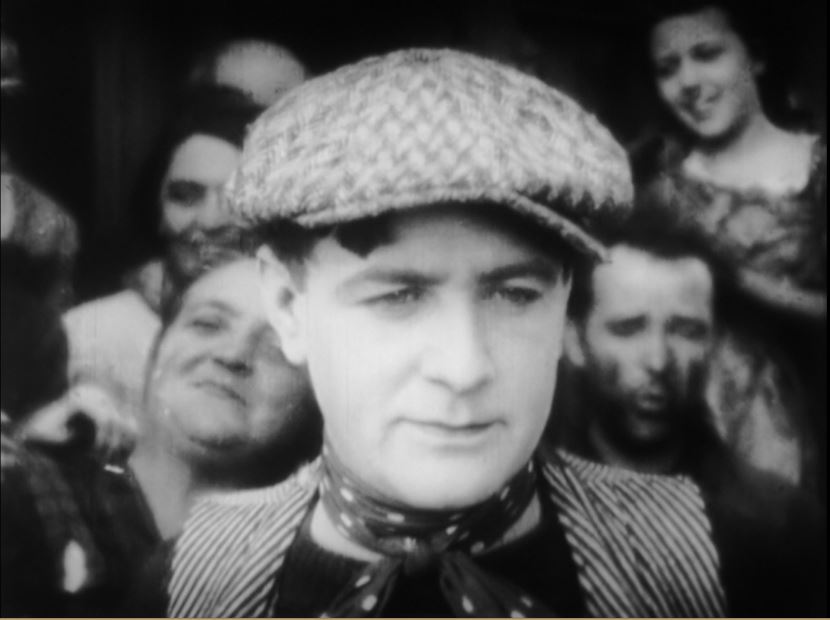
Brabin’s sets certainly convey the cramped poverty of the East End 5,000 miles away and the opening brings most of the central characters together in one fluid sequence… we find bare-knuckle star Chuck Lightfoot (Kenneth Harlan) striding through Limehouse taking all the congratulations for his latest victory. None of this is good enough for his dipsomaniacal wife Cissie (Gladys Brockwell) and a conflagration gradually escalates watched from above by Dad Minasi (Tully Marshall) as he cleans windows above. As the police arrive to break things up, young Twink (Moore) distracts everyone with an impromptu jig… and as the crowd dissipates, she derides both Chuck and Cissie for their bad behaviour, the former surprisingly willing to listen to the lass.


Twink and her father return home and there’s much affection between the two with the young woman aiming to take after her mother who had been a great dancer and the original “Twinkletoes” … a poster outside still stands testimony to her popularity, even as one of the locals, doubts his young friend can be that dancer. It’s Colleen Moore you fool, of course she can.


Best of friends, Colleen and Kenneth Harlan

Luckily the film doesn’t focus on the inevitability of "Twinkletoes Two" but her love triangle with Chuck and his no-good wife, Cissie. This is quite a daring course for a film of this time and makes for a much more interesting drama especially as we see the lovesick boxer, removed of his physical prowess by his compromised marriage and the tenderness of his feelings for Twink; it’s an interesting role for the big lunk and he excels with what are no doubt big old Irish eyes.


Cissie herself is a real piece of work, another juicy role, and when she can’t beat Twinks in a fist fight or battle of wills – let alone a dance off – she is cunning and reports the dancer’s father to the police. No one likes a grass Cissie but I guess you’re not that keen on yourself either… Dad has, of course, been keeping his criminal side-lines away from Twinks as he tries to wrap up his obligations; now it’s all in danger of collapsing in on him and his pure-hearted daughter.


Cue the music, start the dance!


OK, this is hardly Pabst or Sjostrom but it is a very well-directed film that builds up a decent head of suspense and dramatic tension, from the bit set piece riot at the start to Twink’s stage triumph and the dark betrayals of Cissie. Produced by her husband John McCormick and distributed through Moore's resident studio First National, it shows her dramatic chops which they rotated with comedy fare like Why Be Good? She had the range and reminds me a little of a silent Anna Kendrick, quirky but interesting and with additional talents; sure, Anna can sing though but I doubt she can do ballet…


The Grapevine Blu-ray which is a transfer from 16mm materials in decent if not full restoration clarity. We should be grateful we have it at all though, these are tough times for content and there’s still a certain satisfaction in collating your own home library; you can’t take it with you but you can rewatch it and, should the family agree, take it with you in an outsized coffin buried at the base of a modest garden pyramid… 


Anyway, if you want to grab a copy it's available on their website here.


Wednesday, 23 April 2014

Constant Constance… The Primitive Lover (1922) & Her Sister from Paris (1924)


"I enjoy making people laugh…  this type of work comes easiest and most naturally to me, I am not a highly emotional type….”

Constance Talmadge was one of the most energetic of silent film actors, with clear, open expression, and in possession of two of the biggest, loveliest, eyes in Hollywood. She is my abiding performance memory from Intolerance as she ripped into every opportunity she had to make an audience connection amongst Griffith’s sprawl.

Publicity still from Her Sister from Paris
She was a natural and even without the connections to her savvy sister Norma, would have made it on her own and probably in any era. Yet, Intolerance aside, did Constance ever make any really great movies and, as to a lesser extent with Norma, is this perhaps the reason why the once mighty Talmadge brand has faded more than others who were at their level in the middle silent period?

This is an over-simplification of course, but perhaps we should remember some actors because of their fame and contemporary position as much for the modern appreciation of their creative output? Perhaps we need a more historiographical view?


Account must also be taken of the actor’s professional self-awareness: Constance knew very well what she had to offer and, given the level of success she enjoyed, that was what she set out to achieve, even if the quality of ideas was sometimes illusive…

"…it is exceedingly difficult to get exactly the kind of comedy I especially want. I want comedies of manners, comedies that are funny because they delight one’s sense of what is ridiculously human in the way of little everyday commonplace foibles and frailties – subtle comedies, not comedies of the slap stick variety." 
Constance in Blue Book of the Screen (1923)

Here are two examples of her early twenties output that reflect the impact decent material and support could have on Constance’s energy levels.

The Primitive Lover (1922)


Directed by Sidney Franklin from a Frances Marion scenario based on Edgar Selwyn’s successful stage play The Divorcee, The Primitive Lover allowed the 23 year- old actress (and producer) to show an innocent, dreamy side to her persona as she graduates from spoilt, indecisive, fantasist to a woman of resolution.

Constance plays Phyllis Tomley who opens up the film imagining an extended fantasy in which, marooned at sea on a raft with just a goat and cake for provisions, accepts all too readily the sacrifices of her male protector as he throws himself overboard so that she and her fiancé may survive.

Constance and Harrison Ford
She awakens from her reverie as we discover she was reading the closing stages of her former lover’s book, The Primitive Lover. She turns to her down at heel husband, Hector (Harrison Ford) and asks if he would love her enough to sacrifice himself? She’s bored and spoilt and Hector doesn’t really know what to say or do: he’s a drip.

If only her ex, heroic writer Donald Wales (Kenneth Harlan) hadn’t tragically lost his life just after his book’s publication… But, what’s this, a headline in the paper reveals that he has been found alive and, a few moments later he’s bounding back into Phyllis’ life: the whole thing had been a rouse to sell more books, Hector had been in on it and there was no intention to hurt the love of his life…what!?!?


Inexplicably, Phylis forgives Donald and rather turns on Hector who, rather decently volunteers to stand aside so that the two can be married. Game over and it’s not even half time… except it isn’t and Hector, in spite of going through with the divorce is inspired by a non-nonsense multiple bigamist Indian Chief (Chief John Big Tree) to hatch a plan to either win back his wife or at least prove her “primitive love” for Donald.

He ambushes them on their honeymoon in the Wild West and forces them to live in a shack so that Donald can prove himself the man he wrote he was… Aided by the Chief he sets them tasks and all is going amusingly until real trouble arrives. Who’ll be man enough for Phyllis when the chips are really down?


The Primitive Lover is entertaining fair allowing the three leads enough room to get some laughs at each other’s expense. It is, of course, roaringly un-PC in “new money” but does make fun of the pride and prejudices of both sexes. Constance is a little constrained by the formula though and doesn’t quite raise the bar to her usual level.

Her Sister from Paris (1924)


With a crisper script and better supporting actors – including herself – Constance does much better in Her Sister from Paris.

She plays Helen Weyringer in a stale marriage with Joseph (Ronald Coleman – hard to imagine I know…) but she just won’t party like she used to and he still wants his fun. Coleman’s great: a slightly-more substantial John Gilbert with more than a hint of “cruel” and who would go on to have success into the talkie era.

Helen and Joseph's domestic strife...
Joseph confesses his frustration to his friend Bob (the most excellent George K. Arthur – last seen on this blog trying to ride a bicycle in The Wheels of Chance) and spying a picture of a beautiful French actress very similar to how his wife used to look, resolves to head off to find her in Paris…

But the actress isn’t French and she’s also Helen’s twin sister, only distinguishable from her sibling by a beauty spot on her cheek, cropped blonde hair and a much higher energy reading.

As chance would have – dash it all! – Helen is also en route to Paris to seek sisterly solace and explaining all to her twin, Lola aka La Perry, the showgirl hatches a plan to teach wayward Joseph a lesson!

George K. Arthur and Constance
So it is that Helen has a Lola make-over and plays at being her sister for her clueless husband. Will her old man start an affair with the woman she thinks she is or will he come to his senses and realise that he needs to take as much responsibility for the good times he feels he’s missing with Helen.

It’s classic farce but smartly directed by Sidney Franklin and so very well played by the two Constances, Coleman and Arthur. It’s not a major movie just the kind of film that entertained a lot of people a lot of the time and you know that can’t be bad.

Decisions, decisions...
The Primitive Lover is available from Amazon on a cheap but OK DVD from Alpha Home Entertainment whilst Her Sister from Paris is available on Kino DVD in a double bill with Her Night of Romance, also with Mr Coleman and of which more later...

I’ll leave the last words to Constance, she and Norma both knew what they could offer: “My sister could cry real tears over two sofa cushions stuffed into a long dress and white lace cap, to look like a dead baby… That is real art…

…in my way, I take my work quite as seriously as my sister does hers… One must leave a great deal to the imagination on the screen… so, like the cartoonist, I try to emphasize the salient characteristics, which, of course, in my particular work, bring out the humorous side of the person I am portraying."

Monday, 11 June 2012

Phenomenal Mary Pickford… The Hoodlum (1919)


There’s been a great deal on Mary Pickford over recent weeks in this thing we may still call the blogosphere, chiefly as part of the excellent Pickford Blogathon run by Classic Movies.

I have to confess to knowing very little about this powerhouse of early silent film. Her fame pretty much matched that of Chaplin and she was arguably the most famous woman in cinema, if not the World, during the Great War and beyond.

I’d seen her act very intelligently in the Griffiths short, The New York Hat but had been put off further investigation by an impression that she acted “under her age” and in flimsy comedy-dramas that were of strictly "pop" appeal.


Well, once again, I was wrong and now it’s my turn to gush...

Mary Pickford was the most popular actress of this period because she was undoubtedly technically advanced and because she controlled the quality of her productions. She also looked the part and watching The Hoodlum from 1919, she projected an easy-going likeability that was no doubt the result of many years work in perfecting her craft but which also came from within. She was natural, relaxed and good looking - someone you could easily connect with.


Here the script is a bit wayward but it matters not because Mary holds it all together with a sureness of expression that is quite remarkable. She’s next-door naturalistic all the way through from the spoilt brat at the beginning to the street hustling dice player who wins over the Craigen Street locals and then the lover who stands up for the wronged man at the end.

Pickford had a comic touch that seemingly transcends common sense: she takes us with her with a nod and a wink of massive energetic eyes that convey almost unlimited emotional intelligence.


Mary plays Amy Burke the grand-daughter of the fearsome multi-millionaire Alexander Guthrie (Ralph Lewis) who lives in the lap of 5th Avenue luxury getting her way whenever she likes. She throws tantrums, tortures her poor cat and drives like a mad woman.

Her father (Dwight Crittendon) is absent, involved in some vague research down town where he lives amongst the poor people of Craigen Street documenting their living conditions and doing good work.


Grandpa Guthrie asks Amy to come travelling with him but she refuses wanting to spend more time with her father. This does not go down well and we see a space open up between the two as she heads for a new experience below her class.


Amy learns early on that she must blend in to preserve her father’s “life’s work” and not give the game away. She quickly transforms from a spoilt brat into a street wise, wise-cracking bowery babe, playing craps, dancing in the street and playing the local police for fools.

A mysterious stranger arrives to stay, Peter Cooper, who is quickly revealed to the audience as Guthrie in not very convincing disguise… He has come to observe his grand daughter and is appalled - what has happened to his princess?


But Amy is now part of this new society and helps to look after her neighbours…helping to stop the feud between two neighbours by setting up a mock fight for one to rescue the other, getting help for a sick mother unable to tend to her many children and generally pitching in using her energy for good.

She also takes a shine to a young man, John Graham (Kenneth Harlan) who is seemingly an impoverished painter but who is actually hiding a secret: he was wrongly found guilty of fraud and, after serving his time, is trying to gather evidence to regain his good name.

The man he holds responsible for his misfortune is one Alexander Guthrie …oh dear.


Amy begins to drag the bearded old man into events and, reluctantly at first, her Grandfather begins to see the benefit of giving and he sees that this experience has made Amy a better person. But things come to a head as Amy, finally learning John’s secret, helps him break into her Grandfather’s house to steal the ledger that will show his innocence.

Things go awry and they are caught by the police and then by Guthrie. Devastated by Amy’s seemingly criminal betrayal, he tells the police that he will deal with them. Amy tells him of John’s situation and then Guthrie is revealed to be the caring and generous Peter Cooper… There are more twists and turns than in a Regency play but everything works out in the end and we finish with Amy marrying John and heading off to happiness after one last comic flourish.


So…The Hoodlum is no earnest masterpiece of social commentary but it is a very entertaining film and you do care for the characters. A lot of this is down to Mary Pickford and her peculiar gift must have been to carry films no matter what the premise and the quality of script.


She just has it all within her range and you believe her. Whether you’d believe her as a 12 year old girl or even a boy is another matter but here she’s reasonably close to her age (26 at the time, playing maybe late teens?) and the setting is contemporary and realistic.

Craigen Street would have been a recognisable reality for most of the cinema audiences and Mary was someone they could easily identify with even after the opening scenes of comic tantrums. They would trust in her ability to become one of them and to reflect their lives on screen just as much as Chaplin.


I watched a VHS of the Milestone edition of The Hoodlum which features an vigorous score from Bonnie Janofsky. As you all probably know, Milestone have done much to maintain Pickford’s memory and are the leading source of her films on DVD. It’s a shame more films aren’t more readily available but visit the Milestone site and I challenge you to come away empty handed!

The titles alone say it all about the Pickford phenomenon, everyman adventures with laughs and uplifting endings... Amirilly of Clothes Line Alley, Tess of the Storm Country and Heart O' the Hills. We can kid ourselves that we've moved on but no one is more sophisticated than Mary Pickford. She helped invent film acting and works on levels that still move to this day.

There’s also a very good Mary Pickford documentary on YouTube, it’s the PBS film and narrated by the exemplary Laura Linney.

I know a bit more about Mary Pickford now and will watch more with interest. Can anyone recommend any good biographies?