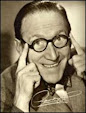
I doubt he could have contained himself had he been here
to hear Aphrodite Raickopoulou's stonking new score written for and played by
Vadim Repin ably accompanied by the might of the Philharmonia Orchestra…
“Paramedic for Mr Hall!”
Is often been said that the camera loved Garbo – watching
Sky Arts Movie documentaries it seems that the camera also loved Ava Gardner,
Lana Turner et al and so on: that Camera was pretty fickle. I think that the
director, cinematographer and, subsequently the audience loved Greta and Mordaunt Hall of course…
 |
| Mordaunt loves Greta |
She must have brought something powerfully new to the
screens and perhaps her European ethereality topped off an earthy sexuality
that the West had rarely seen. Theda and Pola were too deliberate whilst
Lillian, Mary and even Clara were girls in comparison with this woman who
operated on unknowable levels. She has more in common with Asta Nielsen and the
great Italian Divas, especially Bertini: realism with just a silent
touch of a short-fuse.
  |
| A Lyda Borelli reveal borrowed from Malombra? |
Her only vulnerability was love itself and even she could
be charmed by the wholesome wit of John Gilbert. Gilbert was the proof of accessibility
and possibility and, pause for sigh, proved that ultimately neither of things
actually applied in Greta Gustafsson’s case.
But all that was to come and tonight, as in 1927, the
audience believed in their love and, in the love of a mother and son as well as
the love of a soldier for his comrades in arms: there was a lot of love going
round.

But first to feel it was off-screen, as Vadim Repin –
described as the leading soloist of his generation – took to the stage to
rapturous applause alongside conductor Frank Strobel wading through the
eighty-strong Philharmonia. Aphrodite Raickopoulou has spent much of the
intervening period between her splendid score for Faust – performed in the same venue in 2012 – on this new piece and
it was worth every note.
Repin took flight almost from the first few bars of the
overture before the film began and Raickopoulou’s themes began to reveal
themselves against the well-travelled narrative of Tolstoy’s Anna Karenina. It
is an interesting choice to follow up the more tonally extreme Murnau film but
the score succeeded in adding flavour especially to Garbo’s almost mystical
expressiveness. I probably said it before but she over-matches Mr Gilbert whose
natural charm and earnestness simply washes over the swede’s hidden depths.
 |
| John Gilbert: at first sight |
Don’t get me wrong, I do love John Gilbert and I would
also agree with the rather leftfield suggestion from Hugo Vickers who in his
introduction suggested that were he alive today, Gilbert would easily beat
Donald Trump to the Whitehouse: well yes, him, Felix the Cat and Ben Turpin
too!
Meanwhile, back in Tsarist Russia… as adaptations go,
this one is remarkably economical with Director Edmund Goulding moving Frances
Marion’s precis swiftly along and focusing on the aspects of love that bind the
characters to their diverging paths: there is no easy way for any of them to
follow their hearts. Such clever work Miss Marion!
John Gilbert also part directed, perhaps been given his
head with his almost soul-mate – not for nothing did the publicists promote the
film as “Garbo and Gilbert in… Love”
although the original title was simple Heat
which I’m less convinced about.
 |
| OK... it is a little warm in here... |
Their first encounter is tantalizing as horse-drawn
carriages career through frozen countryside. We only see Garbo’s face through a
veil which delays the moment of her rescuer, Alexis Vronsky (Gilbert) seeing
her face. After her carriage loses a horse he takes her to an n inn and after
installing her in a double room wrongly assumed to be theirs, is transfixed
when the big reveal happens: love at first sight!
But… it’s complicated: Anna is already married to the
influential, rich and late middle-aged Senator Alexei Karenin (Brandon Hurst)
and, worse still, they have a son, Serezha Karenin (Philippe De Lacy) who Anna
adores more than life itself. The bond between the 10-year old boy and the
22-year old actress is a strong one but I’m pretty sure it’s meant to show the
immensity of the maternal bond. True Vronsky is jealous in the selfish days of
his passion but he comes to accept the boy’s position in her life.
 |
| George Fawcett does his Windsor Davies |
But Vronsky is similarly compromised by his family
connection to his regiment, led by the Grand Duke Michel (George Fawcett who is
about as Cossack as Windsor Davies!). He faces being drummed out after
generations of Vronsky family service if he doesn’t save face by giving up
Anna.
Eventually the Senator intervenes, telling the lovers
that they will destroy themselves. He is playing a long game and counting on
the pressures of societal norms to keep them apart.
Ultimately Anna cannot leave her boy any more than
Vronsky can walk away from his comrades and his familial history. Regretfully
they give up their love and prepare for the misery of separation.
 |
| Anna gives her emotions away as she watches Vronsky's race |
Famously two endings were filmed one based on Tolstoy’s
and another crafted for local taste… you’ll have to watch it yourself to find
out which one won.
Love is a very
good film above and beyond G&G. There is some lovely cinematography from
William H. Daniels who employs a good range of “European” camera mobility,
following the characters through immense rooms and tracking John Gilbert during
the soldier’s horse race – Anna’s heart is in her mouth and we respond in kind
to the under-cranked danger of the equine dual.

It’s available from Warner Archives in a decent print but
it would be good to see it released with this enormous, radiantly good-natured new score.
The concert launched the 2016 UK-Russia Year of Language
and Literature and featured my pal Sarah’s live debut at a silent film – thanks
for taking the chance SEG!


+colour.png)


%2Bdress.jpg)


+hill+trip.jpg)