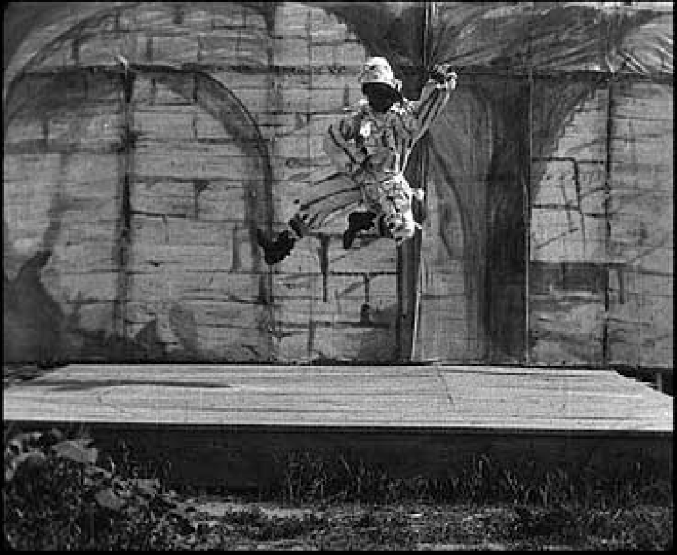
Showing posts with label Vladimir Fogel. Show all posts

Sunday, 16 March 2025

The Revolution might be feminized… Bed and Sofa (1927)


Problems which at one time seemed too difficult for the most talented thinkers have now been solved by the inanimate but all-powerful conditions of production. The same forces which for thousands of years enslaved women now, at a further stage of development, are leading them along the path to freedom and independence.

Alexandra Kollontai, The Social Basis of the Woman Question (1909)


It was one thing to take control of the means of production in 1917 but any attempt to forge a new society was going to have to involve changes in the role of women and their relationship to work and men. Alexandra Kollontai was a major figure in the evolution of the revolutionary movement’s thinking on this issue and served in Lenin’s first government before helping to form the Zhenotdel, the women's department of the Central Committee with the aim of improving women’s position in the new economy. Before it was closed in 1930 as Stalin tightened his grip, the “Woman’s Committee” played its part in educating women about the new marriage, education, and work laws.


From 1918 all marriage was now civil, and divorce was made much easier for both sexes, developments that Kollontai hoped would weaken the institution and lead individuals to focus their loyalty to the state and not family. Yet, while women were expected to be equal participants in the workforce, invariably they retained command of household chores and in terms of parenting, despite the introduction of maternity leave, and the setting up of child-care centres, there was a growth of single parent families in the 1920s. Divorce made easier, was more common and the family was being undermined as intended.


Even though men and women had equal rights men still viewed housework and domestic chores as women’s work.

David K. Klass How the Russians Really Live


Lyudmila Semyonova

In 1926 a new Family Code attempted to address the issue by restoring the “economic partnership” of marriage and allowing women an equal share of family property in the event of a split. Alimony obligations were strengthened and other measures to help support women and children. Perhaps this was the starting point for this film and the attempt by writer-director Abram Room and co-writer Viktor Shklovsky to detail the state of romance as the first decade of communist rule drew on for women's position had not improved as had been hoped.


Whilst falling out of favour and critical of the Family Code as little more than a restatement of western capitalist ideals, Alexandra Kollontai had been calling for the reintroduction of romance for some time arguing in Make Way for the Winged Eros (1923) that:


Collectivism of will and spirit will conquer individualistic self-sufficiency. The coldness of spiritual solitude, from which people in bourgeois culture often seek salvation in love and marriage, will disappear; a multitude of ties binding people to one another in emotional and spiritual union will grow. The feelings of people will change in the sense of a growth of community, and the inequality between the sexes and every kind of dependence of woman on man will disappear without a trace, lost in the memory of past centuries.


What Room and his co-writer made of this can perhaps be seen in a film which, the director wrote about in Kino magazine before production:


Love, marriage, the family and sexual morality are pressing contemporary topics, which have been discussed thoroughly in the press and at public debates… but have not yet been touched upon at all by the cinema. Or more precisely, the Soviet cinema has not yet tackled them in earnest, and if it has come upon them by chance, it has shown a shallow, primitive 'delicacy'. We were hypocrites, some rules of decency… stopped us if not resolving then at least sharpening, revealing and posing these subjects…


The aim was to make a film focused on a small cast and in an intimate space into which the camera “goes into the very thick of the action, looks at the world through the eyes of the heroes and lives alongside them…”. It is a startlingly frank examination of the relationship between a young married couple, Kolia (Nikolai Batalov) and Liuda (Lyudmila Semyonova) and the former’s former Red Army pal Volodia (Vladimir Fogel) who has come to Moscow to find work as a printer. Like a number of films of this period it makes its points in ways that reach beyond the assumed censorial control of the Party… that would come later and there was certainly a negative reaction on release from the powers that be.


Vladimir Fogel and Nikolai Batalov


Watch out, spoilers ahead.


Bed and Sofa largely leaves out the party line but at one point it was going to feature a speech from the head of the apartments committee condemning the immorality of the inhabitants of the basement flat of Third Meshchanskaia Street. There was also going to be a different resolution in which Liuda heads off to train as a draughtswoman or similar but all were rejected by Room in favour of a more open-ended one that was viewed very dimly by Party officials and yet one which my Gen-Z daughter fully enjoyed.


The film is exactly as Room promised in terms of the forensic depiction of the emotion from his three fine leads and it’s one that genuinely surprises as it portrays the impact of the printer’s cuckoo on the complacent construction worker husband. Wiki has them as a working-class group whereas Kolia is a draughtsman working on restoring the Bolshoi Theatre and so the men are craftsmen and not poor. There are wonderful views of Kolia taking his lunch leaning on the crotch of one of the Bolshoi’s naked male statues whilst taking in the bustling street scenes far below.


Nikolai Batalov's placement was no accident...

His is the outside world while his wife hardly ever leaves the flat and her daily duties. Liuda has decadent tastes though, spending her time reading magazines and with pictures and possessions all through the flat, including one of Douglas Fairbanks by their mirror – shades of A Kiss from Mary Pickford released later in 1927 and featuring Abram Room as one of the players. Soviet Russia was more open to Western cultural influence certainly judging from Liuda’s sharp bob and fashion taste. She may be taken for granted by her self-interested husband but she’s no shortage of fashionable clothes even though their apartment has only a single bed and that sofa where mostly sleeps their cat.


Into this environment comes Volodia who we see travelling into Moscow with some marvellous shots of his train and the outskirts of the city from Grigori Giber who’s work inside the small apartment is equally impressive. Liuda’s close ups are often the punctuation point of interaction between the two old pals and whilst she is initially unsure of the new arrival, he soon demonstrates a more chivalrous and caring approach to domestic life. Whilst her husband is away on work, Volodia takes her outside to an air show and it’s the first we have seen of her outside of her domestic realm. The pure joy of their plane ride contrasts to her daily drudgery…


The relationship that begins with Volodia feels genuine, there’s no suggestion that he’s scheming beyond his romantic ambitions and this makes the next development all the more surprising as after Kolia’s return and discovery of their affair, he is eventually offered a place on the sofa with his friend now promoted to the bed. What could possibly go wrong? The answer is plenty but not quite in the way you would expect as the boys still enjoy each other’s company and competitive games of drafts… and somehow their camaraderie needs to coexist with the new romance.


Vladimir Fogel and Lyudmila Semyonova

The film has so many moment of high quality in the film as Room promised in his Kino article, a “condensed” film in which everything is focused on the acting thereby maximising the inventiveness of the scriptwriter, director and cameraman*. This he called aesthetic economy with a room full of clues – and so many deft “touches” of which Lubitsch would be proud – as the narrative is moved along with sparse intertitles.  Glances and looks are all it takes and the cat plays its part too… gradually the balance shifts and in unspoken ways, Kolia is welcomed back into the bed as well as taking turns on the sofa.


Liuda becomes present and we see Volodia frantically searching the calendar to see if it might be his but, unable to decide who is the father, the two offer to pay for Liuda to have an abortion. The scene in the “private clinic” as she goes alone is so well done with a group of half a dozen women given numbered tokens called out as at a cheese counter when their order is ready. It’s too much for Liuda and as the men arrive much later to see what has happened she is already back home packing and ready to leave them and Moscow far behind.


As she packs, she takes her pictures with her, including her own. She picks up a clay model of the cat, now deceased, and tears fall onto the painted eyes… her cat was a true companion whereas the boys have never really taken the responsibility.


The abortion clinic waiting room

There are so many moments during the film and it is packed with overt and hidden meaning. Kolia is immature but then so is Volodia who despite his ability to make tea, is almost as willing to let his lover do the chores. The balance is wrong with each paring and crushed by the double threat of their entitled indifference Liuda heads off on a train with similar shots to Volodia’s arrival. She is free for her future – unspecified but still with child – leaving the final scene to the boys who faced with new decisions about bed or sofa decide on a cup of tea as the first priority. Who knows maybe they don't even need a woman?


It’s difficult at this remove to be precise about Room’s meaning but as he insisted in the Kino piece, that the basic task of the film "was not to solve, but only to sharpen, not to instruct, but only to lay bare and pose this theme for the audience to discuss." To the extent that what is shown was typical of a post-revolutionary society still in flux, he was targeting the conflicted thinking of the new regime on “the woman question”. Alexandra Kollontai’s hopes had not materialised and she was by now relegated to overseas duty as a diplomat whilst the NEP was about to be replaced by Stalin’s Five-Year Plans and a far more prescriptive and ruthless society.


In 1927 the questions of women’s role could still be asked but not for much longer.


The location is within the Meshchansky District which these days has parks and cafes... 


*I'm reminded by my mother-in-law, noted Wellsian scholar and English Literature academic, Dr Sylvia Hardy, that Room's work was part of the Russian Formalist movement as was his scriptwriting partner Viktor Shklovsky who was a major contributor to the movement's beginings in literature. The basic tenents of Formalism in film context emphasise the aesthetic and technical elements of the medium as alluded to in Room's comments above. This is to foreground the meaning and to remove the author's voice and other conflicting artefacts in the presentation of art.


As Room said in 1925, “Cinema is pre-eminently realism, life, the everyday, objectivity, properly motivated behaviour... If we had to characterise theatre and cinema in simple terms we should have to say: theatre is ‘seeming’ whereas cinema is ‘being’.”


Needless to say this did not suit the Stalinist regime as it wanted more imposed meaning and there's a very instructive artice here in The Slavic Review by Maria Belodubrovskaya Abram Room, A Strict Young Man, and the 1936 Campaign against Formalism in Soviet Cinema. Stalinist cinema did not want naturalism but a curated reality. 


  1. A number of quotes were sourced from Julian Graffy’s book, Bed and Sofa: The Film Companion (Publisher: I.B. Tauris, 2000)
  2. Details of Aleksandra Kollontai are from BOLSHEVIK FEMINIST: The Life of Aleksandra Kollontai by Barbara Evans Clements, Publisher: Indiana University Press, 1979
  3. Alexandra Kollontai 1923. Make way for Winged Eros: A Letter to Working Youth. First published: in Molodoya Gvardiya (Young Guard) magazine #3 in 1923
  4. LIFE INTO ART: Laying Bare the Theme in "Bed and Sofa, Rimgaila Salys, Russian Language Journal Vol. 52, No. 171/173 (Winter-Spring-Fall 1998)
  5. How the Russians Really Lived. Willis, David K. Klass, New York: St. Martens Press, 1985.


Friday, 29 November 2024

Cabin fever… By the Law (1926), Barbican with Stephen Horne and Martin Pyne


It is a simple matter to see the obvious, to do the expected… When the unexpected does happen, however, and when it is of sufficiently grave import, the unfit perish. … unable to do the unexpected, (they) are incapable of adjusting their well-grooved lives... In short, when they come to the end of their own groove, they die.

Jack London, The Unexpected (1906)


There were several moments as this extraordinary film reached its climax when I lost track of which musician was making which noise so closely aligned were Stephen Horne and Martin Pyne, especially as the former plucked the heavy strings whilst hammering their keys and Martin used snare, cymbal and bass drum in rapid polyrhythmic clusters. This was a classic Sunday afternoon Barbican silent film screening and the accompaniment plus the kind of knowledgeable and adventurous audience created such an atmosphere with this film that it was irresistibly entertaining. We were also left challenged by the force of Lev Kuleshov’s film and the eternal questions it addressed: mortality and morality, gold at the heart of all evil, a Soviet version of Greed, a proto noir mixed with post-revolutionary nervous exhaustion…


Now, I don’t suppose Jack London had all this in mind when he wrote The Unexpected*, the short story on which this film was based, in 1905**. That said, at 21 he had joined the Klondike Gold Rush goldrush in July 1897, with his sister's husband, one Captain Shepard. He suffered as many others did from malnutrition in the cold remote conditions and developed scurvy, losing four of his front teeth… and being marked for life by striations on his face. Later on, he covered the Russo-Japanese War in early 1904 for the San Francisco Examiner which saw him briefly imprisoned in Japan: honestly, he makes Ernest Hemmingway look a little lightweight!


So it was that London’s prose was filled with his personal experience of otherwise civilised folk faced with having to adapt to new “grooves” as the quote at the top references and you can see how the frozen wastes of the Yukon, the ephemeral nature of capitalist values and the poison at its heart enabled Kuleshov to, just about, get funding from Soviet production company Goskino for what was the cheapest film made in Russia, as the Barbican’s programmer, Tamara Anderson, said in her introduction pointed out that this might be a record that it still holds.


We had faces then... Aleksandra Khokhlova

The results are extraordinary on any budget, with superb performances from the director’s wife Aleksandra Khokhlova, her screen husband as played by Sergei Komarov and especially Vladimir Fogel as the villain of the piece… or is he? That is the question or rather the willingness of the others to decide on his crime and subsequent punishment.


It’s interesting for a soviet Russian film to have kept the story’s Yukon setting but this is a film about greed and the “rules” of society. The protagonists are five emigrees from old Europe all in search of gold and the freedom it will bring. Their leader is the Swedish Hans Nelson (Komarov) who is married to the English Edith (Khokhlova) whilst Dutchy’s country of origin speaks for itself (he’s played by Porfiri Podobed). Then there’s Harky (Pyotr Galadzhev) and the Irish Michael (Fogel) who is the butt of a lot of the camp’s jokes as well as being the manual labourer – the class system is alive and well even in miniature.


We find the group preparing for the day as Michael fetches water from the river and plays his penny whistle for his dog – much to the slight annoyance of Hans – but to our delight especially as it gave Mr Horne the chance to weave some playful lines on his flute. Michael’s easy-going nature is curtailed by his duties and after cooking breakfast for the team he is told to prepare the equipment for relocation after Hans announces that the current location will not produce the gold they want. Having just sat down to eat he shares a bemused look before trudging of, breakfast interrupted, leaving the others to pick off his food.


Michael is however just about to save their bacon, as it were, when during the dismantling of the mine he gives the waters one last chance and slushing the dregs around a washing pan finds the golden nuggets at last. As he labours we repeatedly cut back to the camp with the other four lounging in the early morning sub smoking and relaxing after eating their meals and his. They quickly absorb his role in reversing their fortunes and celebrate by dancing together, his exclusion a signal of the mockery to come now that he has made them rich.


Vladimir Fogel

Things reach a head after Michael returns from hunting to find them eating lunch without him and laughing about his “envy” – the standard slur for the workers from Capital - and the tone shifts in an instance as, gun in hand he blasts first Harky – who slumps forward almost comically, head balanced in his food and preventing the table from collapse – and then Dutchy. The other two are in shock but Edith responds the quicker trying to wrest the gun away as her husband sits slack jawed before finally pounding Michael into submission. It’s the most desperate scene and, as London had written, completely unexpected.


Now Hans and Edith tie Michael up and must treat him as a prisoner through the long winter months until he can be tried “by the law” … What follows is an exploration of the morality of these cultured people in the circumstances of wild nature as the cabin is flooded and isolated in bitter conditions, can they hold out till Spring to take their man to the police and the courts and where does the authority of the law reside?


Edith clutches her bible and Hans is the more pragmatic but still restrained by his own code and Kuleshov makes the most of the tension with quick cuts interspersed with frequent close-ups and the constant reminder of their isolation on the freezing lake. Michael meanwhile has an unknowable, conflicted persona, the hard-working whistler who looks after his dog and who was turned into a rage by hard-hearted teasing and who seems unable or unwilling to explain why he killed.


The management relax as their worker discovers their fortune...


There is so much to work out in the film and a number of possible readings and it was a privilege to be sat head scratching with the rest of the audience as Stephen and Martin whipped up the most visceral improvisations for the wild interiors of this battering wilderness. Food for the heart and mind at the Barbican as you would expect.


*Published in McClure's Magazine, Aug 1906, London's story is apparently based upon actual events involving prospectors at Latuya Bay, Alaska 1900. Details here from historian David Reamer in the Anchorage Daily News.


**The script, co-written with Viktor Shklovsky also incorporated elements of London’s story, Just Meat (1907).


Jack London prospecting in Alaska 1897, he was just 21.


Thursday, 28 October 2021

Back home… The House on Trubnaya (1928), with Cyrus Gabrysch, Kennington Bioscope


Thus, it can be seen that even the most unworldly peasant can make a valuable contribution to the labour movement… As with Michael Powell, Boris Barnet was not phased by the strictures of propaganda and weaves his way around the need to deliver this core messaging whilst still providing entertainment. This film is funny, inventive and superbly edited with the actors giving sardonic and engaging performances that make light of the script ultimately conspired by five different writers. The original script dated back to Lenin’s era and a call for the common comrade to be ready to participate in democratic process whilst Stalin’s era was driven by a lengthening process of pulling more from the country to work in the city. Barnet meets both these objectives with wit and irreverent undercurrents which pull in the viewer in more subtly and completely than more earnest polemic.


I’m second-guessing historically but by the end of the film I was all for marching my support for Parasha Pitunova (Vera Maretskaya) as elected deputy of the Moscow maids' Trade Union.


In addition to some wonderful location shots of Moscow - Yevgeni Alekseyev’s cinematography is a wonder – there’s also a fantastic set showing the flights of stairs inside the tenement on Trubaya, like Dante’s Hell each level denoting a different level of position and snobbery with some of the worst at the lowest levels. It’s a superb way to illustrate the neighbourly interactions as well as the building’s “society” and, in a hectic start, Alekseyev’s camera pulls in and out as we witness the chaos – two men chopping wood on one landing, pausing to let a disabled child squeeze past, whilst others squabble over laundry as another day in civilisation begins.


Inside the house on Trubnaya

Barnet plays with expectations and form throughout notably when Parasha is chasing a duck in the streets and grabs it just as a tram moves at speed towards her, the driver leaps out and is suspended – freeze-framed - in mid-air as the title card reads: “… but wait, we forgot to tell you how the duck ended up in Moscow.” All this after some ten minutes of set up including rapid cuts, reversed film, montage (natch) and the goings on in the staircase set. This was Barnet’s fourth film but it’s his Revolver in terms of pushing the boundaries.


But wait, I forgot to tell you how I ended up in Kennington…


This was my first visit to the Cinema Museum since March 2020 and it was a delight to see the Kennington Bioscope back up and running. The KB carried on through the pandemic with KBTV on YouTube and whilst the path to the old place is all still familiar, what a time we’ve had. The old team was back together in the flesh and as star of stage and small screen, KBTV’s MC Michelle Facey introduced and John Sweeney warmed up for the first films… we were about to party like it’s 2019.


Still Dot Moving

Our first film was Still Dot Moving, a new silent short made by print-maker Julia Vogl which was a mesmerising sequence of original prints superimposed and almost glowing with a vibrant rhythm as John Sweeney overlayed his musical response. This was startling and unlike anything you might expect from the context but it was a fine way to return to the screen. John Sweeney’s accompaniment was as intricate and mesmeric as Julia’s images and this was the perfect example of the continuing possibilities of film and live music. 1


John then introduced us to the ground-breaking Russian dancer and film maker Alexander Shiryaev, who not only founded character dance in Russian ballet at the Mariinsky Theatre but also (probably) invented stop motion animation. Shiryaev’s interests were strictly in support of his work – helping to show his dancers his intended movements and choreography – and were only discovered in the 1990s. As John said, his ability to capture movement using these techniques was remarkable and the three films screened, one paper animation, another stop-motion and a third showing Shiryaev performing a Cossack dance with his wife, dancer Natalia Matveeva, were captivating especially when aided by such a practiced dance accompaniment!


Alexander Shiryaev

A Lupino Lane short comedy followed, Goodnight Nurse (1929) a new scan of 35mm nitrate and one of a number restored by the KB’s David Wyatt and Dave Glass following a Kickstarter campaign. It showcased the Brit’s speed of movement and athleticism which matched those who’d gone over to Hollywood before if not necessarily in terms of originality, then certainly flexibility and comedy!


Accompaniment for this was provided by the sprightly hands of Radio’s Colin Sell who’s worked with more than a few old jokers in his time and was the perfect comedy accomplice for Ida Lupino’s Uncle, the man who used to dance The Lambeth Walk. The Lupino Lane restorations are now available on DVD and you can purchase them from Amazon soon.2


Yes, but what about the duck?


After Boris stops his film with the endangered duck, the tram driver is unfrozen and jumps backwards into his reversing tram and we’re run back to scenes of Parasha about to depart from her village where she has been staying with her aunt. She’s off to stay with her Uncle Fedya (Aleksandr Gromov) in Moscow but, just as she climbs on board with a wicker bag containing food and the present of a white duck (uncredited, sadly) her train departs just after one arrives with Fedya on it.


Cue dreamy views of Parasha’s train slicing through trees and fields on route to Moscow and then her disorientation in finding that Fedya is not where he’s supposed to be. She wanders all night ending up with the above Duck Distress before, as chance would have it, being spotted by someone she knows.


Semyon in his motor

In the first ten minutes, Barnet has already shown us Semyon Byvalov a young chauffeur (Vladimir Batalov) preparing his car and then driving through Moscow with his sweetheart Marisha-maid (Anel Sudakevich). The narrative threads now intersect as he picks up his old friend and takes her to Trubaya. Here she gets work as a maid with the very odd couple of Mr. Golikov (Vladimir Fogel), a hairdresser, and his slovenly wife (Yelena Tyapkina) who seems to have perfected the art of lounging. Mrs. Golikov refuses to allow a union member to be their maid – probably more on economic than political grounds – so the newly arrived innocent is perfect for her purposes.


The Golikov’s are key characters, especially the hairdresser. He is hyperactive and ridiculous, washing their plates in the absence of a maid and after drying them flinging them across the room to smash. She is full of undeserved airs and graces… the sort of bourgeoise the Revolution was supposed to galvanise and re-purpose.


Another interesting sequence with Vera Maretskaya followed by (hand-held) camera through a crowd

But Parasha is of good intention and only sees other’s better motives. She is befriended by Fenya (Ada Vojtsik) who is politically active and takes her to union meetings. The workers arrange a play about the French Revolution which completely bewitches Parasha who, having not seen theatre before, attacks Golikov on stage as his character is assassinates Semyon’s… this wins her the love and support of the audience but Golikov immediately sacks her.


Our irritable boss has reckoned without the impact his young maid has created and soon he learns that she has been elected to the post of deputy by the maids’ trade union. This immediately elevates the standing of her former employers and Mrs Golikov is not alone in being keen to to ride this particular tide yet can her husband control himself for long enough to act in his and, more importantly, others' best interests? 


Parasha on the march

The House on Trubnaya is very clever slapstick mixed with social observation and the required political messaging: if all bosses are as venal and self-serving as the Golikov’s – even over a decade on from the Revolution – then workers need to join unions to support themselves and others. It never lectures just wends its peculiar way scoring laughs over political points and that’s exactly why it’s so watchable now.


Cyrus Gabrysch accompanied in style and relished this return to the silent film “club” he helped found! Welcome home Mr Gabrysch and everyone else involved in this wonderful collective!


1. More about Julia Vogl's work on her website and her Instagram.

2. More details of  the Lupino Lane project on their Kickstarter page.


No ducks were harmed in the writing of this post.