Showing posts with label Jonny Best. Show all posts

Sunday, 19 May 2019

The harder they fall... The Last Laugh (1924) with Jonny Best, BFI


This film has always been on my “ticket list” for watching on the big screen and with a live score: it’s an extraordinary achievement from one of Weimer’s finest actors, possibly it’s greatest director whose images are brought to life by one of the most phenomenal of cameramen.

The Last Laugh, original entitled, Der letzte Mann (The Last Man) was a break out success across the cinema world at the time with the New York Times critic Mordaunt Hall describing it as an “highly artistic film masterpiece…” and it has grown in stature subsequently with critic Paul Rotha saying that it "… was cine-fiction in its purest form…” It gave director FW Murnau, the budget and artistic freedom to make Tartuffe (1925) and Faust (1926) before departing for Hollywood and Sunrise.

Murnau exerts almost complete visual control over this film which was, like Sunrise, filmed mostly in studio with massive sets replicating the hotel where the chief protagonist works, the run-down tenements of his home and the streets in between. Karl Freund’s camera zooms around from balcony to window ledge, choreographing the focus on different character’s reactions. It’s technically brilliant and quite unlike almost anything else at this stage of cinema; lurking in the shadows then suddenly zooming towards or past its targets, as quick as thought and giving the action a curious dreamlike quality.


But then Emil Jannings’ main character is living in constant unreality. He works as a doorman in a swish uptown hotel – The Atlantic – were he helps the prestigious guests to pass from the grimy outside world to its pristine opulence. The hotel is its own fantasy in which appearance is all and status is vital: it has to be a place worthy of the patronage of the guests and this sense of splendour rubs off on those who work there.

To be a visual representation of the hotel “brand” is an honour and source of pride for those fortunate to work front of house. The older and less attractive are kept behind the scenes, cleaning and otherwise maintaining the “front”. Our doorman is however on the cusp with his age starting to tell and his strength on the wane. As one slippery trunk proves too much and he sits recovering his calculating manager spots his weakness and relegates him to a below stairs role in the washroom. He is devastated and, almost immediately, begins to shrink in front of our eyes, an amazingly impressive, protean display of physical acting from Jannings all accentuated by Murnau and Freunds’ angles and lighting.

Spotting his replacement standing younger and taller.
Unable to face the humiliation of this demotion, the doorman steals his uniform and puts it on when he returns to his tenement for his niece’s wedding party (she's played by Maly Delschaft). He carries off the deception for the night and a drunken good time is had by all and yet he has the most vivid of inebriated dreams in which his strength and position are restored with some superb imagery from Murnau.

The next day it’s back to his new reality and his humbling is compounded by the careless humiliation of the guests and, when he is discovered, from his neighbours and even his own family. He creeps home a mere shadow only to be laughed at and scorned. The schadenfreude is open and relentless… everyone seemingly happy to see him brought down to earth and even hi niece ashamed of him.

The doorman returns his coat to the hotel and is discovered by a friendly night-watchman who is the first person there to show him any real kindness. As the watchman helps him to his chair in the washroom his torch illuminates a broken heart and a man at the end of his tether.

Down the drain
There’s surely only one way this story can go… or is there? The ending is controversial or possibly a work of genius… and I’m starting to be convinced it’s the latter as I reach the stage when lifting those metaphorical trunks myself is getting a bit harder.

Jannings gives one of the best performances of the Weimar years. He is a physically powerful actor, yet he is able to expand and reduce his size in proportion to the character’s fortunes. He is supported by a superbly expressive moustache and expert make up and the film, with so many close ups and, no dialogue, makes the most of his range.

The Last Laugh is a testament to the unchanging truths of capitalism, mortality and, in the end, love. It also shows cinema pushed to the very limits, an almost completely “silent” film in terms of specific “commentary” and one that is reliant on the expression of its performers as well as Murnau’s editorial control.


Jonny Best’s accompaniment followed the rhythms of the film and he had Jannings’ back throughout. This must be a challenging film to play with as the music needs to leave as much “unsaid” as the film and allow the audience to weave the emotional warp and weft themselves.

Already a highlight among the Weimar Season with so much more to come… details on the BFI website.


Wednesday, 8 May 2019

Weimar mania… Opium (1919), with Jonny Best, BFI


In her sparkling run through of this major BFI retrospective of Weimar Cinema, Margaret Deriaz said that in the years between 1919 and 1933, Germany produced over 3,500 films, second only to Hollywood in scale and productivity. Of all those films it would be hard to find one more purely quirky than Opium and yet, for all its strangeness the film has plenty of charms especially when accompanied by Yorkshire's finest, Jonny Best, whose patient minor chords and plaintive discords did much to liberate Robert Reinert’s original dramatic flavours.

The film has a distinctive visual style, almost a series of tableaux in the manner of pre-war Italian film but very vibrant and filled with ambitious double exposures as well as some superbly-captured performances. Reinert’s cameraman was Helmar Lerski, a former portrait photographer who used deep focus and careful lighting to capture every performer in the frame with absolute clarity. Over and again one actor is joined by another and then another moving into frame and adding layers of meaning as they react to events. Another startling shot sees the main character, Professor Gesellius (Eduard von Winterstein), on a boat moving relentlessly in focus towards a distant shore filled with opium-induced faeries and sprites (of which more later…).

When the Professor gives a lecture a glass remains in close-up on his lectern as do his students as he approaches to speak, it’s very skilled and apt for a film about perception: The Doors of Perspective perhaps? It’s a very powerful style and whilst it wasn’t the way movies were to go it is still a compelling example of the experimentation of the time.

Conrad fades away and Eduard marvels at the depth of field as Sybill stays calm
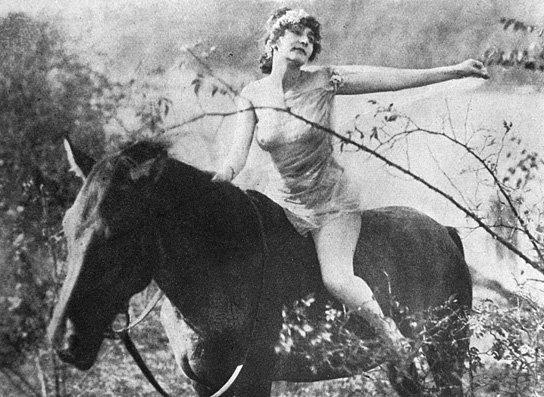
This was also that brief period, post-war, when all censorship was dropped and so the film’s frequent Faerie nudity adds some extra surprise as does the take of mixed-race relationships and, yes, drug addiction. The effects of opium are revealed through double exposures and static montage of dancing sprites and pools of water, sometimes inverted over the character’s head. It’s clear that Psychedelia nearly happened here and yet the summer of love was far from the thoughts of film-makers still trying to make sense of the Great War.

As film historian Tobias Nagl, quoted in tonight’s hand-out said: “under the surface, Opium captures the experience and shock of the War… (using) … a brilliant, hallucinatory cinematic language.” So it is that the sanatorium the Professor sets up for recovering addicts is so very like those for the shell-shocked and the physically-destroyed, men who were all but dead already trying to piece themselves together away from the adrenal rush of fear and mortal dread.

Now some of the audience and I’m naming no names couple in the second row with horsey laughs… found all this a bit too melodramatic but maybe they’d been caught up in BFI Weimar Mania (it’s a thing!) and hadn’t quite – literally – got with the programme.

"Smokers, get high..."
This being 1919 some stereotypical characters are deployed but the relationships between the “Indians” in brown face, the “Chinese” and the white men are more even-handed than you might credit. Granted there is a completely bonkers bad guy, Nung Chiang (Werner Krauss, yes the good Dr Caligari) who literally pops up onto screen to the surprise his enemies across the World with a manic grin and acid jazz hands but I think, like so much of the film, his character is representative and not meant to be a genuine description of a contemporary drug dealer.

Lotte Eisner shoot me down in flames but, whilst this is most definitely not an expressionist film, there are elements of the style not so much in the mis en scene but the performances all of which are designed as emblems rather than characters. No one plays it straight but then this is a drug-den of a movie and we’re all out of minds with grief and as the first tentative buzz of the new democracy kick in. No censorship mein Herr: we’re so out of it, we see lions in India!

The story is about addictions to love and revenge with Nung Chiang swearing revenge on Richard Armstrong (Friedrich Kühne) an Englishman who smoked his opium and then stole his wife in China. There’s a further grievance for Chiang when Professor Gesellius rescues a young woman, Sin (Sybill Morel) from his den of multiple iniquities – you name it he’s selling it – and takes her back to his sanatorium in the West. Sin is mixed race and you can guess who her father is… but, none of this is known to Gesellius’ wife Maria (Hanna Ralph) who just happens to be having an affair with Dr. Richard Armstrong Jr. (Conrad Veidt).

Eduard von Winterstein, Werner Krauss and Sybill Morel
Connie’s younger and better fed than I’m used to and is convulsed with shame after his boss comes back… so much so that he’s not long for this World, dying on a bed surrounded by almost all of the main characters in another remarkable tableau with centimetre-perfect depth of field.

His death is considered suspicious and with the Professor in the frame, Sin takes the blame only to be whisked away from execution by Gesellius. Which is how we find ourselves in India with all those lions and so many scores to settle.

Opium is opulent and over-wrought and I’d love to see it again. The restoration from Filmmuseum München, as premiered at last year’s Berlinale, is crisp and clear, is as close as we’ve been to the original which is one of Reinhert’s few surviving films.

Jonny Best took the film in his stride and maintained a watchful poignance that fitted the sparkling visuals perfectly; this film is an elegy as much as a beginning and despite appearances there was more unknown than known emotion on screen.

An excellent start to the BFI Weimar season!

Just say no.
Jungle Book, not The Lion King