Showing posts with label Ita Rina. Show all posts

Monday, 21 August 2023

Bonn voyage… Waves of Passion (1929), with Neil Brand, Silent Film Days Bonn 2023 streaming


If it’s August it must be Bonn and a silent film festival which thankfully still streams part of its programme for those of us who, once more, can’t make it. It’s the usual top-class programme with some of the world’s finest accompanists producing the musical magic in Beethoven’s hometown. First up for me is this booze smuggling adventure with Slovenian superstar Ita Rina as a bombshell blonde in Waves of Passion (Kire Lained/ Wellen der Leidenschaft) an Estonian/German co-production from 1930.


I have previously seen the film in Pordenone during The Before Times and has since been restored in 4k by the National Archives of Estonia earlier this year. Directed by Russian actor Wladimir Gaidarow, who also stars and provides the production company, it has elements of a sixties crime caper or thirties screwball with a humour and wit that recognises the outlandishness of its premise. I wasn’t that convinced by Gaidarow on first viewing but he’s got an edge that sets him apart from the more earnest heroes of Hollywood; he’s roguish in an almost English way.


Ita Rina is, of course, also more sophisticated than Hollywood might allow and she’s also a fine actress as we know from Tonka of the Gallows, Spring Awakening and Erotikon. She has a toughness that underpins her sweet features and a vulnerability too, not to mention more leg than you’d see from Norma or even Joan at this stage. Those Europeans and their sophistication, eh?


Ita Rina and Wladimir Gaidarow
 

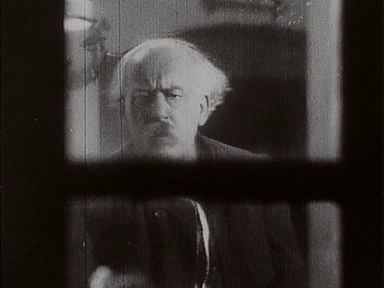
Things begin on a cruise ship in the Baltic Sea as passengers dance in the hall, we meet The Spirit King Jaan Kõlgis (Fritz Greiner – who bears an uncanny resemblance to Wallace Beery both physically and in spirit) so called because of his success in smuggling hooch up the coast to Finland. He’s crude and unmannered, forgetting to take his hat off as he greets an older woman although we ain’t seen nothing yet.


In the ships’ ball room there’s a Brazilian man playing cards with young women, a seeming adventurer Rex Ronney (Gaidarow) who we will learn is a writer working to uncover the smugglers. He meets up with his journalist pal Raimondo (Ernst Falkenberg) and the two fake an assault so Rex can get an in with Kõlgis and find out more about his operation. The King duly impressed with his spirit, he gives Rex a contact at The Fat Anchor in Tallinn, a port in the north of the country directly opposite Helsinki some 90-odd kilometres over the Bay of Finland.


Rex duly makes his entrance at the harbour side hotel and soon attracts the attention of Leida (Jutta Jol) a hostess as well as the distrust of Kõlgis’ men who, to be honest, look quite a bit tougher than him. He’s just getting into a scrap with their leader, Hugo Brett, when a blonde woman in a coat and beret arrives and causes everyone’s jaw to drop. It’s Betty (Ita Rina) who quickly takes the gang off into a room to discuss their plans.


Fritz Greiner

Betty, is the daughter of Mart Martens (Raymondo van Riel), who is organising the smuggling and Rex is quickly involved in an attempt to smuggle 100 litres of vodka, bonding with Betty after the police discover the gang and arrest most of them just as Rex enables her escape via motorboat as the bullets fly around them catching him on the arm.


Back at Martens’ house, Betty nurses Rex back to health and he discovers that Kõlgis is blackmailing her father over unpaid debts and with the threat of forcibly marrying her too. The latest set back puts the old man in an impossible position yet Rex vows to save them and take care of The Spirit King once and for all. There’s a lovely scene on the beach where Betty plays in the water with her dog and lounges in an iconic way on the back of an upturned boat dazzling Rex and the audience with her beautifully enigmatic presence.


Returning to The Fat Anchor though, Betty gets the wrong idea as Rex dances with Leida and storms off in tears before agreeing to marry Kõlgis to save her father… he whisks her off on his boat Mary leaving Rex in pursuit via land and sea for a breathless finale.


Jutta Jol

Gaidarows directs well and there’s a lot of camera mobility not to mention German angles and Russian cuts in what presents as a state-of-the-art action film. It was premiered in Estonia and Germany and it certainly cemented Ita Rina’s Eurostar status although it stands as the only film produced by Gaidarow company and the only one he directed, he stuck to acting after this.


Neil Brand provided adventurous accompaniment of his own, I’ve heard him dance with swashbucklers and neo-noirs before and he has a near limitless catalogue of scoring references from throughout cinema that he not only plays all of the right notes in the right order but also with the perfect sentiment, mood and emotional key. Such a film allows him to cover his range but also always in respect to the source material and the narration… I could sense the audience engagement long before the appreciative applause at the end.


All of which reminds me that next year, next year, I must also be sat in that elegant square listening to this music and watching with all the rest.


In the meantime, there’s more to savour from the online screenings. There are five great films still available to view online until 22nd August with the last on Wednesday 23rd. You can also donate to support this vital festival on the website too.

Listen carefully, I shall say this only once...


Monday, 23 December 2019

2019 vision… illuminating a year in the dark.


Who knows where the time goes eh? The centenary of 1919 passed by with brutal speed leaving me reeling in its wake trying to grab hold of something solid to make sense of it all. This was the year of going with the flow; a mad dash from Italy to Korea to Leicester and back to Italy via a Weimar Germany that increasingly felt uncomfortably familiar.

There’s no respite, strong rumours suggest that the Twenties are about to be re-booted and we can only hope that means a return of style and ambition across every walk of life. So, in no particular order, and with sincerest thanks to everyone who programmed, introduced, projected and played along with the 120+ silent films I saw in cinema… here we go: fourteen favourites but it could have been forty.

Steve McQueen and Faye Dunaway...
1.       The Lodger (1927), Neil Brand score, Ben Palmer conducting Orchestra San Marco, Pordenone

My third year at Le Giornate and to get through eight days of cultural and social excess – those Aperols won’t Spritz themselves - and still find myself watching this film with such alert glee, says so much about Hitchcock’s visuals and Neil Brand’s score. In my first year I’d nodded off for Lubitsch’s Student Prince of Old Heidelberg (sorry Ernst) but watching this most re-watchable of silent films with Neil’s score sinking in even more, I felt fully connected in this cinematic home from home.

There is just so much to process in Pordenone with up to 14 hours of film a day. It was a good year for William S Hart – with a retrospective showing how his bad-to-good man, with the love of a good woman, themes evolved – Estonian silents and a delightful Marion Davis film, Beverly of Graustark (1926), which proved a cross-dressing delight! Read all about it in my daily posts here.

You know who it is.
2.       Brooksie on the big screen: It's the Old Army Game (1926), with European Silent Screen Virtuosi, Bristol Old Vic, Slapstick Festival also Diary of a Lost Girl (1929), BFI

There aren’t that many Louise Brooks’ films but I want to see them all on the big screen and this year I added two more and was not disappointed. Louise is fresh as a daisy alongside an occasionally tiresome WC Fields in Army Game, her gleeful reactions just beautiful to watch especially in a room full of people experiencing the same thing. Diary is at another level as a film and I’ve waited years to see it on screen eschewing my multiples DVDs and Blu-rays… with a smashing intro from Pabstspert Pamela Hutchison unseen Louise filled the screen almost as powerfully as for Pandora.

At the Crossroads
3.       Crossroads of Youth (1934), with Lee Jinwook and Cho Hee Bong, BFI Early Korean Cinema

2019 was the centenary of Korean Cinema with a season featuring what remains of the very earliest films made under Japanese occupation as well as an excellent 14th edition of the Korean Film Festival later in the year.

Crossroads is the only silent survivor of this turbulent period and had been painstakingly reconstructed to establish narrative and visual sense. This was a silent film screening unlike any other I’ve ever witnessed, in addition to a Korean Byeonsa – a more active version of a Japanese Benshi – performed with gleeful energy by Cho Hee Bong, we had two actors, Hwang Minsu and Park Hee-von who sang parts echoing the central love story with West-end panache. Accompaniment was provided by composer Lee Jinwook on keyboards, Shin Jia on accordion, Oh Seung Hee on double-bass and Sim Jeongeun on violin an ear-popping combination of styles that seamlessly supported the narrative on and off screen.

The Miller and the Sweep (1897)
4.       Screening the Victorians, with Bryony Dixon and Stephen Horne, BFI

This was another marvellous trip through the oldest BFI archives accompanied by curator Bryony Dixon and Stephen Horne and it featured some of the most impressive footage from the Victorian cinema era, 1896 to 1901. We’d seen glimpses of Queen Victoria before but this screening of Queen Victoria’s Last Visit to Ireland (1900) from a print held by MOMA, was the clearest glimpse yet of the Empress as she greeted Dublin crowds smiling and wearing sunglasses – yes, smiling!


5.       Happy Birthday, Mr Paul!, with Ian Christie and John Sweeney, BFI

It was a good year all round for Victorian film with Ian Christie giving two thoroughly entertaining show and tells at the BFI and the Bioscope on RW Paul, the father of British cinema.

During his ten years of peak activity, Paul undoubtedly advance the art of cinema as both a technical innovator and an artistic one: bringing both together in forms of new expression. The World’s first two-scene film was (probably) Paul’s Come Along, Do (1898) which has now had a fragment of its long-lost second scene - inside the art gallery - restored from one of his illustrated catalogues, another innovation in marketing terms – take that Mr Edison or more specifically, William Dickson who did the work the Big E was happy to patent!


It was good to fill out the backstory of this key figure and Christie’s book, Robert Paul and the Origins of British Cinema (Chicago University Press) will be on many a list this Christmas.

Valeska Gert in Joyless mood.
6.       The Joyless Street (1925) with John Sweeney, BFI Weimar Season

The BFI spoiled us with some excellent strands this year, I loved the Antonioni season and of course we have the ongoing musicals season which covers a huge amount of ground from the Hollywood greats to fantastic British and French films: First a Girl and Les Umbrellas de Cherbourg being two standouts. For me though the Weimar Cinema season curated by Margaret Deriaz was not only the best of the year but also for many years, from a silent perspective at least.

Between 1919 and 1933, Germany produced over 3,500 films, second only to Hollywood in scale and productivity and it was a delight to see some of the cream of what remains: from the madness of Opium (1919) to the hard-hitting politics of Kuhle Wampe (1932) and Mother Krause’s Journey to Happiness (1931) via so many “key texts” such as Der Golem (1920), Dr Mabuse (1922) and The Student of Prague (1926).

It's impossible to pick a favourite so I will opt for Pabst’s Joyless Street illuminated by Queen Asta Neilsen and Princess Greta Garbo along with King John Sweeney’s unstinting improvisation and utterly controlled musical narrative.

Another joyless street
7.       Sylvester (1923), Frank Bockius and Stephen Horne, Il Cinema Ritrovato, Bologna

It was hot, hot, hot in Bologna with the usual bewildering range of choices and memorable outdoor screenings in the Piazza Maggiore of my favourite Keaton with a restored The Cameraman (1928) followed by Charlie’s turn with The Circus (1927), a film I’d not seen and yet which was one of the funniest I’ve seen all year.

There was no escaping Germany though and Frank Bockius and Stephen Horne’s accompaniment for Lupe Pick’s grim Sylvester (1923) under the stars with the Piazzetta Pasolini’s carbon-arc projector revealed an horrific family struggle taking place in the backroom of a bar on a street filled with New Year’s revelry. The two accompanists took turns in carrying the line and it was fascinating to hear a percussion-led musical narrative.

Our Betty Balfour
8.       Love, Life and Laughter (1923), with Meg Morley, London Film Festival Archive Gala

Unseen since 1923, recovered by a cinema owner in Holland and restored by a multi-national team, this was one of those screenings when you walk out onto the Southbank with a spring in your step, cracking a wonky smile with a shard of bliss warming your core courtesy of Britain’s Queen of Happiness and Australia’s Princess of the Pianoforte. Music and movie combining in a genuinely soulful way to utterly change my mood on a rotten Brexit Thursday… forget all that, let’s have a laugh; let’s live a little… is precisely what Betty Balfour urged.

Ita means it.
9.       Tonka of the Gallows (1930), with Stephen Horne, Phoenix Cinema

This film was one of the hits of this year’s San Francisco Silent Film Festival and understandably drew a substantial audience of the capital’s silent cineastes to the Finchley Phoenix. We’d come to see the serene Slovenian Ita Rina who’s delicate beauty underpinned her quite staggering performance in this film. Add in Stephen Horne’s alchemical accompaniment (he also played for it in San Francisco) and we were lost in that mystical meld of sound, vision and venue which leaves you at the mercy of your own emotional response.


10.       The Cat and the Canary (1927), with Jeff Rapsis, Kennington Bioscope

One of so many excellent screenings from the National Treasure that is the Cinema Museum. Here we were treated to a watch of Kevin Brownlow’s own 35mm – I know! - one that resulted from his own restoration for Photoplay. We also got an introduction full of the insider jokes and insights from the man who – nearly – met them all, capturing silent stars on tape from the fifties to the eighties and preserving the oral history of the birth of film.

Guest pianist Jeff Rapsis had flown over from Boston in the morning and was full of praise for the Bioscope – and it’s (thankfully) ongoing contribution to keeping alive the art of improvised accompaniment for which a live audience is just essential. “I have no sheet music, I have nothing prepared I just go with the film and the audience…” and, in front of our very eyes, he performed the magic.

Lady Eleanor
11.       Souls for Sale (1923) with Meg Morley, Kennington Bioscope Silent Weekender

I have a well-publicized soft spot for Eleanor Boardman and also love films about films of which Souls is one of the very first. The glimpses behind the scenes are precious, with Erich von Stroheim seen directing Greed, giving Jean Hersholt instructions, and Charlie Chaplin playing along by over-actively directing Mem/Eleanor in a “scene” from Woman of Paris. Elsewhere you can glimpse Hobart Bosworth, Barbara Bedford, Chester Conklin, Raymond Griffith, June Mathis, Marshall Neilan, Claire Windsor & many more! William Haines is also in there, his first credited appearance, as Pinky the assistant director to Richard Dix’s square-jawed Frank Claymore.

Kevin Brownlow introduced on his birthday and explained that the film was partly a PR exercise to show that after numerous scandals, Hollywood wasn’t a bad place, full of upstanding professionals. Meg Morley accompanied in fine style matching the epic with the intimate with trace elements of Liszt amongst the jazzed assurance!

Asta catches a tram and a man.
12.   Claire (1924)/ Afgrunden (1910) with John Sweeney and Colin Sell, Kennington Bioscope

Two films that showed how women’s stories were front and centre of the new medium in Weimar Germany and Denmark. Claire is convoluted fun and John Sweeney enlightened the narrative with romantic flourishes and dramatic interventions that ensured we were firmly focused on the extraordinary expressiveness of Lya de Puti. Michell Facey introduced and told of the Hungarian actress’ success in Germany – including Variety and her off-screen/in-trailer relationship with Emil Jannings – before she tried her (bad) luck in Hollywood…

No misgivings about the quality and significance of the first of the films, Afgrunden (1910) staring the uncannily naturalistic Asta Nielsen who is undeniably one of the inventors of screen acting and her ability to express cinematically – nuanced and naturalistic – is something to behold. As Angela Dalle Vacche has said, seemed to anticipate the close-up's subliminal impact.

The alternate title for this film is The Woman Always Pays and even as early as 1910, Asta was questioning why this should be with a character who is dependent on male patronage and who cannot be free of the “male passions” that plague Lya too. Colin Sell accompanied with remarkably steady hands despite the mounting on-screen excitement of Asta’s raunchy dance round a ranch hand in the most figure-hugging dress in the World.

Ghost of a chance
13.   The Phantom of the Moulin Rouge (Le fantôme du Moulin Rouge) (1925) with Elizabeth-Jane Baldry and Stephen Horne, British Silent Film Festival

This was the UK premier of Lobster films restoration of René Clair’s first feature and, as with his earlier short film, Paris qui dort, it is a science fantasy film in which the human drama is magnified rather than obscured as is so often the case. The dynamic duo of Baldry and Horne provided yet another sublime combination taking it in turns to wring unexpected sounds and sumptuous lines as we floated through this strange adventure.

"Life's a walking shadow, nah-nah-na-nah-nah!"
14.   He Who Gets Slapped (1924), with Taz Modi and Fraser Bowles, Barbican

To see this film projected from a 35mm print is a special treat and all praise to the Barbican team for sourcing this copy from a private collection in France. He Who Gets Slapped has not been digitally restored, which is a crime given its qualities, and probably has not been screened like this for many a year in the UK.

Not all sonic experiments from the Barbican work but I enjoyed the mesmeric and wistful score from Taz Modi who plays a kind of hybrid-jazz, accompanied by expressive cello from Fraser Bowles. Taz’s piano figures weaved patterns over the narrative rather than matching specific events; a tonal rather than a harmonised duet and which, in the context of such a powerfully visual and humane film, worked very well. More please Barbican!

So, just to be clear:
1.       The Christmas we get we deserve.
2.       I (therefore do not) wish it could be Christmas every day.
3.       All I want for Christmas is a screening of Gosta Berling...

See you in The New Twenties!

Thursday, 10 October 2019

Revolution in the head… Le Giornate del Cinema Muto, Pordenone Day Five


With all this talk of Todd Phillip’s latest talkie, Joker (pronounced Joke-err…) perhaps it was appropriate that two of today’s most interesting films addressed the mind in the context of traumatic events. In place of a psychopathic comic book villain we have a traumatised soldier, Filimonov (Fyodor Nikitin) who has missed the biggest change in his country’s history.

Directed by Fridrikh Ermler, Fragment of an Empire (1929) takes an almost magical-realist look at the impact on this man as he is release from his pre-revolutionary shell-shocked amnesia into a Russia well into the Soviet project – Stalin was now in charge and the first Five Year Plan was well underway as forced industrialisation led to famine on an unimaginable scale in Ukraine and other rural areas.

Filimonov is, of course, a remnant of the old era himself and his observations on the New Russia are meant to make the audience appreciate them anew – revolutionary gains not to be taken for granted and still goals to be worked hard for. Further sacrifice is always going to be necessary and the personal must be subservient to the political. It’s propaganda that, despite of the censors’ eagle eyes, not only takes its audience seriously (like Powell and Pressburger) but which also allows for a range of interpretation: you ask if Ermler is for the Soviet or against? Ask yourself what you must do for Russia?!

Like the film the answer is complex and laced with humour; respecting the intellectual contribution required as much as the sacrifice for the communist state to achieve anything like its aims. Historian’s caveat: it must be presumed, unless otherwise shown, that Fridrikh Ermler was not aware of the inner workings of Stalin’s top-level strategies and that he, like 200 million others, could only view things from his own perspective. Which brings us straight back to the everyman Filimonov.

What happened?
Yes, dear reader, this is history as film and film about history as history, and you can never judge the efforts of the artists to try and find a way through for their meaning on the basis of subsequent knowledge of their time and place. This is one of the great films made about the interior life in a totalitarian state: and there’s another 80,000 words needed to fully cover that – if funding is available, I’ll give it a go.

The film’s opening says all you need to know about Ermler’s humanity. In a snowy night-time with rows and rows of soldiers’ bodies and the observation of one character that there are “so many boots...” Amongst the useless bodies and recyclable footwear there is a wounded soldier who is hefted into a barn by a kindly comrade - Filimonov. The soldier is thirsty and in desperation he suckles a dog, pushing her pups out of the way… he’s discovered by the enemy and an officer who shoots the dog dead: if that’s how they treat animals, imagine how they treat humans?

The rest is a whirlwind of some beauty, as Filimonov gradually comes to terms with modern life, his modern wife and sees exactly what remains of the old empire…

Why change your wife?
I had previously seen the dream team of Stephen Horne and Frank Bockius accompanying this film (and their music is on the new Flicker Alley Blu-ray) but tonight featured the original score from Vladimir Deshevov, played by the Orchestra San Marco and conducted by Gunter A. Buchwald who also had to tweak the score to make it fit the running time. He did an amazing job and the score was richly enjoyable reflecting the tumult of emotions with some gorgeous lines and the hard-hitting proto metal of contemporary Soviet composition.

Like Joker, it’s a film you want to analyse and externalise. Unlike Joker, it is an undeniable classic.

Elsewhere the Giornate’s waters were relatively calm with the exception of those around Kador where a devious guardian is trying to rob his ward of her life, love and inheritance in The Mystery of the Kador Cliffs (1912). Directed by Léonce Perret it is not so much a who-dunnit but a how-he-who-dunnit-gets-caught… a bit like Columbo only a bit snappier, with more forensic method and fewer cigars: Sherlock-Columbo if you will.

Suzanne de Lormel (Suzanne Grandais) must make it to 18 without going mad or else she will lose all of the inheritance to her uncle and tutor the Comte Fernand de Kéranic (Perrett).  It’s the usual troublesome arrangement that can lead to trouble…

I’ve always loved the sweet-hearted appliance of science in the film’s denouement involving Professeur Williams (Émile Keppens), a man who has a reputation for solving the seemingly un-solvable psychiatric cases through revolutionary use of cinematic techniques! Todd Phillips take note.

Filiming to catch the criminal of Kador!
Elsewhere today we had another cheerfully sexy dose of Ita Rina as a member of an opera chorus in Mario Bonnard’s sumptuous Das letzte Souper (1928). The stakes are high as a very strong cast take part in a murder we are sure to happen as opera director and shameless Lothario Boris Stroganoff (Heinrich George), lines up a list of his potential killers with unremitting bad behaviour. In detective terms this is like Hercule Poirot with more patience… end result, the same.

We also had more of the reliably conflicted William S Hart who was especially impressive in Wolf Lowry (1917), with , Exhibitor’s Trade Review raving “Exciting gun play, love interest, the sweep of the great out-of-doors country and the spirit of self-sacrifice exemplified in the central character…” in short, everything expected from this genre master at the time.

Neil Brand played as if he had 100 western themes to incorporate at will in improvisations informed by so much classic scores of the genre: Hart brought a shooter to a gunfight but Mr Brand had a piano: bang-bang (in “C”).

William S Hart faces another moral conundrum in Wolf Lowry
Last, but not least, we had Wait and See (1928) a very strong – i.e. funny – British comedy from Walter Forde, which was basically Trains, Planes and Automobiles as Walter pursues his love interest Pauline Johnson (Jocelyn Winton), in a break-neck mash-up of mechanised transport. Walt plays Monty Merton who is pranked by co-workers fed up with his groundless ambitions, into believing he has a fortune to collect. This flimsy device snowballs until Walter’s successful pursuit may well generate enough investor support to save his firm and guarantee his future and love life.

Schrodinger’s Comedy Cat OR Brexit Fever 1920’s style? You decide.

Either way it was made all the more enjoyable by Stephen Horne and Frank Bockius' accompaniment clanging along wonderfully well with Walter's weaving.

Boris Stroganoff before the off...

Monday, 7 October 2019

Waving not drinking... Le Giornate del Cinema Muto, Pordenone Part One

Ita Rina reclines in Estonia
Good morning, good morning, we’ve watched the whole day through good morning to you*… aka Watchin’ 9 to Half Midnight. Pordenone takes no prisoners and on my first full day I saw everything baring the odd break for comfort, coffee and an ice cream.

So, let’s start at the very ending because that’s a very good place to start*, smuggling booze from Estonia to Finland with Slovenian Ita Rina (Tonka of the Gallows, Spring Awakening et al) as a bombshell blonde in Waves of Passion (Kire Lained) and Estonian/German co-production from 1930. This film is part of the Estonian films strand and epitomises the wonder of this festival – something I’d never heard of yet which sprang to life on screen in emphatically entertaining ways; accomplished cinema muto – German angles, Russian cuts… that felt like a cross between a Bogart/Bacall or sixties crime caper with an, admittedly not quite convincing, rom-com tension between Rina and her teasing co-star/director Vladimir Gaidarov.

Rina plays Betty, the daughter of Mart Martens (Raymondo van Riel), a man being blackmailed by spirit king Jaan Kõlgis (Fritz Greiner – who bears an uncanny resemblance to Wallace Beery both physically and in spirit) into smuggling hooch up the coast to Finland. A writer Rex Ronney (Gaidarow) and his journalist pal Raimondo (Ernst Falkenberg) are tracking the crooks and Rex goes deep undercover in order to ingratiate himself with Kõlgis and bust the whole scam wide open… He reckons without Betty though and in spite of himself, falls hard and now needs to rescue her and her father from these drunken, dancing mobsters.

Ita and Vladimir
There’s fighting and sea chases a-plenty and events move on at some pace with Rina being the class act that anchors the reality whilst Gaidarow is not so good, possibly distracted by his dual role (he stuck to acting only in future). Austrian actor Fritz Greiner plays very nasty and brutish Beery well indeed.

Things were lifted by spirited accompaniment from Gunter Buckweld channelling his inner Gypsy/Grappelli on violin, Frank Bockius percussively perfect, and Stephen Horne on accordion and piano. It felt like a late-night improv in a Tallinn nightclub and the three improvised superbly with and around each other’s lines which is, after all, how they work with the shadows on the screen.

Sylvia Bremer & William S. Hart - The Narrow Trail (1917)
Before this we’d had the first in the William S Hart strand, The Narrow Trail (1917) which with its pacing, performance and glorious scenery – including San Francisco Bay, showed how much of the classic Western was in place by this time.

Hart is mesmeric in this film and, in spite of his 53 years, his Ice Harding is a believable leading man effortlessly shifting from heartless highwayman to a lovelorn loser in search of a perfect second chance, he covers it all with actorly grace whilst sitting in the saddle with the true conviction of a western soul.

He’s saved by the love of a good woman Betty Werdin (Australian-born Sylvia Breamer – the spit of Helena Bonham-Carter!) who has more in common with him than he knows. There’s an excellent fight sequence in which Ice takes on half a dancehall in something approaching method-brawling; it’s people like William and Lillian that brought authenticity to the early screen.

One of The Great Faces!
There was grand accompaniment from Philip Carli who brought dynamic delicacy to this typical Hart film, reflecting the man’s own persona. Before the film they screened a talkie introduction to his classic Tumbleweeds made in 1939, in which the 75-year old could still eulogise the old West with passion.

The day began with studio films promoting their stars and services and which not only gave us a glimpse of the likes of the Talmadges it also showed films being made on the huge lots. There was A Tour of the Thomas H Ince Studios (1920) in which the man who played a major role in setting up “factories of dreams” was shown to have an empowering fitness regime; all the better to manage and control the production process. We also learned how Paramount’s kit was the best at handling faults in spliced film… as if there was ever any doubt, they were “paramount” after all.

We did a bruising two rounds with Reginald Denny in the serial The Leather Pushers the story of a rich lad who resolves to win back his father’s business fortune through boxing. It’s perhaps not the obvious choice given his education and background but it was good fun – as will Hart and Westerns, the Boxing rags to riches – even with a broken right hand – trope was well in place by 1922.

I went down to the crossroads... RIP Ginger Baker
The Devil’s in the details of course as, erm Emil Jannings proved in Murnau’s Faust (1926) which I hadn’t seen since 2012 when it was screened at London’s Royal Festival Hall accompanied by a score composed by Aphrodite Raickopoulou. Donald Sosin performed the honours here and I think I enjoyed the film more; it’s so over-the-top and yet so compelling; Murnau and Jannings are surely brothers from another mother.

The local orchestre dell’Istituto Comprensivo di Pordenone Centro (Scuola "Centro Storico")
and Rorai-Cappuccini di Pordenone (Scuola “Pier Paolo Pasolini”) accompanied Hal Roche’s Little Rascals in Dogs of War (1923) and Baby Peggy (yay!) in Carmen Jr. (1923). This was very effective and some of the funniest films of the day were well supported musically showing that Pordenone is “growing its own” future generations of expert accompanists.

Music alone cannot guarantee success in silent screening and even maestro John Sweeney’s precision playing couldn’t keep me engaged with Albert Capellani’s La Glu (1913). The film starred the impressive Mistinguett as Fernande, a woman who marries a Doctor but just can’t stop saying no… her constant affairs become confusing and more to the point, perfunctory. Capellani’s good but even he struggles to digest the source motivations from the novel which begat the film.

Baby Peggy: no bull
The Pride of the Firm (1914) was directed by Carl Wilhelm and featured Ernst Lubitsch as Siegmund Lachmann a young man with retail ambition and healthy libido, who struggles to balance his “interests” in a work context. Like other film of his early period this one referenced Lubitsch’s own background as the son of a tailor who was less interested in retail than cinema. It’s more a series of situations/sketches than a feature narrative but it’s still fascinating to watch the director as an actor his eyes always so alive with mischief!

And that was the Sunday that was. Now, show me the way to the next coffee bar…

The dog remins Ernst of the films he may be missing... 

Monday, 5 August 2019

New dawns fade... Tonka of the Gallows (1930), Phoenix Cinema with Stephen Horne


“To become a little child again…” or "Verily I say to you, that the publicans and the harlots go into the kingdom of God before you." Matthew 21:31, as quoted at the start of this film.

This film was one of the hits of this year’s San Francisco Silent Film Festival and understandably drew a substantial audience of the Capital’s silent cineastes to the Finchley Phoenix. We’d come to see the serene Slovenian Ita Rina who had impressed me so much in Gustav Machatý’s Erotikon (1929) and who had, as Phoenix Programmer Miranda Gower Qian described, a delicate beauty which underpinned her quite staggering performance in this film.

Tonka was the first synchronised sound film in Czech Republic and the latest restoration, from 2017, is based on the French release which features one song and a prayer amongst the scratchy dialogue. The Phoenix elected to show the film as silent, with the exception of those two moments, partly because the film unarguably is directed as a silent but also because Stephen Horne, who played with it in San Francisco, could repeat his alchemical accompaniment for what is visual tone poem played out across Rina’s immaculate features.

Jack Mylong-Münz and Ita Rina
It was an event for the connoisseur, described by the SFFF’s Jay Weissberg as “…a deeply empathetic portrait of a prostitute whose self-contempt is equal to the scorn she receives from those around her.” We’ve seen that movie many times but rarely as affecting as here with an actress on song and a director who knows enough to hold back on the melodrama and let the audience and actress collude on the meaning and the depth of tragedy.

All starts well enough as city girl Tonka Sibenice (Ita Rina) returns from Prague to the village she came from, impressing the yokels (all great “faces” tempted from the fields of the Moravian countryside around Veselí nad Moravou) with her style – stockings and high heels. Her mother played by the terrific Vera Baranovskaya (star of Vsevolod Pudovkin’s 1926 film Mother) is delighted to greet her and the homecoming is like a fairy tale as Tonka sets out a coffee grinder and other presents. An old flame, Jean (Jack Mylong-Münz) rushes to the house and her romantic future seems assured… this is how films are supposed to end and yet this is only the start.

Jean's proposal only makes Tonka realise what she has lost
As Jean proposes, Tonka tumbles down from this blissful plateau and pulls herself back to Prague drawn by her guilt having lived life as a very popular prostitute – she has deemed herself not worthy and not for the last time. The key to her downfall is not her chosen profession but her self esteem mixed with a kindness that exceeds her calling. One night two policemen arrive after a condemned man has requested a woman for his last night, the others shrink away but Tonka willingly accepts although she doesn’t quite understand why until after she arrives.

Her scenes with the killer (the excellent Josef Rovenský who featured in Pabst’s Diary of a Lost Girl) are exceptional, the two terrified, she of him and he of his last night, until Tonka brings out a child’s wind up toy and they become distracted. The two are lit in close up, the condemned cell flooded in shadow as the focus is on their desperate attempt to find comfort and, as Tonka says, courage. It’s a tour de force from the performers and tribute to Karel Anton’s direction as well as cameraman Eduard Hoesch - the gravitational core of the film drenched in the darkest night before the final dawn.

Josef Rovenský and Ita rina
Tonka gives the killer the strength to comes to terms with the end of life and the second sound sequence features her reading of the Lord’s Prayer; surely a sign that she too has found peace through this kindness… only words are exchanged as she realised, at last, what made her come to this man.

As with the Spring, so too is this moment another moment of tragic misdirection from Anton for her act only serves to condemn Tonka in the eyes of the World. The other workers at the brothel have always been jealous of her and now they exact merciless revenge on “The Widow of the Hanged”… Tonka’s appetite for the life she lives drains away and soon she is on the streets, battered with charity is in shorter supply than cheap booze.  A chance encounter with Jean in a dive bar brings hope as  he takes her back home and this time they will be married but on the eve of their wedding another meeting in a bar with one of her old customers drives him wild and he throws her across her mother’s floor in a shocking rage.

Back she goes to Prague and deeper and deeper she declines… will there be one last chance?


There are many silent films that show the descent from, often rural, innocence to degradation via sex in the city and yet Tonka is cleverly structured to give the viewer more pause for thought. At many points Tonka could save herself and yet, clearly, she doesn’t… why is this? The tragedy is all the more poignant for our having to wonder why and Tonka’s evocations of childhood bliss make our awareness of the fall from innocence even more pronounced.

There’s also an ending worthy of David Lynch which, as with many points of the film, wrong-foots the viewer; have we just watched a dream of the doomed?


Stephen Horne accompanied with the range and sympathy you would expect and there was more than one moment of exquisite timing such as when the bordello’s pianist stops in readiness for Tonka’s song. Such an emotional film requires a delicate touch and Stephen had many deliciously-poignant lines to underscore Ita Rina’s delicate emotional shifts – a sublime and heart-breaking duet.

As Miranda Gower Qian had said in her introduction, the combination of live music and visuals can lift silent music free of its time and place. In the magnificent setting of the grand old Phoenix and with such an appreciative audience, this is always assured!

You can order the Czech DVD of the 2017 restoration screened from Amazon or direct from the Czech Film Institute which is cheaper! 


Saturday, 12 November 2016

Dangerous friends… Erotikon (1929), Barbican with Lydia Kavina and Thomas Ang


Director Gustav Machatý provides some stunning visuals in this morally confrontational essay on passion and perfume – read on – and pre-figures the sexual liberation of Ecstasy with Ita Rina his proto-Hedy Lamarr. Ita has the air of a young Joan Crawford and delivers a performance rich in abandon as well as nuance as a young woman spurned then forced to choose between two different types of love.

Erotikon was showing as part of the Barbican’s Cheap Thrills season, although not cheap it is a cinematic thrill, as well as the Czech Centre’s 20th Made in Prague Festival – details here. It has been restored by the Czech National Film Archive.

Ita Rina
Machatý works well with the language of silent film and this feels like a much stronger vision than Ecstasy. He hits the ground running: a train pulling away, hard rain falling, a man running for shelter then spotted by the stationmaster.

The man Georg Sydney (Olaf Fjord), slowly reveals himself to his rescuer, (Karel Schleichert) who becomes increasingly helpful the more expensive gifts Georg pulls out of his well-travelled case: a bottle of Scotch a cigarette lighter. But the appearance of the stationmaster’s daughter Andrea (Ita Rina) offers Georg something he wants.

Georg passes the bottle of Erotikon
There are some fruity POV shots as Georg admires Andrea with scarcely concealed lust; the young woman responds with a coy smile but initially refuses his offer of a bottle of perfume labelled Erotikon… He’s persistent and she heads off to her room to daub herself with this fragrance and to being a fitful sleep.

The telephone rings and wakes Andrea up… it’s a false alarm, the storm perhaps, but it’s the opportunity Georg needs to make his move. He kisses Andrea’s finger and she dissolves into a blur of hyper-sexualised movement. The sex scene is as audacious as Ecstasy and must have pushed the boundaries of good taste. To modern eyes it is still sizzling and poetically-restrained: whereas Hedy had pearls spilling on screen, here raindrops intermingle on the window pane to signal love’s labour’s spent.

Erotikon: it does what it says on the label...
Dawn and the realisation that Georg will not be staying. Steam engine wheels turn, Andrea waves goodbye cast against the bright, cloudy sky by a low camera shot and she slumps back home.

How quickly people forget… reads the title card and back in his world Georg is soon seen carousing with a married blonde Gilda (Charlotte Susa), whilst Andrea finds herself pregnant and mourning her lost moments with this doe-eyed sophisticate.

Gilda bounces in the background
Andrea travels to her aunts to give tragic birth to a still-born baby – she cradles the dead mite in heartbreak as a maid casually but brutally removes a cot it would have needed. She is out of money though and is cast out into the cold.

George meanwhile carries on as if there are plenty of tomorrows although a chance encounter at the tailors has raised the suspicions of his lover’s husband, the ungainly but well-heeled Hilbert (Theodor Pištek).

Out on the road to nowhere, Andrea is given a lift by a man who then tries to rape her only to be rescued by Jean (Italian star, Luigi Serventi), a handsome middle-aged man arriving in an expensive car. In the ensuing conflagration Jean knocks the assailant out only to be stabbed in his ribs. He makes it to a hospital where Andrea has to give blood to help save him – a favour returned and an intimate bond established.


A quick narrative fast forward and we find the couple now married and in search of a grand piano… and who should also be purchasing a keyboard but Georg. There’s a shock of recognition, an attempt at repulsion and the inevitable... complications. A ”dangerous friendship” begins and is encapsulated perfectly by a game of chess in which Andrea wants Georg to win even as she sits by her husband’s shoulder…“I fear you are going to lose your queen” he warns Jean.

But George still has to free himself not only from his relationship with the dynamic Gilda (Susa has similar energies to Olga Backlanova) but the obsessive jealousy of her husband: the outcome is far from clear cut…

Not giving up lightly...
Erotikon’s extensive use of symbolism, drifting focus and sometimes obscure angles reflected the input of leading avant garde players of the time including the poet Víteszlav Nezval who co-wrote with Machatý, art director Alexander Hackenschmied (later Alexander Hammid in the USA) and cinematographer Václav Vích. At times the use of close up and swirling found images reminded me of Dimitri Kirsanoff’s Brumes D’Autumne (1929) who focused as much on his lead Nadia Sibirskaia as Machatý does on Ita Rina. Both films play with abstract emotionalism to create a cinematic reverie for the watcher.


The accompaniment from Lydia Kavina on Theremin and Thomas Ang on piano got off to a cracking start with suitably romantic intensity from Ang but some found the Theremin more of a challenge as a lead instrument. Lydia Kavina is a very experienced player having studied with Theremin himself and she attempted an ambitious duet with the piano often pushing out complicated lines using just the proximity of hands to electric field. I’ve never heard the Theremin used to the fore in this way and in spite of the skill involved it didn’t always match the lush emotionalism on screen none-the-less it was a bold experiment; one fitting given the film’s artful ambition.

The chess players
The orchestral score from Jan Klusák on the Czech DVD is perhaps a better servant to the narrative and features some lovely period detail and hugely romantic clashing chords. The DVD is available quite cheaply on eBay or direct – all in Czech – from the Česko-Slovenská filmová databáze.

By showing less and inferring just as much as Ecstasy it is an important example of vibrant European silent cinema.