Sunday, 15 December 2019

Venus as a boy… First a Girl (1935), BFI Musicals Season


In his introduction, film historian John Oliver, apologised to fans of Gracie Fields after declaring Jessie Matthews as the leading singer, actor and dancer in British film during the thirties. It was hard not to agree seeing her energised and uplifting performance in this film; the Soho girl from Berwick Street, had elegance and a strong slim physique and could effortlessly lift a straight leg higher than her head with seemingly little effort. She was just as adept in raising a smile and whilst she quibbled about her slight overbite, her upturned nose and “big eyes”, jeepers, those peepers were made for the camera.

This was the fourth film the actress had made with Victor Saville and the director was the ideal match for the nervous star and even commissioned screen test after she had been cast just to show her how perfect she was for the role. First A Girl is essentially a remake of Viktor und Viktoria (Victor/Victoria) a 1933 German musical comedy film directed by Reinhold Schünzel starring Renate Müller as a woman pretending to be a female impersonator. This very Weimar storyline allowed for a startling array of double and even single entendre concerning he/she and the subject of “half and half” – pre-Kinsey code for those who "like” everyone. There's a constant play with the idea of "confused" sexuality with a man not sure why he feels so "strange" looking at another man and a woman taking in the news that her finance may be in love with another man - transvestism as comic-erotic?

Griffith Jones and Jessie Matthews
So it was that Jessie had her hair cropped Eton style; closer than a Brooksie bob without the bangs, cutting a striking figure in Mayfair dinner parties and saving a fortune on haircare. The style suits her delicate features to a “t” but she makes for a rather unconvincing boy; which is always half the point at this stage in proceedings. It was still too risqué for the US where several chunks were chopped and the whole film was banned in Maryland. Nevertheless, the film did reasonably well in America and her name was up in lights the same size as Clark Gable in Times Square; she was an international star.


First a Girl retains its charm and is still strikingly frank and funny to this day, helped by Jessie’s eternal good humour and a strong supporting cast including her husband Sonny Hale who’s full of comic energy himself as Victor, a down on his luck cross-dressing crooner. Jessie plays Elizabeth, a girl who sings to her co-workers in a chic London fashion house and lampoons Princes Wibble-Wobble, Princess Mironoff (Anna Lee, who has the most stunning smile), as they watch the latest show.

Jessie cuts a rug as only she can
Betty’s job is hanging on by a thread but gets a last chance to deliver an expensive dress to the Princess. She gets distracted on the way by an open audition and borrows the dress to make an impression but she can’t hit the right tone for the choir master and, bumps into Victor as the two walk out in dejected rejection. Caught in a rain shower, Victor loses his voice and has to enlist Betty to take his part – a girl playing a boy playing a girl… She goes down a storm despite escaping geese and slipping on paste but is talent spotted all the same by Mr. McLintock (Alfred Drayton) who lines up a big tour for Victor and his new mate “Bill”.

Now playing much smarter venues, the couple get spotted by the Princess again and her latest fiancé-or-not, Robert (Griffith Jones, Gemma Jones Dad, fact fans!) – as she later explains, engagements are like inoculations, some take some just don’t… Victor soon sets his sights on the Princess while Robert is strangely fascinated with Bill having been completely convinced that he was a girl on stage. But, as Victor impresses the Princess with his Shakespeare quotes, Bob and Bill get pickled at the bar and share large cigars; Bill’s eyes widening when presented with her eight-incher. They also bond over a shared love of the Mills Brothers, a nice touch!

Sonny Hale, Anna Lee, Griffith Jones and Jessie: Robert is "confused"...
The Princess is not at all convinced that Bill’s a boy and arranges to drive he and Victor down to their next engagement in Nice via a small hotel Robert knows where they lay a trap for the young lad. Bill survives their test and we see his splendid turn as Victoria at the theatre with Saville giving it the full Busby Berkley with dances choreographed by Ralph Reader that make up for any lack of budget with imagination and sheer pep! Matthews has a long, slim figure and leads off many a dance by leaning back and raising a long leg high into the air before hitting the ground hard with a deceptive swiftness. You can see why the Americans called her the “Dancing Divinity” as she has a smooth, sure-footed style all of her own that is indeed world class (sorry Gracie) to the extent that you could see her on stage with an Astaire or a Cagney. Powering her supernatural grace is the sincerest of smiles and a glint in her huge eyes string enough to power a reasonably sized family home.

The songs are memorable too, written by Americans Al Goodhart and Al Hoffman (both of whom would later have work featured in Singing in the Rain) along with Maurice Sigler. Add costumers from Coco Chanel and you have something approaching American standards of excellence. Now then, none of those films had a sweetheart quite the likes of our Jessie though did they and it’s a heart-warming thrill to see the Berwick Street Ballerina showing her star power on the big screen and in 35mm too!

Yeah, obviously a man
The story must conclude with Bill’s outing as a non-boy and, well, all the hoped-for happiness and laughter is delivered in the closing section of the film as both Betty and Victor are unleashed!  Robin Baker’s aim in curating this season has been to give us all a lift and with this film, as with so many others, he has succeeded! I saw it just after casting my vote in the General Election… for an hour and a half I didn’t think about politics AT ALL and as I walked home and as I sit here I’m still smiling about Jessie and frankly, feeling just a little bit in love.


Thursday, 12 December 2019

Come to the cabaret… Moulin Rouge (1928), with Meg Morley, Kennington Bioscope


Well now… this was a slow-cooked pot-boiler with two hours and ten minutes of gently simmered passion play, expertly filmed and performed, especially by the extraordinary Olga Tschechowa, and all filled out by Meg Morley’s improvisations in heart-rending minor keys. The challenge was not so much the sheer amount of ground to cover musically but the pace at which things happened and Meg took it all in her stride from massed showgirls on stage to life or death car chases and hearts breaking in slow-motion – almost eternal triangles. It was a perfectly pitched performance and the extended applause from a packed Bioscope was as much for Meg as the film; a cracking end of year show.

Michelle Facey introduced us to the main players behind the scene with her trademark thoroughness and penchant for juicy titbits; I knew that Olga Tschechowa had known Adolf Hitler but what I didn’t know was that she was a Russian spy tasked with his murder. Based on her display in this film, she looks more than capable with a fearless performance both as a dancer on stage and also in terms of her ferocity. She commits to every dark turn and not in a melodramatic way but with convincing passion.

Olga Tschechowa
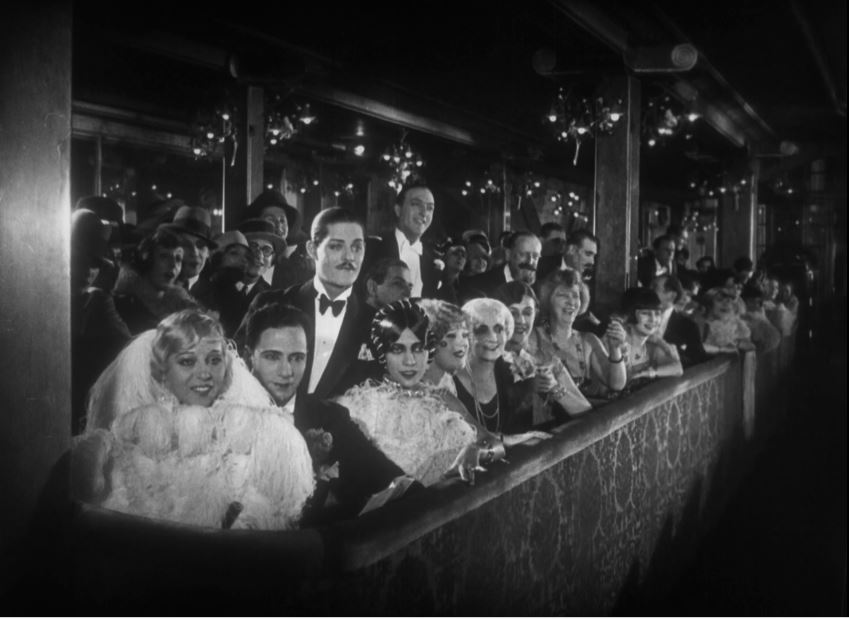
Ewald André Dupont – director of The Ancient Law (1923) and Variety (1925) - wrote, produced and directed with his debut film in Britain and brought his ability to capture performance especially in the long opening section showing acts at Paris' grand Casino de Paris standing in for the Moulin Rouge – it’s a full 27 minutes before we really get to the characters interacting.  The film's detailed scenes was shot in Elstree but there are plenty of exterior night shots showing the illuminated locations in Paris and the interiors shots show thoroughbred comtemporary performers in the Casino. 

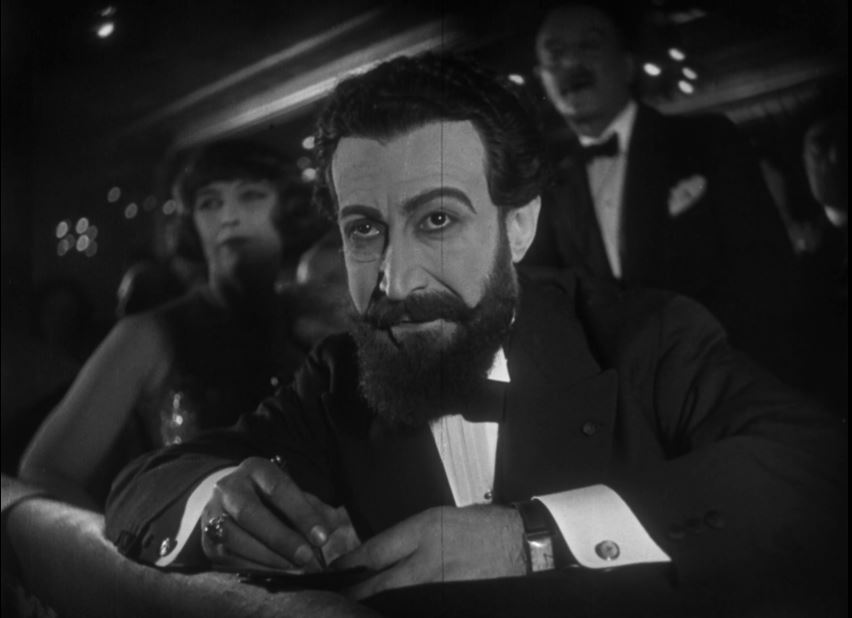
Dupont sets the scene so well with so many mini dramas, a man trying to decide between two prostitutes, another selling dirty postcards, the audience watching the show and each other and the spectacular acts on stage. If nothing else, Mouline Rouge is a superb snapshot of French musical hall entertainment featuring so many acts - dancers, actors, singers and snake charmers who otherwise would only be found on palybills and mentioned in reviews.

Un-named cabaret contortionist
Tschechowa stars as Parysia the main attraction at the Moulin’s cabaret and one can easily see why in her eye-popping costume and with her natural poise on stage during so many West End professionals. She has a daughter, Margaret, played by Eve Gray who had a short role as a murderee in The Lodger and she’s not the only one from that film as an uncredited Marie Ault turns up late in the film as a backstage helper trying to restrain an hysterical Parysia.

Margaret has been away at expensive finishing school and turns up to see her mother perform after four years away. With her is Andre (Frenchman, Jean Bradin, who was in Prix de Beauty with Louise Brooks) the son of a wealthy father (Georges Tréville) who, naturally does not approve of the relationship given her mother’s career.

Watching Mother on stage: Jean Bradin and Eve Gray
Andre is immediately star-struck and buys a programme featuring lots of pics of his girlfriend’s Mum, for a man about to marry his love he does seem easily distracted by Parysia’s more overt sexual presence but he falls hard and the complications begin.

As Michelle pointed out, Gray was only three years younger than Tschechowa, but the two make the relationship believable even though Olga was only 31, she carries it off and there’s one memorable scene in which, face covered with cream she stares horrified at her aging face in the mirror… that’s acting my dears! Dupont juxtaposes this with Andre lying in bed and reading the programme he bought, lusting after her provocative photographs just as she doubts her aging appeal and giving, quite possibly, a whole new meaning to the phrase jazz-age mags.

What the face cream won't hide and Andre's magazine heaven
Wanting a better path through life for her daughter, Parysia goes to visit Andre’s grumpy old Dad in the hope of persuading him to sanction the marriage. She succeeds after he sees she has left behind a possibly incriminating handkerchief – I probably missed the significance – and he writes confirming his decision just as Parysia’s about to lie about it.

But it’s then that she is shown Andre’s true feelings as he bows down kissing her hand and offers to marry her instead. Parysia parries his proposal and tries to get the marriage arranged as soon as possible in order to make Andre focus on  her daughter but he’s not one to be easily swayed and potential disaster awaits as he looks at ill-advised and dangerous ways of maintaining honour… the kid needs a good talking to, and just perhaps, his first exposure to more overt sexual expression has confused his uptight bourgeois libido?

Andre reveals his true feelings...
The story is very slight for a two-hour film but it works through the strength of the main players and because of the cinematography of Werner Brandes who captures some fantastic images throughout from smoky music halls, to extreme close-ups. Brandes is adept at catching faces and the captured reactions of the extras in the theatre would be hard to edit away as they really show the most important part of cabaret culture. Apparently, Ray Milland is one of the audience members although I didn’t spot him.

There’s also superb art direction from Alfred Junge who would end up working with Powell and Pressburger on I Know Where I’m Going, A Matter of Life and Death and Black Narcissus.

It was a smashing end to the year for the Bioscope and another film that shows the strength of British silent film, especially when it collaborated with European talent. It was enlivened by Meg Morley's superb musicianship; she has a real feel for jazz-age narratives and played tirelessly for this Moulin Marathon! 

Cheats! There's 38 of you and Meg did it all on her own!
Moulin Rouge is available on Network Blu-ray and DVD, complete with John Reynders score which I believe was written for a shorter version? It runs the full 127 minutes and so 120 edits were made gto make the music fit. Either way it’s a visual feast and well-worth asking Santa to add to your stocking this Christmas.

And now for a visual postscript for your delectation...

One audience member goes from stalls (4th from left) to stage... the performers obviously keen to be extras too!
An artist is inspired... any resemblance to Lautrec is intentional
Andre daydreams of kissing the other woman...

See! It's Marie Ault!

Sunday, 8 December 2019

Five fingers of fear... Eerie Tales (1919), BFI with Stephen Horne


This was my twenty third Weimar screening of the year in which Europe celebrated its centenary from Kennington, to Cambridge and Bologna to Pordenone via a superb season at the BFI in the early Summer. I’d even seen Claudio Macor’s new play, Different From the Others based on Richard Oswald’s ground-breaking film of the same name and featuring a cast of young performers interpreting the roles of the Weimar superstars, Conrad Veidt, Reinhold Schünzel and Anita Berber, a woman who loved life and narcotics all too much but who inspired so many. Eerie Tales (aka Uncanny Stories or Unheimliche Geschichten) was made directly after and featured the same three stars.

For today’s screening we had our own Weimar dream team, with an informed and entertaining introduction from Veidtspert Miranda Gower-Qian and accompaniment from Stephen Horne. Miranda explained the background to the film in the theatre of Max Reinhardt with all three leads well-established in theatre and cabaret. Veidt was already renowned as The Walking Cadaver whilst Berber was a huge and outrageously successful cabaret star, the three knew each other well and, as Miranda said, there’s a sense of familiarity and playfulness informing the film which helps to compensate for its limited budget and the fact that there remain missing segments even after the restoration.

Richard Oswald had already directed a number of literary adaptations (his second name taken in tribute to a character from Ibsen's Ghosts) as well as horror films and the episodic opera Tales of Hoffman before he came to Eerie Tales. The film features five stories all framed by a sequence in an antiquarian bookshop in which paintings of The Devil (Schünzel), Death (Veidt) and a Strumpet (Berber), become animated after closing time and relax by leafing through the stock for the most sinister stories.

The Apparition by Anselma Heine


Here Veidt plays a man who rescues a woman (Berger) from the violent attentions of her former husband (Schünzel). No matter where they go the deranged man follows and the two soon fall under each other’s spell: hero and rescued damsel. They take rooms in a hotel and the woman, feeling unwell retires early… the man goes downstairs to enjoy some after dinner drinks and, returning with un-chivalrous intent in the early hours, he finds her room not just empty but cleared of all furniture and with the walls scorched bare… What madness can this be? The answer is still shocking.

Schünzel clearly relishes the chance to extend his flexible features as the spurned husband – his face contorted by the madness of rejection.

The Hand by Robert Liebmann


It’s Veidt’s turn to show his uncanny expressiveness in the second segment. He and Schünzel are in competition over Anita again and, like gentlemen, they agree to throw dice for her. Schünzel throws a ten but Veidt responds with an improbably eleven – to the winner the spoils! But things don’t quite work that way as the sore loser throttles the victor who falls dead, his hand twisted by the desperate final struggle.

The cheat takes advantage of the girl’s grief but if he thinks he’s in the clear he has another thing coming…

This section gives us a precious glimpse of Anita Berber performing on stage as Schünzel’s character looks on before seeing a ghostly Veidt stage left. Berber has arguably the least to do in Eerie Tales (she dies twice which is unfortunate) but the trained dancer carries herself well and brings a cabaret cutting edge to proceedings: she knows where the next whiskey bar is alright and much more besides.

The Black Cat by Edgar Allan Poe


Next up is a classic from the man who may well have invented both the detective and horror genres: The Godfather of Ghoul anyone? Once again, our three are caught in a love triangle and as the debonair Conrad sweeps in to win the maid, Schünzel snuffs out the object of attraction whilst at the same time throwing her precious pet cat against the wall.

Veidt smells a rat but the police are baffled: yet how many lives does a cat actually have. As usual with Poe it’s the very matter-of-factness of his narrative that evokes the greatest chill…

The Suicide Club by Robert Louis Stevenson


Oswald brings a consistent creepiness to all of these stories not just through his use of the same actors but through his expressive visuals and – forced - economy. This tale of a most unusual gentleman’s club is given considerable spin by Veidt’s unnerving turn as the titular club president but the director’s eye for detail has him use repeated motifs of playing cards and an expressionist ticking clock to ramp up an unnatural tension before Stevenson’s more conventionally heroic tale twists its way through.

The Haunting by Richard Oswald


The last tale is written by the director and is the lightest: perhaps he wanted to send his audience away with a spring in their step after the preceding death and disturbance. The intertitles are in verse and the cast dressed in fairy tale garb for the story of an injured knight who takes advantage of his host’s generosity by making merry with his wife. Schünzel plays the bawdy Baron and Anita Berber gets her chance to shine as the girl who can hardly say no. Her husband (Veidt) decides to teach both a lesson and mild amusement ensues… with tension maintained by three far from straight faces!

Stephen Horne matched Oswald’s tones with his usual array of instrumentation and clearly relished throwing gothic chords in the more extreme moments as well as laying down uncanny themes on accordion and flute.

Eerie Tales is clearly a staging post between the major works of Weimar gothic but it’s very entertaining and with a sold out NFT 2, clearly a popular choice in a year in which the BFI has programmed boldly from this era and hopefully seen the returns. Here’s to more in 2020!

Anita dances

Double Demy delight… The Umbrellas of Cherbourg (1964)/ Les Demoiselles de Rochefort (1967)


In these dull days how wonderful to lose your heart to Catherine Deneuve with the delicious musical prompting from Michel Legrand and the sublime vision of Jacques Demy. These two musicals are among the finest never made in the US and present a very gallic take on the form, especially in the Umbrellas of Cherbourg which has just been re-released by the BFI as part of its musicals season: we have never been more in need of Demy’s style and substance.

It’s impossible to watch these films and not feel uplifted and heartbroken, the colours of Rochefort in summer dazzle whilst those in rainy Cherbourg are equally impressive even in darker interiors, backstreet stairwells, bars and workshops. Demy’s musicals dealt with complex emotions and confounded expectations and even over half a century later, with this being my first viewing of Umbrellas, I got more than expected.

Catherine Deneuve
I have seen Les Demoiselles de Rochefort – starring Deneuve’s equally everything, sister Françoise Dorléac – and watching the spanking new BFI Blu-ray, found new depths of delight in what is a masterpiece of co-ordinated location filmmaking. It’s a shot of pure joy with so much sisterly energy, another cracking Legrand score and is graced by an on-form Gene Kelly whose smile cracks the screen and who still makes even George Chakiris look like merely an exceptional mover.

But to the North coast first and Jean Rabier’s wonderful opening shot of the docks as the camera lifts above cobbled pavements showing the rain falling from high as the titles run and Legrand’s overture introduces the familiar poignancy of his key theme, Je ne pourrai jamais vivre sans toi (aka I Will Wait for You) in which he twists his melody so deep, Demy’s lyrics flow unopposed into any cineaste’s soul. There’s no dialogue in the film with every line sung in the cinematic equivalent of free-running all “sung-through” like an opera and, whilst this could so easily throw a force-field of artifice over the emotions on show it does the opposite and amplifies them just as the audience is disarmed by the melody and the extraordinary visuals.

Anne Vernon, mirror, wallpaper... Catherine.
Mise-en-scène has rarely played as big a role as here with costumes, paint and wallpaper combined to striking affect for the interiors – the BFI has even replicated the paper from the umbrella shop run by Madame Emery (Anne Vernon). Even some exteriors were painted as Demy aimed for consistency of look and tone to reflect the inner lives of our passionate players.

Geneviève (Catherine Deneuve) is the teenage daughter of Madame Emery and when she’s not working at her mother’s struggling shop, is romancing a handsome mechanic, Guy (Nino Castelnuovo). The two are very much in love although Madame Emery disapproves and wishes for a more suitable and affluent, partner. The web is tangled by a young woman called Madeleine (Ellen Farner) who helps to look after Guy’s elderly aunt. We’ve been here many times and we know things will not go too quickly to plan.

Sure enough, Guy is drafted to go and serve in Algeria whilst Geneviève gets pregnant on their last night before he heads off. The two promise to wait forever and Deneuve is so impressive in these sequences; heartbreak in song.

The young lovers go to Carmen... it's all opera.
True love never runs smooth… Madame Emery is forced into selling her pearls to cover a debt that threatens to close her business and the buyer, a wealthy Parisian jeweller, Roland Cassard (Marc Michel) starts to try and woo Geneviève. With Guy’s letters becoming less frequent and the prospect of motherhood advancing will Geneviève waver? Well, you’ll just have to watch it for yourself to find out.

Umbrellas is one of the most deeply emotional musicals and that’s a tough field to stand out in. I was blind-sided by the promise of the technique and didn’t really expect to get so “involved” … but Demy’s multiple lines of attack are too well co-ordinated for viewer neutrality. I urge you to go and watch this film in cinema and just let it happen to you…


Moving down now to the Atlantic coast, Les Demoiselles de Rochefort now on BFI Blu-ray is a more whimsical affair but no less impressive. Catherine plays ballet teacher Delphine Garnier and Françoise is Solange her singing sister although both can play almost any instrument. Both have ambitions to go to Paris to find their fortunes yet, as things turn out their romantic and career fortunes may well come to meet them in their hometown.

It could be corny but it all works courtesy of Demy’s vision who ensures that same consistency of tone and again makes sure that simply everything works in pursuit of his narrative aims: what we see on screen is entirely the reflection of the characters’ feelings. Passers by dance and syncopate with both the story and the songs, the colours, the cars, the fair and even the streets all become signifiers moving from the background to become part of the whole. The medium really is the message as Demy takes the musical to its extreme conclusion: no one really sings out loud their inner thoughts but if musicals represent the most passionate and unashamed narratives of love and desire then the director decided to go the whole hog.

Gotta dance...
The timing is perfect throughout, Delphine has heard of an artist, Maxence (Jacques Perrin) who has painted a picture of his ideal woman, who looks a lot like her… the two keep missing each other throughout the film and at one point, as he leaves his bag at her mother’s café, our expectations are dashed by the merest second as she goes one way and he nips in the other; it’s heartbreak in a  heartbeat.

Appropriately for a film with as much dance as song, George Chakiris fresh from being a Shark, plays Etienne a fairground barker on a weekend visit to Rochefort with his buddy Bill (Grover Dale – another American dancer). They are joined by the ultimate Hollywood musical star, Gene Kelly, as Andy Miller, a famous musician visiting the town to see an old friend who just happens to be the ex-lover of the girl’s mother. The connections and coincidences make the film like a musical Paul Auster story, with near misses and improbable relations illustrating how life and love can turn on the spin of a centime… it’s hyper-real but still not fantastic enough to alienate the watcher and dull our concern.

Mr Kelly and fab MG sportscar
The film is also full of sharp and darkly humorous moments including the tale of an axe murderer, about which the denizens of the café run by the girls’ mother Yvonne Garnier (Danielle Darrieux) gaily sing with more fascination than horror. A crime of passion is all the more to sing about.

As with Umbrellas, Michel Legrand's music never fails to look love straight in the eye and if, I could barely cope with one Dorléac sister in Cherbourg, then, mon Dieu, I’m simply ruined in Rochefort…

So, do yourself a favour, boost your endorphins and blast away your winter miseries with this dual-format treat. As usual there are lashings of extras including a booklet crammed with essays and a welter of extras including Les Demoiselles ont eu 25 ans (1993) Agnès Varda’s documentary celebration of Demy and this film.