Showing posts with label Charles Ray. Show all posts

Wednesday, 18 February 2026

Going for a song... The Garden of Eden (1928), with Stephen Horne, BFI UK Restoration Premier


Film writer David Thomson has described late period silent film as a medium just bursting to express itself through talk and watching this sparkling romantic comedy you could also add the desire to laugh and sing. Lewis Milestone’s picture is bursting with virtual sound and has an irresistible rhythm that Stephen Horne accompanied quite superbly on piano, accordion, flute and sheets of paper… of which more later!


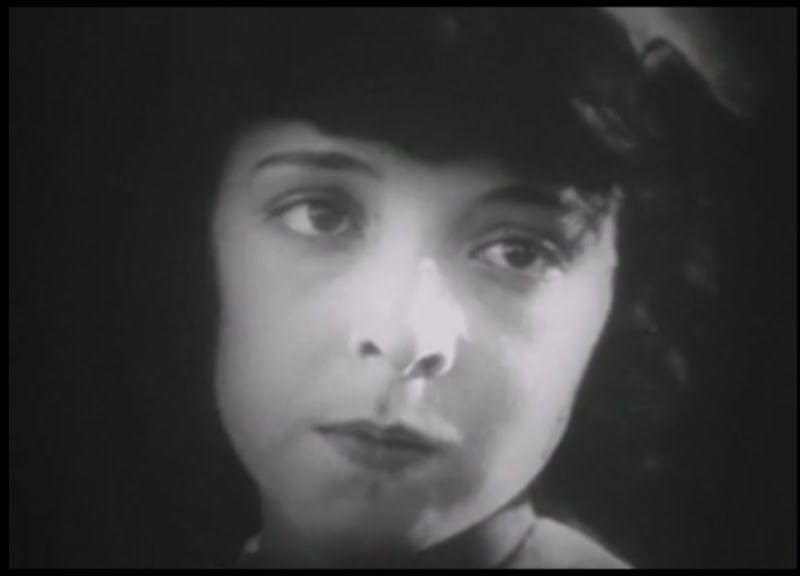
This was the UK restoration of the San Francisco Film Preserve 4k restoration which I had missed in last year’s Cinema Ritrovato in Bologna. It’s a revelation not just in terms of wit and Lubitsch-style “coding” – thanks to scriptwriter Hans Kraly a frequent collaborator – but also in the way it allows for the showcasing of the beauty and talent of Corinne Griffith. In her introduction the BFI’s Bryony Dixon called for a show of hands for those who had heard of the actress before and a handful of us raised our hands. Many more will now have her imprinted in their minds for the next few days.


She has a spirit all of her own and shows plenty of emotional skills as well as comedic timing in a partnership with baby-faced Charles Ray – looking nothing like his 39 years and one bankruptcy – whose timing and grace had already served him well in a career dating back to 1911 and included Thomas Ince’s The Coward (1915) and The Busher (1919) in which he competes with one Jack (John) Gilbert for the hand of a young Colleen Moore.


Corinne Griffith in front of the cameras that loved her so...


Griffith was – also surprisingly – only four years younger and had been in the business since 1916 and starred in films like Black Oxen (1924) with a really young Clara Bow, as well as The Divine Lady (1929) for which she earned an Academy Award nomination. Her reputation has no doubt suffered as so many of her films are now lost, I make it 55 out of 72, but she was a major star and producer who was not only one of the most beautiful actors in Hollywood but also clearly among the most financially astute.


Bryony gave a fascinating insight into the actors’ relationship with men and money which culminated in her fourth divorce and an attempt to pass herself off as her own (fictional) sister to avoid paying alimony to her departing husband – points for effort but she could afford it and died a wealthy woman. A life well lived and in this context perhaps an unlikely pastry chef with operatic qualifications which is how her character Toni LeBrun begins the film.


It's a midnight flit as she leaves a note for her aunt and uncle and runs away from Vienna to join the “opera” having been encouraged by a letter from the Palais de Paris in Budapest… Sadly the venue is not so fine as its name suggests and is little more than a gentlemen’s dance hall with scantily clad women kicking up the dust for their leery clientele. She arrives with her opera diploma and finds the owner, a super smart Madame Bauer (Maude George – close cropped hair and plenty of "coding"…) more interested in her legs than her voice.


Maude George's Madame has a plan!

Toni takes things at face value though and is soon being kitted out by the wardrobe mistress Rosa (the exceptional Louise Dresser of The Goose Woman and more) in the most unoperatic of revealing costumes. She complains leaving Madame Bauer to offer her a seemingly more modest chiffon dress only for her to cue the stage lights during Toni’s performance which causes a mighty uproar amongst the sleazeballs in the stalls. Also watching is predatory nobleman Henri D'Avril (Lowell Sherman) whose boredom is swiftly transformed as Milestone’s camera pulls in to reveal the double image of the up-lit girl in his opera glasses.


Things get worse when the amorous aristocrat expects to have his post-theatrical meal in Toni’s company but she is too quick for him with the aid of Rosa, and, as tens to happen in an environment without employment rights and strong HR, both get fired. Rosa extends a helping hand though as she is due her annual leave and takes her new friend with her to Monte Carlo…


Now, if you have any remaining disbelief, I suggest you suspend it for it turns out that the humble dresser, Rosa, is, in fact a Baroness who gets just enough pension from her former husband, to live the life she used to in the expensive hotels of the Principality of Monaco and signs Toni in as her daughter, ennobling her and within a few days, adopting her as one later intertitle confirms.


Rosa reveals her nobility.

Now, as they enjoy the luxuries of the Eden Hotel – with its rather fine gardens… the story changes pace as Richard Dupont (Charles Ray), naughty but nice nephew of Colonel Dupont (Edward Martindel), a friend of Rosa’s, spies Toni and soon comes a courting. Griffith and Ray have a very smart interplay and this is a romantic screwball comedy in waiting as the two engage in a courtship based on misunderstandings, cheeky games and good old-fashioned coup de foudre with all of the hurdles to acceptance this usually implies.


There’s a lovely bit of business when Richard spots Toni playing the piano and singing, he peers across at this beauty who is naturally annoyed until – after she switches the light off to hide – he imitates and the two engage in something like l’amour de morse code, before the rooms on both sides of the hotel follow suit. Love, and lights, are in the air.


Richard is a songwriter when his duties as wealthy playboy permit, and he writes a song for Toni which as he plays to her, causes her to melt in his arms in a sure sign that their musicality is compatible. Later when his uncle decides to make his own proposal he also plays the song only for his phrasing to leave Toni cold. Yes indeed, the two youngsters seem destined to be together and the only tiny thing stopping the inevitable is the sleeping draught they both end up taking during a sequence that asks the question, how interesting is a proposal really?


Griffith and Ray make sweet music

Turns out it’s not quite the only thing though as soon, and what are the chances, Richard’s posh relatives arrive including his Uncle Henri, recently returned from Vienna… can you see where this is going?


The Garden of Eden is so smoothly directed by Milestone that it manages to serve the plot complications and keep the ball rolling without annoying even the modern audience. Griffith had fabulous timing and Ray is appealing in the gung-ho way of all noble, would-be songwriters who fall for women out of their class. Audiences now and then knew what to expect from this kind of film and Milestone delivers with emphatic efficiency and purpose aided by swoon-worthy design direction from William Cameron Menzies.


The jury of his peers, aunts and uncles...

Of course, whilst this 4k restoration looked gorgeous on screen it was greatly uplifted by Stephen Horne’s timing and invention. There’s one moment which I think may have surprised the audience when the Colonel sits down to play the song and the sheet music has been placed on the strings of the grand piano, Stephen had anticipated this and, diegetically, his playing also included paper on the piano strings. That’s experience! Sadly, the sheet music gave no clues as to what was being playing and so Stephen had to improvise the music that persuades Toni of her love just as he did the rest of the score… it’s a kind of magic. Another outstanding afternoon of live music, informed introduction and classic film at the BFI…


There’s more high-quality Corinne on the National Film Preservation Foundation site with a lovely restoration of her 1922 film A Virgin’s Sacrifice – you can screen it right here!


Details of the restoration of The Garden of Eden can be found on the San Francisco Film Preserve website - they also stream films from time-to-time and so it is well worth signing up for their newsletter! It is also to be hoped that they add this to the films they have released on Blu-ray through Flicker Alley such as the splendid new Louise Brooks early film collection... of which more later! But a Corinne Griffith box set would be most welcome too!


Tuesday, 5 October 2021

Modern love… An Old Fashioned Boy (1920) with Philip Carli, Le Giornate 40th Edition Streaming, Day Three


Great marital unhappiness believed to be due to apartment hotels and dogs…


This film only survives as a 16mm print at UCLA and was screened as part of the American women screen writers’ series having been penned by Agnes Christine Johnson who enjoyed a long career and collaborated with King Vidor on the fabulous Show People (1928) as well as writing for Pickford and many more.


Directed by Jerome Storm it stars Charles Ray at the relatively short-lived peak of his popularity, looking ten years younger and still the All-American Boy earning some $11,000 a week (approximately $142,000 today) according to his obituary in The Evening Independent of 20th November 1943. He made a fortune and then lost it as a would-be film producer but from this film it’s clear his face was not the only contributing factor.


An Old Fashioned Boy is very much a new-fashioned film, being a light-hearted examination of gender expectations with mass appeal at the time. There was a shift in living choices and there was concern that women would be distracted from their traditional roles by too much being provided for them in so-called apartment hotels where food and laundry could be outsourced from the home. Not quite sure how dogs came to be a threat to the American family – personally I’d have put the finger on cats! – but there you go; many things today make less sense.


Charles Ray and Ethel Shannon

Johnson’s scenario involves two couples, or rather one potential couple and one married pair complete with a trio of “angels” of which more later… Ray is David Warrington who is the titular romantic who dreams of putting his Betty (Ethel Shannon) on a pedestal complete with stairs to enable her to run down to the kitchen every few hours as well as the washroom. He’s so convinced they’re the perfect couple that he even builds a new house for Betty before he has proposed. Some might say that’s presumptive and, well, we’ll see…


David’s friends the Smiths are married and not enjoying anything like his vision of contentment. Herbert (Wade Boteler) is cynical and perpetually grumpy complaining about loaning their living room out for David to court Betty. His wife Sybil (Grace Morse) is long-suffering and takes the slings and arrows of outrageous Herbert as well as providing for him and those aforementioned angels: Violet, Herbie and a baby played by Virginia Brown who is very good at crying and reaching out her arms.


Three kids and a baby!

David is successful in his proposal and takes Betty to see a house his “friend” has built for his fiancée. Betty likes the house but, oh dear, wouldn’t want to live there so wedded is she to the freedoms of apartments. And, when she hears that David built the house for her before even asking for her hand, takes against his rather odd behaviour and storms out.


Betty is pretty flighty as she’s soon seeing her former beau, Fast-Car-Ferdie, or at least Ferdie who owns a sports car, and forgetting all about Drippy Dave. Meanwhile Sybil has had enough and decides to go home to mother. Quite understandably she can’t take her three children… so… she decides to leave them with David telling him on no account to tell her potentially former husband, Herbert, where they are.


Now, this all sounds fine and the actions of a reasonable and balanced parent under stress but in reality, Sybil has left her kids in danger with David’s solution to childcare being to muck about and fill the three of them with home-made taffy. They eat so much they get sick and so David calls Betty’s father, Doctor Graves (Alfred Allen) who he then persuades to ask his daughter to come and help. Betty’s trained as a nurse and so puts the kids to bed like a pro before making to leave forcing David to get her father to put the house in quarantine and to make up a new medical condition, Black Measles.


Betty can’t leave now and nor can Ferdie when he arrives to take her home… there follows much high-spirited daftness as Betty’s emotional response to her would-be husband ranges from impatience, extreme anger and borderline psychotic.


All of this covers an interesting “debate” on the role of women and men even as it allows Ray to show his superb comic timing and winning range of expressions. One of my favourite moments comes as Herbert accuses David of having an affair with Sybil at which point, she decks him with an absolute haymaker of a right hook leaving him unconscious. Proof that these films were sophisticated and attuned to the sensibilities of their audience.


The daft premise and entire story arc play on audiences’ preconceptions and they were no less aware of the “joke” than we are now. There was much praise in the contemporary press according to film historian April Miller in the Giornate notes with Louis Reeves Harrison in Moving Picture World (13 November 1920) singling Johnson out for with creating a “flawless structure” for “this bright story”.


Miller also quote the author as saying “women have too much creative energy to spend it merely on housekeeping. You get neurasthenic if you have only one line…” even asserting she was “a much better tempered wife and mother” when working, “… so used to writing with the babies crying”. Very much the “new-fangled” woman Betty wanted to be!


Philip Carli played along with characteristic flare and deep understanding of "the argument", that American sense of humour is not to be under-estimated!


More in store streaming from Pordenone, details on the web.


Thursday, 6 June 2019

Tailor-made woman… Souls for Sale (1923) with Meg Morley, Kennington Bioscope Silent Weekender Day 2


Would you like to sin. With Elinor Glyn On a tiger skin? 
Or would you prefer. To err. With her. On some other fur?
Rupert Hughes (as quoted by Mr K Brownlow, on the occasion of his 81st birthday)

This was one of the first silent DVDs I bought partly because of its cameos of Hollywood stars but mainly because of a fascination with Eleanor Boardman who was later to star in The Crowd and to feature so elegantly in Kevin Brownlow’s Hollywood series. Yes, there’s something about Eleanor and she’s also caught up in the William Haynes legend, with them both winning a contract through Goldwyn Pictures "New Faces of 1921" and maintaining a friendship through the years of their success and beyond: you got the feeling that they both rose above the daily Hollywood grind from the get go.

Souls for Sale is pretty light fare but it’s well made and does give a playful insight into the business of show people with Boardman’s character accidentally falling into the movies after escaping the clutches of her Bluebeard of a husband…

Charlie, Erich and Jean
The glimpses behind the scenes are, of course, precious, with Erich von Stroheim seen directing Greed, giving Jean Hersholt instructions, and Charlie Chaplin playing along by over-actively directing Mem/Eleanor in a “scene” from Woman of Paris. Elsewhere you can glimpse Hobart Bosworth, Barbara Bedford, Chester Conklin, Raymond Griffith, June Mathis, Marshall Neilan, Claire Windsor & many more! William Haines is also in there, his first credited appearance, as Pinky (!) the assistant director to Richard Dix’s square-jawed Frank Claymore.

Kevin Brownlow introduced on his birthday – no better treat for him than sharing in his passion – and explained that the film was partly a PR exercise to show that after numerous scandals, Hollywood wasn’t a bad place, full of upstanding professionals.

The film was based on a novel by a man named Rupert Hughes – Howard’s Uncle – who produced and adapted the screenplay and directed it. Mostly known as an historian and writer, Hughes couldn’t understand why a film company would buy an author’s work and then change so much. Here he made sure his work would see the screen as intended and the rigour of his research pays off in the detailed background to the film process.

Eleanor Boardman
Boardman was already famous as the Kodak Girl model and had already made three films but this was her first time as the main female star and so, just like her character she was in at the deep end. She’d tried to make a success on the stage in New York and made some head way but this, at 24, was her biggest break yet in the movies.

She doesn’t flunk it and, for me, gives a very relaxed and confident performance as Remember “Mem” Steddon (trips off the tongue doesn’t it…) who falls into film work as a refuge from her psychopathic husband (Lew Cody) and, against the wishes of her strictly-Christian parents – an echo of Boardman’s own folks’ disapproval. Boardman was perhaps a natural, very interesting to watch on camera and varied not only in her expression but her looks. She can handle comedy as well as drama and gives a taste of her dowdy desperation in The Crowd when watching her disastrous screen test: hands pulling her hair to a mess, tears running red down a face of real misery.

Less regal Garbo?!
She reminds me of a less regal Garbo, more down-to-earth and not quite the force or presence but still very watchable and adaptable, he relatively tall frame (over 5 feet 6… a giant in 1923!) making her both a graceful clothes horse as well as the equal of the men.

The film starts off with a shot of Mem in the back of a railway carriage with her husband Owen Scudder (Lew Cody), who is already starting to frighten her with his weird intensity – first example of Boardman’s ability to show unease. She’s desperate and jumps train at the first opportunity, landing in the middle of a desert.

Not a real sheik... Frank Mayo, Eleanor B and Richard Dix
She wanders for days and finally is saved by a Sheik on a camel… or rather handsome actor Tom Holby (Frank Mayo) who is on a location shoot for a film being made by director, Frank Claymore (Richard Dix). The crew rescue Mem with stars Leva Lamaire (Barbara La Marr… see what they did?) and Robina Teele (a feisty, Mae Busch) making sure the kid gets a break as well as medical attention. Snitz Edwards is also on hand as the lovelorn Komical Kale, who is unrequitedly in love with Leva who still mourns for her lost lover, Jim, who died as his plane was engulfed in flames.

Meanwhile Scudder with a history of marriage and murder behind him, manages to evade the cops at a railway station and then gets lucky and a little richer by taking advantage of Abigail Tweedy (Dale Fuller) who he convinces, cons and almost chokes before escaping. Of course, he’s not finished with Mem just yet…

After finding work in a hotel, the end of season forces Mem to try her hand in Hollywood and, we see her trying to sell her soul, to get into a picture, any picture… there’s a great casting session with even Eve Southern as Miss Velma Slade being told she’s only beautiful and there’s a pile of those in this town (the film was also intended to discourage people from the film business… ).

Billy Haines!
In addition to Chaplin and von Stroheim, Mem gets a tiny part in Fred Niblo’s The Famous Mrs. Fair and sees Marshall Neilan directing The Eternal Three with Raymond Griffith, Hobart Bosworth, and Claire Windsor. Star-spotting is half the fun although Kevin spoiled this by reading out the names of a table full at one point: including Barbara Bedford, Chester Conklin, William H. Crane, Elliott Dexter, June Mathis and ZaSu Pitts.

After a disastrous screen test with Frank Claymore and the crew, he realises that she’s made more for drama than comedy and gradually she starts to make her way with bigger and bigger parts. Eventually she gets her big chance in a circus film after Robina gets injured. By this stage Scudder is back on her trail and has decided that he’s in love with the now successful actor…

But, it’s a stormy night over the circus set and there’s not many places more dangerous than a film set based in a tent!


The ending is a tour de force as the storm hits and the flames rise higher – all tinted yellow in the Warner Archive/TCM restoration. One of the extras told Brownlow that the circus tent was soaked in paraffin for the fire… which Hughes didn’t let people know there were horses inside as he didn’t want them to clear a path for them; the result is chaotic but undeniably dangerous with a least one injury to a dancer.

As a defence of the film industry, that doesn’t show the health and safety standards in a good light but I guess the audience took it all as part of the drama.

Meg Morley accompanied in fine style matching the epic with the intimate in a film of many contrasting moods. There may have been a snatch of Liszt at one point but as ever Meg melds these themes into an overall improvisation that is unique to the moment and the setting.

Big productions!

The Old Swimmin’ Hole
(1921) with Meg Morley

Talking of William Haines, the next film starred Charles Ray who bears more than a passing resemblance to the former. Based on a poem by James Whitcomb Riley, the film was essentially a series of backwoods episodes all told without intertitles. Directed by Joe De Grasse it was charming if a little ambient, but like all poetry, something you had to just relax and focus on. Meg Morley accompanied again and in a quite different manner; lots of light tones and energetically reiterated figures that played so well along with the “children” on screen.

I spotted Laura La Plante in Pickford curls as Charles’ love interest, so different from her close-cropped platinum bob of later years.

Another exceptional collection of films overall for the weekend and I was sorry to miss the final parts of the second day. All credit to the programmers, players, projectionists and volunteers who make the Bioscope happen and happen so very well!


Wednesday, 31 August 2016

No beating around… The Busher (1919)


“The story has been done and done, and even half-way well-done, it never fails, but this time it has been so well done that it starts life all over again, as something new, vigorous and real.” New York Times, May 1919

Baseball, as obscurely-fascinating as cricket: thousands of people in a frenzy of support whilst arcane running, hitting and catching takes place on the grass. Films about sport; close-ups and game-changing moments… cricket’s a slow-burn and not very cinematic but baseball… a home run can change everything: a flash of the bat, the ball in the sky and the hero running safely home as his opponents throw wildly to base.

OK, no spoilers… but this is a film about a baseball. It features impossibly-young people who resemble Colleen Moore and Johnny-Jack Gilbert but its star is Charles Ray a boyish 27-year old who, since his debut in 1913, had often played country boys made good…

And, lo, it did come to pass that here he plays a fresh-faced young man who can swing and throw like no other in the little town of Brownsville...


Charles Ray
As The Times went on: “Seldom, if ever, has Ray had a part more suited to him. Ben Harding, hired-man, pitcher, lovable and laughable human being, lives on the screen in him.”

A "Busher" is someone from the minor baseball “Bush Leagues” someone who may have the potential to make the majors but not necessarily the character… it’s one thing to have the skill, Raheem Sterling (insert other disappointment here…), but another to deliver when it matters… The Busher may or may not have provided emphatic new momentum to this tale but it’s hard to tell given the odd jump and skip suggestive of missing frames if not reels.

That said, we can fill in those gaps and the narrative arc holds in place for a story of rise and fall and the girl won then lost then…

Whether deliberately of through force of vanishing celluloid, there are moments that are underplayed… and that means that the film now presents as “subtle” and strangely “modern” in not ramming its key moments home.


Jim tries to impress Mazie with his car and all...
Ray himself is a decent performer – anyone who has seen The Coward (1915) will know how well he can act – and here he is as convincing as the contemporary press describes: his Ben Harding a mix of insecurity and sporting brilliance that needs to find a balance. In love with local girl Mazie (Colleen) but out-gunned by the confidence and wealth of her other suitor Jim Blair (Jack – later John – Gilbert).

Ray just falls back in jealous resignation whenever he sees them and even when he gets a chance to bid on a date with Mazie at a bizarre ritual at the local theatre in which men get to bid on the silhouette of their favourite girl… he guesses wrong and ends up out of pocket and out of luck.

But things are about to change… Earlier that day the players and coaching staff of the major league Pink Sox (no relation to the team that plays at Fenway Park…) – are marooned in Brownsville and decide on a knock-up to pass the time. Ray gets involved and they can’t fail to be impressed as he throws un-playable curveballs past what he thinks are just amateur players. The guys look around with eyebrows raised but they ain’t telling, at least not yet.


Colleen
Yet, in the midst of his humiliation at the theatre, a telegraph arrives that far from bringing bad news – the usual expectation, especially this close to the Great War – contains an offer to train with the Pink Sox! The town celebrates with their hero: recognition at last.

Off to the big city, and his big opportunity… but surely it’s too early? Yes, it is… Ray goes from that insecure ingénue to a cocky first-teamer who all-too-quickly forgets the folks back home as the potential WAGS of the time gather. By the time he returns home to show what his new team can do, he has taken his eye off the ball and gets hooked after trying an illegal spit ball… the equivalent of seam-tampering in cricket and the lowest of the low…

He is shamed and what’s more seems to have lost the trust of his town and even loyal Maize… can there be any way back: will we see redemption?


Ben watches the ball...
The Busher is a fun film in spite of those missing pieces. Charles Ray gives a super performance of realistic expression and is more than ably supported by those around him. Colleen Moore radiates as usual, her style already in place at just 19 years old whilst Gilbert, also 19, looks skinny and not yet the romantic superpower he would become.

Jerome Storm directs with efficiency and the cinematography of Chester A. Lyons capture the detailed and large-scale action equally well.

Your home media options
I watched the Grapevine version which is not great quality but which retains some of the original title cards and some well-chosen stock backing music. The film is also available on the Kino’s Reel Baseball DVD in much better quality: if you need more silent baseball – that’s the one to go for!
This is a lovely still but it's Colleen and Ben Lyon in Painted People from 1924

Saturday, 23 May 2015

Fear itself… The Coward (1915)


The Coward was one of a number of films made to commemorate the 50th anniversary of the American Civil War’s nominal ending. It tells a much smaller story than Mr Griffiths’ well-known epic from earlier in the year and focuses in on the more human reaction to war: the question of will I be able to fight?

Too often physical bravery is taken for granted and instinctive fear is treated as momentary doubt to be blown away by a sudden onrush of heroism or as a weakness to be pitied or laughed at. In The Coward the “hero” suffers deep shame and is only able to enlist under threat of being shot by his father… all armies need men like him: happy to slaughter those who run the wrong way.

Fearsome Frank Keenan
It’s not necessarily that this film won’t witness the ultimate triumph of heroism but the sympathetic way it deals with its counter-point that marks it out. The performance of the titular non-hero, Frank Winslow from baby-faced Charles Ray is naturalistic and convincing as the young man runs as terrified by his own perceived inadequacy as impending oblivion after all his letting not only his family and girl down, he’s letting himself down.

Written and produced by Thomas H. Ince and directed by Reginald Barker, The Coward starts off in the sunny South just as war breaks out. Frank’s father, retired Colonel Jefferson Beverly Winslow (Frank Keenan) sits reading a letter from Southern military command rejecting his offer to –re-enlist on account of age. Meanwhile Frank is out admiring peaceful nature with his sweetheart Amy (Margaret Gibson) but when they return to town, the declaration has been made and young men are falling over themselves to join up.

Margaret Gibson and Charles Ray
Frank’s worst fears have been realised and he is terrified of being a coward which seems distinct from being frightened for his own demise: is that a comment on societal indifference to the actuality of military conflict resolution at a time when Europe was ripping itself to shreds and America was seeing films showing the horror of its own war as never before?

Frank flees from the recruitment office
Frank enters the recruitment office, encouraged by the general hysteria and Amy’s pride, and almost manages it before, sickened with fear, he makes a break for home. He falls upon his mother (Gertrude Claire) and looks for some comfort but once his father hears we begin to understand why he’s more frightened of failure than death. The old man expects nothing but self-sacrifice and he treats his son as he would treat any other deserter by getting his gun and offering him the choice between a bullet sooner rather than later.

Frank joins up
Duly incentivised, Junior signs up with Dad in close attendance just in case and you have to say that theatre veteran Keenan is superb as the unbending force of Colonel Past: he may be unyielding but that look in his eye is not anger so much as deep regret and sadness… he knows all about war and he, unlike the thousands of ever-ready recruits, knows just what is going to happen to them.

So off goes Frank to serve the South but his involvement is short-lived as he runs back home after his first night watch: scared by the trees, the breeze and his own shadow. Father is disgusted and decides to take his son’s place in the war – off he goes, rifle in hand; back in the business.

Frank's disgrace is almost complete
But the Northern advance is swift and their home town is suddenly over-run forcing Frank to hide from the Yankees as they avail themselves of the Winslow house. As mother and the family servants – white actors Nick Cogley and Minnie Provost both in sad blackface – look after the intruders, Frank overhears their plans: they are exposed at the rear until reinforcements can arrive the following day… if the Confederates knew this they would be over-run...

Excellent battle scenes
OK… now the film changes tack as you might expect but it’s not without a twist in its final sequence. It’s also now that the war really starts and there are some well-realised scenes of battle from Barker and his cameramen Joseph H. August and Robert S. Newhard. After Birth the bar has been raised and after the slow pace and emotional intricacies of the film to this point, the action is now thick and fast.

If you look carefully you might even spot John Gilbert as “a young Virginian” although I missed him: these Yankees, they all look the same…

One of these men could be John Gilbert...
It’s not a major film but The Coward is none-the-less an interesting and entertaining one from a time of national self-reflection when the war was still in living memory and with some combatants still around to re-tell the tale.  As Birth also showed, some of the war’s issues were also still very much alive and kicking  but War never really grows old and Frank’s fears are as relevant and real today as they were a century ago.

War is hell
The Coward is available on Image Entertainment's Civil War Films of the Silent Era DVD from Amazon and probably elsewhere too.