Showing posts with label Adolphe Menjou. Show all posts

Friday, 22 December 2023

The Chaplin Touch… A Woman of Paris (1923), BFI with Mark Fuller, Cinema Unbound


Hollywood had been taught a new and sophisticated attitude to sexual relations by, of all people, Charlie Chaplin in a Woman of Paris…

Michael Powell, A Life in Movies


There was a moment when Edna Purviance’s character Marie St Clair, is being visited by her former love Jean Millet (Carl Miller) to discuss his painting her portrait. She’s seemingly done well for herself but as one of her maids opens a draw to fold away her washing, a man’s shirt cuff falls to the floor and catches the eye of Jean who notes as does the audience, the significance of such familiarity with a man’s wardrobe. It’s the economy of the moment and Chaplin’s cinematic intelligence that catches our attention now as we sit and do the maths for subsequent releases such as Lubitsch’s The Marriage Circle (1924) or Three Women (1924) and Monte Bell’s Lady of the Night (1925).


But we weren’t here to discuss the influence of Chaplin on his contemporaries but the impact of this film on an 18-year-old Michael Powell who at this point was just a regular cinema- loving bank clerk based in respectable Ringwood, Hampshire as Archers expert Mark Fuller explained in his informed introduction. I would say that Mark has forgotten more about Powell and Pressburger than most remember if not for the fact that I don’t think he forgets any details of these two. His diligence and thirst for knowledge led him to the rediscovery of Smith (1939) a short film Powell made to promote the Embankment Fellowship Centre with Ralph Richardson (and Wally Patch!).


"... using objects for their metaphoric and metonymic value..."*

Years later, interviewed by Kevin Brownlow in an unpublished article for Time Out, Powell recalled how he was collecting everything in a “romantic sort of way… and I looked on films the way that people did then, as a wonderful new plaything, but not serious…”. Then he saw A Woman of Paris, in either the Boscombe Hippodrome of Boscombe Cinema near Bournemouth, and “I was absolutely knocked by it, because suddenly the whole medium grew up.”


For Powell, Chaplin a clown with “all the power in the world”, had not only made a “grown-up” film, he’d done it out of pure love and loyalty for his long-time on-screen partner Edna Purviance, who was given the prominence you would expect of an Italian diva or a Pickford, Gish or Talmadge in a project with something of his innocence but also sense of tragedy based on the worldview you could expect of a man who grew up in the poorhouse. Charlie and Edna had also been romantic partners until his marriage to Mildred Harris but they remained firm friends and he supported her throughout her life.


The film was not a smash hit – perhaps Powell suggested, it was not just realistic but too realistic – but he felt more modern viewers should be made aware of it and the influence it had on the cinematic language of the twenties and beyond. Modesty would have forbidden but we certainly watched this film with fresh eyes after learning of its impact on Powell himself. Props to the BFI for including it in the Cinema Unbound programme and to bringing in Mr Fuller to explain the connection.


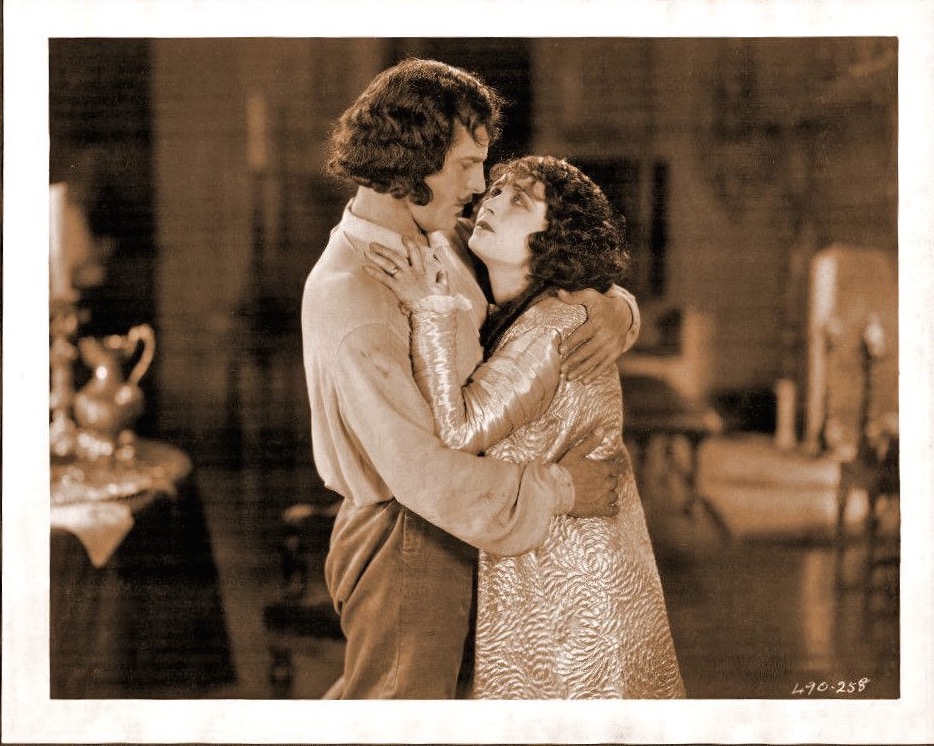
Adolphe Menjou and Edna Purviance

Charlie Chaplin not only wrote, produced and directed the film by 1976, he had even written the music for it which today we heard on a recording conducted by Timothy Brock. I must admit that I don’t always like Chaplin’s score but this one, possibly because if was for Edna, rang so true to the narrative and was like an audio commentary on his intent from the 87-year-old to his 34-year-old self. It was the last of his films he scored and it was to be his final completed work.


Chaplin was frustrated by the reaction to the film and it’s a shame for Edna that it didn’t raise her profile in the way it did for Adolphe Menjou who was to feature in Lubitsch’s The Marriage Circle and many more. Edna is superb though and in addition to wearing some fabulous costumes that would have graced a Borelli or a Boardman, gives such a nuanced and commanding dramatic performance. Her timing is, of course, perfect and whilst Chaplin’s comedies had always required dramatic chops, here she’s inverted her usual performance with some controlled comedic touches mixed with a dominant and thoroughly convincing lead performance as a woman torn between two lives and loves.


There are Germanic touches in the sets and lighting and the film feels almost more European than American but what would you expect from a boy from Kennington. But the themes and the timing – sometimes comic and otherwise tragic – are all his own.


Edna looks nervously towards the future

The film opens with a bravura shot of a small house in a French village with the enclosing camera gradually revealing the figure of a young woman staring with concern from her bedroom window. The young woman, Marie St Clair (Purviance) nervously packs her bags in her room and as her father creeps up the stairs and locks her door, Chaplin gradually reveals the scenario: an elopement is being planned and both sets of parents disagree.


Marie’s lover Jean Millet (Carl Miller) helps her climb down from outside her room and they walk to his house where an equally frosty reception awaits. What has caused this parental disapproval is not made clear but it’s deep-seated. Refused entry back home, the couple head for the station to catch a train to Paris: their city of hope. Jean leaves Marie to go and collect his things but, tragedy strikes when his father has a heart attack and dies. A fateful miss-communication then occurs as the lovers telephone each other and Marie, thinking than Jean has just got cold feet, heads off to Paris alone.


A year later she seems to have found her feet exceptionally well, being the kept woman of Pierre Revel (Menjou), “the most eligible bachelor in Paris”, living in luxury and spending her time socialising or being prepared for the next occasion along with her proto-flapper buddies Fifi (Betty Morrissey) and Paulette (Malvina Polo). Everything is well except for the fact that Pierre is planning to marry the wealthiest spinster in Paris. The story is revealed in the papers but Marie doesn’t know until her helpful friends show her, she hides her disappointment well: she’s learned a great deal of city ways. Pierre tells her that it won’t change their relationship but she’s not convinced.

Parisians un-winding...

She sulks and stays in whilst her friends head off to an outrageous party in the Latin Quarter… Chaplin gives a good party and clearly enjoys showing the risqué side of life as the drunken debauch is topped off by an elegant striptease in which a young woman (Bess Flowers - sometimes dubbed the Queen of the Hollywood Extras) is gradually revealed to the on-screen audience as a white sheet is slowly unwrapped: glasses and monocles are raised even by the women and a drunken man faints in dis-belief.


Fifi tells Maria she can’t miss out and she heads over only to open the door to the wrong address, a small apartment home to a struggling artist: it’s Jean. So, chance has re-united them and whilst their guards are now up, Marie invites Jean to paint her. As Jean arrives wide-eyed at her opulent home Marie finds out with a shock the reason for his none-appearance and her sympathy shifts back but there can be no simple reconciliation especially when Marie sneaks at peek at her portrait and, rather than paint her in the stunning satin gown she has chosen, Jean depicts her as she was when he left her. This can’t be healthy and it’s a very neat touch from the director.


Carl Miller

But as romance is re-kindled, parental dissatisfaction again plays a part as Jean’s mother – disapproving of Marie’s lifestyle – makes him promise not to marry her and he agrees only for Marie to overhear at the door… The course of true love never runs smooth and in real life second chances are few yet Chaplin’s players are compelled to try and there’s a very elegant mess building that he plays out as well as in any of his comedies. The relationship between Marie and Pierre is especially well handled, so many then transgressive aspects left unsaid but the full meaning conferred perfectly by these two wonderful players.


Ultimately the film stands as testimony to Chaplin’s enduring qualities as an instinctive and innovative filmmaker as well as to his loyalty and influence. It should also ensure that Edna Purviance’s reputation remains as simply one of the finest screen actors of the period: not just a "straight guy" or a foil but the emotional foundation on which he built some of his finest work. As for Mr Powell, we can see the inspiration he took from this work and the role Chaplin had in inspiring his fellow Englishman: a daisy chain of genius.


Powell loved this simple intertitle as Pierre laughs at Marie's frustration: a perfect moment...
Edna abides...


*Chaplin: Genius of the Cinema (2003), Jeffrey Vance,  New York: Harry N. Abrams. 


Wednesday, 6 November 2019

RW Paul the 2nd & Adolphe the 1st... The King on Main Street (1925), Kennington Bioscope with Colin Sell


"Yes, yes, by all means sure-fire box office values ... the Menjou fans will eat this up ... it is mighty fine entertainment, and they will like it!" Film Daily

Mr Kevin Brownlow was rather incredulously reading out some of the notices for The King on Main Street with one paper claiming it was up there with Valentino in The Eagle and The Big Parade as one of the best releases of the month although the King’s budget could barely have covered a week of Vidor’s epic. We were seeing Kevin’s 16mm print and this has some parts missing, namely the starting reel and the saucier aspects of Greta Nissen’s role, excised for the home market and, rightly so judging by the way the actress was wearing silk in her Paris boudoir.

In truth the film is a modest effort but it does feature superb playing from Adolphe Menjou as the runaway King Serge IV of Molvania who, on a business trip to America nips out from the confines of royal duty for a day of adventure at Coney Island. Here he meets a young kid who shows him the ropes vis-à-vis hot dogs and the business of fun including a memorable roller coaster ride filmed with the camera close-up on Menjou as he acts his way up and down and, indeed, around Coney’s biggest dipper.

Gotta love Bessie 
He is also reacquainted with the excessively lovely Bessie Love as the all-American Gladys Humphreys who has already thrown her iced bun at him in Paris overcome with the sight of royalty. As Kevin explained the film was cashing in on the royal fad sparked by the handsome Prince of Wales, Edward the Abdicator, albeit a few years before our King ran for his life.

Love’s always a treat and here she absolutely rips the floor up as, ukulele in hand she Charlestons the heck out of the carpet at small-town Little Falls reception for the King arranged by her beau John Rockland (the disturbingly Ford Sterling-esque Oscar Shaw). Wikiparently, Love’s rip-roaring helped popularise the dance in the US and strictly speaking, she’s 10+ in comparison with the Saturday night kids we get from the BBC’s dance show.

Theatre Magazine was definitely impressed "... Bessie Love gives a perfect exhibition of the Charleston, proving that it can be danced with extreme grace and agility, and yet without a single hint of wriggling vulgarity. We hereby award Miss Love the palm as the greatest Charleston expert on the screen if not on the stage -- which is by way of being a miracle, for ordinarily a film dance looks as silly as the capering of goats".


There’s some business involving selling oil to unscrupulous American Arthur Trent (Joseph Kilgour) – how little things change – and the King may even be forced to betray his country’s best interests in order to protect Gladys’ honour but, y’know, it’s probably a “great deal” when you look at it closely. The King also finds a way to smuggle Greta’s saucy Therese Manix by getting her to marry his butler Hugo (Londoner Edgar Norton) and it makes a man of him in scenes largely cut to preserve our frail morality.

Monta Bell directs with straightforward efficiency influenced, as Kevin pointed out, by his time working alongside Chaplin on A Woman of Paris a couple of years earlier – Adolfe was also in that too. Other existing elements of The King on Main Street include two sequences filmed in early two-strip Technicolor which might explain its success along with the charm of the King and his women. Lois Wilson is also an uncredited "guest" extra in a hotel lobby scene – I think I spotted her but I do see her everywhere I go.

Colin Sell accompanied and riffed in divine style on By the Light of the Silvery Moon as well as launching into a spirited Yes, We Have No Bananas as the jazz band at the reception tried to find something that would pass as the Molvania national anthem.

Is Spiritualism A Fraud? (1906) 
The first half of the evening had featured Professor Ian Christie continuing his birthday tribute to RW Paul with some films he hadn’t shown at the BFI last month. One particular delight was A Soldier’s Courtship (1896, repeat 1896!) which has a good deal of performance and plot as a young couple on a bench are disturbed by an old woman as they canoodle leading the titular soldier to upend the seat and the bothersome intruder. Made the same year as Edison’s The Kiss, this film is far ahead in style and entertainment.

Edison’s failure to extend the patent for his Kinematograph to Europe was, possibly, because he was wary of a legal wrangle with William Friese-Greene’s very similar machine and there is another major step up the Ladder of Recovery currently being climbed by Bristol’s finest “father of cinema”.

This laid the way open for Paul to manufacture his own version and to advance the design and implementation of the technology. His wife Ellen, featured in heavy disguise as the annoying old lady in the first film, introduced Paul to more theatrical ideas and collaborations and the first couple of British film became established as both innovators and commercial hits.

A Soldier’s Courtship... well, they'll have to get wed after *that*!
Paul’s illustrated catalogues make it clear that his film’s were colourised even from 1896 and exhibitors would pay a pretty penny to see the likes of Comic Costume Race (1896), The Twins' Tea Party (1896) and – Christie’s suggestion for the first two-act film - Come Along, Do! (1898) recently completed with an animation based on just two frames by his son. A further four frames have now been found by the BFI and so there is more to be done.

Christie is hopeful that there will be a lot more to come as archives around the world begin to re-evaluate their possible-Pauls.What we have is fascinating and, as at the BFI, it was interesting to see how the filmmaking developed into longer-form with trick camerawork as in Artistic Creation (1901), the bizarre The Magic Sword (1901) – knight loses girl to giant devil and wins her back thanks to Fairy and Sword (I think) – up to Is Spiritualism A Fraud? (1906) a rather violent take down of the fad for communication with the dead.

The Magic Sword (1901)
Once again Paul’s documentary work was also covered including two films he made of the tragic events around the launch of HMS Albion in 1898 – 34 people were drowned when the huge wash smashed into the pontoon on which they were standing. Though criticised by former collaborator Birt Acres for exhibiting the films, Paul gave them away for free and a fund was set up to help the families who had suffered. Paul was using an electric camera which kept on running and the proof of the pudding is in the striking close-up of Ellen on the boat approaching the launch.

John Sweeney accompanied these cinematic gobbets with his uncanny period feel and sense of dramatic timing; many of the films are missing starts and ends and could catch out the unwary. Nothing got past the safe hands and quicksilver thematic inventions of Mr Sweeney though!


Sunday, 9 December 2018

Brutish and short… Open All Night (1924), BFI with Meg Morley


“I hate him, he lets me do whatever I want! Why does marriage spoil men? It makes them just husbands… “

Viola Dana is another hugely successful silent film star who is not as widely recalled as her contemporary fame might have suggested. As with Mabel Normand, Norma Talmadge and even Lois Webber, she’s fallen from a collective memory dominated by those with longer – post-talkie – careers, better preserved archives and the twists of fashion. As with Pickford and Swanson, Dana was a post-Victorian waif – undernourished and frail in parts such as Children of Eve - and just about five feet in heels. But, as with Mary and Gloria she was also a very fine actress and highly adept at comedy.

In Open All Night she’s part of a splendid cast including two of the great gentlemen of sophisticated silent screwball, Raymond Griffith and Adolphe Menjou and the excellent Jetta Goudal who pretty much steals the show as Lea the aggressive lover of cycling champ Petit Mathieu (Maurice 'Lefty' Flynn). It’s an amusing rather than hilarious film, well made but with a conflicted message about love and physicality that won’t play well with most modern audiences and must have met with disapproval from some at the time: I can’t imagine my Nan putting up with any of this nonsense from any man she decided was worthy of her time… although this is a little balance at the end: big tough guys also need tough women.

“A woman may be fascinated by a brute but she can’t respect him…”

Adolphe Menjou
Set in Paris, the story is essentially about two couples at a cross-roads and we start with Mr and Mrs Duverne played by Menjou and Dana, in their splendid apartment on the Ile du France… He’s watching the couple across the way with his binoculars and she’s reading a romantic novel in an extensive scene in her bath tub. Edmund sees the attractive woman across the way being pushed around and shakes his head as he decides no man could keep a woman’s love if he treated her violently.

Meanwhile Therese, reading a book that equates rough-handling with ecstasy… goads her husband to smash the door down and force her to come out with him. Their friend Isabelle Fevre (Gale Henry) arrives with her latest escort, and American called Igor (Griffith) who is drunk and incapable… Griffith is intermittingly amusing in the film but is under-used.

Isabelle decides that her friend needs taking out of herself and that some sauce must be found for the gander with which to prick the conscience of the over-gallant goose… The conclusion of a marathon cycle race in the velodrome will provide the opportunity.

Viola Dana
At the race, local favourite Petit Mathieu is ahead of a world-class field including a continent (Africa), a country (United States) and a city (New York) … he’s a rangy fellow covered in grease who seems to tower over the rest. Director Paul Bern (yes, Jean Harlow’s tragic Paul…) films the velodrome well with Bert Glennon’s cameras at a low angle, tracking ahead or alongside the racers and generally putting the viewer in amongst it.

In the stands is his girl Lea who snarls her support and gives the films best performance with a swagger that subverts sexual/gender stereotypes mores than anything in the narrative. Hers is no cheap-shot like the reference to the sexuality of the Gendarme swooning over Igor’s signed photo, but a genuinely strong women who knows what she wants – and that is more attention from her man Mathieu.

Lea goes to the Café des Boulevards to drown her sorrows and there’s quite the scene as she downs glass after glass of Pernod or possibly Absinth while repulsing numerous polishes-but-dull men in evening suits. Edmund is impressed – he’d obviously prefer a tipsy lass with attitude to a demanding wife. The two get on and end up at the Velodrome.

“So, you want this pin-point of a woman, do you?!”

Adolphe Menjou and Jetta Goudal
By this time Therese has taken her own interest in the hunky cyclist – far taller, muscular and greasier than her husband and is applying more oils and leg massage between stages of the race. She’s not entirely sure that size matters until, inevitably, their other halves discover them… and, as Griffith valiantly attempts to squeeze out some slapstick laughs by drunkenly dancing with the arcing bikes on the track, the marriage square must resolve itself to a circle…

This was enjoyable if not hilarious as the reviews of the time seemed to suggest with  Film Daily saying: “The story is slight… Whilst the excellent characterisations and the skilful direction is important, it is a question whether or not the picture fans care sufficiently about this.”

Meg Morley’s accompaniment was a jazzed as you’d expect and she enlivened the narrative throughout with period-appropriate flourishes and the light-touch assurance you’d expect from a Kennington Bioscope alumnus!

All in all, a precious flicker for the so many now-familiar faces who starred in it.

Raymond Griffith
After the film, Viola decided to marry her cyclist “Lefty” – who was a former football player – at least up until 1929 after which she made the switch to golf with Jimmy Thomson with whom she was married to for 15 years.

Dana was not one of those who continued into sound but she was a star for twenty years and more. In January 1922, Screenland Magazine reported that she and Bebe Daniels were more popular in Japan than Mary Pickford and Mary Miles Minter. Now we have more of her films being rediscovered by modern audiences such as this one - us and it - and there’s also a new DVD for The Cossack Whip (1916) from a Kickstarter project initiated by Edward Lorusso.

Let's have more Viola (and Jetta too).


Viola Dana in The Cossack Whip (1916)

Thursday, 24 May 2018

Her name was Pola … The Spanish Dancer (1923), with Meg Morley, Kennington Bioscope


Pola dancing, Meg Morley playing… it’s enough to make you forget the Lambeth Walk and  flamenco down the Kennington Road.

In his introduction, Amran Vance quoted Jeanine Basinger on Negri’s ability to present emotion throughout form and here her every extension was balletically convincing in a story which sometimes almost put the pain in Spain. You can’t take your eyes of Pola as she ignites the screen with a power and cultured restraint sadly lacking from Wallace Beery’s boorish performance as King Philip IV.

It’s an odd mix of humour and drama that never threatens to take itself too seriously, although if you think the way to a woman’s heart is to shoot her husband and then seductively surprise her on her wedding night; then be my guest. There was the odd snicker at rather than with, but this tone was not unusual in a time of Fairbanks thrills and Barrymore blockbusters: see, how they laugh in the face of death!

Stitch that Pickford!
Any gripes are dispelled by the ambitious direction of Herbert Brenon and the majesty of Negri in a role that lets her dance, fight and love as only she can. Even in the spaces of a vast royal garden party you can see her movement as she leads an energetic group of gypsies in dancing for the Queen. Pola’s gypsy Maritana is distraught as she reads handsome Don Cesar de Bazan (Antonio Moreno) his fortune and faces him with a passion Moreno struggles to match. The story was originally written for Rudolph Valentino and was re-tooled for the female lead, but you can’t imagine even he matching the swash in Pola’s buckle. She’s fierce – Lubitsch fierce – and there’s even a scene nicked from Die Bergkatze (1921) in which she douses herself in cologne.

Herbert Brenon had clearly done his homework and, after two so-so films in Hollywood, the former Barbara Apolonia Chałupiec scored her first major hit, one compared favourably with her old pal Ernst Lubitsch’s work with Mary Pickford in the similar tale of Rosita. Brenon gives Pola every opportunity to show her physicality, dancing and fighting as well as riding a horse and it suits the grand scale of his film in ways few leading actresses could match.

Antonio and Pola...
 Brenon has a cast of thousands and in addition to grand garden parties, shoots a mass carnival scene which is given extra atmosphere by tonnes of confetti and expert depth of field from cinematographer James Wong Howe. There’s excellent tracking work which gives a real feeling of atmosphere as the screen is filled with movement.

Against this are the acute emotions of court intimacy as Adolphe Menjou’s Don Salluste tries to manoeuvre King Phil into betraying his French wife, Queen Isabel of Bourbon (an excellent Kathlyn Williams) who really does deserve better. I liked the way the royal characters are introduced as poor old Velasquez tries to paint Phil and his favourite midgets only to be repeatedly interrupted by every significant new arrival.

Then the gypsies run out at the castle of Don Cesar de Bazan (Antonio Moreno) who is about to fall instantly in love, be declared bankrupt and have to go on the run: a rough night on balance. Luckily his fortune-teller reciprocates and even seeks him out the following day to return a purse one of the gypsies had stolen; the only money he has left it turns out.

I can't watch Adolphe without imagining his Irish brogue and I can't watch Wallace without thinking, "poor Gloria..."
The same young gypsy boy who had stolen the purse, Juan (Robert Agnew who was 23 at the time) turns up next as an ill-treated apprentice to a bullying nobleman. Ironically, Don Cesar defends him from his tormentor and ends up breaking the royal decree: no swordplay on carnival day. Things get really complicated as King Phil decides only the gypsy dancer will do for him and all manner of callous enabling is provided by Don Salluste as events spin seriously out of control…

Making sense of all this was Meg Morley whose exuberant and assured accompaniment was filled with so much content all providing subtle tone and colour to the spectacle. Her understated Latin lines and energy kept pace with every sweep, stomp and throw of the hair, not only from Pola but from Señor Moreno too.

Gimme a break 2017, it's a comedy-drama!!
Another superlative spectacle from Lambeth and London’s finest and, as if all of the above were not enough we were treated to three rare and, in one case, possibly unique, 16mmm films from director and collector, Chris Bird.

The first of these was a Georges Méliès film, Paris to Monte Carlo in Two Hours (1905) – imagine having something like that in your collection!? Prince Leopold can’t be bothered with a 17-hour train journey down south, so a mad motorist gives him a lift at what Phil calculated to be 214 mph. It’s magic Méliès with only one confirmed casualty, a man flattened by the car who is blown up so much he pops.

The great race begins
Next up was a Cecil Hepworth film, Miss Deceit (1915) of which this may have been the only copy remaining – anywhere! It features Johnny Butt as Podgmore, a financial manager who competes with his clerk Whatley (Arthur Staples) for the love of Miss Elysia de Seete (Chrissie White - British film’s first leading lady?). Podgmore keeps Whatley working overtime but the roles are reversed when the latter signs up and becomes a Sergeant. All the girls love a man in uniform, don’t they? Maybe…


Lastly, we faced the real horror of director-to-be James Cruze acting in Dr. Jekyll and Mr. Hyde (1912) alongside the delectable Florence La Badie. There’s a lot of potion drinking and gurning as the white-haired Dr J turns painfully into his black-haired and dentally-wayward alter-ego. I also liked the way that not only must the hair change but so must the hat, Hyde purposefully beating it into a jaunty signifier of his up-to-no-goodness. It’s fun and a prime example of the many films Cruze and La Badie were making at the time.

All three were meat and drink to John Sweeney, who took us on a rigorous journey river deep mountain high, via bizarre British love triangles and onto the good, the ugly and La Badie!

Florence and James
Ken Bioscope, you do spoil us rotten sometimes!!

Hyde's bad hat-titude in evidence!
Flo-La-Bad was a stunner
So was Pola
Look at Antonio's hair.
...she was a dancer (classically trained)