Showing posts with label Ruan Lingyu. Show all posts

Tuesday, 7 October 2025

Tears are not enough… Le Giornate del Cinema Muto Day Four

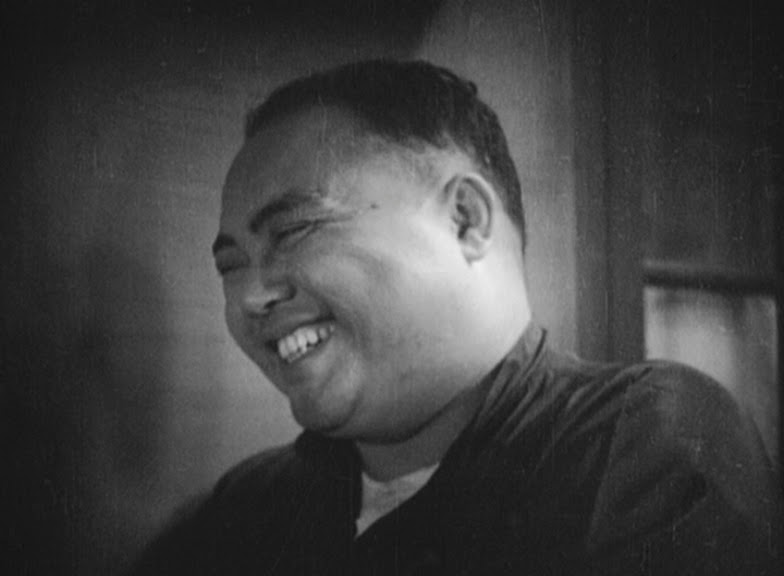
Ruan Lingyu abides...

OK, new rules, we’re halfway through and it’s time to make this blog snappier. Today:

·         Cried – twice

·         Laughed – numerous times

·         Rolled eyes at improbable plot twist and/or directorial time wasting/needless passing of the narrative ball across the midfield and back to the defence and back again… four times

·         Shouted “C’mon John!!” embarrassingly loud to encourage Mr Sweeney on stage for an encore – once!

People, it’s been a roller coaster day… maybe I need more sleep/less coffee?!


Why cry though? Well for that you have to blame simply one of the finest actors of the 1930s, Ruan Lingyu who acts her socks off and breaks our hearts in the overlong but for long periods quite brilliant Love and Duty (CN 1931). She was only just 21 at the time of the film’s making and succeeds in convincing us that she’s a schoolgirl, a young woman, a woman prematurely aged by the concerns of her life and then her own daughter. Not once do the multitude of close-ups betray a single wobble in her expression she is absolutely as good as she will be in The Goddess and other films about the “new women” in China at this time.


This film is her last of the old style in terms of its morality and attitude to women, she plays a woman who is unfaithful in marriage but her husband has already crossed that bridge and yet prospers while she suffers. Stylistically the film is advanced with some intriguing compositions by director Bu Wancang including some choice tracking shops as her character Yang Nei Fang walks to school and is followed by Li Tsu Yi (played by Jin Yan). This really emphasises the moments in which they fall in love at first sight… but their fate is not true to this fairy tale beginning.


A new dawn about to fade.

Her traditionalist parents promise her in marriage to a rich writer Huang Ta Jen whom she doesn’t love… the years pass and they have two children and are sporadically unhappy. Another chance encounter as the returning Li Tsu Yi saves one from drowning in the park and their love is soon rekindled, just as Huang is seeing his mistress. I believe it was Sade who suggested that love is stronger than pride and it’s certainly stringer than the family ties in this film as the two lovers run away leaving Business Huang with the children. It’s the first heart break.


Things do not go well for the starstruck couple and even after they have a child of their own, a daughter, Li struggles to find work and soon succumbs to illness, that first dry cough is a sure sign that he’s a goner before the next reel is run. Yang has various visions of her options standing by her lover’s grave and after seeing all of them end in humiliation vows to bring up their daughter in his honour and give her the chance she never got.


Ah, if only things were that simple and there was an invisible guiding hand – perhaps Mr William H Hays’? – to get us to the happy ending we all long for but this film isn’t taking the easy way out and nor is it in a rush… But, by the time the endings are all tied up even cynical old publishing marketing directors where not alone in sniffing back tears in the Teatro Verdi!


Of course, for this I can also blame John Sweeney whose Stakhanovite efforts in constructing a powerful, emotional musical narrative for the 150 minutes of this film were outstanding and he richly deserved the ovation and the bow we called for. It’s one thing to stand there casually crying but quite another to play a part in perfectly amplifying the key moments in the tragedy and the love on screen. To do it all in such an embedded way is magic of the highest order!


Quickfire round up to 300 words. GO!


More stars than there are in West Lynne certainly...


In the morning we’d returned to East Lynne (US 1925) with new twists and turns, a better-looking cast, and less faith in the plays or novel to the point at which we didn’t get an electoral contents and not even get a dead Young Willy. This is heresy and several of the audience were visibly shaken but it is otherwise perfectly serviceable Hollywood fare and there are some good performances form those good-looking people including Marjorie (“see-saw”) Daw, Alma Rubens and Edmund Lowe as the apple-munching menace Carlyle.


No complaints at all about the wonderful accompaniment from Stephen Horne on piano (and various) plus Elizabeth-Jane Baldry on harp, the two work so well together and elevated this film to thoroughly enjoyable!


Mabel & Tillie and the CCEU, with Meg Morley

Miss Normand appeared on screen with her saucer eyed beauty and it was as if the whole auditorium lifted. Her energy is simply unmatched and it was there right from the start in Betty Becomes a Maid (US 1911) and Mabel at the Wheel (US 1914) two perfect comedies that knock the pomp out of the whole process and connect directly to our inner nuisance and devilment. I found myself wishing for a Mabel bio-pic featuring either Aimee Lou Wood, Margaret Qualley or both: whose with me? Let’s make this happen!


We also met another recuring character in the Extended Charlie-verse, Tillie, as played by the magnificent Marie Dressler – see, women are just funnier, ask Mack and Charlie, or just look at Ford Sterling.


Mabel on the left... see what I mean about Aimee?


More fabulous music in the evening session, this time for the Ukrainian children’s film The Adventures of a Penny (UkrSSR, 1929) directed by Axel Lundin. An entertaining new score composed by Olga Podgaiskaya performed by her with a mixed string and woodwind ensemble playing along with this lighter tale from the second year of Stalin’s First Five Year Plan. The kids are great and Lundin directs then exceptionally well, it's a real child's eye view of an adult world that continually lets them down. The solution is solidarity, community and working for each other no matter what the bourgoise commentator from Merseyside says on here.


But sadly, Stalin's fisrt plan lasted seven years and killed millions of Ukrainians in the name of industrialisation and “dekulakization” (forcing the “richer” farmers to surrender to collectivisation and a redistribution of labour and grain to the cities).


It never ends does it?


The remarkable young Kolya Kuryshkin, a fabulous performance for a scrappy kid!


Monday, 21 December 2020

So here it is (against all odds)… 2020's Silent Highlights


“A journey in one’s armchair – a journey of the mind – is the nicest kind of journey, because it’s what we want it to be, because there are no obstacles, and all our dreams are granted.”


In such a year as this with no accompanied silent film screenings since the middle of March… how can Arthur find very much to thank? Well, let me tell you there is more to be thankful of in 2020 than in any normal year because, despite it all, people did carry on and they did put the show on Right Here! So here they are - in no particular order - my top twelve silent delights from a year spent mostly at home...


Buster and Natalie Talmadge 

1. Slapstick Festival – Our Hospitality (1923) with The European Silent Screen Virtuosi


If it was January it must have been Bristol and the reliably sensational Slapstick Festival which was again packed with rare and beautiful shorts as well as features I’d previously missed such as Lubitsch’s So This is Paris (1926) and James Cruze’s On to Reno (1928) starring Marie Prevost. The highlight was Buster’s Our Hospitality screened in the cathedral with an informed, passionate introduction from actor Paul McGann who this year joined with me in celebrating victory for Liverpool Football Club in the Premier League as well the World Club Championship… 2020 eh!?


Our Hospitality was the first of Buster’s features and a huge leap for comedy kind with a substantial budget enabling him to shift the legendary Canfield and McKay feud back to the 1830s resulting in a very funny and genuinely thrilling film with real drama added to the gags by one of the greatest of comedy innovators.


The European Silent Screen Virtuosi joyfully accompanied with Günter A. Buchwald, Romano Todesco and Frank Bockius filling the cavernous spaces with perfectly judged collaborative improvisation.


Pierre Magnier gets a hat, gets ahead.


2.       Cyrano de Bergerac (1925), with John Sweeney, Phoenix Cinema


Pure joy in February Finchley with a Cyrano that is one of the few surviving colourised silent features; a sumptuous classic that revels in its own excesses in full expectation that the audience know exactly what’s coming from this classic tale of secret love. It is a film that demands to be watched in a beautiful 108-year-old cinema and with accompaniment from someone as skilled as John Sweeney who provided so many stirring motifs that you could almost see a feathered hat bobbing over the keyboard.


I remarked at the time that it was “…well worth braving Storm Ciara for on a day National Rail told us not to travel! Faint hearts and all that…” Go on, tempt fate, why don’t you?


3.       Tatjana (1923), with John Sweeney, Kennington Bioscope


I don’t think anyone took the Cinema Museum for granted, even before all of this… but I wouldn’t have ever thought that this would be my last trip there for nine months and counting. This show was a very rare screening of a skilfully made tale of love and obsession during the turbulence of the Russian Revolution. Made in Germany with direction from the Danish Robert Dinesen, it does at least feature a Russian lead, Olga Tschechowa, as the woman distracting several comrades from purposeful politics.


John Sweeney is, of course, very much your man for the Russians and wove splendid dramatic and romantic lines through the web of revolutionary intrigue. He hadn’t seen the film – who had? – but he was, of course, spot on.


Jenny Hasselqvist y'all!


4.      Ingmar's Inheritance (1925), Selma Lagerlöf’s Jerusalem


Everything closed in the first Lockdown, those of us who could worked from home and, in my case, programmed an in-house season of Swedish films based on my reading of Selma Lagerlöf’s epic Jerusalem as translated by the well-intentioned but over fussy, Velma Swanston Howard. Four films were made of the two books of Victor Sjöström made the first two, The Sons of Ingmar (Ingmarssönerna) (1919) and then Karin Daughter of Ingmar (Karin Ingmarsdotter) (1920) which failed to repeat the success of the first film leaving the director to turn his attention elsewhere.


Gustaf Molander picked up the project and completed the story with his brace, Ingmar's Inheritance (Ingmarsarvet) (1925) and Till österland (1926). The two directors had many differences in approach with Sjöström’s narrative much closer to Lagerlöf’s text and more focused on the interior life of her conflicted characters whilst Molander broadened the palate, taking more liberties and setting up more action.


I especially enjoyed Ingmar's Inheritance which has a stellar cast including Lars Hanson, Mona Mårtenson, Conrad Veidt and Sweden’s actor/prima ballerina superstar Jenny Hasselqvist!


Indoor adventure with Raymond McKee


5.       KBTV – Kennington Bioscope Online, Kidnapped (1917) with John Sweeney (ITMA!)


When the going got tough, the tough went online… It was Dame Pamela of Walthamstow who once described the Kennington Bioscope as London’s Silent Speakeasy, an exclusive yet inclusive, almost mythical club of the committed and persistently passionate silent cinephiles who gather under shadowy circumstances once every three weeks or so… When the door of the Museum had to shut, these movie mobsters just stayed calm and carried on, shifting to digital and, with casual ease, bloomin’ well going global!


Hosted by Michelle Facey – literally the face of KBTV – throughout lockdown the Kennington Bioscope have been broadcasting shorter films on their YouTube channel but this episode was something else as there was a full feature film with live accompaniment from John Sweeney and an introduction from Fritzi Kramer, America’s premier silent blogger with Movies Silently and the woman who crowdfunded the restoration and DVD release of Alan Crosland’s adaptation of Robert Louis Stevenson’s Kidnapped. It’s a film for all the family and one which retains its sense of adventure and charm a century on.


Nita Naldi and John Barrymore: two great profiles...


6.       Dr. Jekyll and Mr. Hyde (1920), HippFest at Home with Neil Brand


One of the first and biggest disappointments of the year was the cancellation of Hippfest – ock, we were just a week away…  The Hipponauts stayed connected via social media though and after an earlier shared watch-along of Clara Bow’s It, this was the full Monty: a learned introduction from Pamela Hutchinson and the wonderful – properly diegetic – scoring of Neil Brand for one of the classics of the silent era, courtesy of Kino Lorber’s Blu-ray of the 2011 restoration.


This was also another of those “appointments to view” with so many of the silent film community watching and commenting as the film played; from London, Bristol, Scotland, Europe and the USA… we were all in the room sharing the film just as we do in festival. Sure, we had to bring our own drinks and nibbles, but this was a night when social distancing became merely a physical construct.


Valéry Inkijinoff acting up a storm


7.       Storm Over Asia (1928), Silent Film Days Bonn, Elizabeth-Jane Baldry and Stephen Horne


Some countries did better than others post lockdowns and in August the 36th Silent Film Days in Bonn was one of the first to run in Europe. The organisers also decided to stream some of the films along with the live accompaniment so that those of us who couldn’t make it, could experience something of the immediacy and ambience of the festival.


So, huddled over my laptop, in my Berlinale t-shirt and with my Louise Brooks Pordenone Silent Film Festival mug topped up, I watched this crystal-clear restoration of Vsevolod Pudovkin’s Storm Over Asia (1928) and listened to the visceral interplay between accompanists Elizabeth-Jane Baldry and Stephen Horne on headphones… and it was almost like being there; certainly one of the most visceral streams of the year.


Ruan Lingyu


8.      
Guofeng (National Customs) (1935) with Gabriel Thibaudeau, 39th Pordenone Silent Festival


Talking of Le Giornate del cinema muto… this year’s edition moved spectacularly online with an afternoon and evening’s worth of musician masterclasses, main feature and post screening discussion that gave us something of the festival’s immediacy and intensity. Every day for a week festival director Jay Weissberg bounded out from our screens drawing us into the programme of restored gems and quoting the above lines from Michel Robida about our shared armchair journeys.


The films were a treat from the restored Weimar sophistication of Abwege (sex and drugs and Brigitte Helm…) to the small-town, mid-west, juvenile Americana of Penrod and Sam (1923) via a rare trip to Greece for The Apaches of Athens (1930). It’s a close-run thing but my favourite was probably Guofeng (1935), accompanied by Gabriel Thibaudeau. Made during a fighting pause in the China’s lengthy civil wars the film promoted Chiang Kai-shek’s Kuomintang (KMT or Nationalist Party) call for a return to core values with its New Life Movement. The movement, sharing values with the opposing Communist Party, was reaction against Western imperialist influence and urged the people to observe social and political responsibilities, practice frugality and to know one’s sense of shame.


Now, if that sounds too functional a brief the resulting drama is nonetheless well made and acted especially by a radiant Ruan Lingyu, the star of Goddess (1934) among many other Chinese silents, before she committed suicide aged just 25 in early March 1935, some two months before the film’s release. She is extraordinary here as every time I’ve seen her, gently emoting and disarmingly direct, sometimes straight to camera if not to the audience, she never leaves her character.


The Masterclasses were also uniformly fascinating and provided extra dimensions to the screenings along with Jay’s masterfully chaired discussions. Sorry Jay, but next year’s festival is just going to have to be that much longer to allow for this all!! Immacolato!!


BFI's Bryony and KB's Michelle introduce

9.       The Cheaters (1929) with Cyrus Gabrysch, London Film Festival 2020


After Pordenone it was straight on to London for the next streaming festival and one that brought a collaboration from the Kennington Bioscope and the BFI. KBTV MC Michelle Facey introduced along with the BFI’s Bryony Dixon who filled us in on the remarkable McDonagh Sisters, Paulette who directed this and seven other features, Isabel, the star, acting under the name Marie Lorraine and Phyllis who worked as art director. They even had their own set, using their splendid family home Drummoyne House as well as some stunning locations around Sydney.


The Cheaters was the third of the McDonagh sister’s films and shows a remarkable consistency of tone and aesthetic. It’s a very proficient melodrama with Hollywood-level performances allied to a crispness of direction and that visual cohesion described by the National Film and Sound Archive as evidence of the McDonagh sisters' “understanding of mood and atmosphere.”


Cyrus Gabrysch’s accompaniment was a gorgeous gamelan, matching the drama but also the thread of family and love. Occasionally I glanced down at his work on the now famous Bioscope “Piano Cam” but mostly, as John and Neil had said in Pordenone’s masterclasses, the music was at the heart of the film and it felt exactly as if it was coming out of the screen!


10.   The House of Shadows (1924), Stephen Horne & Elizabeth-Jane Baldry, Le Giornate del Cinema Muto Silent Stream


There is much discussion about the “new normal” and whether cinema viewing will return in the same ways after the pandemic is ended but some things can stay, especially archive streaming. The Danish Film Institute has – literally – hundreds of silent films available to view on its site (of which more anon) whilst the San Francisco Silent Film Festival also provides highlights from previous screenings. Le Giornate has The Silent Stream which in addition to the masterclasses, features films from earlier editions including this gem from 2017, my first year in Pordenone.


The House of Shadows is an intense melodrama set in northern Norway and Anders Wilhelm Sandberg’s film is an intense, mystical family drama that is as disturbing as it is haunting with some outstanding locations matched by some exceptional performances.


Elizabeth-Jane and Stephen make for an intuitive paring and they fill the characters with so much musical warmth as well as dread, lifting their lines above the swooping panoramas and pacing the viewing narrative with a measured precision that confounds the occasional reminder that this is all played live. There’s a rapture of applause at the end and I think you can hear me whooping as well!


11.   Digital release of the year? The Intrigue (1916)/A Son of Erin (1916), Kino Lorber Blu-ray


Like many compulsive obsessives I have a stack of unwatched Blu-rays and DVDs, in order of release date or sub-sectioned by Director… and whilst this has been the year to eat into that reserve there’s also been good reason to add to the challenge by bringing in more! One I bought and watched was this great set from Kino Lorber featuring forgotten films from Julia Crawford Ivers.


Included are four films either written by or written and directed by Ivers all of which compliment her film, The Call of the Cumberlands (1916) included on the company’s boxset of Women Film Pioneers which, a six discs and 25 hours long, is the perfect lockdown companion.


This set majors on The Intrigue, a science fiction spy adventure from 1916, and whilst it’s very interesting, it was A Son of Erin (1916) written and directed by Ivers that drew my eye the most as it had a number of thematic parallels with Cumberlands; humble men making good, steadfast romance in a changing world and corruption in public office. Ivers sense of morality is consistent across these films and that draws you in further to the history of the films and the time.


Ben Model


12.   Streaming King: The Silent Comedy Watch Party, Ben Model and Steve Massa


Incredibly Ben Model hosted his thirty eighth silent comedy streaming on Sunday 20th December making him one of the most relentless bringers of digital joy for the year. The redoubtable Steve Massa provides deeply informed introductions and Ben live-accompanies shorts comedies starring every silent comedian you have and haven’t heard of. It’s an education and an inspiration. Also *funny*!


This week’s episode featured champion Charley Chase in There Ain’t No Santa Claus (1925) which proved that, actually Chaz, there is one, as this was the perfect comedy gift on a day, we desperately needed it! We also had Martha Sleeper – who I’ve previously descried as the silent era Parker Posey (OK, just me then…) and who is literally slapstick on skates in Sure-Mike (1925) - effortless amongst the mayhem in a two-reeler which also features some youngster name of Fay Wray. There was also lovely Lillian Peacock in A Shadowed Shadow (1916) which is not as dark as it seems… no shades of grey just grade “A” comedy.


Martha Sleeper


Steve and Ben take the digital biscuit and epitomise the resilience and invention of our silent cineaste subculture and its positive refusal to stand by in disconnected silence. As Ben says, people are contacting them and letting them know how the show is heloing them cope with social restrictions and much more beside; laughter maybe the best medicine but so is routine and dedication. 


Thank you boys and thank you everyone above for continuing to shine your light in 2020. We go again in 2021 and I look forward to seeing you online and in theatres as soon as possible.


Monday, 5 October 2020

"Down with luxury and romance!" Guofeng (National Customs) (1935) with Gabriel Thibaudeau, Pordenone Day 2


“We are country people, they come from the city. They are too extravagant and modern, we mustn’t imitate them.”  “If all peasants in China behaved like modern citizens, we would lose the virtues of simplicity and frugality and the country would succumb!”


Day Two of Le Giornate del Cinema Muto #39 and I’m already planning to become a schoolteacher in rural China. Frivolity and beauty products are undermining the country’s resilience, culture and productivity and frankly, I think it’s about time I did my bit.


Guofeng (National Customs) (1935) was made during a fighting pause in the China’s lengthy civil wars with Chiang Kai-shek’s Kuomintang (KMT or Nationalist Party) advocating a return to core values with its New Life Movement. The movement, sharing values with the opposing Communist Party, was reaction against Western imperialist influence and urged the people to observe social and political responsibilities, practice frugality and to know one’s sense of shame.


This period of Chinese history is a complex one yet the interpretation of these issues by director’s Luo Mingyou and Zhu Shilin speaks largely for itself with a clear message that modernity and western ideals are to be at least kept at arm’s length as people work hard to secure social cohesion and prosperity during harsh times. At one point the Principal of the rural school at the heart of the story, appeals to her pupil’s conscience, asking them to recognise their privileged position at a time when many were starving and in poverty. Similarly, the obsession of her daughter Zhang Jie (Li Lili) with make-up, western style and consumerism, is nearly everyone’s downfall.


Lim Cho Cho's Principal


Things have gone and will, in the film, go too far, but there is redemption in working together towards common goals. There’s an almost slapstick ten minutes in which the town councillors see an opportunity in modernisation and Western-style shops pop up all along the main street with the councillors getting western suits, cigars and even "Western socks" to make themselves look younger. This is then juxtaposed by a stirring segment in which Principal Zhang (Canadian born Lim Cho Cho) and her loyal teacher, bring the people back together with forceful speeches that push back the torrents of decadent confusion.


I have another love, says Zhang’s other – sensible – daughter Lan, to her former lover, it is for education!


Lan is played by the radiant Ruan Lingyu, the star of Goddess (1934) among many other Chinese silents, before she committed suicide aged just 25 in early March 1935, some two months before the film’s release. She is extraordinary here as every time I’ve seen her, gently emoting and disarmingly direct, sometimes straight to camera if not to the audience, she never leaves her character. She has a direction in life and is hardworking, believing in truth, justice and the Chinese way. She is betrayed by her flighty sister Jie played by Li Lili who is superbly sassy, with the “pre-code” “presence” of a Joan Blondell or Glenda Farrell and the cruel sneer of a Barbara Stanwyck.


Li Lili dresses for the part

The film itself is a study in the New Life aesthetic and in the ways that Western culture was absorbed and utilized in new ways. The direction is very “European” with fluid camerawork and plenty of tracking and dolly shots, montage and inventive cross-fades; it’s a very well-made film with state-of-the-art design, costumes and staging. Allowing for the odd drop of pace and it is also clearly addressing a cinema-literate audience with a narrative economy that knows somethings can be un-said or un-shown.


“If you love him you have to stop dressing up and behave more seriously…”


The story? The two sisters couldn’t be further apart in their view of life, Lan the best in class and gaining a scholarship to Shanghai University and Jie, obsessed with make-up and social excitement. Lan warns her to forget about the foundation and knuckle down but she won’t listen. Yet Lan not only loves her sister she also loves social order and for this reason selflessly backs away so that Jie can marry the man that she loves and who had just proposed to Lan, Chen Zuo (Zheng Junli).


Westerngoods undermine cohesion


Lan cannot lie and tells him she loves another, she says this twice and always means it, and departs leaving him to marry Jie. Lan goes to work in an elementary school in Huai’an and three months later… Lan reads of her sister’s marriage just as she is selected to go to Shanghai at the expense of the state for further education… Lan was the best in class. Her sister is already bored with married life and jealous of Lan asks Zuo to pay for her to join her in Shanghai.


Meanwhile, handsome Boyang is also sent to Shangai – “what a lively city!” – and we spy trouble ahead. Jie asks for more and more money from Zuo who is tearing his hair out at home whilst she wears make up and goes out more with her flighty friends… meanwhile goody-Lan sends money to her old school to buy books. It is heavy handed to us western sophisticates from the future but was clearly designed as patient propaganda for a rapidly changing society.


Boyang also asks for money from his long-suffering parents and whilst he tells them he’s working hard the reality is that he’s skipping lessons and gets reprimanded. We just know the lad is perfect for Jie and Lan tries to put him off by urging them to be good citizens, highlighting the problems of this new generation who come from the country to be city educated and then, when they cannot adjust, bankrupting their parents in their demand for material goods and leisure experiences.


They don’t listen and remind me so much of Gen-X…


Ruan Lingyu battles Li Lili's smarmy bf

“Are you scolding us, we don’t have time to argue with you…”

Lan plans to ask Boyang to marry her but her sister and he use it to humiliate her and to encourage the other students to take revenge on her and her “saintly” ways. She ends up ill and will have to graduate late... giving the film time for its final flourish as the two return to their town laden down with luggage and take up posts as teachers in their old school.

They proceed to make a mess and set the worst of examples for students and the local populace leading to the final fight back from Principal Zhang and the film’s central address and dramatic conscience call. It’s as dramatic as anything you’ll see with Walter Pigeon and, frankly, I was stirred.

Gabriel Thibaudeau accompanied and provided his own discourse between ancient and modern with subtle lines that reflected the film’s central concerns as well as delighted in its dynamism and emotional force. A reminder of the skills of Le Giornate’s musicians and the due diligence they pay to their source material: a fine duet of audio-visual balance.


Zheng Junli and Ruan Lingyu


Before this we delighted in The Brilliant Biograph: Earliest Moving Images of Europe (1897-1902) captured in 68mm with expert accompaniment from Daan van den Hurk.


This was a tour of Europe drawing from Eye Filmmuseum’s The Mutoscope and Biograph Collection – which includes over 200 films on the original 68mm stock – as well as the British Film Institute and The Museum of Modern Art in New York. Some I had seen before but all were a feast for the eyes and you could only wish to see these on the big screen as we had with the BFI’s Victorian film show at the BFI’s Imax a few years back.


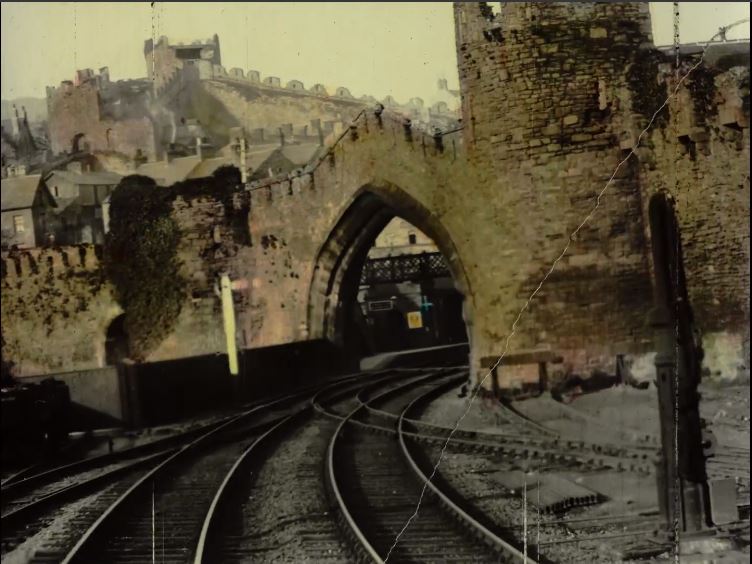
It was a stunning compilation though and I especially enjoyed hand-coloured Conwy (1898), Funeral procession in Rome (1898), Venice, Grand Canal and Ponte dei Sospiri (1898) and Captain Deasy promoting Martini cars, Switzerland (1903)!


And, never forget...


Friday, 21 April 2017

Shanghai Star - The Goddess (1934), BFI DVD


“Older people went misty-eyed when they heard Ruan’s name… She represented a time for them when hopes weren’t jaded, when you didn’t have to talk in double speak, when a revolution promised better lives.” Mark Cousins remembering a recent visit to China.

This one is almost too much, the natural dignity of Ruan Lingyu outstanding in a desperate tale of motherly love against all odds provided by a brutal environment and a society determined that it’s all her fault. This is a third world away from the sweet stories of Hollywood and sees Lingyu’s character employed as a prostitute – a goddess by any other name – and enduring the overbearing “protection” of a crime boss in order to provide for her son.

Even when the kindly head of the school stands up for her he is shouted down by those who cannot see beyond her profession… can’t see even Barbara Stanwyck playing this, not overtly. Yet the Greta Garbo of Shanghai takes it all in her stride and is magnificent.

Ruan Lingyu
Written and directed by  Wu Yonggang, The Goddess is remarkably bold in its subject matter and reflective of a country in flux between the revolutionary forces of Mao Zedong’s Chinese Communist Party and the nationalist Kuomintang Party led by Chian Kai-chek who had achieved a temporary ascendancy in Shanghai which clearly allowed the urban creative elite full expression.

In the Shanghai of 1934 there were as many as 100,000 women scraping a living as a prostitute: around one on thirteen… In the year of the Long March Chinese society warlords and politicians struggled for control whilst a newly urbanised peasantry lived in squalor.

Shanghai street-work
The film was one of Ruan Lingyu’s last as she committed suicide within a year of its completion – she was only 24 and on this evidence a performer of the highest order with a range of controlled, natural emotion that cuts through in a very modern way.  If not the Chinese Garbo of legendary cliché but, as with Greta, someone who works their interior world very hard and yet gives only glimpses of the powerful turmoil just bubbling below.

She’s almost matched by the baby-faced Zhang Zhizhi who plays her pimp, a compulsive gambler and a bully who can smile and smile and indeed be a villain still. But he’s not necessarily the clichéd control freak and psychotic bully boy; he’s weak and irresponsible - another believable character.

Zhang Zhizhi - nowhere near as friendly as he looks
Then there is the woman’s son, played by a talented youngling called Keng Li who gives a very good account of himself… The Chinese Jackie Coogan? No, he’s his own boy.

Wu Yonggang’s screenplay had been partly inspired by his observing prostitutes forced smiles as they greeted customers: what horrors lay behind those phoney faces? Wu had spent time in Hollywood and his experience is clear from any number of clever tracking shots, expert close-ups and a wonderful overhead as the woman engages with another client and the two walk off together to more hotel room misery…

Cold hotel morning
The woman seeks to find a way to support her son using the only option open to her. She is almost run in by the police but takes shelter with her soon-to-be protector who starts to make her work for him. Not wanting her boy to suffer as she has she starts to hide away money in order to enrol him in school. But prejudice is rife and the other school governors are not so open-minded nor are the parents. Meanwhile the gambling-pimp finally finds the stash of money, is he about the throw away the only chance the boy will ever get?

Last chance at school?
No spoilers:  Even if this was a Hays dodging pre-code Hollywood film, there would be retribution in store but here the twists and turns have the ring of truth and you’re never certain of the end game as the story plays its course. It remains a genuinely moving experience and a story the resonates strongly still.

Chinese composer Zou Ye’s newly commissioned score moved graceful alongside the film interweaving modern themes with more traditional sequences: a bridge connecting us to the time and the place… Zou Ye conducted the Chinese Philharmonic Orchestra for this recording of a  score commissioned by the KT Wong Foundation, an independent body dedicated to fostering cultural exchange between China and the rest of the World.

Brilliant actor at work
Sadly, Ruan’s personal life was no less complicated than this film and under huge pressure from the press following her complicated love life, she took an overdose and died less than a year after The Goddess. Her death led to questions being asked about the uncontrolled behaviour of the tabloid press and the rights of celebrities to privacy and a life… and we think we’re so different?

The Goddess is extraordinary proof of the talent that was lost.

It’s available on BFI DVD from 23rd April and you can pre-order it directfrom their online shop now!