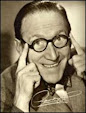
Showing posts with label Paul Cavanagh. Show all posts

Saturday, 8 October 2022

Priscilla, Queen of the Deserters… The Runaway Princess (1929) with Phil Carli, Le Giornate del Cinema Muto Streaming, Day Six


Marry! How does a princess marry? Someone she’s never seen, who’s picked for her? I wouldn’t marry a prince for anybody!


Even before the royal escapees became hot news, there were others who dreamt of live without the constrictions of “duty”. It’s not for everyone, clearly, especially given the huge social spotlight of these days and the lack of freedom of choice earlier sensibilities brought. Australian-born novelist, Countess Elizabeth Russell certainly felt the pressure of expectation, living a life of suffocating duty only enlivened by lengthy country walks with her many dogs and her writing of “The Princess Priscilla’s Fortnight” (1905) on which this film was based.  


This was an Anglo-German co-production between British Instructional Films and the German company Laender Film, with direction from Anthony Asquith for this English version and shotting split between Berlin and Hertfordshire Hollywood (Welwyn Studios). It’s an endearing fairy tale, entertaining without being that dramatically compelling or funny - not quite up there with Asquith’s Shooting Stars, Underground or A Cottage on Dartmoor – but a decent British film.


Mady and Paul Cavanagh

It does feature a winning performance from Austrian actress Mady Christians who’s Wilhelmina Marie Alexandra Victoria, Princess of Lothen-Kunitz, Grand Duchess of Gerstein… call her Princess Priscilla for short, is a bundle of innocence, energy and “Ruritanian” pluck! Natural charm combined with an ease of expression that covers the comedy and the drama with an earnestness that overcomes a rather predictable situation. She’s just turned 21 and decides to make a break for it when she is told she is to marry the Prince of Savonia, no doubt some old fuddy-duddy!


Accompanied only by her Professor (Fred Rains, father of Claude!), the two head off to London via Amsterdam for adventure and a normal life. Cycling on her estate Priscilla meets a Charming Man (Paul Cavanagh) who is immediately taken with this strange, pretty woman. He follows her as she makes her way on the train away from responsibility and towards the freedoms of London. She also has her first encounter with a group of forgers led by Norah Baring, who’s screen intensity instantly creates a new dynamic with knowing looks that could ignite celluloid with one glance from a hundred paces.


Norah Baring

The action picks up as Princess and the Prof change trains and the CM follows them along with a detective tasked with catching the forgers. The two only just make it into the baggage car and then exchange notes, with This Charming Man pretending to also be a detective, so that the two of them, Hand in Glove, can prevent the future Queen from being dead… (that’s enough Smith’s references, ed.).


The remainder of the film is a mixture of proto romcom and caper movie with some great shots of London especially when 'Cilla rides down Fleet Street up top on a double decker only to be kicked off with no ticket just yards from Ye Olde Cheshire Cheese and Devereux Arms public houses… The steam train crossing the old bridge with St Paul’s in the background is an iconic shot of the vestiges of steam punked London.


Claude H. Beerbohm and Paul Cavanagh

Goaded by the Handsome Man, ‘Cilla determines to get a job to show she’s independence and, after failing as a roller-skating mannequin/model, she gets a job as a delivery worker using the fake fiver given to her by Norah’s Forger, before her handsome fella sabotages her delivery of millinery to, guess who, the forgers. Head forger decides that she’s the perfect person to deliver their manufactured money as she’s so dopey and innocent. Besides… she just keeps turning up!


Now then, will Priscilla get caught up with the criminals and will she ever find out who the handsome man is? I suspect you can have a good guess but it’s fun finding out even if the forgery storyline is a little undercooked and you feel like an opportunity has been missed about the whole Runaway Princess situation.


Up top with St Paul's in the background

That said, Mady Christians is excellent as the innocent but resilient royal and there’s some great support from Norah and Paul Cavanagh, not to mention Claude H. Beerbohm as the detective. Generally, Asquith favours the humour and this is a satisfying romantic comedy, with almost zero dramatic tension, that would soon be christened screwball. All is never as it seems, but we know that!


I wonder if there was anything deeper about the royal desire for escape. Turns out you can’t really escape your responsibilities or your destiny as the sone of a man who was Prime Minister for eight years, perhaps Anthony knew this better than most.


Sunday, 9 August 2015

Home Counties on the range… The Squaw Man (1931)


“I think it is terribly dangerous for him to ever take her in his arms or touch her deliberately… any physical contact must be legitimately for a purpose – like helping her off with some wet things.” So wrote co-scriptwriter, Lenore J. Coffee to her director Cecil B. DeMille.

This was DeMille’s third go at Edwin Royle’s The Squaw Man following two silent versions in 1914 and 1918 and, if anything, the tale of inter-racial love was more sensitive in the early thirties. At least in 1914 the part of Nat-u-ritch was played by a Native American - Lillian St. Cyr (aka Red Wing) – on DeMille’s insistence but here in 1931 we were back to make up and Mexican María Guadalupe Villalobos Vélez took on the role.

Lupe vexed...
The Californian anti-miscegenation laws existed until 1948 but apparently relationships between whites and Native Americans was “more accepted” than other combinations. You can see the appeal for DeMille in this opportunity to plug into what biographer Scott Eyman refers to as the “duality” of the audience: “… its eagerness to vicariously experience the forbidden, while at the same time preserving a sense of respectability.”

Eleanor Boardman
But I’m not really here for Cecil but for Eleanor Boardman in sound. Wiki-parently Boardman was “unable to make the transition from silent to talking pictures” but I think the truth was more along the lines of her having better things to do: divorcing King Vidor, romancing then marrying Harry d'Abbadie d'Arrast in Europe oh, and bringing up two daughters, Antonia born in 1927 and Belinda born in June, 1930 just a year before this film was a released. She and Vidor were to have a battle royal for custody which certainly hit him hard as Durgnat and Simmon contend in King Vidor, American and no doubt exhausted their mother just as much. She was also someone who her later interviews confirmed, wasn’t necessarily that bothered with her film career, proud though she was of The Crowd and surely several others.


On this showing, Boardman could do “talkie” and, indeed, she is as nuanced and eye-catching as ever; not as energetic and edgy as her co-star, Lupe Velez – ten years younger – but more controlled, expressing her various reversals of fortune in quietly-desperate ways: a better portrayal of natural “English” than Velez’s portrait of “native” American.

No doubt, had Eleanor wanted to carry on making movies for us then she could and would… but, as much as Norma Talmadge, she didn’t need us anymore and she probably thought the audience could do without too especially given the cruder tone of pre-code in which the next generation made their way in more revealing and overtly sexual ways… Lupe being one of course and in this film too…

The ruling class
The story starts in England as the idle rich gather for a weekend at the country pile of Henry, Earl of Kerhill (Paul Cavanagh) and his wife, Lady Diana Kerhill (Eleanor Boardman). Henry has been collecting funds for his regiment’s orphan fund along with his cousin James 'Jim' Wingate (Warner Baxter) but has “borrowed” £10,000 to invest in a scheme run by a pal; one that couldn’t fail but which now has.

Lord and Lady take a break
Henry and Diana’s sparring over snooker reveals a marriage under strain and when Jim arrives, the lights in Diana’s eyes tell us all we need to know. As the party progresses the excellent Roland Young throws in much humorous gravitas as Sir John 'Johnny' Applegate who sacrifices his pawn in the hope of beating Henry’s aunt at chess: ‘tis a foretaste!


There’s a nifty sequence as the camera shifts from Jim in the garden to Diana behind a window – emblematic for the silent star forced to mime behind the glass until being revealed in sound at the doorway. Diana and Jim are in love and as they wish by the well they come close to admitting it until and over-hearing Henry surprises them. The truth is out but Jim is too much of a man and Diana is too much of a woman to betray Henry.

Diana and Jim agree the "decent thing"
Meanwhile Henry’s “investment manager” has killed himself and that truth is also about to come out too. He takes his own gun but Jim prevents him and hatches a plan to save both Diana and Henry’s honour at the cost of his own… he will take the blame and leave for America.

Jim's sense of duty is overwhelming
Cut to the middle of nowhere and a dusty ranch near Buzzards Pass where local bully Cash Hawkins (the effortlessly aggressive Charles Bickford) wants to appropriate part of the land of a recently-arrived rancher from England… Jim faces off the threat even with the local Sheriff Bud Hardy (DeWitt Jennings) favouring Cash (in hand, no doubt).

Cash tries to intimidate Naturich
Cash is also pressurising a Native American, Tab-y-wana (Joseph Singleton…), for his land by pushing liquor into his hands in the hope he’ll get drunk enough to let go. Tab-y-wana’s daughter, Naturich (Lupe Vélez) intervenes only to become the focus of Cash’s interest but as the ranchers pulls her hair and pushes her against the bar Jim arrives and slaps him down.

That’s one save to the Englishman but Naturich soon returns the favour as Cash aims to ambush Jim whilst he drinks himself into a stupor after spotting a picture of Diana in the society pages… a good moment from DeMille as the camera pans round the newspaper and shows the source of Jim’s reaction. She shoots Cash before he can gun down Jim.

Cheers m'dear
Jim avoids arrest – it wasn’t his gun – but is shot from his horse by Cash’s men as her returns home. Naturich saves him (2-1!) and nurses him back to health… she’s infatuated and gradually Jim returns that interest. Folks are talking though, it’s just not done round these parts, and he attempts to send her back to the reservation only to find her crouched outside the house soaked to the skin in a storm…

Steamy... literally.
It’s now that DeMille is able to show that “physical contact” as Jim does indeed help “her off with some wet things…” in front of the fire as Velez shows off her bare shoulders and legs in one of those code-transgressing moments so popular at the time. The scene ends with Naturich leaning her head against Jim’s arm as he sits masterful on his chair… all “code” for far more.

So now, common law in the cabin, what lies in store for Jim and Naturich? The story cuts to eight years ahead after the arrival of a son… and events in England progress as well meaning that Jim’s past and present are about to collide in the most forceful of ways…


The Squaw Man has some interesting moments and good performances all round but it doesn’t quite add up to more than the sum of these parts.  Even DeMille later admitted that it was a bit slow and it is indeed far less pacey than the 1914 original which has a lot more action and dramatic impact.Then there is the toe-curling "native" dialogue and references to Naturich having a "primitive mind" - hey, maybe she just doesn't want to learn English even after eight years with gentleman Jim?

The two are available on Warner Archives DVD either direct or from Amazon. This one is worth watching for butch Baxter and lusty Lupez but for me, elegant Eleanor still excels them all.