Showing posts with label Lupino Lane. Show all posts

Thursday, 28 October 2021

Back home… The House on Trubnaya (1928), with Cyrus Gabrysch, Kennington Bioscope


Thus, it can be seen that even the most unworldly peasant can make a valuable contribution to the labour movement… As with Michael Powell, Boris Barnet was not phased by the strictures of propaganda and weaves his way around the need to deliver this core messaging whilst still providing entertainment. This film is funny, inventive and superbly edited with the actors giving sardonic and engaging performances that make light of the script ultimately conspired by five different writers. The original script dated back to Lenin’s era and a call for the common comrade to be ready to participate in democratic process whilst Stalin’s era was driven by a lengthening process of pulling more from the country to work in the city. Barnet meets both these objectives with wit and irreverent undercurrents which pull in the viewer in more subtly and completely than more earnest polemic.


I’m second-guessing historically but by the end of the film I was all for marching my support for Parasha Pitunova (Vera Maretskaya) as elected deputy of the Moscow maids' Trade Union.


In addition to some wonderful location shots of Moscow - Yevgeni Alekseyev’s cinematography is a wonder – there’s also a fantastic set showing the flights of stairs inside the tenement on Trubaya, like Dante’s Hell each level denoting a different level of position and snobbery with some of the worst at the lowest levels. It’s a superb way to illustrate the neighbourly interactions as well as the building’s “society” and, in a hectic start, Alekseyev’s camera pulls in and out as we witness the chaos – two men chopping wood on one landing, pausing to let a disabled child squeeze past, whilst others squabble over laundry as another day in civilisation begins.


Inside the house on Trubnaya

Barnet plays with expectations and form throughout notably when Parasha is chasing a duck in the streets and grabs it just as a tram moves at speed towards her, the driver leaps out and is suspended – freeze-framed - in mid-air as the title card reads: “… but wait, we forgot to tell you how the duck ended up in Moscow.” All this after some ten minutes of set up including rapid cuts, reversed film, montage (natch) and the goings on in the staircase set. This was Barnet’s fourth film but it’s his Revolver in terms of pushing the boundaries.


But wait, I forgot to tell you how I ended up in Kennington…


This was my first visit to the Cinema Museum since March 2020 and it was a delight to see the Kennington Bioscope back up and running. The KB carried on through the pandemic with KBTV on YouTube and whilst the path to the old place is all still familiar, what a time we’ve had. The old team was back together in the flesh and as star of stage and small screen, KBTV’s MC Michelle Facey introduced and John Sweeney warmed up for the first films… we were about to party like it’s 2019.


Still Dot Moving

Our first film was Still Dot Moving, a new silent short made by print-maker Julia Vogl which was a mesmerising sequence of original prints superimposed and almost glowing with a vibrant rhythm as John Sweeney overlayed his musical response. This was startling and unlike anything you might expect from the context but it was a fine way to return to the screen. John Sweeney’s accompaniment was as intricate and mesmeric as Julia’s images and this was the perfect example of the continuing possibilities of film and live music. 1


John then introduced us to the ground-breaking Russian dancer and film maker Alexander Shiryaev, who not only founded character dance in Russian ballet at the Mariinsky Theatre but also (probably) invented stop motion animation. Shiryaev’s interests were strictly in support of his work – helping to show his dancers his intended movements and choreography – and were only discovered in the 1990s. As John said, his ability to capture movement using these techniques was remarkable and the three films screened, one paper animation, another stop-motion and a third showing Shiryaev performing a Cossack dance with his wife, dancer Natalia Matveeva, were captivating especially when aided by such a practiced dance accompaniment!
 

Alexander Shiryaev

A Lupino Lane short comedy followed, Goodnight Nurse (1929) a new scan of 35mm nitrate and one of a number restored by the KB’s David Wyatt and Dave Glass following a Kickstarter campaign. It showcased the Brit’s speed of movement and athleticism which matched those who’d gone over to Hollywood before if not necessarily in terms of originality, then certainly flexibility and comedy!


Accompaniment for this was provided by the sprightly hands of Radio’s Colin Sell who’s worked with more than a few old jokers in his time and was the perfect comedy accomplice for Ida Lupino’s Uncle, the man who used to dance The Lambeth Walk. The Lupino Lane restorations are now available on DVD and you can purchase them from Amazon soon.2


Yes, but what about the duck?


After Boris stops his film with the endangered duck, the tram driver is unfrozen and jumps backwards into his reversing tram and we’re run back to scenes of Parasha about to depart from her village where she has been staying with her aunt. She’s off to stay with her Uncle Fedya (Aleksandr Gromov) in Moscow but, just as she climbs on board with a wicker bag containing food and the present of a white duck (uncredited, sadly) her train departs just after one arrives with Fedya on it.


Cue dreamy views of Parasha’s train slicing through trees and fields on route to Moscow and then her disorientation in finding that Fedya is not where he’s supposed to be. She wanders all night ending up with the above Duck Distress before, as chance would have it, being spotted by someone she knows.


Semyon in his motor

In the first ten minutes, Barnet has already shown us Semyon Byvalov a young chauffeur (Vladimir Batalov) preparing his car and then driving through Moscow with his sweetheart Marisha-maid (Anel Sudakevich). The narrative threads now intersect as he picks up his old friend and takes her to Trubaya. Here she gets work as a maid with the very odd couple of Mr. Golikov (Vladimir Fogel), a hairdresser, and his slovenly wife (Yelena Tyapkina) who seems to have perfected the art of lounging. Mrs. Golikov refuses to allow a union member to be their maid – probably more on economic than political grounds – so the newly arrived innocent is perfect for her purposes.


The Golikov’s are key characters, especially the hairdresser. He is hyperactive and ridiculous, washing their plates in the absence of a maid and after drying them flinging them across the room to smash. She is full of undeserved airs and graces… the sort of bourgeoise the Revolution was supposed to galvanise and re-purpose.


Another interesting sequence with Vera Maretskaya followed by (hand-held) camera through a crowd

But Parasha is of good intention and only sees other’s better motives. She is befriended by Fenya (Ada Vojtsik) who is politically active and takes her to union meetings. The workers arrange a play about the French Revolution which completely bewitches Parasha who, having not seen theatre before, attacks Golikov on stage as his character is assassinates Semyon’s… this wins her the love and support of the audience but Golikov immediately sacks her.


Our irritable boss has reckoned without the impact his young maid has created and soon he learns that she has been elected to the post of deputy by the maids’ trade union. This immediately elevates the standing of her former employers and Mrs Golikov is not alone in being keen to to ride this particular tide yet can her husband control himself for long enough to act in his and, more importantly, others' best interests? 


Parasha on the march

The House on Trubnaya is very clever slapstick mixed with social observation and the required political messaging: if all bosses are as venal and self-serving as the Golikov’s – even over a decade on from the Revolution – then workers need to join unions to support themselves and others. It never lectures just wends its peculiar way scoring laughs over political points and that’s exactly why it’s so watchable now.


Cyrus Gabrysch accompanied in style and relished this return to the silent film “club” he helped found! Welcome home Mr Gabrysch and everyone else involved in this wonderful collective!


1. More about Julia Vogl's work on her website and her Instagram.

2. More details of  the Lupino Lane project on their Kickstarter page.


No ducks were harmed in the writing of this post.


Sunday, 23 October 2016

Ev'rything's free and easy, do as you darn well pleasey… Kennington Bioscope Second Comedy Weekend


Kennington Bioscope you spoil us and we should never fail to be grateful for days like this: rare screenings, new discoveries and top-notch musical accompaniment all just a few Northern Line stops shy of the west end in the leafy high-housed terraces of Lambeth.

The Bioscope is based at the Cinema Museum, a former workhouse now overshadowed by massive skyscrapers at the Elephant and Castle. But the old continues to stand tall against such crass interruption: and this is a place we go to share in the preservation of memory without which we’re just all so many empty buildings.

Kid Boots (1926)

This marked the first time I’ve seen Clara Bow on the big screen and, as usual w=she did not disappoint. Directed by Frank Tuttle, this was Eddie Cantor’s first film and was based on his 1923 hit Broadway musical – without the songs – although Meg Morley provided perfectly-pitched accompaniment instead. Clara’s breakthrough, Manhunt, was released during production and by the time Boots she was a star. She and Cantor made a good partnership with he teaching her comic timing and she teaching him film acting.


Eddie impresses with an energy of his own – a remarkably supple stage veteran he is put through his physical paces by Clara’s bully of an ex, Big Boyle (Malcolm Waite) who tries to electrocute and then pummel him to pieces at a country retreat. But it is Bow who shines brightest and gradually takes over the film with her ease of expression and vivacity.

Eddie tries to make her jealous by flirting with the scheming Carmen Mendoza (Natalie Kingston) and as tears well up in Clara’s eyes we feel her genuine hurt. It’s a comedy but no one could feed tragedy so quickly into a smile as Clara.

Clara Bow
There’s winsome support from Lawrence Gray – who is Eddie’s mate trying to avoid his divorce falling through to the mendacious Mendoza – and Billie Dove as Eleanor Belmore, the new apple of his eye. It’s fun and features an extended literal cliff-hanger at the end… oh and Eddie Cantor looks just like Melvyn Hayes.

Meg Morley accompanied filling these boots with jazz-aged phrasing and rom-com panache: we were off to a flyer!

Early Days…

Andre Deed
Twenty years before Bow and Cantor’s relative sophistication there was an explosion of cinematic comedy characters in Europe. The venerable David Robinson gave us a glimpse into this almost vanished world of protean film stars who straddled the Worlds of theatre and the new media – highly athletic and expressive in films with fixed cameras and minimal narratives.

These players needed to have high impact and recognition and in this era of rapid prototyping only the fittest, fastest and funniest would thrive. André Deed was the first true named cinema comedy star with films dating from 1906 after he Charles Pathé was impressed with his stage performance. Deed was popular throughout Europe and was a man of many monikers: Cretinetti in Italy, Foolshead in Britain and Boireau in France.

The crowd waits to ambush Foolshead in his case!?
We saw a flavour of Deed’s approach in the – literally – mad-cap Boireau’s Apprenticeship (1907), which launched his career, and then How Foolshead Paid His Debts (1909) which involved a good deal of business with a large attaché case in which our hero hides. There’s a lot of chasing and our hero avoids his debtors by eventually disappearing into a wall.

There was more extreme silly with the Italian short Duel with Shrapnel (1913) which involved two men (Alex Bernard and Ernesto Vaser) trying to explode bombs attached to their backs… the winner may or may not win the hand of a fair maiden.

A dangerous game of Tick
No trip to the Big Bang of cine-comedy is complete without Max Linder – Chaplin’s Professor – and here we saw The Man Who Hanged Himself from 1912 which remains outrageous and very funny!

Scarce Pathé 28mm prints, almost as old as the films themselves, were projected by KB experts Chris Bird and Brian Giles on some equally vintage apparatus.

Lillian Henley accompanied with grace and humour, playing all of the right notes all in the right order in spite of the madness on screen.

Laurel and Hardy – And Still They Come!

David Wyatt and Glenn Mitchell performed a double act of their own to introduce a genuine scoop with the British premier of four films involving Mr Laurel and Mr Hardy. These restorations include previously lost footage – some large, some small, which goes towards completing the picture of team’s precious legacy.

The Second Hundred Years (1927)
The Second Hundred Years (1927) is now completed by footage long lost. It was the first true Laurel and Hardy film and features the duo attempting to break free from jail. Their chemistry is already in evidence and they just warm your heart.

Putting Pants on Philip (1927) is another very early example of this blend of comedic talent. Individually as shown by Stan in the restored but fragmentary Monsieur Don’t Care (1924) and Oliver aka Babe in Maids and Muslin (1920) they were funny guys but together there’s some kind of a critical mass of comedy that delivers economies of scale beyond any other duo in history.

Cyrus Gabrysch somehow kept pace with all this and the alarming possibilities of Stanley wearing a kilt in true Scottish style.

Ock no!
Home James (1928)

Kevin Brownlow introduced the day’s second feature film and this was an opportunity to see his copy of this rare Laura La Plante comedy. Laura’s striking blonde bob is nowadays mostly associated with The Cat and the Canary but this film showed how adept she was at comedy and it’s a bit of a gem for all that.

Laura plays a small town girl who leaves for New York to paint and make her fortune. Her mother (Aileen Manning) is not convinced she’ll make it – folk that leave rarely do - and it seems she’s not far wrong as Laura is selling plenty of paintings just none of her own; working as a sales clerk in a department store.

Laura tries to hide from Mr Lacey Senior
Laura is terrorised by Arthur Hoyt’s miserable floorwalker, Waller, who can smell her lack of dedication. By chance – where would we be without it? – Laura encounters the son of the shop owner, James Lacey Jr (a charming Charles Delaney) who she mistakes for his father’s chauffeur. Junior does little to dissuade her and plays along loving the idea that this gal likes him just for himself. He even starts doing some work standing in while Dad’s away just so he can see more of Laura.

The standout scene occurs when Laura has to go see Lacey Number Two to be disciplined; James hides from her so as not to give the game away while she performs an elaborate shadow play at the office door to convince Waller she’s been let off.

Not a classic but a really enjoyable movie all the same with a neatly paced narrative as mother and sister come to stay, James uses his own home to help Laura show she’s successful and James Senior finally makes it home.

The relations come calling
John Sweeney was our musical chauffeur and drove with relaxed precision towards the film’s destination neatly swerving to avoid jams and dead ends with practiced ease.

Lupino Lane – Local Hero

This was a labour of love from Lane aficionado Mathew Ross and opened up a career I knew very little about. Excitingly there was also a brief clip of Michael Parkinson showing Arthur Askey (all together: Ithankyou!) film of Lane performing some of his most famous theatrical moves in a 1978 documentary on pantomime.

Lupino Lane & Wallace Lupino - A Half Pint Hero (1927)
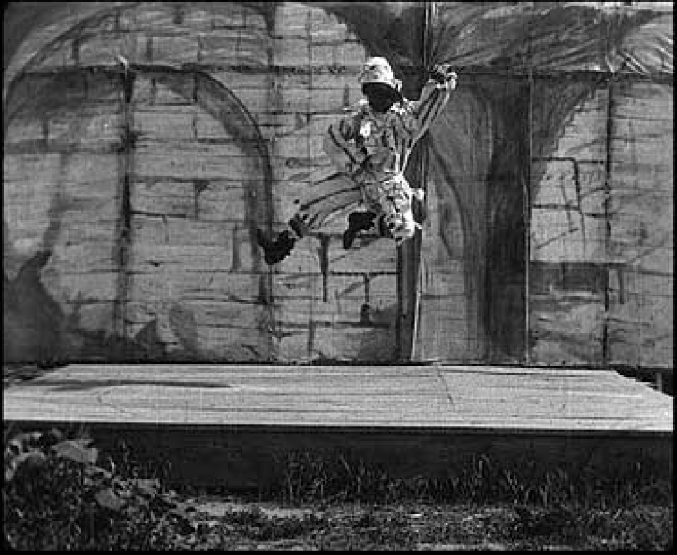
The Lupino family had a theatrical pedigree stretching back centuries and “Nip” – as he was nicknamed – was trained in gymnastics from early childhood, a still showing him in relaxed splits showing how comfortable he was with his double-joints.

Mathew rates Lane’s athleticism as second to none with only Buster coming close and there were ample examples of Lupino’s prat-falling in clips from The Dummy, one of his earliest British films in 1916 to his successful stint in Hollywood with the Roscoe Arbuckle directed Fool’s Luck (1926) and A Half-Pint Hero (1927) – in which Lupino plays a fireman battling brother William Lupino for the love of Toy Gallagher.

William appeared in and co-directed many of Lupino’s films often as his rival or his ally – the two had an instinctive understanding of the other’s technique and we saw this in full in Hello Sailor (1927) in which the boys chase after a girl who turns out to be a twin (Charlene and Minniela Aber: where do they get these names!?).

Roscoe Arbuckle and Lupino Lane or is it Alan Cummings?
Lillian played along with Lupino – both walked the walk as you do down Lambeth way.

It was time for dinner but I had to take my leave for a previous engagement at the Rough Trade 40th Anniversary concert at the Barbican. I swapped the chance to see Lupino in the 1939 musical, The Lambeth Walk, for some more contemporary sounds.

My ears won’t thank me for that.

Another great day at the Bioscope - enriching, informative, funny and thoroughly entertaining. Thank you Amran, Michelle and all the team - long may you reign!

Wednesday, 7 September 2016

Funny Bones: the Black Comedy of the War… BFI with Cyrus Gabrysch


This was the latest screening from the BFI’s WWI: The View from the Ground aimed at commemorating the centenary of the Battle of the Somme. It took a look at the lighter side of war… and indeed there always is one even in the darkest of conflicts.

Very few comedy films from the period survive but what we have illustrates the greatness of Britain: our ability to laugh at and with ourselves in the face of almost unendurable horror. This is often, as Bryony Dixon season curator put it in her notes, “conscript humour”; taking the proverbial whilst not only accepting the possibility that those in charge might possibly have a plan, but steadfastly counting on it. As Bryony says it’s not too far from modern satirical humour: Blackadder with good faith perhaps.

Officers are lampooned but no more than gullible privates, NCOs, land girls, magistrates and even horses: the country that laughed together fought together.

Meet the boys... Splinters (1931)
First up was an extract from proto-It Ain’t Half Hot Mum – Splinters (1931) an early talkie which was based on an officially-sanctioned morale-boosting wartime stage show featuring leading drag artiste Reg Stone and Hal Jones.  For soldiers starved of anything like female company such reviews were a chance to imagine life back home. In this particular instance two squaddies – Lew Lake and Sydney Howard - are so dulled by fond hearts and beer that they are completely fooled by Mr Stone’s expertise…

I’ve seen this film before and would recommend a full viewing: luckily the BFI are showing the complete film on Monday 12th September – details here.

Violet Hopson and Johnny Butt
Next up was a comedy short Tubby’s Rest Cure (1915) which featured some marital comedy from Johnny Butt as the titular Tubby and his long-suffering missus, Isabelle, played by Violet Hopson.
Tubby goes for his rest in a village seemingly over-flowing with Land Girls who, clearly desperate for male company fawn all over him. He writes to Isabelle complaining of his loneliness only to be caught out when she pays him a visit. What’s good for the goose is quickly adopted by the gander and Tubby’s nose is out of joint as handsome officers entertain Mrs T.

Charming and even-handed in a way that Mr B Hill would struggle with half a century later…

Lupino shows his moves...
More outlandish nomenclature followed with Lupino Lane in Trials of Mr Butterbun (1918). This was truly outrageous and suggested that our judiciary could be bought off with the promise of a few pounds of sugar! Lupino played a magistrate charged with hearing appeals against the draught and had to endure a variety of bribes and excuses in the course of his business at the “Try-on-bunial”.

The magistrate was joined by four others – a Quin-bunial? – and had to resort to a magic ring to convince his fellow judges – one of whom was a Mr Slopsam, sausage maker and horse owner (possible connection inferred). Funniest of the complainants was a conscientious objector who thrashed the tribunal until they gave him an exemption.

On screen and on paper: Old Bill
Lastly… a double helping of Sydney Chaplin along with his brother… Charles I think?

Syd played cartoonist Bruce Bairnsfather’s famous ‘Old Bill’ character in a film called The Better ‘Ole (1926) reprising a moustache he initially deployed in Shoulder Arms – like three overgrown Charlies on the one upper lip.

Old Bill is a veterans’ veteran who, as Bryony Dixon put it possesses: “…that comforting old soldier’s instinct for survival and competence at dodging extra duty.” But he can only dodge so much and here he ends up as the front end of a pantomime horse trapped on stage with an unconvincing blacksmith and a German officer who wants him re-shoed for a walk in the Alps. Mayhem ensues as “Black Beauty” gets too close to the furnace and ends up soaking cast, crew and audience.

Only an extract was featured but it’s a film worth seeking out. You can buy it from Warner Archives.

Charlie and Syd entrenched
The same goes in triplicate for the source of this evening’s final sequence, Chaplin the Younger’s Shoulder Arms (1918) – not just the best of the period’s comedies but one of Charlie’s too. Famously it was an attempt to make up for his not signing up – although what purpose could that have served? Mr Chaplin surely did far more good on screen than he could ever have in the trenches and the film clearly showed how far ahead he was of most other performers.

Charlie’s timing and tone is perfect and he is genuinely funny in these Hollywood trenches, sleeping under water, opening wine bottles and lighting cigarettes with German sniper fire and launching an attack using Limburger cheese – why don’t we fight wars with dairy products and not guns as my son’s old teacher used to ask…


My previous experience of Shoulder Arms is detailed here…

Fleet-fingered live piano accompaniment was provided throughout by the eminent Mr Cyrus Gabrysch who’s work can regularly be experienced at the Kennington Bioscope.

The View from the Ground continues through September, further details on the BFI site.

Sunday, 25 October 2015

We were surprised… Silent Laughter Saturday, Kennington Bioscope

Betty Compson and Raymond Griffith
Back to the Islington of the South and the walk along the graceful Georgian high-sides of Kennington Park Road, in the quiet hours of a Saturday morning when the city is still stunned after the week and the Friday night before…. A hearty breakfast was had at a café near the park and then into the Cinema Museum for a day of silent comedy re-connection.

Today we were only two degrees of separation from some of the greats with a talk from David Robinson, long-time director of the Pordenone Silent Film Festival and former Times film critic who once interviewed Laurel and Hardy for Sight and Sound as well as Kevin Brownlow for whom it might be easier to list those he hadn’t met.

and again...
First up was a film from Mr Brownlow’s collection, Paths to Paradise (1925), featuring the bonny Betty Compson and Raymond Griffith who Kevin felt could have been amongst the very best had it not been for a “difficult” nature and a way with the studios that made Louise Brooks look like an arch diplomat.

The film was directed by Clarence Badger and was a lively caper movie featuring triple-crosses and a police motorcycle chase sequence that would have exhausted even Smokey and his bandit.

Compson plays a moll called Molly (see what they did…) part of a gang that dupe innocent thrill-seekers hoping to see life in the underworld. They do a quick change routine depending on what brand of criminality you want and when a gent (Griffith) comes looking for some Chinese crims they make ready the opium smokers and incense. Just as they think they've duped the rube he turns the tables posing as a policeman and makes off with a generous contribution to the police fund before Molly spots that his badge is for the gas inspectorate…

Partners in crime?
Soon Molly and the gent - The Dude from Duluth according to IMDB (he does abide…) – are chasing the same mark as an old millionaire (Bert Woodruff) somehow trusts him with protecting a diamond necklace for his daughter’s wedding. The heat is on and Molly teams up with the Dude for that amazing chase sequence which gave accompanist John Sweeney ample scope for some high-speed playing: careering off in dangerous directions but always keeping his eyes firmly on the road!

The film is missing its final reel but ends on a perfectly acceptable moment of success or doubt… As KB said, hopefully one day someone in New Zealand will find they have the reel in their loft.

Laurel & Hardy Revelations

Next up were some Laurel & Hardy recollections from Mr Robinson interspersed with rarities including an un-censored version of Duck Soup (1926) complete with poor Stan dressed as a maid trying to avoid seeing his temporary mistress through to her bath. This film has recognisable dynamics between Stan and Ollie but was made a few years before their relationship was cemented.

The print came from the BFI and is far better than version on released DVDs – they will hopefully be remastered for the film's 90th.

Madeline Hurlock, William Austin, Oliver and Stan in Duck Soup
A clip was played from Leave ‘em Laughing (1928) in which Stanley has a tooth-ache. The couple started filming the bed scene and laughed so hard that nothing was committed to film for the first few days: they had fun so did we.

The final short was the surviving second half of a rather fine Stan Laurel solo spoof called When Knights Were Cold (1923) in which our hero is Lord Helpus. He and indeed all the knights ride pantomime horses and it looks for all the world like an outtake from The Holy Grail especially when Stan’s “horse” drains a water trough in one go.

Of course it's a horse...
David’s recollections of his meeting with the boys in the Brixton Empress Theatre were precious. It was the boys' last tour – Ollie was overweight and in ill health but they were very welcoming and, as the young journalist met them with pad but no pencil, Oliver duly lent him his.

Stanley did most of the talking and enabled Robinson to produce a summation of their career at a time when their critical stock was very low – “only popular with the public” and even regarded as “dross for the news theatre” by a young Kevin Brownlow. This new generation was about to reverse that impression in a major way: genuine “game changers” in their own right.

The Silent Contenders


But, what about those comics who are still little remembered? Of the Big Four even Harry Langdon is perhaps not so well remembered now but what of Charley Chase, Lupino Lane, Lloyd Hamilton and others?

Matthew Ross, editor of Movie Night magazine, gave a fascinating talk on the other silent comic contenders starting with Max Linder the man Chaplin used to call The Professor.

Charlie and The Professor
Linder was ahead of his time in the pre-war years with a subtle style in contrast to the slapstick craze. He fought in the Great War and was invalided out after a gas attack suffering psychiatric problems until his untimely death in 1925. He made some excellent features in Hollywood such as The Three Must-Get-Theres (1922) and Seven Year’s Bad Luck (1921) from which was shown a sequence in which Max’s servants try to prevent him seeing that they have broken his mirror – the Marx Brothers were watching as their Duck Soup shows.

Ham Hamilton and Charley Chase
Lloyd “Ham” Hamilton was next – a laconic mummy’s boy who specialised in misfortune and the art of disdain. Mac Sennett praised his “comic motion” and you could see this even in one of his relatively early films called The Simp (1920) in which he tries to win the heart of a very forgiving Marvel Rae (there’s a name to conjure with!).

Sadly, many of Ham’s films are lost and the same is true of Charley Chase who must have been close to the Champions League of silent comedy: a complex persona combining elements of Lloyd and the nasty side of early Chaplin he was another good “actor” as well, like Linder.

Lupino Lane before he points his sword
Last up was a Brit, Lupino Lane, a relative of Ida Lupino and part of a theatrical family that could trace its stage lineage back to the 1600s. He had decades of stagecraft under his belt and was a supreme athlete with a signature move involving elevating himself from the splits… We were shown Sword Points (1928) a parody of those Musketeers and the style of Douglas Fairbanks who was present on set at one point – mutual respect.

David Robinson had pointed to the importance of critical re-evaluation in ensuring a performer’s legacy and we should make the most of what primary evidence survives for these performers.

Buster Keaton and Kevin Brownlow - A Hard Act to Follow

One comedian for whom the case is already rock solid is Buster Keaton and this is in part due to the efforts of Kevin Brownlow who in the eighties produced an Emmy Award-winning, three part series for British TV pulling together what  he could of radio interviews with Keaton and one filmed interview.

A dog and a Buster
Keaton’s widow was heavily involved and there were contributions from surviving contemporaries even though there were difficulties in the reliability of some witnesses (no naming and shaming, whatever happens in The Bioscope, stays in The Bioscope…) and availability of outtakes.

Kevin’s reminiscences were interspersed with clips from the programme as well as the films including The General (of course) and a short excerpt from a British series with Richard Hearne (Mr Pastry... before my TV-time) and an alternative ending to My Wife’s Relations (1922) which even Mr B had not seen before.

Interviewed by The Bioscope's David Wyatt, who worked on the series, Kevin Brownlow was in his element and threw in a James Mason anecdote in which the actor found a treasure trove of films after buying Buster’s House. Mason’s favourite was The Playhouse whilst he also found a stack of Talmadge features and was full of respect for the acting of Norma (another who deserves a reputational uplift in my humble… someone clean up those Frank Borzage films!)

Those relations
You’d Be Surprised (1930)

Up until last Wednesday I’d never heard of Walter Forde but now I was watching a second film directed by and starring probably Britain’s leading silent comic - The Bioscope is an education.

Then another of those second degree connections… Tony Slide, author of over 70 books on silent film and a friend of Forde’s during his last years in Hollywood, gave a personal insight into a man he felt deserved a lot more respect and work from the domestic film industry.

Walter Forde
This was a neatly produced romp that was infused with wit and which ended with a cracking gag – the very British sense of the daft! It concerned the musical “journey” of a composer, Walter (Forde) who’s initial movements only involve working for a piano removal firm.

One delivery is to the home of a West End star, Maisie Vane (Joy Windsor) who hears one of his compositions as he “tests” her new piano. She arranges for him to play the song to her producer convinced he will pick it up and the rest of the film pretty much involves Walter’s increasingly desperate efforts to get heard.

Joy Windsor glams it up in 1928
He enlists the help of an orchestra of street musicians, gets accused of murdering a bagpipe player (c’mon, fair do’s…) and then handcuffed to an escaping prisoner (a vicious turn from Douglas Payne). It’s light but likeable and hasn’t been seen in public for much of the past 80 years.

Hats off to an extraordinary accompaniment from John Sweeney and a specially assembled Bioscope Ensemble including today's other two pianists Lillian Henley and Cyrus Gabrysch along with special guests… The film originally came with a music and effects track which is lost although some elements survive such as the theme song which plays a major part. It was a significant challenge to re-orchestrate and John and his not-motley-at-all, merry band did so with some style blowing and hitting anything that moved to produce one of the highlights of the day.


The last film was Harold Lloyd's Girl Shy which sadly I had to miss as domestic responsibilities loomed – Harold and Jobyna will have to wait but I do have the DVD.,,

A thoroughly entertaining, informative and inspirational day which must have taken some organising: they really walk the walk in Lambeth!
