Showing posts with label Lucky Dog Picturehouse. Show all posts

Saturday, 19 August 2017

Tall tails... The Lost World (1925), Lucky Dog Picturehouse, Wilton’s Music Hall


Dunkirk and superpowered Amazons aside, 2017 has not been a vintage year for blockbusters but in 1925 it was a little different with The Big Parade being a huge $20 million hit followed by the likes of Ben Hur, The Gold Rush and The Phantom of the Opera. Also comfortably in the top ten grossers was The Lost World a science fantasy from the pen of Arthur Conan Doyle who swapped Baker Street for brontosaurus in his wildly successful book of the same name

We’re not so different 1925 and 2017, are we? Literary adaptions fuelling Hollywood invention and excess only in this case they knocked the ball right out of the Jurassic Park using techniques rarely seen before and on a scale that was to set the template for the next century of alien worlds from Kong all the way to Skull Island.

Sir Arthur abides... a snip from a contemporary documatary replaces his original intro.
For Harry and Mabel, Frank, Lil, Jenny Wren, William, Jessie and Jim, this would have been their first exposure to prehistoric animation a visual shock on a par with any technological leap seen since although I can’t see our Jessie being that impressed with such frippery.

Directed by Harry O. Hoyt and completely unlike anything he or anyone else had produced before, this was adventure cinema as adventure based on a concept that was far more believable in an age before satellites took some of the fun out of exploration. As recently as twenty years ago an expedition to a huge meteor crater in Africa was touted as possibly revealing a “lost world” of new and previously-extinct species… we live in hope and we want to believe.

But here the brave band of explorers discovers the past alive; mind-blowing wish fulfilment we cinemutophiles can completely relate to. And here in the restored stucco walls of our oldest music hall, we feel the same frisson as, with Emily O’Hara’s intrepid troop of musical adventurers to guide us, we simply connect with a lost world of nitrate wonderment.
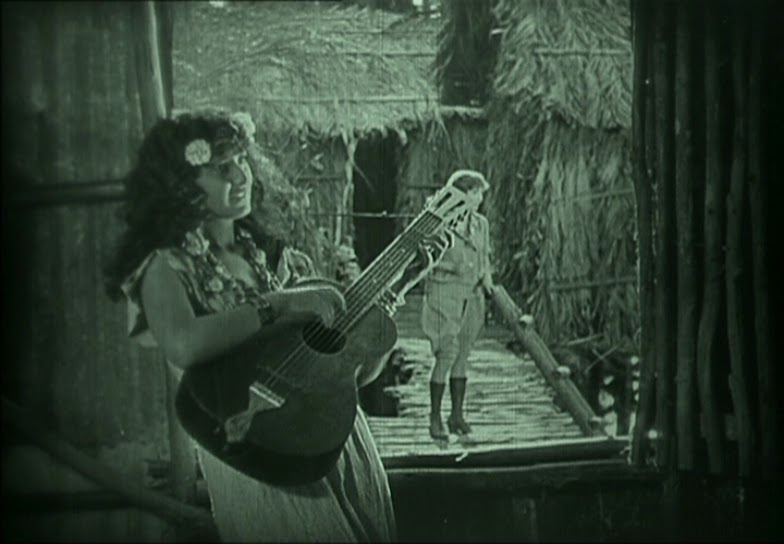
The indigenous sounds of the deep Amazonian rain forest.
The Lucky Dog players snuck on stage in character, pith helmets and jodhpurs along with an inflatable tyrannosaurus. Their music is witty and very tightly orchestrated with Emily on guitar, mandolin, cello and musical direction, Christopher Eldred on piano and clarinet, Daniel Tiberius Mays (parents, Star Trek fans?!) on woodwind – a deliciously poignant flute and Nicholas D. Ball on percussion and some very effective dino-sounds!

I loved their playful syncopations and when they were clicked off by Nick’s drums their ensemble playing is a real joy – is dancing allowed mid-film?! They also handled the thematic work well and I was especially entranced by Emily’s Spanish guitar lines and Mr Eldred’s way with the pianoforte: the bedrock of a score which not only included snatches of contemporary songs – the lovely What’ll I do? – but also a few notes from Jurassic Park (or was that just my projection?!).  It’s music that competes sometimes with the narrative but for this film and in this setting, that’s exactly what you need.

Hipsters go mad for silent film!
Wiltons is an interesting silent film gig and it was good to see so many young and unfamiliar faces and an audience who, inspired by the Lucky Dog verve, had a ball with the film: laughter is the gateway response to silents. Not that The Lost World is ever meant to be taken entirely seriously; as with its modern counterparts, there’s a rich mix of humour and action from the relationship between the squabbling professors to the convenient get-out for our main hero at the end: what happened in the jungle doesn’t always need to stay in the jungle!
                                
The Trachodon about to do battle with the Allosaurus!
We shouldn’t underestimate the impact stop motion techniques had on contemporary audiences, just as the CGI from the first Jurassic Park looks slightly awkward compared with Jurassic World over twenty years later, technology moves on and our perceptions follow. The film’s special effects maestro, Willis O’Brien had worked on stop-animation since 1918 and a short test film he made was shown by Conan Doyle a meeting of the Society of American Magicians, which included Harry Houdini in 1922. Doyle refused to discuss the film's origins but the audience and press alike were astonished… the New York Times declaring that if they were fakes they were “masterpieces”.

Sir Arthur is featured on his porch at the start of the film, he looks happy enough and I’m sure a good deal was arranged for the script as developed by Marion Fairfax. The author later declared that it was Lost World’s Professor Challenger who was his favourite character and not the Great Detective.

Wallace Beardy!
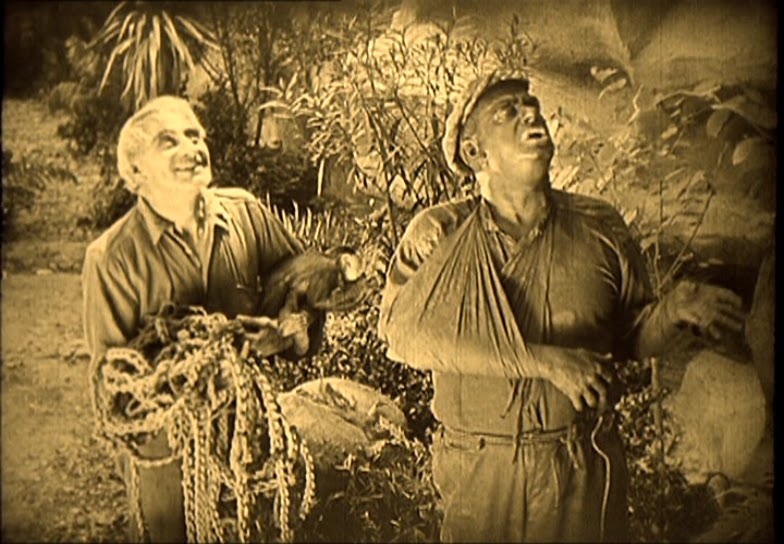
You can understand as Challenger is all for pure adventure even if here he’s opposed by the scientific establishment. He’s played by Wallace Beery complete with wildling beard and scatty fringe highlighting wide staring eyes as he’s laughed at by his peers. He’s looking for men to accompany him on an expedition to the Amazon to try and rescue Maple White whose journal suggests that dinosaurs still roam a plateau deep in the jungle. Noted adventurer and game hunter Sir John Roxton (Lewis Stone) offers to join him as does Professor Summerlee (Arthur Hoyt) who wants to prove him a fraud.

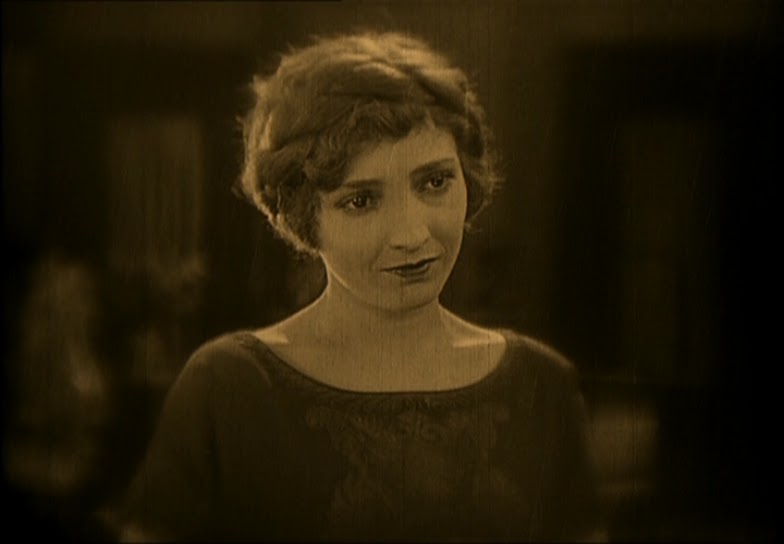
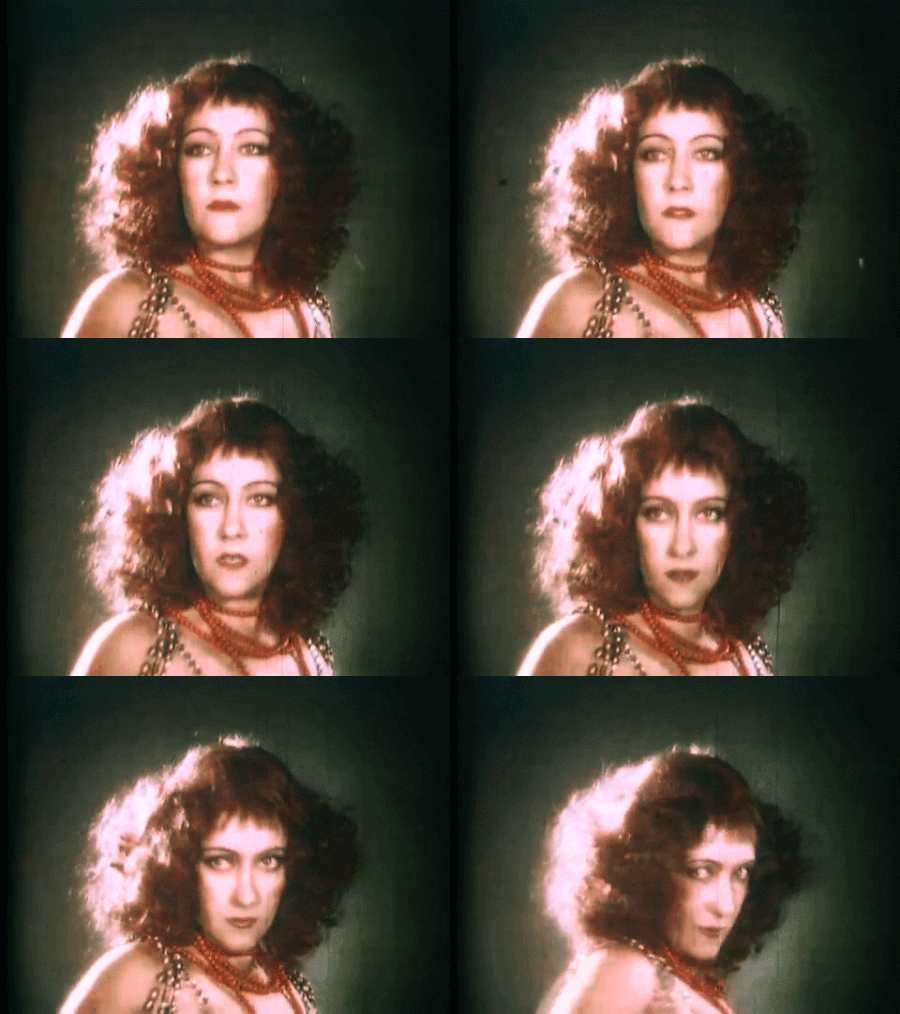
A young reporter, Edward Malone (Lloyd Hughes) also offers to join up much to Challenger’s disgust – he hates fake news – but Ed has a girl to impress with daring deeds, Gladys Hungerford (Alma Bennett). But, once then young fellow spies White’s daughter Paula (Bessie Love) we and he aren’t so sure of this prior commitment.

A US map of the Atlantic: Britain known by its proper name of Liverpool...
Cut to animation of ship skipping down a map from London to Brazil and the team are soon looking at a huge plateau with only one way up. They climb a rock tower and walk across a tree trunk to the plateau but their route is soon swiped away by the first of many huge new animals: the dinosaurs are here!

The stop motion is still impressive (thousands of movements over hundreds of painstaking days) and O’Brien worked a split screen with increasing confidence as he showed the “tiny” actors against a backdrop of dense forest and battles between Allosaurus, Brontosaurus, Triceratops and Stegosaurus (the last two my childhood favourite dinos). By the film’s spectacular conclusion, we see a Brontosaurus let lose in 1925 London… eight years later, O’Brien had a giant gorilla doing the same in New York.

Very smart split screens
If the story intensity drops on the plateau it’s because the adventure was all in seeing these great creatures live and move again and we’re all so used to seeing dinosaurs now. But there were moments when music and music hall helped us recapture the magic of discovery once again.

The Lost World was so nearly a lost film and is still being restored with a new 110 minute long Blu-ray due from Flicker Alley on 12th September. The version shown was the 93-minute restoration from 2000 used on the Eureka DVD which has perhaps 90% of the original content according to Doyle and Lost World expert, Roy Pilot’s commentary.

Reaction shots are key to believability.
It’s a classic bit of fun – pure cinematic pleasure! Wilton’s and the Lucky Dogs made sure we all had the best of it!

This was part of a short summer season from Lucky Dog at Wiltons including the magnificent Brit-com Shooting Stars and, footage of Irving and Malory’s fateful climb in The Epic of Everest. For details of upcoming show visit their website or follow them on the old social media.


Saturday, 27 December 2014

And the best is silence… 2014 in review

https://blogger.googleusercontent.com/img/b/R29vZ2xl/AVvXsEjSP48F_KK1of2brRrN7k45dRHZpB85jj0vut2QOL16IomGJ8xesQIenT31QnYcQVa_MOulJv8QRAjNp3bfVuRls6dtUR4iBXZNIccCV6lQLH7GCXWlNtkaP3tbCQMhjP-WAn9S0b2jfA/s640/Bow.jpg
Clara strides towards the New Year!
This blog is an aide memoire for a good chunk of my cultural experience not just a means to rationalise it... at my age, given the speed of life, I might just forget stuff. So, what do I remember best about 2014? Without referring to my notes or re-reading, here’s what’s left in my head: my, inevitable, Top Ten in no particular order involving nine grand nights out and one good reason to stay in...

Neil Hamilton and Colleen Moore
Colleen Moore and Why be Good (1929), London Film Festival
This has been Colleen Moore’s year as she re-emerged on screen to blow us away with her intelligence, wit and sheer verve. Moore’s enduring impact was demonstrated no better than in the LFF screening of the recently re-discovered Why be Good – complete with the original Vitaphone soundtrack.

The Warner Archives DVD has also allowed my teenage daughter to find a new silent heroine!

Si vis pacem, para bellum?
The Battles of the Coronel and Falklands Islands (1927), London Film Festival
A special night at the Southbank's Queen Elizabeth Hall with the BFI’s restoration being accompanied by a magnificently-moving new score from Simon Dobson performed by the Band of Her Majesty’s Royal Marines – a 24 piece ensemble in memory of the 24 bandsmen who perished on HMS Monmouth at Coronel.

Walter Summers’ painstaking reconstruction of these two key engagements from the Great War is all the more impressive as he used real sailors and ships – there were no model shots – a tribute to naval and creative discipline.

Harriet Bosse and Victor Sjöström
The Sons of Ingmar (1920), with John Sweeney, Cambridge Arts Picturehouse
The Sons of Ingmar is not digitised and can only be viewed when double-projected in cinema. This was a rare chance to view this important Victor Sjöström film and it proved to be deftly made and genuinely moving – worth the effort of finding a car parking space in Cambridge!

It was also good to finally see personal favourite dancer-actress Jenny Hasselqvist in Sjöström’s Vem Dömer (1922) – but why are so many of these films not on DVD?!

Mind your hats!
Comic Heroes of the Silent Screen at Wilton’s Music Hall, with the Lucky Dog Picturehouse
Wilton’s wins my new venue discovery of the year award – an Eighteenth Century music hall on the fringes of the City that has great atmosphere and a bar too! The Hall was taken over by the Lucky Dog Picture House for a programme of comedy capers accompanied by the magic house band.  We had Charlie in The Adventurer, Harold Lloyd in Never Weaken, Felix the Cat in Hollywood, George Méliès with four heads and Buster Keaton in Sherlock Jnr (1924).

http://www.flickeringmyth.com/wp-content/uploads/2014/07/night19142.jpg
Variety
A Night at the Cinema in 1914, BFI with Stephen Horne
Another hugely enjoyable anthology evening, this time aimed at recreating the experience of a night at the cinema in the year that war broke out. The films on view were mostly British and ranged from clips showing the troops in Egypt to the unreal sight of German troops on bicycles after their rapid invasion of Belgium. It captured the “over by Christmas” spirit but the Empire wasn’t as strong as we thought… The picture houses went on to help maintain morale through the ensuing years of unrelenting sacrifice.

Benita Hulme rouses the rabble
Not going out? Silent sci-fi on the BFI Player – High Treason (1929) and A Message from Mars (1913)
It was good to see the BFI Player hosting some interesting British silent science fiction, from Maurice Elvey’s late silent-period  High Treason to the very first domestic feature, A Message from Mars. I always like peering beyond the actors to the street settings and it was fascinating to see Trafalgar Square, the Mall and Edwardian fire engines tearing through pre-Great War London.

The Electric Cinema
The Wind (1928) with Lola Perrin at the Electric Cinema, Birds Eye View
I’d kicked myself for missing the original performance from Lola Perrin – winner of Silent London’s poll way back in 2011 – and wasn’t going to pass up the opportunity again. Ms Perrin’s accompaniment was as unrelenting as the wind and melded so well with Victor Sjöström’s tale of life and death at the extremes... 

The venue was also superb and if you’ve never experienced the plush, leather-seated living room comforts of the Electric Cinema I urge you to add it to your New Year’s resolutions – this is how all cinema should be!

The auditorium awaits...
The Sound of Chaplin, Barbican with Timothy Brock and BBC Symphony Orchestra
A grand evening with Timothy Brock conducting the BBC Symphony Orchestra as they played along to the early works of Mr C Chaplin of Walworth.  Call me an inverted snob but the orchestrated set pieces at the Royal Festival Hall sometimes seem more for the “concert crowd” than the cineaste whereas the Barbican feels more focused on the film. There was barely a set of red braces in sight as the beards and cloche hat brigade laughed their heads off at The Immigrant, Kid Auto Races and Shoulder Arms.

Neil Brand’s sprint to the stage to take his un-expected bow for Easy Street’s new score epitomised the unaffected joy of the event.


The Music Lovers (2013)
Six Italian Films 1906-2013, Italian Institute of Culture with 1911 Lokomotif Orchestra
An unexpected delight at an unusual venue where I was probably the only non-Italian speaker and the only non-Armani wearing attendee…

We were treated to five short films from the golden age of Turin Cinema all accompanied by the music of Mauro and Roberto Agagliate. Matteo Bernardini hosted the evening which was topped off by a showing of his silent short The Music Lovers (2013).


Naughty, bawdy, gaudy, sporty Friedrichstrasse…
Berlin, Symphony of a City (1927), Barbican with Stephen Horne and Martin Pine
Director Walter Ruttmann’s rhythmic city symphony was brought to life by swinging syncopation from Stephen Horne on piano, accordion and flute along with Martin Pine on drums and vibraphone. This was “lean-forward” silent media with an urban-edge that peeled away the years: for 65 minutes we were all Berliners (at least the 1927 variety...).

More proof, if it were ever needed, that silent film is best viewed with live music. The media may be old but the improvised response from expert musicians helps transmit an edge of uncertainty to an audience experiencing something genuinely new.
Gloria is Stage Struck!
So, here’s a toast to more of this in 2015… Gloria Swanson, Maurice Elvey and Sherlock Holmes at the Barbican, Buster and Carl at the Southbank and the Lucky Dog Picturehouse illuminating early British comedy at the BFI… Another very silent year but far from quiet!

Thursday, 17 July 2014

The good old days... Buster, Charlie, Felix, Harold and George at Wilton’s Music Hall with The Lucky Dog Picturehouse


What better place to connect with the spirit of Charlie Chaplin than in Britain’s (and the World's!) oldest surviving music hall, just a hop, skip and a ferry across the Thames from his old stomping grounds. Charlie never played Wilton’s Music Hall but he certainly trod the boards in many similar theatres as did Buster Keaton and Harold Lloyd across the pond and Georges Méliès in Paris.

The silent hipsters gather...
John Wilton bought what had been a public house in the 1850s and built his ‘Magnificent New Music Hall’ in 1859 to play host to the East End’s finest including Arthur Lloyd and George Leybourne - Champagne Charlie himself. The venue was a Methodist hall in Chaplin’s days and after years of post-war decay the hall is back in all its glory as one of London’s most distinctive arts venues, its patchwork eighteenth century fascia opening up to reveal a dusty brick and stucco interior in which you can almost breathe in the history …

Tonight Milton’s had been taken over by The Lucky Dog Picturehouse for an evening celebrating the Comic Heroes of the Silent Screen – this is how the hall could have been in 1924 and it felt altogether wrong not to be in period costume… So, tonight, I blog upon the shoulders of five genuine comedy giants…


Georges Méliès avec Georges, Georges et George
 Un Home de Tetes (1898)

Written, directed and starring Georges Méliès along with four of his heads… this was a brief yet typically inventive comic blast from the godfather of cinema and great to see on the big screen (I was one of those who almost leapt up and cheered during sections of Hugo…). He pops one head after another onto two tables either side of him then – after a failed attempt at singing in harmony – bops the tuneless versions in favour of the one true voice.

This is one of my favourite Méliès as it’s a solo show and you can see the performance craft honed over his years as a magician.

Emily O’Hara, Lucky Dog’s founder, played along on jaunty guitar – what a joy to duet with Georges.


The Adventurer (1917)

So many dismiss Charlie Chaplin for his sentimentalism but in this energetic short you can see his relentless, seriously anarchic comedy in full effect. Charlie is quick, he’s fearless and more than a little bit wicked.

We never know why Charlie’s on the run but he’s an escaped convict trying to out fox the police from beginning to end. We first see his head emerging out of the sand to confront the gun of a policeman taking a breather on a rock and his ensuing chase with the law is one of the most inventive and consistently funny I’ve seen. Charlie ends up in the sea and after evading capture ends up trying to save a woman drowning near a beach, that is until he spies her daughter (Edna Purviance) and decides she’s more in need of rescue – it’s a comically-shocking moment and proof that Chaplin was rather more knowing than some might expect.

Henry Bergman, Marta Golden, Edna Purviance, Eric Campbell and Charlie Chaplin

Charlie falls in with the girl’s family after convincing them that he’s a commodore swimming far from his yacht. He has a running battle with her over-aged and over-grown suitor (Eric Campbell) which involves lots of minor ABH and manages to drink as much as he possibly can. Before the police arrive and the chase resumes, Charlie lives the high life of the rich set… just like any poor boy from Walworth would given the chance to get one over on some nobs.

Peter Coldham provided expert piano accompaniment and helped to ensure the hall was filled with the sound of a collective re-connection with the silent sense of humour: we cast our chin-stroking hipster reserve away and just laughed!


http://www.silentera.com/video/img/frames/neverWeaken-kino.jpg
Visions of angels...
Never Weaken (1921)

Any thoughts that Harold Lloyd would struggle to follow Charlie were soon dispelled as his “thrill” comedy wound us up to unexpected heights. Charlie got the most laughs but Harry ran him close and his audience response was laced with our genuine concern for his safety. 93 years on and we still think he might actually fall… that’s genius!

This was Lloyd's last short film, before he focused on features and he went out with a bang, using techniques that would later make Safety Last into a classic. But here the sky-scraper slapstick was used in condensed form – almost too much to bear for those of a nervous disposition: we laughed out our unease and there were genuine gasps and groans as one slip on a mile-high girder led to another and Harold clung on for dear life.

http://pics.imcdb.org/0is501/valmis207il4.6743.jpg

Harold is desperate to impress his girl (Mildred Davis) and attempts to drum up business for her osteopath boss who hasn’t enough patients to cover her pay. All goes well with the aid of a neighbouring acrobat (Mark Jones) but when Harold sees the girl talking marriage with another man, he resolves to kill himself. Harold suicide preparations are surprisingly funny but, just when it seems he’s worked out the perfect death he is lifted out of his office by a girder wedging itself under his chair. For a moment he thinks his plan has worked and as he opens his eyes he sees the statue of an angel on top of the building and a voice like an angel in singing practice on the top floor. But, as a basement jazz band pops his bubble Lloyd’s reactions as he realises where he actually is are precious.

All Harold has to do now is somehow avoid any number of girder perils and get back to ground to get the girl. It was breathless stuff, aided and abetted by Peter Coldham’s piano accompaniment… he deserved the half time break as much as anyone.


Felix meets Charlie
 Felix in Hollywood (1923)

Can’t think how it’s taken me so long to catch up with Felix the Cat; probably amongst my early silent memories thanks to Bob Monkhouse’s TV trawl through his dusty vault of 35mms….

Forget Itchy and Scratchy, Felix was always The Man – sorry Cat – and here he strides coolly over to Hollywood and meets Charlie Chaplin, Douglas Fairbanks, William S. Hart, Ben Turpin and others in the  first animated cartoon to feature caricatures of Hollywood celebrities (and before the celebrities became caricatures etc…).

Funny and so post-modern: every sassy cat that followed was always part-Felix.

Emily O’Hara, played along on cat-quirky banjo this time. 


Sherlock Jnr (1924)

Buster Keaton finished off the evening with one of his best and a film that really does justice to the Wilton’s attempt to recreate that twenties feeling. Sherlock Jr’s film within a film enabled us all to sit watching a film showing a projectionist watch his audience before dreaming himself into the film they were watching. And we all went in there with him.

I’ve previously raved about this film and, again, it was good to see it the way Buster intended. None of these film makers envisaged a world in which we could all watch their work alone at home and tonight, somewhere between the City and Shadwell, we were privileged to experience communal silent comedy in historically-appropriate surroundings.

At the end as Buster kept on glancing from his projection booth to the screen to work out how to make love to his girl, it was almost as if he were looking directly at us too: we’re pulled into the joke and not for a second does his expression waver: I know you’re watching and so am I but I’m not going to let you see that…

Mind your hats!
Tom Marlow provided thunderous piano accompaniment for the big finish and we clapped long and loud before heading to the bar and out into the warm almost Mediterranean air of Tower Hamlets…

The Lucky Dog hope to run more of these evenings and all I can say is, keep the films coming, bring your banjo and we will be there!

Further details about TLD are available on their website whilst details of Wilton’s Music Hall are on theirs. Encore!!