‘All the good boys got themselves killed in the war or
should have done. The good die young; that’s what we were meant to do. But we
didn’t die. Oh no – we fooled them, we stayed alive. And, worse than that, we
came back. So now we’re in the way, we’re redundant. We’re not wanted.’
Another BFI release from the post war era and one that
reveals concerns from the dried-out beginnings of the 1950s with four men in
desperate need of an even break and some money. For three of them, the fault is
not really their own, they’ve had bad luck, whereas the fourth has made his own
luck wasting away opportunity until he has nothing left but to risk the fate of
others to find his fortune.
It's no surprise that of the actors on show, Laurence
Harvey is the real bad apple, but even he comes up with a story of bitterness
blaming the War in which the “good” were first to die, as the motivation for
his entirely self-centred existence. As with all good noir there is so much
shade but also choices to be made and few who had witnessed the sacrifice of
the war generation would have much sympathy for his self-pity. The others, on
the other hand all retain some relatability which makes the film especially
nuanced at a time when few criminal characters could expect to get away with
much in British film let alone be willed on by the decent crowd in the darkness.
 |
| Harvey, Baseheart, Ireland and Baker |
Directed and co-scripted by Lewis Gilbert, the story is
based on a novel by American writer Richard Macauley and the events transposed
to austere London with a number of notable US performers including Richard
Basehart and the glorious Gloria Grahame as flighty film star, Denise Blaine.
Grahame gives enough here to see why she is still so highly rated; she’s got an
almost out-of-time aggressiveness and her timing is superb uplifting every second
she is on screen. By comparison, home-grown starlet Joan Collins seems
under-powered and more than a little miscast as the rather timid Mary Halsey, a
young married who just can’t escape her clinging mother.
For Brit-grit and screen presence look no further than Stanley Baker as down on his uppers boxer Mike Morgan, a man clinging onto a career after multiple defeats and going into his last fight with a broken hand and even his brother-in-law Dave (James Kenney, who was so memorable in Cosh Boy) betting against him. But, somehow, Mike prevails and has won enough to retire and look after his wife Angela only Dave is now deep in debt and on the run from some unforgiving gangsters… blood is thicker than water and Mike finds his funds all gone towards the preservation of lost causes.
 |
| Gloria Grahame and John Ireland |
Talking of which, over in New York City Joe Halsey (Richard
Basehart) quits his job to try and bring his wife Mary (Joan Collins) back from
England where her mother (Freda Jackson) keeps on inventing illnesses and other
excuses to keep her girl at home. It’s a heart-breaking choice in the best of
circumstances and probably a fairly common scenario for a lot of war brides, but
something has to give and there’s no way Joe can get the work he needs and Mary
is pregnant, forcing the issue to a head.
From dreary suburbia to Knightsbridge hotels and the even
unhappier life of glamourous Gloria as flighty Hollywood starlet Denise Blaine
married, just about, to American airman, Eddie (John Ireland). The two are
moving in increasingly elliptical orbits as she shoots in locations and he gets
transferred to Germany; they were clearly equal once but now Denise is showing
more interest in her co-stars.
 |
| Richard Baseheart and Joan Collins |
The catalyst for bringing these three desperate husbands
together is Harvey’s Miles 'Rave' Ravenscourt, a decorated war “hero” married
to Eve Ravenscourt (Margaret Leighton) or rather her money. Rave is your
classic public-school waster, disappointed in love, life, war and pretty much everything
and who keeps on losing what ever money he has in gambling. Eve refuses to
advance him anymore and there’s even a lovely cameo from Robert Morley as Sir
Francis Ravenscourt, Rave’s exasperated father. Sir Francis gives the film’s
biggest clue yet as to the soulless void behind his son’s relentless flippancy…
in the eyes of post-war viewers his ceaseless betrayals surely rank as high as
any more physical crime.
Rave it is who pulls the others together after the encounter each other by chance in a public house which, incidentally, is exactly the kind of pub I’ve been looking for after four months of lockdown! He gradually nudges them towards the idea of one big payday and sets out a sure-fire way to rob a post office that will bring them tens of thousands each; more than enough to set them free for a second chance.
 |
| Rene Ray, James Kenney and Stanley Baker |
The film opens with the four of them sat in a car about
to undertake the robbery and, having gone full circle, the raid takes place and
their fates are played out in a breathless final segment. No spoilers, but at
one point a shocked Mike observes that Rave has never seemed more alive than
with a gun in his hand and with men to kill…
The film is that dark and Harvey’s key lines quoted at the top were cut from the British release as the BFI’s Dr Josephine Botting reveals in her booklet essay; perhaps it was felt that this was too cynical and disrespectful or maybe the powers that be felt it might strike to much of a chord? Dr Botting’s essay gives fascinating background on the production and there’s also an article on Lewis Gilbert from Peter Rankin.
 |
| Laurence Harvey and Margaret Leighton - apparently Laurie kept the pictures for "personal use"... |
The set includes the worldwide home entertainment debut export
version of the film an extended, alternative cut of the film – featuring
material not included in the British release version. There’s also Not Like
Any Other Director: Lewis Gilbert (1995) an edited excerpt from a 1995
onstage interview with the director held at the National Film Theatre with Michael
Caine is on hand to introduce his friend. Gilbert directed Caine in Alfie
(1966) and Educating Rita (1983), two of my favourite Michael’s!
As is traditional, there are also a selection of
delicious shorts from the BFI archive including Midnight Taxi (1946) Norman
Hemsley’s look at bustling London after dark and Under Night Streets
(1958) Ralph Keene’s documentary showing how an army of workers cleans the
London Underground in the four hours between close-down and rush-hour.
 |
| Frank Craig goes out to battle Tom Cribb |
The
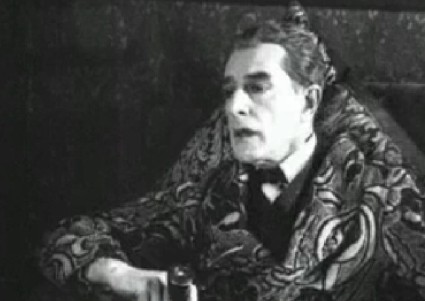
highlight for me is When Giants Fought (1926), Harry B Parkinson’s tale about the first black
contender for Britain’s heavyweight bare-knuckle boxing title in 1810. Frank
Craig plays the real-life Tom Molyneaux who fought champion Tom Cribb (Joe
Beckett) over 35 rounds in 1910 and, by some accounts, should have won. It is a
fascinating film and Frank Craig’s plays Molyneaux with conviction and pugilistic
poise.
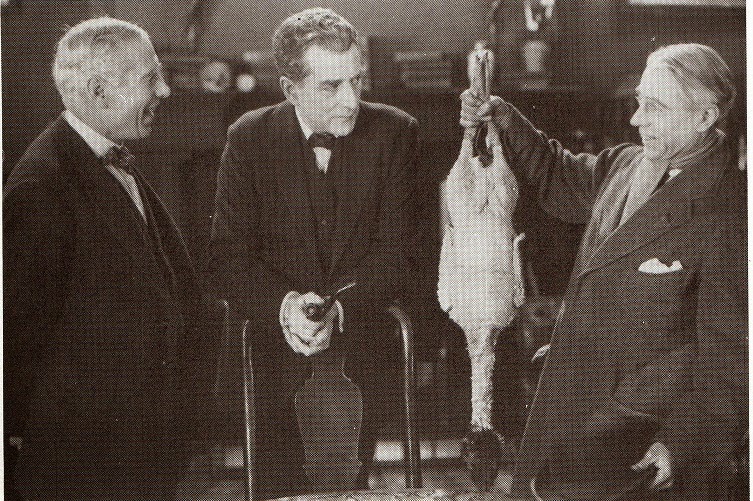
The
story uses the framing device of an old man telling tales in a Holborn alehouse
many years later. He regales his audience with the battle of a sailor and
soldier for the love of a country maid and this ends up being a wager on the
outcome of the fight. The threesome’s reaction to the course of the fight – and
the watchers in general – reveals much of the Twenties’ creative’s views of Georgian
racist attitudes and some of the language on the intertitles is shocking
another century on even although they also reveal which side the filmmakers were on.
In
the end Molyneaux is cheated of his deserved victory by Cribb’s team and a
lenient referee… and there’s a twist in the tale of love too. All’s unfair in
love and boxing.

Another reason, if you needed one, to buy this new set. It's available from the BFI online and on the Southbank. Another winner!