Showing posts with label Blanche Sweet. Show all posts

Sunday, 2 August 2020

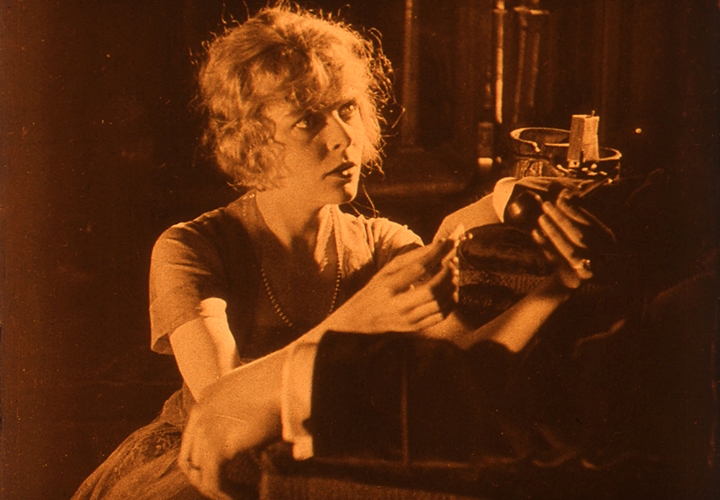
Blanche and Boris… The Deadlier Sex (1920), Silents Under the Stars, with Michael Mortilla


 “You can’t feature Blanche Sweet too much for her performance here certainly justified stardom and will go a long way toward pushing her up to the top again.” Wid’s Film Daily


If Lobster Films supremo, Serge Bromberg’s car hadn’t broken down on a trip to see his cousins in the South of France, he’d never have got into conversation with a garage mechanic who knew someone who had some old films and, as it turned out, was happy to clear some storage space. Serge discovered an old Pathé wooden camera along with a stash of films; some trailers, some pornography (natch) and a complete 35mm print of The Deadlier Sex… previously considered a lost film. Adding new intertitles, beginning and end credits and a clean-up, the film is now perfectly preserved by the Academy Film Archive and is exceptionally good-looking copy of Boris Karloff’s first major feature but also a fine example of just why Blanche Sweet was such a huge star.


The film was been streamed as the 33rd annual Silents Under the Stars event run by the Hollywood Heritage Museum normally outdoors at the Paramount Ranch. This being 2020, this was the Covid-19 edition with watchers across the World glued to their laptops for a special screening accompanied by the museum’s regular accompanist Michael Mortilla and introduced by Randy Haberkamp, Hollywood Heritage board member and Silent Society Committee Chair.


This was also a fundraiser for the Hollywood Heritage Museum on its 35th anniversary as well as the Santa Monica Mountains Fund for the restoration of the Paramount Ranch which has recently suffered horrendous damage in a fire. Donation details below.


Best of all, this film was being shown to Boris Karloff’s daughter Sara, who had never seen the film and had only come across it in an interview with his father in which he remembered the unsettling realisation of seeing himself, alone on screen and thinking, that’s how I look! The film was shot in the beautiful hills and rivers of Truckee, California which just so happens to be 24 miles from where Sara lives… You know, all in all, I think this was meant to be!


Onto the film itself and Wid’s Film Daily was spot on in highlighting Blanche Sweet as the outstanding player; she has a relaxed, naturalistic approach that elicits audience complicity in even the maddest of schemes driving the odd narrative. Her open features, generous smile – revealing slightly British dentures – and energetic physicality holds everything together and she’s on screen for pretty much the whole film.


Young Mr Karloff

She plays Mary Willard a resourceful young woman who is determined to take proper control of her father’s legacy after he dies suddenly at their home, the two in loving response looking forward to their annual walking holiday. To protect his assets, she needs to overcome the aggressive – commercial - advances of Wall Street financier Harvey Judson (manly Mahlon Hamilton), who pushes the rules to the limits in his desire to gain others’ capital.


This is where the film takes a strange turn as Mary decides the only way to stop Harvey from unfairly dominating the market and undermining her father’s fund is to drug and kidnap him and then take his out to the wilderness where he can either sink or swim as a proper man.


This seems such a common thread in the Twenties having just watched Miriam Cooper in Is Money Everything? (1923) as well as Leni Riefenstahl in The Great Leap (1927); heck, what would people say if The Deadlier Sex was a Berg Film espousing the nourishing impact of the outdoor life on conflicted urban businessmen?!


Still in his city suit, Mahlon Hamilton

Anyway, glossing over the fact that Kidnapping People is Wrong, Blanche quickly makes you forgive her as does Hamilton’s Harvey, as he starts offering huge amounts of money to the locals only to find that it counts for nothing in what is essentially a barter economy. Jim Willis (Russell Simpson) is one such man, an old friend of the Willards with pine wood running through his veins, pretends that Mary is his niece and also has some of the film’s best lines in the quaint ways he rejects every dollar offered by Harvey.


Of course, not everyone is disinterested in filthy lucre and, local tracker Jules Borney (Boris Karloff) is happy to take Mary’s money to force a fight with Harvey in an attempt to get him to “man up”. As an aside this reminds me of my Scouse Nan trying to get me into fights when I was a kid for pretty much the same reason…


Back in California, Jules takes things too far and having bested Harvey has to be fought off by Mary. Harvey, who doesn’t know that Mary is his business rival, begins to feel differently about his strange predicament and starts to enjoy aspects of the absolutely stunning countryside – this is one of the best looking location shoots you could hope for, positively Swedish from raging rivers to pine-topped mountains.


Then he has an idea to force Jim into taking him back to civilisation be pretending to kidnap Mary – here we go again people with The Kidnapping!? What could possibly go wrong? Only Jules, spotting an opportunity to rob Harvey and take Mary into the bargain. Meanwhile, what’s happening back in Wall Street and can this faked kidnapping on top of the faked rescue from another faked/actual kidnapping possibly not be found out!?


I have previously seen The Deadlier Sex in Pordenone back in 2017 and enjoyed the chance to see it again in a more focused setting. It’s good-looking and good fun and Michael Mortilla’s playful accompaniment brought out the best of its good humour. Robert Thornby’s direction is very effective, especially out at these rugged locations whilst cinematographer, Charles E. Kaufman, captures the sweeping vistas as well as the emotions.


Lovely depth of field Mr Kaufman!
 

Before the main feature, there was also a fascinating short called Life in Hollywood – Part One (1927) which showed the main studios with a voice-over revealing the addresses. Some still stand to this day although I’m not sure if Cecil B. de Mille’s replica of George Washington’s house is one of them.


The home of Hollywood Heritage, as President Richard Adkins explained, is actually the oldest film company studio and where de Mille shot the first Hollywood feature, The Squaw Man in 1913. All of which made the footage of the Paramount Farm fire all the sadder.


If you want to help restore this precious slice of Hollywood Heritage, click on the link here.


I’m sure many of us will as the silent film community is as supportive and unified as never before during the Covid-19 crisis and this was another special online moment when silent cineastes stop what they’re doing across the World and watch and learn and listen in silence.


Thank you, Hollywood Heritage!


Ain't she Sweet? 


Cecil's studio from Life in Hollywood (1927)


Part of the fire damaged Paramount Ranch: please donate to help with the restoration if you can.


Sunday, 8 October 2017

That Pordenone Touch… The Student Prince in Old Heidelberg (1927) with Orchestra San Marco, Pordenone Day 8


These people don’t do things by halves, do they? Eight days of almost ceaseless cine-muto reached a crescendo on Saturday evening with Ramón Novarro, Norma Shearer and the Orchestra San Marco, Pordenone, conducted by Mark Fitz-Gerald playing Carl Davis’ score.

The Student Prince in Old Heidelberg is another I’ve saved for the big screen and live accompaniment and Mr Davis’ score is one of his nest for this near-perfect movie from Ernst Lubitsch – romantic, witty and so poignant… Davis works from inside the film outwards and I have a feeling he and Herr Lubitsch would have got on well!

Now then, Mrs Thalberg remains a slightly controversial and divisive figure and there are those who favour Silent Shearer over Talkie Norma but I like them both and here she is simply superb. Ramon is a very pretty boy and he does well, but only Norma moved me close to tears (darn it Pordenone, that’s three times you made me cry!!) with an intelligence pf expression that is rarely equalled.


This is not the gung-ho tennis playing sophisticate of The Divorcee but a woman who finds true love and then, heart-breakingly, has to let it go. Typically, she must decide for her Prince; they will both love again and marry as their station and duty demands but they cannot be happy. All of which reminds me of a conundrum I once had with Princess Anne… but it was all worked out amicably.

Lubitsch too is a man of many phases and it was instructive to compare The Student Prince… with his Pola Carmen from earlier in the week. The latter was energetic and game for a quick laugh but, ten years and a whole continent onwards, his approach is more delicately-defined. This film has plenty of evidence of his famous touch form the over-regimented raising of hats for the prince to the lovely time he chases Norma’s humble hotelier’s daughter, Kathi, along a series of arches; the camera follows them, anticipating their arrival at the next arch until, suddenly, the don’t: the prince has caught his girl and who knows what private passions are being expressed.

The pacing is so well handled – a real musician’s film – and the overall tone is one of good humour even if the end-game involves balancing duty against individual happiness.

Lovely composition. Cheers Getty Images!
The programme notes reveal that The Student Prince… was an attempt to win back the mid-European market by showing a more human side to Germanic characters – a similar problem was faced with Herbert Wilcox’s Dawn (1928) about Edith Cavell. Here Lubitsch is on safer ground but these men have honour as well as humour.

Appropriately enough for a Ramon Navaro film, this film was M-GM’s second most expensive film after Ben-Hur (in which the actor starred). Apparently, Norma fought off competition from May McAvoy, Marceline Day, and Fay Wray for the role but I can’t see any of them playing the role as well. That said… there were moments of tension with her director as he felt he initial performance was too grand: ‘Mein Gott!’ he shouted. ‘I can get a waitress from the commissary who will do better than you.’

That may well be Ernie but she’s got a guy called Mr Thalberg at home and he’s quite important. IN the end, Irving superbly defused the situation with the line: ‘Darling, I’m sure we can all learn a lot from Mr. Lubitsch.’ I’m sure she did.

We also watched:

Karina Bell and Peter Nielsen in Morænen
The Swedish Challenge has been my favourite strand and shown me that there is far more to Scandinavian silent film than Victor and Mauritz… today’s double maintained the quality and in the case of the latter Anders Wilhelm Sandberg’s Morænen (1924), featured some of the best accompaniment of the week from Stephen Horne on piano and various and Elizabeth-Jane Baldry. 

Elizabeth-Jane users her sonic pallet way beyond the confines of traditional playing much as Stephen has pushed the piano; together they sounded like a dozen players and produce music that is delicate and the with all the attack of more avantgarde composition. In the end, the Teatro Verdi wouldn’t let them leave the orchestra pit until they’d take a bow on the main stage: and well deserved too!

The film itself was quite dark with an overbearing father a dying mother and a brain-damaged son. It’s interesting to see how mental disability was treated at the time and – given the huge developments in diagnosis and treatment over the years, very valuable social history.

Everyone seems to care for the boy in question, even the father for whom he is a daily reminder of his "hateful" mother (IHAO), a man of unyielding selfishness his over-compensatoin was for his own failure.


Teuvo Puro and Jussi Snellman’s Anna-Liisa (1922) was no less challenging and this time involved infanticide a woman unwittingly getting pregnant after an, un-consensual liaison with a local ruffian. She has the child but kills it new born and as she tries to move on and marry the man she does love; this past comes back to haunt her. The answer is to come clean and accept both crime and punishment: another scandi-redemption song and it’s true.

Gabriel Thibaudeau wove some elegant lines throughout his piano improvisations, he seems to have all the time in the world: The Eric “Slowhand” Clapton of accompaniment.

No, please... don't kill Creighton Hale!
After all this Scandinavian seriousness, hearts were sinking at the merest sight of Danish director, Benjamin Christensen in the credits for Seven Footprints to Satan (1929).  But, we needn’t have worried for it was an absolute hoot that prefigures the comedy horror of Cat and the Canary and Universal’s funnier moments. It’s very well done and whilst Creighton Hale rises to the occasion, Thelma Todd just blows him off screen!! Screwball before screwball was invented.

Turns out Christensen was far funnier than we thought… talking of which: don’t miss Haxan, at the Pheonix Cinma on 31st October… Halloween Night, yes, that’s right! Tickets available here!

Rising star Daan van den Hurk was on hand to have fun accompanying this one.

Blanche Sweet
Also funny and disturbing was The Deadlier Sex (1920) and the sight of Boris Karloff in pants that looked liked they had been stolen from a New Romantics party in 1981!? Thank goodness we didn’t see those in colour!

Robert Thornby directs and his two leads sparkle especially Blanche Sweet as the daughter of an industrial magnate aiming to be just as tough when “Wall Street alchemist” Harvey Judson (Huntley Green) tries to bully her Dad’s former business out to the market. Nothing a bit of sedation and kidnapping can’t fix as she has Green transported to the wilds to sink or swim.

Boris is hired to put the frighteners on him but he takes his role a little too seriously. It’s fun and Masterclass graduate, Bryson Kemp, played along with a spirit of adventure!

Georges Méliès: Le Rosier Miraculeux (1904)
Then, just before The Student Prince… we were treated to a recently-discovered Georges Méliès: Le Rosier Miraculeux (1904) or The Wonderful Rose Tree projected in almost immaculate condition on the huge screen. It is truly amazing that his work is still being discovered but it’s thanks to the dedication of the very people who attend, program, perform and otherwise support Pordenone that all is possible.

So keep on being passionate about cinema muto in all its forms. Enjoy it, discuss it, engage and promote it and we will not only have more wonderful weeks like this one but so much more.

Grazie Mille Pordenone!! Vediamo l'anno prossimo per GCM37!


A communication from the Mile-high Blogger Club (no, it’s not what you think…)

Monday, 8 June 2015

Father’s Day… Judith of Bethulia (1914), BFI with Wendy Hiscocks


The Variety reviewer was awestruck: "It is not easy to confess one's self unequal to a given task, but to pen an adequate description of the Biograph's production of 'Judith of Bethulia' is, to say the least, a full grown man's job."   cripes: am I “man enough” to blog this one?

Today was DW day at the BFI at the start of their month-long season celebrating “Cinema’s Great Pioneer” which will include screenings of all his major works including a tie-in with UCL’s three-day conference on Birth of a Nation: the Father of Cinema celebrated, just two Sundays before Father’s Day… Really BFI, you could have waited!

David Llewelyn Wark Griffith, probably not a descendant of  Rhys ap Gruffydd...
As befits a man little known for brevity, the day started with Kevin Brownlow and David Gill’s three part documentary covering the life and career of the man our Charlie called “the teacher of us all”. DW Griffith: Father of Film, narrated by Lindsay Anderson, included precious interviews with Lillian Gish and Blanche Sweet, who were to feature later, along with cinematographers Karl Brown and Stanley Cortez.

The series documents Griffith’s relatively humble background on a farm – not quite the southern aristocrat he later made himself out to be: “descended from the Kings of Wales…” me too mate! He was a self-made man, self-taught with his school-teacher sister’s help and this makes his achievements all the more remarkable:  as with Chaplin he clearly had exceptional native intelligence and supernatural energy.

Lillian reaches out in The Battle at Elderbush Gulch
There are in-depth appraisals of his blockbusters and the almost unbroken run of success up to Orphans of the Storm (Lillian had me on the verge of tears yet again…) and then his attempts to replicate that success over the next decade. A decline marked by the emergence of new wave of silent-sophisticates such as Lubitsch, Vidor and Von Stroheim.

http://www.cliomuse.com/uploads/9/2/4/6/9246605/6649063.jpg?352
DW examining the rushes from Abraham Lincoln
But you know, decline is always far worse when viewed retrospectively – from the vantage point of ultimate failure and there are some films such as America and Lincoln that are worthy of deeper investigation.

With scarcely time to grab a sandwich, it was on to the actual films with three fascinating samples of early DW…

The Adventures of Dollie (1908)

A still from Dollie... no where near as clear as the print we saw!
This was Griffith’s first film as a director and was an amazing print: 107 years old and looking as fresh as yesterday! Gypsy tries to steal from a young mother and after being forced away by her husband takes revenge by abducting their daughter. The mean travellers hide her in a barrel which falls off the back of their cart and sails home along the river… NO children were harmed in the making of this film (probably).

The Battle at Elderbush Gulch (1913)

The calm before the storm... but they did say "no dogs!"
The print quality here was not so good but it showed how far DW had come in the five years since his debut. There’s a battle in a besieged log cabin that prefigures the same in Birth of a Nation. This time the aggressors are Native Americans upset over the killing of the chief’s son. Now, personally I think they gave up on negotiations far too soon but then again, the young man was killed in an argument over whether or not he could eat two dogs belonging to the settlers.

The owner of the dogs was Mae Marsh who eventually emerges as the hero by rescuing Lillian Gish’s baby amidst the smoke and cross-cutting fury of the battle itself. Robert Harron, another Griffith regular, plays Lillian’s heroic husband wearing the kind of moustache often seen on Brookside in the late 1980’s.


Judith of Bethulia (1913)

Blanche Sweet
Marsh, Gish and Harron all re-appear in the main course, Griffith’s first four-reel film made when the director was upping his game in response to long-from competition from Europe and the Italians in particular; Quo Vadis, The Last Days of Pompeii et al.

Biblical stories gave directors more freedom of “expression” and there’s certainly a good deal of passion in this tale from exotic dancers to Judith herself (Blanche Sweet) who spends most of the time breathing in and stretching her arms up wide as she contemplates the manly charm of Assyrian Prince Holofernes (a barely-recognisable Henry B. Walthall) and what she must do to him…

The "Little Colonel" has a wee dram...
There’s also a wonderfully camp turn from J. Jiquel Lanoe as the Prince’s Eunuch Attendant and a dance troop led by Gertrude Bambrick who provides considerable distraction to the viewer if not their jaded leader.

Mae Marsh plays a young woman called Naomi who is in love with a warrior called Nathan (Robert Harron - still with that same ‘tache!) and looks years older than in the previous film. There’s an interesting comment from Lillian Gish in the documentaries about being cast as the “young girl” in Broken Blossoms; she reckoned she was too old and that they should have given the job to an actual girl “they always look five year’s older on screen” (except perhaps Mary P!). Mae Marsh was 19 at the time of filming both.
Mae Marsh thinks about irrigation techniques...
 Naomi and Nathan’s lives are turned upside down when the Assyrians attack and lay siege to their city of Bethulia. Naomi is carted off to the enemy camp whilst Nathan takes to arms as the city tries to fight off the invaders. The city walls remain intact but there is precious little water and food and the enemy will surely only have to wait.


Griffith marshals his extras well not just for the battle – which certainly shows the Italian influence – but also within the city where a long line of helpless citizens lines up into the distance. At the head of this queue of the vulnerable is a young mother (Lilian again!) who epitomises the civilian heart of Bethulia.
Lil and Blanche
The citizens look to Judith for leadership and healing but she despairs until she works out a way of saving her people… along with her maid she makes her way to the Assyrian camp and immediately begins to entrance their prince. What she didn’t reckon though was on attraction being a two-way street and as she begins to doubt her own mission in the face of burgeoning love, will she have the heart to carry out her plan?

The film is a very refined Griffith product and shows the benefit of his weeks of rehearsal time with an established company of technicians and performers. The battle scenes are again closer to what we will see in the ensuing years with Birth and Intolerance… they’re not quite Cabirian but you can feel the flames and the fury.

Judith smothers herself in dirt before undertaking her dangerous mission...
Blanche Sweet gives and impressive performance amidst all her wind-milling arms and heavenly-imploring - in the documentaries there’s a precious shot of DW showing her how to cosy up to the Prince… she does it far better! She’s actually impressively naturalistic and nuanced whilst also looking more than capable of doing the deed she must… I doubt Lillian could even wield that sword whilst Mary P just couldn’t!

Mae Marsh is also impressive here looking a little like Zoe Deschanel (is that just me?) in one of her more serious roles whilst Henry B. Walthall shows how to act through a beard: be the beard – he is the beard! There is also a fleeting appearance from Dorothy Gish as a crippled beggar, her mother Mary and some bloke called Lionel Barrymore: the Hollywood “club” was turning into a juggernaut.

Blanche leads the extras (including Lionel Barrymore?)
And there was more… as A Romance of Happy Valley was up next along with The Cricket on the Hearth but I needed to re-establish some form of contact with my family and to eat… 

The DWG show runs till the end of June and further details are available on the BFI site. There are still tickets available but they're selling fast!


You just can’t beat seeing the man’s work on screen and projected with live accompaniment. Wendy Hiscocks’s was today’s pianist and she contributed greatly to the tone and focus – capturing the mood from Dollie’s dangerous barreling to matters of life, death and love in the longer films. Every silent film musician brings their own flavour to the films and Wendy mixed post Victorian lyricism, wild-western dramatics and middle-eastern epic with consummate ease!